If you need help with a Residential Homeowners Claim Apex policyholders can hire For The Public Adjusters, Inc. to document the damage, prepare the claim, and negotiate directly with the insurance company on your behalf. We work only for you — never for the insurer — and we are licensed and bonded in North Carolina. Whether your claim was denied, delayed, or paid far less than your contractor says repairs will cost, we step in and take over the fight so you can focus on your family and your home.
What This Service Is
A homeowners claim sounds simple until you actually file one. Fire, smoke, water from a burst pipe, a fallen tree, vandalism, or damage from a hurricane remnant or tornado can all trigger a claim — and each one comes with its own coverage rules, deadlines, and paperwork requirements buried in your policy.
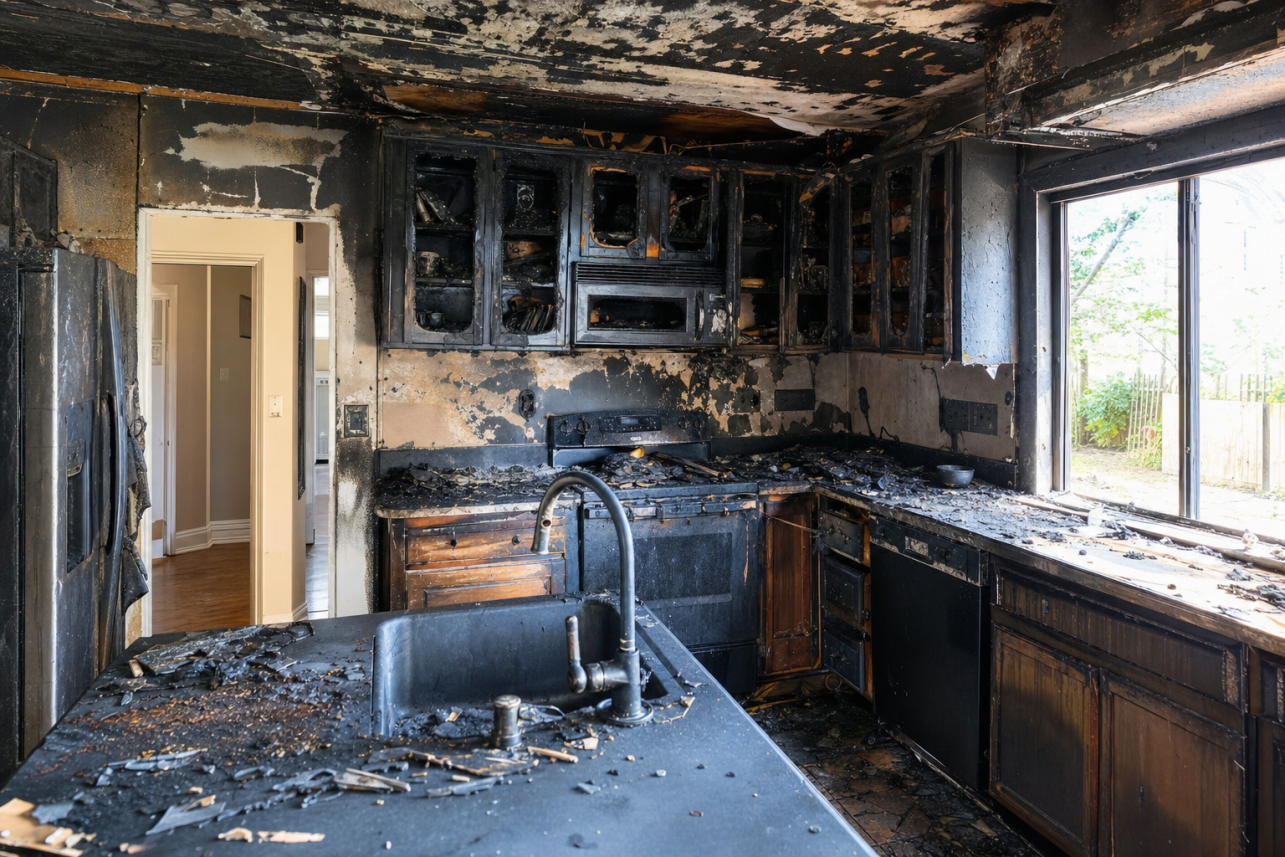
As public adjusters, we read your policy the way the insurance company reads it, then inspect and measure the damage ourselves. That includes the losses homeowners routinely miss: smoke residue rooms away from a kitchen fire, moisture trapped inside walls after a water loss, and personal contents that were damaged but never itemized.
From there we build a complete, documented claim — repair scope, contents inventory, and additional living expenses if you cannot stay in the house — and we handle the back-and-forth with the carrier’s adjuster. We work these files every day across Wake County, including a steady stream of Residential Homeowners Claim Cary files just up the road from Apex.
One thing we will always be honest about: no one can promise a specific dollar outcome, and you should be wary of anyone who does. What we can promise is a thoroughly documented claim presented by professionals who know how these negotiations actually work.
Common Problems
Why Is My Residential Homeowners Claim Apex Payout So Much Lower Than My Contractor’s Estimate?
This is the most common call we get. The insurance company’s adjuster spends an hour at your house, writes a quick estimate, and the check that arrives is thousands short of what any Apex contractor will actually charge.
Often the gap comes from depreciation — the insurer pays the used, aged value of your roof or flooring first, then holds back the rest until repairs are done. Many homeowners never realize they can recover that held-back money. Other times the estimate simply misses damage or uses pricing no local contractor will honor.
We rebuild the estimate line by line, compare it against real repair costs, and push back with documentation. The same underpayment pattern shows up in fire losses too — it is a big part of why homeowners call us for Fire Damage Claim Help in Garner and throughout the county.
My Claim Was Denied Or Keeps Getting Delayed — What Can I Actually Do?
A denial letter is not the end of the road. Insurers deny claims for reasons that are frequently disputable: they call storm damage “wear and tear,” argue the water loss was gradual, or say you missed a reporting deadline. Every denial can be challenged with better evidence and a proper reading of the policy.
Courts have backed policyholders on this. In Bi-Economy Market, Inc. v. Harleysville Insurance Co., New York’s highest court sided with an insured whose building and contents were destroyed by fire, ruling the policyholder could pursue additional damages caused by the insurer’s failure to pay the claim promptly and fully. The lesson is simple: carriers can be held accountable when they drag their feet.
Delays are fought the same way — with a documented proof of loss, written demands, and escalation. If a claim truly cannot be resolved through negotiation, we can coordinate with insurance dispute lawyers, though most files never need to go that far.
Should I Just Handle The Claim Myself, Or Is Hiring A Public Adjuster Worth It?
Some small, straightforward claims settle fine without help. But if the loss is significant — a fire, major water damage, a tree through the roof, vandalism, or suspected arson — you are negotiating against a trained professional whose employer profits by paying less. That is not a fair fight for someone doing it for the first time.
The North Carolina Department of Insurance publishes the NCDOI Public Adjusters Guide explaining exactly this: policyholders have the right to hire their own licensed adjuster to represent them in the claim. When you evaluate one, ask three things — are they licensed in North Carolina, are they bonded, and will they show you their damage documentation before it goes to the carrier.
A good public adjuster does the physical inspection, the contents inventory, the policy analysis, and the negotiation. We handle complex cases across the region, including sensitive files like an Arson Homeowners Claim in Fuquay-Varina, where documentation standards are especially demanding.

Our Process
Policy Review And Full Damage Inspection
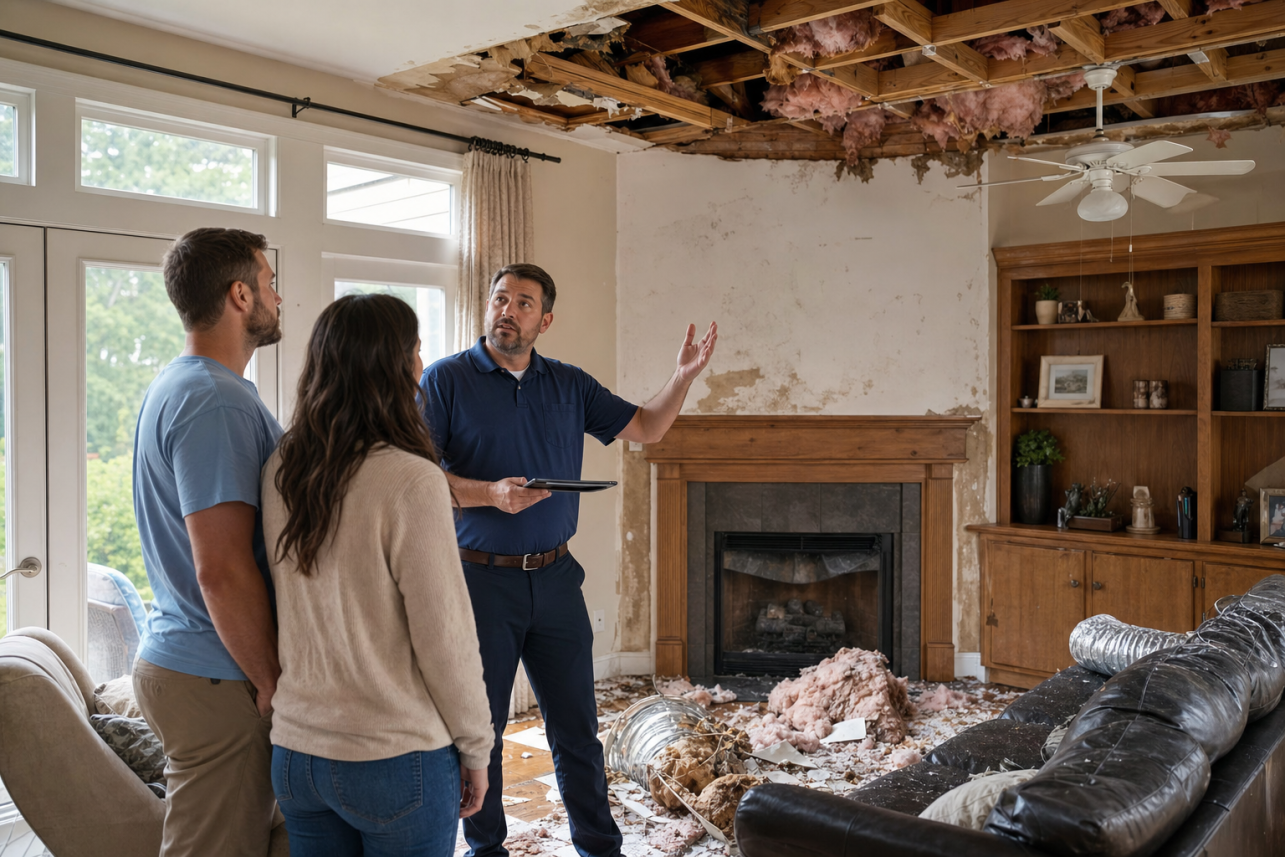
We start by reading your actual policy — coverage limits, deductible, replacement cost versus actual cash value provisions, and any deadlines that apply. Then we inspect the property ourselves, photographing and measuring everything, including hidden damage the carrier’s adjuster may have skipped.
Building The Claim And Proof Of Loss
Next we prepare a detailed repair scope, a room-by-room contents inventory, and the formal proof of loss paperwork your insurer requires. If your home is unlivable, we document your additional living expenses so temporary housing and meals are part of the claim, not out of your pocket.
Negotiation, Supplements, And Settlement
We present the claim, respond to every carrier objection in writing, and negotiate the settlement. If new damage surfaces during repairs — which happens constantly in fire and water losses — we file a supplemental claim rather than letting you absorb the cost. We used exactly this approach on a Fire Damage Insurance Claim Adjuster Rolesville file where the initial estimate missed extensive smoke damage.
| What Happens | Filing on Your Own | With For The Public Adjusters, Inc. |
|---|---|---|
| Damage documentation | You rely on the carrier’s adjuster, who works for the insurance company | Independent inspection with moisture mapping, photos, and a line-item scope built for you |
| Estimate accuracy | Carrier estimates often cover visible damage only | Hidden damage behind walls, under floors, and in attics is tested and included |
| Policy knowledge | You interpret exclusions, depreciation, and code coverage yourself | Licensed, bonded adjusters who read your policy the way courts have interpreted it for policyholders |
| Negotiation | One offer, take it or dispute it alone | Documented supplements, reinspections, and appraisal rights invoked when needed |
| Your time | Weeks of calls, paperwork, and follow-ups | We manage communication with the carrier from start to settlement |
Commonly Overlooked In The Public Adjusting Industry
- Moisture inside wall cavities beyond visible staining — Carrier adjusters often rely on what they can see, and water routinely travels six to ten feet past the last visible stain.
- Matching requirements for continuous flooring, siding, and shingles — Insurers push patch repairs, even though courts in cases like Windridge v. Philadelphia Indemnity have required insurers to replace matching materials on damaged buildings.
- Code upgrade coverage (ordinance or law) — Many Apex homes built before current Wake County code triggers require upgraded electrical, decking, or venting during repairs, and this coverage sits unused because nobody claims it.
- Recoverable depreciation left unclaimed — Homeowners cash the first actual-cash-value check and never realize thousands in withheld depreciation is payable once repairs are made.
- Smoke and soot contamination in rooms far from the fire — Soot migrates through HVAC ductwork into closets and contents rooms away, and quick inspections rarely test beyond the burn area.
- Additional living expense (ALE) benefits during repairs — Policyholders live in a torn-up house for months without knowing their policy would have paid for temporary housing and meals.
- Attic decking and insulation damage after hurricane impacts — Adjusters scope from the ground or the roof surface and skip the attic, where cracked decking and soaked insulation hide.
- The line between covered water damage and NFIP flood claims — Rising water falls under separate flood policies governed by FEMA and NFIP rules, and misfiling under the wrong policy can sink an otherwise valid claim.
Case Studies
Case Study #1
Situation: A family in Apex’s Scotts Mill neighborhood came home from a week at the beach to find a second-floor supply line had failed, sending water through the master bath, hallway, and into the kitchen ceiling below.
Problem: The carrier’s adjuster spent forty minutes on site, wrote an estimate for drywall patching and carpet cleaning, and issued a payment of roughly $9,400. The offer ignored saturated insulation, buckled hardwoods, and cabinetry that had wicked water at the toe kicks.
Investigation: Our team brought in moisture mapping across every affected room, opened inspection points in the kitchen soffit, and documented elevated readings inside wall cavities the carrier never tested. We also pulled the manufacturer specs on the engineered hardwood to confirm it could not be spot-repaired.
Findings: Hidden saturation extended nearly eight feet beyond the visible staining. The hardwood ran continuously through the kitchen, dining room, and foyer, meaning a patch repair would leave an obvious mismatch. The base cabinets were swollen and delaminating from the inside.
Solution: We prepared a line-item estimate covering full flooring replacement across the continuous run, cabinet replacement, proper drying protocol, and code-required work. We supported the flooring position with case law like Windridge of Naperville Condominium Ass’n v. Philadelphia Indemnity Ins. Co., where the court sided with the insured on replacing undamaged matching materials to restore a uniform appearance after storm damage to buildings.
Outcome: After two rounds of negotiation and a joint reinspection, the claim settled for a figure several times the original offer, enough for the homeowners to complete the repairs the way the damage actually demanded.
Lesson: Water travels far beyond what you can see. If nobody puts a moisture meter in the walls before the first check is written, the first check is almost always wrong.
Case Study #2
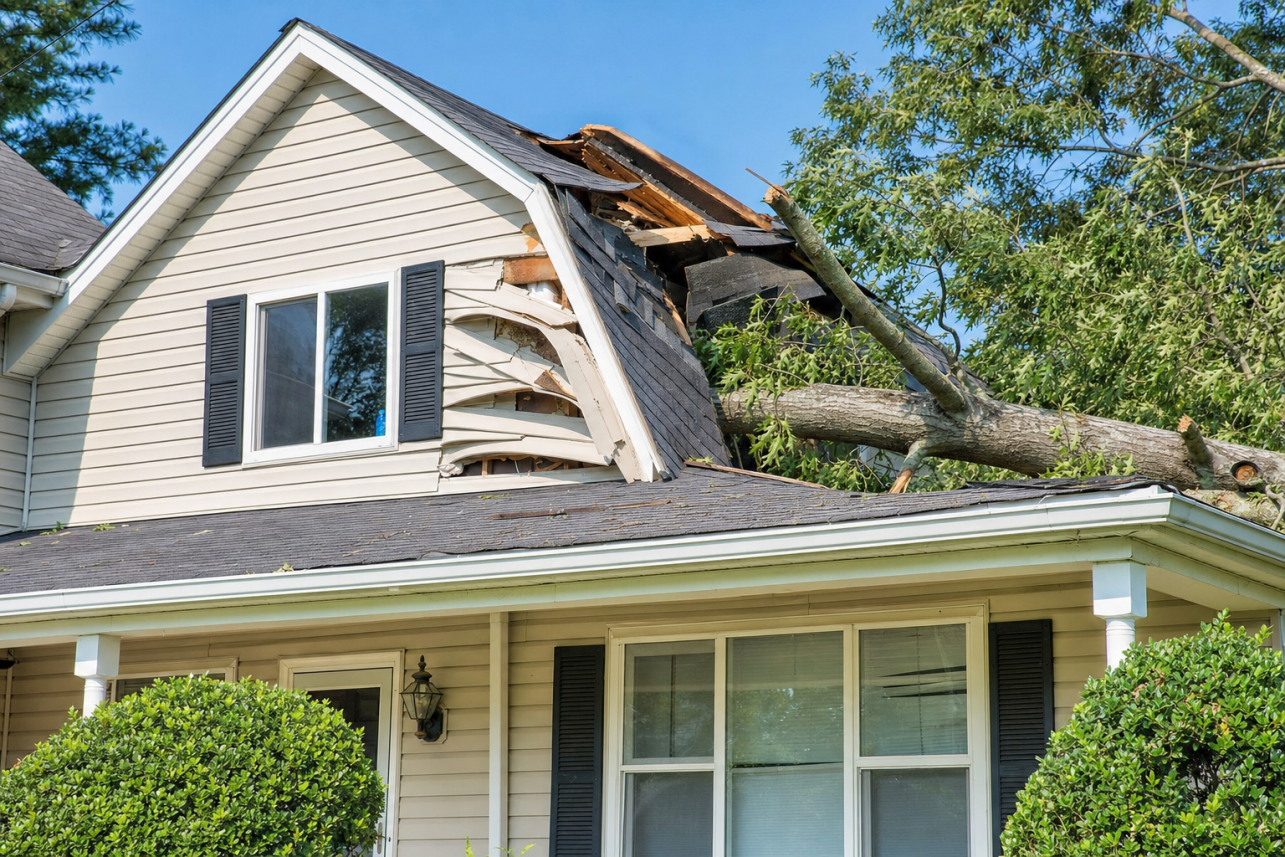
Situation: When the remnants of a hurricane tracked through Wake County, a two-story home off Olive Chapel Road took a large oak limb through the roof deck, with wind-driven rain pouring into the attic and two bedrooms overnight.
Problem: The insurance company approved a roof repair over the impact area only and depreciated the interior work heavily, leaving the owners about $22,000 short of contractor bids. The carrier also denied the wet attic insulation, calling it ‘pre-existing settling.’
Investigation: We photographed the storm path, matched the damage timeline to the National Weather Service hurricane report for the area, and had the decking inspected from inside the attic. We documented fractured decking panels well outside the patch zone and rain staining consistent with a single storm event.
Findings: The impact had cracked structural decking across multiple truss bays, and the shingle line could not be tied into cleanly without replacing the slope. The insulation showed uniform water staining that could not be ‘settling.’ Interior damage extended into the subfloor of one bedroom.
Solution: We rebuilt the claim with a full scope, cited North Carolina appraisal rights when negotiations stalled, and referenced the policyholder-favorable reasoning in Cedar Bluff Townhome Condominium Ass’n v. American Family Mutual Ins. Co., where the Minnesota Supreme Court held the insurer had to replace all siding to achieve a reasonable match after hail damaged the buildings.
Outcome: The carrier reversed the insulation denial, paid for the full slope, and released recoverable depreciation on the interior scope. The homeowners repaired the house without financing the gap themselves.
Lesson: A hurricane doesn’t damage a house in neat rectangles. Scoping only the hole where the limb landed ignores how impact and wind-driven rain actually behave.
| Damage Scenario | First Step at the House | Does a Public Adjuster Typically Help? | Watch Out For |
|---|---|---|---|
| Burst pipe or supply line leak | Shut off the main water valve, photograph everything before cleanup | Yes — hidden saturation is the most underpaid item on water claims | Carriers reclassifying sudden leaks as excluded ‘long-term seepage’ |
| Hurricane or tornado damage | Tarp openings, keep receipts for emergency repairs | Yes — roof decking, matching materials, and interior scope are often shorted | Partial roof approvals that leave mismatched slopes |
| House fire or smoke damage | Do not discard contents until they are inventoried | Yes — contents and smoke remediation are frequently undervalued | Quick settlement offers before the full contents list is complete |
| Flood from rising water | Report to your NFIP flood carrier; review FEMA guidance | Depends — flood claims run through NFIP rules, and we can advise where we’re able to assist | Assuming your homeowners policy covers rising water — it usually doesn’t |
| Hail damage to roof and siding | Get date-stamped photos and note the storm date | Yes — matching and full-slope arguments have court support, as in Cedar Bluff v. American Family | ‘Repair only’ offers that leave visibly mismatched siding or shingles |
| Fallen tree on the structure | Document the tree, the point of impact, and interior leaks immediately | Yes — structural decking and interior water paths are commonly under-scoped | Estimates that patch the hole but ignore cracked framing nearby |
Reviews
Our dishwasher line leaked for who knows how long before we caught it, and the insurance company tried to blame ‘long-term seepage’ and pay almost nothing. For The Public Adjusters documented everything, pushed back on the seepage argument with actual moisture evidence, and the difference in the final settlement paid for our whole kitchen floor. I would never handle a homeowners claim alone again.
Danielle R., Apex
After the tornado warning night in Wake County, we had ceiling damage in two rooms and the adjuster the carrier sent barely looked in the attic. This team found broken decking and wet insulation the first guy missed entirely. They handled every call and email with the insurer so I didn’t have to. Settlement came in far above the original offer.
Marcus T., Apex
House fire in our garage last spring — the smoke damage to our contents was the part the insurance company kept lowballing. They itemized every damaged belonging room by room and knew exactly what our policy owed us for smoke and soot cleanup. Honest about timelines, never overpromised, and the result spoke for itself.
Priya S., Apex
Frequently Asked Questions
What Does A Public Adjuster Do For A Residential Homeowners Claim Apex Homeowners Can File?
When you hire For The Public Adjusters, Inc. to handle a Residential Homeowners Claim Apex property owners face, we work exclusively for you — never the insurance company. That distinction matters, because the adjuster your insurer sends is paid by the carrier and evaluates the loss with the carrier’s interests in mind.
Our role starts with a complete review of your policy so you understand exactly what coverage you purchased, including provisions many homeowners overlook, such as ordinance and law coverage, additional living expenses, and matching requirements for repairs. We then document the damage to your home and contents in detail, prepare a professionally itemized estimate, and negotiate directly with the carrier on your behalf.
Homeowners in Apex neighborhoods like Scotts Mill, Bella Casa, and the older homes near downtown often face losses from kitchen fires, burst pipes, hail, hurricane damage, and tornado damage. Each of these requires different documentation, and carriers frequently miss or undervalue items like smoke residue in HVAC systems, water migration behind walls, or code-upgrade costs Wake County requires during repairs.
We are licensed and bonded, and we handle the paperwork, deadlines, and meetings so you can focus on your family. While no one can promise a specific outcome — and we never do — having a professional advocate levels the playing field with an insurer that adjusts thousands of claims a year. We handle property losses to homes, buildings, and contents; we do not handle claims involving vehicles, cell phones, health, or life insurance.
My Insurance Company Only Wants To Pay For Part Of My Roof Or Siding After Hail Damage. Is That Legal?
Partial payments for matching materials are one of the most common disputes we see on homeowners claims in Apex, and courts have repeatedly sided with policyholders on this issue.
A good example is Windridge of Naperville Condominium Association v. Philadelphia Indemnity Insurance Company (7th Cir. 2019). Hail and storm damage destroyed siding on some sides of the buildings, and the insurer wanted to replace only the damaged panels — even though matching siding was no longer manufactured. The court ruled for the insured, holding that the carrier had to replace the siding on all sides so the buildings would match, because a patchwork repair did not restore the property to its pre-loss condition.
The same logic often applies to Apex homes. If your roof shingles, vinyl siding, or hardwood flooring can’t be matched with new material, a mismatched repair may leave you with a visibly damaged-looking home and reduced value. North Carolina policies frequently contain language, and the Department of Insurance has guidance, that supports replacement of continuous surfaces when a reasonable match isn’t available.
We review your specific policy wording, obtain documentation from suppliers showing the material is discontinued or unmatchable, and present that evidence to the carrier. This is exactly the kind of technical dispute where a Wake County homeowner benefits from professional representation rather than accepting the first estimate. We can never guarantee a particular result, but we can make sure your claim is supported by the strongest possible documentation and precedent.
Does For The Public Adjusters, Inc. Handle Flood Damage Claims For Apex Homes?
Flood losses work differently from standard homeowners claims, and this catches many Apex residents off guard. A typical homeowners policy excludes rising water — flooding from creeks, overwhelmed storm drains, or surface runoff is generally covered only if you carry a separate flood policy through the National Flood Insurance Program (NFIP) or a private flood carrier.
Areas near Beaver Creek, Middle Creek, and low-lying sections of western Wake County can see significant water during hurricanes and heavy summer storms. If you’re unsure whether you’re in a flood zone, FEMA’s Flood Map Service Center at msc.fema.gov lets you look up your address, and FloodSmart.gov (the official NFIP site) explains coverage options and costs.
Here’s where it gets complicated: many losses involve both flood water and other covered causes. A hurricane might push rising water into your crawl space while wind-driven rain enters through a damaged roof. Sorting out which policy pays for which damage requires careful documentation, because the flood carrier and the homeowners carrier will each try to attribute damage to the other’s policy.
We help homeowners document the loss thoroughly, distinguish between causes of damage, and pursue both claims properly. NFIP claims also carry strict deadlines — including a signed, sworn proof of loss typically due within 60 days — that can bar recovery if missed. We’re licensed and bonded, and while we never promise specific dollar amounts, we make sure every covered element of your loss is identified, documented, and presented before those deadlines pass.
How Long Do I Have To File A Residential Homeowners Claim Apex Insurers Will Accept, And Should I Get Help Before Or After Filing?
Most North Carolina homeowners policies require you to give “prompt” notice of a loss, and the standard policy language sets a three-year window to bring legal action, though your specific policy controls. For a Residential Homeowners Claim Apex insurers will process fairly, earlier is almost always better — evidence disappears fast as you clean up, make emergency repairs, and dispose of damaged contents.
The honest answer on timing: involving a public adjuster before you file, or immediately after, usually produces the best documentation. We photograph and inventory damage before demolition, secure moisture readings on water losses, and frame the claim correctly from day one. That said, we regularly help homeowners who filed on their own and received a low offer or an outright denial. Claims can be reopened and supplemented in many situations, so a disappointing first check is not necessarily the end.
Courts have made clear that carriers must honor their contractual obligations. In Salvatore v. Allstate Insurance Company (Connecticut), homeowners whose house suffered structural damage prevailed against their insurer when the court found the loss fell within the policy’s coverage despite the carrier’s denial. Cases like that underscore why documentation and policy analysis matter so much.
If your Apex home has suffered fire, smoke, water, hail, hurricane, or tornado damage, contact us before signing any settlement release. Reviews and consultations cost you nothing to start, and we’re licensed and bonded. We can’t guarantee outcomes — no ethical adjuster can — but we can make certain your claim receives the thorough, professional presentation it deserves.
How Much Does It Cost To Hire For The Public Adjusters, Inc. For A Residential Homeowners Claim Apex Property Owners Need Help With?
We work on a contingency fee basis, which means you pay nothing up front. Our fee is a percentage of the settlement your insurance company actually pays, agreed to in writing before we begin any work on your claim.
If the insurer pays nothing, you owe nothing for our adjusting services. This structure keeps our interests aligned with yours: we only do well when your recovery does well. It also means homeowners in Apex and throughout Wake County can afford professional representation even when money is tight after a loss.
Many families find the fee pays for itself. When a carrier’s estimate misses code-upgrade costs, matching requirements for roofing or siding, hidden water damage behind walls, or a full contents inventory after a fire, the gap between the first offer and a properly documented claim can be substantial. We cannot promise a specific outcome — no honest adjuster can — but we can promise a thorough, professionally documented claim presented under the actual terms of your policy.
For The Public Adjusters, Inc. is licensed and bonded, and our fee agreement complies with North Carolina Department of Insurance regulations. Before you sign anything, we review your policy, discuss the damage, and explain exactly how the fee works for your situation. There are no hidden charges, no hourly billing, and no surprise invoices. Everything is spelled out clearly so you can make an informed decision about your homeowners claim in Apex without pressure.
My Insurance Company Denied Part Of My Water Damage Claim, Saying The Loss Had More Than One Cause. Can That Decision Be Challenged?
Yes, and homeowners have successfully challenged this exact tactic in court. Insurers sometimes deny claims by arguing that a covered cause of loss, like a plumbing failure, combined with an excluded cause, like gradual deterioration, so nothing is owed. Courts have repeatedly pushed back on overly aggressive versions of that argument.
In Sebo v. American Home Assurance Co., the Florida Supreme Court sided with a homeowner whose house suffered severe water damage from multiple concurrent causes. The court held that when a covered peril combines with other causes to produce the loss, the insured could still recover under the policy. The insurer’s attempt to escape payment by pointing to excluded contributing factors failed, and the homeowner won.
While every state applies its own coverage rules, the lesson for Apex homeowners is the same: a partial denial is a starting position, not a final verdict. Policy language, the sequence of events, and the physical evidence all matter enormously.
When we take on a water loss in Apex — a burst supply line, a failed water heater, an overflowing appliance — we document the origin of the damage, distinguish sudden loss from long-term seepage, and hold the carrier to the actual wording of the policy. We photograph and moisture-map affected rooms, inventory damaged contents, and prepare a detailed estimate that includes drying, demolition, rebuild, and code-required upgrades. That level of documentation is often what turns a partial denial into a fair settlement, though results always depend on the facts and the policy.
What Should I Do In The First 48 Hours After A House Fire In Apex, Before The Insurance Adjuster Arrives?
First, make sure everyone is safe and the fire department has cleared the structure for entry. Do not re-enter until officials say it is safe, because smoke, structural weakening, and electrical hazards can linger long after flames are out.
Second, notify your insurance company promptly, but be careful about giving detailed recorded statements before you understand your coverage. Report the basic facts — date, time, and general nature of the loss — and note your claim number.
Third, take reasonable steps to protect the property from further damage, such as boarding openings and tarping roof breaches. Your policy requires this, and reasonable mitigation costs are typically reimbursable, so keep every receipt. Do not throw anything away yet. Smoke-damaged contents, even items that look ruined, are evidence that supports your contents claim.
Fourth, start a simple log: photos and video of every room, a list of damaged belongings, and notes on conversations with the carrier. Fire claims involve structure, contents, smoke and soot contamination, and additional living expenses if your family needs temporary housing in the Apex area — and each category needs its own documentation.
This is also the ideal moment to call a Wake County public adjuster. When we are involved early, we attend the carrier’s inspection, ensure hidden smoke and heat damage inside walls and HVAC systems is examined, and build the contents inventory properly from the start. Early professional documentation prevents the disputes that so often arise when a fire loss is measured only by the insurance company’s own adjuster.
Will Hiring An Apex Public Adjuster Slow Down My Claim Or Make My Insurance Company Treat Me Unfairly?
In our experience, professional representation usually makes a Residential Homeowners Claim Apex families file move more efficiently, not slower. Delays in property claims typically come from incomplete documentation: missing measurements, an incomplete contents list, or an estimate the carrier keeps sending back for revisions. We deliver a complete, professionally prepared claim package, which reduces the back-and-forth that stalls settlements.
Insurance companies deal with public adjusters constantly, and North Carolina law protects your right to hire one. Retaliating against a policyholder for exercising that right would expose the carrier to bad-faith liability. Courts take that duty seriously — in Gaston County Dyeing Machine Co. v. Northfield Insurance Co., the North Carolina Supreme Court ruled in favor of the insured, rejecting the insurers’ narrow reading of what constituted covered property damage. That decision reflects a broader principle in North Carolina: ambiguous policy language is construed in favor of the policyholder, not the carrier.
What actually changes when we get involved is the balance of expertise. The insurance company already has trained adjusters working its side of the file. We put an equally experienced, licensed and bonded advocate on yours, reviewing every coverage, exclusion, and endorsement in your policy.
We handle fire, smoke, lightning, hail, water, theft, and hurricane or tornado damage to homes throughout Apex and Wake County. We do not handle auto, health, life, or cell phone claims. If your loss involves flooding, that falls under separate flood coverage through the National Flood Insurance Program, and FEMA’s floodsmart.gov is a helpful resource for understanding those policies.
Can For The Public Adjusters, Inc. Reopen An Underpaid Residential Homeowners Claim Apex Insurers Have Already Closed?
In many situations, yes. A closed file does not always mean a final file. If your policy is still within its contractual time limits and new or overlooked damage can be documented, a supplemental claim can often be submitted for review.
We start by reading your policy line by line, then comparing the carrier’s estimate against what it actually costs to repair a home in Apex and the surrounding Wake County market. Underpayments frequently hide in missed line items — undersized drywall quantities, no allowance for matching finishes, skipped code-upgrade coverage, or contents that were never inventoried.
Courts have long held insurers to the full measure of the loss. In Lammert v. Auto-Owners (Mutual) Insurance Co. (Tennessee Supreme Court, 2019), homeowners challenged their insurer for depreciating the cost of labor when calculating payment for storm-damaged homes, and the court sided with the policyholders, ruling labor could not be depreciated under those policies. Cases like that show that an insurer’s first number is not always the right number.
We are licensed and bonded, and we cannot promise a specific dollar outcome — no honest adjuster can. What we can do is build a documented, itemized case for what your policy actually owes and negotiate it professionally. If you suspect your settlement came up short, bring us the estimate and the denial or payment letters, and we will tell you plainly whether a supplement is worth pursuing.
What Is The Difference Between Actual Cash Value And Replacement Cost On My Apex Homeowners Policy, And Why Does My Check Seem So Small?
Actual cash value (ACV) is the cost to replace damaged property minus depreciation for age and wear. Replacement cost value (RCV) is the full cost to repair or replace with materials of like kind and quality, without that deduction. Most replacement-cost policies pay ACV first, then release the withheld depreciation after repairs are completed and documented.
That first ACV check is often where homeowners in Apex get discouraged. A fifteen-year-old roof or older kitchen cabinets can be depreciated heavily, and if you never submit proof of completed repairs, the carrier keeps the recoverable depreciation. We track those deadlines and paperwork so that money is not left behind.
How depreciation is calculated matters too. In Hicks v. State Farm Fire & Casualty Co. (U.S. Court of Appeals, Sixth Circuit, 2018), homeowners argued their insurer improperly depreciated labor costs — not just materials — when paying ACV on damaged dwellings, and the court ruled in the policyholders’ favor, holding labor should not have been depreciated. If your estimate depreciates labor, tarping, or debris removal, that deserves a hard look.
When our Apex team reviews a claim, we audit every line: the unit pricing, the depreciation percentages, what was classified as non-recoverable, and whether code-upgrade coverage was applied. We make no guarantees about outcomes, but we make sure the math is done according to your policy, not according to what is cheapest for the carrier.
Does For The Public Adjusters, Inc. Handle Hurricane And Tornado Damage Claims For Homes In Apex And Wake County?
Yes. Hurricane and tornado losses are among the most complex claims a homeowner in this area will ever face. When remnants of a hurricane track through central North Carolina or a tornado touches down in Wake County, the damage often combines torn roofing, structural racking, water intrusion through breached openings, and widespread contents losses — each of which the carrier may try to value separately or attribute to excluded causes.
A Residential Homeowners Claim Apex families file after a tornado or hurricane deserves a complete inspection, not a twenty-minute walkthrough. We document everything: roof decking and fastener damage, interior moisture readings, damaged insulation, and a room-by-room contents inventory with photographs. That evidence becomes the backbone of the negotiation.
Storm claims also raise causation disputes, because hurricanes bring both wind and water. If rising water or flooding contributed to your loss, that portion typically falls under a separate flood policy through the National Flood Insurance Program rather than your homeowners policy. We can help you sort out which policy responds to which damage, and resources at FEMA.gov and FloodSmart.gov (the official NFIP site) explain flood coverage in detail.
One practical tip: after a major storm, do not sign an assignment of benefits with a door-knocking contractor before understanding your claim. As licensed and bonded adjusters working only for you, we cannot guarantee any particular settlement, but we can make certain your storm loss is measured completely and presented properly.
Are There Insurance Claims For The Public Adjusters, Inc. Will Not Handle For Apex Homeowners?
Yes, and we believe in being upfront about it. Our practice is focused entirely on property losses — homes, other residential buildings, and the contents inside them. That includes fire and smoke, lightning, water damage from burst pipes or appliance failures, hail, hurricane and tornado damage, theft, vandalism, and similar covered perils under a homeowners policy.
We do not handle claims involving cell phones or other mobile-device protection plans, motor vehicles, health insurance, or life insurance. Those fall under entirely different policy types and regulatory rules, and homeowners are better served by specialists in those fields. If your loss touches one of those areas — say, a car damaged in the same fire that damaged your garage — we handle the structure and contents portion while you pursue the vehicle through your auto carrier.
For flood losses, we can assist with the property side, and we always point homeowners to the official resources at FEMA and the National Flood Insurance Program so you understand how flood coverage differs from your standard policy.
Within our lane, we go deep. Whether it is a kitchen fire off Salem Street or storm damage in a neighborhood near Apex Community Park, we measure the loss ourselves rather than accepting the carrier’s numbers at face value. Policyholders have prevailed when they pushed back — in Sproull v. State Farm Fire & Casualty Co. (Illinois Supreme Court, 2021), homeowners won a ruling that their insurer could not depreciate labor in actual cash value payments on building damage. We are licensed and bonded, we work only for you, and while we never promise a specific result, we commit to pursuing every dollar your policy legitimately owes.
How Does For The Public Adjusters, Inc. Document A Residential Homeowners Claim Apex Families Need To Prove?
Documentation is where most homeowner claims are won or lost, so we treat it as the foundation of every file we build. Our licensed adjusters start with a full inspection of your home, photographing and measuring every affected area, including spots the insurance company’s adjuster may have skipped, like attic decking, wall cavities, and crawl spaces.
For water and fire losses, we use moisture meters, thermal imaging, and detailed scope notes to establish exactly how far damage traveled through the structure. Hidden saturation behind drywall or under hardwood flooring is one of the most commonly missed items in Wake County homes, and it can add thousands of dollars in legitimate repair costs.
We then prepare a line-item repair estimate using the same professional estimating software insurance carriers use, priced to current labor and material costs in the Apex and Triangle market rather than outdated regional averages. For personal property, we walk you through a room-by-room contents inventory, documenting brand, age, and replacement cost so nothing is lumped into a vague lump-sum figure.
Finally, we organize everything into a demand package with policy citations showing exactly which coverage applies to each item. Insurers respond differently when a claim arrives fully documented and professionally presented. While no one can promise a specific outcome, thorough documentation removes the easy excuses carriers use to underpay, and it gives your claim the strongest possible footing from day one.
What Happens If My Insurer’s Estimate Is Far Lower Than My Contractor’s Bid To Repair My Apex Home?
A large gap between the insurance company’s estimate and a real contractor’s bid is one of the most common problems Apex homeowners bring to us, and it is almost never a reason to give up. The carrier’s first estimate is a starting position, not a final word.
Our team compares the two documents line by line. Common shortfalls include missing trades entirely, using below-market labor rates, omitting code-required upgrades, and improperly depreciating labor. Courts have pushed back on that last practice: in Lammert v. Auto-Owners Insurance Co. (Tennessee Supreme Court, 2019), homeowners whose houses were damaged by hail challenged the insurer’s practice of depreciating labor costs when calculating actual cash value, and the court sided with the policyholders, ruling that labor could not be depreciated under their policies.
Once we identify what the carrier missed or undercut, we submit a documented supplement with photos, measurements, and pricing support. If the insurer still refuses to move, most homeowner policies contain an appraisal clause, a formal dispute process where each side selects an appraiser and disagreements go to a neutral umpire. We can guide you through invoking that right.
We never guarantee a specific dollar result, because every policy and loss is different. What we can do is make sure your Apex claim reflects the true cost of putting your home back the way it was, using the same evidence and pricing standards insurers respect.
Does My Homeowners Policy Cover Smoke, Soot, And Contents Damage After A Kitchen Fire, And How Are My Belongings Valued?
Yes. Most homeowners policies cover not only the burned area but also smoke and soot damage that spreads through the house, along with damage to your personal property. Contents are often the most underpaid portion of a Residential Homeowners Claim Apex families file after a fire, largely because homeowners rarely realize how much documentation the carrier expects.
Smoke and soot travel through HVAC systems and settle on surfaces far from the flames. Clothing, upholstery, electronics, and even items inside closed cabinets can absorb odor and corrosive residue. We inspect every room, not just the kitchen, and document contamination the insurance company’s adjuster may dismiss as minor.
For your belongings, the carrier will typically ask for a contents inventory listing each item, its age, and its replacement cost. Doing this alone after a fire is overwhelming, and rushed inventories almost always leave money on the table. Our adjusters help you reconstruct the inventory methodically, using photos, receipts, bank statements, and room-by-room walkthroughs.
Pay attention to whether your policy pays replacement cost or actual cash value on contents, because that difference dramatically affects your check. Many policies pay depreciated value first and release the balance only after you replace the items, a step insurers do not always explain clearly.
For The Public Adjusters, Inc. handles fire and smoke losses throughout Apex and Wake County, and we build the contents claim with the same rigor we apply to the structure itself.
Is For The Public Adjusters, Inc. Licensed To Handle Homeowner Claims In Apex, And How Do I Verify That?
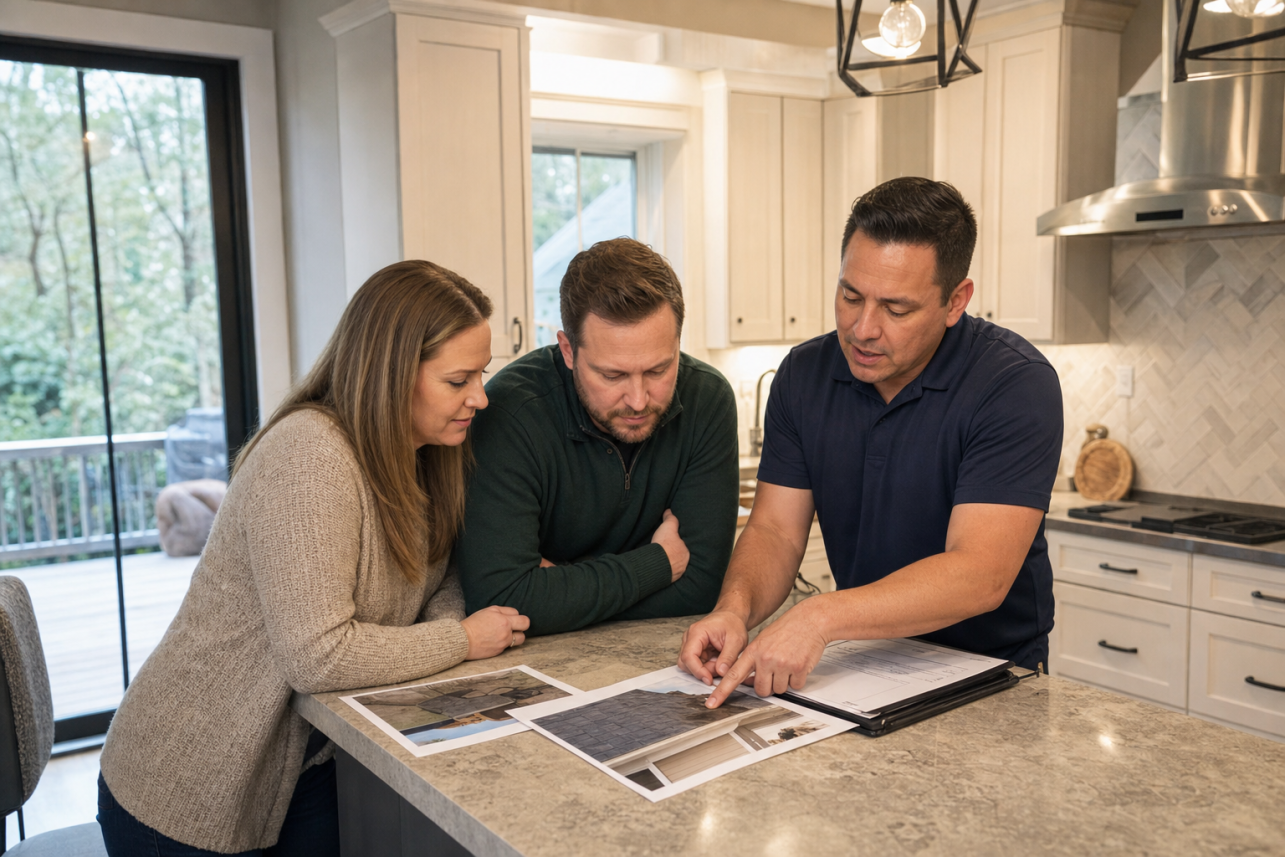
Yes. For The Public Adjusters, Inc. is licensed and bonded to represent policyholders in North Carolina, including homeowners throughout Apex and Wake County. Licensing matters because North Carolina law restricts who may negotiate an insurance claim on your behalf. Contractors, roofers, and restoration companies are not permitted to negotiate your settlement, no matter how well-intentioned they are.
Verifying a public adjuster’s license is straightforward. The North Carolina Department of Insurance maintains a public licensee lookup on its website where you can confirm any adjuster’s license status before signing anything. We encourage every homeowner to check, whether they hire us or anyone else. A legitimate professional will never hesitate to provide a license number.
Bonding adds another layer of protection. It means a financial guarantee stands behind our conduct, which is a safeguard unlicensed operators simply cannot offer. After major storms, out-of-state solicitors sometimes canvass Triangle neighborhoods, so this verification step protects you from claim-related scams.
One clarification about our scope: we represent homeowners on losses to homes, other structures, and personal contents. We do not handle claims involving motor vehicles, cell phones, health insurance, or life insurance. If your loss involves damage to your house or belongings from fire, water, hail, hurricane, tornado, theft, or similar perils, that is exactly the work our Apex adjusters are trained and licensed to do, and we are glad to review your situation at no obligation.
Local Relevance
Apex sits in the middle of one of the fastest-growing corridors in Wake County, which means the housing stock runs from older homes near the historic downtown to entire neighborhoods built in the last two decades. Both come with claim headaches: older homes hide plumbing and electrical issues that complicate fire and water claims, while newer builder-grade construction can conceal moisture problems behind fresh drywall.
The climate does not help. Central North Carolina summers bring intense thunderstorms and heavy downpours, and hurricane remnants tracking inland have historically dropped damaging rain and spawned tornadoes across the Triangle. Tree damage claims are a regular part of our work here — mature pines and hardwoods come down on roofs, fences, and vehicles’ garages during these events.
One warning we give every Apex homeowner: standard homeowners policies do not cover rising water. The Federal Emergency Management Agency oversees the separate flood insurance program, and if stormwater entered your home from the ground up, that claim runs through a flood policy — a distinction that trips up many families after a big storm. We help homeowners sort out which policy applies and pursue both when needed.
We serve all of Apex and the surrounding towns, and homeowners who found us as a Public Adjuster Cary NC resource frequently refer their Apex neighbors to us after a loss.
Because so much of Apex was built during the region’s rapid growth of the past twenty years, many homes share the same builder-grade roofing, siding, and plumbing components — so when a severe thunderstorm or a failed supply line hits, the damage often extends into wall cavities and crawlspaces where a quick carrier inspection tends to miss it. Insisting on moisture readings and a full scope before accepting any settlement is especially worthwhile here.
Underpaid, Denied, Or Stuck? Let’s Look At Your Claim Together
Before you accept a settlement that feels too low — or give up on a denial — have a licensed, bonded public adjuster review your policy and your damage at no obligation. For The Public Adjusters, Inc. represents Apex homeowners, not insurance companies, and we will tell you honestly whether your claim is worth pursuing further.
Call us: (919) 400-6440
Helpful Resources
- NCDOI Public Adjusters Guide
- Federal Emergency Management Agency (FEMA)
- FEMA’s National Flood Insurance Program — Official federal flood insurance resource
- North Carolina Department of Insurance — State regulator that licenses public adjusters
Last updated: September 27, 2026