
If a hurricane or tornado damaged your home, a Wind Damage Claim Garner NC is the process of proving that damage to your insurance company and getting paid enough to actually repair it. For The Public Adjusters, Inc. is a licensed and bonded public adjusting firm that represents you — the policyholder — not the carrier. We inspect the damage, document it, price the repairs, and negotiate directly with your insurer so you aren't left accepting whatever number their adjuster writes.
What This Service Is
When hurricane winds or a tornado hit Garner, the insurance company sends its own adjuster to decide what it owes you. That adjuster works for the carrier. A public adjuster works only for you, and that single difference changes everything about how the claim unfolds.Our role starts with a full review of your homeowners policy — your coverage limits, your windstorm deductible if you have one, and whether your roof is covered at replacement cost or only actual cash value. Many Garner homeowners don't discover that their policy pays depreciated value on an older roof until the check arrives thousands short.
From there we perform a structural inspection, document every opening where wind-driven rain got in, build a line-by-line repair estimate, and negotiate the settlement. The North Carolina Department of Insurance licenses public adjusters, and its NCDOI Public Adjusters Guide explains exactly what we are permitted to do on your behalf — which includes handling the entire claim from filing through final payment.
We handle hurricane and tornado losses across the Triangle, from Garner to a wind damage claim in Cary NC on the other side of the county. The storm systems are the same; the fights with the carriers are remarkably similar too.
Common Problems
Why Is The Insurance Check So Much Smaller Than The Repair Quotes?
This is the most common call we get after a storm. The carrier's estimate pays for patching a slope; your roofer says the whole roof needs replacing. The gap usually comes from depreciation deductions, software pricing that doesn't match real Wake County contractor costs, and missed items like decking, flashing, gutters, and interior water staining from wind-driven rain.Your windstorm deductible also matters more than people expect. Some policies carry a separate, percentage-based deductible for wind, so a claim that looks covered can net far less than you assumed. We read the policy first so there are no surprises, then rebuild the estimate so nothing the storm actually damaged gets left off. We never guarantee a specific outcome — no honest adjuster can — but we make sure the claim is valued on complete, documented scope rather than a twenty-minute drive-by.
What If My Wind Damage Claim Garner NC Gets Denied As Wear And Tear?
A denial letter blaming "age" or "maintenance" is not the end of the road. Carriers lean on wear-and-tear language hardest when a roof is fifteen to twenty-five years old — exactly the age of much of Garner's housing stock. The counter is evidence: storm dates, wind reports, creased and lifted shingles, and a clear causation argument tying the damage to a specific hurricane or tornado event.Courts have backed policyholders who push back. In Corban v. United Services Automobile Association, the Mississippi Supreme Court sided with homeowners after Hurricane Katrina, holding that wind damage the storm caused to their home was covered and could not be wiped out by the carrier's causation arguments. The lesson travels well: when the evidence shows wind did the damage, the insurer owes the claim.
We also reopen underpaid claims and file supplemental claims when damage shows up after the first check — something we've done repeatedly on storm losses like a wind damage claim in Apex NC where hidden decking rot wasn't found until the roofer opened the roof.
Should I Just Handle It Myself, Or Hire A Wind Damage Public Adjuster?
Plenty of homeowners start on their own, and for a small, clean loss that can work. The problems show up when the claim gets denied, delayed, or lowballed — because at that point you're negotiating against a professional adjuster using your own photos and your own words against you.A good public adjuster earns their fee by finding covered damage the carrier's inspection missed, pricing it correctly, and handling the back-and-forth so deadlines don't slip. When you're vetting one, check the license with the state, confirm they're bonded, and ask specifically about hurricane and tornado roof claims — not just fire or water.
We're licensed and bonded, we only represent policyholders, and wind losses are a core part of what we do alongside fire, water, and tree damage claims. If the dispute ever needs to escalate, we also work alongside insurance dispute lawyers — but most claims settle properly long before that step.

Our Process
Policy Review And Free Damage Consultation
We start by reading your homeowners policy the way the carrier will — coverage limits, exclusions, your deductible, and whether you're owed replacement cost or depreciated actual cash value. Then we inspect the property ourselves: roof, siding, windows, fencing, and every interior ceiling or wall where wind-driven rain found a path in. You learn exactly where you stand before anything is filed or signed.
Documentation, Emergency Protection, And The Estimate
Storm claims are won on evidence. We photograph and record everything, tie the damage to the specific storm date, and make sure temporary repairs like tarping are handled and billed to the claim — your policy requires you to protect the home, and those costs are typically reimbursable. Then we build a complete repair estimate using real local pricing, not the carrier's software defaults. This is the same approach our public adjuster Morrisville NC team uses across Wake County, because thorough scope is what moves settlements.
Negotiation And Settlement
We present the claim, meet the carrier's adjuster at the property, and negotiate every disputed line item. If the insurer delays, we push the file forward in writing and hold them to North Carolina's claim-handling rules. If new damage surfaces during repairs, we file the supplemental claim so you aren't paying out of pocket for covered work. Our fee is a percentage of the recovery, so our interests stay aligned with yours from the first inspection to the final check.
| Claim Stage | Handling It Yourself | With For The Public Adjusters, Inc. |
|---|---|---|
| Damage inspection | You rely on the carrier's adjuster, who works for the insurance company and may spend minutes on site | Independent roof-to-foundation inspection focused on hurricane and tornado damage, including hidden structural and moisture issues |
| Estimate preparation | Carrier writes the scope; items like code upgrades, matching materials, and contents are often left out | Complete line-item estimate prepared on your behalf, covering structure, contents, and additional living expenses |
| Causation disputes (wind vs. flood) | Denials citing the flood exclusion often go unchallenged | Documented wind-created openings and legal precedent such as Corban v. USAA, where the policyholders prevailed, used to keep covered wind losses from being mislabeled |
| Negotiation | You negotiate against trained claim professionals with no experience advantage | A licensed and bonded adjuster who advocates only for the policyholder manages every exchange |
| Deadlines and paperwork | Missed proof-of-loss deadlines can jeopardize the claim | All notices, documentation, and sworn statements tracked and submitted on time |
Commonly Overlooked In The Public Adjusting Industry
- Broken shingle seal strips that look intact from the ground — Hurricane winds can break the adhesive bond without tearing shingles off, so a drive-by inspection calls the roof undamaged while it will leak in the next storm.
- Fastener withdrawal in roof decking after tornado uplift — Nails back out under wind suction invisibly from the exterior, and only an attic-side inspection reveals that the decking is no longer secured.
- The matching question for discontinued shingles and siding — Carriers often pay to patch a slope with mismatched materials, and many policyholders never realize the reasonable-match issue can support a larger scope.
- Ordinance and law (code upgrade) coverage — Repairs in Wake County must meet current building code, but carrier estimates frequently price the roof as it was built decades ago.
- Wind-driven rain inside wall cavities — Drywall dries on the surface while insulation stays saturated behind it, so claims get closed before mold and rot show up months later.
- Detached structures, fences, and landscaping line items — Homeowners focus on the house and forget that sheds, fences, and even tree-debris removal often carry their own policy coverage.
- Contents depreciation that is actually recoverable — Many policyholders accept the depreciated contents check without knowing replacement-cost policies let them recover the holdback after replacing items.
- Who bears the burden of proving an exclusion — After hurricanes, insureds accept 'flood exclusion' denials at face value, even though courts like the one in Corban v. USAA — a case the policyholders won — require the insurer to prove the excluded cause.
Case Studies
Case Study #1
Situation: A family on the south side of Garner, off Timber Drive, came to us after the April 2011 tornado outbreak that tore through Wake County. The storm peeled back a section of their roof, snapped a mature oak onto the back porch, and drove rain into two bedrooms.
Problem: Their insurance carrier's adjuster spent less than thirty minutes on site and wrote an estimate for a partial roof patch and some drywall paint. It ignored the broken rafters under the tree impact, the saturated insulation in the attic, and the family's damaged contents in both bedrooms.
Investigation: Our licensed and bonded team performed a full inspection: we got on the roof, pulled attic insulation samples with moisture readings, photographed fractured framing members, and documented every wind-lifted shingle whose adhesive seal had broken even where the shingle itself still sat in place.
Findings: The tornado's winds had compromised the roof system as a whole, not just the visible hole. The decking showed widespread fastener withdrawal, the rafter damage was structural, and moisture mapping showed water migration well beyond the two rooms the carrier had scoped.
Solution: We prepared a complete line-item estimate covering full roof replacement, structural framing repairs, attic insulation, interior finishes in four rooms, a room-by-room contents inventory, and additional living expenses for the time the home was unsafe to occupy. We then presented it to the carrier with the supporting photos, moisture logs, and engineering notes.
Outcome: After reviewing our documentation, the carrier reinspected and issued a revised settlement many times the original estimate, including the structural repairs and the family's displaced-living costs they hadn't known were covered.
Lesson: Tornado damage is rarely limited to what you can see from the driveway. A quick carrier inspection after a Wake County tornado often captures the hole and misses the structure, and the burden of proving the full loss falls on the policyholder unless someone documents it properly.
Case Study #2
Situation: A homeowner near White Oak in Garner called us after Hurricane Florence in 2018. Hurricane-force wind gusts had stripped shingles and ridge caps, and wind-driven rain soaked the ceiling and walls of the living room and kitchen.
Problem: The carrier denied most of the interior damage, labeling it 'flood and surface water,' which the homeowner's policy excluded. The home sits on a slope and no ground water ever entered the house, but the denial letter treated all the water damage the same.
Investigation: We traced every water path from the roof down. Staining patterns started at ceiling level, not the floor. We documented the missing shingles and torn underlayment directly above each interior stain and pulled weather data showing sustained hurricane winds in Garner during the storm.
Findings: The water entered through wind-created openings in the roof, which is a covered wind peril, not excluded flood. We cited Corban v. United Services Automobile Association, 20 So. 3d 601 (Miss. 2009), where the court sided with the policyholders after Hurricane Katrina and held that the insurer bears the burden of proving a loss falls under the flood exclusion, and that wind damage remains covered even when water is also involved.
Solution: We submitted a rebuttal package separating the wind-caused damage from any alleged flood cause, supported by the photographs, the weather records, and the causation analysis. We also advised the homeowner that true ground-level flood risk in their neighborhood should be addressed separately through the National Flood Insurance Program at floodsmart.gov and FEMA resources at fema.gov, since standard homeowner policies exclude rising water.
Outcome: The carrier reversed its denial on the interior damage and paid for the roof, ceilings, walls, flooring, and damaged furniture as a covered windstorm loss.
Lesson: During a hurricane, carriers sometimes lump all water damage under the flood exclusion. Courts like the one in Corban have made clear that the insurer, not the homeowner, must prove an exclusion applies — but you still have to build the causation record that forces that question.
| Your Situation | What the Outcome Usually Depends On | Smart Next Step |
|---|---|---|
| Shingles missing or lifted after a hurricane | Whether the full roof system (seals, underlayment, decking) was compromised, not just the visible shingles | Get a roof-level inspection before accepting a repair-only estimate |
| Tree fell on the house or garage | Hidden framing and rafter damage beneath the impact point | Have the structure opened up and documented before the carrier closes the scope |
| Ceiling or wall stains after storm winds | Proving the water entered through a wind-created opening rather than excluded rising water | Photograph the exterior opening above every stain and keep weather records from the storm date |
| Carrier denied the claim citing the flood exclusion | Who carries the burden of proof on causation — courts in cases like Corban v. USAA placed it on the insurer | Request the denial in writing and have an independent causation review done |
| Settlement offer feels too low | Whether matching, code-upgrade, contents, and living-expense items were included in the estimate | Compare the carrier's scope line by line against an independent estimate before cashing checks |
| Ground water also entered during the storm | Flood is excluded under standard homeowner policies and handled separately | Check NFIP coverage at floodsmart.gov and FEMA disaster resources at fema.gov while the wind portion is pursued under your homeowner policy |
| Home is unsafe to live in | Additional living expense coverage limits and documentation of displacement costs | Save every lodging, meal, and mileage receipt from day one |


Reviews
After a tornado warning turned real and we lost half our roof, our carrier offered barely enough to tarp it. For The Public Adjusters found broken truss plates and soaked insulation the first adjuster never looked at. The revised settlement actually covered a full roof and the two bedrooms underneath it. I would never handle a storm claim alone again.
Marcus T., Garner
Hurricane winds pushed rain through our gable vent and the insurance company called it 'maintenance.' This team proved the vent was damaged by the storm, documented every stain in the attic and hallway, and got the denial overturned. They explained each step and never overpromised, which I appreciated.
Deana R., Van Story Hills area
We filed a Wind Damage Claim Garner NC search at midnight after a hurricane dropped a pine on our garage, and I'm glad we found this company. They inventoried everything in the garage we would have forgotten — tools, a freezer, holiday storage — and handled the back-and-forth with the carrier so we didn't have to.
Phil and Janet W., Garner
Frequently Asked Questions
How Can A Public Adjuster Help With A Wind Damage Claim Garner NC After A Hurricane Or Tornado?
When a hurricane or tornado moves through Wake County, the damage it leaves behind is rarely as simple as a few missing shingles. Uplifted roof decking, creased architectural shingles, racked framing, and wind-driven rain inside wall cavities are easy for a carrier's adjuster to miss or minimize.
For The Public Adjusters, Inc. works only for the policyholder, never the insurance company. We inspect the entire property, document hidden storm damage with photos, moisture readings, and detailed estimates, and prepare the claim in the format carriers require.
Garner has seen this firsthand. The April 16, 2011 tornado outbreak tore through southern Wake County, and hurricanes like Fran and Florence have pushed damaging winds well inland to our area. After events like these, carriers are flooded with claims and fast, low settlements are common.
We review your policy language, identify every coverage that applies — dwelling, other structures, contents, and additional living expenses — and negotiate directly with the insurer on your behalf. We are licensed and bonded in North Carolina. While no one can promise a specific dollar outcome, having an experienced advocate ensures your claim is fully documented and fairly presented rather than settled on the carrier's first offer.
My Insurer Says My Hurricane Damage Was Caused By Flooding, Not Wind. What Are My Options In Garner?
This is one of the most common disputes after a hurricane. Standard homeowners policies cover wind but exclude flood, so some carriers try to attribute as much damage as possible to water rising from below, which shifts the loss off their books.
The courts have pushed back on this tactic. In Corban v. United Services Automobile Association, the Mississippi Supreme Court ruled in favor of homeowners after Hurricane Katrina, holding that the insurer — not the policyholder — bears the burden of proving that excluded flood damage, rather than covered wind damage, caused the loss. That burden-of-proof principle matters enormously when damage causes are mixed.
In practice, winning this argument comes down to evidence. We document wind indicators — directional shingle damage, debris impact, broken windows on the windward side, water intrusion from the roof down rather than the floor up — and we obtain weather data showing recorded wind speeds in the Garner area at the time of the storm.
If part of your loss genuinely was flood-related, that falls under separate flood coverage through the National Flood Insurance Program. You can learn more at FEMA.gov and FloodSmart.gov, the official NFIP site. We handle the wind and storm portion of your homeowners claim and help you keep the two clearly separated.
Has A Homeowner Ever Beaten An Insurance Company In Court Over Hurricane Wind Damage?
Yes, and the results are instructive for anyone dealing with a disputed storm loss. In Dickerson v. Lexington Insurance Co., a New Orleans homeowner sued her insurer after Hurricane Katrina destroyed her house. The carrier argued the home was lost to flooding, which the policy excluded. The jury disagreed, finding that hurricane winds destroyed the home before any floodwater arrived, and awarded the homeowner the policy limits for the dwelling and contents plus penalties for the insurer's bad-faith handling. The Fifth Circuit Court of Appeals upheld the verdict in 2009.
Cases like Dickerson show that carriers do not get the final word on what caused your damage. When the evidence is properly developed — engineering observations, storm timing, wind data, and witness accounts — policyholders can and do prevail.
That said, litigation should be the last resort, not the first. Most disputed hurricane and tornado claims in the Garner area can be resolved through thorough documentation, a well-supported estimate, and firm negotiation, or through the appraisal process built into most policies. Our job is to build your claim so strongly from the start that the carrier has little room to dispute it. No outcome can ever be guaranteed, but a properly documented claim is always in a stronger position than an undocumented one.
How Long Do I Have To File A Wind Damage Claim Garner NC After A Tornado Or Hurricane, And What Should I Do First?
Act quickly. Nearly every homeowners policy requires "prompt notice" of a loss, and in North Carolina, the statute of limitations for suing an insurer for breach of the policy contract is generally three years — though your policy may set shorter internal deadlines for submitting proof of loss. Waiting also gives carriers an opening to argue that damage worsened because you delayed.
Start by making the property safe and preventing further damage, which your policy requires. Tarp the roof, board broken windows, and keep every receipt — reasonable emergency repairs are typically reimbursable. Photograph and video everything before anything is removed or repaired, including damaged contents, from multiple angles.
Do not throw away damaged items until they are documented, and be careful about giving recorded statements or accepting a quick settlement check before the full scope of damage is known. Hidden issues like loosened roof fastening, wet insulation, and water inside wall assemblies often surface weeks later.
For The Public Adjusters, Inc. can step in at any stage — before you file, after a low offer, or after a denial. Bringing us in early on a Wind Damage Claim Garner NC property owners are preparing usually produces the smoothest process, because the claim is documented correctly from day one rather than repaired after the fact.
What Does A Wind Damage Claim Garner NC Typically Cover After A Tornado Or Hurricane Moves Through Wake County?
A wind claim after a tornado or hurricane usually covers far more than the obvious roof damage. On Garner homes we routinely document torn or lifted shingles, bent flashing, damaged ridge vents, cracked siding, broken windows, detached gutters, and fencing or outbuildings flattened by straight-line winds.
Just as important is the hidden damage. Wind-driven rain entering through a compromised roof can soak insulation, drywall, and flooring days before you notice a stain. Your policy's contents coverage can also apply to furniture, electronics, and personal belongings ruined by water intrusion that started with wind damage.
If your home is unsafe to occupy, most homeowner policies include additional living expenses — hotel stays, meals, and temporary housing while repairs are completed. Many Garner homeowners never claim these benefits because no one explains them.
One caution: wind coverage and flood coverage are separate. Rising water from a storm surge or overflowing creek is handled through the National Flood Insurance Program, not your homeowner policy, so visit FEMA.gov or FloodSmart.gov if rising water contributed to your loss. Our role is to identify every wind-related element of your loss, document it properly, and present it under the correct coverages. As licensed and bonded public adjusters, we work only for you — never the insurance company — though no adjuster can promise a specific outcome, since every policy and loss is different.
The Insurance Company Already Sent An Adjuster To My Garner Home — Why Would I Hire My Own?
The adjuster your insurer sends works for the insurance company. A public adjuster works exclusively for you, the policyholder, and that difference matters most in disputed hurricane and tornado claims.
Company adjusters often inspect a wind-damaged roof from the ground or with a quick drone pass, miss creased shingles that have lost their seal, and overlook interior moisture that has not yet surfaced. We perform a full inspection — roof, attic, exterior envelope, interior, and contents — and build the claim with photographs, moisture readings, and line-item estimates the carrier must respond to.
Courts have recognized how high the stakes are when insurers push back on storm claims. In Corban v. United Services Automobile Association (Mississippi Supreme Court, 2009), a homeowner whose house was damaged during Hurricane Katrina fought USAA's attempt to deny wind damage by blaming excluded flooding. The court sided with the policyholder's position, holding that the insurer bears the burden of proving an exclusion applies — the homeowner does not have to disprove it. That principle is powerful for anyone whose carrier is attributing tornado or hurricane damage to an uncovered cause.
Hiring your own adjuster does not guarantee a larger settlement — no honest professional will promise that. What it does guarantee is that someone licensed, bonded, and experienced in Wake County storm losses is reading your policy, measuring your damage, and negotiating on your side rather than the carrier's.
What Documentation Will Strengthen A Hurricane Wind Claim On A Garner Home?
Strong documentation is the backbone of any storm claim, and it starts the moment the weather clears. Photograph and video everything before touching it — the roof from multiple angles, fallen limbs, damaged siding, broken glass, and every affected interior room. Capture wide shots for context and close-ups for detail.
Next, gather weather evidence. The National Weather Service office in Raleigh issues storm reports confirming when a tornado or hurricane-force winds hit Garner, and that official record undercuts any suggestion your damage came from wear and tear rather than the storm. We pull these reports as part of every file we build.
Keep every receipt. Emergency tarping, board-up services, water extraction, hotel nights, and even extra meal costs may be reimbursable, but only if you can prove them. Save damaged contents rather than discarding them when safely possible — carriers frequently ask to inspect items before paying for them.
Finally, locate your full policy, including declarations pages and endorsements. Coverage for ordinance and law upgrades, debris removal, and matching materials often hides in endorsements homeowners never read. If rising water also entered your home, keep that documentation separate, because flood losses go through the NFIP — FEMA's floodsmart.gov explains that process.
We organize all of this into a documented, estimated claim package. No one can promise a particular result, but a thoroughly documented file is consistently harder for a carrier to underpay than a few phone photos and a verbal description.
My Insurer Only Wants To Pay For Part Of My Roof After The Tornado. Can A Wind Damage Claim Garner NC Include Full Replacement When Shingles No Longer Match?
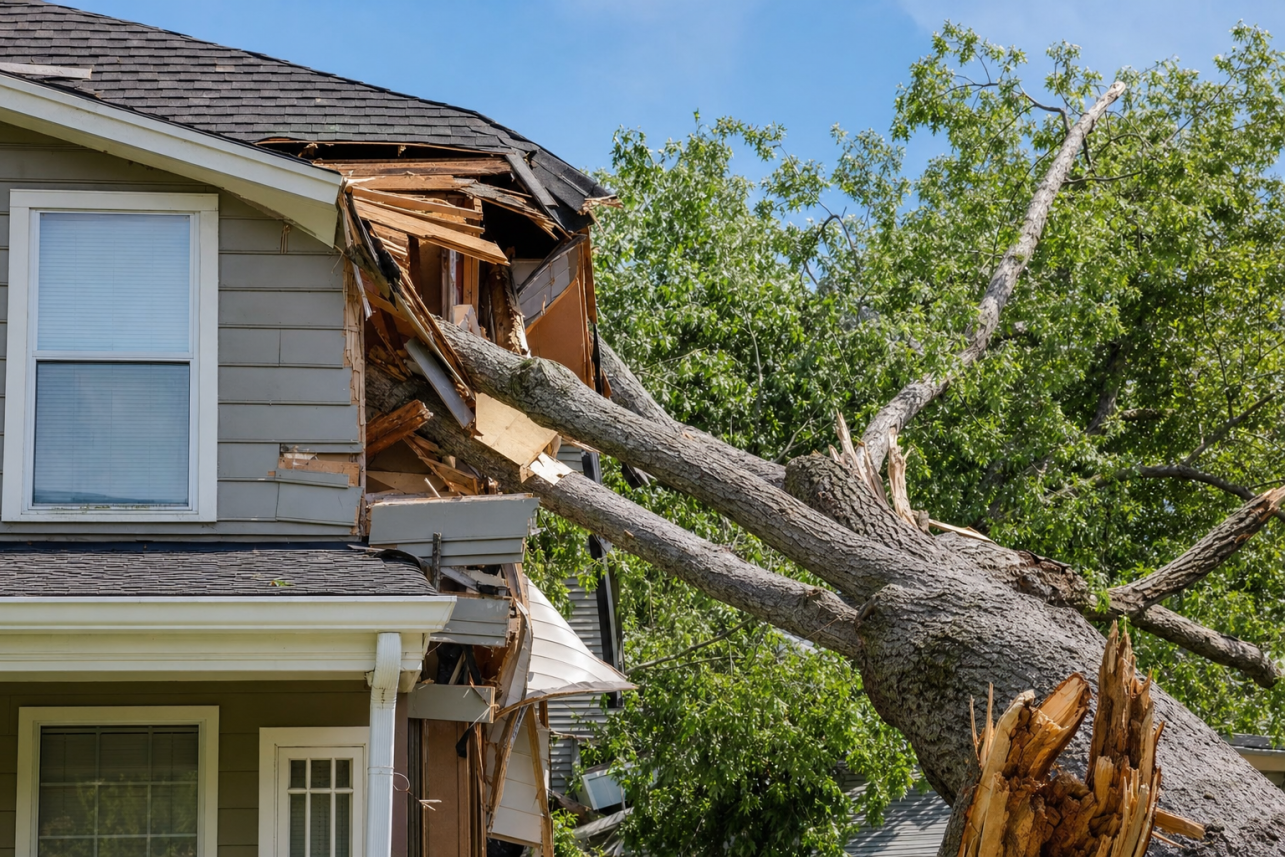
This is one of the most common disputes we handle, and yes — matching is often a legitimate part of a Wind Damage Claim Garner NC. When a tornado or hurricane destroys shingles on one slope, carriers frequently offer to patch that slope alone, even when the original shingles are discontinued or the repaired section will visibly clash with the rest of the roof.
North Carolina does not require homeowners to accept a mismatched repair in every situation. Many policies promise to restore the home to its pre-loss condition, and a two-tone roof arguably fails that standard. Some policies contain matching endorsements; others have limitations. Reading the exact language is step one, and it is something we do on every file.
The technical evidence matters too. Wind-lifted shingles on "undamaged" slopes often have broken adhesive seals that cannot be repaired, which independent inspections and manufacturer repairability guidelines can establish. Discontinued shingle lines can be verified through industry databases, demonstrating that a true match is impossible.
We present this evidence, apply the policy language, and negotiate for the scope the damage actually requires — sometimes a full slope, sometimes the entire roof. We cannot guarantee any carrier will agree to full replacement, and anyone who promises that should raise a red flag. What we can do, as licensed and bonded professionals, is make the strongest documented case your policy and your roof's condition support, and push back when a patch job shortchanges your Garner home.
My Wind Damage Claim Garner NC Was Underpaid Or Denied. Can It Be Reopened?
In most situations, yes. A denial or a low payment is not the final word. North Carolina policies generally allow a claim to be supplemented or reopened while the contractual limitations period is still running, and many underpaid hurricane and tornado claims in Wake County are resolved for significantly more once they are properly re-documented.
The first step is a full review of the denial letter and the insurer's estimate. Carriers frequently miss hidden damage: lifted shingle seals, cracked roof decking, racked framing, wind-driven rain that soaked insulation and drywall, and damaged contents in attics and upper floors. We inspect the property ourselves, prepare a line-item estimate, and present the supplement with photographs and supporting documentation.
Policyholders have real leverage here. In Broussard v. State Farm Fire & Casualty Co., a Mississippi couple whose home was destroyed during Hurricane Katrina took their insurer to court after the carrier blamed the loss on water rather than wind. The jury found for the homeowners, and the courts affirmed that the insurer bore responsibility for proving which damage its policy excluded. That principle matters in every disputed wind loss.
As licensed and bonded public adjusters, we work only for you, never the insurance company. We cannot promise a specific dollar outcome — no honest adjuster can — but we can make sure every item of hurricane or tornado damage to your Garner home is documented, priced correctly, and presented forcefully before you accept any settlement.
What Does It Cost To Hire A Public Adjuster For A Hurricane Or Tornado Claim In Garner?
For The Public Adjusters, Inc. works on a contingency-fee basis, which means our fee is a percentage of the insurance settlement we help you recover. If there is no recovery, you owe us nothing for the adjusting work. There are no upfront retainers or hourly bills, which matters when a tornado or hurricane has already strained your finances.
The percentage is agreed to in writing before we begin, and North Carolina regulates how public adjusters may contract with policyholders. We are licensed and bonded in the state, and our contract spells out exactly how the fee is calculated so there are no surprises.
Homeowners sometimes worry that paying a fee leaves them with less. In practice, carrier estimates on storm losses in Wake County often omit entire categories of damage — roof decking, siding on multiple elevations, interior water intrusion from wind-driven rain, code-upgrade costs, and additional living expenses while repairs are made. A properly documented claim frequently changes the settlement picture considerably, though we never guarantee any particular result.
The initial consultation and policy review are free. We will look at your declarations page, your damage, and any correspondence from the insurer, then tell you honestly whether professional representation makes sense. If the claim is small and straightforward, we will say so. If it involves disputed causation, depreciation holdbacks, or a lowball roof estimate, that is exactly the kind of Garner wind loss where our involvement earns its keep.
After A Hurricane, Who Has To Prove Whether Wind Or Flooding Destroyed My Garner Home?
This question decides many hurricane claims, because homeowners policies cover wind but exclude flood. When a storm pushes both through a neighborhood, insurers sometimes attribute as much damage as possible to water so they can deny it.
The courts have pushed back. In Corban v. United Services Automobile Association, the Mississippi Supreme Court addressed a Hurricane Katrina loss where the insurer leaned on its water exclusion. The court held that the insured only needs to show a covered windstorm occurred and caused damage; the burden then shifts to the insurance company to prove which portion of the loss falls under an exclusion. The homeowners prevailed on that framework, and the reasoning is persuasive wherever wind and water losses are disputed, including North Carolina.
Practically, that means you should never accept a blanket statement that "this was all flooding." Wind damage often strikes first — shingles peel, decking lifts, windows fail — and wind-driven rain then pours into the structure. That sequence is covered under most Garner homeowners policies even when the carrier calls it a water loss.
If your property genuinely suffered rising-water flooding, that portion belongs to a separate flood policy. We encourage every homeowner near Swift Creek, White Oak Creek, or other low-lying areas of Wake County to review FEMA's National Flood Insurance Program at FloodSmart.gov. We handle the wind side; for true flood losses, your NFIP policy and FEMA resources are the right avenue, and we can help you keep the two claims clearly separated.
Does A Wind Damage Claim Garner NC Cover Interior Water Damage When A Tornado Or Hurricane Opens Up My Roof?
Generally, yes. When tornado or hurricane winds create an opening in the roof, walls, or windows, the rain that enters through that opening is treated as part of the windstorm loss under most North Carolina homeowners policies. A properly prepared Wind Damage Claim Garner NC should therefore include the soaked ceilings, insulation, drywall, flooring, and damaged contents that follow the breach — not just the shingles.
The key is the "opening" requirement. Many policies cover interior water damage only if wind first created an opening in the building envelope. That makes early documentation critical. Photograph the roof breach, the torn siding, or the failed window before emergency repairs cover the evidence, and keep every tarp and board-up receipt, since reasonable temporary protection is typically reimbursable.
Insurers sometimes argue the water came from long-term wear, poor maintenance, or ground flooding instead. We counter that with inspection findings, weather data for the storm date, moisture mapping, and when needed, engineering opinions tying the intrusion to the wind event. Courts have sided with policyholders in these disputes; in Broussard v. State Farm, a jury found the insurer liable for a Katrina home loss the carrier had blamed on excluded water.
If part of your damage truly came from rising water, that piece belongs under a National Flood Insurance Program policy rather than homeowners coverage — FEMA.gov explains how those claims work. We are licensed and bonded, we never guarantee a specific recovery, and our job is to make sure every covered dollar of your storm loss in Garner is actually claimed.
What Is The Difference Between Actual Cash Value And Replacement Cost On A Wind Damage Claim Garner NC After A Tornado?
Actual cash value (ACV) is what your damaged property was worth at the moment the tornado hit — replacement cost minus depreciation for age and wear. Replacement cost value (RCV) is what it actually takes to repair or replace the damage with materials of like kind and quality at today's prices in the Garner market.
Most Wake County homeowners carry replacement cost coverage on the dwelling, but insurers typically pay in two steps. First they issue the ACV amount, holding back the depreciation. Then, once repairs are completed and documented, they release the recoverable depreciation.
This is where many Garner wind claims quietly lose money. If the carrier's estimate uses deflated local pricing, depreciates items too aggressively, or classifies a 12-year-old architectural shingle roof as if it were at the end of its life, both the ACV check and the final payment shrink. Homeowners who never submit proof of completed repairs can also forfeit depreciation they were entitled to recover.
As licensed and bonded public adjusters, we prepare our own line-item estimate using current Wake County labor and material costs, challenge improper depreciation, and track the recoverable depreciation so it is actually requested and documented. We cannot promise a specific dollar outcome on any claim, but we can make sure the valuation method the insurer uses matches what your policy actually says — and that no category of payment is simply left on the table after a tornado or hurricane.
A Tree Came Down On My Roof During A Hurricane — Does My Homeowner's Policy Cover The Damage In Garner?
In most cases, yes. When hurricane-force winds push a tree onto your house, garage, or fence, the resulting damage to the structure is generally covered under the windstorm peril in a standard homeowner's policy. That typically includes the roof repair, structural framing, interior water damage from the opening the tree created, and damaged contents inside the home.
It usually does not matter whose tree it was. If your neighbor's oak lands on your Garner roof during a hurricane, your own policy ordinarily responds first, because wind — not negligence — caused the loss. Your insurer may later pursue the neighbor's carrier only if the tree was demonstrably dead or hazardous beforehand.
Two details trip up a lot of these claims in Wake County. First, debris removal: policies often cap tree removal at a few hundred dollars per tree unless the tree damaged a covered structure, so how the loss is documented matters. Second, emergency tarping and board-up costs are reimbursable mitigation expenses — keep every receipt.
One caution: if the tree fell because floodwater undermined it rather than wind, a flood policy through the National Flood Insurance Program would be the proper avenue, and FEMA resources can help there. Our team handles the wind side of hurricane and tornado losses throughout Garner, documenting the point of impact, the hidden structural damage, and the interior chain of damage so the full scope — not just the visible hole — gets measured and claimed.
Can I Dispute The Insurance Company's Estimate Without Going To Court After Hurricane Damage To My Garner Home?
Yes. Most policies contain an appraisal clause — a built-in dispute process for disagreements over the amount of loss. You name an appraiser, the insurer names one, and the two select a neutral umpire. Agreement by any two sets the amount. For a Wind Damage Claim Garner NC, appraisal often resolves pricing and scope disputes in months rather than the years litigation can take.
Before invoking appraisal, there is usually room to negotiate. A detailed, line-item estimate built on current Wake County pricing, supported by photos, moisture readings, and engineering observations where needed, frequently moves a carrier off a lowball number without any formal proceeding.
It is also worth knowing that policyholders do win when disputes escalate. In Windridge of Naperville Condominium Association v. Philadelphia Indemnity Insurance Co. (7th Cir. 2019), a storm's wind and hail damaged building siding, and the insurer wanted to replace only the directly damaged panels. The court sided with the insured, holding the carrier had to replace siding on all elevations so the buildings were properly restored. Cases like that shape how carriers evaluate wind losses everywhere, including North Carolina.
As licensed and bonded public adjusters, we handle the negotiation and can serve in the appraisal process on behalf of Garner policyholders. We never guarantee a particular result — no honest professional can — but we make sure your position is documented, priced, and argued the way the policy and the evidence support.
Does A Wind Damage Claim Garner NC Include Additional Living Expenses If A Tornado Makes My Home Unlivable?
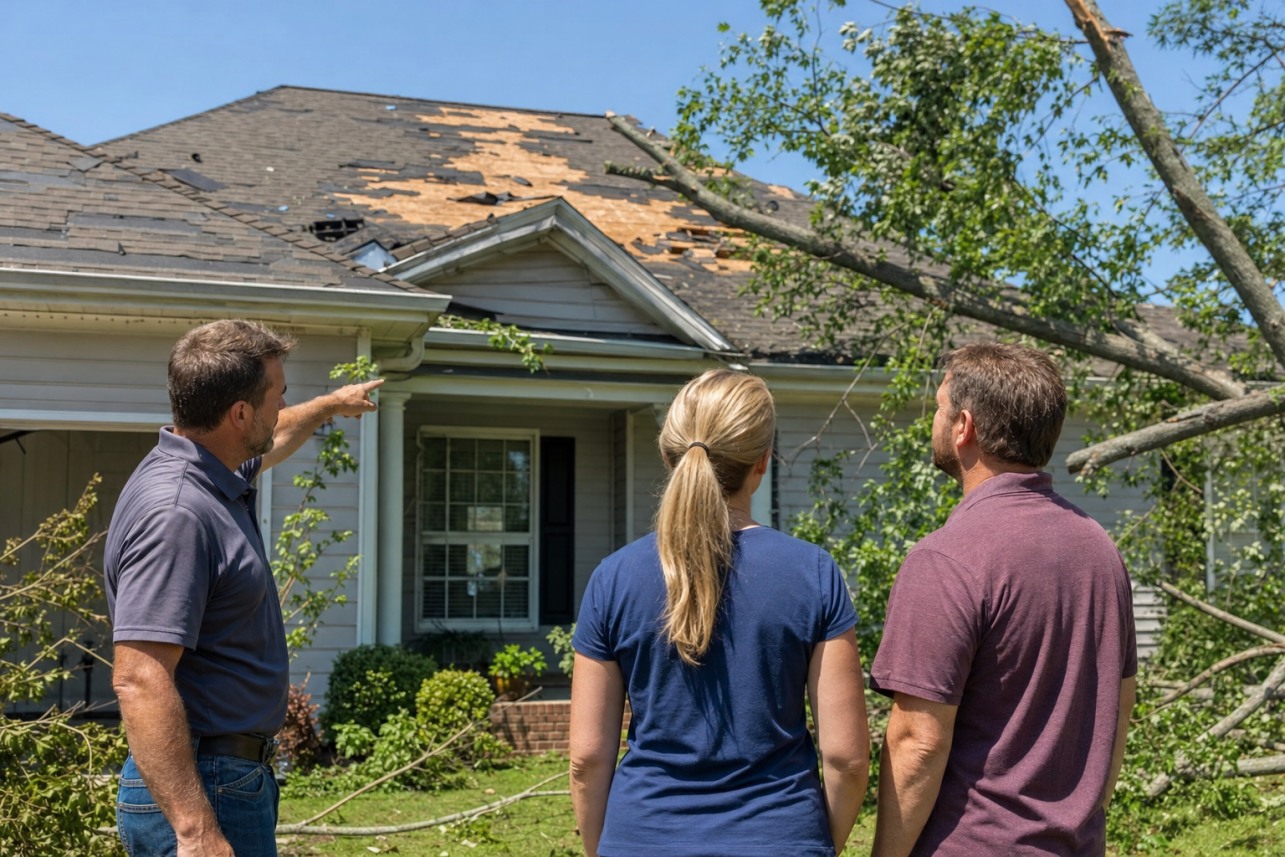
If a tornado or hurricane leaves your home uninhabitable, the additional living expenses (ALE) portion of your homeowner's policy — sometimes called loss of use — generally pays the reasonable increase in your living costs while repairs are underway. That matters because wind events in this part of Wake County can displace families for months when roofs, framing, or electrical systems need major work.
ALE typically covers temporary housing such as a rental or extended-stay hotel near Garner, the difference between your normal grocery bills and restaurant meals, extra commuting mileage, pet boarding, laundry, and storage for salvaged contents. The key word is increase: the carrier pays what displacement adds to your normal cost of living, not your entire budget.
Two things to watch. ALE has limits — usually a percentage of your dwelling coverage or a set number of months — so a slow, understated structural claim can burn through the time limit before repairs even begin. And every expense needs documentation, so keep receipts from day one, including the first night you could not stay in the house.
Note that displacement caused by flooding rather than wind falls under a separate flood policy, and NFIP and FEMA disaster assistance are the right channels for that piece. For the wind side, our Garner team pushes the structural claim forward quickly, tracks your ALE submissions, and makes sure loss-of-use benefits are claimed in full alongside the repair estimate — because the longer the dwelling claim stalls, the more your own living costs are at risk.
Local Relevance
Garner sits squarely in the path of two kinds of wind events: the remnants of Atlantic hurricanes that push inland across eastern North Carolina, and the spring tornadoes and severe thunderstorms that cut through the Triangle. Tracking what the Hurricane Center publishes each season is almost a local habit here, because even a weakened tropical system can strip shingles and drive rain into attics across southern Wake County.The housing stock matters too. A large share of Garner's neighborhoods went up during the late-1990s and 2000s building boom, often with builder-grade shingles and minimal flashing. Those roofs are now at the age where carriers reflexively argue "wear and tear" on every storm claim — which is precisely why documentation of the actual storm event carries so much weight here.
Wind is only part of what Garner homeowners deal with. Falling pines and oaks make tree damage claims common after the same storms, and when disaster strikes indoors our fire damage claim help in Garner covers that side of the house as well. We also handle hurricane and tornado losses in neighboring communities, including a wind damage claim in Chapel Hill NC when the same system tracks west across the Triangle.
Tornado and hail paths through this part of Wake County tend to be remarkably narrow — the April 2011 outbreak totaled roofs on one street while the next block went untouched. So if a neighbor says "nobody else around here filed," that tells you nothing about whether your own roof took a legitimate hit; the evidence on your shingles is what counts.
Storm Damage In Garner? Get A Second Opinion Before You Settle
Whether the carrier denied your claim, cut the check short, or hasn't responded at all, you're entitled to professional representation of your own. For The Public Adjusters, Inc. is licensed and bonded, and the consultation costs you nothing. Let us look at the roof, the policy, and the carrier's estimate before you sign anything.
Call us: (919) 400-6440
Helpful Resources
- NCDOI Public Adjusters Guide
- Hurricane Center
- North Carolina Department of Insurance — State regulator that licenses public adjusters and oversees claim handling
- National Hurricane Center — Official federal source for hurricane tracking and storm history
Last updated: November 19, 2026