A Private Claims Adjuster Apex NC policyholders hire works for you — not the insurance company — to document your loss, prepare the estimate, and negotiate the settlement on your behalf. For The Public Adjusters, Inc. is licensed and bonded in North Carolina and handles fire, water, smoke, tree, flood, and tornado damage claims for Apex homes and businesses. If your claim has been delayed, underpaid, or denied, an independent review of the file is usually the fastest way to find out what you are actually owed under your policy.
What This Service Is
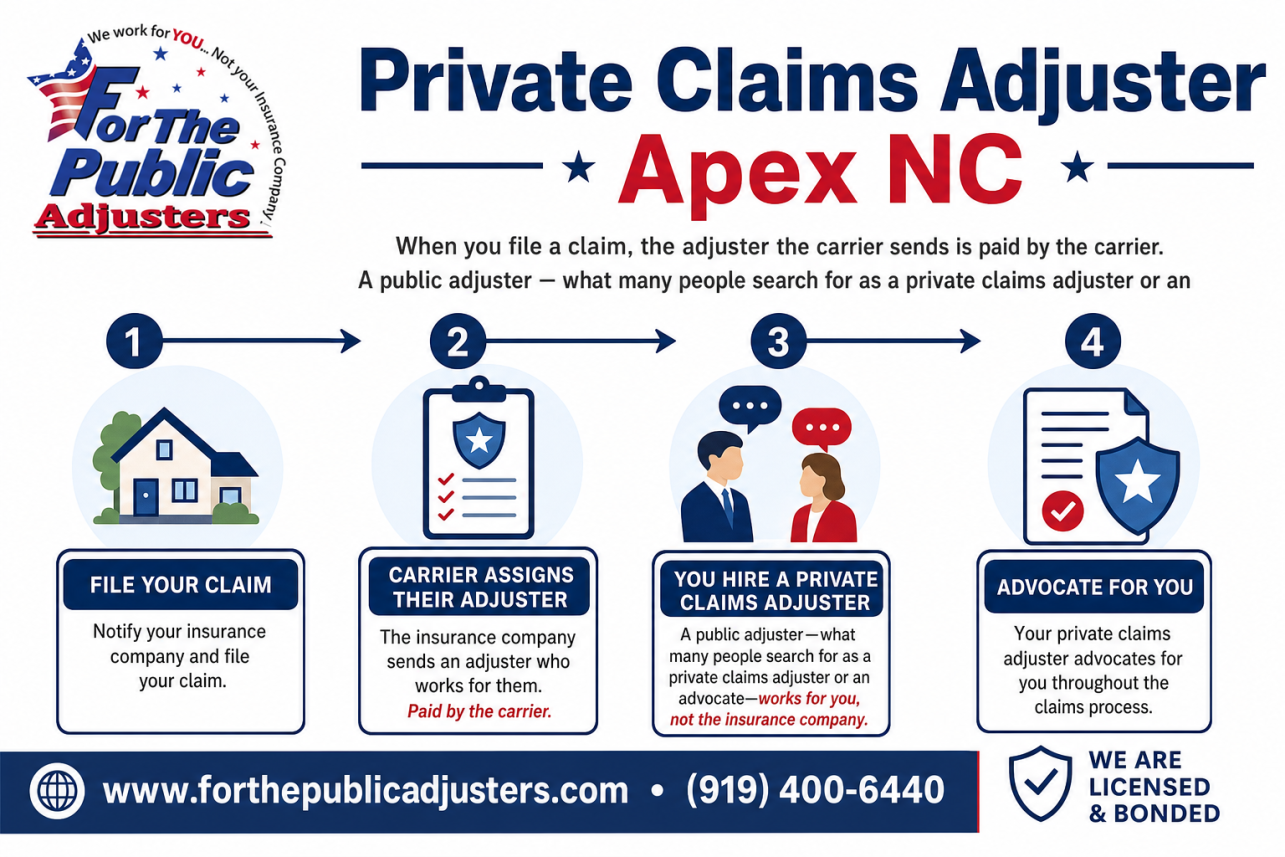
When you file a claim, the adjuster the carrier sends is paid by the carrier. A public adjuster — what many people search for as a private claims adjuster or an independent insurance claims adjuster — flips that arrangement. We represent only the policyholder.
The work is detailed and technical. We read your full policy, including the endorsements most people never see. We photograph and measure the damage, inventory contents, write a line-item repair estimate, and handle every call and letter with the carrier until the claim is resolved.
North Carolina regulates this work closely. The NCDOI Public Adjusters Guide explains that public adjusters must be licensed by the state, and we encourage every Apex homeowner to verify a license before signing anything. We serve policyholders across Wake County, from Apex and Cary to clients who find us searching for a public adjuster in Garner.
One thing we do not do: cell phone, motor vehicle, health, or life insurance claims. Our work is homes, buildings, and the contents inside them.
Common Problems
What Does An Apex Public Adjuster Cost — And Is It Worth It On A Smaller Claim?
Public adjusters in North Carolina typically work on a contingency fee — a percentage of what the claim recovers. There is no hourly bill and no upfront retainer with our firm, so the cost scales with the result.
Is it worth it? That depends on the gap between what the carrier offered and what the repair actually costs. On many Apex claims, the first estimate misses code-upgrade costs, matching issues on discontinued shingles or siding, and hidden moisture damage behind walls. Those omissions often dwarf the fee.
We will tell you honestly if a claim is too small to benefit from representation. We never guarantee a specific outcome — anyone who does is someone to walk away from.
Can A Private Claims Adjuster Apex NC Homeowners Hire Reopen An Underpaid Or Denied Claim?
In many cases, yes. A denial letter or a low settlement check is rarely the end of the road. Policies include appraisal provisions, and North Carolina law allows supplemental claims when new damage or documentation comes to light.
Courts have sided with policyholders in these fights. In Gaston County Dyeing Machine Co. v. Northfield Insurance Co., the North Carolina Supreme Court ruled for the insured in a dispute over whether physical damage to property was covered — a reminder that the carrier's first reading of the policy is not the final word.
We reopen underpaid claims by rebuilding the file: fresh inspections, moisture readings, contractor-grade estimates, and documented storm dates. When a dispute truly hardens into litigation, we work alongside insurance dispute lawyers in Wake Forest and across the Triangle.
Public Insurance Claims Adjuster Vs. Doing It Myself — How Do I Choose?
You can absolutely handle a claim yourself, and for a simple, fairly paid loss you should. The problem is you only find out a claim is complicated after the carrier's number comes in low.
A good public insurance claims adjuster does three things you cannot easily do alone: reads the policy the way carriers read it, writes an estimate in the same software and format carrier adjusters use, and knows which disputes are winnable and which are not.
When you search "public claims adjuster near me," check for three things: a current North Carolina license, bonding, and a fee agreement in plain writing. We carry all three and will show them to you before you sign anything.
Our Process
Free Policy And Claim Review
We start by reading your actual policy — declarations, endorsements, and exclusions — and any correspondence from the carrier. In one sitting you will know what coverage you have, where the carrier's position is weak, and whether representation makes financial sense for your situation.
Full Documentation Of The Loss
We inspect and document everything: photos, measurements, moisture readings, roof and attic conditions, smoke residue, and a room-by-room contents inventory. Hidden damage is where most Apex claims get shortchanged, whether it is water that traveled inside a wall or smoke that migrated through ductwork. We bring the same thoroughness here that we bring to water damage claim help in Bynum and across the region.
Negotiation Through To Settlement
We submit the estimate, meet the carrier's adjuster at the property, and answer every pushback in writing. If the carrier holds at a low number, we invoke the policy's appraisal provision or escalate as needed. You approve every decision; we handle the grind. No settlement is accepted without your sign-off.
| What Happens | Insurance Company's Adjuster | Your Apex Private Claims Adjuster |
|---|---|---|
| Who they work for | Hired and paid by the insurance company | Hired by you; works only for the policyholder |
| Scope of damage | Often limited to what is visible on the first walkthrough | Full inspection including hidden smoke, moisture, and structural damage, with testing when needed |
| Contents inventory | Typically left for the homeowner to complete alone | Room-by-room inventory with photos, pricing, and depreciation documented for you |
| Policy knowledge applied | Interprets coverage from the carrier's perspective | Reads the policy for every coverage that applies — dwelling, contents, additional living expenses, ordinance and law |
| Negotiation | Presents the carrier's number | Prepares a documented counter-estimate and negotiates each line item |
| Dispute options | Rarely volunteers them | Explains proof of loss, appraisal, and other policy rights, and prepares the evidence behind them |
Commonly Overlooked In The Public Adjusting Industry
- Smoke contamination inside HVAC ductwork — Soot hides inside supply and return ducts where nobody looks, then recirculates odor through the home long after repairs are 'done.'
- Matching continuous flooring and roofing — Carriers often pay to patch only the damaged section, even when North Carolina's uniform-appearance standard supports replacing the connected run.
- Ordinance and law (code upgrade) coverage — Older Apex homes often must be rebuilt to current Wake County code, and that extra cost is missed unless someone claims it under the right coverage part.
- Recoverable depreciation on contents — Policyholders accept the depreciated check and never file the paperwork to recover the held-back replacement-cost difference they are owed.
- Additional living expenses beyond the hotel bill — ALE also covers increased food, mileage, pet boarding, and laundry costs, but families rarely track them so the money goes unclaimed.
- Sworn proof of loss deadlines — Many policies set a strict filing window, and missing it can jeopardize an otherwise valid claim before negotiations even start.
- Hail fractures in the shingle mat — Hail bruising can break the fiberglass mat without an obvious surface hole, so it gets labeled 'cosmetic' unless the shingle is flexed and photographed up close.
- Water migration behind baseboards and under cabinets — Surface drying looks complete while trapped moisture in wall cavities and toe-kicks quietly feeds mold that surfaces months later.
Case Studies
Case Study #1
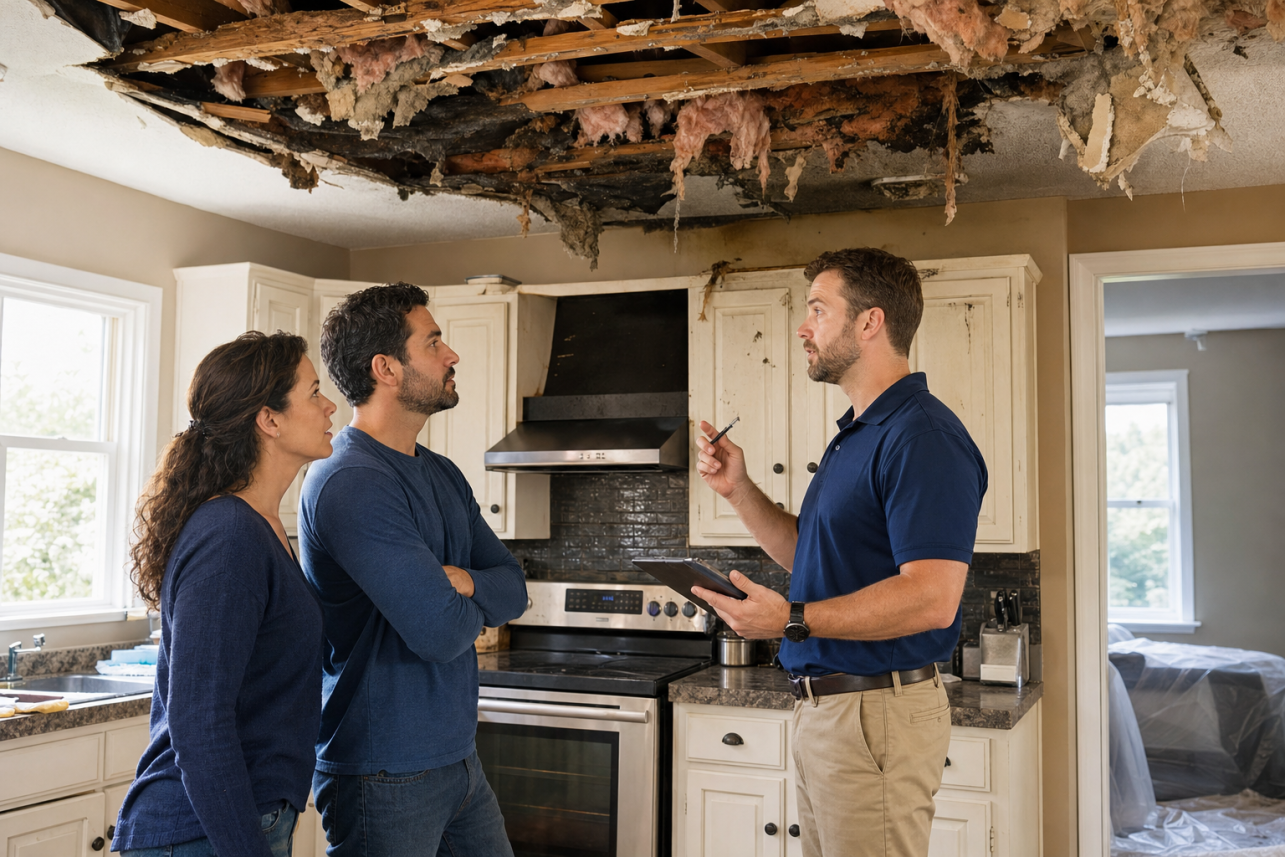
Situation: A family in the Scotts Mill neighborhood of Apex suffered a kitchen fire that started in a range hood. Flames were contained quickly, but smoke moved through the entire two-story home before the fire department cleared the scene.
Problem: The insurance company's staff adjuster scoped the loss as a 'kitchen-only' event. The estimate covered cabinet replacement and repainting two rooms, and it ignored the smoke odor the family could smell upstairs weeks later.
Investigation: Our Apex private claims adjuster brought in a hygienist to take soot wipe samples from the HVAC supply registers, attic insulation, and second-floor closets. We also photographed and inventoried every contents item, from clothing to electronics, room by room.
Findings: Lab results confirmed combustion byproducts throughout the duct system and in upstairs textiles. The policy's dwelling, contents, and additional living expense coverages all applied to damage the original estimate never addressed.
Solution: We prepared a complete line-item estimate including duct cleaning, insulation replacement, whole-home sealing and repainting, contents cleaning or replacement, and temporary housing costs while the work was done. We then presented the documentation package to the carrier and negotiated each disputed line.
Outcome: The carrier reopened the claim and issued payment at several times the original estimate, and the family relocated during repairs with their additional living expenses covered under the policy terms.
Lesson: Insurers sometimes narrow a loss to what is visible on day one. Courts have pushed back on undervalued property claims — in Guessford v. Pennsylvania National Mutual Casualty Ins. Co. (M.D.N.C. 2013), a North Carolina homeowner whose hail-damaged house was repeatedly underpaid was allowed to pursue bad faith and unfair claims practices claims against the insurer, and the carrier ultimately paid far more than its early offers. Documentation is what forces a fair accounting.
Case Study #2
Situation: A homeowner near Beaver Creek in Apex returned from a long weekend to find a second-floor supply line had burst, sending water through the ceiling into the kitchen, hardwood floors, and finished basement.
Problem: The carrier's adjuster attributed part of the damage to 'long-term seepage,' which the policy excluded, and offered a settlement that covered drying fans and a small drywall patch — nothing for the buckled hardwoods or the swollen cabinet boxes.
Investigation: We documented moisture readings on a grid pattern across every affected floor and wall, pulled the failed fitting for inspection, and obtained a plumber's written opinion that the failure was sudden and accidental. We also mapped the water migration path to show it was consistent with a single event, not months of seepage.
Findings: The fitting showed a clean stress fracture, not corrosion. Moisture mapping proved one continuous water path from the burst point, which contradicted the seepage theory entirely. Continuous hardwood flooring also required replacement beyond the wet boards to achieve a uniform match.
Solution: We submitted a sworn proof of loss with the plumber's causation report, the moisture logs, and a full replacement-cost estimate including flooring continuity, cabinet replacement, and basement finishes. When the carrier held its position, we invoked the policy's appraisal provision.
Outcome: Faced with the causation evidence, the carrier withdrew the seepage denial before the appraisal hearing and settled the claim for the full documented scope, including matched hardwood replacement throughout the connected rooms.
Lesson: An exclusion is only as strong as the evidence behind it. One important note: a burst pipe is covered water damage, but rising surface water is flood damage handled under the National Flood Insurance Program — if you have flood losses, start with FEMA.gov and FloodSmart.gov to understand your NFIP coverage.
| Claim Scenario | What Usually Goes Wrong | What It Depends On |
|---|---|---|
| Kitchen or house fire | Smoke and soot in ducts, attics, and upper floors get left out of the estimate | Whether contamination was tested and documented before cleanup erased the evidence |
| Burst pipe or appliance leak | Carrier reclassifies the loss as excluded 'seepage' or limits the drying scope | Proof the failure was sudden, plus moisture mapping of every affected material |
| Hail damage to roof and siding | Damage dismissed as 'cosmetic' or pre-existing wear | Close-up photo documentation, storm-date verification, and shingle mat fracture evidence |
| Tornado or hurricane damage | Partial roof and structural damage underscoped; matching of undamaged sections denied | Full structural inspection and North Carolina's rules on reasonably uniform appearance |
| Smoke damage from a neighbor's fire | Policyholders assume they have no claim because flames never touched their home | Soot testing and odor documentation under your own policy's coverage |
| Flood from rising surface water | Homeowners file under the wrong policy — flood is separate from homeowners insurance | An NFIP flood policy; start with FEMA.gov and FloodSmart.gov to review your flood coverage |
| Vehicle, cell phone, health, or life claims | Not property losses — outside what a property claims adjuster handles | These claim types require different professionals; we focus on homes, buildings, and contents |
Reviews
After our kitchen fire, the insurance company's estimate didn't even cover new cabinets, let alone the smoke smell upstairs. For The Public Adjusters tested our ductwork, inventoried every single item we owned, and handled all the back-and-forth. The final settlement covered duct cleaning, repainting the whole interior, our contents, and the rental we stayed in during repairs. I never would have known half of that was in our policy.
Melissa T., Apex (Scotts Mill area)
A spring hailstorm damaged our roof and the carrier said the shingles only had 'cosmetic' marks. The adjuster from For The Public Adjusters got on the roof, documented the fractured shingle mats with chalk and close-up photos, and compared our storm date against the hail reports for Wake County. The claim was reopened and the roof was replaced under the policy. Professional, patient, and thorough from day one.
David R., Apex, NC
A pipe burst while we were out of town and the insurance company tried to call it long-term seepage. These folks brought moisture meters, got a plumber's report on the broken fitting, and proved it was a sudden break. They even made sure our continuous hardwood was replaced through all the connected rooms instead of a patchwork fix. Worth every penny of their fee.
Karen & Jim L., Apex (near Beaver Creek)
Frequently Asked Questions
What Does A Private Claims Adjuster Apex NC Homeowner Hires Actually Do For My Insurance Claim?
A private claims adjuster — also called a public adjuster — works exclusively for you, the policyholder, never for the insurance company. The adjuster your insurer sends is paid by the carrier, which creates an obvious conflict when it comes time to value your loss.
When you hire For The Public Adjusters, Inc., we read your full policy, document every bit of damage to your Apex home or building, prepare a detailed estimate using the same software insurers use, and negotiate directly with the carrier on your behalf. That includes structural damage, contents inventories, and additional living expenses if you've been displaced.
We handle claims involving fire, smoke, water, hail, hurricanes, tornadoes, and similar property losses throughout Apex and the rest of Wake County. We do not handle claims for cell phones, motor vehicles, health, or life insurance — our work is strictly damage to homes, buildings, and the contents inside them.
Many homeowners in neighborhoods like Scotts Mill, Haddon Hall, and Bella Casa discover their carrier's first estimate missed matching materials, code-upgrade costs, or hidden water damage behind walls. Our job is to find what was missed, document it properly, and pursue what your policy actually owes. We are licensed and bonded in North Carolina.
How Much Does It Cost To Hire A Public Adjuster In Apex, And Is It Worth It?
Most policyholders pay nothing up front. A Private Claims Adjuster Apex NC families rely on typically works on a contingency fee — a percentage of the settlement your insurer pays. North Carolina regulates these fees, and the exact percentage is spelled out in writing before any work begins, so there are no surprises.
Because the fee comes out of the recovery, our interests are aligned with yours: we only do well when your claim is documented and valued properly. We cannot and do not guarantee any specific outcome or dollar amount — no honest adjuster can — but thorough documentation routinely uncovers damage and policy benefits that initial carrier estimates leave out.
Think about what's commonly missed on an Apex claim: code-required upgrades under Wake County permitting, matching siding or roofing discontinued by the manufacturer, smoke residue in HVAC systems after a kitchen fire, or a complete room-by-room contents inventory. Each of those items takes hours of detailed work that most homeowners understandably don't have the time or training to do themselves.
Before you sign anything, we'll review your policy and the damage, explain what we see, and let you decide. You'll know exactly what the fee is and exactly what we'll do to earn it.
Do Policyholders Ever Actually Win When They Push Back Against An Insurance Company?
Yes — North Carolina courts have sided with insureds in significant property-damage disputes. One instructive example is Gaston County Dyeing Machine Co. v. Northfield Insurance Co., 351 N.C. 293 (2000), where the North Carolina Supreme Court ruled in favor of the insured in a dispute over coverage for serious damage to business property. The carrier tried to narrow what the policy covered; the court disagreed, and the policyholder prevailed.
Cases like that underscore a simple truth: an insurer's first position on your claim is an opinion, not a final verdict. Policy language matters, documentation matters, and insureds who push back with evidence often reach a very different result than the one first offered.
Most claims we handle in Apex never need a courtroom. Thorough documentation, a correct reading of the policy, and persistent negotiation resolve the majority of disputes well before litigation becomes necessary. When a claim does require attorneys, our detailed damage files and estimates give counsel a strong foundation to work from.
We can't promise any particular result — no one legitimately can — but we can promise that your claim will be documented and presented the way carriers are required to take seriously. That alone changes the conversation for most Wake County homeowners.
Can Your Apex Adjusters Help With Flood And Hurricane Damage Claims In Wake County?
Yes. Hurricanes are the storms most likely to cause widespread damage in Apex — remnants of systems like Fran and Florence have brought flooding, fallen trees, and roof damage across Wake County — and tornado damage, while less frequent, can be devastating when it strikes. We handle both.
Hurricane and tornado claims often involve two overlapping problems: structural damage from the storm itself and water intrusion that follows. Carriers sometimes attribute damage to excluded causes or undervalue interior water losses. Our adjusters in Apex separate and document each cause of loss so your claim is presented accurately under your specific policy language.
Flood damage is usually handled separately from your homeowners policy through the National Flood Insurance Program (NFIP). If your Apex property flooded, start by confirming whether you carry an NFIP or private flood policy. FEMA.gov and FloodSmart.gov are the official resources for understanding NFIP coverage, filing deadlines, and proof-of-loss requirements — flood claims have strict timelines that differ from standard homeowners claims.
We can review your flood, hurricane, or tornado claim, document the damage to your home, building, or contents, and manage the process so the paperwork and deadlines don't overwhelm you. We're licensed and bonded, and the initial claim review costs you nothing.
Can A Private Claims Adjuster Apex NC Homeowners Trust Help If My Claim Was Already Denied Or Underpaid?
Yes. A denial or a low settlement offer is rarely the end of the road. Many Apex homeowners come to us after the insurance company's adjuster has already inspected the property, and we regularly find damage that was missed, undervalued, or improperly excluded under the policy language.
When we take on a denied or underpaid claim, we re-inspect the property, document the full scope of loss with photos and measurements, review your policy line by line, and prepare a detailed estimate using the same industry pricing tools insurers rely on. From there we negotiate directly with the carrier on your behalf.
Policyholders do prevail when they push back with proper documentation. In Mills v. Foremost Insurance Co., 511 F.3d 1300 (11th Cir. 2008), homeowners whose residence was damaged by a hurricane challenged their insurer's refusal to pay full replacement-cost benefits, and the appeals court sided with the insureds, allowing their claim against the carrier to move forward. Cases like that show courts expect insurance companies to honor the policies they sell.
While we never guarantee a specific outcome, hiring a Private Claims Adjuster Apex NC policyholders can rely on gives you a trained advocate who knows how to reopen, supplement, and properly present a claim. We are licensed and bonded, and we only get paid when you do.
What Types Of Property Damage Claims Do You Handle In Apex And Wake County?
We handle residential and commercial property claims throughout Apex and the rest of Wake County. The most common losses we see locally include fire and smoke damage, water damage from burst pipes and appliance failures, hail damage to roofs and siding, and storm damage caused by hurricanes and tornadoes moving through the Triangle.
We also assist with flood damage claims. Flood losses are typically covered under a separate policy through the National Flood Insurance Program rather than your standard homeowners policy, and NFIP claims follow their own rules and deadlines. If you have flood damage, resources at fema.gov and floodsmart.gov explain NFIP coverage basics, and our team can help you document the loss and present the claim correctly.
Business owners in Apex can also call on us for building damage, damaged contents and inventory, and business interruption losses tied to a covered property claim.
To be clear about what we do not handle: we do not work on claims involving motor vehicles, cell phones, health insurance, or life insurance. Our focus is strictly damage to homes, buildings, and the contents inside them.
If you are not sure whether your loss qualifies, call us. A quick conversation about your policy and your damage costs you nothing, and we will tell you honestly whether our services make sense for your situation.
Are You Licensed To Handle Insurance Claims In North Carolina, And How Can I Verify That?
Yes. For The Public Adjusters, Inc. is licensed and bonded to represent policyholders in North Carolina. Public adjusters in this state are regulated by the North Carolina Department of Insurance, which requires licensing exams, continuing education, and a surety bond that protects the consumers we serve.
You can verify any adjuster's license directly through the Department of Insurance licensee search on the NCDOI website. We encourage every Apex homeowner to do exactly that before signing a contract with anyone, including us. A legitimate adjuster will never hesitate to provide a license number.
This matters because after major storms, out-of-state contractors and unlicensed "claim consultants" often canvass Wake County neighborhoods making big promises. Working with someone unlicensed can jeopardize your claim and leaves you with no recourse if something goes wrong.
Licensing also shapes how we work. State law governs our contracts, our fee structure, and our conduct, which means you get a written agreement with clear terms before we lift a finger on your claim. We represent you and only you — never the insurance company.
When you hire our Apex team, you get local professionals who answer to North Carolina regulators and to you. That accountability is a meaningful difference from handling a complex fire, water, or storm claim on your own.
How Long Will My Property Claim Take Once A Private Claims Adjuster Apex NC Office Gets Involved?
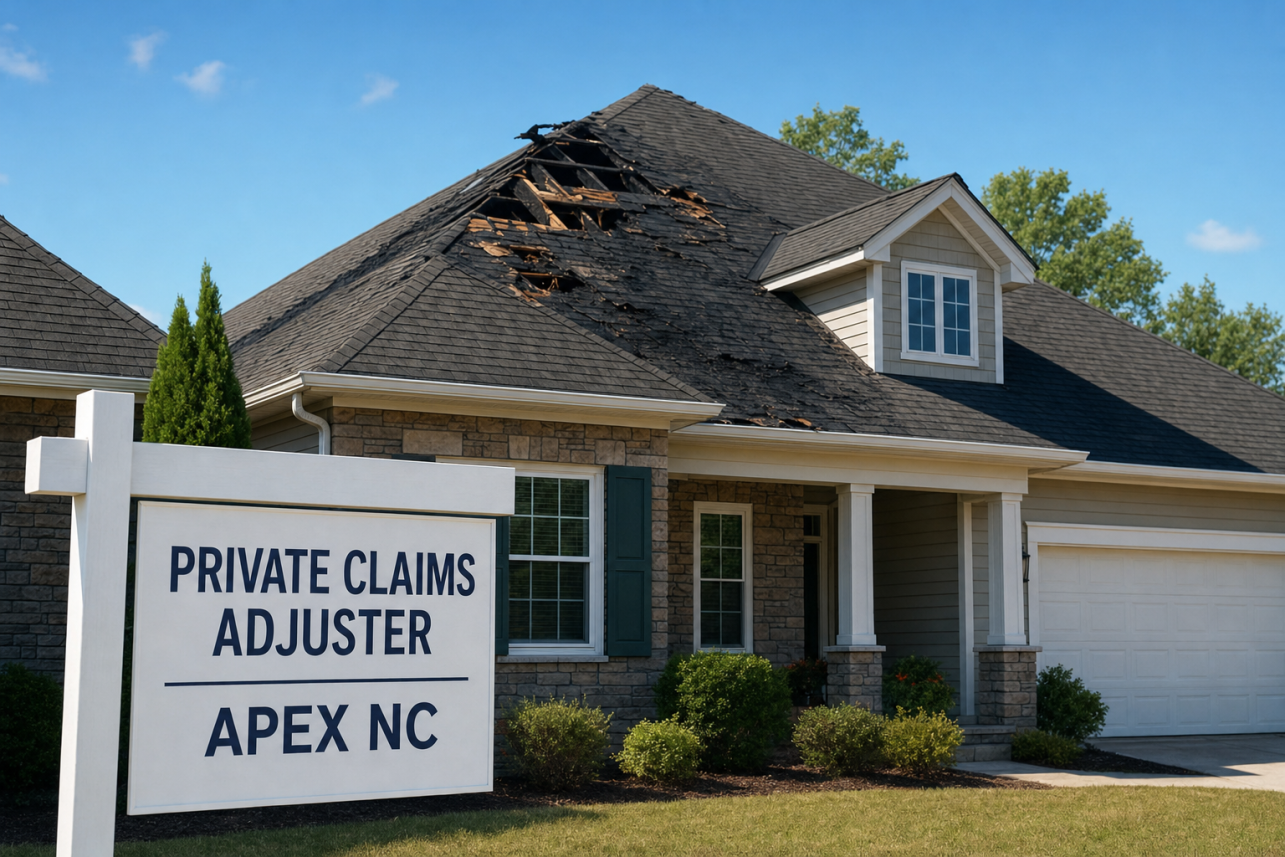
Every claim is different, but most residential claims we handle in Apex resolve within 30 to 90 days of our involvement. Straightforward water or hail losses often settle on the shorter end. Large fire losses, hurricane claims, or disputes where the carrier has already denied coverage can take longer, sometimes several months.
North Carolina rules require insurers to acknowledge and investigate claims promptly, and once we submit a complete, well-documented claim package, we actively follow up to keep the file moving. Delays usually happen when documentation is thin or the scope of damage is disputed — two problems our preparation is designed to prevent.
Here is what the timeline typically looks like. First, we inspect your property and review your policy, usually within days of your call. Next, we build the estimate and supporting documentation, which can take one to three weeks depending on the size of the loss. Then we present the claim, meet the carrier's adjuster at the property if needed, and negotiate until the numbers reflect the real cost of repairs in the Apex market.
We cannot promise a specific settlement amount or an exact closing date — no honest adjuster can. What we can do is keep you informed at every stage, respond to carrier requests quickly, and push back when the insurance company drags its feet. Most clients tell us the process felt far less stressful once a professional was managing it.
When Is The Best Time To Contact A Private Claims Adjuster Apex NC Property Owners Can Call — Before Or After I File With My Insurance Company?
The earlier, the better. When our team is involved from day one, we help you document the loss correctly, meet your policy's notice deadlines, and frame the claim properly before the insurance company's adjuster ever sets foot on your Apex property. First impressions matter in claims, and a well-organized initial submission is harder to dispute.
That said, it is never too late to bring us in. Many Apex and Wake County homeowners call us after they receive a settlement offer that feels low, or after weeks of unreturned calls from their carrier. We can review the insurer's estimate line by line, re-inspect the damage, and reopen the negotiation with our own documented scope of loss.
There is strong legal precedent for policyholders who push back. In Bi-Economy Market, Inc. v. Harleysville Insurance Co., a business destroyed by fire sued after the insurer delayed and underpaid the building and contents claim. New York's highest court ruled for the insured, holding the carrier could be liable for consequential damages caused by its failure to pay promptly. Courts take underpayment seriously, and so do we.
One honest caveat: if you have already signed a full and final release, your options narrow considerably. So if you are anywhere between "the pipe just burst" and "I'm about to cash this check," reach out first. The consultation costs you nothing, and we are licensed and bonded in North Carolina.
What Should I Do Right After Fire Or Water Damage To My Apex Home, Before Your Adjuster Arrives?
First, make sure everyone is safe and the property is secure. Your policy requires you to prevent further damage, so reasonable emergency steps — shutting off the water main, tarping a burned roof section, boarding broken windows — protect both your home and your claim. Keep every receipt for those emergency costs, because they are typically reimbursable.
Second, document everything before anything is moved or cleaned. Take wide photos of each room, then close-ups of damaged flooring, drywall, cabinetry, and contents. Video walkthroughs with narration are even better. In Apex homes we often find hidden damage — saturated insulation, smoke residue inside HVAC ducts — so do not assume what you can see is the full loss.
Third, do not throw anything away until it has been photographed and inventoried, even items that seem like obvious trash. Destroyed contents are part of your claim, and carriers frequently dispute items that no longer exist.
Finally, be careful what you say and sign. Report the loss promptly, but avoid guessing at causes or values in recorded statements, and do not sign work authorizations or releases you do not fully understand. Once our Apex adjuster is retained, we handle communication with the carrier, build the inventory, and prepare the estimate.
One important distinction: rising water from outside is flood damage, which falls under a separate flood policy through the National Flood Insurance Program. You can learn more at FEMA.gov or FloodSmart.gov, and we can help you sort out which policy applies.
Will Hiring A Public Adjuster Make My Insurance Company Treat Me Worse Or Raise My Rates?
No. Hiring representation is your legal right as a North Carolina policyholder, and insurers deal with licensed public adjusters every day. Your premium is driven by your loss history, your coverage choices, and market factors — not by whether you had professional help presenting your claim. Filing the claim itself is what goes on your record, and that happens whether or not a Private Claims Adjuster Apex NC families rely on is standing beside you.
In practice, representation usually improves the tone of the claim. Carriers know that a professionally documented estimate — with measurements, photographs, code-upgrade considerations, and a complete contents inventory — is difficult to dismiss. Disputes become technical conversations between adjusters rather than a homeowner trying to argue construction costs alone.
Courts have repeatedly backed insureds who stood their ground. In Bi-Economy Market, Inc. v. Harleysville, the owners of a fire-gutted market fought their insurer's lowball payment on the building and contents all the way up on appeal — and won, with the court holding the insurer accountable for the harm its delay caused. Cases like that exist precisely because policyholders refused to accept unfair treatment.
We will never promise a specific dollar outcome — no ethical adjuster can — but we can promise that your claim will be documented thoroughly and negotiated professionally. For Apex homeowners, that means you stop chasing the carrier and start focusing on getting your home and your life back in order.
What's The Difference Between The Insurance Company's Adjuster And The Adjuster I Hire Myself?
The difference comes down to one word: loyalty. The adjuster your insurance company sends — whether a staff adjuster or an independent one the carrier hires — works for the insurer. Their job is to evaluate the claim within the company's guidelines, and the company pays their check. A public adjuster works exclusively for you, the policyholder, and is paid only from what you recover.
That changes how the claim is handled. A carrier's adjuster may spend thirty minutes at your Apex home and write an estimate from a handful of photos. Our team spends the time to open up the loss: moisture mapping after a pipe failure, testing for smoke migration after a kitchen fire, cataloging contents room by room, and pricing repairs against what Wake County contractors actually charge rather than generic software defaults.
We also read your policy the way it is written, not the way it is summarized to you over the phone. Coverages like ordinance-and-law, debris removal, and additional living expenses are frequently overlooked or underused in initial carrier estimates, and they can meaningfully change a settlement.
To be clear about scope: we handle property claims — homes, commercial buildings, and contents. We do not handle claims involving motor vehicles, cell phones, health, or life insurance. For damage to your house or business anywhere in Apex or greater Wake County, For The Public Adjusters, Inc. is licensed, bonded, and on your side of the table from the first inspection to the final payment.
Will A Private Claims Adjuster Apex NC Policyholders Hire Actually Negotiate Directly With My Insurance Company?
Yes. Once you sign a representation agreement, For The Public Adjusters, Inc. becomes your official advocate, and the insurance company is required to communicate with us about your property claim. That means no more fielding confusing calls or letters on your own — we handle the documentation, the back-and-forth, and the negotiation.
Our process starts with a full, independent inspection of your Apex home or building. We write our own damage estimate using the same professional estimating software carriers use, then compare it line by line against the insurer's figures. When numbers don't match, we push back with photos, measurements, and policy language — not opinions.
If negotiation stalls, most North Carolina property policies include an appraisal clause, a formal dispute process we can help you invoke. Courts have repeatedly sided with policyholders who stood their ground. In Mills v. Foremost Insurance Co., homeowners whose property was damaged in a hurricane sued their carrier for failing to pay contractor overhead and profit on the repairs — and the federal appeals court ruled the insureds could pursue those amounts. Cases like that show carriers don't always get the final word.
We can't promise any specific outcome, and no honest adjuster should. What we can promise is that your claim will be documented thoroughly and argued professionally. We're licensed and bonded in North Carolina, and our only client in the room is you — never the insurance company.
Do You Handle Commercial Property Claims For Apex Businesses, Or Just Homes?
We handle both. Businesses along NC-55, in downtown Apex, and throughout Wake County face the same uphill battle homeowners do — often with far more money at stake. A fire, burst pipe, or hurricane can shut down a restaurant, retail shop, medical office, or warehouse, and the claim that follows is rarely simple.
Commercial policies layer coverage in ways residential policies don't: building coverage, business personal property, tenant improvements, and often business interruption or loss of income. Each has its own limits, deductibles, and documentation requirements. Our team reads the entire policy, identifies every coverage that applies, and builds a claim that accounts for all of them — not just the obvious structural repairs.
Business interruption is where carriers most often shortchange owners. Proving lost income requires financial records, projections, and a defensible methodology. We work with you to assemble that documentation so the insurer can't dismiss it as guesswork.
One note on scope: we handle claims involving buildings, structures, and contents only. We don't work on claims for motor vehicles, cell phones, health, or life insurance, so commercial fleet losses would fall outside what we do — but damage to your building, inventory, equipment, and fixtures is squarely in our lane.
If your Apex business has suffered a loss, call before you accept the carrier's first estimate. Early involvement gives us the best chance to document everything properly from day one.
What Documents Should I Gather Before Meeting With A Private Claims Adjuster Apex NC Residents Recommend?
The most important document is your full insurance policy — not just the declarations page. The declarations page shows your limits and deductibles, but the policy body and endorsements contain the coverage language, exclusions, and deadlines that actually decide your claim. If you can't find your copy, your agent or carrier must provide one on request, and we can help you ask.
Beyond the policy, gather anything that documents the loss: photos and videos of the damage, the claim number if you've already filed, any correspondence or estimates from the insurance company, and receipts for emergency repairs like tarping or water extraction. Keep damaged items when it's safe to do so — physical evidence matters.
For contents losses, start a simple list of damaged belongings with approximate purchase dates and prices. Don't worry about perfection; a Private Claims Adjuster Apex NC homeowners work with will help you build a complete, properly valued inventory, which is one of the most commonly underpaid parts of any claim.
If you have pre-loss documentation — old listing photos of your home, renovation receipts, appraisals — bring those too. They help establish what your property looked like before the damage, which strengthens your position considerably.
Don't delay your call because your paperwork feels incomplete. Most Apex homeowners we meet are missing something, and part of our job is tracking down what's needed. The sooner we review your situation, the sooner we can tell you honestly whether we can help.
My Insurance Company Paid For Repairs But Lowballed My Damaged Furniture And Belongings. Can You Help With The Contents Portion?
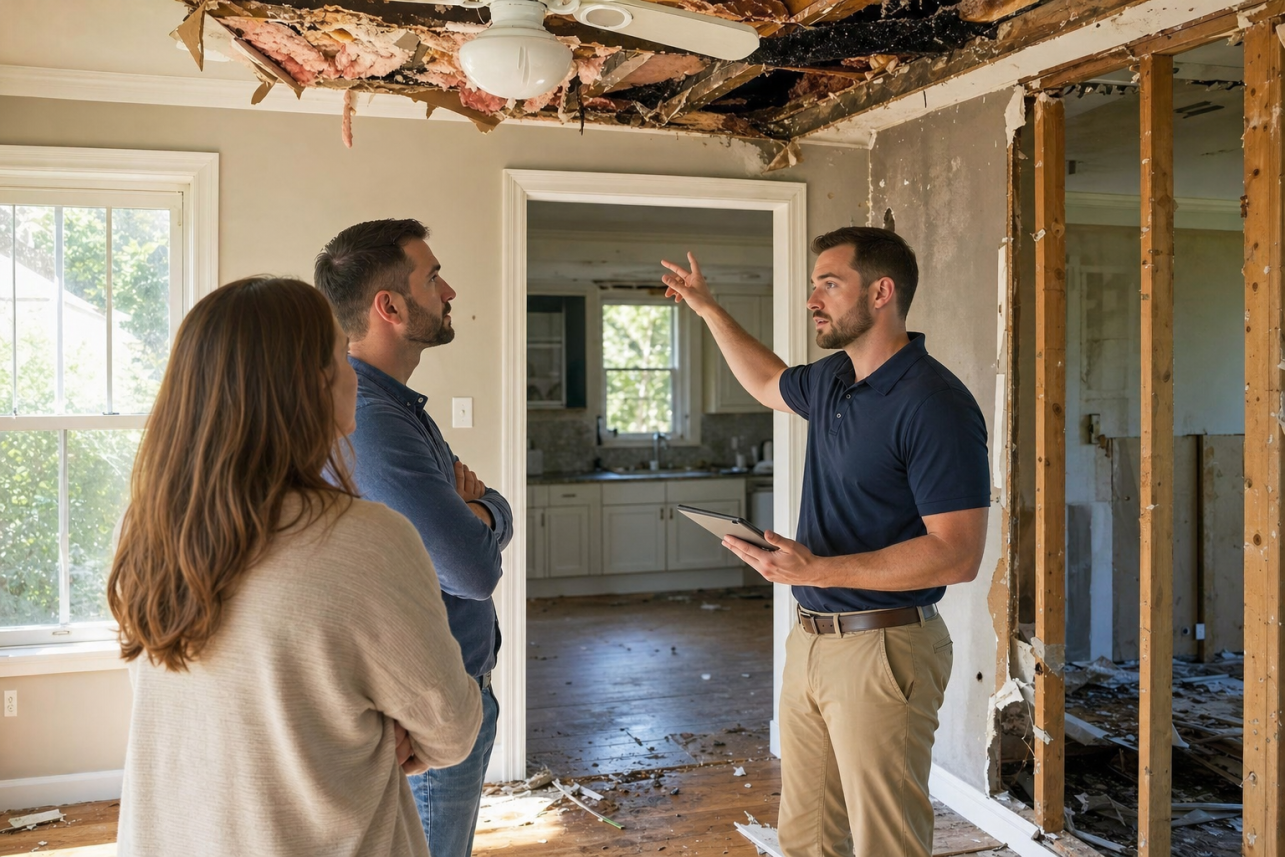
Absolutely — contents claims are one of the areas where policyholders lose the most money, and one where an experienced Apex public adjuster adds real value. After a fire, water loss, or hurricane, carriers often apply steep depreciation, miss items entirely, or pressure homeowners into accepting a quick inventory done in a single walkthrough.
We approach contents differently. Our team conducts a methodical room-by-room inventory, documenting each item with photos, descriptions, age, and replacement cost. For smoke-damaged belongings, we distinguish between what can genuinely be cleaned and what must be replaced — a distinction carriers frequently blur to reduce payouts.
Depreciation is where the fight usually happens. Many North Carolina policies provide replacement cost coverage, meaning you're entitled to recover the depreciation holdback once items are replaced. Insurers don't always volunteer that, and homeowners leave that money on the table every year. We track those recoverable amounts and pursue them.
Policyholders who challenge inadequate payments have real standing. In Mills v. Foremost Insurance Co., insureds whose home and property were damaged in a hurricane successfully took their carrier to court over amounts the insurer refused to include in its payment, and the appellate court allowed their claims to proceed — a reminder that the carrier's first number isn't necessarily the right one.
We can't guarantee a specific recovery, but we can make sure every damaged item in your Apex home is documented, valued correctly, and presented in a way the carrier has to take seriously. We're licensed and bonded, and the contents inventory is included in our representation — not an add-on.
Local Relevance
Apex sits in western Wake County, where the housing stock tells its own story. Subdivisions built during the late-1990s and 2000s boom are now hitting the age where builder-grade shingles and flashing fail — and where carriers reach for "wear and tear" on every roof claim. Documenting the actual storm date is often what separates a denial from a replacement.
Spring hail and the region's history of narrow tornado paths mean one Apex street can take heavy damage while the next is untouched, so "nobody else on the street filed" proves nothing about your roof. Summer thunderstorms and mature pines produce steady tree-strike claims too — the same kind of losses we handle when owners need tree damage insurance claim help in Carrboro.
Flooding is the quiet risk. Rapid development means more pavement and more runoff than older flood maps anticipated, and many homeowners discover only after a storm that their homeowners policy excludes flood entirely. The National Flood Insurance Program (NFIP) is where that separate coverage comes from, and if you carry an NFIP policy, those claims have their own rules and deadlines — we handle those as well.
Much of Apex sits on the Triassic Basin, where poorly draining clays shrink and swell with the seasons — producing cracked slabs, sticking doors, and settlement that out-of-area adjusters too quickly blame on "age." Knowing which side of that soil line a house sits on changes how a foundation or water intrusion claim should be documented and argued.
Get A Second Opinion On Your Apex Claim
Before you cash a settlement check or accept a denial, let a licensed, bonded Apex public adjuster review the file. The consultation is free, there is no obligation, and you will leave knowing exactly where your claim stands and what your policy actually covers.
Request Your Free Claim Review
Call us: (919) 400-6440
Helpful Resources
- NCDOI Public Adjusters Guide
- National Flood Insurance Program (NFIP)
- North Carolina Department of Insurance — State regulator where consumers can verify public adjuster licenses
Last updated: October 12, 2026