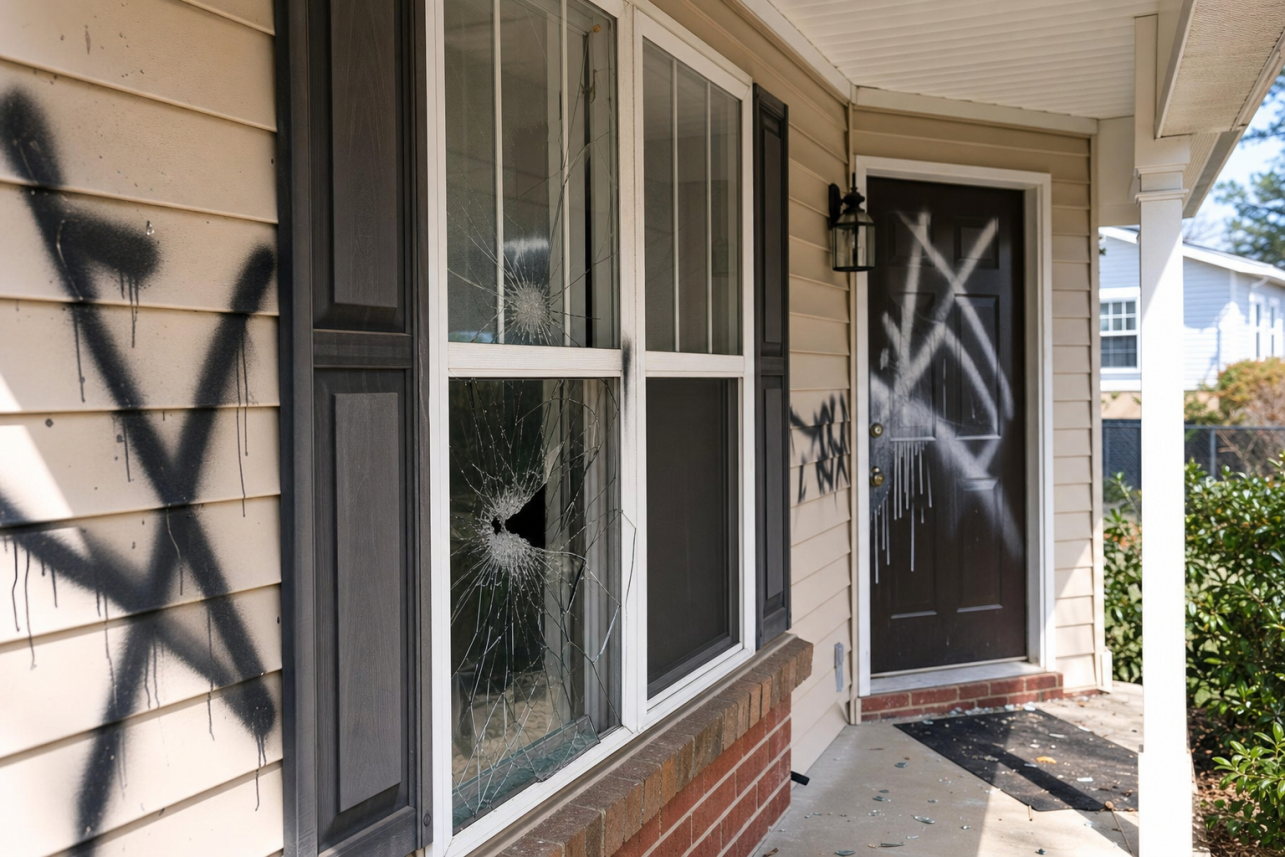
If you need help with a Vandalism Homeowners Claim Apex insurance carriers will actually pay fairly on, a licensed public adjuster is the professional who works for you, not the insurance company. For The Public Adjusters, Inc. documents the break-in, graffiti, or malicious damage, prepares the repair estimate, and negotiates the settlement on your behalf. We are licensed and bonded, and we only get paid when your claim does. Most standard homeowners policies do cover vandalism, but the payout depends heavily on how the loss is documented and presented.
What This Service Is
Vandalism coverage is part of nearly every standard homeowners policy, yet these claims are among the most frequently disputed. Someone kicks in your back door, spray-paints your siding, smashes windows, or destroys belongings inside your home, and suddenly you are dealing with police reports, security concerns, and an insurance adjuster asking pointed questions.
Our job is to level that field. We inspect every bit of damage, including things homeowners often miss, like damaged door frames, scratched flooring, and paint that cannot be spot-matched. Then we build a line-item repair estimate, prepare the proof of loss statement your policy requires, and negotiate directly with the carrier’s adjuster.
We handle these losses across Wake County, and the same careful approach we use for a Vandalism Homeowners Claim in Cary applies here in Apex. The North Carolina Department of Insurance publishes the NCDOI Public Adjusters Guide, which explains exactly what licensed public adjusters can and cannot do for policyholders — we work strictly within those rules, and our fee is a percentage of the recovery, disclosed up front in writing.
Common Problems
Why Was My Vandalism Homeowners Claim Apex Payout So Low?
The most common reason is depreciation. If the carrier pays actual cash value first, it deducts for the age of your door, window, fence, or carpet, and many homeowners never realize they can recover that held-back money after repairs are done under a replacement cost policy.
The second reason is scope. A carrier’s estimate might cover one broken window pane but ignore the damaged frame, the graffiti removal that requires repainting the entire wall for a color match, or the interior contents that were destroyed. Add your deductible on top, and a lowball estimate can leave you paying serious out-of-pocket repair costs.
We rebuild the estimate line by line so nothing gets quietly left out, then push for the full settlement amount the policy language actually supports.
The Insurance Company Denied My Claim Or Keeps Stalling — What Now?
Vandalism claims get denied for predictable reasons: no police report was filed promptly, the carrier argues the damage is really wear and tear, or the home was vacant longer than the policy allows. Each of these can often be challenged with the right documentation, and a denial letter is rarely the final word.
Delays are just as damaging. Weeks of unreturned calls while your home sits with a boarded-up door is not something you have to accept, and North Carolina law requires insurers to handle claims fairly. Courts have backed policyholders on this — in Bi-Economy Market, Inc. v. Harleysville Insurance Co., the insured won when the court held a policyholder could pursue consequential damages after the insurer dragged out and underpaid a claim for a destroyed building and its contents.
We have helped homeowners appeal denials on losses like a Homeowners Vandalism Insurance Claim in Durham, and the pattern is usually the same: better documentation changes the conversation.
Do I Really Need A Public Adjuster, Or Can I Handle This Myself?
You can file on your own, and for a single broken window with damage barely above your deductible, you probably should. But once vandalism involves forced entry, graffiti across multiple surfaces, destroyed contents, or a denial, you are negotiating against a trained adjuster whose employer benefits from paying less.
A good public adjuster does three things you cannot easily do yourself: values the loss with professional estimating software, knows which policy provisions the carrier must honor, and handles every call and letter so nothing you say gets used to shrink the claim. The Insurance Information Institute notes that most homeowners never read their full policy — we read yours cover to cover before we make a single demand.
Check that anyone you hire is licensed in North Carolina, bonded, and charges a clearly disclosed percentage fee only on what they recover. That is exactly how we operate.

Our Process
Free Inspection And Damage Documentation
We walk your Apex property and photograph every point of damage — forced doors, broken glass, graffiti, damaged fencing, and destroyed contents inside. We also confirm your police report is complete, since carriers routinely use a missing or vague report as grounds to question a vandalism loss.
Estimate, Proof Of Loss, And Claim Preparation
We prepare a detailed repair cost estimate and the sworn proof of loss statement your policy requires, submitted on time and built to withstand scrutiny. Where the cause of damage is in question — for instance, when a fire looks deliberately set — we bring the same rigor we apply to a claim like an Arson Homeowners Claim in Fuquay-Varina, where cause and documentation decide everything.
Negotiation And Settlement
We meet the carrier’s adjuster at your property, challenge every unjustified deduction, and negotiate until the offer reflects the true cost of repairs. If depreciation was withheld, we pursue the recoverable amount after work is completed. We never promise a specific dollar outcome — no honest adjuster can — but you will know your claim was fully presented.
| Claim Task | Handling It Yourself | With For The Public Adjusters |
|---|---|---|
| Damage documentation | Photos of visible damage only, often missing hidden water, contamination, and structural issues | Full inspection with moisture mapping, contents inventory, and contractor-verified repair scopes |
| Estimate review | Accepting the carrier’s estimate at face value | Line-by-line comparison against real Wake County repair pricing and policy language |
| Policy interpretation | Guessing at exclusions, sublimits, and code-upgrade coverage | Licensed and bonded professionals who read the policy the way courts have interpreted it |
| Negotiation | One homeowner against a trained company adjuster | Documented, written positions supported by evidence and applicable North Carolina case law |
| Denials and disputes | Often accepting the first denial letter as final | Formal challenges backed by precedent, such as the innocent co-insured protections in Bryant v. Nationwide |
Commonly Overlooked In The Public Adjusting Industry
- Full-plane repainting instead of spot touch-ups over graffiti — Oil-based spray paint bleeds through standard paint, so touch-ups fail within months, yet first estimates almost always price them anyway.
- Water damage from faucets, hoses, or plumbing the vandals deliberately opened — Adjusters focused on broken glass and paint often never run moisture readings, missing saturation that spreads through floors and ceilings for days.
- Code-required tempered or safety glass on replacement windows and doors — Ordinance-and-law coverage that pays for the upgrade sits in a separate policy section most homeowners never know to invoke.
- Rekeying and lock replacement after a break-in — It is a small line item that carriers rarely volunteer, but every exterior lock is compromised once an intruder has been inside.
- Matching of siding, flooring, and cabinetry across continuous surfaces — Insurers often pay to replace only the damaged section, leaving a visible mismatch, when the policy and repair standards can support replacing the full run.
- Contamination cleanup when vandals leave urine, chemicals, or biohazards — Sanitization and affected-material removal get lumped into general cleaning at a fraction of the real remediation cost.
- The innocent co-insured doctrine when a household member caused the damage — Carriers frequently issue blanket intentional-act denials even though North Carolina courts, in Bryant v. Nationwide, ruled an innocent spouse can still recover.
- Reimbursable emergency expenses like board-up, tarping, and temporary security — Homeowners pay these costs out of pocket in the first frantic hours and forget they are typically claimable if the receipts are kept.
Case Studies
Case Study #1
Situation: A family on Salem Street’s west side in Apex returned from a two-week trip to find their home broken into and heavily vandalized. Windows were smashed, walls were spray-painted, and the intruders had turned on the upstairs bathroom faucets, letting water run for days.
Problem: The homeowner’s insurer accepted the claim but scoped it narrowly. They offered spot-painting for the graffiti, a single window sash replacement, and drying fees only for the second-floor bathroom, ignoring the saturated ceiling, hardwood floors, and cabinetry below.
Investigation: Our team performed moisture mapping across two floors, pulled the police report and photographed every tagged surface, and brought in a painting contractor to test whether the oil-based spray paint could be sealed and matched on the existing walls.
Findings: Moisture readings confirmed water had migrated into the kitchen ceiling, subfloor, and base cabinets. The paint tests showed bleed-through, meaning full priming and repainting of continuous wall planes was required, not touch-ups. Three windows, not one, had compromised frames.
Solution: We prepared a room-by-room estimate covering full repaint of affected planes, three window replacements to match the home’s existing units, structural drying, subfloor replacement, and cabinet replacement where swelling made repair impractical, then presented it with the moisture logs and contractor documentation.
Outcome: The carrier revised its position substantially after reviewing the documentation, and the settlement funded the complete scope, including the water damage the original estimate had left out. The homeowners repaired the house without absorbing those costs themselves.
Lesson: Vandalism claims are rarely just about what you can see. Water sabotage, contaminated surfaces, and hidden structural damage frequently exceed the visible destruction, and the first insurer estimate often reflects only the obvious.
Case Study #2
Situation: A homeowner near Apex Community Park was going through a difficult divorce when her estranged spouse entered the home and deliberately destroyed interior finishes, appliances, and personal contents before moving out of state.
Problem: The insurance company denied the entire claim, arguing that intentional damage caused by a named insured is excluded under the policy, even though our client had no involvement in or knowledge of the destruction.
Investigation: We reviewed the policy’s intentional-acts language, gathered the police report and separation documentation, and researched North Carolina law on innocent co-insureds. We also built a detailed contents inventory with photographs, receipts, and replacement pricing for every damaged item.
Findings: North Carolina courts have protected policyholders in this exact situation. In Bryant v. Nationwide Mutual Fire Insurance Co., 313 N.C. 362 (1985), the North Carolina Supreme Court held that an innocent co-insured spouse could recover under a homeowners policy despite the other spouse’s intentional destruction of the property. Our client’s facts fit squarely within that precedent.
Solution: We presented the carrier with a written position letter citing Bryant, the police report establishing our client’s absence, and the full damage documentation, and requested the denial be reconsidered on the innocent co-insured doctrine.
Outcome: The insurer withdrew the blanket denial and paid the claim for the structural repairs and the client’s share of the destroyed contents, allowing her to restore the home and replace what was ruined.
Lesson: A denial letter is a position, not a verdict. North Carolina law has long protected innocent policyholders, and knowing the case law that applies to your situation can change the outcome of a claim entirely.
| Scenario | Typically Addressed by a Homeowners Policy? | What It Usually Depends On | Smart First Step |
|---|---|---|---|
| Graffiti on brick or siding | Often, subject to policy terms | Whether cleaning damages the substrate and whether replacement siding still matches existing panels | Photograph everything before any cleaning attempt |
| Broken windows and kicked-in doors | Often, subject to policy terms | Code upgrades such as tempered glass requirements and matching existing units | Get a police report number and secure the openings |
| Water damage from sabotaged plumbing or faucets | Often, subject to policy terms | Proving the water release resulted from the vandalism event itself | Document running water and moisture damage before drying begins |
| Destroyed personal contents | Often, subject to policy terms and sublimits | Quality of your inventory, receipts, and photos, plus any special limits on certain items | Build an item-by-item list with photos before discarding anything |
| Vandalism to a home vacant more than 60 days | Frequently disputed | The policy’s vacancy or unoccupancy clause and evidence of actual occupancy or renovation activity | Gather utility bills, contractor records, and dated photos showing use |
| Damage caused intentionally by a co-insured spouse | Denials are common but contestable | North Carolina’s innocent co-insured doctrine, upheld in Bryant v. Nationwide Mutual Fire Insurance Co. | Do not accept a denial without a professional policy and case-law review |
| Board-up, rekeying, and emergency securing costs | Often, subject to policy terms | Keeping itemized receipts and showing the work was reasonable to protect the property | Save every invoice, including hardware store receipts |


Reviews
Vandals broke into our house while we were selling it and spray-painted almost every room downstairs. The insurance company wanted to pay for touch-up paint only. For The Public Adjusters documented the bleed-through and got the settlement to cover priming and repainting entire walls, plus the two exterior doors that were kicked in. Night and day difference from what we were first offered.
Marcus T., Scotts Mill
Teenagers destroyed our screened porch and threw bricks through three back windows. I had no idea the tempered glass code requirements would raise the replacement cost, but this team did. They caught the code upgrade coverage in our policy and included the rekeying of every lock, which I never would have thought to claim. Professional from the first call to the final check.
Deana R., Apex
Our rental-turned-primary home was vandalized right after we moved back in, and the carrier tried to raise a vacancy issue. For The Public Adjusters pulled together utility records and moving receipts proving occupancy, and the claim moved forward. The only reason for four stars instead of five is the overall claim took longer than I hoped, but that was the insurer dragging, not them.
Phillip W., Wake County
Frequently Asked Questions
What Does A Vandalism Homeowners Claim Apex Public Adjuster Actually Do For Me?
When you hire For The Public Adjusters, Inc. to handle a Vandalism Homeowners Claim Apex homeowners often find the entire process changes in their favor. Instead of relying on the insurance company’s adjuster — who works for the insurer — you have a licensed and bonded professional documenting the damage, interpreting your policy, and negotiating strictly on your behalf.
For vandalism losses, that work is detailed. We photograph and catalog every instance of damage: broken windows, kicked-in doors, spray paint on brick or siding, slashed screens, damaged HVAC units, and destroyed or stolen contents inside the home. Vandals frequently cause damage that isn’t obvious at first glance, such as water damage from opened faucets or graffiti that requires full repainting rather than spot treatment, and we make sure those items are included in the scope.
We also prepare the proof of loss, coordinate with the Apex Police Department report — which most policies require for vandalism claims — and challenge lowball repair estimates line by line. Policyholders have prevailed against insurers in court on these issues before.
In Erie Insurance Exchange v. Bledsoe, 141 N.C. App. 331 (2000), the North Carolina Court of Appeals sided with the insured, holding that a fire intentionally set by vandals fell within the policy’s vandalism coverage, and the carrier had to pay for the building damage. That case shows why policy language matters, and why having someone who knows how to argue it can change the outcome. We never guarantee a specific result, but we work to pursue every dollar your policy legitimately owes.
My Home In Apex Was Vandalized. What Should I Do Before Filing The Claim?
First, make sure the property is safe and call the Apex Police Department to file a report. Nearly every homeowners policy in Wake County requires prompt notice to law enforcement for a vandalism or malicious mischief loss, and skipping this step gives the insurer an easy reason to deny.
Second, document everything before you clean up or repair anything. Take wide photos of each room or exterior area, then close-ups of every broken item, defaced surface, and point of forced entry. If contents were destroyed — electronics, furniture, artwork, clothing — photograph them where they lie and start a written inventory with approximate purchase dates and values.
Third, take reasonable steps to prevent further damage, such as boarding up broken windows or securing a damaged door. Keep every receipt, because emergency protective measures are typically reimbursable under your policy. Do not throw damaged items away until the claim is resolved; the carrier has a right to inspect them.
Finally, contact a public adjuster in Apex before you give a recorded statement to the insurance company. Recorded statements are often used to narrow or dispute coverage later. For The Public Adjusters, Inc. can review your policy, identify what deadlines apply, and manage communication with the carrier from day one. As a licensed and bonded firm, we handle homeowners property claims only — we do not handle claims involving vehicles, cell phones, health, or life insurance — so a vandalized car in the driveway would go through your auto carrier, while the damage to your home and its contents is exactly what we do.
Why Do Insurance Companies Underpay Or Deny Vandalism Claims In Wake County?
Vandalism claims get more scrutiny than almost any other property loss because carriers worry about fraud and about drawing the line between vandalism, theft, and wear and tear. In our experience helping Apex and greater Wake County homeowners, denials and underpayments usually come down to a few recurring tactics.
Carriers may argue the home was vacant. Most policies exclude vandalism if the dwelling was vacant for 60 consecutive days or more, and adjusters sometimes stretch the definition of vacancy to include homes that were simply unoccupied during a renovation or between tenants. Those are legally different concepts, and the distinction can decide the claim.
They may also underscope the repairs — paying to patch graffiti instead of repainting the full elevation for a uniform match, or replacing one broken window pane when the frame is bent. And they frequently dispute contents values, demanding receipts most families no longer have.
Courts have repeatedly corrected insurers who read coverage too narrowly. In Erie Insurance Exchange v. Bledsoe, the North Carolina Court of Appeals ruled for the insured, finding that intentional destruction of the building by third parties was covered vandalism even though the carrier tried to reclassify the loss to escape payment. Precedent like that is leverage during negotiation.
Our job as your Apex public adjuster is to anticipate these arguments, build the documentation that defeats them, and present a complete, well-supported claim. We can’t promise a particular payout — no honest adjuster can — but we make sure the carrier evaluates the full loss, not a convenient fraction of it.
How Much Does Help With A Vandalism Homeowners Claim Apex Cost, And Is Stolen Property Included?
For The Public Adjusters, Inc. works on a contingency fee, meaning our fee is a percentage of the insurance settlement and you pay nothing out of pocket up front. If the claim doesn’t pay, you don’t owe us a fee for the adjusting work. That structure keeps our interests aligned with yours: the more thorough and accurate the claim, the better for both of us. We are licensed and bonded, and our fee agreement is put in writing before any work begins.
As for stolen property, vandalism and theft often happen together, and most homeowners policies cover both — though sometimes under different limits and conditions. If intruders spray-painted your walls, broke your fixtures, and also stole a television and jewelry, we document the theft portion alongside the physical damage and pursue both under the applicable coverages. Certain categories like jewelry, firearms, and cash often carry special sub-limits, and we’ll walk you through exactly what yours says.
Keep in mind a police report is essential for both the vandalism and theft components, and the carrier will expect a detailed contents inventory. We help Apex homeowners build that inventory room by room, using photos, bank statements, and replacement pricing rather than guesswork.
One clarification: we handle claims for homes, buildings, and personal contents only. Damage to or theft of a vehicle, even from your own driveway or garage, falls under auto insurance and is outside what we do. For everything covered by your homeowners policy, we’re ready to review the loss at no cost and tell you honestly whether professional representation makes sense.
How Long Does A Vandalism Claim Take To Settle In Apex, And What Deadlines Apply?
Most vandalism claims in Apex resolve within 30 to 90 days when the file is well-documented, though contested or underpaid claims can stretch much longer. North Carolina requires insurers to acknowledge your claim promptly and to pay undisputed amounts within a reasonable time once proof of loss is accepted.
Your own deadlines matter just as much. Almost every homeowners policy requires prompt notice of the loss, a police report for vandalism, and a signed sworn proof of loss if the carrier demands one — often within 60 days of that demand. Miss those windows and the insurer gains leverage to reduce or deny payment.
North Carolina also imposes a contractual limitations period, typically three years from the date of loss under standard policies, for filing suit against a carrier. Waiting rarely helps; graffiti, broken glass, and forced-entry damage deteriorate, and memories fade.
When For The Public Adjusters, Inc. handles a vandalism file in Wake County, we build the documentation early — photographs, contractor scopes, contents inventories — so the carrier has fewer excuses to delay. We cannot promise a specific timeline or outcome, since every loss and policy differs, but a complete, professionally prepared claim historically moves faster than one the adjuster has to piece together. If your claim has already stalled past 90 days with no clear explanation, that is usually the moment to bring in independent representation.
Does Homeowners Insurance Cover Vandalism If My Apex House Was Vacant Or Under Renovation?
This is where many Apex homeowners get blindsided. Standard homeowners policies contain a vacancy exclusion — commonly, if the dwelling has been vacant for more than 60 consecutive days before the vandalism, the carrier can deny coverage for vandalism and malicious mischief entirely.
The key word is vacant, and it has a specific legal meaning. Vacant is not the same as unoccupied. A home you left furnished while traveling, a house between tenants that still contains your belongings, or a property under active renovation with materials and tools inside is often unoccupied but not legally vacant. Insurers frequently blur that distinction to justify a denial.
North Carolina courts have historically construed ambiguous policy language against the insurer. In Gaston County Dyeing Machine Co. v. Northfield Insurance Co., the North Carolina Supreme Court sided with the insured on a property damage coverage dispute, reinforcing that carriers cannot stretch exclusionary language beyond its plain meaning. That principle is exactly what a policyholder leans on when a vacancy exclusion is misapplied.
If your Wake County property was mid-renovation, listed for sale, or between occupants when vandals struck, do not accept a denial at face value. Our team reviews the actual policy wording, the timeline of occupancy, and the physical evidence — utility records, furnishings, permits — to determine whether the exclusion genuinely applies. We are licensed and bonded, and while no one can guarantee a reversal, vacancy denials are among the most frequently overturned when the facts are properly presented.
My Vandalism Claim Was Already Denied Or Lowballed. Can A Public Adjuster Still Help?
Yes, in many cases. A denial letter or a low settlement offer is the carrier’s position, not the final word. As long as the claim has not been formally closed by a signed release and the policy’s limitations period has not expired, the file can be reopened, supplemented, or disputed.
The first step is a forensic review of the denial. Carriers in Wake County commonly deny vandalism losses by mislabeling the cause, invoking a vacancy exclusion, disputing the contents inventory, or claiming late notice. Each of those defenses can be challenged with documentation: the police report, timestamped photos, contractor estimates, receipts, and witness statements.
Policyholders who push back have real legal footing. In Harleysville Mutual Insurance Co. litigation and in cases like Gaston County Dyeing Machine Co. v. Northfield Insurance Co., North Carolina’s highest court ruled for the insured in property damage coverage disputes, confirming that exclusions are read narrowly and ambiguities favor the policyholder. Your policy also typically includes an appraisal clause, which lets an underpaid homeowner demand an independent valuation without filing a lawsuit.
For The Public Adjusters, Inc. handles reopened and disputed vandalism files across Apex regularly. We re-scope the damage, rebuild the contents claim, and present the supplement in the format carriers must respond to. We never guarantee a specific recovery — no honest adjuster can — but a denial supported by thin reasoning often does not survive a properly documented challenge. Bring us the denial letter and your policy, and the review costs you nothing upfront.
What Documentation Makes A Vandalism Homeowners Claim Apex Stronger From Day One?
A Vandalism Homeowners Claim Apex succeeds or fails on evidence, and the strongest files share the same core documents. Start with the Apex Police Department report — vandalism coverage under nearly every policy requires that the loss be reported to law enforcement, and the report number anchors your entire claim.
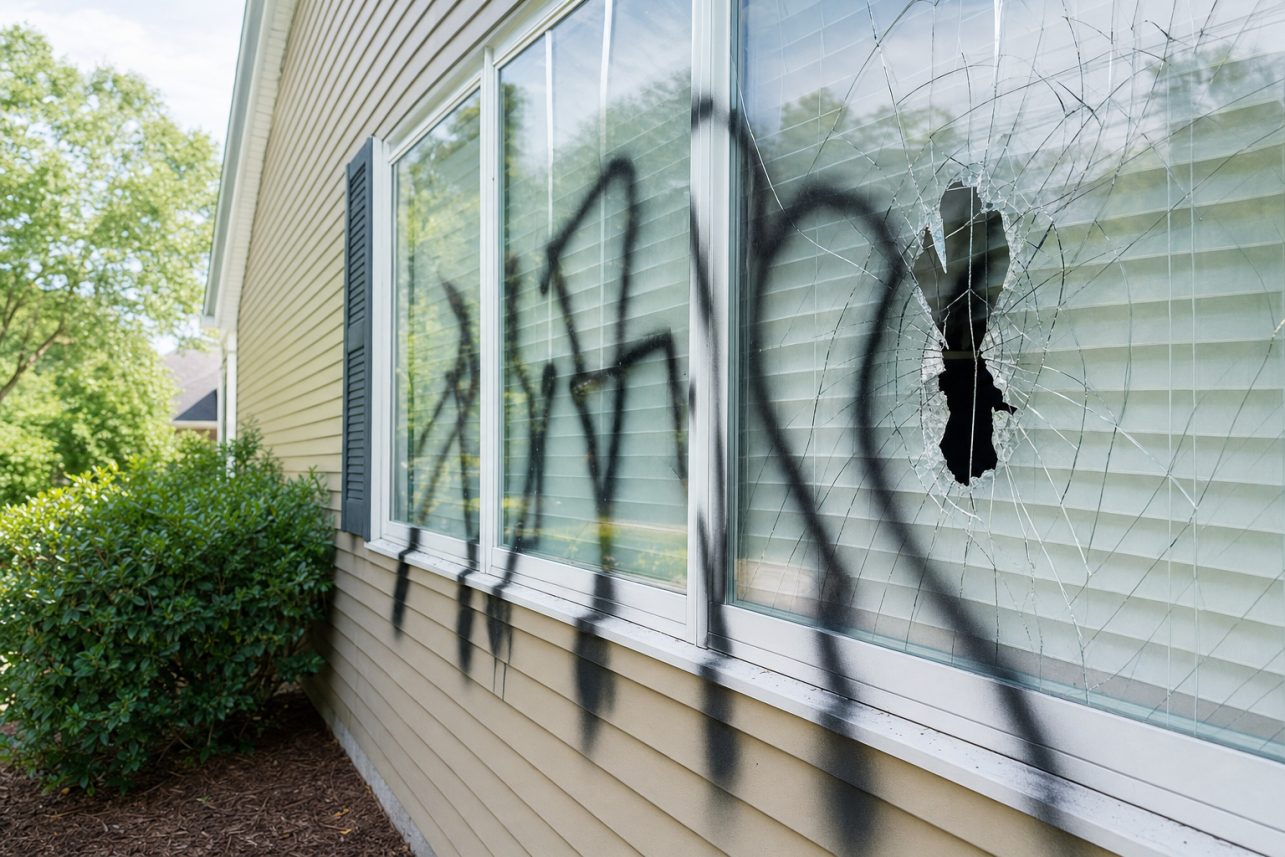
Next, photograph and video everything before cleanup: spray paint, shattered windows, kicked-in doors, slashed screens, damaged fixtures, and any destroyed contents. Capture wide shots for context and close-ups for detail. If vandals broke in, document the point of entry carefully, since forced-entry evidence supports both the vandalism and any related theft components of the loss.
Then build the paper trail. Gather receipts, credit card statements, or photos showing you owned damaged items, and collect written repair estimates from licensed local contractors rather than relying solely on the carrier’s numbers. Keep every invoice for emergency board-up, glass replacement, and security measures — those mitigation costs are typically reimbursable and are also required by your policy’s duty to protect the property from further damage.
Finally, keep a dated log of every call and email with the insurance company, including adjuster names and what was promised. When our Apex team takes over a vandalism file, this record often becomes the leverage that moves a stalled claim.
We organize all of this into a sworn proof of loss the carrier must formally respond to. Strong documentation cannot guarantee any particular payout, but it removes the easiest excuses insurers use to delay, discount, or deny.
What Counts As Vandalism Versus Theft Under A Vandalism Homeowners Claim Apex Policyholders Typically Carry?
Vandalism means intentional, malicious damage to your property — spray paint on brick or siding, smashed windows, kicked-in doors, slashed screens, damaged fixtures, or destruction inside the home. Theft is the taking of property, and while the two often happen together during a break-in, insurers treat them as separate perils with separate documentation requirements.
This distinction matters in Apex because adjusters sometimes shift damage into whichever category pays less or carries a tighter sub-limit. For example, a pried-open door frame is vandalism damage even if the intruder’s goal was theft, and it should be scoped and paid as building damage, not lumped into a contents theft schedule.
Most HO-3 policies written for Wake County homes cover both perils, but the burden falls on you to show what was destroyed versus what was taken. We separate the two clearly: a building estimate for the malicious damage, a contents inventory for anything stolen, and a police report that supports both. That structure prevents the carrier from applying the wrong deductible or the wrong limit.
One caution: damage caused during vehicle break-ins is an auto matter, not a homeowners matter, and we do not handle motor vehicle claims. But damage the same vandal caused to your garage door, fence, or home itself belongs on the homeowners side, and we make sure every dollar of it is accounted for there.
Have Homeowners Actually Won In Court When Insurers Denied Vandalism Damage?
Yes, and one case worth knowing is Mosley v. Pacific Specialty Insurance Co. (2020). The Mosleys owned a rental house that a tenant secretly converted into a marijuana grow operation, tampering with the electrical system and causing serious damage to the structure. The insurer denied the claim, arguing the policy’s vacancy and control provisions barred coverage.
The appellate court sided with the homeowners, holding that an insurer could not use those provisions to escape paying for damage the owners never knew about and never authorized. The insured prevailed, and the decision is frequently cited when carriers try to stretch exclusions to defeat vandalism and malicious mischief claims on homes and buildings.
The lesson for Apex homeowners is simple: a denial letter is the carrier’s opening position, not the final word. Courts have repeatedly required insurers to honor the plain language of the policy rather than the broadest reading of an exclusion.
That said, most disputes never need a courtroom. When damage is documented thoroughly, the policy language is applied correctly, and the estimate reflects real Wake County repair costs, carriers usually reconsider. As a licensed and bonded public adjusting firm, we build that record from the start so your claim stands on the same solid footing whether it settles at the adjuster’s desk or has to be escalated. We never promise a specific outcome — no honest professional can — but we do make sure the insurer answers to the full, documented facts.
Can Damage To My Fence, Shed, Or Landscaping Be Included In A Vandalism Homeowners Claim Apex Homeowners File?
In most cases, yes. Standard homeowners policies extend coverage beyond the dwelling itself under Coverage B, “Other Structures,” which typically pays up to 10% of your dwelling limit for detached items like fences, sheds, detached garages, gazebos, and mailboxes. If someone spray-painted your fence along a greenway in Apex or smashed up a storage building, that damage is claimable.
Landscaping is trickier but not excluded. Many policies pay a set amount — often 5% of the dwelling limit, capped per tree or shrub — for plants destroyed by vandalism or malicious mischief. Torn-up sod, cut ornamental trees, and destroyed plantings around a Bella Casa or Scotts Mill home can add real value to a claim when they are itemized properly.
The problem we see is that homeowners photograph the house and forget the yard, and carrier adjusters rarely volunteer these coverages. By the time the fence damage is noticed, the file may already be closed at a lower figure.
Our approach is to walk the entire property, document every structure and planting affected, and map each item to the correct coverage part with its correct limit. On a Vandalism Homeowners Claim Apex property owners bring to us, those overlooked exterior items are often the difference between a settlement that feels short and one that actually restores the property. There is no guarantee of a particular number, but nothing gets left off the estimate on our watch.
Will Filing A Vandalism Claim Raise My Premiums Or Put My Apex Policy At Risk?
It can affect your record, but the picture is more nuanced than most homeowners fear. Vandalism claims are generally coded as non-weather property losses, and a single claim rarely triggers non-renewal on its own. What carriers watch for is frequency — multiple claims in a three-to-five-year window — and whether the loss suggests an ongoing hazard at the property.
Here is the practical math for Apex homeowners: if the damage barely exceeds your deductible, filing may not make financial sense once you weigh potential premium impact. But if a vandal caused $15,000 in damage to doors, windows, flooring, and paint, absorbing that yourself to protect a premium is almost never the right trade. We help homeowners in Wake County run that comparison honestly before anything is filed.
Two other points matter. First, North Carolina insurers cannot simply invent a rate penalty; increases go through a regulated rate structure, and a documented, legitimate claim is exactly what you have been paying premiums for. Second, an underpaid claim hurts you twice — you take the claim on your record and still pay out of pocket to finish repairs.
If you decide to file, our job as your Apex public adjuster is to make that one claim count: complete scope, correct pricing, and a settlement position supported by evidence. We cannot promise what the carrier will pay, but we can make sure you never settle for less than the documentation supports.
Vandals Tore Out Pipes And Flooded My House — Is The Water Damage Part Of A Vandalism Homeowners Claim Apex Homeowners Can File?
In most cases, yes. When intruders rip out copper piping, smash a water heater, or leave faucets running, the resulting water damage is generally treated as part of the vandalism loss because a covered peril set it in motion. That can include soaked drywall, buckled hardwood floors, ruined cabinets, and damaged contents throughout the home.
The distinction that matters is between vandalism-caused water damage and flood damage. Water that enters from outside — rising creeks, storm surge, or surface runoff — is excluded from standard homeowners policies and is handled through the National Flood Insurance Program instead. If any portion of your loss involves rising water, resources at FEMA.gov and FloodSmart.gov explain how NFIP coverage works.
Insurers sometimes try to blur that line, or they scope only the plumbing repair and ignore secondary damage like mold, subfloor saturation, and insulation. A public adjuster in Apex documents the full chain of damage, brings in moisture readings and drying logs, and ties every damaged item back to the vandalism event so nothing gets carved out.
Courts have held insurers accountable when they stretch exclusions to deny legitimate claims. In Mosley v. Pacific Specialty Insurance Co., 968 F.3d 1145 (9th Cir. 2020), a homeowner’s insurer denied coverage after trespassers damaged the home, arguing the owners were responsible for conditions they never knew about. The court sided with the insureds, ruling the exclusion could not be applied that way. We can’t promise a specific result, but a properly documented claim gives you the strongest possible position.
The Vandal Was Caught. Does That Change How My Vandalism Claim In Apex Is Handled?
It changes some things behind the scenes, but it doesn’t reduce your right to be paid. Your homeowners policy covers the damage regardless of whether the person responsible is identified, arrested, or convicted. You file with your own insurer, and the carrier may later pursue the vandal through a process called subrogation to recover what it paid out.
An arrest actually helps your claim in practical ways. The Apex Police Department report will contain names, dates, and often photographs or officer observations that corroborate exactly what was damaged and when. That documentation makes it much harder for the carrier to question whether the damage was intentional or pre-existing.
One caution: if the vandal turns out to be a resident of your household or someone named on the policy, most policies exclude intentional acts by an insured. That’s a fact-specific issue, and it’s worth having someone review the policy language before assuming anything.
A restitution order from a Wake County criminal court is a separate matter from your insurance claim. Restitution is often paid slowly, if at all, so pursuing your policy benefits first is almost always the faster path to actually repairing your home. Our team coordinates the police documentation, the policy analysis, and the damage estimate so the criminal side and the insurance side don’t get tangled. We’re licensed and bonded, and we work only for the policyholder — never the carrier — so the goal is a settlement that reflects what it truly costs to restore your property.
Should I Be Present When The Insurance Company Inspects My Vandalized Home, And How Does A Vandalism Homeowners Claim Apex Expert Handle That Inspection?
You have every right to be there, and someone knowledgeable should always attend on your behalf. The carrier’s adjuster works for the insurance company, and the scope of damage written during that first walkthrough often becomes the foundation of the entire settlement. Items the adjuster doesn’t photograph or list have a way of disappearing from the estimate.
When we handle a Vandalism Homeowners Claim Apex families bring to us, we attend that inspection prepared. Before the carrier’s adjuster ever arrives, we’ve already documented the property ourselves — every gouged floorboard, spray-painted wall, shattered fixture, and damaged item of personal property — with photos, measurements, and a line-item estimate.
During the inspection, we walk the adjuster through the full extent of the loss so nothing is minimized or missed. Vandalism damage is easy to underscope: paint fumes penetrate HVAC systems, glass shards embed in carpet, and matching issues arise when only part of a room’s flooring or siding is destroyed. We raise those issues on the spot and follow up in writing.
Afterward, we compare the carrier’s estimate against ours line by line and negotiate the differences with documentation, not opinions. Policyholders who push back with evidence have prevailed in court, too — in Bowler v. Fidelity & Casualty Co., 53 N.J. 313 (1969), the court ruled for an insured whose carrier delayed and resisted paying a legitimate property claim, holding the insurer to its obligations under the policy. Preparation before the inspection is what makes that kind of leverage possible.

Can I Start Cleaning Up Graffiti And Boarding Windows Before The Insurer Approves My Claim?
Yes — in fact, your policy requires you to take reasonable steps to prevent further damage, and those emergency measures are typically reimbursable. Boarding broken windows, securing doors, tarping openings, and shutting off damaged plumbing all fall under your duty to mitigate. Keep every receipt, because those costs belong in your settlement.
What you should not do is make permanent repairs or discard damaged property before the loss is fully documented. Photograph and video everything first: wide shots of each room, close-ups of graffiti and broken items, serial numbers on damaged electronics. If you must remove something for safety, set it aside in the garage or a storage bin rather than hauling it to the curb.
Graffiti deserves special care. Don’t paint over it or pressure-wash brick until the damage is recorded, because removal methods themselves can affect what the estimate should include. Some paints penetrate porous masonry and require professional abatement, and cheap fixes the carrier suggests often fail within months in North Carolina’s humidity.
A public adjuster in Apex can step in at this stage and manage the sequence — emergency mitigation first, thorough documentation second, permanent repairs only after the scope is agreed. That order protects both your home and your claim. We prepare the inventory of damaged contents, obtain contractor pricing appropriate for the Wake County market, and present the full loss to your carrier. While no one can guarantee a particular payout, following these steps prevents the most common reasons vandalism claims come up short.
Local Relevance
Apex has grown fast, and that growth shapes the vandalism losses we see. Newer subdivisions on the edge of town sit near active construction, and homes bordering job sites or greenways see more broken fences, damaged siding, and forced entries into garages and outbuildings. Closer to the historic downtown, older homes have original doors, windows, and trim that carriers try to replace with cheap modern equivalents — a fight over like-kind materials we know how to win.
Commuter households are another factor. With so many Apex residents working in Raleigh or Research Triangle Park, homes sit empty during the day, and vandalism often is not discovered until hours later, which carriers sometimes use to question the timeline. Prompt, thorough documentation closes that door.
We serve all of Wake County, and the same team behind our Public Adjuster Cary NC office handles Apex claims — often on-site the same week you call. We also assist with related residential losses, from fire and smoke damage to water damage and tree damage claims.
Because so much of Apex was built in waves of rapid development, many neighborhoods mix nearly identical builder-grade materials that are now discontinued — so when vandals damage one section of siding, fencing, or trim, a proper claim often needs to cover matching or replacing a much larger area than the carrier’s first estimate admits.
Vandalized Home In Apex? Talk To An Adjuster Who Works For You
Before you accept the insurance company’s number — or their denial — get a free review of your damage and your policy from For The Public Adjusters, Inc. We are licensed and bonded in North Carolina, and we only get paid when your claim does. One call gets a local adjuster to your Apex property, usually within days.
Call us: (919) 400-6440
Helpful Resources
- NCDOI Public Adjusters Guide
- Insurance Information Institute (III)
- North Carolina Department of Insurance — State regulator overseeing insurers and public adjuster licensing
- Insurance Information Institute — Consumer education on homeowners insurance coverage
Last updated: September 26, 2026