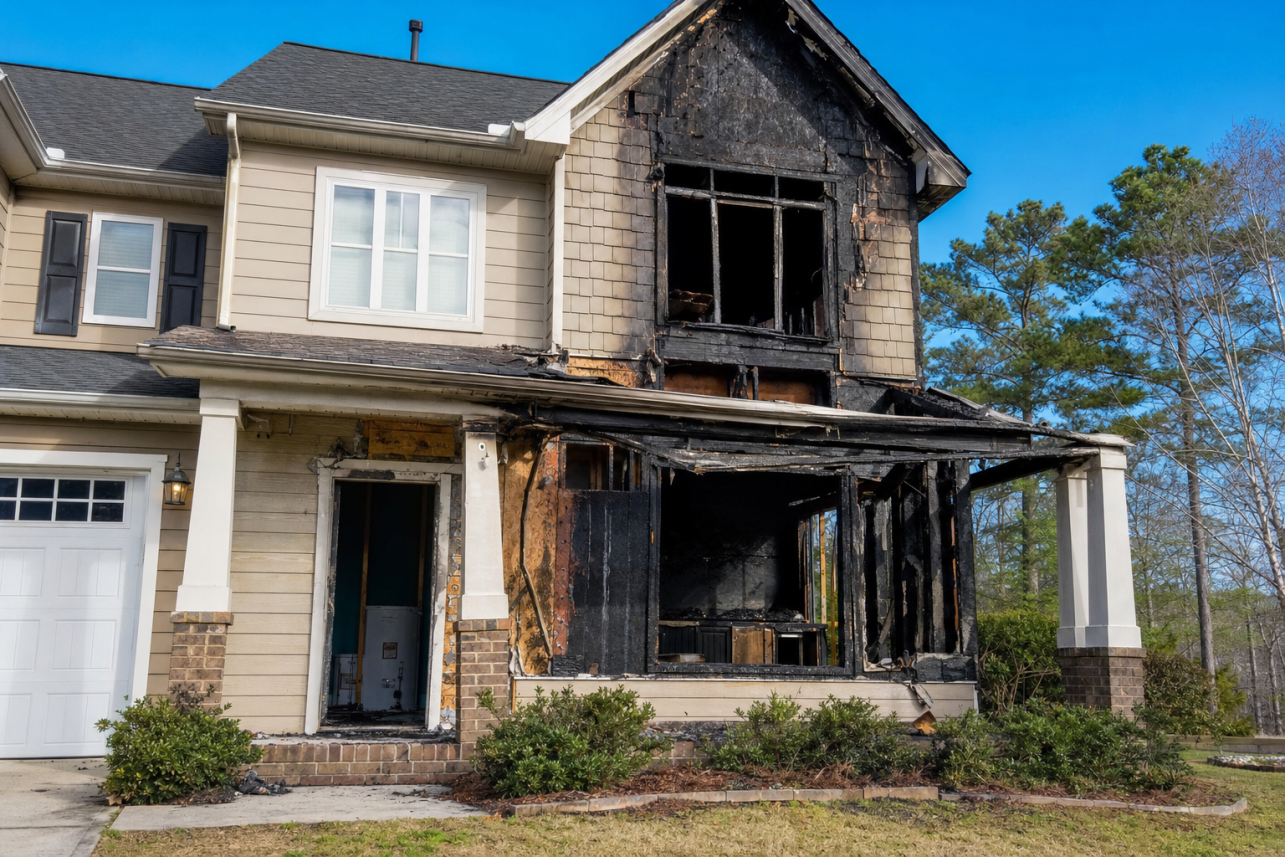
The Best Public Adjuster Raleigh NC homeowners can hire is one who is licensed, bonded, and works exclusively for the policyholder — never the insurance company. For The Public Adjusters, Inc. documents, values, and negotiates residential and commercial property claims across Raleigh and Wake County, from fire and smoke losses to water, tree, and tornado damage. Our fee is a percentage of the recovery, so our interest sits on the same side of the table as yours.
What This Service Is
A public adjuster is the only type of insurance adjuster licensed to represent the policyholder. The adjuster your carrier sends works for the carrier. We work for you — reading the policy, building the damage estimate, preparing the contents inventory, and negotiating the settlement.
In North Carolina, public adjusters are licensed and regulated by the state, and the NCDOI Public Adjusters Guide is a smart first read for any homeowner deciding whether to hire one. It explains what a public adjuster can and cannot do, and how fees work. We encourage every Raleigh client to check our license before signing anything.
The claims we handle most often in the Triangle are fire damage, smoke damage, water damage, tree-strike damage, vandalism, arson defense for innocent homeowners, and commercial business losses. Smoke travels farther than most carriers want to admit — it is the same issue we see on every smoke damage insurance claim help in Morrisville file, where odor and residue show up rooms away from the fire itself. We do not handle cell phone, motor vehicle, health, or life insurance claims — only damage to homes, buildings, and their contents.
Common Problems
What Does A Raleigh Public Adjuster Cost — And Is It Worth It?
Public adjusters in North Carolina work on contingency: a percentage of what the insurance company pays, agreed in writing before work begins. There is no hourly bill and no upfront fee.
The value question comes down to the gap between the carrier's first number and what your policy actually owes. Carrier estimates routinely miss code-upgrade coverage, matching requirements for siding and roofing, full contents inventories, and additional living expenses while you are displaced.
We cannot promise any specific result — no honest adjuster can. What we can do is make sure every covered dollar is documented and claimed, which is where most underpayments hide.
The Carrier Denied Or Lowballed My Claim. What Now?
A denial or a low offer is a position, not a verdict. Policyholders who push back with documentation and policy language win real disputes. In Windridge of Naperville Condominium Association v. Philadelphia Indemnity Insurance Company, a federal appeals court ruled in 2019 that the insurer had to replace storm-damaged building siding on all elevations — not just patch the damaged side — because mismatched repairs did not restore the property. Matching disputes like that come up constantly on Raleigh roofs and siding.
The first step is a line-by-line comparison of the carrier's estimate against the actual scope of damage. We frequently reopen underpaid claims, the same way our water damage claim help in Bynum files often start with a settlement that missed hidden moisture behind walls.
When a dispute hardens, we document the file so thoroughly that appraisal or referral to insurance dispute lawyers becomes a strong position rather than a last resort.
How Do I Choose The Best Public Adjuster Raleigh NC Has To Offer?
People searching for the best public adjuster near me should check three things before signing. First, licensing and bonding — verify the license with the state, and walk away from anyone who cannot produce it. We are licensed and bonded.
Second, relevant experience. Top public adjusters can show you comparable claims: a kitchen fire, a burst supply line, a loblolly pine through a roofline. Ask how they handled the contents inventory and the living-expense claim, not just the structure.
Third, local knowledge. An adjuster who works Wake County knows how Triangle carriers argue "wear and tear" on late-'90s builder-grade roofs and how tree claims actually get paid here. That is why we keep dedicated teams close by, including our public adjuster in Garner office serving the south side of the county.

Our Process
Free Claim Review And Policy Reading
We start by reading your actual policy — declarations, endorsements, and exclusions — and inspecting the damage ourselves. You learn what the policy owes before anyone commits to anything. If we cannot add value, we say so.
Documentation And Valuation
We photograph and measure every affected area, test for hidden damage like moisture and smoke residue, and build a room-by-room contents inventory. The result is an independent estimate written in the same format carriers use, so there is no apples-to-oranges argument. The depth of this file is usually what moves the settlement.
Negotiation And Settlement
We present the claim, meet the carrier's adjuster on site, and answer every pushback with documentation. You approve any settlement before it is accepted — we negotiate, you decide. If the carrier will not move on a legitimate dispute, we prepare the file for appraisal or legal referral.
| What's at Stake | Going It Alone | With For The Public Adjusters |
|---|---|---|
| Damage documentation | Carrier's adjuster writes the scope; hidden smoke, soot, and moisture damage often go unrecorded | Independent inspection with moisture mapping, duct checks, and photo documentation of every affected room |
| Contents inventory | Homeowner fills out forms from memory, usually missing 40-60% of damaged items | Room-by-room inventory built with you, with replacement pricing and depreciation reviewed line by line |
| Estimate review | Little way to know if overhead, profit, code upgrades, or matching costs were left out | Line-item comparison against the policy, with court precedent like Mills v. Foremost cited when carriers omit overhead and profit |
| Negotiation | You argue with a trained adjuster whose employer pays the claim | A licensed and bonded adjuster who works only for you handles every negotiation |
| Your time | Dozens of hours of calls, paperwork, and meetings while displaced | We manage the claim so you can focus on your family and your home |
Commonly Overlooked In The Public Adjusting Industry
- General contractor overhead and profit on multi-trade repairs — Carriers often strip the standard 10-and-10 from estimates even though courts, including in Mills v. Foremost, have held policyholders are entitled to it when multiple trades are needed.
- Soot contamination inside HVAC ducts and the air handler — Ducts are hidden and rarely opened during a carrier's walkthrough, so smoke damage keeps recirculating long after the visible surfaces are repainted.
- Matching of discontinued shingles, siding, and flooring — Adjusters price a patch repair without checking whether the material still exists, even though decisions like Cedar Bluff v. American Family required insurers to pay for a uniform result.
- Ordinance and law (code upgrade) coverage — Raleigh and Wake County code requirements can add thousands to a rebuild, but the coverage sits in a separate policy section most homeowners never think to invoke.
- Recoverable depreciation deadlines — The withheld depreciation is only paid after repairs are completed and claimed on time, and policyholders routinely leave it on the table without realizing it was theirs.
- Moisture migration two or three rooms beyond the visible leak — Water travels along framing and under flooring, so damage that is never meter-tested gets sealed behind new drywall and surfaces later as mold.
- Additional living expenses beyond the first hotel stay — ALE often covers months of comparable housing, extra mileage, and meal differentials, but carriers seldom volunteer the full scope of what qualifies.
- The appraisal clause as a dispute tool — Most policies contain a built-in mechanism for resolving valuation disputes, yet homeowners accept a low figure because no one told them the clause exists.
Case Studies
Case Study #1
Situation: A family in Raleigh's North Hills neighborhood suffered a kitchen fire that spread smoke and soot through the entire two-story home. Their insurer sent a staff adjuster within a week and issued an initial estimate.
Problem: The carrier's estimate covered repainting the kitchen and cleaning visible surfaces, but ignored soot contamination inside the HVAC ductwork, smoke-damaged attic insulation, and roughly 60% of the family's contents. The initial offer was $38,000 on a loss that clearly ran much deeper.
Investigation: Our team performed a room-by-room inspection, pulled supply and return vent covers to document soot inside the duct system, and tested odor-sealed surfaces behind cabinetry. We built a complete contents inventory with the family, item by item, instead of relying on the carrier's one-page summary.
Findings: Soot had migrated through the air handler into every conditioned room. Insulation, duct runs, and dozens of textiles and electronics the carrier never listed were damaged. The carrier's estimate also omitted general contractor overhead and profit, even though multiple trades were clearly required — the exact issue decided in the policyholder's favor in Mills v. Foremost Insurance Co., 511 F.3d 1300 (11th Cir. 2008), where the court held insureds were entitled to overhead and profit on a hurricane-damaged home claim.
Solution: We prepared a line-item estimate reflecting full duct cleaning, insulation replacement, odor sealing, a documented contents schedule, and properly applied overhead and profit, then presented it to the carrier with photographs and testing documentation.
Outcome: After negotiation, the claim settled at $147,000 — nearly four times the original offer — plus additional living expenses for the months the family was displaced. Every figure was supported by documentation the carrier could not reasonably dispute.
Lesson: Fire losses are almost never limited to what the eye can see. Smoke travels through a home's air system, and a carrier estimate written in a single walkthrough rarely captures it.
Case Study #2
Situation: When the remnants of a hurricane tracked through Wake County, a homeowner near Lake Johnson lost a large section of roofing, and wind-driven rain soaked the second floor and ceilings below.
Problem: The insurer approved a partial roof repair and some drywall patching, but refused to replace the remaining shingles even though the original product line had been discontinued, leaving a visibly mismatched roof. Interior moisture behind walls was never tested or scoped.
Investigation: We brought in moisture mapping of the affected walls and ceilings, documented elevated readings two rooms beyond the carrier's scope, and obtained manufacturer confirmation that matching shingles were no longer produced.
Findings: The hidden moisture meant insulation and portions of wall cavities needed removal to prevent mold. On the matching issue, courts have sided with policyholders in comparable disputes — in Cedar Bluff Townhome Condominium Ass'n v. American Family Mutual Insurance Co., 857 N.W.2d 290 (Minn. 2014), the court held the insurer had to replace undamaged siding so the repaired property would match, because a patchwork repair did not restore the home to its pre-loss condition.
Solution: We submitted a revised scope covering full roof slope replacement for uniformity, complete interior drying and rebuild, and a supplement for the hidden moisture damage, supported by the moisture logs and manufacturer documentation.
Outcome: The carrier revised its position and paid for full replacement of the affected roof slopes and the expanded interior scope. The settlement grew from an initial $19,500 to just over $84,000.
Lesson: A hurricane claim is rarely finished when the tarp comes off. Discontinued materials and hidden moisture are two of the most common reasons storm settlements come in short.
| Your Situation | Typical Complexity | What It Depends On |
|---|---|---|
| Kitchen or house fire with smoke throughout the home | High — smoke travels through ductwork and contents losses are large | Whether the carrier's estimate includes duct cleaning, odor sealing, insulation, and a full contents inventory |
| Burst pipe or appliance leak with soaked floors and walls | Moderate to high — hidden moisture spreads behind finishes | Whether moisture readings were taken beyond the visibly wet rooms before drywall was closed back up |
| Hurricane or tornado roof damage with interior leaks | High — matching, slope replacement, and hidden water are common fights | Whether your shingle line is discontinued and whether interior moisture was scoped, not just ceiling stains |
| Claim already denied or drastically underpaid | High — requires policy analysis and a documented rebuttal | Policy language, deadlines, and whether appraisal or re-inspection rights still apply |
| Flood damage from rising water | Specialized — flood falls under separate NFIP rules, not your homeowners policy | Whether you carry a flood policy; FEMA (fema.gov) and the NFIP (floodsmart.gov) explain coverage and filing requirements |
| Commercial building or rental property loss | High — business interruption and lease issues layer on top of the damage | Whether loss of rents or business income coverage applies and how the repair timeline affects it |
| Auto, cell phone, health, or life insurance claims | Not applicable | We do not handle these claim types — our work is homes, buildings, and their contents only |
Reviews
A pipe burst in our crawl space while we were out of town and water wicked up into the hardwoods and walls. Our insurance company offered to refinish part of one room. For The Public Adjusters documented moisture readings in three rooms we didn't even know were affected and handled every call with the carrier. The final settlement covered continuous flooring throughout, drying, and our hotel stay. I would never face a water claim alone again.
Danielle R., Five Points
After a garage fire, our insurer's contents list was two pages long. The team here sat with us for an afternoon and built an inventory that ran over twenty pages — tools, holiday decorations, sports equipment, things we'd forgotten we owned. They also caught smoke damage in the bonus room above the garage that the carrier's adjuster never inspected. Professional, patient, and relentless on the details.
Marcus T., North Raleigh
Hurricane damage tore up our roof and the insurance estimate didn't come close to what our contractor needed to actually repair it. These adjusters re-scoped everything, proved our shingles were discontinued, and got the carrier to pay for full slope replacement instead of a mismatched patch. They explained each step in plain English and never overpromised — they just did the work. Four and a half months start to finish on a complicated claim.
Priya S., Cary / Wake County
Frequently Asked Questions
What Does The Best Public Adjuster Raleigh NC Actually Do For My Property Claim?
A public adjuster works exclusively for you, the policyholder — never for the insurance company. When your Raleigh home or commercial building suffers damage from fire, smoke, water, hail, hurricanes, or tornadoes, we document every element of the loss, interpret the fine print of your policy, prepare a detailed estimate, and negotiate directly with the carrier's adjuster on your behalf.
That matters because the adjuster your insurer sends is paid by the insurance company. Their estimate often reflects the carrier's interests, not yours. Our team at For The Public Adjusters, Inc. builds an independent, line-item scope of damage for the structure and your contents, including items that are easy to miss — code-upgrade costs, hidden moisture damage behind walls, smoke residue in HVAC systems, and matching requirements for roofing and siding.
Courts have repeatedly affirmed that policyholders are entitled to the full benefit of their policies. In Sproull v. State Farm Fire & Casualty Co., 2021 IL 126446, the Illinois Supreme Court ruled in favor of a homeowner whose fire-damaged dwelling claim had been reduced by improperly depreciating labor costs — a practice that shortchanges insureds everywhere, including Wake County.
We handle claims for homes, buildings, and contents throughout Raleigh and the surrounding Wake County area. We do not handle claims involving motor vehicles, health, life, or cell phones. We are licensed and bonded in North Carolina, and while no one can promise a specific outcome, having a professional advocate ensures your claim is presented completely and accurately.
How Much Does It Cost To Hire A Public Adjuster In Raleigh, And Is It Worth It?
For The Public Adjusters, Inc. works on a contingency-fee basis for Raleigh homeowners and building owners. That means our fee is a percentage of the insurance settlement, and you pay nothing upfront. If there is no recovery, you owe us nothing for our adjusting work. We discuss the exact percentage before you sign anything, so there are never surprises.
Is it worth it? Consider what goes into a properly prepared claim: a room-by-room inventory of damaged contents, moisture mapping after a water loss, structural documentation after a fire, and a repair estimate built to the same standards contractors actually charge in the Triangle market. Most policyholders simply don't have the time, software, or policy knowledge to do this at the level the insurance company's adjusters do.
We also know how North Carolina policies treat replacement cost, actual cash value, ordinance and law coverage, and additional living expenses — distinctions that can meaningfully change what a Wake County claim is worth. We cannot and do not guarantee any specific settlement amount; no honest adjuster can. What we can promise is a complete, well-documented claim presented by a licensed and bonded professional who answers only to you.
Many of our Raleigh clients come to us after receiving an initial offer that felt low, or after a claim was partially denied. Others call us the day the damage happens so the claim is built correctly from the start. Either way, the earlier we're involved, the more thoroughly we can document your loss.
Can You Help With Hurricane, Tornado, Or Flood Damage Claims In Wake County?
Yes. Raleigh sits far enough inland that people sometimes underestimate storm risk, but hurricanes like Fran and Matthew caused extensive damage across Wake County, and tornadoes — including the April 2011 outbreak that tore through downtown Raleigh — have destroyed homes and businesses here. We represent policyholders on hurricane and tornado claims involving structural damage, roof damage, water intrusion, and destroyed contents.
Flood claims deserve special attention because standard homeowners policies almost never cover rising water. Flood coverage typically comes through the National Flood Insurance Program (NFIP), administered by FEMA, or a private flood carrier. NFIP policies have their own proof-of-loss deadlines and documentation rules that differ sharply from a standard homeowners claim, and missing those deadlines can jeopardize your recovery. You can learn more about coverage and claim requirements at FloodSmart.gov (the official NFIP site) and FEMA.gov.
If your Raleigh property took on water, it's also common to have a mixed loss — wind-driven rain through a hurricane-damaged roof covered under your homeowners policy, plus rising water covered under a separate flood policy. Sorting out which policy owes for which damage is exactly the kind of work a policyholder's adjuster handles, and it's where carriers often dispute responsibility.
We document the full scope of storm damage to your home, building, and contents, coordinate the separate claims, and negotiate each one. We're licensed and bonded in North Carolina, and we'll give you an honest assessment of your situation — never an inflated promise.
My Raleigh Insurance Claim Was Underpaid Or Denied. Do I Have Any Real Leverage Against The Carrier?
You have more leverage than most policyholders realize. An initial denial or low offer is the insurance company's position — it is not the final word. Policies contain appraisal provisions, North Carolina law imposes good-faith obligations on insurers, and courts have sided with property owners when carriers underpay.
A strong example is Lammert v. Auto-Owners (Mutual) Insurance Co., 572 S.W.3d 170 (Tenn. 2019), where homeowners whose houses and barn suffered hail damage challenged the insurer's practice of depreciating labor when calculating actual cash value. The Tennessee Supreme Court ruled for the insureds, holding that labor does not depreciate — a decision that strengthened underpaid structural claims for policyholders well beyond that state. Similar labor-depreciation and underpayment disputes arise constantly in North Carolina property claims.
In practice, winning a dispute starts with evidence. We re-inspect the property, identify damage the carrier's adjuster missed or minimized, obtain supporting documentation from engineers or contractors when needed, and prepare a corrected estimate. From there we negotiate, invoke appraisal when appropriate, or document the file so your attorney has what they need if litigation becomes necessary.
If you're searching for the Best Public Adjuster Raleigh NC after a denial, bring us your denial letter and policy — For The Public Adjusters, Inc. will review them and tell you honestly whether the claim is worth reopening. We're licensed and bonded, we handle claims for homes, buildings, and contents only, and while results can never be guaranteed, underpaid claims are frequently resolved for more once they're properly documented and pressed.
Do You Handle Fire And Smoke Damage Claims In Raleigh, And How Is That Different From What My Carrier's Adjuster Does?
Yes. Fire and smoke losses are among the most complex claims we manage for homeowners and building owners across Raleigh and Wake County. The visible char is only part of the story — smoke residue migrates through HVAC systems, soot etches finishes, and heat can compromise framing and wiring that looks intact on the surface.
The adjuster your insurance company sends works for the carrier. We work exclusively for you, the policyholder. Our team documents every affected material, prepares a detailed structure and contents inventory, and negotiates from your policy language rather than the carrier's first estimate.
North Carolina courts have made clear that insurers who lowball or mishandle property claims can be held accountable. In Gray v. North Carolina Insurance Underwriting Association, 352 N.C. 61 (2000), the North Carolina Supreme Court upheld a verdict for homeowners whose storm-damaged house claim was improperly handled, including treble damages under the state's unfair trade practices law. That decision gives policyholders real standing when a carrier cuts corners.
We can't promise a specific dollar outcome — no honest adjuster can — but we can promise your fire loss will be fully documented, professionally presented, and pursued under every applicable coverage in your policy, from dwelling and contents to additional living expenses while you're displaced.
How Do I Know I'm Hiring The Best Public Adjuster Raleigh NC Has To Offer?
Start with licensing. Any legitimate Best Public Adjuster Raleigh NC search should lead you to a firm licensed and bonded through the North Carolina Department of Insurance — For The Public Adjusters, Inc. is both. You can verify any adjuster's license directly with the Department before you sign anything.
Next, ask about local claim experience. Raleigh properties face specific loss types: hurricane damage pushing in from the coast, tornado outbreaks that have torn through Wake County, kitchen fires, lightning strikes, and burst pipes during January cold snaps. An adjuster who has negotiated these exact claims with the carriers operating in the Triangle will anticipate the disputes before they happen.
Then ask how they document a loss. A strong firm prepares its own independent estimate, a room-by-room contents inventory, and a formal proof of loss — not just a markup of the carrier's numbers. Ask to see a sample claim package.
Finally, ask about fees and promises. Reputable firms work on a contingency percentage with no upfront cost, and they will never guarantee a specific settlement amount. If someone promises you a number before reviewing your policy and inspecting your damage, walk away. Honest representation, thorough documentation, and verifiable credentials are what separate a true professional from a salesperson.
A Pipe Burst In My Raleigh Home And Water Soaked The Floors And Drywall. When Should I Bring In A Public Adjuster?
Call as early as possible — ideally before the carrier's adjuster inspects. Burst pipes are common in Raleigh during hard winter freezes, and the first 48 hours shape the entire claim. Water wicks up drywall, travels under hardwood and subflooring, and creates hidden moisture pockets that lead to mold if they're missed.
Carriers frequently pay for what's visible and stop there. Our job as your Raleigh public adjuster is to document what isn't visible: moisture readings behind baseboards, saturation in insulation, damage to cabinets and built-ins, and affected contents. We prepare an independent scope of repair so you're not negotiating against the insurance company's estimate with nothing of your own.
Two practical steps before we arrive: stop the water and mitigate further damage — your policy requires reasonable mitigation — and photograph everything before anything is thrown out or torn out. Keep damaged flooring samples and ruined contents if you safely can.
One important distinction: a burst pipe or appliance leak is typically covered under your homeowner's policy, but rising water from outside is flood damage, which falls under a separate National Flood Insurance Program policy. If flooding from a storm is involved, FEMA.gov and FloodSmart.gov explain how NFIP claims work. We can help you sort out which policy applies and pursue the covered loss properly, with no guarantee of outcome but a full commitment to documenting every dollar of damage.
What Types Of Claims Does The Best Public Adjuster Raleigh NC Team Handle — And What Do You Not Take On?
For The Public Adjusters, Inc. represents policyholders on property claims: damage to homes, commercial buildings, rental properties, and the contents inside them. In the Raleigh area, that typically means fire and smoke, lightning, burst pipes and plumbing leaks, hurricane damage, tornado damage, hail, theft and vandalism, and business interruption tied to a covered building loss.
We do not handle claims involving motor vehicles, cell phones or personal electronics as standalone claims, health insurance, or life insurance. Those fall outside the public adjusting work we're licensed for, and we'd rather tell you that upfront than waste your time. If your loss involves rising floodwater, that's handled through the National Flood Insurance Program — FEMA.gov is the right starting point — though we can assist with the wind-driven hurricane portion of a combined loss.
For the claims we do take, the service is complete: policy review, independent damage documentation, a full structure estimate, contents inventory, proof of loss preparation, and direct negotiation with the carrier. North Carolina law backs policyholders who are treated unfairly — in Gray v. North Carolina Insurance Underwriting Association, the state's highest court affirmed that an insurer's bad-faith handling of a home damage claim exposed it to tripled damages. We're licensed and bonded in North Carolina, we never promise a specific settlement figure, and we only get paid as a percentage of what you actually recover.
Is For The Public Adjusters, Inc. Licensed To Represent Policyholders In North Carolina?
Yes. For The Public Adjusters, Inc. is licensed and bonded in North Carolina, which matters more than many Raleigh homeowners realize. The North Carolina Department of Insurance regulates public adjusters under state law, and anyone negotiating a property claim on your behalf for a fee must hold an active license.
That licensing requirement exists to protect you. A licensed adjuster is accountable to the state, must follow strict rules about contracts and fees, and carries a bond that provides a layer of financial protection for the policyholder. Unlicensed "claim consultants" and door-knocking contractors who offer to "handle the insurance" operate outside those protections, and carriers often refuse to deal with them at all.
Before you sign anything with any firm, verify the license yourself. The NC Department of Insurance maintains a public lookup tool, and a legitimate adjuster will hand you their license number without hesitation. We encourage every Wake County property owner to check ours.
One more point worth knowing: our license covers claims involving damage to homes, commercial buildings, and the contents inside them — fire, smoke, water, hurricane, tornado, hail, and similar losses. We do not handle claims involving motor vehicles, cell phones, health insurance, or life insurance, and no licensed public adjuster in this state should be offering to. If a dispute falls outside property coverage, we will tell you up front rather than take a case we cannot ethically work.
How Long Will My Raleigh Property Claim Take Once A Public Adjuster Gets Involved?
Every claim is different, but most residential losses in Wake County move through a predictable arc. Our first week is spent inspecting the property, photographing and documenting every area of damage, and reviewing your policy line by line — including coverages like ordinance and law, code upgrades, and additional living expenses that homeowners frequently overlook.
From there, we build a detailed estimate using the same industry software carriers use, then submit it and schedule a joint inspection with the company adjuster. Straightforward water or fire losses often reach a negotiated resolution within 30 to 90 days of that submission. Larger structural losses, or claims where the carrier disputes scope or causation, can run longer — sometimes several months if appraisal or other dispute mechanisms are needed.
North Carolina law does give carriers deadlines. Insurers are expected to acknowledge, investigate, and respond to claims within reasonable timeframes, and documented delay becomes leverage during negotiation. One of the most common things we see in Raleigh is a claim that has stalled for months simply because the homeowner didn't know what to send next; a complete, professionally documented demand package usually gets a stalled file moving again.
Two honest caveats. First, bringing us in early is faster than bringing us in after a lowball offer, because we shape the record from day one. Second, no ethical adjuster can promise a specific timeline or a specific dollar outcome — anyone who does is telling you what you want to hear, not how claims actually work.
What Should I Do Right After Fire, Water, Or Storm Damage Before The Best Public Adjuster Raleigh NC Can Get On Site?
First, make the property safe. If there's been a fire, wait for the fire marshal's clearance before re-entering. For burst pipes or appliance failures, shut off the water main. After a hurricane or tornado moves through the Triangle, stay clear of downed lines and unstable structures.
Second, document everything before you touch anything. Photograph and video every damaged room, the exterior, and individual contents — wide shots and close-ups. Your policy requires you to mitigate further damage, so tarping a torn-open roof or extracting standing water is appropriate, but keep every receipt and photograph the damage first. Do not throw anything away, even ruined items; damaged contents are evidence of your loss.
Third, report the claim to your carrier promptly, but keep your description factual and brief. Don't speculate about causes, don't guess at dollar amounts, and don't give a recorded statement before you understand your policy. Early misstatements are one of the most common reasons Raleigh claims get underpaid.
If rising water or flooding is involved, that's typically covered under a separate flood policy rather than your homeowners policy. Report it through the National Flood Insurance Program and review the claims guidance at FEMA.gov and FloodSmart.gov, because NFIP claims follow their own rules and deadlines.
Then call us. The earlier a public adjuster inspects the loss, the stronger the documentation — and strong documentation is what claims are ultimately paid on.
Do Policyholders Ever Actually Win Against Insurance Companies, Or Do Carriers Always Have The Upper Hand?
Policyholders win — and sometimes win big — when the facts are documented and the fight is handled correctly. A case worth knowing about happened right here in North Carolina: Guessford v. Pennsylvania National Mutual Casualty Insurance Company, decided in the U.S. District Court for the Middle District of North Carolina. The homeowner's house was destroyed by fire, and after the carrier dragged out the claim and disputed the payout, the court allowed the policyholder's bad-faith and unfair trade practices claims to go forward, and the insured ultimately prevailed with a substantial recovery well beyond the original offer.
Courts in other states have reached similar results. In Gruenberg v. Aetna Insurance Co., a landmark decision, a business owner whose building and contents burned sued after his insurers wrongfully refused to pay, and the court held that an insurer's unreasonable refusal to pay a valid property claim exposes it to liability beyond the policy limits.
What do these cases mean for a Raleigh homeowner? Carriers know this case law exists, and a claim backed by thorough documentation, a professional estimate, and a clear policy analysis gets treated differently than a homeowner negotiating alone. That is exactly the leverage the Best Public Adjuster Raleigh NC services from our firm are built to create — a claim file so well supported that litigation usually isn't necessary.
We can't guarantee any particular result, and the vast majority of our Wake County claims settle without a courtroom. But the record is clear: insureds with strong evidence and persistence are not powerless.
Can The Best Public Adjuster Raleigh NC Reopen Or Supplement A Claim I Already Settled?
In many situations, yes. If you accepted a payment but later discovered hidden damage — soaked framing behind drywall, smoke residue inside HVAC ducts, or contents you forgot to list — you can often file a supplemental claim, provided your policy's deadline for doing so has not passed.
Our Raleigh team starts by reviewing the original estimate line by line against the actual damage. Carrier estimates frequently miss code-upgrade costs, matching requirements for flooring and siding, and proper drying or demolition scope. We document what was overlooked, prepare a revised estimate, and present the supplement to the carrier with photos, measurements, and policy language to support each line item.
Timing matters in North Carolina. Most policies here require suit within three years, and some impose shorter windows for submitting additional proof of loss. The sooner we review a closed or underpaid file, the more options you have.
One important caveat: cashing a check is not always the end of the road, but signing a full release can be. Bring us every document the insurer sent you — including anything you signed — before assuming your Wake County claim is truly finished. We will tell you honestly whether a supplement is realistic. We never promise a specific dollar outcome, but we can promise a thorough, licensed, and bonded review of what your policy actually owes you.
What Documents Should I Gather Before Meeting With A Public Adjuster In Raleigh?
The single most important document is your full insurance policy — not just the declarations page. The declarations page shows your limits, but the coverage forms and endorsements decide what is actually owed on a Raleigh fire, water, or storm claim. If you cannot find your policy, we can help you request a certified copy from your carrier, which they are required to provide.
Beyond the policy, gather anything that documents the loss or the property's condition before it: photos and videos from before and after the damage, repair invoices, receipts for major purchases, and any inspection reports from when you bought the home. For contents losses, bank and credit card statements help reconstruct what you owned.
Also collect every communication from the insurance company — the claim number, adjuster letters, emails, estimates, and any checks or proof-of-loss forms. These tell us exactly where your claim stands and what positions the carrier has already taken.
If you have searched for the Best Public Adjuster Raleigh NC can offer, you already understand that preparation changes outcomes. Do not worry if your paperwork is incomplete — a loss is chaotic, and documents burn, soak, or get misplaced. For The Public Adjusters, Inc. routinely rebuilds claim files from scratch using property records, contractor measurements, and itemized contents inventories. Bring what you have, and we will build the rest.
What Is The Appraisal Clause In My Policy, And How Does It Compare To Hiring A Raleigh Public Adjuster?
Most North Carolina property policies contain an appraisal clause. It is a dispute-resolution tool: when you and the carrier agree that coverage exists but disagree on the amount of the loss, either side can demand appraisal. Each side picks an appraiser, the two appraisers select an umpire, and any two of the three set the loss amount, which is generally binding.
A public adjuster and appraisal are not the same thing — they work at different stages. A Raleigh public adjuster manages the entire claim from the start: documenting damage, preparing the estimate, negotiating scope and pricing, and handling proof-of-loss requirements. Appraisal is a last-resort mechanism when negotiation stalls over valuation.
The two often work together. If a carrier refuses to move off a lowball number on a Wake County hail, fire, or burst-pipe claim, invoking appraisal can break the deadlock — and the detailed estimate we built during the claim becomes the foundation of the appraisal presentation.
One warning: appraisal decides amount, not coverage. If the insurer is denying that your loss is covered at all, appraisal usually cannot fix that; those disputes may require legal counsel, and we can point you to attorneys who handle policyholder cases. Knowing which tool fits your situation is a big part of what we do, and we will walk you through the options honestly before you commit to anything.

Have North Carolina Courts Actually Ruled For Property Owners Against Insurance Companies?
Yes, and one decision from our own state supreme court is worth knowing. In Gaston County Dyeing Machine Co. v. Northfield Insurance Co., 351 N.C. 293 (2000), the North Carolina Supreme Court sided with the insured in a dispute over physical damage to property and equipment. The insurers argued their policy language excluded the loss; the Court held that where policy terms are ambiguous, they must be construed in favor of the policyholder and against the insurer that drafted them.
That principle — ambiguity favors the insured — runs through North Carolina property insurance law, and it matters on everyday Raleigh claims. Carriers draft the policy. When an exclusion or limitation can reasonably be read more than one way, our courts have said the reading that provides coverage wins.
This is exactly where the Best Public Adjuster Raleigh NC homeowners and building owners rely on earns its fee: knowing the policy language, knowing how North Carolina courts have interpreted it, and refusing to accept a denial letter as the final word. Many denials rest on exclusions that do not hold up under scrutiny.
To be clear, no one can guarantee a particular result — every claim turns on its own facts and policy. But the law in this state does not automatically favor the carrier. Policyholders who document their losses thoroughly and push back with informed arguments recover more often than people assume, and that is precisely the fight we take on for Raleigh and Wake County property owners.
Local Relevance
Raleigh property losses have a distinct local fingerprint. Mature willow oaks and loblolly pines tower over neighborhoods from Five Points to North Raleigh, and after days of soaking rain those trees come down on roofs — hurricane remnants have taught the city that lesson more than once. Tree damage claims here are rarely as simple as carriers make them sound, especially when a neighbor's tree is involved.
The building boom also matters. Whole Wake County subdivisions went up in the late 1990s and 2000s with builder-grade shingles, and those roofs are now at the age where carriers reflexively argue wear and tear instead of storm damage. The spring tornado and hail seasons cut narrow paths, so one street can be hit hard while the next block is untouched.
Flooding is the quiet risk. Crabtree Creek and the Neuse tributaries push water into homes that sit outside mapped high-risk zones, and homeowners policies exclude flood — separate coverage through the National Flood Insurance Program is the only protection, and the Federal Emergency Management Agency publishes the flood-zone maps worth checking before you assume you are safe. We handle claims throughout the Triangle, from Raleigh proper to a fire damage insurance claim in Hillsborough or a loss out in Johnston County near our public adjuster in Four Oaks coverage area.
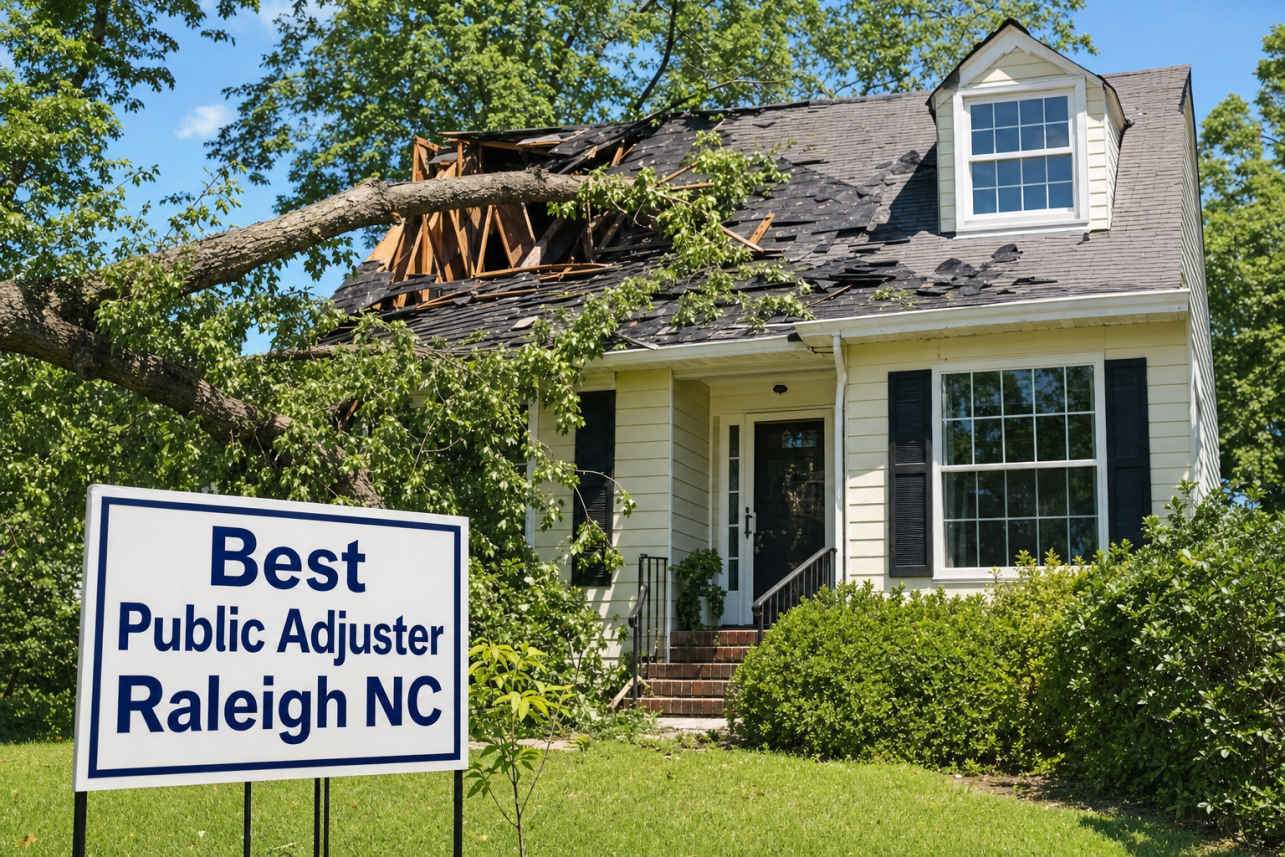
In Raleigh, trees cause more claim damage than wind itself — most "hurricane damage" here is actually loblolly pines and big willow oaks toppling after days of rain soften the ground, a lesson Fran drove home in 1996. Many homeowners are also surprised to learn that when a neighbor's healthy tree lands on their house, it is usually their own policy that responds, which changes how the claim should be documented from day one.
Talk To A Raleigh Public Adjuster Before You Accept The Carrier's Number
Whether it is a kitchen fire in North Raleigh, a pine through the roof, or a water loss the carrier underpaid, a free claim review costs you nothing and tells you exactly where you stand. For The Public Adjusters, Inc. is licensed, bonded, and works only for policyholders across Raleigh and Wake County.
Call us: (919) 400-6440
Helpful Resources
- NCDOI Public Adjusters Guide
- Federal Emergency Management Agency (FEMA)
- National Flood Insurance Program (NFIP)
- North Carolina Department of Insurance — State regulator where consumers can verify public adjuster licenses
Last updated: October 5, 2026