Before you hire an Insurance Dispute Lawyer Garner property owners should know that most underpaid or denied home and business claims can be resolved by a licensed public adjuster — without a lawsuit, court costs, or years of waiting. For The Public Adjusters, Inc. represents policyholders in Garner and across Wake County, documenting fire, water, smoke, tree, and storm damage and negotiating directly with the insurance company on your behalf. If litigation truly becomes necessary, we can connect you with insurance dispute lawyers — but attorneys are usually the last resort, not the first step.
What This Service Is
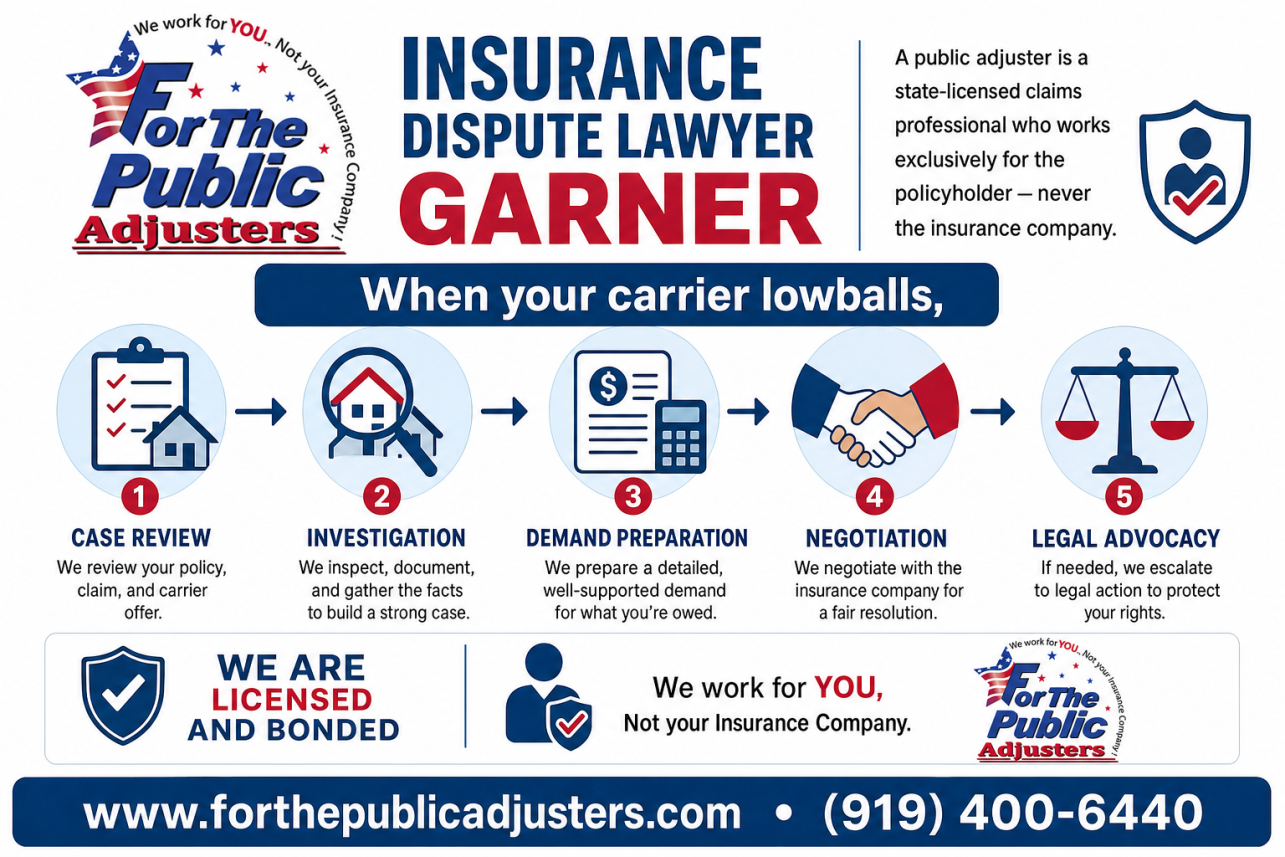
A public adjuster is a state-licensed claims professional who works exclusively for the policyholder — never the insurance company. When your carrier lowballs, delays, or denies a fire damage claim, water damage claim, or smoke damage claim, we re-inspect the loss, prepare a detailed estimate of the damage and contents, and negotiate a settlement based on your actual policy language.
That is different from what an attorney does. A lawyer's leverage is litigation, which can take years and typically costs 30–40% of your recovery plus expenses. A Garner public adjuster's leverage is documentation and policy knowledge, applied early, before positions harden. Many disputes exist simply because the damage was never fully scoped or the policy was misread — problems an adjuster fixes without a courtroom.
The NCDOI Public Adjusters Guide explains that public adjusters in North Carolina must be licensed and are held to specific standards when representing insureds. We are licensed and bonded, and we handle residential homeowners claims, commercial business claims, tree damage, vandalism, arson, car-hits-home losses, and flood insurance claims throughout Wake County. We do not handle cell phone, motor vehicle, health, or life insurance matters.
And policyholders can win when they push back with the right representation. In Broussard v. State Farm, a Mississippi couple whose home was destroyed during Hurricane Katrina challenged their insurer's denial in federal court and won a jury verdict covering their dwelling and contents. Cases like that show the law protects insureds — but they also show how long and costly litigation is. Strong claim documentation up front is what keeps most Garner families out of that fight entirely.
Common Problems
Will A Lawyer Cost Me More Than A Public Adjuster In Garner?
Usually, yes. Insurance litigation attorneys commonly charge contingency fees of roughly a third or more of the recovery, plus filing fees, expert witnesses, and deposition costs — and a lawsuit can stretch on for years while your home sits damaged.
A public adjuster works for a smaller percentage of the settlement, regulated in North Carolina, with no court costs and a timeline measured in weeks or months rather than years. For most underpaid residential homeowners claims and commercial business claims, that math strongly favors starting with an adjuster.
Insurance Dispute Lawyer Garner Or Public Adjuster: What If My Claim Was Denied?
A denial is not the end of your claim — it is a position the carrier has taken, and positions can be reversed with evidence. Many denials rest on an incomplete inspection, a misapplied exclusion, or missing documentation of hidden damage like moisture inside wall cavities after a burst pipe.
We reopen the file, re-inspect the property, and present a documented rebuttal under the terms of your own policy. If the carrier still refuses to act in good faith, that is the point where insurance dispute lawyers enter the picture — and by then, the adjuster's file becomes powerful evidence. Starting with a lawyer skips the step that resolves most disputes.
How Do I Know Who To Call First When My Insurer Won't Pay Fairly?
Ask one question: is my dispute about the amount and scope of the damage, or about a legal question of coverage? The overwhelming majority of Garner claim disputes are about scope and value — the carrier's estimate missed the smoke residue in the HVAC system, undervalued contents, or ignored structural damage from a fallen oak. Those are adjuster problems.
A good public adjuster is licensed, bonded, works only for policyholders, and can show you a line-by-line estimate of what was missed. The National Association of Insurance Commissioners encourages policyholders to verify licensing before hiring anyone to assist with a claim, and we welcome that check. If your case genuinely needs a courtroom, we will tell you — and hand your attorney a fully built file.
Our Process
Free Policy And Claim Review
We start by reading your actual policy and the carrier's estimate or denial letter side by side. Whether it is a fire, water, smoke, or tree damage claim, we identify what the insurance company missed, misapplied, or undervalued before any negotiation begins.
Independent Damage Documentation
We inspect the property ourselves — structure, systems, and contents — and build a detailed, itemized estimate. Hidden damage is where most Garner claims get shorted: moisture behind drywall, smoke migration into attic spaces, foundation impact from a vehicle strike. Our file is built to withstand scrutiny, whether it lands on a claims desk or, eventually, in front of a judge.
Negotiation, Settlement, Or Escalation
We present the documented claim to your insurer and negotiate as your licensed representative. Most disputes settle at this stage. If the carrier refuses to deal fairly, we can refer you to experienced insurance dispute lawyers — with your case already documented, which strengthens any litigation that follows. We never guarantee a specific outcome, but we make sure your claim is presented at its full documented value.
| Factor | Public Adjuster First | Attorney First |
|---|---|---|
| Typical fee | Percentage of recovery, commonly 10-25% | Contingency of 33-40% plus case costs |
| Typical timeline | Weeks to a few months through negotiation or appraisal | 12-24+ months through NC courts |
| Who documents the damage | Licensed adjusters inspect, measure, and estimate the full loss | Attorneys rely on outside experts you often pay for separately |
| Relationship with carrier | Negotiation stays in the claims process; carrier keeps working the file | Filing suit usually freezes negotiation and hardens the carrier's position |
| Best suited for | Underpaid, delayed, or poorly documented claims — the majority of disputes | Proven bad faith, coverage denials after appraisal fails, statute deadlines |
| What happens if it escalates | Complete claim file transfers to counsel, strengthening any lawsuit | Case starts from scratch without a professionally built damage record |
Commonly Overlooked In The Public Adjusting Industry
- The appraisal clause buried in the policy — Most policyholders never read past the declarations page, so they hire a lawyer for a valuation dispute their own policy already provides a faster, cheaper process to resolve.
- Matching requirements for discontinued shingles and siding — Carrier adjusters quietly write repairs for materials that no longer exist, and homeowners don't realize mismatch rules can support replacing the entire slope or elevation.
- Collateral damage beyond the obvious loss — Everyone stares at the roof or the burn area while gutters, screens, fencing, HVAC fins, and interior finishes go unmeasured and unpaid.
- Recoverable depreciation left unclaimed — Many Garner homeowners never file for the holdback after repairs are done, effectively donating thousands of dollars back to the carrier.
- Code upgrade (ordinance or law) coverage — Wake County building code changes can add real cost to a rebuild, and carriers rarely volunteer that the policy has a separate limit to pay for it.
- Continuing expenses inside business interruption claims — Owners calculate lost sales but forget payroll, rent, and loan payments that keep running during closure — items most policies explicitly cover.
- Proof-of-loss and notice deadlines — Policyholders assume the claim stays open indefinitely, then discover a missed contractual deadline gave the carrier grounds to deny everything.
- The evidentiary value of the claim file itself — People who rush to sue skip the professional documentation phase, then learn their attorney has to hire experts to rebuild what an adjuster would have created from day one.
Case Studies
Case Study #1
Situation: A homeowner off Aversboro Road in Garner had significant hail and wind damage to a 12-year-old architectural shingle roof after a spring storm swept through Wake County. The carrier's initial estimate came in at $4,800 — barely enough to patch two slopes.
Problem: The homeowner's first instinct was to call an attorney and sue. But no lawsuit had a foundation yet, because the claim itself had never been properly documented. Litigation would have meant contingency fees of 33% or more on a claim that hadn't even been fully measured.
Investigation: Our licensed adjusters performed a full roof inspection with drone photography, test squares on all slopes, and moisture readings in the attic. We also pulled the local weather data confirming hail size at the property on the date of loss.
Findings: The carrier's field adjuster had only inspected two of four slopes and missed collateral damage to gutters, window screens, and the HVAC condenser fins. Matching shingles were also discontinued, which under North Carolina practice supports full slope replacement rather than spot repair.
Solution: We prepared a line-item Xactimate estimate, submitted a supplemental claim with photographic evidence, and invoked the policy's appraisal clause when the carrier stalled — all without a single court filing.
Outcome: The claim settled at $31,400, more than six times the original offer. The homeowner paid a public adjusting fee that was a fraction of what attorney contingency fees would have cost, and the roof was replaced within eight weeks.
Lesson: Most underpaid claims in Garner are documentation problems, not legal problems. A public adjuster resolves the documentation gap first — and if litigation is ever truly needed, the case file we build makes any attorney's job far stronger.
Case Study #2
Situation: A small restaurant owner near White Oak Crossing suffered a kitchen fire that shut the business down. The carrier accepted the fire claim but denied most of the business interruption loss, and the owner was two weeks from missing payroll.
Problem: The owner had already consulted a law firm, which quoted a 40% contingency fee and warned that litigation could take 12 to 24 months. The business could not survive a two-year court fight.
Investigation: We audited the policy's business income provisions, reconstructed pre-loss revenue using POS records and tax returns, and documented the full period of restoration including permit delays specific to Wake County inspections.
Findings: The carrier had calculated lost income using only the slowest quarter of the prior year and had ignored ongoing payroll and continuing expenses the policy explicitly covered. The smoke remediation scope was also understated by roughly 60%.
Solution: We submitted a revised business interruption worksheet, negotiated directly with the carrier's large-loss desk, and secured two advance payments while the full claim was finalized — keeping the doors positioned to reopen.
Outcome: Total recovery reached $187,000, including $94,000 in business income the carrier had originally denied. The restaurant reopened in under four months, and no lawsuit was ever filed.
Lesson: Speed matters when a business is bleeding. Public adjusters can negotiate advances and settle within the claims process on a timeline no courtroom can match — the attorney route should be the last resort, not the first phone call.
| Your Situation | Best First Step | Why |
|---|---|---|
| Carrier's offer feels too low but the claim is open | Public adjuster | This is a scoping and documentation gap — a re-inspection and supplemental claim usually closes it without lawyers |
| Claim delayed for months with no decision | Public adjuster | Adjusters know NC's fair claims handling expectations and can push the file with deadlines and formal demands |
| Denial letter cites 'wear and tear' or 'maintenance' | Public adjuster | Causation evidence — weather data, moisture mapping, expert photos — often reverses these denials in negotiation |
| You and the carrier disagree only on the dollar amount | Public adjuster (appraisal clause) | Most policies include appraisal, a binding valuation process that resolves price disputes without any lawsuit |
| Carrier accuses you of fraud or takes examination under oath | Attorney, with adjuster support | Legal exposure requires counsel — but a documented claim file still protects you |
| Appraisal finished and carrier still refuses to pay | Attorney | Refusing a binding appraisal award is a genuine legal dispute, and your adjuster's file becomes the evidence |
| Statute of limitations deadline is weeks away | Attorney immediately | Only a filed lawsuit stops the clock; the adjuster can keep working the damages side in parallel |

Reviews
After the storm hit our neighborhood off Timber Drive, our insurer offered us next to nothing for the roof. I was ready to hire a lawyer until a friend told me to talk to For The Public Adjusters first. They re-documented everything, found damage the insurance adjuster never even looked at, and got our settlement up to where it should have been. No lawsuit, no court dates, done in about ten weeks.
Marcus T., Garner NC
Our water damage claim was denied outright and I honestly thought suing was the only option. This team read our policy line by line and showed the carrier where their denial contradicted their own coverage language. They invoked appraisal and we ended up with a fair payout. I would have paid a third of it to an attorney for the same result, maybe less.
Denise W., Garner NC
I run a small auto shop in Garner and my fire claim was a mess. They rebuilt the whole claim with real estimates and handled every call with the insurance company. My only regret is the two months I wasted trying to fight it myself before calling. If you're googling for a lawyer, call these folks first — they'll tell you honestly if you actually need one.
Rob H., Wake County
Frequently Asked Questions
Should I Hire An Insurance Dispute Lawyer Garner Homeowners Recommend, Or Start With A Public Adjuster?
In most property claim disputes, a public adjuster is the smarter first step. Attorneys are essential when a claim reaches litigation, but the majority of underpaid or delayed claims in Garner and across Wake County are resolved long before a courtroom is ever needed.
A licensed public adjuster documents your damage, prepares a detailed estimate using the same software insurance carriers use, and negotiates directly with the insurance company on your behalf. That professional-to-professional negotiation resolves most disputes without legal fees, which typically run 33 to 40 percent of your recovery when a lawyer takes the case.
Public adjuster fees in North Carolina are usually a smaller percentage, and the work happens faster. Litigation can take a year or more; a well-documented supplemental claim can be resolved in weeks.
There is also a practical benefit if your claim does eventually require an attorney. The file we build — photographs, moisture readings, line-item estimates, and a documented record of the carrier's responses — becomes the evidence a lawyer needs. Attorneys in the Triangle regularly refer clients to public adjusters first for exactly this reason. Starting with For The Public Adjusters, Inc. keeps every option open while giving your claim the strongest possible foundation.
What Can A Garner Public Adjuster Do That An Attorney Cannot?
The two roles are genuinely different, and understanding that difference saves Garner homeowners real money. An attorney's expertise is the law: contract interpretation, bad-faith litigation, and courtroom advocacy. A public adjuster's expertise is the claim itself — the damage, the policy coverage, and the dollar value of what the insurance company owes you.
We physically inspect your property, whether it's hail damage on a roof off Timber Drive or water damage in a home near White Oak. We measure, photograph, and scope every affected material, then build a line-item estimate that reflects true local repair costs in Wake County, not the carrier's discounted pricing.
Most attorneys do not perform this fieldwork. They rely on estimates and documentation produced by others — often by public adjusters or independent appraisers they bring in anyway. Hiring a lawyer first frequently means paying legal rates while the underlying valuation work still has to be done separately.
We also handle the day-to-day claim management: responding to the carrier's adjuster, submitting supplements when hidden damage is found during repairs, and invoking policy provisions like appraisal that can resolve valuation disputes without any lawsuit at all. If the carrier acts in genuine bad faith, we recognize it early and can tell you when it is truly time to involve counsel — with a complete, litigation-ready file already in hand.
How Much Does It Cost To Dispute An Insurance Claim In Garner, NC?
Cost is one of the biggest differences between the two paths, and it matters most on the typical residential claims we see across Garner, Clayton, and southern Wake County.
An attorney handling an insurance dispute usually charges a contingency fee of 33 to 40 percent of the recovery, plus litigation costs — expert witnesses, depositions, court filing fees — that can add thousands more. On a $60,000 roof and interior claim, that structure can consume $20,000 or more of your settlement.
A public adjuster works on a contingency basis too, but at a meaningfully lower percentage regulated under North Carolina law. You pay nothing up front, and the fee comes only from money actually recovered. If we don't improve your outcome, we haven't earned anything.
There's also a timing cost to consider. Lawsuits in Wake County can stretch twelve to twenty-four months, during which your home may sit unrepaired. Most disputes we handle resolve in a fraction of that time because we're negotiating the estimate itself rather than filing motions.
Our advice is simple: exhaust the lower-cost, faster resolution path first. For The Public Adjusters, Inc. offers a free claim review for Garner property owners, so you can see whether your claim was underpaid before committing to any fee at all.
When Does A Claim Actually Need An Insurance Dispute Lawyer Garner Residents Can Trust Instead Of An Adjuster?
An Insurance Dispute Lawyer Garner property owners hire should be reserved for situations a public adjuster legally cannot resolve. Knowing where that line sits protects you from paying attorney fees on a claim that never needed litigation.
A lawyer becomes necessary when the carrier issues a full coverage denial based on a policy interpretation and refuses to reconsider, when there is evidence of bad faith such as ignored deadlines under North Carolina's Unfair Claims Settlement Practices provisions, or when the statute of limitations is approaching and a lawsuit must be filed to preserve your rights.
Everything before that point — disputed damage scope, lowball estimates, depreciation disputes, denied supplements, delayed payments — is negotiation territory, and that is precisely where a public adjuster delivers the most value at the lowest cost.
Here is what we see in practice around Garner: the overwhelming majority of underpaid storm, water, and fire claims are resolved through re-inspection, a corrected estimate, or the policy's appraisal clause. Only a small fraction ever require counsel.
When a claim does cross that line, we say so directly and can connect you with attorneys who handle first-party insurance litigation in Wake County. You then arrive at that attorney's office with a fully documented claim file, which strengthens your case and often shortens the litigation itself. Starting with For The Public Adjusters, Inc. means you escalate only when escalation is genuinely warranted.
Will Starting With A Public Adjuster Hurt My Case If I Need An Insurance Dispute Lawyer Garner Later On?
No — in most situations it strengthens it. When For The Public Adjusters, Inc. handles your claim first, we build a complete, documented file: a line-item estimate, photographs, moisture readings, policy analysis, and a written record of every communication with the carrier.
If your Garner claim eventually does require litigation, that file becomes the backbone of the attorney's case. Lawyers routinely tell clients that the hardest part of an insurance lawsuit is proving the scope and value of the damage. A public adjuster does exactly that work, before positions harden and evidence disappears.
There is also a practical benefit. North Carolina policies require you to cooperate with the insurer and, in many cases, complete an appraisal or proof-of-loss process before suing. We manage those steps correctly so no deadline is missed and no procedural door closes.
Many disputes we handle in Wake County settle at the adjusting or appraisal stage, which means the legal step never becomes necessary. But when it is, we can refer you to counsel and hand over a claim that is organized, documented, and ready — instead of a shoebox of receipts and a verbal dispute. Starting with an adjuster keeps every option open while often resolving the problem faster and at lower cost.
How Long Does An Insurance Dispute In Garner Take With A Public Adjuster Versus An Attorney?
Timelines differ dramatically, and this is one of the biggest reasons Garner homeowners call us before calling a law firm.
When For The Public Adjusters, Inc. takes over a disputed claim, we typically re-inspect the property, prepare a corrected estimate, and re-open negotiations within the first few weeks. Many underpaid claims in Wake County resolve in 30 to 90 days once the carrier receives professional documentation it can't easily dismiss. If negotiation stalls, the policy's appraisal clause usually resolves the dollar dispute in a few months without any court involvement.
Litigation is a different animal. Filing suit in Wake County Superior Court starts a process of pleadings, discovery, depositions, and mediation that commonly runs twelve to twenty-four months — sometimes longer if the carrier appeals. During that time, repairs often sit unfinished and your family absorbs the disruption.
Speed matters for another reason: contractors, materials, and temporary housing costs in the Garner and Raleigh market keep rising. A settlement reached this season stretches further than the same dollars two years from now.
Our approach is simple. We push the claim as far and as fast as the adjusting and appraisal process allows. Only if the insurer denies coverage outright or acts in bad faith do we recommend the slower legal route — and by then, the groundwork we've laid shortens even that timeline.
My Storm Damage Claim Was Underpaid, Not Denied — Is That A Job For An Insurance Dispute Lawyer Garner Or A Public Adjuster?
An underpaid claim is almost always an adjusting problem, not a legal one — and that distinction saves Garner homeowners real money.
When a carrier pays something but not enough, there is usually no coverage fight to litigate. The insurer has already admitted the loss is covered. The dispute is about scope and price: how many roof squares, whether matching shingles are required, what drywall and flooring actually cost in Wake County right now. Those are estimating questions, and they're exactly what For The Public Adjusters, Inc. does every day.
We re-inspect the property, document damage the field adjuster missed or minimized, and prepare a detailed estimate using current local pricing. Then we negotiate directly with the carrier. If the two sides still disagree on the amount, nearly every North Carolina homeowner policy includes an appraisal provision that resolves valuation disputes without a lawsuit.
Compare the economics. An attorney's contingency fee often runs a third or more of the recovery, and litigation over a pricing gap can take longer than the repair itself. A public adjuster's fee is a smaller percentage, and the timeline is measured in weeks or months, not years.
We reserve legal referrals for genuine coverage denials or bad-faith conduct. For the common underpayment scenario after hail, wind, or hurricane damage in Garner, the adjusting route is faster, cheaper, and built for exactly this fight.
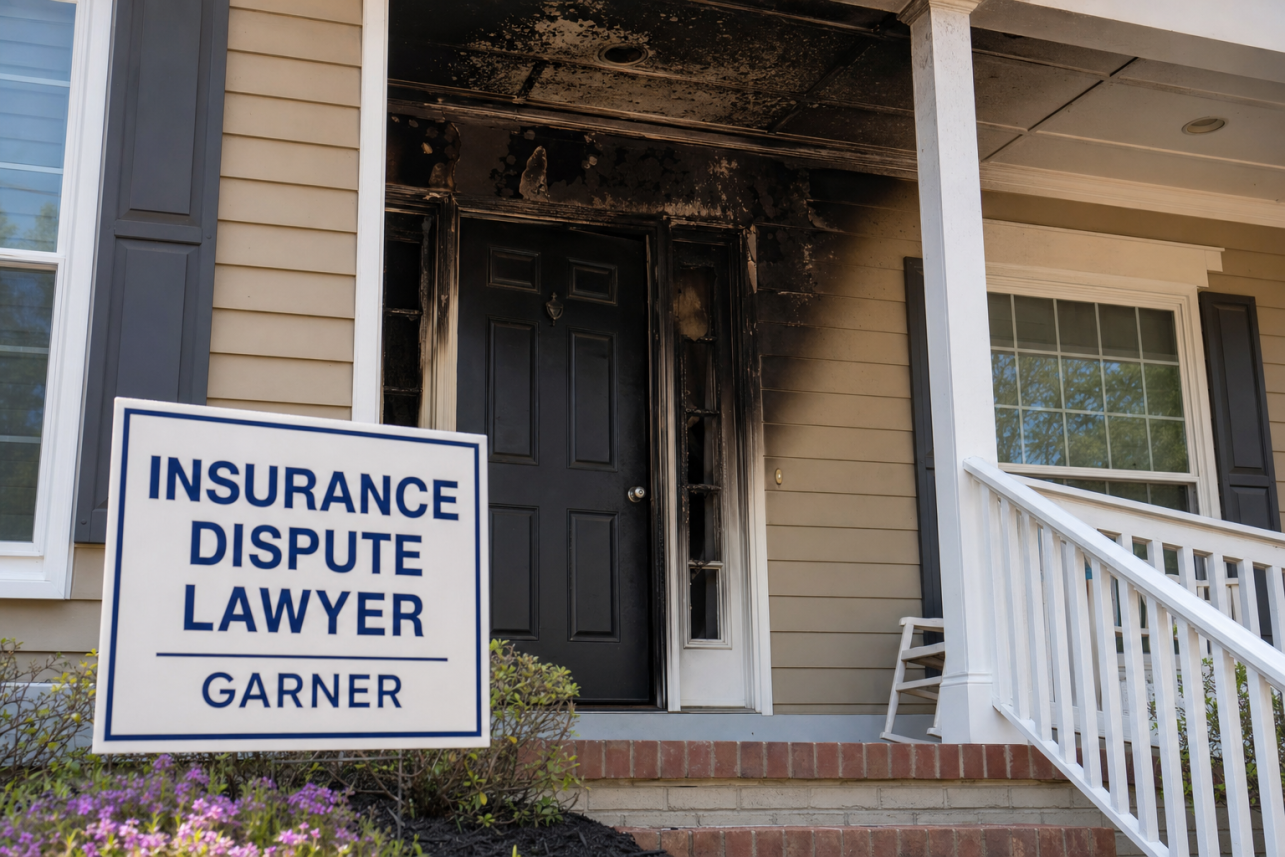
What Should I Do Right Now In Garner Before Contacting Either A Lawyer Or A Public Adjuster?
Take a few protective steps immediately — they preserve your claim no matter which professional you ultimately work with.
First, document everything before you touch it. Photograph and video the damage from multiple angles, inside and out. If a storm hit your Garner neighborhood, capture your neighbors' visible damage too; it helps establish the weather event.
Second, make only reasonable emergency repairs — tarping a roof, extracting standing water — and keep every receipt. Your policy requires you to prevent further damage, but don't make permanent repairs until the loss is fully documented.
Third, locate your complete policy, including all endorsements, not just the declarations page. Coverage disputes in Wake County often turn on endorsement language most homeowners have never read.
Fourth, be careful with recorded statements. You must cooperate with your insurer, but you're entitled to have a licensed representative involved. Offhand remarks in a recorded call are frequently used to narrow claims later.
Finally, get a professional review before accepting any settlement figure. For The Public Adjusters, Inc. evaluates Garner claims at no upfront cost, so you'll know whether the carrier's number is fair before you sign anything. If our review reveals a flat coverage denial or bad-faith conduct rather than an underpayment, we'll tell you honestly that an attorney is the right move — and everything you documented in these first days will make that case stronger too.
Does North Carolina's Appraisal Clause Mean I Can Skip Both An Insurance Dispute Lawyer Garner And A Public Adjuster?
Not usually. The appraisal clause in most North Carolina homeowner policies lets either side demand appraisal when the disagreement is about the amount of loss, not coverage. It sounds like a shortcut, but appraisal only works in your favor if your side of the number is well documented.
That is exactly where a public adjuster earns their keep. Before appraisal is ever invoked, a licensed adjuster from For The Public Adjusters, Inc. builds a line-item estimate using local Wake County labor and material pricing, photographs every elevation of the home, and documents hidden damage like saturated insulation or lifted shingle mats that carrier estimates routinely miss. If appraisal does happen, that file becomes the backbone of your appraiser's position.
Going into appraisal with nothing but the carrier's estimate and your own guesswork is how Garner homeowners end up with awards barely above the original offer. And appraisal cannot resolve coverage denials at all — if the insurer says the damage is excluded entirely, that dispute may eventually need a Garner insurance dispute lawyer.
The practical order for most claims here is simple: adjuster first to build the evidence and pursue negotiation, appraisal second if the numbers stay apart, attorney last if the carrier denies coverage outright or acts in bad faith. Skipping straight to appraisal without professional documentation almost always leaves money on the table.
Can A Public Adjuster Reopen A Claim My Insurer Already Closed In Garner?
In many cases, yes. A closed claim is not the same as a dead claim. Under North Carolina law, you generally have three years from the date of loss to pursue payment on a property claim, though some policies shorten that window by contract, so the exact policy language matters.
What a public adjuster does with a closed file is essentially an audit. We pull the carrier's estimate and compare it line by line against the actual damage still visible at the property. In Garner neighborhoods hit by the same hail or wind event, we routinely find carriers paid for partial roof repairs when full replacement was warranted, omitted code-upgrade costs required by Wake County inspections, or missed interior water damage that showed up weeks after the storm.
If the audit shows the claim was underpaid, For The Public Adjusters, Inc. files a supplemental claim with new documentation — photos, moisture readings, contractor scopes, and a corrected estimate. Carriers reopen underpaid claims far more often than homeowners expect when the supplement is properly supported.
This is another reason to start with an adjuster rather than an attorney. Reopening a claim is an evidence and negotiation exercise, not a legal filing. Litigation over a closed claim is slow and expensive, and most reopened claims in this area settle through the supplemental process without a lawsuit ever being necessary. Save the courtroom for genuine coverage fights.
My Insurer Keeps Delaying And Asking For More Paperwork — Is That A Job For An Adjuster Or An Attorney In Garner?
Start with the adjuster, and here is why. Carriers often delay claims not out of bad faith, but because the file in front of their desk adjuster is incomplete or inconsistent. Every new document request resets their internal clock, and homeowners who respond piecemeal keep the cycle going for months.
A public adjuster ends that cycle by taking over the paper war. For The Public Adjusters, Inc. compiles everything the carrier could reasonably ask for — sworn proof of loss, itemized contents inventories, contractor estimates, mortgage information, and photo documentation — and submits it as one complete package. When the insurer has no legitimate reason left to stall, decisions come faster.
We also track North Carolina's claim-handling standards. Insurers doing business here are expected to acknowledge, investigate, and respond to claims within reasonable timeframes, and a paper trail showing repeated stalling despite a complete file becomes powerful leverage in negotiation.
If the delays continue even after everything has been documented and demanded in writing, that pattern can support an unfair claims practices complaint or, in serious cases, a bad-faith claim. At that point, hiring an Insurance Dispute Lawyer Garner homeowners have vetted makes sense — and the meticulous file your adjuster built becomes the attorney's Exhibit A. Most delayed claims in Garner, though, resolve once the carrier realizes a licensed professional is managing the file and documenting every missed deadline.
For A Garner Business Or Commercial Property, Should The Adjuster-First Approach Still Apply?
Yes — arguably even more so. Commercial claims along the Highway 70 and Timber Drive corridors involve moving parts that residential claims never touch: business interruption calculations, extra expense coverage, tenant improvements, co-insurance penalties, and inventory losses. These are accounting and documentation problems before they are ever legal problems.
A public adjuster is built for that work. For The Public Adjusters, Inc. reconstructs lost income using your sales records, quantifies ongoing expenses during closure, scopes the physical repairs with commercial contractors, and presents the full measure of loss to the carrier. An attorney, by contrast, typically has to hire outside experts to do this same analysis — often billed on top of the contingency fee.
For Garner business owners, speed matters more than almost anything. Every week a restaurant, retail shop, or warehouse sits closed is revenue that never comes back. The adjuster route pursues an advance payment and partial settlements while the full claim is being negotiated, so you can start repairs and reopen. Litigation, even when successful, rarely moves fast enough to save a small business's cash flow.
Reserve the attorney for genuine coverage disputes — a denied business interruption claim, a contested exclusion, or documented bad faith. If your commercial claim reaches that point, an insurance dispute lawyer in Garner will inherit a fully organized loss file from your adjuster, which shortens litigation and strengthens your position from day one.
Won't My Insurer Take Me More Seriously If I Hire An Insurance Dispute Lawyer Garner Right Away?
It's a common assumption, but usually the opposite of what actually helps. When an attorney sends a letter of representation, most carriers route the file to their legal department, freeze routine communication, and shift into litigation posture. That often slows your payout rather than speeding it up.
What truly gets a Wake County claim taken seriously is documentation the carrier can't argue with: a licensed public adjuster's independent damage inspection, a line-item estimate built on current Triangle-area construction pricing, and a policy analysis that cites the exact coverage provisions that apply. Insurers respond to evidence, not just letterhead.
At For The Public Adjusters, Inc., we've seen underpaid claims in Garner double or more once a professional scope of loss replaced the carrier's abbreviated estimate — no courtroom required. The adjuster on the other side knows they're now negotiating with someone who speaks their language and can defend every number.
There are absolutely times a lawyer is the right escalation, such as proven bad faith or a coverage denial that hinges on legal interpretation. But leading with litigation on a claim that could be resolved through documentation is like calling a surgeon before anyone has run the tests. Start with the professional who builds the evidence. If the dispute still can't be resolved, that same evidence becomes the foundation an attorney will need anyway — and you'll have lost nothing by starting there.
What Should I Look For When Choosing A Public Adjuster In Garner Instead Of An Attorney?
Start with licensing. North Carolina requires public adjusters to be licensed through the NC Department of Insurance, so ask for the license number and verify it on the Department's website. Anyone hesitant to provide it should be crossed off your list immediately.
Next, ask about local experience. Garner properties deal with a specific mix of losses — hail and wind off spring storm cells, hurricane remnants pushing up from the coast, pipe bursts during hard January freezes. An adjuster who has worked claims in Wake County knows local building costs, local code requirements, and how regional carrier offices typically respond.
Ask how fees work. Reputable public adjusters in North Carolina work on contingency, taking an agreed percentage of the recovery, and that fee must be spelled out in a written contract. If you're quoted upfront fees or given vague answers, walk away.
Finally, ask what happens if the claim can't be settled. A trustworthy adjuster will tell you plainly that some disputes — outright coverage denials, bad-faith conduct — belong with an attorney, and will hand off a fully documented file when that day comes. For The Public Adjusters, Inc. maintains exactly that kind of file on every claim we handle, which is why starting with us costs you nothing in leverage if legal action ever becomes necessary. The right adjuster isn't trying to replace a lawyer; they're trying to make sure you never need one.
If My Garner Claim Escalates, Do The Public Adjuster And The Lawyer Work Together?
Yes, and this is one of the strongest arguments for the adjuster-first approach. The two roles aren't competitors — they're sequential stages of the same fight, and a well-run handoff makes each one more effective.
During the claim itself, your public adjuster builds the factual record: photographs, moisture readings, engineering observations, a detailed repair estimate, and a written timeline of every carrier response and delay. That record is exactly what an insurance attorney needs if the dispute later moves toward appraisal, mediation, or a lawsuit in Wake County.
When escalation happens, the adjuster typically stays involved as the damages expert. The attorney argues coverage and conduct; the adjuster proves the dollar amount. Attorneys generally prefer inheriting a file a public adjuster has already documented, because it saves them months of discovery work and strengthens the demand from day one.
Homeowners here sometimes worry they'll pay twice. In practice, the adjuster's contingency fee and the attorney's fee apply to different phases and are disclosed in writing before either professional starts. And because the vast majority of documented claims settle without litigation, most Garner clients of For The Public Adjusters, Inc. never pay a legal fee at all.
The takeaway: hiring an adjuster first doesn't close the door on legal help. It builds the case a lawyer would want anyway, while giving your claim its best chance of settling long before a courtroom enters the picture.
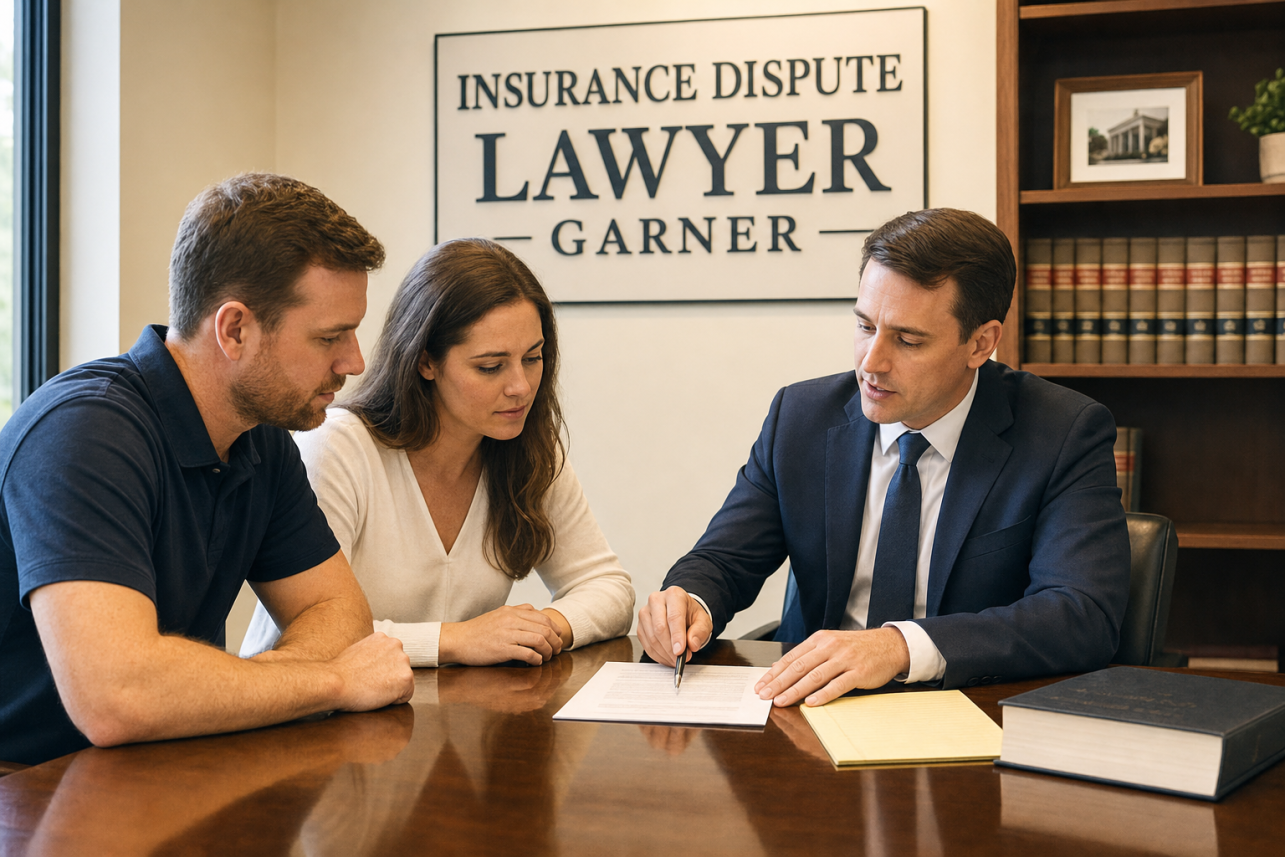
For A Fire Or Major Water Loss In Garner, Is A Public Adjuster Still Better Than Calling An Insurance Dispute Lawyer Garner First?
For large, complex losses, the adjuster-first approach matters even more — because the size of your recovery depends almost entirely on how thoroughly the damage is scoped in the first few weeks.
After a house fire or a major pipe failure in Garner, the carrier's adjuster typically spends a limited amount of time on site and produces an estimate that misses hidden damage: smoke residue inside HVAC ductwork, moisture trapped behind drywall and under subfloors, structural charring behind finishes, and code-upgrade costs required when Wake County permits the rebuild. Those omissions can represent tens of thousands of dollars.
A public adjuster's job is to catch all of it before the claim is valued. That includes documenting contents room by room, calculating additional living expenses while your family is displaced, and pricing the rebuild at real Triangle contractor rates rather than software defaults.
An Insurance Dispute Lawyer Garner families might call at this stage would face the same problem the homeowner does: no independent damage documentation to argue from. Attorneys resolve legal disputes; they don't crawl attics, run moisture meters, or write construction estimates. Hiring one before the loss is fully scoped means litigating over a number that was wrong to begin with.
For The Public Adjusters, Inc. handles exactly these large-loss claims across Garner and greater Wake County. Get the scope right first. If a legal dispute still develops over coverage or conduct, you'll enter it with a complete, defensible file — the strongest position any policyholder can be in.
Local Relevance
Garner sits in a part of Wake County that sees the full range of North Carolina weather — humid summers, severe thunderstorms, the occasional tornado, and the remnants of hurricanes tracking inland from the coast. Mature trees in established Garner neighborhoods make tree damage claims a recurring issue, and hurricane-driven wind and rain can open roofs and soak interiors quickly.
The housing stock here ranges from older homes near downtown Garner to newer construction in fast-growing subdivisions, and each brings its own claim complications: aging plumbing and electrical in older houses, builder-grade materials and drainage issues in newer ones. When storms sweep through, we serve neighbors across the county too, from our public adjuster team in Wake Forest to policyholders working with our public adjuster in Rolesville.
For properties near creeks and low-lying areas, flood losses fall under a separate flood insurance claim through the National Flood Insurance Program rather than your homeowners policy — a distinction that trips up many Garner families after heavy rain. If you are just outside Wake County, we handle claims through our Garner public adjuster office and across the Triangle, including Durham-area communities like Bahama, and as far west as our public adjuster services in Greensboro.
Because Garner's storm damage often arrives as inland hurricane remnants, wind-driven rain frequently soaks insulation and wall cavities days before homeowners notice — and carriers tend to scope only the visible ceiling stains. Insisting on moisture mapping before repairs begin is often the difference between a fair settlement and a shorted one in this area.
Get A Free Claim Review Before You Call A Lawyer
If your insurance company has underpaid, delayed, or denied your Garner property claim, let a licensed and bonded public adjuster review your policy and damage at no cost. Most disputes are resolved without a lawsuit — and if yours truly needs an attorney, we will tell you honestly and hand over a fully documented file.
Call us: (919) 400-6440
Helpful Resources
- NCDOI Public Adjusters Guide
- National Association of Insurance Commissioners (NAIC)
- North Carolina Department of Insurance — State regulator overseeing public adjuster licensing and consumer protection
- FEMA flood insurance resources — Federal guidance on NFIP flood coverage and claims
Last updated: August 23, 2026