
A Wear and Tear Denial Isn’t Always the Final Answer
A wear and tear denial is not automatically the end of your building claim — the exclusion only applies when the physical evidence actually shows gradual deterioration caused the loss. If a sudden, covered event triggered the damage, North Carolina policyholders can challenge the denial, as one Elon apartment owner did after a breezeway collapse.
Key takeaways
- In DENC, LLC v. Philadelphia Indemnity Insurance Co., the Fourth Circuit sided with an Elon, NC apartment owner after the insurer tried to blame a collapsed breezeway on wear and tear.
- The court found the sudden breezeway collapse fit the policy’s collapse coverage, and the carrier could not stretch the wear and tear exclusion to escape paying.
- A ‘wear and tear’ denial is the insurer’s interpretation, not a final verdict — the physical evidence must actually match the exclusion for it to hold up.
- A private claims adjuster’s first move on any denied building claim is to compare the carrier’s stated exclusion against what the structure actually shows.
- Insurers bear the burden of proving an exclusion applies, which is exactly why documented physical evidence so often turns denials around.
When a carrier stamps “wear and tear” on a denial letter, many property owners assume the decision is final. It isn’t. That exclusion is one of the most commonly cited — and most commonly overused — reasons insurers give for refusing building claims. The exclusion is only as strong as the evidence behind it, and insurers do not always do the engineering homework needed to back it up.
The Quick Version of the Elon Story
An apartment owner in Elon, North Carolina faced exactly this situation after a breezeway collapsed at their property. The carrier’s initial position was predictable: the structure was older, so the collapse must have been the slow result of age and deterioration — excluded wear and tear. But the physical evidence told a different story, and when the denial was challenged with documentation that matched the damage to a covered cause of loss, the owner won coverage on appeal. Later sections of this article walk through how that happened step by step.
Why This Matters for Every Property Owner
The lesson applies far beyond one collapsed breezeway. Whether you own a home, a rental duplex, or a commercial building, the same principles hold:
- Exclusions must fit the facts. An insurer cannot simply label damage “wear and tear” — the denial has to be consistent with what the evidence actually shows.
- Age alone is not proof. Older buildings suffer sudden, covered losses too. The age of a structure does not convert a covered event into excluded deterioration.
- You have the right to push back. Denials can be appealed, re-inspected, and re-evaluated with independent evidence on your side.
These disputes come up constantly with water losses, where carriers may argue a leak was “long-term seepage” rather than a sudden pipe failure. Owners pursuing water damage insurance claim help in Bennett and across the state run into this exact tactic, and the answer is the same: test the exclusion against the physical evidence.
You don’t have to accept the carrier’s first answer, and you don’t have to fight alone. Working with a licensed, bonded public adjuster in Siler City NC or anywhere in North Carolina gives you a professional advocate who documents the loss independently and holds the insurer to the actual policy language. In the sections that follow, we’ll break down the Elon case, explain why these denials happen, and show you what to do if your claim was denied.

What Happened in the Elon, NC Breezeway Collapse Case?
In DENC, LLC v. Philadelphia Indemnity Insurance Co., a second-floor breezeway at The Crest apartments near Elon University partially collapsed. The insurer denied the claim, blaming long-term deterioration, but the Fourth Circuit Court of Appeals sided with the building owner, holding the collapse was covered under the policy’s abrupt collapse provision.
The Collapse at The Crest
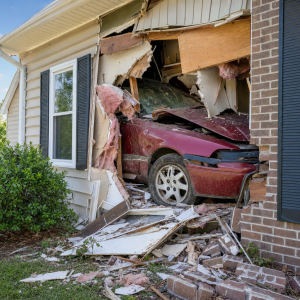
The Crest is an apartment complex in Elon, North Carolina that housed college students. In January 2018, a second-floor breezeway suddenly gave way while students were standing on it, dropping the walkway and sending people and debris downward. The owner, DENC, LLC, promptly reported the loss to its insurer, Philadelphia Indemnity, expecting the building policy to respond to a dramatic structural failure.
The Insurer’s Deterioration-Based Denial
Instead of paying, the carrier investigated and denied the claim. Its position followed a familiar script in a wear and tear denial:
- The breezeway had been weakened over time by water intrusion and decay.
- Because deterioration contributed to the failure, exclusions for wear and tear, decay, and faulty construction should bar coverage.
- In the insurer’s view, a slow process — not a sudden event — caused the loss.
Hidden moisture problems are common in multi-family and residential buildings alike, which is why owners dealing with concealed leaks often seek help with a water insurance claim in Siler City and similar disputes where a carrier tries to recast sudden damage as gradual deterioration.
How the Courts Ruled for the Policyholder
DENC sued, and the federal district court ruled in its favor. On appeal, the Fourth Circuit affirmed. The court focused on what the policy actually said about collapse: the policy extended coverage to an abrupt collapse of a building or part of a building, and the breezeway’s sudden failure fit that language. The fact that hidden decay may have set the stage did not erase coverage — the policy’s collapse provision contemplated exactly that kind of scenario, and the insurer could not read its own coverage grant out of the contract by pointing to deterioration exclusions.
The takeaway for North Carolina property owners is powerful: an insurer’s label of “wear and tear” is an argument, not a verdict. When the policy language and the physical facts line up for the policyholder, courts will enforce the coverage the owner paid for. Building owners in Alamance County — the same county where this collapse occurred — sometimes work with a public adjuster in Mebane NC to document sudden failures properly before a carrier can frame them as gradual decay.
DENC fought back with evidence, policy analysis, and persistence — and the appellate court agreed the loss was covered. That outcome is a reminder that a denial letter is the beginning of a conversation, not the end of your claim.
Why Do Insurance Companies Deny Building Claims as Wear and Tear?
Insurance companies deny building claims as wear and tear because nearly every property policy excludes gradual deterioration, and older buildings always show some aging. Labeling sudden damage as “wear and tear” shifts the loss onto the owner — but in North Carolina, the carrier bears the burden of proving the exclusion actually caused the damage.
Both commercial and residential property policies are built the same way: they promise broad coverage for direct physical loss, then carve pieces back out through exclusions. Wear and tear, deterioration, rust, rot, and “neglect” or lack of maintenance exclusions are among the most frequently cited. The reasoning behind them is fair enough in principle — insurance is designed to cover sudden, accidental events, not the predictable aging that every roof, beam, and pipe experiences over decades.
Why Older Buildings Attract This Denial
The problem is how these exclusions get applied in practice. When a building has some age on it, an adjuster can almost always find corrosion, weathered materials, or dated construction somewhere on the property. That makes wear and tear a convenient, low-effort denial — the carrier points to the building’s age rather than investigating what actually triggered the collapse, leak, or failure. Common patterns include:
- Conflating age with causation: an old component is not the same thing as a component that failed because of age.
- Ignoring the triggering event: a storm, water intrusion, or hidden structural failure may be the true cause, with deterioration playing little or no role.
- Stretching maintenance language: “neglect” exclusions typically apply to failing to protect property after a loss, not to ordinary upkeep decisions made years earlier.
The Carrier’s Burden of Proof in North Carolina
Here is the part many property owners never hear: once you show a direct physical loss under the policy, North Carolina law places the burden on the insurance company to prove that an exclusion applies. Courts in this state construe exclusions narrowly and resolve genuine ambiguities in the policy language in favor of the policyholder. A denial letter that simply recites the words “wear and tear” — without engineering evidence tying the deterioration to the actual failure — often cannot carry that burden. Policyholders working with a public adjuster in Mebane NC and throughout Alamance County frequently discover that the carrier’s file contains little more than photographs of an aging building and an assumption.
That gap between the exclusion’s wording and the physical evidence is exactly where wear and tear denials fall apart. Owners across the Triangle, including those who bring in a public adjuster in Hillsborough, have successfully pushed back by demanding that the insurer prove — not merely assert — that gradual deterioration, rather than a covered event, caused the loss. Understanding that the burden sits with the carrier changes the entire conversation after a denial.

How Do You Test Whether an Exclusion Fits the Physical Evidence?
You test a wear and tear denial by comparing the exact policy wording against what the structure physically shows. If the damage pattern points to a sudden event, hidden decay, or a covered collapse — rather than slow, visible deterioration — the exclusion may not apply, and the denial can be challenged with documentation.
Insurance policies are contracts, and exclusions only work when the facts match the words. The first job on any denied building claim is to put the denial letter next to the physical evidence and ask a simple question: does the story the insurer is telling actually match what the building shows?
Sudden vs. Gradual: What the Evidence Tells You
Wear and tear implies slow, predictable deterioration that an owner could have seen and addressed. Sudden damage looks different. Key indicators worth documenting include:
- Fresh fracture surfaces in wood or masonry — clean, light-colored breaks suggest a recent failure, not years of decline.
- Moisture and rot patterns — localized rot hidden inside a wall or ceiling cavity points to concealed decay, while uniform surface weathering supports the insurer’s position.
- Displacement and deflection — sagging, separation, or racking that neighbors or tenants noticed appearing quickly supports a sudden event.
- Engineering reports — an independent structural engineer can often distinguish a progressive failure from an abrupt one, and date the mechanism of damage.
Read the Collapse and Hidden Decay Provisions Carefully
Many policies that exclude wear and tear simultaneously grant back coverage for collapse caused by hidden decay — decay the owner could not reasonably have seen. If rot was concealed behind sheathing, siding, or a ceiling, that language may convert a denial into a covered loss. Courts have sided with policyholders on exactly these questions. In Beach v. Middlesex Mutual Assurance Co., the Connecticut Supreme Court held that the undefined term “collapse” was ambiguous and construed it in the homeowners’ favor, finding that substantial impairment of structural integrity could qualify — the building did not need to fall completely to the ground. Ambiguous policy language is generally interpreted against the insurer who drafted it, and that principle matters enormously in decay and collapse disputes. A licensed Public Adjuster in Hillsborough applies this kind of language-versus-evidence analysis as a routine part of reviewing a denied claim.
Build a File, Not Just an Argument
Photographs with dates, moisture meter readings, engineering opinions, maintenance records, and witness statements all help establish whether the exclusion genuinely fits. The goal is to replace the insurer’s assumption with documented fact. Property owners working with an experienced Public Adjuster in Mebane NC often find that evidence gathered early — before repairs disturb the scene — makes the strongest case that the damage was sudden or hidden rather than ordinary wear and tear.
What Should I Do If My North Carolina Building Claim Was Denied?
If your North Carolina building claim was denied, don’t tear anything out or accept the decision as final. Preserve the damaged materials, request the denial in writing with the exact policy exclusions cited, document everything with photos and dates, and explore your appraisal and dispute rights before weather or repairs destroy the evidence you need.
Preserve the Evidence First
The physical evidence is your strongest asset. A wear and tear denial often collapses when the actual damaged components are examined closely, so resist the urge to clean up quickly. Make only the temporary repairs needed to prevent further damage — tarping, shoring, boarding up — and keep receipts, because reasonable protective measures are typically covered and expected under your policy.
- Photograph and video the damage from multiple angles, including close-ups of broken connections, fasteners, and framing.
- Keep removed materials — rotted beams, failed brackets, collapsed decking — rather than hauling them to the dump.
- Note the date and conditions when the damage occurred or was discovered.
- Get an independent inspection before any contractor demolishes the area.
Get the Denial in Writing — With Specifics
Ask the insurer to identify, in writing, every exclusion it is relying on and the factual basis for each. Under North Carolina law, the insurer generally bears the burden of proving an exclusion actually applies, so a vague letter that simply says “wear and tear” is not the end of the conversation. The specific language cited becomes the roadmap for challenging the denial. Property owners who feel outmatched at this stage often bring in a licensed Public Adjuster in Clayton NC or elsewhere in the state to review the denial letter against the policy and the physical facts.
Know Your Dispute Options
Most property policies include an appraisal provision, which lets you and the insurer each appoint an appraiser to resolve disputes over the amount of loss. You can also file a complaint with the North Carolina Department of Insurance, submit a supplemental claim with new evidence, or pursue the matter through counsel. Denials are frequently reversed or revised when a policyholder pushes back with documentation rather than frustration.
A Fall Warning: Document Before Winter Makes It Worse
If your damage happened in autumn, act quickly. Freeze-thaw cycles, ice, and winter storms can worsen cracks, saturate exposed framing, and blur the line between the original loss and new deterioration — which hands the insurer a fresh argument. The same urgency applies to storm-related losses, like the ones covered by tree damage insurance claim help in Carrboro, where a limb through the roof left unprotected can turn into disputed water damage by January. Document now, protect the property, and lock in the evidence while it still tells the true story.

How Can a Public Adjuster Help After a Wear and Tear Denial?
A licensed, bonded public adjuster works for you, not the insurance company. After a wear and tear denial, they independently inspect the damage, compare the policy’s exact exclusion language against the physical evidence, document a point-by-point rebuttal, and negotiate on your behalf. No outcome is ever guaranteed, but the claim gets a genuine second look.
That second look matters. When the policyholder in the DENC, LLC breezeway collapse case pushed back, the dispute turned on whether the insurer’s exclusions actually matched what happened to the building — and the Fourth Circuit ultimately sided with the insured. Most property owners don’t have the time or training to mount that kind of challenge alone. A public adjuster does this work every day.
What a Public Adjuster Does Differently
- Independent inspection: A fresh, hands-on review of the damage — often uncovering evidence of a sudden, covered event that the carrier’s adjuster overlooked or lumped under “deterioration.”
- Policy-language scrutiny: Exclusions are read narrowly and tested against the facts, the same way the DENC policyholder tested them. If the carrier can’t tie the exclusion’s wording to the actual cause of loss, the denial is on shaky ground.
- A documented rebuttal: Photos, moisture readings, repair estimates, and when needed, input from engineers or contractors — assembled into a written case, not just a phone complaint.
- Advocacy through the process: Handling correspondence, meeting the carrier’s adjuster on site, and pressing for a re-evaluation or appraisal where appropriate.
Importantly, public adjusters are regulated professionals. In North Carolina they must be licensed through the North Carolina Department of Insurance, and reputable firms are bonded. You can also read about how adjusters and the claims process work through consumer resources from the National Association of Insurance Commissioners. Always verify licensing before you sign anything.
When to Bring One In
The best time is as soon as you receive the denial letter — before the damage is repaired or evidence is lost. Wear and tear denials frequently involve interior leaks and hidden moisture, which is why owners dealing with disputed losses often seek water damage insurance claim help in Bennett and surrounding communities early, while the evidence still tells its story.
If your claim was denied and you’re not sure the exclusion fits the facts, talking with a public adjuster in Pittsboro NC or elsewhere in the region costs you nothing but a conversation. An honest professional will tell you whether the denial looks defensible or whether there’s a legitimate basis to challenge it — and will never promise a specific result, because no one ethically can. What they can promise is a thorough, documented effort to make sure your claim is judged on the evidence, not on a convenient label.
Wear and Tear Denial vs. Covered Sudden Damage: What the Evidence Shows
| Factor | True Wear and Tear (Often Excluded) | Sudden Covered Event (Like DENC’s Collapse) |
|---|---|---|
| Timeline of damage | Gradual deterioration visible over months or years | Abrupt failure, often on a specific, identifiable date |
| Physical evidence | Uniform aging, slow corrosion, long-term weathering | Fractured materials, displaced structure, signs of a triggering event |
| Who must prove it | The insurer must show the exclusion actually applies | The policyholder shows a loss occurred during the policy period |
| Typical outcome if challenged | Denial stands only if evidence truly matches gradual deterioration | Courts, as in DENC v. Philadelphia Indemnity, can enforce coverage |
Illustrative Example: When the Evidence Didn’t Match the Denial
Illustrative example
Consider a hypothetical, composite scenario: the owner of a small NC apartment building receives a denial letter citing ‘wear and tear’ after a second-floor walkway suddenly gives way. A private claims adjuster inspects the site, documents fresh fractures in the supporting structure, and gathers maintenance records showing the walkway had been serviced and stable. That evidence points to a sudden structural failure rather than gradual deterioration, directly undercutting the exclusion the carrier relied on. Armed with this documentation — and supported by precedent like DENC v. Philadelphia Indemnity — the owner is positioned to challenge the denial on solid factual ground. This example is illustrative only; every claim turns on its own policy language and evidence, and no outcome can be guaranteed.
Frequently asked questions
What is a wear and tear denial and why do insurance companies use it so often?
A wear and tear denial is when an insurer refuses a building claim by blaming the damage on gradual deterioration, which most property policies exclude. Carriers lean on it because it shifts blame to the building’s age instead of a covered event. The good news: in DENC, LLC v. Philadelphia Indemnity Insurance Co., the Fourth Circuit sided with the policyholder, showing these denials can be successfully challenged when the physical evidence tells a different story.
Can I fight my insurance company if they say my building damage is just wear and tear?
Yes. A denial letter is the insurer’s opinion, not the final word. In DENC v. Philadelphia Indemnity, the owner of a North Carolina apartment complex challenged a wear and tear denial after a breezeway collapsed, and the court ruled the loss was covered. The key is testing whether the exclusion actually matches the physical evidence — engineering findings, water intrusion patterns, and the timeline of the damage often contradict the carrier’s theory.
What’s the difference between wear and tear and a sudden collapse under an insurance policy?
Wear and tear is slow, expected deterioration from normal use. A collapse or sudden structural failure is an abrupt event, and many policies cover it even when deterioration played a background role. In the DENC case, the breezeway failed suddenly, and the court found coverage despite the insurer’s deterioration argument. The distinction often turns on what actually triggered the loss, which is why independent inspection of the physical evidence matters so much.
What does a public adjuster actually do first when a claim is denied?
The first job is to test the denial itself: pull the exact policy language the carrier cited, then compare it to the physical evidence at the property. That means documenting the damage, reviewing engineering or inspection reports, and asking whether the exclusion genuinely fits the facts. Many denials rest on assumptions no one verified on site. If the exclusion doesn’t match the evidence, that mismatch becomes the foundation for challenging the decision.
How long does it take to overturn a denied property insurance claim?
It varies widely. Some denials get reversed in weeks once new documentation — like an engineering report — is submitted and the carrier reconsiders. Others require appraisal or litigation, which can take months or longer; the DENC case went all the way to the Fourth Circuit. Acting quickly helps: preserving evidence, meeting policy deadlines, and submitting a well-documented rebuttal early gives you the best chance of a faster resolution.
How much does it cost to hire a public adjuster for a denied building claim?
Public adjusters typically work on a contingency fee — a percentage of what the insurer ultimately pays — so there’s usually no large upfront cost. Fee percentages vary by state and by the complexity of the claim, and reputable adjusters put the fee in writing before any work begins. Because the adjuster is paid from the recovery, their interests align with yours. Always confirm the adjuster is licensed and bonded in your state.
What evidence do I need to challenge a wear and tear exclusion on my claim?
The strongest evidence is physical and documentary: photos and video of the damage, an independent engineering or structural report identifying the actual cause, maintenance records showing the building was cared for, weather data if a storm or water event was involved, and the insurer’s own inspection notes. In DENC v. Philadelphia Indemnity, the facts about how the breezeway actually failed were central to the policyholder’s win. Evidence that pinpoints a sudden cause undercuts a deterioration theory.
What are the biggest mistakes building owners make after a claim denial?
The most common mistakes: accepting the denial letter at face value, throwing away or repairing damaged materials before they’re documented, missing policy deadlines for appeals or suit, and relying solely on the insurer’s expert rather than getting an independent opinion. Another is giving recorded statements without preparation. Preserve everything, get the denial reviewed by someone experienced with property claims, and keep repairs limited to emergency mitigation until the evidence is documented.
Should I hire a public adjuster or go straight to a lawyer after a wear and tear denial?
It depends on where the dispute stands. A public adjuster is often the practical first step: they re-document the loss, test the exclusion against the evidence, and negotiate directly with the carrier, frequently resolving claims without litigation. If the insurer won’t budge, or bad-faith conduct is involved, an attorney becomes the right move — and the two often work together. Cases like DENC show courts will side with policyholders when the evidence supports coverage.
Does the DENC v. Philadelphia Indemnity case apply to my denied claim in another state?
Not directly — it’s a Fourth Circuit decision applying North Carolina law, so it binds courts in that region. But its reasoning travels well: the court looked past the insurer’s wear and tear label to what actually caused the loss. Courts nationwide apply similar logic, and insurers must prove an exclusion applies. Your claim will turn on your own policy language and evidence, which is exactly why an independent review of the denial is worthwhile.
Flood Insurance Claim help near you
Related local pages
Received a wear and tear denial on your NC property claim? Get a free, no-obligation policy and claim review from our licensed and bonded public adjusters today. Get in touch.
Last updated: November 2, 2026