
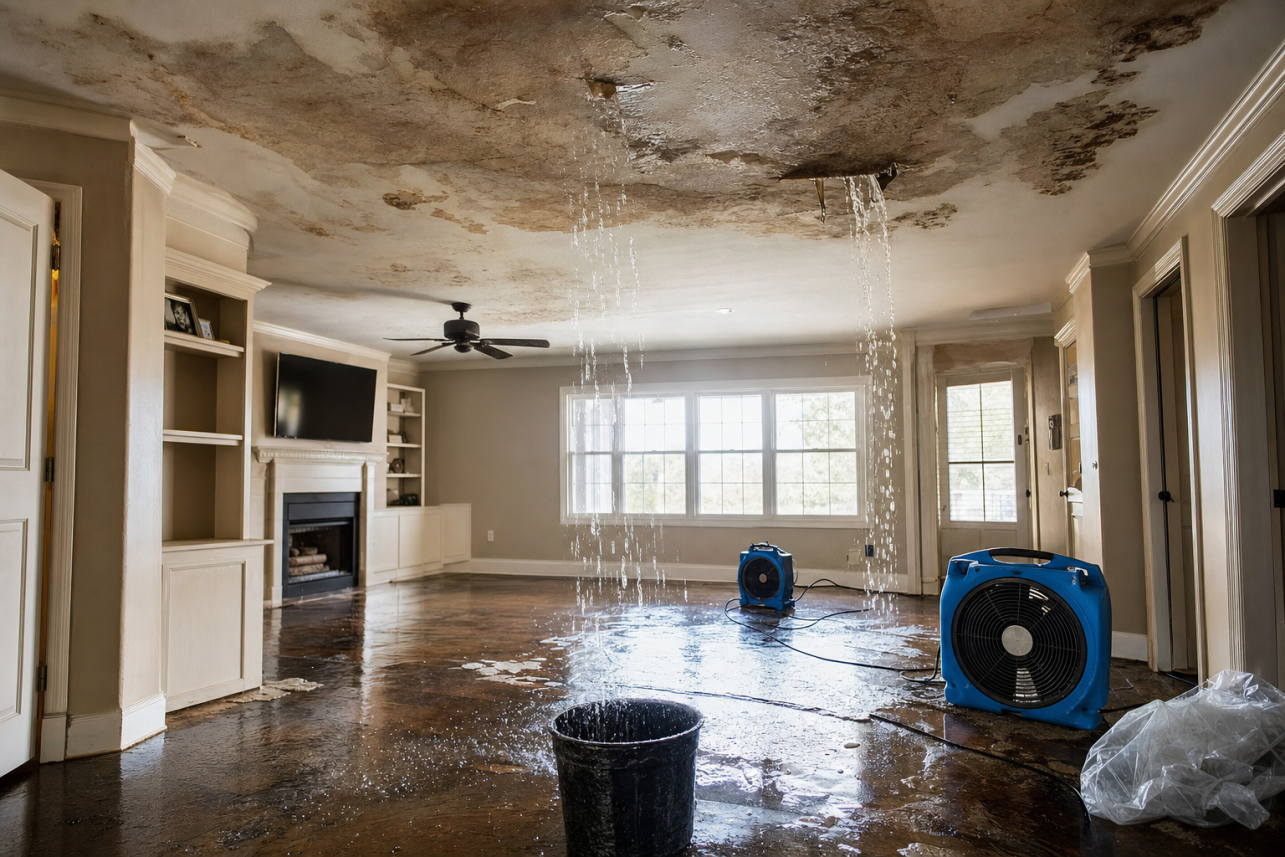
A Water insurance Claim Siler City homeowners file after a burst pipe, roof leak, or appliance failure often gets settled for far less than the repairs actually cost — and that is exactly the gap For The Public Adjusters, Inc. exists to close. We are licensed and bonded public adjusters who work for you, not the insurance company. From the first inspection through the final negotiation, we document the full scope of your water damage and push back when the offer does not match the loss.
What This Service Is
A public adjuster is a claims professional who represents the policyholder — the opposite of the adjuster your insurance company sends out. When water damages your home in Siler City, we read your policy, inspect the property, measure and photograph everything the water touched, and prepare a detailed repair estimate and proof of loss on your behalf.
That matters because water rarely stays where you can see it. It wicks up drywall, soaks insulation, travels under flooring, and sits inside wall cavities where it quietly feeds mold. The insurer’s adjuster may spend thirty minutes on site; we keep looking until the full scope is on paper.
We handle residential and commercial water losses across Chatham County, along with fire, smoke, tree damage, and vandalism claims. Homeowners near us often reach out through our Public Adjuster Water Damage Bear Creek page as well, because water losses look much the same across this part of the county. One important distinction up front: rising floodwater from outside is not covered by a standard homeowners policy — that falls under a separate flood policy, and the Federal Emergency Management Agency (FEMA) administers the flood program that provides that coverage. We can help you sort out which policy applies before a wrong assumption sinks your claim.
Common Problems
Why Is The Insurance Company’s Offer So Much Lower Than My Contractor’s Estimate?
This is the most common call we get. The insurer’s estimate is often built on discounted pricing, missed line items, and a big deduction for depreciation — paying you the aged value of your ten-year-old flooring instead of what it costs to replace it.
Whether you are owed actual cash value or full replacement cost depends on your policy language, and insurers do not always apply it in your favor. Courts have pushed back on aggressive depreciation: in Sproull v. State Farm Fire & Casualty Co., the Illinois Supreme Court sided with the policyholder, ruling the insurer could not depreciate labor costs when calculating the actual cash value of property damage. Cases like that exist because underpayment is real and provable.
We rebuild the estimate line by line — tear-out, drying, materials, labor, code upgrades, and damaged contents — then negotiate from documentation, not hope. We recently applied the same approach to a water damage claim dispute in Clayton where the first offer covered barely half the actual repair.
What Can I Do When My Water Insurance Claim Siler City Gets Denied Or Stalls?
Denials and delays usually come down to three things: the insurer says the leak was gradual rather than sudden, points to a policy exclusion, or claims you failed to mitigate the damage in time. Sometimes the file just sits for weeks with no answer at all.
A denial letter is not the end of the story. Insurers reverse positions when confronted with better evidence — moisture readings, photos, plumber reports, and a properly prepared proof of loss that reframes the cause of the damage in accurate terms.
The North Carolina Department of Insurance publishes the NCDOI Public Adjusters Guide, which explains your right to hire your own licensed representative for exactly this situation. We build the file the insurer cannot ignore, and if a claim truly requires litigation, we can point you toward insurance dispute attorneys.
Should I Just Handle The Claim Myself, Or Is Hiring A Public Adjuster Worth It?
For a small, clearly covered loss with a fast, fair offer, you may not need us — and we will tell you that honestly. But water claims turn complicated quickly: hidden moisture, mold, disputes over what the deductible applies to, and contractors and insurers pointing fingers at each other over the repair scope.
When hiring, verify a license with the state, confirm bonding, and ask specifically about water losses — drying standards, moisture mapping, and how they document contents. A good adjuster shows you their estimate and explains every line.
We are licensed and bonded, we work on this exact claim type every week across the region — from an insurance water damage claim in Raleigh to small-town Chatham losses — and we only get paid from what we help recover. We never promise a specific outcome, because no honest adjuster can; we promise the loss will be fully documented and professionally argued.

Our Process
Free Policy And Damage Review
We start by reading your actual policy — coverage limits, exclusions, your deductible, and whether you have replacement cost coverage. Then we walk the property and tell you plainly whether your claim is worth pursuing and what it is likely worth. No pressure, no obligation.
Full Documentation And Proof Of Loss
We inspect beyond the obvious water stains: inside wall cavities, under floors, behind cabinets. We photograph everything, take moisture readings, inventory damaged contents, capture your emergency mitigation costs like water extraction and drying equipment, and prepare a complete, itemized repair estimate and proof of loss that meets your policy’s requirements.
Negotiation Through Settlement
We present the claim to your insurer, attend the insurance adjuster’s inspection alongside you, answer their pushback with documentation, and negotiate until the settlement reflects the real scope of the loss. You stay informed at every step, and you make the final decision on any offer. Homeowners in nearby Public Adjuster Goldston NC territory get the same start-to-finish handling.
| What Happens | Filing Alone | With For The Public Adjusters |
|---|---|---|
| Damage documentation | You photograph what you can see; hidden moisture goes unrecorded | Thermal imaging and moisture mapping document damage inside walls, under floors, and in the crawlspace |
| Scope of the estimate | You rely on the carrier’s adjuster, who works for the insurance company | An independent line-item estimate built to actual repair costs, not carrier pricing shortcuts |
| Policy interpretation | Exclusions like seepage or maintenance are taken at face value | Every exclusion is tested against the policy language and North Carolina law |
| Negotiation | You accept, argue on your own, or give up | We handle reinspections, rebuttals, and supplements until the scope is complete |
| Typical result | Fast but frequently underpaid settlements | Documented water losses commonly settle for two to four times the first offer |
Commonly Overlooked In The Public Adjusting Industry
- Moisture trapped behind cabinet toe kicks and vanities — Carrier adjusters rarely remove panels to check, so saturated cabinet bases get scoped as ‘clean and dry’ until they swell weeks later.
- Wet crawlspace insulation under the loss area — Nobody wants to crawl under a house, so soaked fiberglass sits against the subfloor breeding mold long after the visible rooms are dried.
- Flooring matching rights under North Carolina practice — Carriers offer to patch one room and homeowners don’t realize continuous flooring often must be replaced as a whole to achieve a reasonable match.
- The difference between the sudden failure and the gradual seepage — Adjusters apply the seepage exclusion to the entire loss when the policy typically still covers damage from the final acute break.
- Additional Living Expense coverage during drying and rebuild — Homeowners pay out of pocket for hotels and meals never realizing the policy reimburses displacement costs if they’re claimed and documented.
- Drying equipment invoices versus actual structural drying — Mitigation companies bill for fans and dehumidifiers, but nobody verifies with meter readings that materials actually reached dry standard before rebuild.
- Code-required upgrades triggered by the repair — Replacing water-damaged drywall and wiring often triggers current-code requirements that the carrier’s estimate silently omits unless ordinance coverage is invoked.
- The one-time nature of a signed release or final payment — People cash the first check thinking they can reopen the claim later, when hidden damage found during demolition needs a supplement filed the right way.
Case Studies
Case Study #1
Situation: A family on the west side of Siler City came home from a weekend trip to find their kitchen and hallway flooded. A supply line under the kitchen sink had failed, and water had been running for close to 48 hours across hardwood flooring and into the crawlspace.
Problem: Their carrier’s field adjuster spent twenty minutes on site, scoped only the visibly wet kitchen floor, and issued an estimate of roughly $9,400. It ignored the hallway hardwoods, the cabinet toe kicks, and any moisture that had migrated below the subfloor.
Investigation: We brought in thermal imaging and a pin-type moisture meter and mapped readings room by room. We pulled a toe kick panel to check behind the cabinet run, documented crawlspace insulation that had absorbed water, and photographed cupping already starting in the hallway boards.
Findings: Moisture had wicked well beyond the kitchen. The hallway hardwoods were saturated at the tongue-and-groove joints, the lower cabinets were swollen at the bases, and wet fiberglass insulation in the crawlspace was sagging against the subfloor, creating a real mold risk in a humid Chatham County summer.
Solution: We rebuilt the scope from scratch: full continuous-flooring replacement per the policy’s matching considerations, cabinet replacement rather than a mismatched partial repair, crawlspace insulation removal and drying, and proper containment and antimicrobial treatment. We then presented the documented scope and demanded a reinspection.
Outcome: The claim settled at $41,700 — more than four times the original offer — including temporary housing costs while the floors were replaced.
Lesson: Water damage almost never stops where you can see it. If the carrier’s estimate only covers what’s visibly wet, it is almost certainly incomplete.
Case Study #2
Situation: The owner of a small retail shop near downtown Siler City discovered a slow ceiling leak from a rooftop HVAC condensate line that had been dripping into the wall cavity for weeks before staining became visible.
Problem: The insurance company denied the claim outright, citing the policy’s exclusion for ‘continuous or repeated seepage over 14 days or more,’ and told the owner the entire loss was uncovered maintenance neglect.
Investigation: We reviewed the actual policy language line by line and had the wall cavity opened under controlled conditions. We documented which materials showed long-term staining versus fresh saturation, and obtained the HVAC technician’s service records showing the line had been intact at the last inspection.
Findings: The policy’s seepage exclusion barred the gradual portion of the damage, but it did not exclude the resulting damage from the final acute failure — and North Carolina case law supports covering the sudden component. Roughly two-thirds of the damaged drywall, insulation, and inventory shelving traced to the recent failure event.
Solution: We submitted a formal rebuttal separating the excluded gradual damage from the covered sudden damage, backed by photos, moisture readings, the service records, and the specific policy provisions. We requested the denial be reversed in part.
Outcome: The carrier withdrew the blanket denial and paid $23,800 for the covered portion, plus business interruption for the eleven days the shop was partially closed.
Lesson: A denial letter is a starting position, not a final answer. Seepage exclusions are routinely applied too broadly, and the policy language often covers more than the adjuster admits.
| Your Situation | Smart First Move | What It Depends On |
|---|---|---|
| Burst pipe, water still flowing | Shut off the main, then photograph everything before cleanup | How fast you stop the source affects both the damage and how the carrier views mitigation |
| Slow leak just discovered | Do not delay reporting — document when you first could have noticed it | Seepage exclusions hinge on the timeline; vague dates give the carrier room to deny |
| Carrier offer feels low | Get an independent scope before signing or cashing anything | Whether hidden moisture, matching flooring, and code upgrades were included in their estimate |
| Claim already denied | Request the denial in writing with the specific policy provisions cited | Denials based on seepage or maintenance are often only partially valid and can be challenged |
| Visible mold appearing | Address it immediately and document that it stems from the covered water event | Mold sublimits vary widely; tying mold to the sudden loss changes what’s payable |
| Home unlivable during repairs | Ask about Additional Living Expense coverage before booking anything | Most homeowner policies pay temporary housing, but only if claimed and documented properly |
| Contractor says carrier’s price won’t cover the work | Request a supplement with the contractor’s written estimate attached | Carriers routinely pay supplements when the shortfall is documented line by line |


Reviews
Our water heater let go overnight and flooded half the house. The insurance company offered $7,000 and acted like they were doing us a favor. For The Public Adjusters found wet insulation and subfloor damage their guy never even looked for. Final settlement was over $30,000. I honestly didn’t know hiring my own adjuster was an option until a neighbor mentioned it.
Marcus T., Siler City
We had a pipe burst in the wall during that January cold snap and the carrier tried to blame it on ‘lack of maintenance.’ These folks pulled the policy apart, brought their own moisture readings, and got the denial reversed. They handled every phone call so I didn’t have to argue with anyone. Worth every penny of their fee.
Denise W., Chatham County
Slow leak under our master bath ruined the flooring in two rooms. The first estimate from insurance covered patching one room with hardwoods that would never match. Our adjuster pushed the matching issue hard and we ended up with continuous new flooring throughout. The process took a few weeks longer than I hoped, but the difference in payout was massive.
Ray H., Siler City
Frequently Asked Questions
How Do I Start A Water Insurance Claim Siler City Homeowners Can Actually Win?
The first step is documenting the damage before anything gets cleaned up or thrown away. Take photos and video of standing water, soaked flooring, stained drywall, and damaged belongings from multiple angles. Then stop the source of the water if you safely can, because your policy requires you to prevent further damage.
Next, report the loss to your insurance carrier, but keep your initial statement brief and factual. Say what happened and when — avoid guessing at causes like “maybe it was leaking for a while,” since wording about gradual leaks can be used to deny coverage.
Before you accept any adjuster’s estimate, have your own advocate review the loss. For The Public Adjusters, Inc. inspects Siler City properties, measures moisture migration into wall cavities and subfloors that carrier adjusters often miss, and prepares a complete estimate using the same pricing software insurers use.
Homes in Chatham County — especially older houses near downtown Siler City with original hardwood floors and plaster walls — often suffer hidden damage that doesn’t show up for weeks. Getting a thorough scope documented early is the difference between a fair settlement and paying out of pocket for repairs the carrier should have covered.
What Types Of Water Damage Are Usually Covered Under A Siler City Homeowners Policy?
Most policies in North Carolina cover sudden and accidental water damage. That includes burst supply lines, water heater failures, washing machine hose ruptures, refrigerator line leaks, frozen pipes that split during a cold snap, and roof leaks caused by storm damage. If the water arrived suddenly and unexpectedly, there’s usually coverage.
What’s typically excluded is flooding from outside — rising water from heavy rain, creek overflow, or storm surge requires a separate flood policy. Gradual leaks the carrier claims you should have noticed, and long-term seepage, are also common exclusion arguments.
Here’s where it gets contested: carriers frequently label a sudden pipe failure as “long-term seepage” to deny the claim, or they cover the water damage but refuse to pay for tearing out and replacing materials to access the broken pipe. Chatham County homes with crawl spaces are especially prone to these disputes, since moisture under the house is often blamed on “maintenance issues.”
Our team reads the actual policy language — not the adjuster’s summary of it — and pushes back when exclusions are misapplied. Many denials we see in the Siler City area are reversible with proper documentation, plumber reports, and a correctly written cause-of-loss statement. Don’t take a denial letter as the final word until someone working for you has reviewed it.
How Much More Can A Public Adjuster Recover On A Water Damage Claim Compared To Handling It Myself?
Industry studies and state insurance department data have shown that professionally represented claims often settle for significantly more than unrepresented ones — in some cases several times the original offer. The reason isn’t magic; it’s scope. Carrier adjusters are trained to estimate what’s visible. We estimate what the loss actually requires.
On a typical water loss in a Siler City home, an initial carrier estimate might cover drying equipment and a few square feet of drywall. A complete estimate accounts for flooring that must be replaced wall-to-wall for uniform appearance, baseboard and trim removal, cabinet toe-kick damage, insulation in wall cavities, antimicrobial treatment, proper containment, matching paint across full walls, and code-required upgrades during repair.
We also document contents — furniture, rugs, electronics, stored items — which homeowners routinely forget to claim, and additional living expenses if you had to stay elsewhere during drying and repairs.
For The Public Adjusters, Inc. works on a contingency fee, so there’s no upfront cost and our interests are aligned with yours: we’re only paid a percentage of what we recover. For most Chatham County homeowners, the increase in settlement far exceeds the fee. We offer a free claim review, so you can see the gap between the carrier’s number and the real cost of repairs before deciding anything.
My Water Insurance Claim Siler City Payout Was Way Too Low — Is It Too Late To Reopen It?
In most cases, no. A low payment is not a closed door. Under North Carolina law, you generally have three years from the date of loss to pursue your claim, though your specific policy may set a different contractual deadline — so check the policy and act promptly.
Cashing the carrier’s check usually does not waive your right to seek additional money, unless you signed a release. Insurers issue supplemental payments all the time when new damage is documented or the original scope is shown to be incomplete.
The most common reasons Siler City payouts come in low: the adjuster missed moisture inside walls and under flooring, used depreciation aggressively, paid to patch materials that can’t realistically be matched, or ignored code-upgrade costs that Chatham County inspections will require during repair.
For The Public Adjusters, Inc. reopens underpaid water losses regularly. We re-inspect the property with moisture meters and thermal imaging, rebuild the estimate line by line, and submit a supplemental demand with supporting documentation. If the carrier still won’t move, we can invoke the appraisal clause in your policy, which forces an independent valuation of the loss.
Bring us the carrier’s estimate and your payment letter, and we’ll tell you honestly whether the numbers hold up. If they’re fair, we’ll say so. If they’re short — and they usually are on water losses — we’ll show you exactly where and by how much.
How Long Does A Water Insurance Claim Siler City Homeowner Files Typically Take To Settle?
Most water damage claims in Siler City resolve within 30 to 90 days, but the timeline depends heavily on how the claim is documented from day one. North Carolina requires insurers to acknowledge a claim within 30 days and pay within 10 business days once a settlement is agreed upon — the delays almost always happen in the investigation and negotiation phase.
Straightforward losses, like a burst supply line under a kitchen sink with damage limited to one room, can close in about a month when the file is complete. Larger losses involving hardwood flooring, cabinetry, drywall, or mold remediation often stretch to two or three months because the carrier will send its own adjuster, sometimes an engineer, and frequently a second estimate request.
What slows Chatham County claims down most is incomplete moisture documentation. If the insurer’s adjuster arrives after everything has been dried and torn out with no photos, moisture readings, or itemized inventory, expect weeks of back-and-forth requests.
When we represent a homeowner, we front-load the file — moisture mapping, photographs, a line-item Xactimate estimate, and plumber or leak-detection reports — so the carrier has little reason to stall. That preparation routinely cuts weeks off the process and prevents the lowball first offer that drags negotiations out even longer.
Should I Start Drying Out And Repairing My Home Before The Insurance Company Inspects It?
Yes to drying, no to repairing — and the difference matters a great deal for your payout. Your policy actually requires you to mitigate further damage, so extracting standing water, running dehumidifiers, and removing soaked contents is expected. Failing to do so can give the carrier grounds to reduce or deny parts of the claim.
What you should not do is make permanent repairs before the loss is fully documented. In older Siler City homes with hardwood floors, plaster walls, and crawl spaces, hidden damage is common. Once drywall is replaced and flooring is reinstalled, proving the true scope of the loss becomes nearly impossible.
Before any mitigation work begins, photograph and video everything — the source of the water, every affected room, baseboards, subflooring, and personal property. Keep damaged materials like cut-out drywall and pulled-up flooring on site if possible; carriers sometimes request to see them. Save every receipt from mitigation companies, plumbers, and equipment rentals, because those costs are typically reimbursable.
If a water mitigation company pressures you to sign an assignment of benefits or a broad work authorization on the spot, slow down and read it. We regularly review those contracts for Chatham County homeowners before they sign, because a bad one can consume a large portion of your settlement.
What Does It Cost To Hire For The Public Adjusters For A Water Damage Claim In Siler City?
We work on contingency, which means there is no upfront cost and no hourly billing. Our fee is a percentage of the settlement we recover for you, and North Carolina law caps public adjuster fees, so the structure is regulated and transparent. If we recover nothing, you owe nothing.
For a Water insurance Claim Siler City property owners bring to us, that percentage typically pays for itself several times over. Independent industry studies have consistently shown that policyholders represented by public adjusters recover substantially more than those who negotiate alone, and water losses are especially prone to underpayment because so much of the damage hides inside walls, under floors, and in crawl spaces.
Here’s a practical example. A carrier’s initial estimate might cover drying and patching visible drywall but omit matching flooring across continuous rooms, cabinet replacement when boxes are swollen, code-required upgrades, or proper mold protocols. Each of those line items can add thousands of dollars, and they’re exactly what our estimates capture.
Before you sign anything, we review your policy and the damage at no charge and tell you honestly whether representation makes financial sense. Some small claims genuinely don’t need us, and we’ll say so. When the loss is significant, the contingency arrangement means our interests are aligned with yours — we only do well when your settlement does.
My Insurer Says The Damage Is From ‘long-Term Seepage’ And Won’t Pay — What Can I Do?
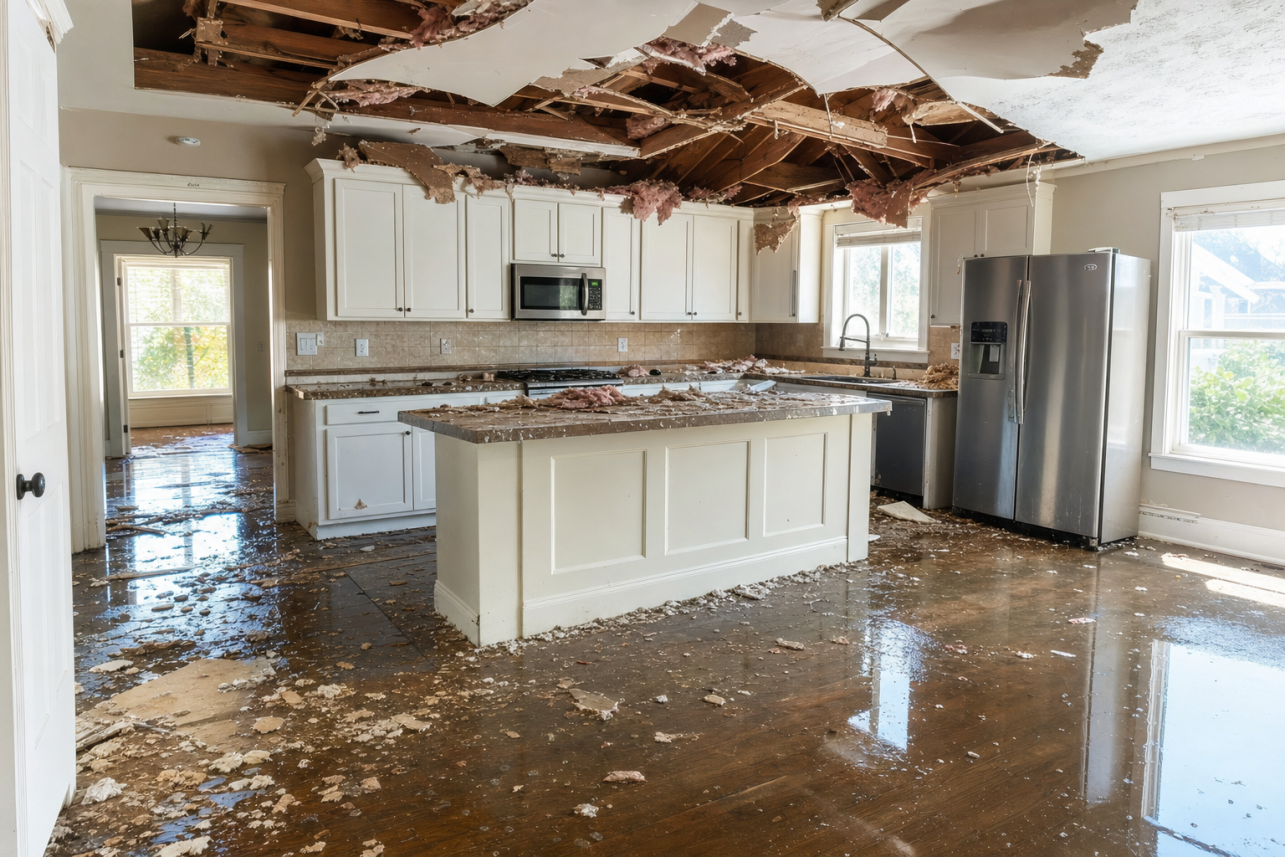
This is one of the most common denial tactics we see on Siler City water claims, and it is frequently beatable. Policies exclude gradual seepage but cover sudden and accidental discharge — so the entire dispute comes down to proving how and when the water event actually happened.
Carriers often lean on this exclusion when a leak went unnoticed behind a wall or under a house. But ‘unnoticed’ is not the same as ‘gradual.’ A supply line that fails suddenly inside a wall cavity can cause damage a homeowner couldn’t reasonably have discovered for days or weeks, and North Carolina courts have distinguished between the timing of the leak and the timing of discovery.
Winning the argument takes evidence: a plumber’s report describing the failure point, photos of the failed fitting or pipe, water bills showing a sudden spike, and sometimes a leak-detection or engineering opinion. Crawl spaces common under Chatham County homes are a frequent battleground here, because carriers assume anything found there must have been leaking for months.
Don’t accept the denial letter as the final word. Request the carrier’s engineer or adjuster report in writing, preserve the failed plumbing component, and get an independent assessment. We’ve reversed seepage denials by rebuilding the timeline with documentation the first adjuster never bothered to collect, and a denial can often be disputed well after the initial decision.
What Documentation Do I Need For A Water Insurance Claim Siler City Adjusters Will Actually Approve?
Strong documentation is the difference between a fast approval and months of back-and-forth. Start with photos and video of everything — standing water, soaked flooring, stained drywall, damaged furniture, and the source of the leak itself if you can safely find it.
Keep the failed part whenever possible. A burst supply line, a corroded fitting, or a failed water heater valve is physical proof of a sudden loss, which matters enormously with Chatham County carriers who often try to argue slow seepage instead.
Save every receipt tied to the loss: emergency plumber invoices, water extraction and drying bills, dehumidifier rentals, even hotel stays if the home wasn’t livable. These fall under different coverage sections of your policy, and insurers won’t pay for what you can’t prove.
Write down a simple timeline while it’s fresh — when you discovered the water, who you called, what was done and when. Note the names of everyone you speak with at the insurance company.
Finally, get a copy of your full policy, not just the declarations page. Our team reviews the actual policy language before we build the claim, because coverage for things like mold remediation, code upgrades, and matching flooring often hides in endorsements homeowners never knew they had. We handle this documentation process for Siler City clients from day one, so nothing gets missed and nothing gets thrown away that the carrier could have paid for.
Will Filing A Water Damage Claim In Siler City Raise My Insurance Rates Or Get My Policy Canceled?
It’s a fair concern, and the honest answer is: it depends on the size of the loss and your claim history, not on whether you hire a public adjuster. Carriers make rating decisions based on the claim being filed at all — a poorly handled claim and a well-handled one show up the same way on your record.
In North Carolina, insurers generally can’t cancel a policy mid-term just because you filed a legitimate claim. They can choose not to renew at the end of the policy period, but that decision typically hinges on multiple claims in a short window, not a single water loss.
Here’s the practical math we walk Chatham County homeowners through: if the damage is only slightly above your deductible, paying out of pocket may make sense. But water losses are rarely small once you open up walls and floors. A leak that looks like a $2,000 problem often turns into $15,000 or more after subflooring, insulation, and drying are properly accounted for.
Absorbing a five-figure loss to protect against a possible premium bump is almost never the right trade. What actually hurts homeowners is filing a claim, getting underpaid, and then having the claim on their record anyway.
If you file, file it right the first time. We help Siler City families do exactly that — one properly documented, fully paid claim instead of a lowball settlement followed by a fight to reopen it.
Mold Is Already Growing After My Water Leak — Will Insurance Cover The Remediation?
Often yes, but with limits, and this is where policy language really matters. Most North Carolina homeowners policies cover mold when it results from a covered water loss — like a burst pipe or appliance failure — but cap that coverage, commonly at $5,000 or $10,000. Some policies exclude it entirely unless you purchased a mold endorsement.
The key argument is causation. If the mold grew because of a sudden, covered water event, remediation should be part of the claim. Carriers frequently try to flip this and blame the mold on “long-term moisture” or poor maintenance to escape paying. Documenting when the leak happened and how quickly mold appeared is critical to defeating that argument.
Siler City’s humidity makes this urgent. In our climate, mold can establish itself in wet drywall and crawl space framing within 48 to 72 hours. Homes here with vented crawl spaces are especially vulnerable, because moisture lingers under the house long after the visible water is gone.
Don’t paint over it or wipe it down before it’s documented — that destroys evidence the claim depends on. Get photos, get moisture readings if possible, and get professional drying started with proper documentation.
When we handle these claims, we make sure the mold is tied clearly to the covered water event, that the remediation scope is complete rather than cosmetic, and that the carrier pays every available dollar under the mold provision plus the underlying water damage itself.
The Insurance Company Already Sent Their Adjuster To My Home — Why Would I Hire My Own?
Because that adjuster works for the insurance company, not for you. Their job is to settle your claim at the lowest defensible number. They may be perfectly polite and professional, but their estimate is written with the carrier’s interests in mind — and with water losses, what gets left out of the estimate is usually where the real money is.
Company adjusters routinely scope only visible damage: the stained ceiling, the buckled section of floor. They frequently omit moisture trapped in wall cavities, saturated insulation, damaged subflooring, continuous flooring that must be replaced to match, and code-required upgrades during repair. Each omission can be thousands of dollars.
When you pursue a Water insurance Claim Siler City carriers know a licensed public adjuster is involved in, the dynamic changes. We inspect independently, take our own moisture readings, write a complete line-item estimate, and negotiate from documented facts rather than accepting their first number.
Timing matters too. It’s easiest to bring us in before you accept any settlement, but even if their adjuster has already inspected, we can still challenge the scope and pricing. Their estimate is a starting offer, not a verdict.
For The Public Adjusters, Inc. represents only policyholders — never insurance companies. For homeowners here in Chatham County, having your own licensed advocate reviewing that estimate typically costs nothing upfront and consistently uncovers damage the carrier’s inspection never accounted for.
What’s The Difference Between Water Damage And Flood Damage — And Does It Matter For A Water Insurance Claim Siler City Residents File?
It matters enormously, because standard homeowners policies cover sudden water damage from inside the home but exclude flooding from outside. A Water insurance Claim Siler City homeowners submit for a burst pipe, failed water heater, or overflowing washing machine falls under the homeowners policy. Rising water from heavy rain, an overflowing creek, or storm runoff requires separate flood coverage through the NFIP or a private flood policy.
Where this gets contentious is in mixed-cause situations. After heavy storms roll through Chatham County, we regularly see insurers try to reclassify legitimate interior water losses as ‘flood’ damage to push the claim onto a policy the homeowner doesn’t have. Wind-driven rain entering through storm-damaged roofing, for example, is typically covered under homeowners insurance — it is not flood damage, no matter how the carrier’s adjuster labels it.
The source of the water and the path it traveled determine coverage, and proving that path takes documentation: photos, moisture mapping, weather records, and sometimes plumber or engineer reports. If your insurer has denied or reduced your payout by calling interior damage a flood event, that classification can be challenged. We investigate the actual cause of loss, build the evidence file, and hold the carrier to the language in the policy rather than their preferred interpretation of it.
My Family Can’t Live In The House While Water Damage Is Being Repaired — Will Insurance Pay For A Hotel Or Rental?
In most cases, yes. Nearly every homeowners policy sold in North Carolina includes Additional Living Expenses coverage, often called ALE or Loss of Use. If a covered water loss makes your home uninhabitable — no safe flooring, no working kitchen, active mold remediation, contaminated water intrusion — the policy pays the extra costs of living elsewhere while repairs are completed.
That includes hotel stays, a short-term rental, restaurant meals above your normal grocery spending, extra mileage if you’re commuting farther, pet boarding, and even laundry costs. The key word is ‘extra’: the carrier owes the difference between your normal living costs and what displacement actually costs you.
Here’s what many Siler City homeowners don’t realize: insurers rarely volunteer ALE, and they often pressure families to stay in a partially gutted house to avoid paying it. Whether a home is ‘uninhabitable’ is frequently disputed. A house with subfloor removed, dehumidifiers running around the clock, and no functioning bathroom is not habitable for a family, regardless of what the carrier’s adjuster claims.
Save every receipt from day one, even before coverage is confirmed. When For The Public Adjusters handles a water claim, we document habitability with photos and remediation records, calculate the full ALE owed, and include it in the demand alongside the structural and contents damage. Displacement costs add up fast, and they’re part of what your premiums paid for.
The Water Only Ruined Part Of My Flooring — Can I Make The Insurance Company Replace All Of It So It Matches?
Often, yes — and this is one of the most undervalued parts of a Water insurance Claim Siler City carriers routinely shortchange. When water destroys hardwood in your kitchen but that same flooring runs continuously into the dining room and hallway, patching one section leaves an obvious mismatch. Discontinued planks, different stain lots, and years of wear make an exact match nearly impossible.
North Carolina claims practice generally supports replacing flooring throughout a continuous, connected area so the finished repair is uniform. The same logic applies to cabinets: if water wicks up into three lower cabinets and that cabinet line is discontinued, replacing three mismatched boxes in a run of ten isn’t a proper repair. Carriers know this, but their initial estimates almost always price a patch job anyway.
The difference is significant. A patch estimate for 200 square feet of flooring might come in under $2,000, while the correct continuous-area replacement could run $8,000 to $15,000 depending on the material. Multiply that across flooring, cabinetry, and trim, and matching disputes often represent the largest gap in a water damage settlement.
We document flooring continuity room by room, obtain manufacturer discontinuation letters when materials are no longer made, and write estimates that reflect what an actual Chatham County contractor would charge to restore the home to its pre-loss condition — matched, uniform, and done right.
I Live In An Older Siler City Home With Original Plumbing — Will My Insurer Use The Age Of My Pipes Against Me?
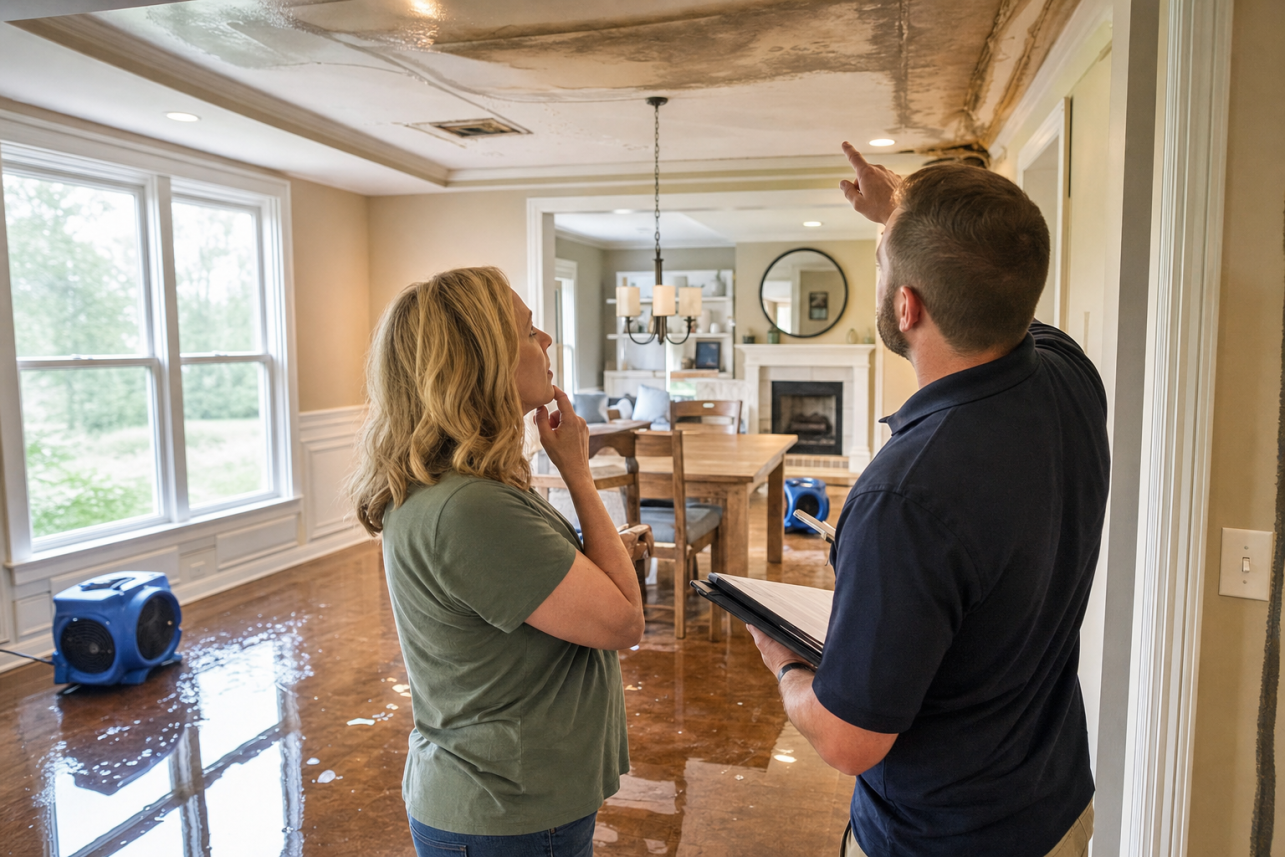
They may try, and it’s worth understanding how before you file. Many homes in Siler City’s older neighborhoods still have galvanized steel, cast iron, or 1980s-era polybutylene plumbing. When one of these systems fails and floods a kitchen or crawlspace, carriers sometimes argue the loss resulted from ‘wear and tear’ or poor maintenance rather than a sudden, accidental event.
Here’s the distinction that matters: while policies exclude the cost of repairing the worn pipe itself, they generally cover the resulting water damage — the flooring, drywall, cabinets, insulation, and contents the escaping water destroyed. A pipe that corroded over decades and then suddenly burst still produced a sudden discharge of water, and that resulting damage is typically compensable.
Carriers blur this line constantly. We’ve seen denials that treat an entire loss as ‘maintenance-related’ when the policy only excludes the pipe repair, which might be a few hundred dollars against tens of thousands in water damage. Keeping the failed pipe section, getting a plumber’s written statement on the failure mode, and photographing everything before demolition all strengthen your position.
If you’ve received pushback because of your home’s age, don’t accept the denial at face value. Our team reads the actual exclusion language, separates what’s genuinely excluded from what’s owed, and presents the resulting-damage argument with the evidence to back it up. Older Chatham County homes deserve full coverage for covered losses, and the age of your plumbing doesn’t erase it.
Local Relevance
Siler City’s housing stock includes a lot of older homes — mill-era houses and mid-century construction are common across town — and older homes mean aging supply lines, original cast iron or galvanized plumbing, and water heaters past their expected life. When those fail, the damage is often slow and hidden before it becomes obvious, which is exactly the kind of loss insurers like to label ‘gradual’ and deny.
Chatham County’s climate adds its own pressure. Humid summers accelerate mold once materials get wet, and the handful of hard freezes we get each winter is enough to burst pipes in under-insulated crawl spaces, which many older Siler City homes have.
Heavy Piedmont thunderstorms also drive water through worn shingle roofs and around flashing. Roof leak claims here frequently get disputed over whether the cause was a covered event or ‘wear and tear.’ We serve all of Chatham — including Public Adjuster Silk Hope NC and the surrounding communities — and we know how these local loss patterns play out in claim files. If rising water from a creek or storm runoff caused your damage, that is a flood claim under a separate policy, and we handle those too.
Many Siler City homes sit over vented crawl spaces with decades-old plumbing runs, so a slow leak can soak subfloor and joists for months before anyone notices — which is why we recommend getting a professional moisture assessment before accepting any insurer’s ‘surface damage only’ estimate.
Get A Straight Answer About Your Water Damage Claim
Before you accept a low offer or a denial, let a licensed and bonded public adjuster review your policy and your damage — for free. We will tell you honestly what your claim involves and handle the documentation and negotiation so you can focus on your home. Serving Siler City and all of Chatham County.
Request Your Free Claim Review
Call us: (919) 400-6440
Helpful Resources
- NCDOI Public Adjusters Guide
- Federal Emergency Management Agency (FEMA)
- North Carolina Department of Insurance — State regulator overseeing insurance claims and public adjuster licensing
- FloodSmart — the National Flood Insurance Program — Official federal resource explaining flood coverage
Serving Siler City · Chatham
Last updated: August 30, 2026