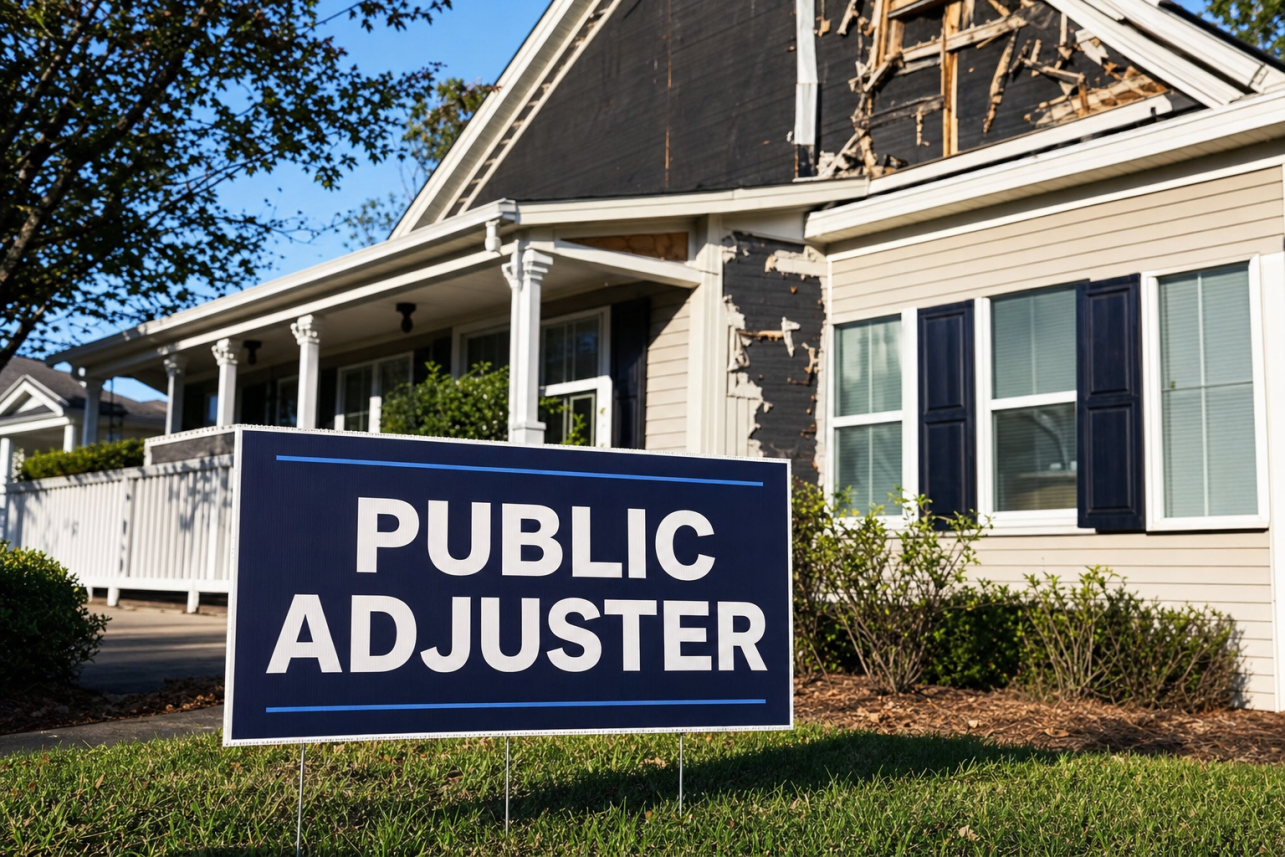
A public adjuster Silk Hope NC property owners can call is exactly what For The Public Adjusters, Inc. provides: a licensed and bonded claims professional who works for you, not the insurance company. We prepare, document, and negotiate fire, water, smoke, tree, and flood damage claims for homes, farms, and businesses across the Silk Hope community and greater Chatham County. Our fee comes from the settlement, so our interests stay aligned with yours from the first inspection to the final check.
What This Service Is
Every insurance claim has two sides. The company adjuster who shows up after your loss works for the insurer — that's simply who signs their paycheck. A public adjuster is the licensed professional on the other side of the table, hired by the policyholder to read the policy, measure and document the full scope of damage, prepare the estimate, and negotiate the settlement.
In North Carolina, public adjusters are regulated and licensed by the state. The NCDOI Public Adjusters Guide explains the ground rules: we must be licensed, our contracts must be in writing, and our compensation is a percentage of the recovery rather than an hourly fee. That structure matters — if the claim doesn't pay, we don't get paid.
For The Public Adjusters, Inc. handles residential homeowners claims, commercial business claims, fire and smoke losses, water damage, tree damage, vehicle-into-home impacts, vandalism, arson-related homeowners claims, and flood claims including NFIP policies. We do not handle cell phone, motor vehicle, health, or life insurance claims — buildings and their contents are our entire focus.
Common Problems
What Does A Public Adjuster Silk Hope NC Homeowners Hire Actually Cost?
There's no retainer and no hourly bill. We work on a contingency percentage of the insurance settlement, agreed to in writing before any work begins, as North Carolina licensing rules require.
What surprises most Chatham County policyholders is what's already in their policy that never gets mentioned: additional living expenses while the home is unlivable, debris removal, code-upgrade coverage on older farmhouses, matching for siding and roofing, and contents depreciation that can often be recovered. Courts have backed policyholders on these valuation fights — in Sproull v. State Farm Fire & Casualty Co. (2021), the Illinois Supreme Court sided with a homeowner and held the insurer could not depreciate labor costs when calculating the actual cash value of home repairs. Knowing what the policy and the law actually allow is where the value comes from. We never guarantee a specific outcome, but we do make sure nothing covered gets left off the claim.
The Insurer's Estimate Won't Come Close To Covering The Repairs — Now What?
This is the most common call we get from rural Chatham County. A tree comes through the roof or a kitchen fire spreads smoke through the whole house, and the carrier's estimate covers a patch job while local contractors quote two or three times that figure.
Lowball estimates usually come from scope problems, not price problems: hidden framing damage under a roof puncture, smoke residue in HVAC ducts and wall cavities, or water that traveled inside walls far from the visible stain. A company adjuster doing a thirty-minute walkthrough rarely captures it.
Our job is to reopen that scope — with moisture readings, photo documentation, line-item estimates, and policy language — and negotiate from evidence. If a claim has been underpaid or denied, it can often be supplemented or disputed rather than accepted as final.
Can't I Just Handle The Claim Myself, Or Have My Contractor Deal With It?
You can, and for a small, straightforward loss that may be reasonable. But a contractor is licensed to build, not to interpret an insurance contract, and North Carolina restricts who may negotiate claims on a policyholder's behalf for compensation.
The honest test for hiring help: is the loss large, is anything hidden or structural, and does the carrier's number differ meaningfully from real repair costs? If yes to any of those, representation tends to pay for itself.
When you vet any adjuster in the Silk Hope area, ask three things: are they licensed in North Carolina, are they bonded, and will they put the fee in writing before signing. We answer yes to all three, and we'll walk you through our contract line by line before you commit to anything.

Our Process
Free Policy Review And Damage Inspection
We start by reading your actual policy — the declarations, endorsements, and exclusions — because coverage drives everything else. Then we inspect the property in person, from attic framing to crawl space, documenting damage the way it needs to be presented to a carrier: photographed, measured, and tied to specific policy provisions.
Build And File The Full Claim Package
We prepare a line-item repair estimate, a contents inventory with values, and supporting documentation for additional living expenses or business interruption where they apply. On flood losses, we prepare the proof-of-loss paperwork the National Flood Insurance Program requires within its strict deadlines — a step many NFIP policyholders miss on their own.
Negotiate To Settlement
We meet the company adjuster on site, walk the damage together, and negotiate scope and value item by item. If the carrier's position doesn't move on the evidence, we pursue supplements, re-inspections, or the appraisal process your policy provides. You approve every decision; nothing settles without your sign-off.
| What Happens | Filing on Your Own | With For The Public Adjusters, Inc. |
|---|---|---|
| Damage documentation | Whatever the carrier's adjuster chooses to photograph in one visit | Full inspection with moisture readings, engineer reports, and line-item scope of every affected area |
| Estimate accuracy | Carrier writes the estimate using its own pricing and scope | Independent Xactimate estimate built to actual local contractor pricing in Chatham County |
| Policy interpretation | You take the adjuster's word on what's covered and excluded | Every exclusion and endorsement is read against NC case interpretation before accepting a position |
| Negotiation | One offer, take it or argue alone | Documented rebuttals, re-inspections, and appraisal invoked when the carrier won't move |
| Your time | Weeks of calls, emails, and paperwork on your schedule | We handle all carrier communication; you approve decisions and get updates |
| Typical result | Settlements frequently miss hidden and code-required work | Claims routinely settle for multiples of the initial offer when underscoping is documented |
Commonly Overlooked In The Public Adjusting Industry
- Ordinance and law (code upgrade) coverage — Carrier estimates often price repairs to pre-loss condition, quietly skipping the code-required upgrades Chatham County inspections will actually demand.
- Matching of discontinued shingles and siding — Adjusters approve a patch without checking whether the material line still exists, leaving homeowners with a roof or wall in two visibly different products.
- Recoverable depreciation left unclaimed — Many policyholders never realize the depreciation withheld from the first check is recoverable after repairs, so it simply stays with the insurer.
- Moisture trapped in wall cavities and under flooring — Surface-dry drywall passes a quick visual inspection while saturated insulation and subfloor keep breeding mold behind it.
- Additional living expense (ALE) entitlements — Families camp in one habitable room to save the insurer money, not knowing the policy owes them comparable temporary housing and meal differences.
- Detached structures, fencing, and farm outbuildings — On rural Silk Hope properties, workshops, barns, and long fence runs get skipped because the field adjuster only walks the main dwelling.
- Proof-of-loss and claim deadlines in the policy — Policies contain strict notice and documentation deadlines that quietly expire while homeowners wait for the carrier to 'get back to them.'
- Smoke and soot migration beyond the burn area — Soot travels through HVAC ductwork into rooms that look untouched, and cleaning those systems rarely appears in an initial fire estimate.
Case Studies
Case Study #1
Situation: A family on Silk Hope Gum Springs Road had a large oak come through their roof during a spring thunderstorm, opening the attic and two bedrooms to wind-driven rain.
Problem: The carrier's field adjuster wrote an estimate for shingle repair and drywall patching only, totaling about $14,200. It ignored the fractured roof trusses, saturated blown-in insulation, and the fact that the discontinued shingle line meant a partial repair would never match.
Investigation: We brought in a structural engineer to document the cracked truss chords, ran moisture mapping through the attic and ceiling cavities, and pulled the shingle manufacturer's discontinuation records to support a full roof replacement under the policy's matching considerations.
Findings: Three trusses required engineered repair, insulation across roughly 1,100 square feet was wet and compressed, and hidden water had tracked down interior wall cavities into the subfloor of one bedroom. None of this appeared in the carrier's scope.
Solution: We rebuilt the claim line by line with engineer-backed structural repairs, full roof replacement, insulation removal and replacement, wall cavity drying, and code-required upgrades, then negotiated directly with the carrier's large-loss desk.
Outcome: The claim settled at $87,600 — more than six times the original offer — and the family's contractor could actually complete the work without cutting corners or out-of-pocket surprises.
Lesson: Storm damage in wooded Chatham County rarely stops at the shingles. If nobody looks inside the attic and wall cavities within the first days, the most expensive damage never makes it into the estimate.
Case Study #2
Situation: A hobby-farm owner off Siler City-Snow Camp Road discovered a slow supply-line leak had run behind the kitchen wall of their 1970s farmhouse for weeks before the floor started cupping.
Problem: The insurer initially denied the claim as 'long-term seepage,' excluded under the policy, and offered nothing. The homeowner was staring at a gutted kitchen, buckled hardwoods, and mold blooming along the sill plate.
Investigation: We reviewed the exact policy language on sudden-and-accidental discharge versus the seepage exclusion, hired a licensed plumber to document the failure point in the braided supply line, and had a mold assessor delineate the affected area before demolition erased the evidence.
Findings: The plumber's report showed a burst-type failure, not gradual corrosion — meaning the discharge itself was sudden even though discovery was delayed. North Carolina policy interpretation on that distinction became the backbone of our appeal.
Solution: We submitted a formal rebuttal with the plumbing report, mold protocol, and a complete Xactimate estimate covering kitchen demolition, hardwood replacement throughout the connected flooring, cabinetry, and remediation, and requested re-inspection with our team present.
Outcome: The denial was reversed and the claim paid at $63,400, including additional living expenses for the six weeks the kitchen was unusable.
Lesson: A denial letter is an opinion, not a verdict. The difference between 'seepage' and a covered sudden discharge often comes down to expert documentation gathered before anyone tears out the evidence.
| Your Situation | Handle It Yourself? | Call a Public Adjuster? | What It Depends On |
|---|---|---|---|
| Small claim under your deductible or barely over it | Usually yes | Rarely worth the fee | Whether hidden damage could push the true loss well past the deductible |
| Roof storm damage with a partial-repair offer | Risky | Yes | Whether shingles are discontinued and whether decking, underlayment, or interior ceilings were affected |
| Water leak the carrier calls 'long-term seepage' | No | Yes, quickly | Proving the discharge was sudden — evidence disappears once demolition starts |
| Fire loss with contents and structure damage | No | Yes | Contents inventories and smoke remediation are almost always underscoped without professional documentation |
| Claim already denied in writing | No | Yes | The denial's exact policy language and whether expert reports can rebut it — many denials are reversible |
| Carrier offer arrived but feels low | Maybe | Get a free review first | How the offer compares to real repair quotes; a gap over 20% usually signals underscoping |
| Business or farm structure loss with lost income | No | Yes | Business interruption and outbuilding coverage calculations are complex and easy for carriers to minimize |

Reviews
After hail went through in April, our insurance company offered us $9,000 for a roof our contractor quoted at $28,000. For The Public Adjusters found soft-metal damage on the gutters and vents the first adjuster never photographed and got the whole roof approved. We ended up with a full replacement plus interior ceiling repairs we didn't even know were connected to the storm.
Denise M., Silk Hope
Our detached workshop burned in February and the carrier kept lowballing the contents and equipment inside. These folks inventoried everything from the welder to the hand tools, priced replacement cost correctly, and pushed back on the depreciation the company took. Settlement nearly tripled. Worth every penny of the fee and they explained each step in plain English.
Wade T., Chatham County
We tried handling a water damage claim ourselves for two months and got nowhere but frustrated. Once we hired this team, they had a re-inspection scheduled within a week and caught mold behind the baseboards the insurance adjuster walked right past. Only reason for four stars instead of five is the process still took a while, but that was the insurance company dragging its feet, not them.
Karen and Phil R., Snow Camp Road area
Frequently Asked Questions
What Does A Public Adjuster Silk Hope NC Homeowner Hires Actually Do For Me?
A public adjuster works exclusively for you, the policyholder — never for the insurance company. When you hire For The Public Adjusters, Inc., we take over the entire claim process from documentation to final settlement negotiation.
That starts with a thorough inspection of your property. Rural Chatham County homes often have damage that gets missed on a quick carrier inspection: wind-lifted shingles on older roofs, water intrusion behind siding, or storm damage to detached workshops, barns, and outbuildings that are common on properties around Silk Hope. We document everything with photos, measurements, and line-item estimates written in the same software insurance carriers use.
From there, we read your policy carefully — including endorsements and exclusions most homeowners never notice — and prepare a claim package that supports the full scope of your loss. We handle all communication with the carrier's adjuster, attend re-inspections, respond to lowball estimates with documented rebuttals, and negotiate until the settlement reflects what it actually costs to repair or rebuild in this part of North Carolina.
You stay informed at every step, but you're no longer stuck arguing with an insurance company on your own. Our job is to level the playing field, and because we work on a contingency basis, we only get paid when your claim gets paid.
How Much Does It Cost To Hire A Claims Adjuster For My Silk Hope Property?
For The Public Adjusters, Inc. works on a contingency fee, which means there is no upfront cost and no hourly billing. Our fee is a percentage of the settlement we recover for you, agreed to in writing before any work begins. If your claim doesn't pay, you owe us nothing.
North Carolina regulates how licensed adjusters can charge, and every fee agreement we use complies with state law. You'll see the exact percentage in plain language before you sign anything — no hidden charges, no surprise deductions.
Homeowners in the Silk Hope area sometimes worry that the fee will leave them with less money than handling the claim alone. In practice, the opposite is usually true. Independent industry studies have consistently shown that professionally represented claims settle for significantly more than claims policyholders handle themselves. A carrier's first offer on a roof or water-damage claim often covers only a fraction of real repair costs in Chatham County, where contractor availability and material pricing can differ from what national estimating databases assume.
When we document the full scope of damage and negotiate line by line, the increase in the settlement typically outweighs the fee many times over. During your free initial consultation, we'll review your policy and damage and tell you honestly whether hiring us makes financial sense for your specific claim. If it doesn't, we'll say so.
What Types Of Insurance Claims Do You Handle In Silk Hope And Greater Chatham County?
We handle virtually every type of property insurance claim that affects homes, farms, and small businesses in this area.
Wind and storm damage is the most common. Silk Hope sits in a part of central North Carolina that regularly catches severe thunderstorms, straight-line winds, and the remnants of tropical systems moving inland. That means roof damage, fallen trees on structures, and torn siding are frequent claims we manage.
Water and pipe-related losses are close behind — burst supply lines during winter cold snaps, water heater failures, and slow leaks that cause hidden rot and mold. These claims are often underpaid because carriers dispute how long the damage existed, and our documentation is built to counter exactly that argument.
Fire and smoke claims, lightning strikes, hail damage, and vandalism round out the residential side. For rural properties along Silk Hope Gum Springs Road and throughout the surrounding countryside, we also handle claims involving barns, equipment sheds, fencing, wells, and other structures that homeowners often don't realize their policy covers.
We also represent policyholders on denied and underpaid claims. If your insurance company already made an offer that seems low, or denied your claim outright, it's not too late. We can review the denial letter, reinspect the damage, and reopen or appeal the claim in many cases. Bring us your policy and the carrier's correspondence, and we'll give you a straight answer about your options.
My Insurance Company Already Sent Their Own Adjuster — Why Would I Need My Own?
The adjuster your insurance company sends is paid by the insurance company. They may be professional and polite, but their job is to settle your claim according to the carrier's guidelines — which frequently means the lowest defensible number, not the full cost of putting your property back the way it was.
A public adjuster in Silk Hope NC represents only you. That distinction changes everything about how the claim is documented and negotiated. Carrier adjusters often spend twenty or thirty minutes on a property. We spend hours, and we look in the places quick inspections skip: attic decking, crawlspaces, flashing details, interior moisture readings, and outbuildings.
We also read the policy differently. Insurance contracts contain coverage for things like code upgrades, debris removal, temporary living expenses, and matching of undamaged materials — provisions that carrier estimates routinely leave out. On older Chatham County homes, ordinance and law coverage alone can add thousands to a settlement when repairs must meet current building code.
There's a practical benefit too. Recovering from a fire or a major storm is exhausting, and claims can drag on for months. We take the phone calls, the paperwork deadlines, and the re-inspection scheduling off your plate entirely.
Even if the carrier's adjuster has already inspected and issued an estimate, we can review it for free. If the offer is fair, we'll tell you. If it's short — and most first offers are — we'll show you exactly where and by how much.
When Should I Call A Public Adjuster Silk Hope NC Residents Can Trust — Before Or After Filing My Claim?
Ideally, call before you file. When For The Public Adjusters, Inc. is involved from day one, we control how the claim is documented and presented from the very first notice of loss. That early framing matters, because the way damage is described initially often shapes how the insurance company categorizes and values the entire claim.
That said, it is never too late to bring us in. Many Silk Hope homeowners contact us mid-claim, after the carrier's first offer comes in lower than expected, or after weeks of unreturned phone calls. We can step in at any stage, request the full claim file, re-inspect the property, and build a corrected estimate.
Here in Chatham County, timing also matters because of weather. After a summer hailstorm or a tropical system pushes through the Triangle area, roofing damage on farmhouses and newer builds alike can be subtle — bruised shingles, lifted flashing, granule loss. If you wait months to act, the carrier may argue the damage is wear and tear rather than storm-related.
North Carolina policies also contain deadlines for filing proof of loss and for bringing legal action, so waiting narrows your options. Our practical advice: as soon as you discover damage, take photos, prevent further harm (tarp the roof, shut off water), and call us before you give a recorded statement. A short conversation costs you nothing and can prevent mistakes that are difficult to undo later.
My Claim Was Denied Or Underpaid — Can Your Team Reopen It?
In many cases, yes. A denial letter from your insurance company is not necessarily the final word. Under North Carolina law, you generally retain the right to dispute a claim decision, submit new evidence, and demand a re-evaluation — and reopening underpaid or denied claims is one of the most common reasons Silk Hope property owners contact For The Public Adjusters, Inc.
Our process starts with a careful review of your policy and the carrier's denial or settlement letter. Denials are often based on narrow interpretations: the carrier calls hail damage 'cosmetic,' labels water damage as 'long-term seepage,' or claims wind damage predates the policy. We then conduct our own detailed inspection, often finding damage the company adjuster missed entirely — hidden moisture in wall cavities, compromised roof decking, or structural issues in older Chatham County homes and outbuildings.
From there, we prepare a documented rebuttal with line-item estimates, photographs, moisture readings, and code-compliance requirements, and we negotiate directly with the carrier. If the dispute stalls, your policy likely includes an appraisal clause, which is a formal process for resolving valuation disagreements without going to court.
One important caution: deadlines apply. Most North Carolina property policies require legal action within a set period after the loss, often three years but sometimes less. If your claim was denied or you accepted a payment that did not come close to covering repairs, bring us the paperwork sooner rather than later. Reviews of previously closed claims are part of our free initial consultation.
Are Public Adjusters Licensed To Work In Silk Hope And The Rest Of North Carolina?
Yes — and licensing is something you should always verify before hiring anyone to handle your claim. Public adjusters in North Carolina are licensed and regulated by the North Carolina Department of Insurance under Chapter 58 of the General Statutes. That license requires passing a state examination, maintaining a surety bond, completing continuing education, and following strict rules on contracts and fees.
For The Public Adjusters, Inc. holds the required North Carolina licensure, which means we can legally represent policyholders anywhere in the state, including Silk Hope, Siler City, Pittsboro, and every corner of Chatham County. Our contracts follow the state-mandated format, including your right to cancel within the statutory window after signing.
Why does this matter to you? After major storms, unlicensed 'claim consultants' and out-of-state operators sometimes canvass rural communities like ours, knocking on doors and promising quick settlements. Some are roofing contractors improperly negotiating claims, which North Carolina law prohibits unless they hold an adjuster license. Working with an unlicensed representative can jeopardize your claim and leaves you with little recourse if something goes wrong.
Before signing anything, ask for the person's license number and check it on the Department of Insurance website — it takes two minutes. A legitimate Silk Hope public adjuster will welcome the question. We put our license information in writing, explain our fee structure up front, and never ask for money before your claim is paid. That transparency is exactly what the licensing system was designed to protect.

How Long Will My Silk Hope Insurance Claim Take Once You Get Involved?
Every claim is different, but most residential claims we handle in the Silk Hope area resolve within 30 to 90 days of our involvement. Straightforward claims — a single-source water loss or clearly documented wind damage to a roof — often settle on the faster end. Large fire losses, disputed denials, or claims requiring the appraisal process can take longer, sometimes several months.
North Carolina rules work in your favor here. Carriers are expected to acknowledge claims promptly and to accept or deny them within a reasonable time after receiving proof of loss. When a public adjuster Silk Hope NC policyholders have retained submits a complete, professionally documented claim package, we remove the carrier's most common excuse for delay: missing information. Complete documentation up front is the single biggest factor in speed.
Here's a realistic timeline. In the first week or two, we inspect your property, photograph and measure everything, review your policy, and notify the carrier of our representation. Over the following weeks, we prepare a detailed estimate, meet the company adjuster on site, and begin negotiations. Most disagreements resolve during this phase.
If the carrier drags its feet, we escalate — written demands, supervisor involvement, and if necessary, invoking appraisal. We also keep you informed at every step, so you're never left wondering where things stand.
One honest note: our goal is a full and fair settlement, not the fastest one. Occasionally that means turning down a quick lowball offer and pushing for weeks longer. For families rebuilding after a serious loss, that patience typically pays for itself many times over.
Will Hiring A Public Adjuster Silk Hope NC Insurance Companies Deal With Make My Carrier Drop Me Or Raise My Rates?
No. In North Carolina, your premiums are based on risk factors and your claims history — not on whether you had professional representation during a claim. Filing the claim itself is what goes on your record, and you have every right to file it and to be paid fairly on it.
Insurance carriers work with public adjusters constantly. Our team communicates with the same regional desk adjusters and field reps who handle claims all over Chatham County, and those conversations stay professional. Most carriers actually appreciate dealing with someone who documents damage properly and speaks the language of the policy, because it moves the file along faster.
What we will not let happen is your claim being minimized simply because nobody pushed back. Around Silk Hope, we regularly see wind and hail estimates that miss code-upgrade costs, matching requirements for siding and roofing, and hidden moisture damage behind walls. Correcting those omissions is not adversarial — it is simply enforcing the contract you have been paying for.
If you are worried about non-renewal, keep in mind that carriers make those decisions based on claim frequency and property condition, not on who negotiated the settlement. Getting your home fully repaired with an adequate payout actually protects you, because an underpaid claim often leaves damage unrepaired — and unrepaired damage is a far bigger red flag to an insurer than a properly closed claim ever will be.
Do You Handle Rural Properties Around Silk Hope — Farms, Outbuildings, Barns, And Well Houses?
Yes, and it is a big part of what we do in this area. Silk Hope is farm country, and rural Chatham County properties come with structures and coverage questions that a typical suburban claim never touches — pole barns, equipment sheds, detached workshops, fencing, well houses, and older farmhouses with plaster walls and metal roofing.
These claims get shortchanged for predictable reasons. Carrier adjusters often apply steep depreciation to agricultural outbuildings, overlook Coverage B limits for other structures, or write estimates using generic pricing that does not reflect the real cost of matching a standing-seam metal roof or repairing timber-frame construction. We catch those gaps.
We also read the policy closely before we ever talk numbers. Farm and homeowner policies treat outbuildings, stored equipment, and business use very differently, and knowing which endorsement applies can swing a settlement by tens of thousands of dollars.
When we inspect a rural property off Silk Hope Gum Springs Road or anywhere in the surrounding countryside, we document everything — every structure, every fence line, every piece of damaged material — with photos, measurements, and line-item estimates. If a straight-line wind event took the roof off your barn and peeled shingles from the house, both belong in the claim, valued correctly. Our job as your Silk Hope public adjuster is to make sure nothing on the property gets left off the settlement simply because it sits behind the main house.
What Should I Do To Protect My Claim Before Your Team Arrives At My Silk Hope Home?
The first priority is safety, and the second is preservation of evidence. If you have storm, fire, or water damage, take wide photos and close-up photos of everything before you move or clean anything. Shoot from multiple angles, and include reference points like door frames so the scale is clear later.
Next, take reasonable steps to prevent further damage — tarp an open roof, shut off water to a burst line, board a broken window. Your policy requires this, and carriers will try to exclude any damage that happens after the loss if you did not mitigate. Keep every receipt for tarps, fans, plywood, or emergency services, because those costs are typically reimbursable.
Do not throw anything away. Damaged shingles, wet drywall, ruined furniture — set it aside if you can. Physical evidence is far more persuasive than a description of what used to be there. If contents were destroyed, start a simple list from memory with approximate purchase dates and prices.
Finally, be careful with recorded statements. You are obligated to cooperate with your insurer, but you are not obligated to speculate about causes or accept an adjuster's characterization of the damage on the spot. Once a public adjuster Silk Hope NC property owners hire is on the file, we handle those conversations for you. Anywhere in Chatham County, we can usually get out for an initial inspection quickly — and the less that has been disturbed before we document it, the stronger your claim will be.
What Kinds Of Storm Damage Are Most Common In Silk Hope, And How Do Carriers Underpay Them?
Central Chatham County sits in a corridor that regularly sees severe thunderstorms, straight-line winds, hail, and the remnants of tropical systems pushing inland from the coast. The most common losses we work locally are wind-torn roofs, hail-bruised shingles, tree strikes on homes and outbuildings, and the water intrusion that follows all three.
Hail is the claim most frequently underpaid. Bruising on architectural shingles is easy to miss from the ground, and carrier adjusters sometimes count only a handful of hits and offer a small repair instead of the full slope or roof replacement the damage actually warrants. We inspect every slope, document hits per test square, and invoke matching and repairability arguments when a partial repair simply is not feasible.
Wind claims get shorted differently — creased shingles that have lost their seal are functional damage even when they have not blown off yet, and many first estimates ignore them entirely. Tree strikes bring their own disputes over structural framing, whether the carrier owes for engineering, and how much interior damage traces back to the impact.
Water intrusion is where the real money hides. Moisture travels behind siding, under flooring, and inside wall cavities, and a visual-only estimate will miss most of it. We use moisture readings and thorough interior documentation so the settlement covers what actually needs repair. For Silk Hope homeowners, the difference between a surface-level estimate and a complete one is often the difference between patching a roof and properly restoring the home.
What Documents Should I Gather Before Meeting With A Public Adjuster Silk Hope NC Property Owners Recommend?
The most important document is your full insurance policy — not just the declarations page. The declarations page shows your coverage limits, but the endorsements and exclusions buried deeper in the policy often decide whether a claim gets paid fairly. If you can't find your copy, we can request a certified one from your carrier on your behalf.
Beyond the policy, pull together anything that documents the loss: photos or video of the damage, dates the damage occurred or was discovered, and any correspondence with your insurance company. If the carrier already sent an adjuster, bring their estimate and any letters they've mailed you. Those documents tell us exactly where the carrier is trying to limit its payout.
Receipts, invoices, and records of past repairs or improvements to your home help too. If you replaced your roof five years ago or upgraded your HVAC, proof of that work can significantly raise the value of your claim. For contents losses, even a rough inventory with approximate purchase dates gives us a strong starting point.
Don't worry if you're missing pieces. Many Silk Hope homeowners come to us with almost nothing in hand, especially after a fire or major storm scatters or destroys paperwork. Part of our job is rebuilding that documentation — we photograph, measure, and inventory everything ourselves during our inspection. Having records ready simply speeds things up. Either way, the first meeting is free, and we'll tell you honestly whether your claim is worth pursuing.
I Already Cashed A Check From My Insurance Company — Is It Too Late To Bring In Your Team?
In most cases, no — and this surprises a lot of homeowners in Silk Hope. Cashing a claim check in North Carolina does not automatically close your claim or waive your right to additional payment, unless the check was clearly marked as a full and final settlement and you signed a release agreeing to that. Most initial payments are simply the carrier's opening position, not the end of the conversation.
Insurance companies count on people assuming the first check is final. In reality, you generally have the right to submit a supplemental claim when the initial payment doesn't cover the true cost of repairs. We see this constantly with roof claims around Chatham County, where the carrier pays for a partial repair when local roofers won't touch the job for that amount.
When you bring us in after a payment, we re-inspect the property, build a complete line-item estimate, and compare it against what the carrier paid. The gap is often substantial — missed damage, lowballed labor rates, omitted code-upgrade costs, and depreciation that was never properly explained. We then present the supplemental demand and negotiate directly with the carrier.
One caution: North Carolina policies contain deadlines, typically requiring suit or certain actions within a set period after the loss. The sooner you call after cashing that check, the more room we have to work. Bring us the check stub, the carrier's estimate, and any release paperwork, and we'll tell you exactly where you stand at no cost.
How Does Recoverable Depreciation Work On A Silk Hope Claim, And Why Is My First Check So Small?
If your policy pays replacement cost — and most homeowner policies in this area do — your carrier initially pays only the actual cash value of the damage. That's the replacement cost minus depreciation for age and wear. The depreciation they hold back is called recoverable depreciation, and you get it after you complete repairs and submit proof.
Here's a simple example. Say your roof replacement is estimated at $24,000 and the carrier depreciates it by $9,000 for a fifteen-year-old roof. Your first check is $15,000 minus your deductible. Once the new roof is on and you send invoices, the carrier releases the remaining $9,000.
The problem is that carriers frequently apply depreciation too aggressively, depreciate items that shouldn't be depreciated — like labor, in some situations — or make the recovery process so confusing that homeowners never claim the money they're owed. Unclaimed recoverable depreciation quietly saves insurance companies enormous sums every year.
As your Silk Hope public adjuster, we scrutinize every depreciation line in the carrier's estimate, challenge inflated age assumptions, and make sure the replacement cost figure itself is accurate before depreciation is even calculated. A depreciation holdback based on a lowballed estimate shortchanges you twice.
We also watch the deadlines. Policies typically give you a limited window — often 180 days to a year — to complete repairs and claim the holdback. We track those dates and handle the paperwork so nothing you're entitled to gets left on the table.
Do You Represent Businesses And Commercial Properties Near Silk Hope, Or Only Homeowners?
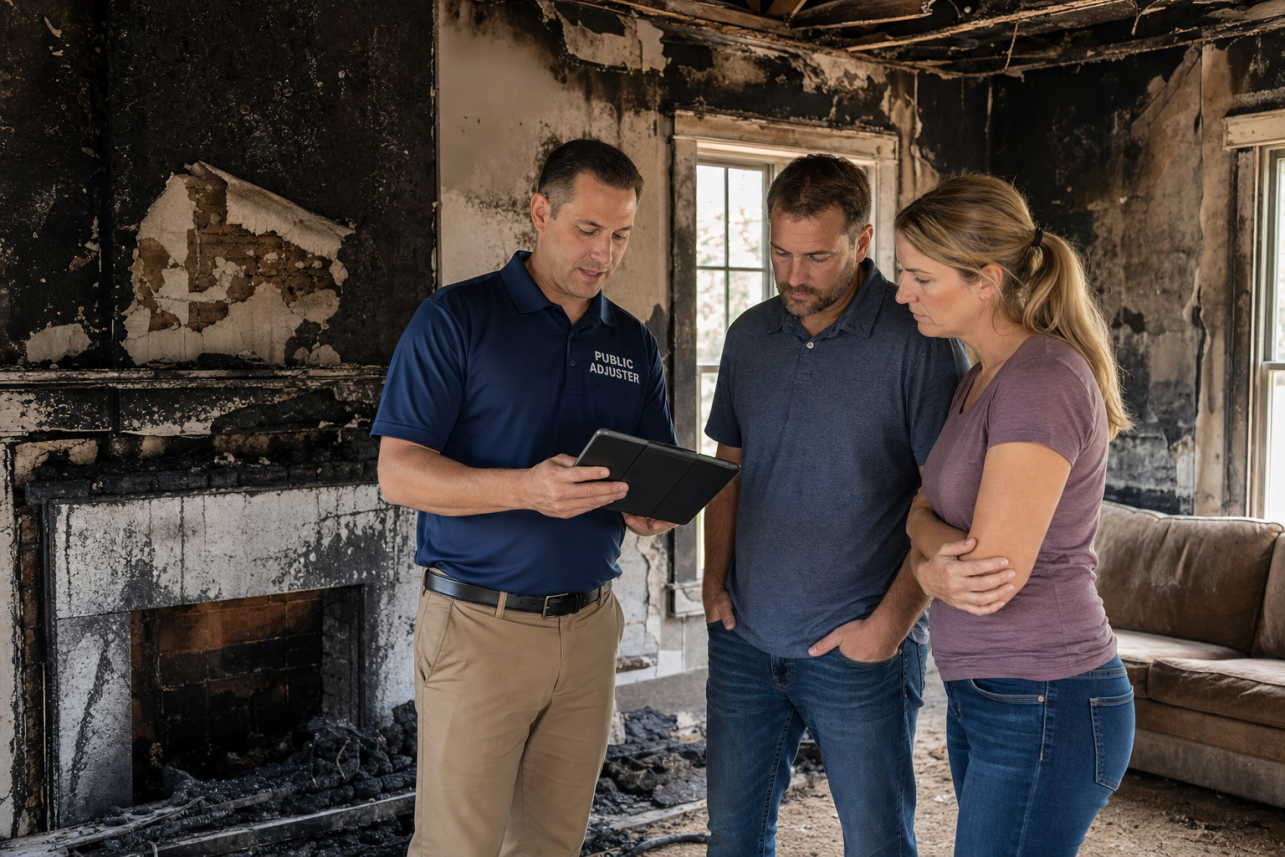
We handle both. Commercial claims are actually where professional representation delivers some of the biggest gains, because business policies are more complex and the losses go beyond the building itself.
Around Silk Hope and the surrounding Chatham County crossroads, that means farm operations, feed and supply businesses, churches, small shops, rental properties, and light commercial buildings along the routes toward Siler City and Pittsboro. Each comes with its own policy language — commercial property forms, business income and extra expense coverage, equipment breakdown endorsements, and coinsurance clauses that can quietly penalize an underinsured owner.
Business interruption is the piece owners most often get shortchanged on. If a fire or storm shuts down your operation, you're likely owed lost income and continuing expenses during the restoration period, not just the cost of repairs. Calculating that correctly requires financial records, projections, and a clear argument about how long a reasonable restoration should take. Carriers routinely cut the restoration period short to shrink the payout, and we push back with documentation.
For landlords, we also address lost rental income and tenant-related coverage questions that carriers rarely volunteer to explain.
Whether it's your home or your livelihood, the engagement works the same way: a free initial review, a contingency fee only if we recover money for you, and a public adjuster Silk Hope NC business owners can reach directly rather than a call center. If you run a commercial operation anywhere in Chatham County and your claim feels underpaid, delayed, or denied, we're glad to take a look.
Local Relevance
Silk Hope is farm country — an unincorporated crossroads community in western Chatham County where properties tend to be older, larger, and surrounded by mature hardwoods and pines. That combination shapes the claims we see here: trees on roofs and outbuildings after summer thunderstorms, tornado and hurricane-remnant damage tracking up from the coast, lightning-sparked fires, and slow water losses in farmhouses with aging plumbing and additions built across several decades.
Older rural homes also raise valuation issues that suburban tract houses don't. Plaster walls, heart-pine flooring, metal roofing, and detached barns or workshops are frequently priced by carriers using generic replacement costs that don't reflect what it takes to rebuild them properly. Documenting those details is a large part of what we do for Chatham County policyholders.
For properties near creeks and low-lying pasture, flood is a separate policy entirely. The Federal Emergency Management Agency oversees the flood program, and its claims run on different forms, different deadlines, and different rules than a standard homeowners claim — which is exactly why having someone who has handled both matters after a heavy-rain event.
Around Silk Hope, the big oaks and pines that shade older farmhouses are also the leading cause of storm claims, and the visible hole in the roof is often the smallest part of the loss — impact damage to rafters, ceiling framing, and interior finishes below tends to be missed on quick carrier inspections, so a tree damage claim here deserves a full structural scope before any settlement is accepted.
Get A Second Opinion Before You Settle
Whether the tree is still on the roof or the carrier's check is already sitting on your kitchen table, it costs nothing to have For The Public Adjusters, Inc. review your policy and your damage. We're licensed and bonded in North Carolina, we serve Silk Hope and all of Chatham County, and we only get paid when your claim does.
Request Your Free Claim Review
Call us: (919) 400-6440
Helpful Resources
- NCDOI Public Adjusters Guide
- Federal Emergency Management Agency (FEMA)
- National Flood Insurance Program (NFIP)
- North Carolina Department of Insurance — State regulator that licenses public adjusters and assists NC consumers
- FEMA flood insurance information — Official resource on NFIP flood coverage and claims
Our services in this city
Service pages for this city are coming soon.
Last updated: August 11, 2026