Why Fire Insurance Claim Delays Are More Than an Inconvenience
Fire insurance claim delays can cost an insurer more than the policy limits, because North Carolina courts have held that a company which unfairly drags out a covered claim can be liable for the additional harm its delay causes — including statutory damages well beyond the original claim amount owed under the policy.
Key takeaways
- In Bi-Economy Market v. Harleysville Insurance Co. (2008), New York’s highest court ruled an insurer that unreasonably delays a fire claim can owe consequential damages beyond the policy limits.
- The purpose of fire insurance is to help a home or business recover promptly, so foreseeable losses caused by an insurer’s delay — like a business failing while it waits — can be the carrier’s responsibility.
- A stalled fire claim is not something policyholders simply have to accept; slow-walking a covered loss carries real legal consequences for insurance companies.
- If your fire claim has dragged on for months, documenting every delay, request, and unanswered communication strengthens your position.
- A licensed and bonded public adjuster can help organize, present, and push your fire claim forward — though no one can guarantee a specific outcome.
That quick answer deserves some unpacking, because most policyholders assume the worst-case outcome for an insurance company is simply paying what the policy requires — eventually. North Carolina law says otherwise. In Gray v. North Carolina Insurance Underwriting Association, the North Carolina Supreme Court allowed homeowners whose storm-damaged properties were not fairly and promptly paid to pursue claims for unfair and deceptive trade practices — a path that can lead to treble (tripled) damages. The lesson for fire claims is the same: when an insurer slow-walks a legitimate property claim, the delay itself can become a separate source of liability.
Why Timing Matters So Much After a Fire
A fire doesn’t pause your life while the insurer reviews paperwork. Every week a covered claim sits unpaid, the real-world cost of the loss grows for you, not the insurance company. Common consequences of a stalled fire claim include:
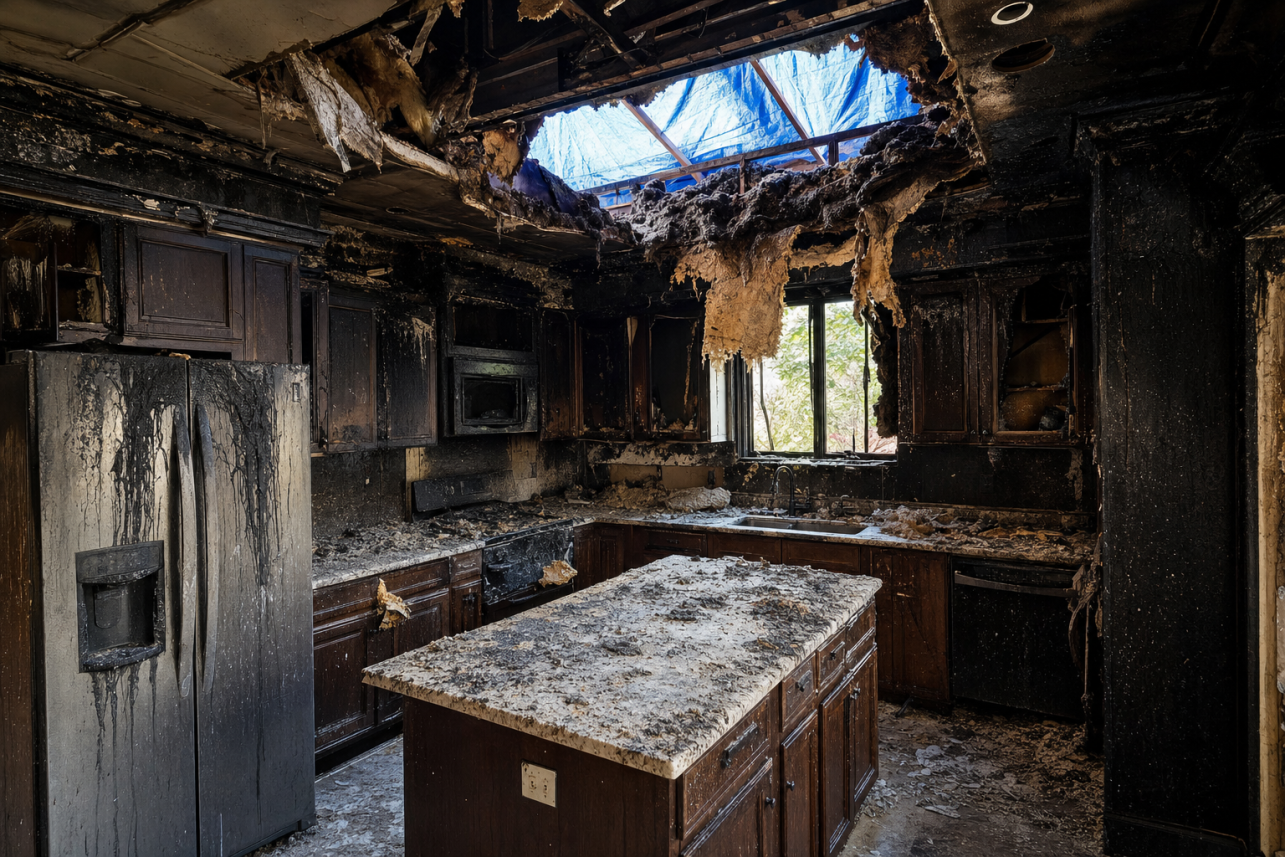
- Secondary damage — smoke residue, water from firefighting efforts, and exposure to weather keep degrading the structure and contents while payment is pending.
- Mounting living expenses — temporary housing, storage, and meals add up fast, especially if additional living expense funds are also delayed.
- Lost business income — commercial property owners may watch customers and revenue disappear while repairs wait on a check.
- Contractor pricing and availability — repair costs rarely go down, and delays can mean losing your place in line with reputable builders.
Why This Matters Heading Into Fall
For North Carolina home and business owners, the stakes rise as fall arrives. Heating systems come back online, fireplaces and space heaters get heavy use, and fire departments across the state see claim activity climb. A property still sitting fire-damaged and unpaid from an earlier loss is exposed and vulnerable just as the riskiest season begins. If your claim has stalled, working with a licensed Public Adjuster in Garner can help you document the full scope of your loss and press the insurer to act.
The sections that follow walk through when a delayed fire claim can support a lawsuit, why delays are so financially damaging, what protections North Carolina law provides, and the concrete steps to take if your claim has been sitting for months. Whether you own a home in the Triangle or a storefront in a smaller community, the same principles apply — and a Public Adjuster in Siler City NC or anywhere else in the state can be a practical first call. The key takeaway: you do not have to accept silence or slow-walking as the cost of making a claim.
Can an Insurance Company Be Sued for Delaying a Fire Claim?
Yes. Courts have held insurers accountable when unreasonable fire insurance claim delays cause additional harm. In the landmark case Bi-Economy Market v. Harleysville Insurance Co., New York’s highest court ruled that an insurer could owe consequential damages — losses beyond the policy itself — because its slow handling of a fire claim destroyed the policyholder’s business.
The story behind that case is one every property owner should know, because it shows exactly how a delayed claim can turn a recoverable loss into a total one — and how courts responded.
The Bi-Economy Market Story
Bi-Economy Market was a family-owned wholesale and retail meat market in Rochester, New York. In October 2002, a fire destroyed the building, its inventory, and its equipment. The family had done what responsible owners do: they carried a commercial property policy with Harleysville that included business interruption coverage, specifically designed to keep income flowing while they rebuilt.
Instead of prompt payment, the family got resistance:
- Harleysville made a low initial offer on the property loss that the owners disputed.
- The business interruption claim was slow-walked — the insurer ultimately paid only about seven months of lost income, despite the policy providing up to a year of coverage.
- More than a year passed before the dispute over the actual building and contents loss was resolved.
Without the cash flow its own policy promised, Bi-Economy could not reopen. The business that survived the fire did not survive the claim process — it collapsed entirely.
What New York’s Highest Court Decided
In 2008, the New York Court of Appeals ruled in the policyholder’s favor. The court reasoned that the very purpose of business interruption coverage is to keep the insured afloat after a disaster, so the insurer knew — when it sold the policy — that delay could destroy the business. Because that harm was foreseeable, Harleysville could be held liable for consequential damages caused by its breach of the duty of good faith and fair dealing, potentially well beyond the policy limits.
That principle matters to homeowners, too. When a carrier drags out a fire claim, the damage compounds — and courts have recognized that insurers who cause that extra harm can be made to answer for it. Policyholders who document the delay and push back early, often with help from a professional like a fire damage insurance claim adjuster in Rolesville, put themselves in a far stronger position than those who simply wait.
The lesson of Bi-Economy is simple: a delayed claim is not just frustrating — it can be legally actionable. If your own claim has stalled, you do not have to navigate it alone; a licensed, bonded public adjuster in Siler City NC can review how your fire loss has been handled and advocate for the fair, timely settlement your policy promises.
Why Do Fire Insurance Claim Delays Cost Policyholders So Much?
Fire insurance claim delays cost policyholders far more than the original loss because damage compounds over time. Additional living expenses pile up, moisture and mold spread through a boarded-up structure, rental and business income stops, and good contractors move on to other jobs — all while fall and winter weather attacks the unrepaired building.
A fire loss is not a frozen moment in time. The day the flames go out, a clock starts running, and every week the insurance company sits on the claim, the real cost of the loss grows. Here is how that cascade typically unfolds for homeowners and property owners.
Living Costs and Lost Income Keep Climbing
- Additional living expenses (ALE): Hotel stays, short-term rentals, extra mileage, storage units, and restaurant meals accumulate every single day you cannot occupy your home — and many policies cap ALE by dollar amount or time period.
- Lost rent: If the fire-damaged property is a rental, tenants relocate and rent checks stop, often permanently if the delay drags on.
- Business interruption: Commercial owners lose revenue, and in some cases customers, while the building sits untouched.
The Building Itself Keeps Deteriorating
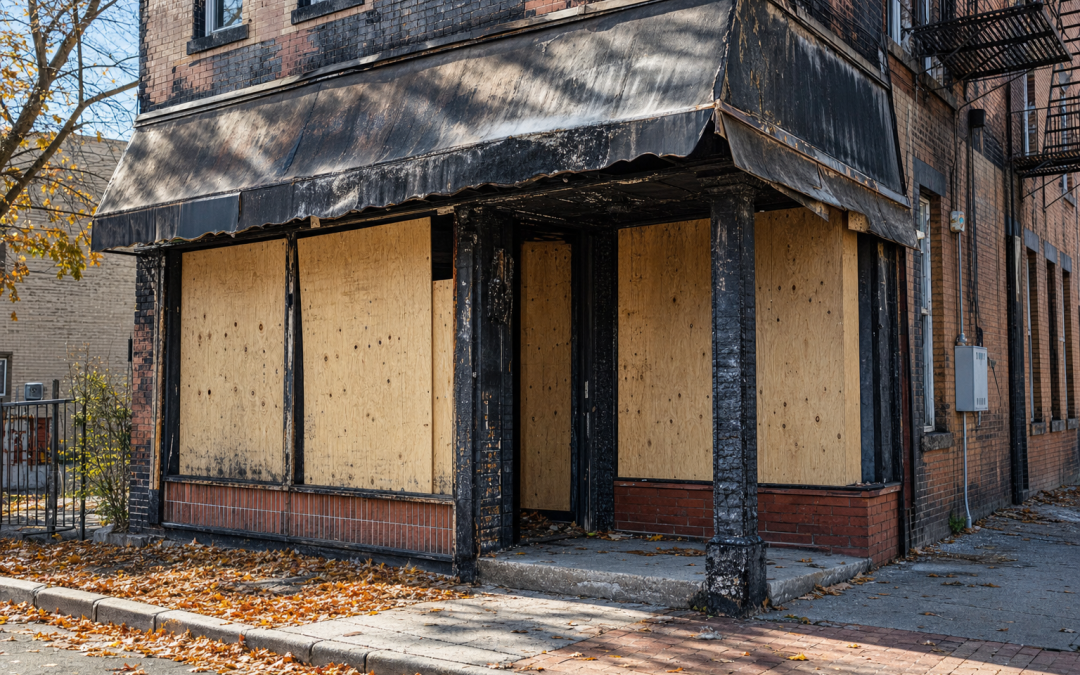
A fire-damaged structure that has been soaked by fire hoses and then boarded up is a greenhouse for secondary damage. Trapped moisture feeds mold growth inside wall cavities and under flooring, and smoke residue becomes more corrosive and harder to remove the longer it sits. Water intrusion issues after a fire can behave much like the losses we handle involving water damage coverage insurance in Fuquay-Varina — except the structure is already compromised, so the damage spreads faster.
Fall and winter make it worse. Falling temperatures, rain, and freeze-thaw cycles work on exposed framing, charred roof decking, and cracked masonry. Pipes in an unheated building can freeze and burst, layering a whole new loss on top of the fire. Damage that could have been repaired in late summer can double in scope by February.
Contractors and Leverage Slip Away
Reputable restoration contractors do not hold open slots indefinitely. When a payout stalls, your contractor takes the next job, material prices can shift, and your repair estimate goes stale — forcing you to start the bidding process over again.
Courts have long recognized that this kind of harm is real. In Gruenberg v. Aetna Insurance Co. (California, 1973), a business owner whose property was destroyed by fire sued his insurers over their handling of the claim, and the California Supreme Court held that an insurance company’s duty of good faith and fair dealing means it can be liable in tort — beyond the policy itself — for wrongfully withholding payment. In other words, the law treats delay-driven losses as genuine damages, not mere inconvenience. Working with an experienced fire damage insurance claim adjuster in Rolesville can help you document that cascade of losses before it quietly becomes your burden instead of the insurer’s.

Does North Carolina Law Protect Me From a Slow-Walked Claim?
Yes. North Carolina law specifically prohibits insurers from unreasonably delaying or underpaying claims. The Unfair Claim Settlement Practices rules under N.C. Gen. Stat. § 58-63-15(11) define improper claim handling, and violations can support an unfair and deceptive trade practices claim under § 75-1.1 — which allows courts to triple the damages a policyholder proves.
In other words, fire insurance claim delays are not just frustrating — in North Carolina, they can carry real legal consequences for the carrier. Here is how the two main protections work together in plain language.
N.C. Gen. Stat. § 58-63-15(11): The Rulebook for Claim Handling
This statute lists specific practices insurers must avoid when settling claims, including:
- Failing to acknowledge and act reasonably promptly on claim communications
- Failing to conduct a reasonable investigation based on all available information
- Not attempting in good faith to settle a claim once liability has become reasonably clear
- Failing to promptly explain, with reference to the policy, why a claim was denied or a compromise offer was made
If your fire claim has sat untouched for months, or the adjuster keeps asking for documents you already sent, those patterns can fall squarely within this statute.
§ 75-1.1 and Treble Damages: Where Delay Gets Expensive for Insurers
North Carolina courts have connected these two statutes in a way that strongly favors policyholders. In Gray v. North Carolina Insurance Underwriting Association, the North Carolina Supreme Court held that conduct violating § 58-63-15(11) in the handling of a property damage claim can constitute an unfair trade practice under § 75-1.1 as a matter of law — and the homeowners in that case prevailed against the carrier. Because § 75-1.1 permits treble damages plus potential attorney’s fees, a carrier that slow-walks a legitimate fire claim risks owing far more than the original claim amount. Every case turns on its own facts, so the outcome in one dispute never guarantees the result in another — but the legal framework is clear: delay has consequences in North Carolina.
What This Means for You as a Policyholder
These protections exist, but insurers rarely volunteer that a delay may be crossing a legal line. Documenting every call, email, and missed deadline builds the record that matters later. Many homeowners bring in a professional early — for example, a fire damage insurance claim adjuster in Rolesville can document the loss thoroughly and create the paper trail that keeps a carrier accountable.
Knowing your rights changes the conversation with your insurer. If you are facing a stalled claim elsewhere in the Triangle, working with a licensed and bonded public adjuster in Fuquay-Varina NC can help ensure your claim file reflects the facts — because in North Carolina, the facts in that file are exactly what these statutes are built to protect.
What Should I Do if My Fire Claim Has Stalled for Months?
If your fire claim has stalled for months, put every communication in writing, ask the insurer to state its position and timeline in writing, keep all receipts for living expenses and mitigation, document any worsening damage, confirm your policy deadlines, and escalate — to the NC Department of Insurance or a licensed public adjuster — if the carrier still won’t move.
By month four, politeness alone rarely gets a fire claim unstuck. What does help is a clear paper trail and steady pressure. Here is a practical checklist for a homeowner in exactly that position.
Build a Written Record
- Put everything in writing. Follow up every phone call with a short email summarizing what was said, who said it, and what was promised. Verbal assurances are hard to prove later; emails and letters are not.
- Request the carrier’s position in writing. Ask the adjuster to state, in writing, what the company has accepted, what it disputes, what information it still needs, and when you can expect a decision. A vague answer — or no answer — is itself useful evidence.
- Keep every receipt. Save documentation for additional living expenses (hotels, rentals, meals above your normal costs) and for mitigation work like board-ups, tarping, and water extraction. These are often reimbursable, but only if you can prove them.
Protect the Property and Your Deadlines
- Document ongoing damage as cold weather sets in. A fire-damaged home exposed through a North Carolina winter can suffer frozen pipes, moisture intrusion, and mold. Photograph and date new damage regularly so the insurer cannot blame it on neglect.
- Review your policy deadlines. Many policies require a sworn proof of loss within a set window and limit the time you have to bring suit. A delayed claim does not automatically pause those clocks, so read your policy carefully and meet every deadline even while the carrier drags its feet.
Know When to Escalate
If written requests go nowhere, you can file a complaint with the North Carolina Department of Insurance, which can require the carrier to respond. North Carolina courts have shown they take claim mishandling seriously — in Gray v. North Carolina Insurance Underwriting Association, the state Supreme Court allowed a homeowner whose hurricane-damaged house claim was mishandled to pursue the insurer for bad faith and unfair trade practices, exposing the carrier to liability well beyond the policy itself.
The other path is bringing in professional help on your side of the table. A licensed Public Adjuster in Hillsborough can take over documentation, correspondence, and negotiation so the burden of proving your loss no longer falls entirely on you.
Because fire losses often involve smoke, soot, and structural issues that are easy for a busy carrier to undervalue, an independent review of the estimate is worth getting early. Homeowners dealing with a stalled claim can also reach out to a Public Adjuster in Pittsboro NC for a professional assessment of where the claim stands and what it will take to move it forward.

How Can a Public Adjuster Help Move a Delayed Fire Claim Forward?
A licensed, bonded public adjuster works only for the policyholder — never the insurance company. On a stalled fire loss, a public adjuster independently scopes and values the damage, builds complete documentation, handles all carrier correspondence, and negotiates from a position of evidence, which often removes the excuses an insurer uses to keep a claim in limbo.
Fire insurance claim delays frequently persist because the carrier controls the pace, the paperwork, and the valuation. A public adjuster changes that dynamic. Instead of waiting on the insurer’s adjuster to re-inspect or “review the file,” your own representative does the work, submits it, and pushes for a written response. The National Association of Insurance Commissioners recognizes public adjusters as the one category of adjuster who represents the insured rather than the insurer.
What a Public Adjuster Actually Does on a Stalled Fire Claim
- Independent scoping and valuation: A room-by-room inspection of structural damage, smoke and soot contamination, and water damage from firefighting efforts — priced independently rather than accepting the carrier’s estimate at face value.
- Complete contents documentation: A detailed personal property inventory with condition, age, and replacement cost, since incomplete inventories are one of the most common reasons fire claims sit unpaid.
- Policy review: Identifying every coverage that applies — dwelling, other structures, contents, additional living expenses, debris removal, and code-upgrade coverage — so nothing is quietly left off the settlement.
- Carrier correspondence: Responding to document requests promptly, documenting every call and letter, and creating a paper trail that makes further foot-dragging harder to justify.
- Evidence-based negotiation: Disputes get resolved faster when the policyholder’s position is backed by photographs, measurements, and line-item estimates rather than frustration alone.
Courts have long held that insurers owe policyholders good faith in handling these claims. In Gruenberg v. Aetna Insurance Co., the California Supreme Court allowed a fire-loss policyholder to sue his insurers in tort for withholding payment in bad faith — a landmark recognition that delay itself can create liability. Having your claim thoroughly documented by a professional, such as a Public Adjuster in Pittsboro NC, is exactly the kind of evidence that matters if a dispute ever escalates.
An Honest Word About Expectations
No one — adjuster, attorney, or contractor — can guarantee a specific outcome or dollar figure on your claim, and you should be wary of anyone who does. What a public adjuster can do is make sure your fire loss is fully documented, properly valued, and actively pursued instead of sitting in a file drawer. You can verify any adjuster’s license through the North Carolina Department of Insurance before hiring them.
If your fire claim has been dragging on, you don’t have to keep waiting alone. Homeowners working with a Public Adjuster in Hillsborough or anywhere in the surrounding area can request a free, no-obligation claim review. We’ll look at your policy, your damage, and the carrier’s handling so far — and give you a straight answer about where your claim stands and what can be done next.
Fire Insurance Claim Delays: A Timely Claim vs. a Stalled Claim
| What You Experience | Properly Handled Claim | Delayed or Stalled Claim |
|---|---|---|
| Communication | Prompt acknowledgment and regular updates from the carrier | Repeated document requests, unreturned calls, shifting adjusters |
| Inspections & Estimates | Timely inspection and a clear, itemized damage estimate | Multiple re-inspections with no written estimate or decision |
| Business or Household Impact | Repairs and interim living or operating funds keep life moving | Mounting out-of-pocket costs, lost income, risk of business closure |
| Potential Carrier Exposure | Payment of the covered loss under the policy | Possible consequential damages beyond policy limits, as in Bi-Economy v. Harleysville |
Illustrative Example: A Family Grocery Waiting on a Fire Claim
Illustrative example
Consider a hypothetical, composite scenario: a family-owned grocery in North Carolina suffers a kitchen fire that damages the building, equipment, and inventory. The claim is clearly covered, yet four months pass with repeated document requests, re-inspections, and no payment — all while the owners pay rent on a building they cannot use. After the family brings in a licensed and bonded public adjuster to document the full loss and the harm caused by the delay, the carrier is pressed to address the claim seriously and the matter moves toward resolution. This mirrors the lesson of Bi-Economy Market v. Harleysville Insurance Co., where the court held that a carrier’s unreasonable delay on a fire claim can make it responsible for the consequential harm that delay causes. Every claim is different and outcomes are never guaranteed, but policyholders do not have to face a stalled claim alone.
Frequently asked questions
What can I actually do about fire insurance claim delays that have dragged on for months?
Start by putting everything in writing: request a written status update, a list of any documents the carrier still needs, and a timeline for a decision. Keep a log of every call and email. If the insurer still stalls, you can file a complaint with the NC Department of Insurance and consider bringing in a licensed public adjuster or attorney. Courts, as in Bi-Economy Market v. Harleysville, have held insurers accountable when delay itself causes harm.
What are consequential damages on a fire insurance claim?
Consequential damages are the real-world losses that flow from an insurer’s delay or wrongful denial, beyond the policy payout itself. In Bi-Economy Market v. Harleysville, New York’s highest court recognized that when the insurer slow-walked the fire claim and the family market went out of business, the carrier could owe for that destroyed business, not just the policy limits. Examples can include lost income, a collapsed business, or extra living and rebuilding costs caused by the delay.
Can my insurance company really owe more than my policy limits after a fire?
In some situations, yes. Policy limits cap what the carrier owes for the covered loss itself, but courts have held insurers responsible for additional damages their own bad-faith conduct causes. Bi-Economy Market v. Harleysville is the leading example: the insurer’s delay helped destroy the insured’s business, and the court ruled those consequential losses could be recovered on top of the policy proceeds. Outcomes always depend on your state’s law and your specific facts.
How long should a fire insurance claim take to pay out?
Straightforward fire claims are often resolved within a few months; large or total losses can reasonably take longer because of inventory documentation, repair estimates, and contents valuation. What is not reasonable is silence. Insurers must acknowledge claims, investigate promptly, and explain any delay. If you are several months in with no payment, no denial, and no clear explanation, that pattern is a warning sign worth documenting and escalating.
How do I know if my insurer is acting in bad faith or just being slow?
Honest delays come with communication: the adjuster explains what is pending and why. Bad-faith warning signs include repeated requests for documents you already sent, long stretches with no contact, lowball offers far below documented damage, shifting explanations, or refusing to put decisions in writing. North Carolina’s unfair claims settlement practices law prohibits exactly this conduct. Keep a dated record of every interaction, because that paper trail is what proves a pattern.
Does the Bi-Economy fire case apply to policyholders in North Carolina?
Bi-Economy is a New York decision, so it does not directly bind North Carolina courts, but it reflects a principle recognized more broadly: insurers who unreasonably delay covered claims can face consequences beyond the policy. North Carolina has its own protections, including unfair claims practices statutes and unfair and deceptive trade practices law, which courts have applied against insurers in property claim disputes. An NC attorney or public adjuster can explain how these tools fit your situation.
What proof should I keep if my fire claim is being delayed?
Save every email, letter, and estimate, and keep a dated log of phone calls, including who you spoke with and what was said. Photograph and video all damage before any cleanup. Keep receipts for additional living expenses, temporary business costs, and anything the delay forces you to spend. For businesses, preserve financial records showing lost income. This documentation supports both the underlying claim and any later argument that the delay itself caused you harm.
Should I hire a public adjuster or a lawyer for a stalled fire claim?
They serve different roles. A licensed public adjuster works for you, not the carrier, documenting the loss, preparing the estimate, and negotiating the settlement, and is often the right first step when a claim is underpaid or stalled. An attorney becomes important when the insurer denies the claim outright or the conduct looks like bad faith that may support a lawsuit, as in Bi-Economy. Many policyholders start with a public adjuster and add counsel if needed.
What mistakes make fire insurance claim delays worse?
Common missteps include accepting the first offer without an independent estimate, giving a recorded statement without preparation, discarding damaged contents before they are documented, missing proof-of-loss deadlines, and relying only on phone calls instead of written communication. Another big one is assuming the carrier’s adjuster works for you; that adjuster represents the insurance company. Staying organized, meeting every deadline, and keeping everything in writing protects your claim and preserves your leverage.
Does the right to consequential damages apply to buildings as well as businesses?
Yes. The same day New York’s high court decided Bi-Economy, it decided Panasia Estates v. Hudson Insurance, allowing a building owner whose property suffered water damage to pursue consequential damages caused by the insurer’s claim handling. Together, the rulings make clear the principle is not limited to lost business income; homeowners and building owners harmed by an insurer’s unreasonable delay on a covered property loss may also have claims beyond the policy proceeds, depending on state law.
Flood Insurance Claim help near you
Related local pages
Stuck in month four of a stalled fire claim? Our licensed and bonded North Carolina public adjusters review your policy, document your loss, and push your claim forward. Call today for a free, no-obligation claim review. Get in touch.
Last updated: November 23, 2026