
What Does It Mean When Your Insurance Settlement Rights Are Compromised?
Your insurance settlement rights are compromised when an action — like signing a broad release, cashing a check marked “final,” or missing a policy deadline — limits what you can legally recover on your home or contents claim. In North Carolina, these everyday steps can quietly close a claim before you’re fully paid, though many rights can still be protected.
Key takeaways
- Signing a quick release can permanently waive your insurance settlement rights, so review every document before accepting an insurer’s first offer.
- Policyholders have the right to dispute an undervalued property claim through appraisal, re-inspection, or state insurance department complaints.
- Courts have long held insurers to a duty of good faith — in Gruenberg v. Aetna Insurance Co. (1973), the California Supreme Court allowed a fire-loss policyholder to sue his insurer for bad faith claim handling.
- Most policies impose deadlines, such as proof-of-loss filing windows, so acting promptly protects rather than weakens your position.
- You are not required to accept the insurer’s estimate as final — independent documentation of home, building, and contents damage is your strongest tool.
Most homeowners never set out to give up anything. The trouble is that insurance claims move quickly after a loss, and the paperwork arriving in your mailbox or inbox is written by the insurance company, for the insurance company. A single signature or an overlooked deadline can change your claim from “open and negotiable” to “closed and final” — often without the policyholder realizing it until more damage surfaces months later.
Common Ways Settlement Rights Get Limited
- Signing a release or settlement agreement that waives your right to seek additional payment, even for damage discovered later.
- Cashing a check labeled “final settlement” without understanding whether it closes part or all of your claim.
- Missing deadlines in your policy — such as time limits for filing proof of loss, submitting documentation, or disputing a payment.
- Accepting the insurer’s first estimate without an independent review of the full scope of damage to your structure and contents.
- Making repairs before documentation is complete, which can make it harder to prove what the loss was actually worth.
Why This Matters for North Carolina Homeowners
North Carolina law takes the insurer’s obligations seriously. In Dailey v. Integon General Insurance Corp., the North Carolina Court of Appeals allowed a homeowner to pursue the insurance company for its bad-faith refusal to pay a legitimate property claim — a reminder that policyholders are not powerless when an insurer handles a claim unfairly. Knowing your rights exist is the first step; protecting them before you sign anything is the second. Many homeowners find that working with a licensed public adjuster in Garner or elsewhere in the Triangle helps them understand exactly what a document means before it becomes binding.
The Reassuring Part: Compromised Rarely Means Gone
Even if you’ve already accepted a payment or signed something you now question, your claim may not be as closed as it feels. Partial payments often don’t extinguish the whole claim, supplemental damage can sometimes be documented and pursued, and releases are only as broad as their actual wording. This is especially true for hidden losses — for example, moisture that keeps spreading behind walls long after a storm, the kind of situation a water damage adjuster in Mebane sees regularly. The sections below explain how these situations arise, what North Carolina policyholders can dispute, and the steps that keep your options open.

How Do Insurance Companies Compromise Your Settlement Rights?
Insurance companies most often compromise your insurance settlement rights through five tactics: fast lowball offers paired with release language, recorded statements taken out of context, incomplete damage scopes, aggressive depreciation calculations, and vague denial letters. Each one is designed to close your claim quickly and cheaply — often before you understand the full value of your loss.
Fast Lowball Offers With Release Language
A quick check can feel like good news, but early offers frequently arrive before the full extent of the damage is known. Many include release or “full and final settlement” language that, once signed, can make it difficult to recover anything more — even if hidden damage surfaces later. Speed benefits the insurer, not you.
Recorded Statements Used Out of Context
Adjusters may ask for a recorded statement shortly after a loss, while you’re still stressed and uncertain about what happened. An innocent guess — about when a leak started or how long smoke lingered — can later be quoted back to you to narrow coverage or shift blame. You generally have the right to prepare before giving one.
Incomplete Damage Scopes
The scope is the insurer’s written list of what was damaged and what it will cost to repair. Common omissions include:
- Moisture trapped behind walls or under flooring after a water loss
- Smoke and soot residue in HVAC systems and wall cavities after a fire
- Code-required upgrades during repairs
- Contents damage that wasn’t visually obvious during a brief inspection
Hidden water migration is a frequent culprit — the kind of overlooked damage a water damage adjuster in Mebane routinely documents after a carrier’s estimate misses it.
Depreciation Games
Carriers often apply steep depreciation to reduce the initial “actual cash value” payment, then make it cumbersome to recover the withheld amount after repairs. Inflated depreciation percentages, short deadlines for recoverable depreciation, and unclear paperwork can quietly shrink what you actually receive.
Vague Denial Letters
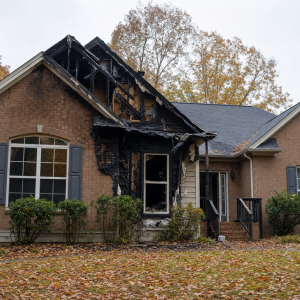
A denial that cites boilerplate exclusions without explaining how they apply to your specific loss leaves you unsure whether to push back. Courts have long held insurers accountable for this kind of conduct. In Gruenberg v. Aetna Insurance Co. (California Supreme Court, 1973), a policyholder whose building and contents were destroyed by fire prevailed when the court ruled that an insurer’s unreasonable, bad-faith refusal to pay a claim could make it liable beyond the policy itself. Fire losses remain especially prone to disputed denials, which is why specialized fire insurance claim help in Siler City and surrounding communities focuses heavily on documenting the full loss before a denial ever takes hold.
Recognizing these tactics is the first step toward protecting yourself — and none of them means your claim is over.
Can I Reopen or Dispute a Low Insurance Settlement in North Carolina? Know Your Insurance Settlement Rights
Yes. In North Carolina, accepting a first payment does not always end your claim. You can often file a supplemental claim for newly discovered damage, invoke your policy’s appraisal clause to resolve pricing disputes, and rely on the state’s unfair claim settlement practices law when an insurer undervalues or delays your claim.
Supplemental Claims: The Claim Isn’t Always Closed
If you discover additional damage after the initial payout — hidden moisture behind walls, structural issues that surface later, or repair costs that exceed the original estimate — you can typically submit a supplemental claim with documentation supporting the new amount. Cashing an early check is not necessarily a final release, unless you signed one. Review your policy and act promptly, because deadlines apply.
The Appraisal Clause: A Built-In Dispute Tool
Most North Carolina homeowner policies include an appraisal provision. When you and the insurer disagree on the amount of the loss (not whether it’s covered), either side can demand appraisal:
- You select an independent appraiser; the insurer selects its own.
- The two appraisers choose a neutral umpire.
- Agreement by any two of the three sets the loss amount, which is generally binding.
Appraisal is often faster and less expensive than litigation, and it puts a knowledgeable advocate on your side of the table. Working with an experienced Public Adjuster in Hillsborough before invoking appraisal can help ensure your estimate is thorough and well documented.
North Carolina’s Unfair Claim Settlement Practices Protections
North Carolina law prohibits insurers from engaging in unfair claim settlement practices, such as failing to promptly investigate claims, refusing to pay without a reasonable basis, or forcing policyholders to sue in order to recover what they are owed. The case of Guessford v. Pennsylvania National Mutual Casualty Insurance Co. is a powerful example of these protections at work. There, a North Carolina policyholder endured a prolonged battle against repeated lowball offers. Rather than giving up, the insured pressed the dispute, and the federal court allowed claims for unfair and deceptive trade practices to go forward against the insurer — and the policyholder ultimately prevailed. The lesson is clear: policyholders are not powerless, and insurers who undervalue claims can face real consequences under North Carolina law.
Key Deadlines to Watch
- Policy deadlines: Many policies set time limits for filing suit or completing repairs to recover full replacement cost — read yours carefully.
- Statute of limitations: North Carolina generally allows three years for breach of contract actions, but your policy language may affect timing, so don’t wait.
- Supplemental claim windows: Report newly discovered damage as soon as you find it.
If you believe your settlement was too low, a licensed and bonded Public Adjuster in Mebane NC can review your claim file, re-document the loss, and pursue the dispute options your policy provides.
What Fall Damage Puts NC Homeowners’ Insurance Settlement Rights at Risk Right Now?
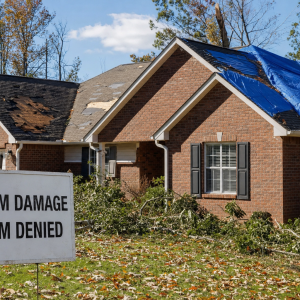
In autumn, North Carolina homeowners face burst pipes from early cold snaps, roof and interior water damage from leaf-clogged gutters, and destruction from late-season hurricane remnants and fall tornadoes. Because owners feel pressure to repair before winter, insurers often push fast, undervalued payouts — making fall the season when insurance settlement rights are most easily compromised.
Early Cold Snaps and Burst Pipes
North Carolina’s first hard freeze often arrives before homeowners have winterized. Pipes in crawl spaces, attics, and exterior walls can split and release water into finished living areas. These claims are frequently underpaid because the visible damage — a wet ceiling or buckled floor — is only part of the loss. Moisture trapped inside wall cavities and insulation can lead to mold if the claim is settled before the full scope is documented. Understanding how water damage coverage insurance in Fuquay-Varina actually applies to hidden moisture is often the difference between a fair settlement and a shortfall you pay out of pocket.
Leaf-Clogged Gutters and Roof Water Intrusion
Falling leaves clog gutters and valleys, forcing rainwater under shingles and behind fascia boards. Insurers sometimes label the resulting interior damage as “maintenance-related” to reduce or deny the claim, even when the policy covers sudden water intrusion. Common warning signs include:
- Water stains spreading on ceilings after heavy autumn rain
- Soft or sagging soffits and fascia near overflowing gutters
- Damp insulation or a musty smell in the attic
- Peeling paint or bubbling drywall along exterior walls
Hurricane Remnants and Fall Tornadoes
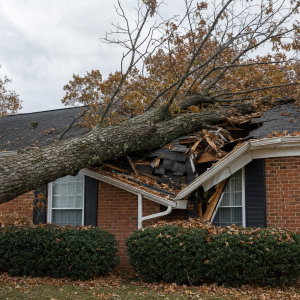
Hurricane season runs through November, and remnants of tropical systems regularly cross North Carolina in the fall, sometimes spinning off tornadoes. Saturated ground plus storm winds bring down mature trees onto roofs, porches, and fences. These losses involve multiple coverage categories — structure, contents, debris removal, and sometimes additional living expenses — and insurers may address only the most obvious one. If a tree has come through your roof or crushed an outbuilding, getting experienced tree damage insurance claim help in Carrboro before accepting a figure can keep every part of the loss on the table.
Why Autumn Claims Get Rushed — and Underpaid
The real seasonal risk isn’t just the damage itself; it’s the calendar. With winter approaching, homeowners understandably want repairs done fast, and insurers know it. A quick “patch it before the cold” check can feel like relief, but cashing it — or signing a release with it — may close out damage that hasn’t been fully discovered yet. Before you accept any fall storm or water loss payment, make sure the estimate reflects hidden moisture, structural issues, and contents, not just what’s visible from the driveway. Taking a few extra days to document the loss properly protects your insurance settlement rights all winter long.
What Should I Do Before Signing Anything From My Insurance Company?
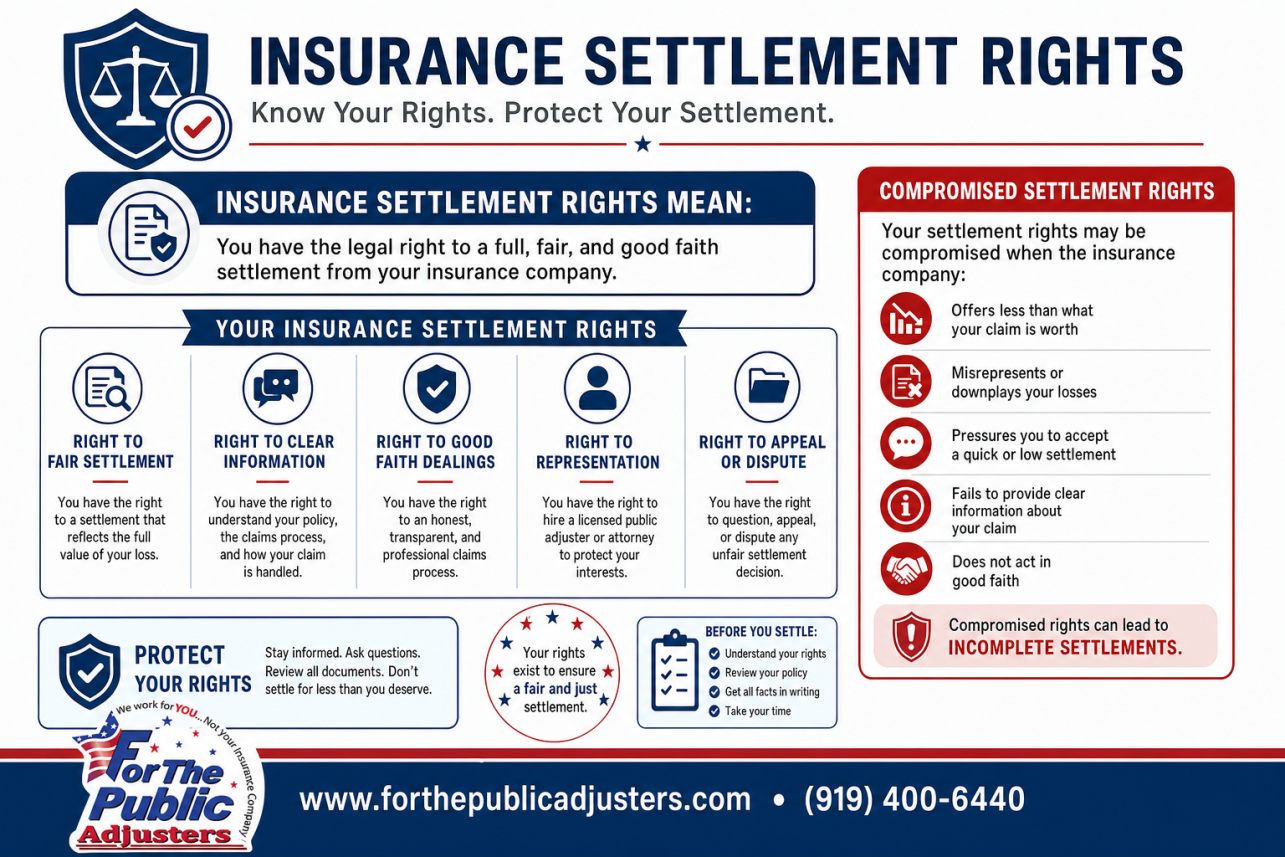
Before signing anything from your insurer, read every word for release or “full and final settlement” language, document all damage (including hidden and contents losses), keep written records of every conversation, request the estimate and your full policy in writing, and never give a recorded statement without preparing first. Signing too soon can permanently waive your insurance settlement rights.
Read the Fine Print for Release Language
Checks, settlement letters, and even repair authorizations sometimes contain phrases like “full and final settlement,” “release of all claims,” or “in satisfaction of all amounts owed.” Signing or cashing a document with that language can close your claim for good, even if hidden damage surfaces later. Courts have held insurers accountable when they mishandle claims — in State Farm Fire & Casualty Co. v. Simmons, the Texas Supreme Court upheld a verdict for homeowners after the insurer wrongfully denied their house fire claim — but it is far easier to protect your insurance settlement rights before you sign than to fight in court afterward.
Document Everything — Including What You Can’t See
- Photograph and video all visible damage from multiple angles before any cleanup or repairs.
- Look for hidden losses such as moisture behind walls, damaged insulation, or compromised roof decking. Concealed moisture is a frequent gap in payouts, which is why homeowners dealing with water damage coverage insurance in Fuquay-Varina often benefit from a thorough inspection before accepting any offer.
- Inventory your contents. List damaged personal property room by room with approximate age and replacement cost. Contents losses are commonly underpaid simply because they were never fully listed.
Storm-related losses deserve the same scrutiny. When a tree strikes a roof, the visible hole is rarely the whole story — rafters, sheathing, and interior finishes may be affected, which is one reason property owners seek tree damage insurance claim help in Carrboro before agreeing to a settlement figure.
Get Everything in Writing
- Request the adjuster’s complete written estimate, not just a summary or a check.
- Ask for a certified copy of your full policy, including all endorsements, so you know exactly what coverage you purchased.
- Keep a claim diary: note the date, name, and substance of every call, and follow up important conversations with an email so there is a record.
Be Careful With Recorded Statements
You generally have a duty to cooperate with your insurer, but you are entitled to prepare. Review your policy and your documentation first, answer only what you know, and never guess at causes, dates, or values. An offhand, inaccurate guess in a recorded statement can be used to limit your claim later. If you feel pressured to answer on the spot, it is reasonable to ask to schedule the statement for a later time.

How Can a Public Adjuster Protect My Insurance Settlement Rights?
A licensed and bonded North Carolina public adjuster works only for you — never the insurance company. They independently document your home, building, and contents damage, review your policy’s coverages, negotiate with the insurer’s adjuster, and support you through appraisal, helping protect your insurance settlement rights at every stage of the claim.
That independence matters. The adjuster your insurance company sends is paid by the carrier. A public adjuster is the only type of adjuster legally allowed to represent the policyholder, and in North Carolina they must be licensed through the North Carolina Department of Insurance, which also regulates their conduct and fees.
What a Public Adjuster Actually Does for You
- Independent damage documentation: A detailed, room-by-room inventory of structural damage and personal property, so nothing gets overlooked or undervalued.
- Policy review: A careful reading of your declarations, endorsements, and exclusions to identify every coverage that applies — including ones policyholders often miss, like additional living expenses or code upgrade coverage.
- Negotiation: Presenting a documented, itemized claim and pushing back on lowball estimates with evidence, not emotion.
- Appraisal support: If you and the insurer disagree on the amount of loss, a public adjuster can guide you through the appraisal clause in your policy — a dispute process short of litigation.
An Honest Word About Outcomes
No reputable public adjuster will guarantee a specific result, and you should be wary of anyone who does. What a public adjuster provides is a level playing field: thorough documentation, policy knowledge, and persistence. Courts have long recognized that insurers owe policyholders a duty of good faith — in Gruenberg v. Aetna Insurance Co. (1973), the California Supreme Court held that an insurer breached that duty when it wrongfully refused to pay a fire loss claim on the insured’s building. Cases like that underscore why having your own documented record of the loss is so valuable. The National Association of Insurance Commissioners also offers consumer guidance on understanding your rights during the claims process.
When Does It Make Sense to Call One?
Consider reaching out when the damage is significant, the claim involves your home’s structure or extensive contents, the insurer’s estimate feels far below your repair quotes, or your claim has been delayed or underpaid. For example, homeowners dealing with fire, water, or storm losses often start by consulting a public adjuster in Pittsboro NC before accepting the carrier’s first offer.
The earlier a public adjuster is involved, the more they can shape the claim rather than repair it afterward. If you’ve just suffered a loss and aren’t sure the insurer’s numbers reflect reality, a conversation with a public adjuster in Carrboro NC costs you nothing but a little time — and may be the step that keeps your settlement rights intact.
Protecting Your Insurance Settlement Rights: Accepting the First Offer vs. Disputing the Valuation
| Consideration | Accepting the First Offer | Exercising Your Dispute Rights |
|---|---|---|
| Speed of payment | Fastest, but may be based on an incomplete damage scope | Takes longer, but allows full documentation of structure and contents losses |
| Finality | A signed release typically closes the claim permanently | Claim stays open while appraisal, re-inspection, or negotiation proceeds |
| Who sets the value | The insurer’s adjuster and estimating software | You, with support from independent estimates or a licensed public adjuster |
| Risk of underpayment | Higher — hidden damage is often missed on first inspection | Lower — supplemental damage can be added before settlement |
Illustrative Example: A Homeowner Who Didn’t Sign Away Her Rights
Illustrative example
Consider a hypothetical, composite scenario: a homeowner suffers significant kitchen fire and smoke damage, and the insurer’s first estimate covers visible charring but overlooks smoke contamination in the attic and damaged contents in adjoining rooms. Before signing anything, she requests a re-inspection and provides a detailed contents inventory with photos. With a documented scope of the full damage, the claim is reopened and the settlement is revised to reflect the additional losses. This composite example shows how understanding your policy rights — not accepting the first number — can lead to a fairer outcome, though every claim is different and results are never guaranteed.
Frequently asked questions
What does it mean when my insurance settlement rights are compromised?
It means actions by the insurance company—or sometimes your own missteps—have weakened your ability to collect the full amount your policy promises. Common examples include lowball offers, delayed responses, pressure to sign a quick release, or denial of covered home, building, or contents damage. The reassuring news is that policyholders have legal protections, and compromised rights can often be restored through documentation, appraisal, or professional claim representation.
How do I know if the insurance company is undervaluing my property damage claim?
Warning signs include an estimate far below contractor bids, missing line items for contents or structural repairs, depreciation applied too aggressively, or an adjuster who spent only minutes inspecting serious damage. If the settlement offer won’t actually cover the cost to restore your home or building to its pre-loss condition, request the insurer’s full estimate in writing and compare it item by item against independent repair quotes.
What should I do if I already signed a release or accepted a low settlement?
Don’t panic—signing isn’t always the end. Review exactly what you signed; some payments are partial or undisputed amounts rather than full releases. Many policies allow supplemental claims if you discover additional covered damage. Gather your paperwork, request a certified copy of your policy, and consult a licensed public adjuster or attorney promptly, because deadlines to reopen or supplement a claim vary by state and by policy.
How much does it cost to hire a public adjuster to fight a bad settlement?
Most public adjusters work on a contingency basis, charging a percentage of the recovered settlement rather than upfront fees, so you typically pay nothing out of pocket. Fee percentages vary by state—some states cap them by law—and by the size and complexity of the claim. Always confirm the fee in a written contract and verify the adjuster is licensed and bonded before signing anything.
How long does it take to dispute a compromised insurance claim?
It depends on the path you take. A supplemental claim backed by strong documentation may resolve in weeks, while the appraisal process often takes a few months. Litigation can take a year or longer. Most states also set deadlines for insurers to acknowledge and respond to claims, so keep a dated log of every communication. Acting quickly protects your options, because policy and statutory deadlines run whether or not you’re ready.
Has a homeowner ever actually won in court against an insurance company?
Yes. In Goodson v. American Standard Insurance Co., 89 P.3d 409 (Colo. 2004), homeowners whose house suffered water damage sued after the insurer unreasonably delayed handling their claim. The Colorado Supreme Court sided with the policyholders, confirming they could recover damages for the insurer’s bad faith delay. Cases like this show courts do hold insurance companies accountable when they mishandle home and property claims.
How can I protect my insurance settlement rights after property damage?
Document everything immediately: photograph and video all damage, keep damaged contents until inspected, and save receipts for emergency repairs. Report the claim promptly, request a certified copy of your full policy, and put every conversation in writing. Never sign releases or recorded statements under pressure. If the insurer delays or lowballs, you have the right to invoke appraisal, hire a licensed public adjuster, or consult an attorney.
Should I use appraisal, hire a public adjuster, or sue my insurance company?
It depends on the dispute. If coverage is accepted but the dollar amount is disputed, the appraisal clause in your policy is often faster and cheaper than court. A public adjuster is valuable for documenting and negotiating complex home, building, or contents losses from the start. Litigation generally makes sense when the insurer denies coverage outright or acts in bad faith. Many policyholders start with an adjuster and escalate only if needed.
What are the biggest mistakes people make after a property damage claim is lowballed?
The most common mistakes are accepting the first offer without comparing it to real repair costs, throwing away damaged items before they’re documented, giving recorded statements without preparation, missing supplemental claim deadlines, and relying only on the insurer’s adjuster for the estimate. Another costly error is making permanent repairs before the damage is fully inspected. Slow down, document thoroughly, and get an independent assessment before agreeing to anything.
Can the insurance company cancel my policy for disputing a settlement?
Disputing a settlement in good faith is your contractual right, and most states prohibit insurers from retaliating against policyholders for exercising it. Insurers can only cancel or non-renew for reasons allowed under state law, such as nonpayment or material misrepresentation. If you believe you’re facing retaliation, document it and file a complaint with your state’s department of insurance, which oversees insurer conduct and can investigate unfair practices.
Flood Insurance Claim help near you
Related local pages
Worried you’ve been offered less than your claim is worth? Contact our licensed and bonded NC public adjusters for a free, no-obligation review of your settlement before you sign anything. Get in touch.
Last updated: October 20, 2026