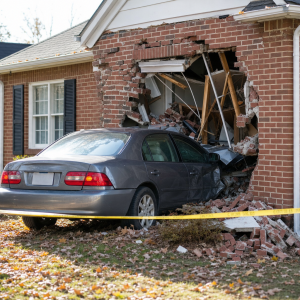

Storm Surge Claim Denied After a Hurricane? Don’t Take the Carrier’s Word for It
If you had a storm surge claim denied after a hurricane, remember this: the insurer’s “flood did it all” explanation is a causation theory, not an established fact. In many mixed wind-and-water losses — especially so-called slab cases — the burden falls on the insurance company to prove its excluded-flood story with real evidence, not assumptions.
Key takeaways
- In Broussard v. State Farm, a federal court held it was the insurer’s burden to prove that excluded flood — not covered wind — destroyed the couple’s Biloxi home, and the policyholders won at trial.
- When your home policy covers wind but excludes flood, the carrier generally must prove its exclusion applies — a ‘storm surge did it all’ letter is a theory, not proof.
- A slab or near-total loss after a hurricane does not automatically mean storm surge caused the damage; wind often strikes first and can cause covered damage before water arrives.
- Demand the insurer’s evidence — engineering reports, weather data, and timing analysis — before accepting a storm surge denial on a North Carolina hurricane claim.
- Document everything you can (photos, neighbor accounts, wind speed records) and consider independent help; courts have repeatedly made carriers back up causation claims with real evidence.
That distinction matters enormously for North Carolina homeowners working through fall hurricane-season denials right now, before winter weather makes temporary repairs harder and evidence of wind damage fades. A hurricane rarely delivers one clean peril. Wind, wind-driven rain, and tornadoes embedded in the storm often strike hours before any surge arrives. When a carrier writes off the entire loss as flood, it is choosing the narrative that costs it the least — because flood is typically excluded under a standard homeowners policy.
Why a Flood-Only Denial Is a Theory, Not a Verdict
Courts have pushed back hard on this tactic. In the well-known Hurricane Katrina litigation, Broussard v. State Farm, the homeowners prevailed at trial after the court made clear that when an insurer relies on a flood exclusion to deny a hurricane loss, the insurer carries the burden of proving that excluded flooding — and not covered wind — caused the damage. We cover that case in more detail below, but the core lesson travels well: a denial letter is the opening position in a dispute, not the final word.
What This Means for Your Claim Right Now
- Covered wind damage must still be paid. Even if surge destroyed part of your home, wind damage that occurred before or alongside the water can remain a covered loss.
- The timeline is evidence. Weather data, neighbor accounts, photos, and the sequence of wind versus water arrival can undermine a flood-only theory.
- Silence helps the carrier. Homeowners who accept the first denial rarely learn what the insurer’s own engineers actually documented.
Policyholders don’t have to build that fight alone. Working with a licensed, bonded Public Adjuster in Garner gives you an advocate who documents the wind component of the loss and demands that the carrier support its exclusion with proof rather than a conclusion.
The same holds true across the Triangle and surrounding communities — a Public Adjuster near Moncure NC can review your denial letter, your policy language, and the physical evidence before you accept the insurer’s version of events. While no one can guarantee a specific outcome, making the insurer prove its excluded-flood story is often the difference between a blanket denial and a fair evaluation of your covered damage.
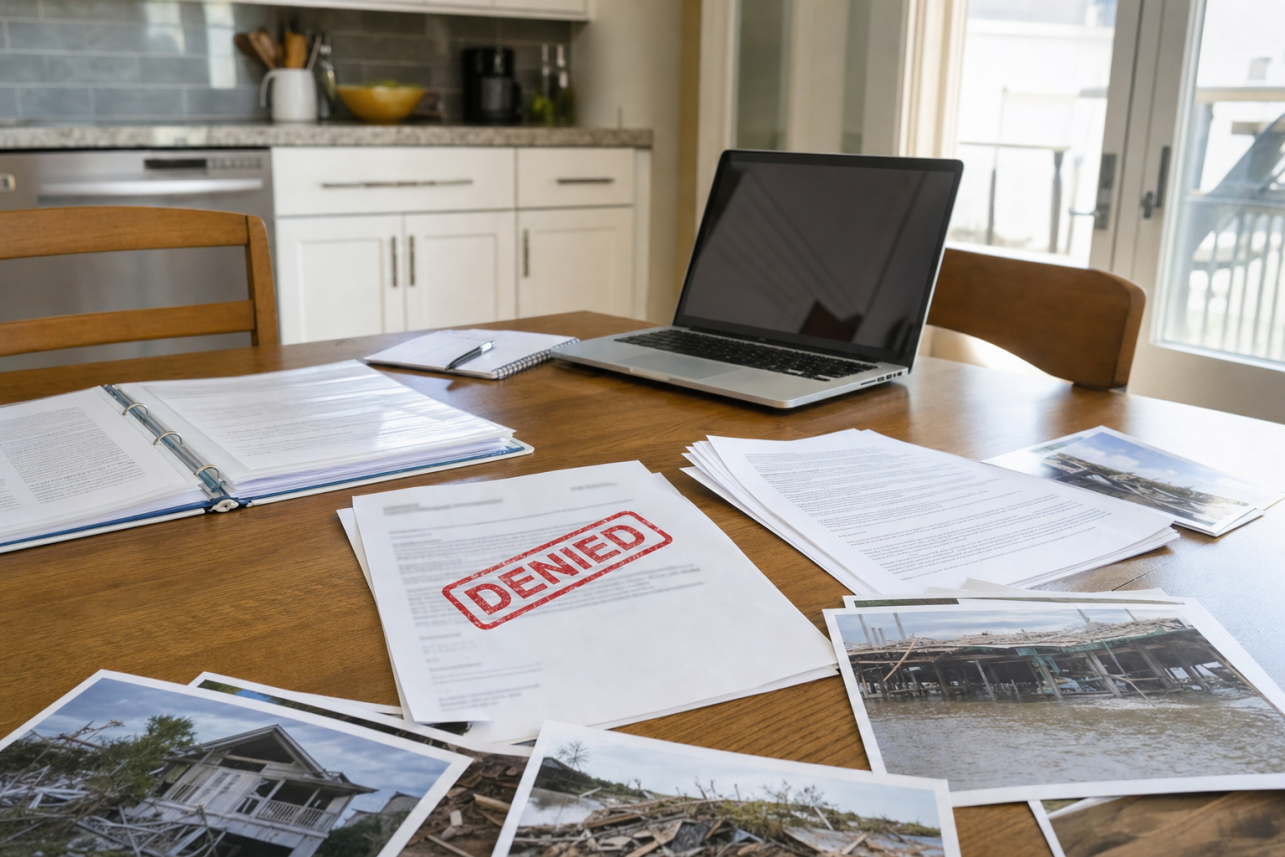
What Happened in the Broussard Case, and Why Does It Matter to NC Homeowners?
In Broussard v. State Farm, a Biloxi, Mississippi couple lost their home to Hurricane Katrina and State Farm denied their claim, blaming storm surge. A federal court ruled the insurer — not the homeowners — had to prove the flood exclusion applied, and the policyholders ultimately prevailed at trial. That burden-of-proof principle is powerful news for coastal homeowners.
A Home Reduced to a Slab — and a Flat Denial
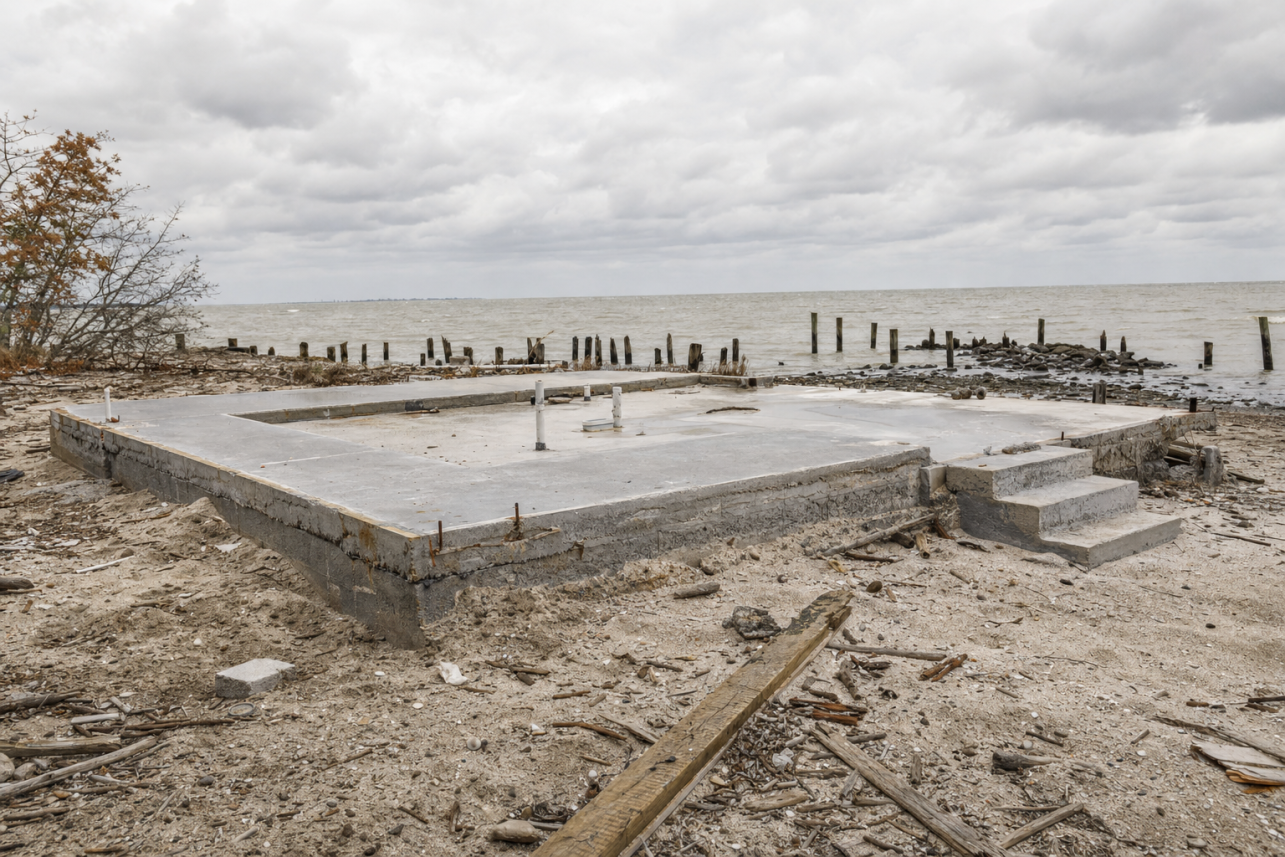
When Katrina made landfall in 2005, Norman and Genevieve Broussard’s home was destroyed so completely that little remained but the foundation slab. Like many Gulf Coast homeowners, they carried a standard homeowners policy that covered wind damage but excluded flood. State Farm took the position that storm surge — excluded water damage — destroyed the house, and denied the claim. The problem? With the house gone, the insurer had very little physical evidence showing what the surge destroyed versus what hurricane-force winds had already torn apart before the water arrived.
The Court Flipped the Script on the Insurer
The case went to federal court in Mississippi, and the ruling reshaped how these disputes are argued. The court made clear that:
- Once the homeowners showed their property was destroyed during the hurricane, the burden shifted to State Farm to prove that the excluded cause — flooding — was responsible for the loss.
- An insurer cannot simply point at the exclusion and walk away; exclusions are the carrier’s to establish with evidence, not the policyholder’s to disprove.
- Where the insurer could not carry that burden, the policyholders were entitled to recover, and the outcome at trial went in the Broussards’ favor.
Why This Matters If You Own Property in North Carolina
North Carolina’s coast and inland counties see the same wind-then-water pattern in every major hurricane. When a carrier issues a blanket denial claiming surge or flooding “did it all,” the Broussard case is a reminder that the law generally puts the proof obligation on the party invoking the exclusion. If you’ve had a storm surge claim denied, the carrier should be able to show — with real evidence — that excluded water, not covered wind, caused each element of your damage. Many homeowners don’t realize this, which is one reason an experienced Public Adjuster in Garner can be so valuable in reviewing exactly what the insurer is claiming and whether the evidence actually supports it.
The lesson is simple: a denial letter is the insurer’s opinion, not the final word. Homeowners from the coast to the Triangle — including those who work with a Public Adjuster in Fuquay-Varina NC — have the right to demand that the carrier back up a flood-only denial with proof, just as the Broussards did.
Who Has to Prove What When Wind and Water Both Hit Your Home?
Under an all-risk homeowners policy, you only have to show that a covered loss occurred during the policy period — for example, that the hurricane damaged your home. The burden then shifts to the insurance company to prove that an exclusion, such as the flood or storm surge exclusion, actually caused the damage it refuses to pay.
This is one of the most important — and least understood — rules in hurricane claims. Many homeowners assume they must somehow prove the wind did the damage before the water arrived. In most all-risk disputes, that gets it backwards. Once you establish a loss, the carrier cannot simply say “storm surge did it all” and walk away. It must come forward with evidence supporting its exclusion.
Slab Cases: When Nothing Is Left Standing
The hardest fights are so-called “slab cases,” where a hurricane leaves only a foundation behind. With the structure gone, insurers often argue there is no way to show wind damage, so the flood exclusion should swallow the whole claim. Courts have pushed back on that approach. In Corban v. United Services Automobile Association, the Mississippi Supreme Court sided with Hurricane Katrina homeowners, holding that wind damage that occurs before storm surge arrives is a covered loss — and that the insurer bears the burden of proving how much damage its flood exclusion actually applies to. If the carrier cannot separate wind damage from water damage, that failure of proof generally falls on the carrier, not the policyholder.
Concurrent Causation and Anti-Concurrent Causation Clauses
When wind and water strike together or in sequence, three concepts come into play:
- Concurrent causation: A covered cause (wind) and an excluded cause (flood) both contribute to the loss. Many courts allow recovery for the portion attributable to the covered cause.
- Anti-concurrent causation (ACC) clauses: Policy language saying excluded water damage is not covered even if wind contributed “concurrently or in any sequence.” Courts read these clauses narrowly — as Corban made clear, an ACC clause does not erase coverage for wind damage that happened before the surge ever reached the home.
- Allocation: Someone must divide the loss between wind and water. When the insurer invokes an exclusion, that allocation burden sits largely with the insurer.
Knowing these rules changes the conversation after a denial. An experienced public adjuster in Fuquay-Varina NC can document wind-caused damage — roof loss, broken windows, debris patterns — and put the carrier to its proof rather than accepting a flood-only conclusion.
If your home took both wind and surge damage and you’re searching for answers after a denial, speaking with a licensed and bonded public adjuster near Knightdale NC can help you understand exactly what the insurer must prove — and whether it has actually proven it. While no one can guarantee an outcome, making the carrier carry its burden is often the first step toward a fair review.

Why Do Insurers Say ‘Storm Surge Did It All’ After a Hurricane?
Insurers often blame storm surge for all hurricane damage because flood losses fall outside the homeowner’s policy — usually onto the NFIP or an uninsured gap. By attributing everything to water, the carrier avoids paying for wind damage it would otherwise owe. That financial incentive is exactly why a storm surge claim denied without real investigation deserves a hard second look.
Follow the Money: Who Pays for Wind vs. Water
When a hurricane pushes water and wind into your home at the same time, two separate pots of money are in play. Wind damage is the homeowner’s insurer’s responsibility. Flood and storm surge typically fall to a separate flood policy — or to no one at all if you don’t carry flood coverage. Every dollar the carrier shifts to the “flood” column is a dollar it doesn’t have to pay. That doesn’t make every denial dishonest, but it does mean the carrier’s conclusion should never be accepted at face value, especially when hurricane-force winds battered your home for hours before the surge ever arrived.
Courts have pushed back on this tactic. In Corban v. United Services Automobile Association, the Mississippi Supreme Court sided with homeowners after Hurricane Katrina, holding that an insurer could not use a flood exclusion to escape paying for wind damage that occurred before the surge — each peril had to be evaluated on its own. Policyholders who document their wind damage and press the issue, often with help from a licensed professional like a Public Adjuster in Knightdale NC, are in a far stronger position than those who simply accept the first denial letter.
Red Flags That the Denial Wasn’t Earned
Watch for these warning signs that the carrier concluded “flood” before it ever truly investigated:
- Drive-by or rushed inspections — an adjuster who spends minutes on-site, never enters the attic, and never gets on the roof cannot credibly rule out wind damage.
- Engineer reports that ignore wind evidence — missing shingles, lifted roof decking, broken windows, and water staining high on interior walls all point to wind-driven damage, yet some reports never mention them.
- Boilerplate causation language — a denial that recites the flood exclusion without explaining how the engineer separated wind damage from water damage is a conclusion, not an analysis.
- No weather data — a legitimate causation opinion should consider wind speeds and timing at your address, not just the fact that surge occurred somewhere nearby.
How This Plays Out on the North Carolina Coast
After Florence soaked eastern North Carolina and Helene-era flooding devastated other parts of the state, many homeowners saw mixed wind-and-water losses lumped entirely under flood exclusions. Coastal and inland policyholders alike faced denials built on thin inspections. A licensed, bonded Public Adjuster in Clayton NC can review the carrier’s reasoning, document the wind component independently, and make the insurer support its position with actual evidence rather than assumptions.
What Should I Do If My Hurricane Damage Is Blamed Entirely on Flooding?
Request the denial and any engineer report in writing, preserve evidence of wind damage before weather and cleanup erase it, obtain an independent damage assessment, and note North Carolina’s claim deadlines. Insurers must support a flood-only conclusion with evidence — you are entitled to see and challenge the basis for a storm surge claim denied in whole or in part.
Get the Denial and the Engineer Report in Writing
Ask the carrier to provide its denial letter, the specific policy language it relied on, and a complete copy of any engineering or cause-and-origin report. A verbal “it was all surge” is not enough. Courts such as the one in Broussard v. State Farm — where homeowners prevailed after their carrier blamed everything on flooding — have made clear that insurers cannot simply assume water caused all the damage; they need proof. You can’t test their proof if you never see it.
Preserve Wind Evidence Before It Disappears
Wind evidence fades fast. Fall rains, falling leaves, and neighborhood cleanup can bury the clues within weeks. Act quickly to document:
- Weather data — recorded wind speeds, gust reports, and the storm’s track near your address
- Debris patterns — shingles, siding, and tree limbs scattered in a direction consistent with wind, not floating water
- Neighbor damage — roof and structural damage on nearby homes that water never reached
- Elevation clues — damage above the waterline, such as broken upper windows, torn roofing, or wet attic insulation
- Photos and video — wide shots and close-ups, time-stamped, taken before repairs or tarping change the scene
Get an Independent Damage Assessment
Do not rely solely on the insurer’s hired expert. An independent evaluation can separate wind-caused damage from flood-caused damage and document it line by line. This is routine work for professionals who handle a hurricane-related wind damage claim in Durham NC and across the state, and a well-documented independent report gives you something concrete to put against the carrier’s conclusions.
Know Your North Carolina Deadlines
Your policy sets time limits for filing suit, submitting proof of loss, and requesting appraisal, and North Carolina law adds its own deadlines. Read your policy’s “Suit Against Us” and proof-of-loss provisions carefully, and calendar every date. Missing a deadline can end an otherwise strong claim, so if you’re unsure, get professional eyes on your policy early. A licensed, bonded public adjuster in Chapel Hill NC or anywhere in the Triangle can review your policy, explain what applies to your situation, and help you keep the claim on track.
No one can promise a specific outcome. But homeowners who document early, demand the insurer’s evidence, and bring in independent expertise put themselves in a far stronger position than those who accept a flood-only denial at face value.
How Can a North Carolina Public Adjuster Help Challenge a Storm Surge Claim Denied by Your Insurer?
A licensed, bonded public adjuster works only for you, not the insurance company. They document wind-first damage, gather meteorological data, scope the entire loss including contents, and negotiate directly with the carrier’s adjusters and engineers. If the insurer won’t move, they can recommend appraisal or legal counsel. No outcome is ever guaranteed, but the playing field is leveled.
When a storm surge claim is denied, the carrier is essentially saying that every dollar of damage falls under the flood exclusion. A public adjuster’s job is to test that conclusion piece by piece rather than accept it at face value.
Building the Wind-First Evidence File
A thorough public adjuster inspects the property for physical signs that wind struck before water did, such as missing shingles, broken windows on elevations above any waterline, racked framing, and interior water staining that starts at the ceiling rather than the floor. They pair that inspection with objective weather records, including wind speed and surge timing data from sources like NOAA’s National Centers for Environmental Information, so the timeline of the storm supports the timeline of the damage. This is the same kind of wind-versus-water documentation that helps policyholders pursuing a wind damage claim in Durham NC after a hurricane or tornado.
Scoping the Full Loss, Not Just the Obvious Damage
- Structure: roofing, siding, windows, framing, and hidden moisture intrusion caused by wind-driven rain.
- Contents: a room-by-room inventory of damaged personal property, which carriers often undervalue or skip in a flood-only denial.
- Additional living expenses: costs you incur while the home is uninhabitable, which may be owed if covered wind damage contributed to the loss.
Negotiating and Knowing When to Escalate
Armed with evidence, a public adjuster meets the carrier’s field adjusters and engineers on equal footing, challenging reports that assume surge caused everything. Courts have repeatedly refused to let insurers make that assumption for free. In Corban v. United Services Automobile Association, the Mississippi Supreme Court held that the insurer bears the burden of proving its water exclusion applies to hurricane damage, a principle that strengthens a well-documented homeowner’s position at the negotiating table.
If negotiation stalls, your adjuster can advise whether invoking the policy’s appraisal clause or consulting an attorney makes sense for your situation. Because flood coverage itself runs through the National Flood Insurance Program administered by FEMA, coordinating the wind claim and any flood claim correctly matters, and an experienced advocate helps you avoid gaps between the two.
Homeowners across the Triangle don’t have to face a flood-only denial alone. Working with a public adjuster in Chapel Hill NC or the surrounding communities means someone licensed and bonded is reviewing the carrier’s reasoning, documenting what the storm actually did to your home, and making the insurer prove its case, not just assert it.
Storm Surge Claim Denied? How to Respond vs. Simply Accepting It
| Your Options | What Happens | Who Carries the Burden |
|---|---|---|
| Accept the denial as written | You absorb the loss based on the insurer’s untested causation theory | You — by default, no one checks the carrier’s work |
| Request the full claim file and engineering reports | You see whether the ‘all flood’ conclusion is actually supported by evidence | Shifts scrutiny onto the insurer’s documentation |
| Hire an independent adjuster or expert | A separate wind-versus-water analysis can support covered wind damage | Insurer must still prove the flood exclusion applies |
| Dispute or litigate the causation theory | As in Broussard v. State Farm, the carrier can be forced to prove excluded flood — not covered wind — caused the loss | The insurer, under the burden-of-proof rule courts applied after Katrina |
Illustrative Example: Pushing Back on an ‘All Surge’ Denial (Hypothetical)
Illustrative example
This is a hypothetical, composite scenario for illustration only. After a hurricane struck the North Carolina coast, a retired couple’s home was left with little more than a foundation, and their carrier denied the claim by attributing everything to excluded storm surge. Instead of accepting that conclusion, they requested the insurer’s engineering file and retained independent help, which highlighted wind-speed records and neighboring wind damage showing destructive winds hit well before the water rose. Faced with the principle courts applied in Broussard v. State Farm — that the carrier must prove the excluded cause, not merely assert it — the insurer re-evaluated and recognized covered wind damage it had initially ignored. Every claim is different and outcomes are never guaranteed, but the lesson holds: make the carrier prove its theory.
Frequently asked questions
What should I do first if my storm surge claim denied letter arrives after a hurricane?
Don’t accept the denial at face value. Request a certified copy of your full policy and the complete claim file, including the adjuster’s reports and any engineering opinions. In Broussard v. State Farm, the court made the insurer prove that excluded flooding—not covered wind—destroyed the home, and the homeowners prevailed before a jury. Preserve photos, videos, weather data, and witness accounts showing wind damage occurred before or alongside the surge.
Who has to prove what caused the damage when wind and flood both hit my house?
Generally, you must show a covered peril (like hurricane wind) could have caused the loss. Once you do, the burden typically shifts to the insurer to prove its exclusion applies—meaning it must establish how much damage the excluded flood actually caused. Courts in cases like Broussard v. State Farm refused to let the carrier simply assume surge did everything, which is exactly why you shouldn’t accept a blanket denial.
How much does it cost to fight a denied hurricane claim?
Most public adjusters work on a contingency percentage of the recovered amount, and many attorneys handling policyholder cases do the same, so you usually pay nothing upfront. Your main out-of-pocket risk is expert costs, such as an independent engineer or meteorologist, which professionals often advance. Compare that to walking away from a six-figure rebuild—making the carrier support its causation theory is usually worth the effort, though no specific outcome can ever be promised.
How long does it take to overturn a denial based on storm surge?
It varies widely. A well-documented supplemental claim or appraisal demand can resolve in a few months. If the dispute requires litigation over causation—as in the Katrina wind-versus-water cases—it can take a year or more, especially after a major storm when courts are busy. Acting quickly helps: evidence like debris patterns and neighboring damage disappears fast, and policies and state law impose deadlines for disputing a denial and filing suit.
What evidence helps prove wind destroyed my home before the storm surge arrived?
Useful evidence includes timestamped photos or videos, neighbors’ and first responders’ observations, National Weather Service wind and surge timing data, damage to elevated structures the water never reached, debris scatter patterns, and an independent engineer’s or meteorologist’s report. In Broussard, the slab-only loss didn’t automatically mean flood caused everything—the jury was allowed to weigh evidence that wind struck first. Collect everything before cleanup removes the proof.
Should I hire a public adjuster or a lawyer after a hurricane claim denial?
It depends on where the dispute stands. A licensed public adjuster is often the right fit for documenting, valuing, and negotiating the claim, including challenging a thin causation theory. If the carrier has issued a final denial, acted in bad faith, or litigation deadlines are approaching, a policyholder attorney is appropriate—and many adjusters and attorneys work together. Verify that anyone you hire is licensed and bonded in North Carolina.
What are the biggest mistakes homeowners make after a storm surge denial?
The most common mistakes: accepting the insurer’s engineer report without an independent review, cleaning up or rebuilding before the damage is documented, giving a recorded statement without preparation, missing policy deadlines for disputing the decision, and cashing a check marked as final settlement without understanding the consequences. Courts have shown—as in Broussard v. State Farm—that a carrier’s causation theory can fail when tested, so don’t treat the first answer as the last word.
Does having flood insurance through the NFIP affect my wind claim with my homeowners insurer?
You can pursue both, but each policy only covers its own peril—NFIP pays for flood damage, your homeowners policy pays for wind. The danger is each insurer pointing at the other and underpaying. Keep the claims documented separately, and don’t let the wind carrier use your flood payment as an excuse to deny everything. Accurate allocation between wind and water is exactly the fight the Broussard homeowners won.
Can the insurer deny my whole claim just because only a slab is left?
A slab alone doesn’t prove flood destroyed the house. In Broussard v. State Farm, the home was reduced to a slab, yet the court required the insurer to prove its flood exclusion applied, and the jury found for the homeowners. Total destruction cuts both ways—it may mean the insurer can’t prove its surge theory either. Demand the specific evidence behind the denial rather than assuming the carrier is right.
What is an anticoncurrent causation clause and can it wipe out my wind coverage?
It’s policy language saying the insurer won’t pay when an excluded peril like flood contributes to a loss, even alongside covered wind. Courts have limited its reach: in Corban v. USAA, the Mississippi Supreme Court held the clause couldn’t erase coverage for damage wind caused before the surge arrived, and the policyholders’ position prevailed. If your denial leans on this clause, have a professional review whether it was applied correctly under your state’s law.
Arson Homeowners Claim help near you
Related local pages
If your hurricane claim was denied or blamed entirely on storm surge, our licensed and bonded North Carolina public adjusters can review your denial, document the wind damage, and push back on the carrier’s causation theory. Contact us today for a free claim review. Get in touch.
Last updated: November 12, 2026