Water Damage Claim Denied as ‘Long-Term Seepage’? Here’s the Quick Answer
If you had a water damage claim denied as “long-term seepage,” here’s the short version: under an all-risk homeowner policy, you only need to show the damage happened during the policy period. After that, the burden shifts to the insurer to prove an exclusion applies — a denial letter that simply declares the leak “long-term” is not proof.
Key takeaways
- Under an all-risk homeowners policy, the policyholder only needs to show that water damage occurred during the policy period — not what caused it.
- In Jones v. Federated National, a Florida appellate court held the insurer bears the burden of proving an exclusion like ‘constant or repeated seepage’ actually applies.
- A carrier cannot deny a plumbing leak claim simply by labeling the damage ‘long-term’ — it must come forward with actual evidence supporting the exclusion.
- North Carolina courts apply similar burden-shifting principles, so a denial letter citing seepage or wear-and-tear exclusions is not the final word.
- If your water damage claim was denied based on an exclusion, demand the insurer’s proof — and consider having an attorney review the denial before accepting it.
That principle isn’t wishful thinking from frustrated policyholders. A Florida appellate court, in Jones v. Federated National Insurance, reversed a ruling in the insurer’s favor for exactly this reason: the carrier invoked the constant-seepage exclusion but never carried its burden of actually proving the water loss fell within it. Simply labeling a plumbing leak as “long-term” or “gradual” in a denial letter does not make it so.
Why the Burden of Proof Matters So Much
Most homeowner policies are written on an “all-risk” (open-perils) basis, which changes who has to prove what:
- Your job: show a covered property suffered direct physical loss during the policy period. That’s it — you don’t have to disprove every exclusion in the policy.
- The insurer’s job: if it wants to deny based on an exclusion (like seepage “over a period of weeks, months, or years”), it must come forward with actual evidence that the exclusion applies to your specific loss.
- What doesn’t count as proof: a conclusory sentence in a denial letter, an adjuster’s hunch, or a boilerplate reference to the exclusion’s policy language.
What This Means for You Right Now
If your denial letter cites long-term seepage but includes no engineering report, moisture mapping, plumber’s findings, or other documented basis for the “long-term” conclusion, the insurer may not have met its burden. That’s a strong opening to challenge the denial rather than accept it. A licensed public adjuster in Clayton, NC can review the denial letter, the policy language, and the physical evidence to assess whether the carrier actually proved anything — or just asserted it.
Timing evidence often works in the homeowner’s favor, too. Fresh staining, a sudden spike in your water bill, a pipe that failed at a specific fitting — these details can point to a sudden loss rather than months of seepage. Documenting them early is critical, which is one reason many homeowners bring in a public adjuster near Moncure, NC before the scene is repaired or the evidence is lost.
The rest of this article walks through the Florida ruling itself, how burden-shifting works, why the reasoning travels well to North Carolina, why insurers reach for the “long-term seepage” label so often, and the concrete steps to take after an unsupported denial.

What Happened in Jones v. Federated National Insurance?
In Jones v. Federated National Insurance, a Florida homeowner’s water damage claim was denied under an exclusion for constant or repeated seepage lasting 14 days or more. A Florida appellate court reversed, ruling that once the homeowner showed a covered loss occurred during the policy period, the burden shifted to the insurer to prove the exclusion applied.
The Story in Plain Language
The homeowner discovered water damage in the home caused by a plumbing leak. Water damage from a sudden plumbing failure is generally a covered peril under a standard homeowners policy, so the claim was submitted in the usual way. The insurer inspected, then denied the claim, pointing to policy language excluding damage caused by “constant or repeated seepage or leakage of water” over a period of 14 days or more. In other words, the carrier’s position was: this leak went on too long, so it falls outside coverage.
The trial court initially sided with the insurer. But on appeal, the court looked at a more fundamental question: who has to prove how long the leak lasted? That question comes up constantly in disputes like a flood insurance claim dispute in Raleigh or anywhere else a carrier leans on timing-based exclusions.
What the Appellate Court Decided
The appellate court reversed the ruling in the insurer’s favor and laid out a clear framework:
- The homeowner’s job: show that a loss occurred during the policy period and that it falls within the policy’s general grant of coverage — here, water damage from a plumbing leak.
- The insurer’s job: if it wants to escape payment based on an exclusion, it must prove the facts that trigger that exclusion — in this case, that the seepage actually continued for 14 days or more.
- The result: the insurer could not simply assert “long-term seepage” and walk away. It had to come forward with actual evidence of duration.
Why This Ruling Resonates With Homeowners
The case matters because it flips the script most policyholders assume applies. Many homeowners believe that once a denial letter arrives, it’s on them to disprove the insurer’s theory. Jones says otherwise: an exclusion is the insurer’s affirmative defense, and the insurer carries the evidentiary weight. A denial letter that merely labels a loss “long-term seepage” — without engineering findings, moisture mapping, or other proof of duration — rests on an assertion, not evidence.
That distinction is exactly what a policyholder representative looks for when reviewing a denial. An experienced Public Adjuster in Clayton NC will examine whether the carrier actually documented how long the water intrusion lasted, or simply assumed it. If the proof isn’t there, the denial is vulnerable — and Jones gives policyholders a well-reasoned framework for pushing back.
Who Has to Prove a Policy Exclusion Applies — You or the Insurer? (Key Rule When a Water Damage Claim Is Denied)
Under an all-risk homeowners policy, you only need to show that a covered property suffered a loss during the policy period. Once you do, the burden shifts to the insurance company: if it wants to deny your claim based on an exclusion — like long-term seepage — the insurer must prove that exclusion actually applies.
All-Risk vs. Named-Peril Policies: Why the Difference Matters
Most modern homeowners policies (typically HO-3 forms) are written on an all-risk (or “open perils”) basis for the dwelling. That means every type of physical loss is covered unless the policy specifically excludes it. Compare that with a named-peril policy, where only the perils listed — fire, windstorm, theft, and so on — are covered, and the policyholder must prove the loss fits one of those named causes.
- All-risk policy: You prove a loss occurred; the insurer must prove an exclusion applies.
- Named-peril policy: You must prove the loss was caused by a listed peril.
The Burden-Shifting Framework, Step by Step
Courts across the country, including in North Carolina, generally follow the same sequence when a water damage claim denied by the carrier ends up in dispute:
- Step 1: The homeowner shows there was a fortuitous (accidental) loss to covered property during the policy period.
- Step 2: The burden shifts to the insurer to prove, with actual evidence, that a specific exclusion bars coverage.
- Step 3: If an exception to the exclusion might restore coverage, the burden can shift back to the policyholder on that narrow point.
This framework is powerful because exclusions are construed narrowly and against the insurer that drafted them. A denial letter that simply labels your loss “long-term seepage” — without inspection findings, moisture readings, or expert analysis showing the leak persisted beyond the policy’s time threshold — is an assertion, not proof. That distinction is exactly where many denials fall apart, and it is the kind of gap a licensed public adjuster in Clayton NC is trained to identify and document.
North Carolina Puts the Burden on the Carrier, Too
North Carolina courts have long held that once a policyholder establishes a loss within the policy’s coverage, the insurance company bears the burden of proving that an exclusion defeats the claim. Ambiguous exclusionary language is interpreted in favor of coverage. So if your carrier denies a burst-pipe or plumbing loss by invoking a seepage exclusion, it must be prepared to back that position with evidence — not just a conclusory letter.
The same principle applies across loss types, from plumbing failures to a flood insurance claim dispute in Raleigh: the party invoking a limitation on coverage has to prove it. Knowing that rule changes how you respond to a denial — you’re entitled to ask the insurer to show its work.

Does a Florida Ruling Matter for a North Carolina Homeowner?
A Florida decision like Jones is not binding on North Carolina courts, but it is persuasive authority. More importantly, North Carolina already follows the same core rule: once you show a loss under an all-risk policy, the insurer must prove an exclusion applies. Citing policyholder-friendly rulings simply reinforces that established principle.
Persuasive vs. Binding Authority — What That Actually Means
Courts are only required to follow decisions from their own state’s appellate courts (and the U.S. Supreme Court on federal questions). A ruling from a Florida appellate court doesn’t obligate a North Carolina judge to do anything. But judges regularly look at how courts in other states have handled the same insurance language — especially when the policy wording is nearly identical, as it often is with standard homeowner forms. When an out-of-state court has already rejected an insurer’s “long-term seepage” theory for lack of proof, that reasoning can be borrowed and applied here.
North Carolina Applies the Same Burden-of-Proof Framework
Under North Carolina law, all-risk (open-peril) homeowner policies work the same way they do in Florida:
- Your burden: Show that a physical loss to covered property occurred during the policy period. That’s it.
- The insurer’s burden: Prove, with actual evidence, that a specific exclusion — such as constant or repeated seepage over an extended period — applies to your loss.
- Ambiguity rule: North Carolina courts construe unclear policy language and exclusions against the insurer, since the insurer drafted the policy.
So a homeowner in Chatham or Orange County isn’t relying on Florida law at all — the burden-shifting principle is already North Carolina law. A public adjuster in Pittsboro NC handling these disputes will typically frame the demand around North Carolina precedent first, then use cases like Jones to show how other courts have treated the exact same denial tactic.
How Citing Cases Like Jones Strengthens Your Dispute
When your water damage claim is denied as “long-term seepage” with no engineering report, no moisture-mapping data, and no plumber’s findings, pointing to decisions where courts rejected that exact approach puts the insurer on notice. It signals that you understand the burden of proof sits with them, that a conclusory adjuster note won’t survive scrutiny, and that continuing the denial exposes them to litigation risk. Insurers often reassess a denial once it’s clear the policyholder — or their representative — knows the legal framework.
If you’re navigating one of these denials in the Triangle area, working with a public adjuster in Chapel Hill NC can help you document the sudden nature of the leak and build a demand that cites the right authority — before the dispute ever reaches a courtroom.
Why Do Insurers Call Fall Plumbing Leaks ‘Long-Term Seepage’?
Insurers label fall plumbing leaks as “long-term seepage” because hidden leaks behind walls and under floors are often discovered weeks after they begin, making the start date hard to prove. Adjusters lean on the seepage exclusion — which typically bars damage occurring over 14 days or more — because vague timing works in the insurer’s favor.
Fall Weather Sets the Trap
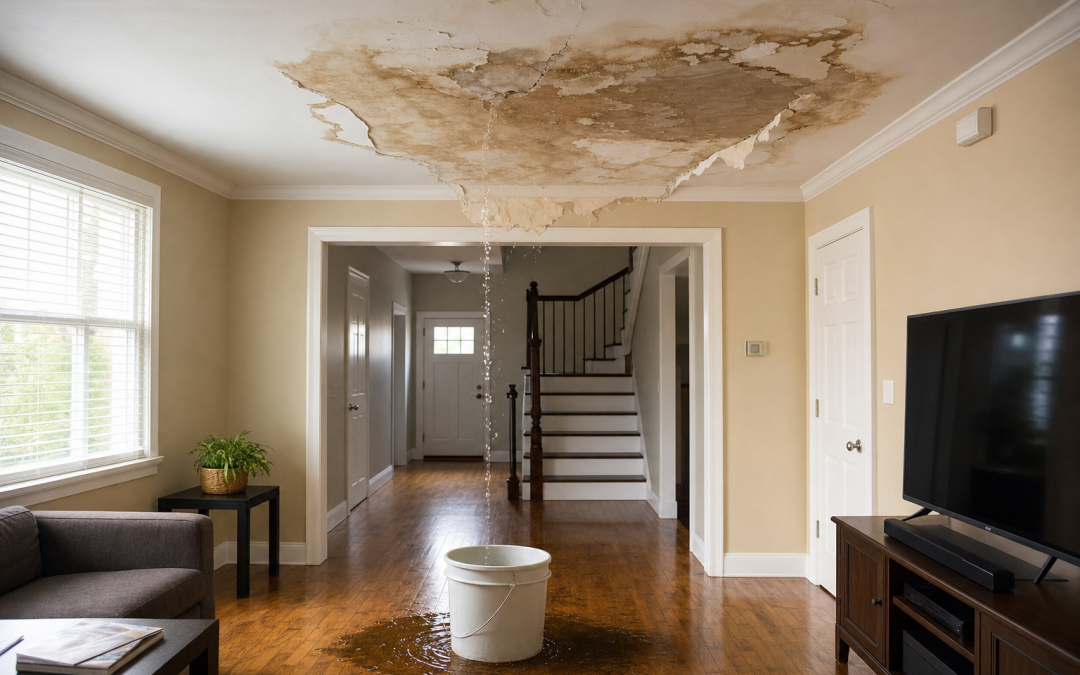
Autumn is prime season for this dispute. The first cold snaps of fall stress supply lines, hose bibs, and pipes running through exterior walls or unconditioned crawl spaces. A fitting that held all summer can weep or fail once temperatures swing. Because these lines are hidden, the first sign a homeowner sees is often a stain, warped flooring, or a musty smell — sometimes weeks after the leak actually started.
That gap between when a leak begins and when it’s discovered is exactly what the seepage exclusion exploits. If you can’t say precisely when the pipe failed, the adjuster may simply assert the damage “must have” occurred over a long period. Homeowners who work with a Public Adjuster in Raleigh NC often learn that this assertion is frequently an assumption, not a finding backed by evidence.
Why the Exclusion Is Convenient for Adjusters
- The burden of confusion falls on you. If timing is murky, a denial letter can cite “continuous or repeated seepage” without pinpointing when the leak began.
- Discovery date gets conflated with start date. Finding damage in November doesn’t mean the leak started in September — but denial letters often blur that distinction.
- Visible deterioration gets overstated. Mold, swelling, and staining can develop quickly in warm wall cavities, yet adjusters may point to them as “proof” of months-long leakage.
Evidence That Actually Establishes When a Leak Began
The good news: leak timing can often be reconstructed with objective evidence, including:
- Moisture mapping — meter readings across walls and floors show the wet footprint’s size and saturation depth, which correlates with duration.
- Plumber reports — a licensed plumber can document the failure point (a split fitting, a burst line, a fresh break) and explain whether it’s consistent with sudden failure versus slow seepage.
- Material condition — clean, recent water staining, intact drywall paper, and the absence of rot or established mold colonies all point to a short-duration leak.
- Water bills and usage data — a spike in consumption can bracket when a supply-line leak started.
- Photos and maintenance records — documentation showing the area was dry and undamaged shortly before discovery undercuts a long-term seepage theory.
Gathering this evidence quickly matters, because materials dry out and get demolished during repairs. A Public Adjuster in Durham NC can document conditions before they’re lost, so the insurer can’t rely on guesswork to characterize a sudden fall pipe failure as excluded seepage.

What Should I Do If My Water Damage Claim Is Denied Without Proof?
If your water damage claim is denied without proof, request the denial in writing with the exact policy exclusion cited, demand the carrier’s supporting evidence, preserve and photograph the damage, build your own expert timeline, and consider hiring a licensed public adjuster to dispute or reopen the claim. No outcome is ever guaranteed, but you have the right to push back.
A denial letter is not the end of the process — it is the beginning of your response. Here is a practical, step-by-step plan.
Step 1: Get the Denial in Writing, With the Exclusion Cited
Ask the insurer to identify, in writing, the specific policy language it is relying on. “Long-term seepage” is not a legal conclusion until the carrier ties it to an actual exclusion in your policy. If the letter is vague, request clarification before you do anything else.
Step 2: Demand the Carrier’s Supporting Evidence
Because the burden of proving an exclusion generally sits with the insurer, ask what evidence supports the denial. Useful questions include:
- What inspection, report, or testing shows the leak lasted longer than the policy’s time threshold?
- Who performed the inspection, and what are their qualifications?
- Can you provide a copy of the adjuster’s or engineer’s report?
Step 3: Preserve and Document Everything
Do not throw away damaged materials, pipes, or fittings — they may be the best proof of when and how the leak occurred. Photograph and video the damage from multiple angles, keep the failed plumbing component if possible, and save all receipts for emergency mitigation. Guidance from the National Association of Insurance Commissioners consistently emphasizes thorough documentation when disputing a claim decision.
Step 4: Build Your Own Expert Timeline
A licensed plumber, leak-detection specialist, or engineer can often establish that damage was sudden rather than long-term — for example, by examining the failed fitting or the pattern of moisture. An independent timeline gives you evidence to weigh against the carrier’s assumptions. Homeowners working with a Public Adjuster in Raleigh NC often find that a properly documented cause-and-origin narrative changes the conversation entirely.
Step 5: Bring in a Licensed Public Adjuster
A licensed and bonded public adjuster works for you, not the insurance company. They can review the denial, gather the evidence above, prepare a documented estimate, and formally dispute or reopen the claim. Policyholders in the Triangle can also reach a Public Adjuster in Durham NC for a review of a questionable denial.
Step 6: Know Your Regulatory Options
If the insurer refuses to substantiate its position, you can file a complaint with the North Carolina Department of Insurance, which oversees claim-handling practices in the state.
One honest caveat: no adjuster, attorney, or advocate can guarantee a specific result. What these steps do is ensure your claim is decided on evidence — not on an unsupported label.
Water Damage Claim Denied: Who Must Prove What Under an All-Risk Policy
| Question | Homeowner’s Burden | Insurer’s Burden |
|---|---|---|
| Did a covered loss occur? | Show water damage happened during the policy period | N/A — coverage is presumed once loss is shown |
| Does an exclusion apply? | None — no duty to disprove exclusions | Must prove the exclusion (e.g., ‘constant or repeated seepage’) applies with evidence |
| How long did the leak persist? | No obligation to establish leak duration | Must present proof (e.g., expert findings) that damage was long-term |
| Ambiguous policy language? | Benefits from ambiguity — construed in favor of coverage | Ambiguities are construed against the insurer as drafter |
Illustrative Example: The ‘Long-Term Leak’ Denial That Didn’t Hold Up
Illustrative example
Consider a hypothetical North Carolina homeowner who discovers water damage behind a bathroom wall from a failed pipe fitting and promptly files a claim under her all-risk policy. The insurer denies the claim, stating in a brief letter that the damage ‘appears long-term’ and falls under the constant-or-repeated-seepage exclusion — without any inspection findings or expert analysis.
Her attorney pushes back, pointing out that once she established water damage occurred during the policy period, the burden shifted to the carrier to actually prove the exclusion applied. Faced with no supporting evidence for its ‘long-term’ label, the insurer reopens the claim and ultimately pays for the covered repairs. This composite scenario reflects how the burden-shifting principle from cases like Jones v. Federated National can change the outcome of a denied claim.
Frequently asked questions
What should I do first if my water damage claim denied letter says the leak was ‘long-term seepage’?
Request the denial in writing with the specific policy language cited, then ask what evidence supports the ‘long-term’ conclusion. Insurers often rely on a brief adjuster visit rather than actual proof. Preserve the damaged materials, take dated photos, keep plumber invoices, and get your own opinion from a plumber or engineer before agreeing to any repairs that destroy evidence. Then consider having an attorney review whether the denial meets the insurer’s burden of proof.
Does the insurance company have to prove an exclusion applies, or do I have to disprove it?
Under an all-risk homeowners policy, you generally only need to show that a covered loss—like water damage—happened during the policy period. The burden then shifts to the insurer to prove a specific exclusion, such as constant or repeated seepage, actually applies. A carrier that simply declares a leak ‘long-term’ without supporting evidence hasn’t met that burden, which is exactly the point the Jones decision reinforced.
How long does it take to fight a denied water damage claim?
It varies widely. A well-documented appeal or supplemental submission can resolve in weeks to a few months. If the insurer holds firm and you file suit, litigation commonly takes many months to over a year, though many cases settle earlier once the insurer’s evidence is tested. Acting quickly matters—policy deadlines and legal limitation periods can bar your claim if you wait too long.
Is it worth hiring a lawyer to fight a denied plumbing leak claim?
Often yes, especially when the denial rests on a conclusory ‘long-term leak’ label with little proof. Many policyholder attorneys offer free consultations and work on contingency, so you pay from the recovery rather than upfront. A lawyer can also evaluate whether the insurer handled the claim in bad faith, which may add value. For small claims, weigh the damage amount against likely fees before deciding.
How can an insurer tell if a water leak is sudden or long-term?
Legitimate determinations rely on physical evidence: moisture mapping, mold growth patterns, rot or staining, corrosion on pipes, and sometimes an engineer’s or plumber’s analysis. A quick visual glance by an adjuster is often not enough to establish that damage occurred over weeks or months. If your denial cites ‘long-term’ damage, ask for the inspection report and expert findings—if none exist, the conclusion may not hold up.
What mistakes do homeowners make after a water damage denial?
Common mistakes include throwing away damaged materials before the dispute is resolved, making full repairs that destroy evidence, giving a recorded statement guessing about how long the leak existed, missing appeal or lawsuit deadlines, and accepting the denial at face value. Another big one: not requesting the insurer’s inspection reports and photos. Mitigate further damage as your policy requires, but document everything before anything is removed.
Does a Florida court decision like Jones v. Federated National actually help homeowners in North Carolina?
It isn’t binding on North Carolina courts, but it can still matter. Courts in one state often look to well-reasoned decisions from other states when interpreting similar all-risk policy language and burden-of-proof questions. For NC homeowners, the case provides persuasive support for arguing that the insurer—not the policyholder—must prove a seepage exclusion applies with real evidence, not just an adjuster’s assumption.
Should I appeal the denial with the insurance company or go straight to filing a lawsuit?
It usually makes sense to challenge the denial internally first: submit contrary evidence, request reconsideration, and demand the basis for the exclusion in writing. This is faster, cheaper, and builds a record if litigation becomes necessary. Go to court when the insurer won’t budge despite weak evidence, or when deadlines are approaching. An attorney can pursue both tracks at once so you don’t lose leverage or time.
Can I still get paid if part of my water damage was gradual and part was sudden?
Possibly. Many disputes involve mixed damage—a sudden pipe failure plus some pre-existing deterioration. Coverage often depends on the specific policy language and which cause produced which damage. The insurer generally must tie the exclusion to the damage it’s denying, not use one excluded element to reject the entire claim. Detailed documentation separating the sudden loss from any older damage strengthens your position significantly.
What evidence should I gather to challenge the insurer’s ‘seepage’ finding?
Collect dated photos and video of the failed pipe or fixture and all affected areas, the plumber’s repair invoice describing the failure, water bills showing no gradual increase, receipts showing recent inspections or renovations, and statements from anyone who saw the area dry beforehand. A report from an independent plumber, engineer, or public adjuster addressing how quickly the damage occurred can directly rebut the insurer’s conclusion.
Arson Homeowners Claim help near you
Related local pages
Had a water damage claim denied or underpaid in North Carolina? Our licensed and bonded public adjusters review your policy and denial letter, document the loss, and advocate for you. Call today for a free claim review. Get in touch.
Last updated: September 28, 2026