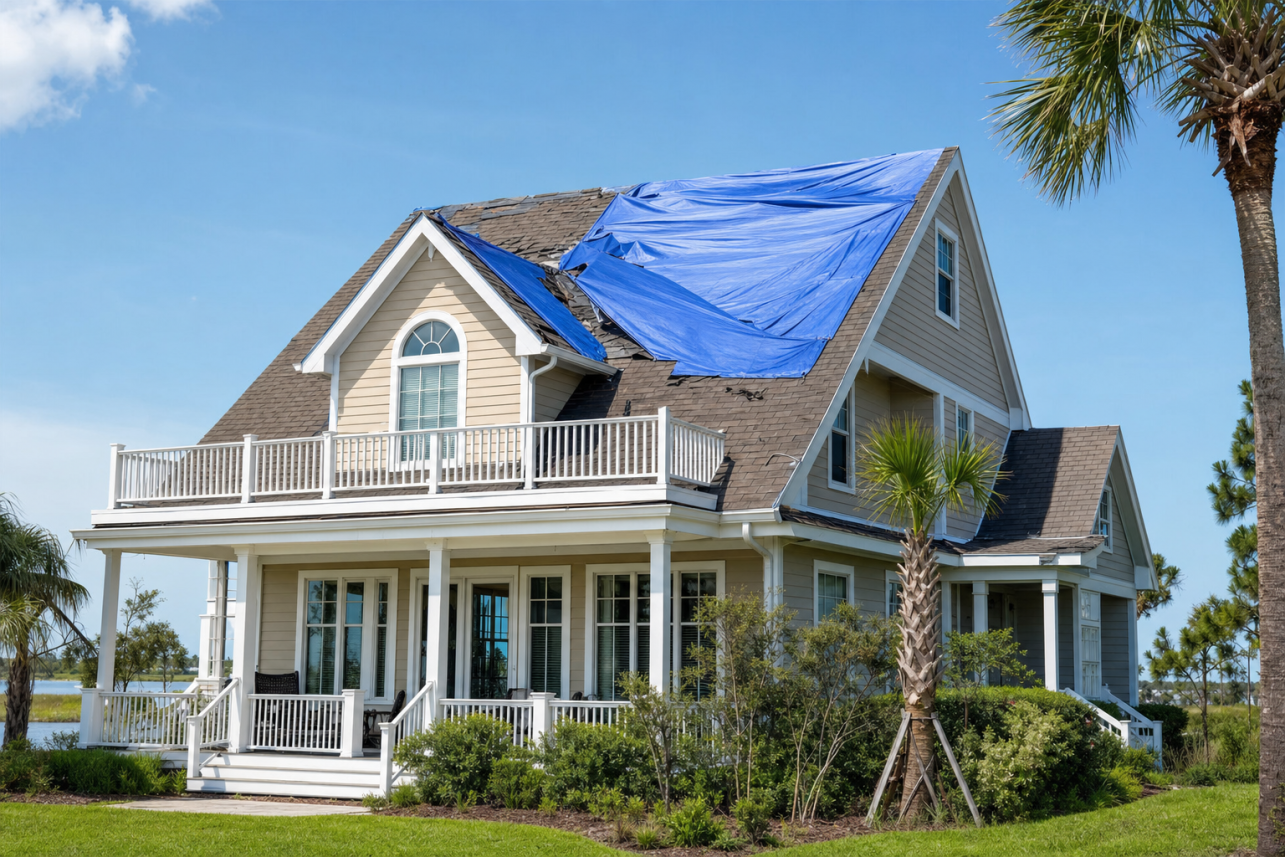
A public adjuster Gulf NC policyholders can call on works exclusively for you — not the insurance company — to document, value, and negotiate your property damage claim. For The Public Adjusters, Inc. is licensed and bonded, and we represent homeowners and business owners throughout Gulf and the surrounding Chatham County area. From fire and smoke damage to water intrusion, tree strikes, and NFIP flood claims, we handle the entire claim so you aren't left accepting whatever number the carrier's adjuster writes.
What This Service Is
When your home or building is damaged, your insurance company sends its own adjuster. That person is paid by the carrier and works within the carrier's guidelines. A public adjuster is the licensed professional on the other side of the table — hired by you, paid a percentage of what your claim actually recovers, and legally obligated to represent your interests alone.
In practice, that means we read the full policy (including endorsements most people never see), inspect the damage ourselves, prepare a detailed line-item estimate, inventory damaged contents, and negotiate directly with the carrier. In North Carolina, public adjusters must be licensed, and the NCDOI Public Adjusters Guide explains policyholders' rights when hiring one — including fee limits and contract requirements. We follow those rules to the letter.
We handle residential and commercial property claims: fire, smoke, water, tornado and hurricane-related wind damage, tree damage, vandalism, arson claims where the homeowner is the innocent victim, vehicle-into-structure damage, and flood claims through the National Flood Insurance Program. We do not handle auto, health, life, or cell phone claims — buildings and their contents are our entire focus.
Common Problems
What Does A Public Adjuster Gulf NC Homeowner Hires Actually Cost — And Is It Worth It?
We work on contingency: a percentage of the recovered claim, capped under North Carolina rules. There is no hourly bill and no upfront fee, and the initial claim review costs nothing.
The value comes from what carriers routinely miss or underpay — code-required upgrades, matching of siding and roofing, hidden moisture behind walls, smoke residue in HVAC systems, and full contents inventories. We never guarantee a specific outcome, but we do guarantee that your claim is fully documented and professionally argued rather than accepted at face value.
Courts have repeatedly sided with policyholders on valuation disputes. In Sproull v. State Farm Fire & Casualty Co., the Illinois Supreme Court ruled in the insured homeowner's favor, holding the carrier could not depreciate labor costs when calculating the actual cash value of a damaged home. Cases like that exist because underpayment is common — and rarely corrected unless someone pushes back.
My Claim Was Delayed, Lowballed, Or Denied — What Now?
A denial letter is not the end of a claim. Carriers deny or underpay for many reasons: a wear-and-tear exclusion applied to storm damage, a water loss labeled 'long-term seepage,' or a fire claim stalled while the origin is investigated.
We re-open the file with evidence. That means our own inspection, moisture readings, photo documentation, a competing repair estimate, and a written rebuttal tied to the actual policy language. If the carrier misapplied an exclusion, we show exactly where and why.
Delays are also fixable. North Carolina insurers must respond to claims within reasonable timeframes, and a professionally documented demand tends to move a stalled file far faster than another unreturned phone call from the homeowner.
Should I Just Handle The Claim Myself, Or Hire Someone?
Small, straightforward losses — a single broken window, a minor fence repair — usually don't need a public adjuster. If the carrier's payment covers real repair costs, take it.
Hire help when the loss is large, layered, or disputed: a kitchen fire with smoke throughout the house, a burst pipe that soaked flooring and framing, a tornado-damaged roof, or a tree through the living room. These claims involve hidden damage, code compliance, contents valuation, and depreciation math where thousands of dollars turn on how the estimate is written.
Judge any adjuster you consider on three things: a current North Carolina license, a bond, and a written contract that follows state rules. Ask exactly who will inspect your property and who will negotiate. We're happy to answer both questions by name.
Our Process
Free Policy And Damage Review
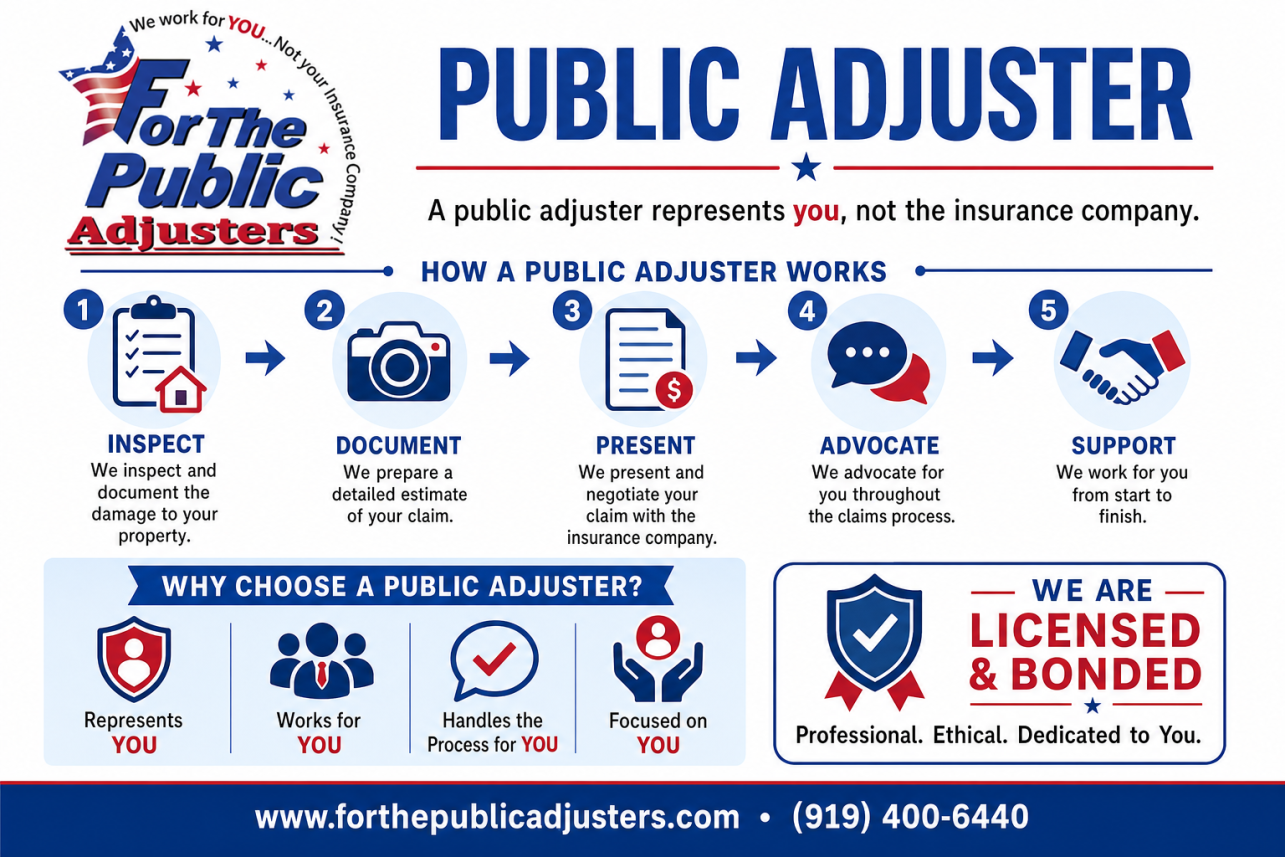
We start by reading your full policy — declarations, endorsements, and exclusions — and inspecting the damage in person at your Gulf-area property. Before you sign anything, you'll know what coverage likely applies, what the claim realistically involves, and whether hiring us makes financial sense for your loss.
Documentation And Valuation
We photograph and measure everything, test for hidden moisture or smoke migration, build a line-item repair estimate using current local construction pricing, and prepare a complete contents inventory. For flood losses, we prepare the proof-of-loss documentation the National Flood Insurance Program requires within its strict deadlines.
Negotiation And Settlement
We present the claim to the carrier, meet its adjuster on site, and rebut low estimates point by point in writing. You approve every decision, and settlement funds are paid to you. Our fee comes out only as a percentage of what is actually recovered — if the claim recovers nothing, you owe us nothing.
| What Happens | Filing on Your Own | With Our Team on Your Side |
|---|---|---|
| Who inspects the damage | The carrier's adjuster, who works for the insurance company | A licensed adjuster who works only for you, documenting every affected room, slope, and system |
| Estimate accuracy | Carrier's numbers, often missing hidden moisture, smoke migration, and code upgrades | Independent line-item Xactimate estimate built from moisture readings, photos, and local repair pricing |
| Negotiation | You argue policy language against trained claims professionals | We handle every supplement, letter, and phone call, citing your policy provisions and NC regulations |
| Typical outcome | First offers frequently cover a fraction of real repair costs | Reopened, supplemented, and negotiated settlements — often multiples of the initial offer |
| Your time invested | Weeks of calls, paperwork, and re-inspections on your own schedule | A few hours total; we manage the file while you focus on your family or business |
| Cost | Free, but you absorb every underpaid dollar | A percentage of the recovery — no upfront fees, and we only earn when you're paid |
Commonly Overlooked In The Public Adjusting Industry
- Ordinance and law (code upgrade) coverage — Carrier estimates price like-for-like repairs, quietly skipping the cost of bringing older Chatham County homes up to current building code, which the policy often covers.
- Shingle and siding matching under NC guidance — Insurers pay to patch one slope or wall, ignoring that discontinued materials can't be matched and may entitle you to broader replacement.
- Hidden moisture behind baseboards and inside wall cavities — Field adjusters rarely use moisture meters or thermal cameras, so water that wicked into framing gets left out of the estimate and turns into mold later.
- Smoke and soot migration beyond the fire room — Soot travels through HVAC ductwork and open attics into rooms that look clean, and only lab testing proves the contamination carriers deny.
- The proof of loss deadline — Many policies require a sworn proof of loss within a strict window, and missing it can void an otherwise valid claim even while negotiations are ongoing.
- Depreciation recovery after repairs are complete — Replacement-cost policies hold back depreciation that homeowners forget to claim once work is done, leaving thousands sitting unrecovered with the carrier.
- Additional living expenses and business interruption documentation — Displacement costs and lost income are only paid when tracked with receipts and sales records from day one, and most policyholders start keeping records too late.
- Detached structures, fencing, and farm outbuildings — Rural properties around Gulf often have sheds, barns, and fence lines damaged in the same storm that never get walked or added to the claim.
Case Studies
Case Study #1
Situation: A family on Old US 421 near the Deep River filed a claim after remnants of a tropical system pushed wind-driven rain through their ridge vents and around a chimney flashing, soaking attic insulation and two bedroom ceilings.
Problem: The carrier's field adjuster spent twenty minutes on site, attributed the ceiling stains to 'long-term seepage,' and offered $2,900 — barely enough to repaint, with nothing for the roof, insulation, or drywall replacement.
Investigation: Our team pulled NOAA storm data confirming recorded gusts over 60 mph in Chatham County on the date of loss, ran moisture mapping across the attic deck, and documented lifted shingle tabs and displaced ridge cap on the windward slope with drone and ladder photos.
Findings: The moisture pattern radiated from the storm-damaged flashing and ridge line, not from any plumbing or chronic source. Creased and lifted shingles on the south slope were consistent with a single wind event, and matching discontinued shingles could not be sourced, triggering the policy's matching considerations under NC guidance.
Solution: We prepared a line-item Xactimate estimate covering full slope replacement, flashing, insulation removal and replacement, drywall, paint, and contents cleaning, then presented the weather data and photo evidence in a formal supplement and negotiated directly with the desk adjuster.
Outcome: The claim was reopened and settled at $41,700 — more than fourteen times the original offer — covering a full roof replacement and complete interior restoration.
Lesson: A 'seepage' denial is often just a rushed inspection. Independent weather data and proper moisture documentation can completely reverse a lowball outcome, but only if it's gathered before repairs erase the evidence.
Case Study #2
Situation: A small farm-supply business owner off NC Highway 87 suffered a kitchen-area electrical fire in an attached office and break room, with heavy smoke migrating through the shared attic into the retail space.
Problem: The insurer's estimate paid to clean and repaint the burn room only, ignored smoke and soot contamination in the retail area, and denied the business interruption claim outright, saying the store 'could have reopened immediately.'
Investigation: We brought in an industrial hygienist to take surface soot samples throughout the building, inventoried smoke-contaminated stock item by item, and reconstructed twelve months of sales records to establish the true revenue baseline for the lost-income calculation.
Findings: Lab results confirmed char and soot residue on merchandise and HVAC components sixty feet from the fire origin. The store could not legally or safely reopen until the ductwork was cleaned and contaminated inventory was replaced — a documented six-week closure, not zero days.
Solution: We submitted a revised claim with the hygienist's report, a certified contents inventory of $38,000 in unsellable stock, an HVAC decontamination scope, and a business interruption worksheet tied to actual point-of-sale data rather than the carrier's guess.
Outcome: The final settlement reached $127,400 across building, contents, and lost income — against an initial combined offer of under $19,000 — and the owner reopened with new inventory and cleaned ductwork.
Lesson: Fire claims are rarely just about the burn room. Smoke travels, and business interruption is provable with real books — carriers pay documented numbers, not verbal assurances.
| Your Situation | Is a Public Adjuster Worth It? | Why It Matters |
|---|---|---|
| Claim denied as 'wear and tear' or 'seepage' | Yes — call immediately | Independent inspections and storm data frequently overturn causation-based denials before deadlines pass |
| Settlement offer feels too low to complete repairs | Yes | Underpayment is the most common claim problem; supplements can be filed with proper documentation |
| Large loss: fire, major water, or hurricane damage | Yes — before the carrier inspects, if possible | Early documentation preserves evidence and prevents the first estimate from anchoring the claim low |
| Business income or commercial property loss | Yes | Lost-income calculations and contents inventories are complex and carriers rarely volunteer full value |
| Small claim near or under your deductible | Usually no | The fee may exceed the recoverable difference; we'll tell you honestly during a free review |
| Carrier delaying past 30 days without a decision | Yes | North Carolina claims-handling standards give us leverage to force movement on stalled files |
| Damage found months after the storm | Yes — but act fast | Policy deadlines and proof-of-loss requirements still apply; late discovery needs careful documentation |
Reviews
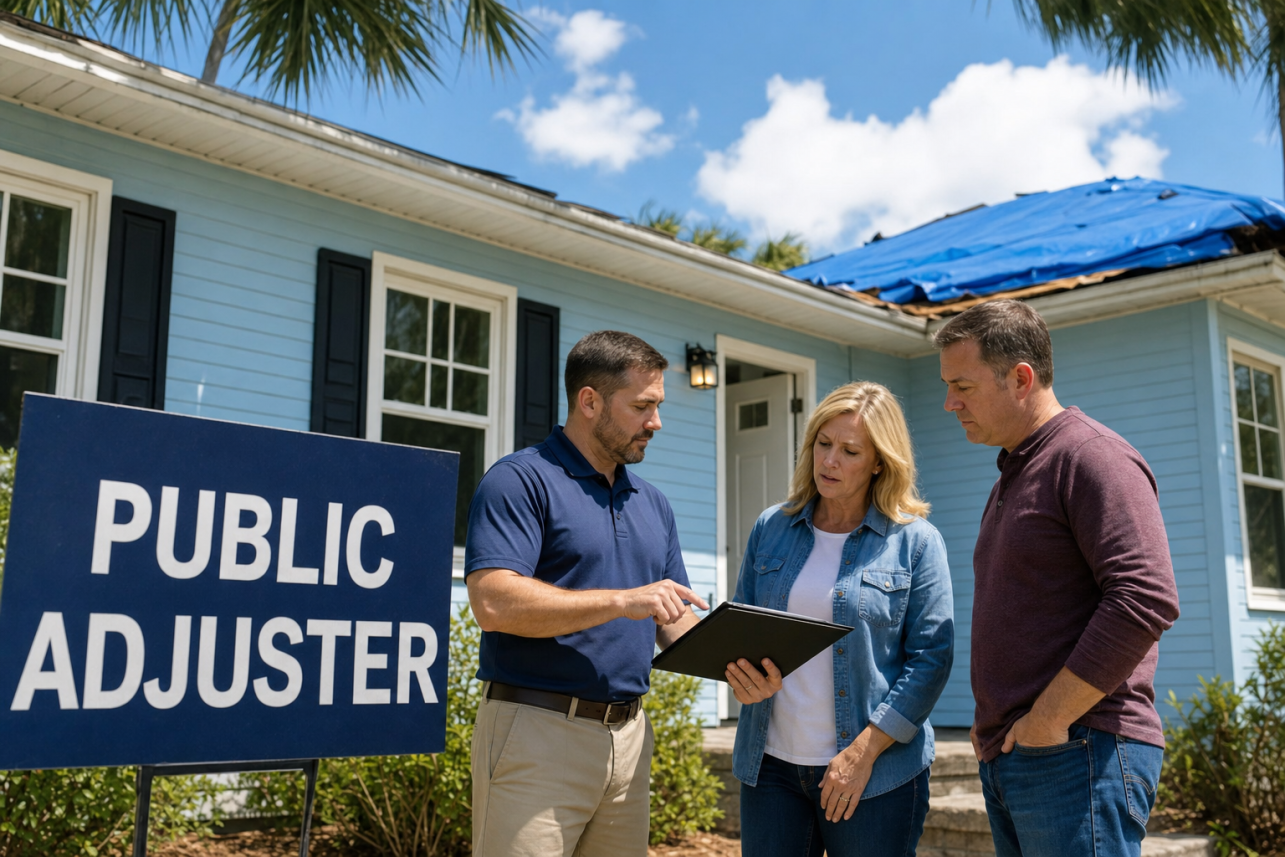
After the hailstorm came through Chatham County, our insurance company said our roof damage was 'cosmetic' and closed the claim. For The Public Adjusters got up on the roof, marked every hail hit with chalk, photographed the dented gutters and soft metal, and got the claim reopened. We went from a $0 denial to a full roof replacement. They handled every call with the carrier so I never had to argue with anyone.
Darlene M., Gulf
A pipe burst in our crawlspace while we were out of town and the first offer wouldn't have covered the flooring, let alone the subfloor and cabinets that wicked up water. Their adjuster metered every wall, caught hidden moisture the carrier's guy never tested for, and rebuilt the whole estimate line by line. Settlement ended up almost triple the original offer. Worth every penny of the fee.
Ray T., Goldston
We had wind damage from a storm and honestly didn't know public adjusters existed until a neighbor mentioned this company. They explained our policy in plain English, found coverage for code upgrades we'd have never claimed, and kept us updated the whole way. Only reason it took a couple months was the insurance company dragging its feet — the team pushed back at every delay.
Susan K., near Deep River
Frequently Asked Questions
What Does A Public Adjuster Gulf NC Homeowners Can Hire Actually Do For My Insurance Claim?
A public adjuster works exclusively for you, the policyholder — never for the insurance company. When you hire For The Public Adjusters, Inc., we take over the entire claim process: documenting your damage, reading your policy line by line, preparing a detailed estimate, and negotiating directly with the insurer's adjuster until you receive a fair settlement.
Here in Gulf and the surrounding Chatham County area, the most common claims we handle involve wind and hail damage to roofs, water intrusion from storms tracking up from the coast, fallen trees on older farmhouses and outbuildings, and fire or smoke losses. Rural properties around Gulf often include detached garages, barns, and well houses that insurance carriers routinely undervalue or overlook entirely — we make sure every covered structure is included in your claim.
The difference in outcome can be significant. Insurance company adjusters are often managing dozens of files and may spend twenty minutes at your property. We spend hours. We photograph everything, pull moisture readings, measure roof slopes, and build an estimate using the same pricing software carriers use, so there's no arguing over methodology.
Most of our Chatham County clients come to us in one of two situations: either they've just suffered a loss and want it handled correctly from day one, or they've received a settlement offer that doesn't come close to covering actual repair costs. We can help in both cases, and initial consultations are free.
How Much Does It Cost To Hire A Public Adjuster In Gulf, And Is It Worth It?
For The Public Adjusters, Inc. works on contingency, which means you pay nothing upfront and nothing out of pocket. Our fee is a percentage of the settlement we recover for you, and North Carolina law caps public adjuster fees to protect policyholders. If we don't recover money for you, you don't owe us a fee.
Whether it's worth it comes down to simple math. Industry studies and our own case files consistently show that professionally represented claims settle substantially higher than claims policyholders handle alone — often enough that the increase far exceeds our fee. On a roof claim in Gulf where the carrier initially offered a partial repair, we frequently document enough damage to justify full replacement, which can mean tens of thousands of dollars in difference.
There's also the time factor. A properly documented claim involves photographs, measurements, contractor estimates, policy analysis, proof-of-loss forms, and often multiple rounds of negotiation. For folks in Gulf who commute to Sanford, Pittsboro, or the Triangle for work, that's hours you likely don't have.
That said, we're honest about when you don't need us. If your loss is small and the carrier's offer is fair, we'll tell you so during the free consultation. Our reputation in Chatham County matters more to us than any single fee, and most of our business comes from referrals — neighbors telling neighbors we treated them right.
My Insurance Company Already Sent Their Adjuster And Made An Offer. Can For The Public Adjusters, Inc. Still Help?
Yes, and this is actually one of the most common situations we handle for Gulf-area policyholders. Receiving an initial offer does not mean your claim is closed. You have the right to dispute the settlement, submit supplemental documentation, and negotiate for the full amount your policy owes you.
When a client comes to us with an existing offer, we start by conducting our own independent inspection of the property. We compare what we find against the carrier's estimate line by line. In Chatham County claims, we routinely find items the insurance adjuster missed: damaged decking under shingles, hidden water damage behind walls, code-upgrade costs required by county building requirements, and underpriced labor rates that don't reflect what contractors in the Gulf and Goldston area actually charge.
From there, we prepare a supplemental claim with photographic evidence, measurements, and a corrected estimate, then negotiate directly with your insurer. In many cases we're able to reopen the conversation and secure a meaningfully higher settlement even after a check has been issued — cashing an initial payment generally does not waive your right to pursue additional amounts owed, though we review your specific paperwork to confirm.
Timing matters, however. North Carolina policies contain deadlines for disputing settlements and filing suit if necessary, so don't sit on a lowball offer. Bring us the carrier's estimate and your policy, and we'll give you a straight answer at no charge about whether more money is realistically on the table.
How Do I Choose The Right Public Adjuster Gulf NC Storm Damage Claims Deserve?
Start with licensing. Every public adjuster Gulf NC property owners hire must hold an active license from the North Carolina Department of Insurance — you can verify a license number on the Department's website in under a minute. For The Public Adjusters, Inc. is fully licensed, and we encourage you to check before signing anything with any firm.
Next, look for local claim experience. Adjusting a claim in Chatham County is different from working a beach town. Around Gulf, we deal with older homes with mixed construction, metal roofs on agricultural buildings, long private drives that complicate contractor access, and carriers who apply coastal pricing assumptions that don't match Piedmont repair costs. An adjuster who knows the area catches those discrepancies.
Ask pointed questions before you hire anyone. How many claims like yours have they settled? Will the person you're speaking with personally handle your file, or hand it off? Can they provide references from nearby clients? Be wary of anyone who shows up unsolicited after a storm, pressures you to sign on the spot, or guarantees a specific dollar amount — no ethical adjuster can promise results before inspecting your property and reading your policy.
Finally, read the contract. Fees should be stated plainly as a percentage, with cancellation terms spelled out. We walk every Gulf client through our agreement paragraph by paragraph, because an informed client is exactly the kind of client we want representing our name in the community.
What Types Of Property Damage Claims Can A Public Adjuster Gulf NC Residents Trust Actually Handle?
For The Public Adjusters, Inc. handles nearly every kind of first-party property claim that affects homes and businesses in Gulf and the surrounding Chatham County area. That includes wind and hail damage from the severe thunderstorms that roll through the Deep River corridor, water damage from burst pipes and appliance failures, fire and smoke losses, lightning strikes, fallen trees, and hurricane remnants that push inland from the coast.
We also work on claims people often assume are too small or too complicated to fight. Roof damage that the carrier calls "wear and tear," hidden water intrusion behind walls, and smoke odor that lingers long after a kitchen fire are all claims we regularly document and negotiate.
Commercial losses are part of our work as well. If you own rental property, a shop, or farm structures in the Gulf area, we can handle building damage, business personal property, and loss of rental income under most policies.
The common thread is this: if your loss is covered under a property insurance policy and you believe the settlement offer doesn't reflect the true cost to repair or replace, we can step in. During your free initial review, we'll read your policy, look at the damage, and tell you honestly whether our involvement will add value. If a claim is straightforward and fairly paid, we'll say so — our reputation in this community matters more than any single fee.
How Long Does The Insurance Claim Process Take When I Work With Your Team In Gulf?
Timelines vary based on the size of the loss and how the insurance company responds, but most claims we handle in the Gulf area resolve within 30 to 90 days of our involvement. Smaller, well-documented claims can settle faster. Large fire losses or disputed hurricane claims can take longer, especially if the carrier initially denied coverage.
Here's how the process typically unfolds. In the first week, we inspect your property, photograph and measure the damage, review your policy line by line, and notify the carrier that we're representing you. Over the following weeks, we prepare a detailed, contractor-grade estimate and submit it with supporting documentation.
From there, we negotiate. North Carolina law requires insurers to acknowledge and respond to claims within specific timeframes, and we hold them to those deadlines. When the carrier's adjuster wants to re-inspect, we're on site with them so nothing gets minimized or overlooked.
One thing worth knowing: hiring representation early usually shortens the process rather than lengthening it. Claims drag on when documentation is incomplete or when a homeowner and carrier go back and forth without a clear scope of damage. A thorough, professional estimate submitted up front removes most of that friction.
Throughout the claim, you'll get regular updates — you won't have to chase us for information. Our goal is to get you a full, fair settlement as quickly as the facts and the policy allow, not to let your claim sit in someone's queue.
My Claim Was Denied. Can A Public Adjuster Gulf NC Property Owners Recommend Still Get It Overturned?
Often, yes. A denial letter is the insurance company's position, not the final word. As a public adjuster Gulf NC homeowners can call after a denial, For The Public Adjusters, Inc. regularly reviews rejected claims and finds grounds to reopen them.
Denials in this area tend to fall into a few categories. Some rest on policy exclusions applied too broadly — for example, calling storm-created roof damage "pre-existing wear" or blaming a sudden pipe failure on long-term neglect. Others come from incomplete inspections, where the carrier's adjuster spent twenty minutes on site and missed hidden water intrusion or structural movement.
Our first step is a free review of your denial letter, your policy, and the damage itself. We look at exactly what language the carrier cited and whether the facts actually support it. If the denial is wrong, we build a rebuttal: independent inspections, moisture readings, engineering input when needed, and a documented estimate that ties the damage to a covered cause of loss.
We then formally dispute the denial with the carrier and, where the policy allows, invoke appraisal or other resolution options. Many denials get reversed once the insurer sees professional documentation and knows the claim won't quietly go away.
Be mindful of deadlines. North Carolina policies typically limit how long you have to dispute a claim or file suit, so the sooner you bring us a denial, the more options we have. If we review your file and the denial is legitimate, we'll tell you that plainly and won't charge you anything.
Is For The Public Adjusters, Inc. Licensed In North Carolina, And Why Does That Matter For My Claim?
Yes. We are licensed by the North Carolina Department of Insurance, which is a legal requirement for anyone negotiating a property claim on your behalf in this state. Before hiring anyone — us included — you can and should verify their license through the Department's public lookup.
Licensing matters for several practical reasons. North Carolina regulates what licensed adjusters can charge, requires written contracts with clear cancellation rights, and holds licensees accountable to a code of conduct with real penalties. That framework protects you. An unlicensed "claims consultant" or a contractor who offers to "handle the insurance" operates outside those protections, and carriers often refuse to deal with them at all.
Licensing also means the insurance company must engage with us. When we send a letter of representation, the carrier is required to direct claim communications through our office and respond to our estimates and disputes. That changes the dynamic of the negotiation immediately.
Beyond the license itself, our team knows how claims actually play out in Chatham County — which carriers write most of the policies around Gulf, how local repair costs compare to the pricing software insurers use, and what documentation regional claim offices expect before they'll move on a settlement.
When we meet with you, we'll show you our license, walk you through the contract in plain language, and explain the fee before you sign anything. You should never feel pressured, and you should never work with anyone in this business who can't produce a current North Carolina license on the spot.
When Is The Best Time To Contact A Public Adjuster Gulf NC Property Owners Can Call After Damage?
The short answer: as early as possible, ideally before you file the claim or within the first few days afterward. When our team gets involved from the start, we control the documentation, the scope of loss, and the conversation with your carrier from day one. That almost always leads to a stronger outcome than trying to fix a claim after it has gone sideways.
Here in Chatham County, the damage we see most often comes from severe thunderstorms, straight-line winds, hail, and the occasional tropical remnant pushing up from the coast. After these events, carriers get flooded with claims and field adjusters move fast. A rushed 20-minute inspection frequently misses damage to decking, flashing, siding, and interior finishes.
That said, early is best but late is not too late. If you have already filed, already received an estimate, or feel the process stalling, we can still step in, re-inspect the property, and submit a corrected scope. North Carolina policies typically give you meaningful time to dispute a settlement, though specific deadlines vary by policy language.
One practical tip for Gulf homeowners: before any repairs beyond emergency mitigation, get a professional damage assessment. Once damaged materials are torn out and hauled away, proving the full extent of your loss becomes much harder. A quick call to us first costs nothing and can protect tens of thousands of dollars in claim value.
What Is The Difference Between Your Adjusters And The Adjuster My Insurance Company Sends?
The difference comes down to one word: loyalty. The adjuster your insurance company sends, whether a staff adjuster or an independent adjuster hired by the carrier, works for the insurance company. Their job is to evaluate the claim from the carrier's perspective. They may be perfectly professional, but they do not represent you.
A licensed public adjuster is the only type of adjuster who works exclusively for the policyholder. When you hire For The Public Adjusters, Inc., we owe our duty to you, not the carrier. We read your policy for coverage that applies to your situation, document every item of damage, price the repairs at real Chatham County contractor rates, and negotiate until the settlement reflects the actual cost to restore your property.
The practical difference shows up in the details. A carrier adjuster inspecting a wind-damaged roof in Gulf might write for a partial repair. We evaluate whether matching shingles are even available, whether local code requires full replacement, and whether hidden damage to underlayment or decking was missed entirely. Those distinctions can change a claim by five figures.
There is also an experience gap in your favor. Most homeowners file one or two major claims in a lifetime. Carrier adjusters handle claims every day. We level that playing field by putting someone equally experienced on your side of the table.
Will Hiring A Public Adjuster In Gulf Make My Insurance Company Drop Me Or Raise My Rates?
This is one of the most common worries we hear from homeowners around Gulf and the wider Sanford and Pittsboro area, and the answer is reassuring. Hiring your own adjuster is a right protected under North Carolina law. Carriers cannot legally cancel your policy or single you out for retaliation simply because you chose professional representation.
Your premiums are a separate matter, and they are driven by the claim itself, not by who handles it. Filing a claim can affect future rates whether you negotiate it yourself or bring in a professional. What we do is make sure that if a claim is going on your record anyway, you actually recover the full amount you are owed for it.
In practice, carriers deal with policyholder representatives constantly. Our involvement typically makes the process more organized, not more adversarial. We submit complete documentation, respond to requests promptly, and communicate through proper channels. Many desk adjusters would rather work a file with a professional on the other side than chase a homeowner for missing paperwork.
One more point worth knowing: North Carolina's Department of Insurance regulates our conduct just as it regulates carriers. Everything we do is on the record, in writing, and within the terms of your policy. There is nothing about hiring representation that gives your insurer grounds to treat you unfairly, and if a carrier ever tried, that behavior itself would raise regulatory red flags.
What Should I Do To Protect My Property And My Claim Before Your First Inspection?
There are a few simple steps that make a real difference, and none of them require special expertise. First, make temporary repairs to prevent further damage, such as tarping a roof opening or shutting off water to a burst line. Nearly every policy requires reasonable mitigation, and carriers can reduce payment for damage that worsened because nothing was done. Keep every receipt, because those emergency costs are usually reimbursable.
Second, photograph and video everything before you move, clean, or discard anything. Wide shots of each room, close-ups of damaged items, and exterior footage of the roof and siding from the ground all help. If storm debris hit your property, photograph the debris where it landed.
Third, do not throw damaged belongings away. Water-soaked furniture, spoiled contents from a power outage, and torn shingles are all physical evidence. If health or safety forces you to dispose of something, document it thoroughly first.
Fourth, be careful what you say to the carrier. Report the loss promptly, but stick to basic facts. Avoid guessing at causes or accepting a recorded statement before you understand your coverage. Do not sign anything from a contractor or restoration company without reading it, since some agreements assign away your claim rights.
When you work with a public adjuster Gulf NC families rely on, we take over from there: a full inspection, a room-by-room contents inventory, and a documented scope of loss built to withstand carrier scrutiny. Your job is simply to preserve the evidence until we arrive.
I Already Settled My Claim But The Payment Did Not Cover My Repairs. Can A Public Adjuster Gulf NC Homeowners Rely On Reopen It?
In many cases, yes. Accepting a claim payment in North Carolina is not the same as signing away your rights. Unless you signed a full release, most policies allow supplemental claims when additional damage is discovered or when the original estimate proves too low once contractors start work.
We see this constantly in Gulf and across Chatham County. A roofer opens up a hail-damaged roof and finds saturated decking. A contractor pulls drywall after a pipe leak and discovers mold behind the wall. Those costs were never in the insurer's original scope, and you should not be paying them out of pocket.
North Carolina generally gives policyholders three years from the date of loss to pursue a claim, though your specific policy may set different deadlines for supplemental filings. That means storm damage from a couple of seasons ago may still be recoverable if the numbers were wrong the first time.
Our team reviews your original settlement paperwork, re-inspects the property, and builds a documented supplemental estimate line by line. We then present that difference to your carrier and negotiate the gap. There is no obligation to find out where you stand — bring us your claim file and we will tell you honestly whether reopening it makes financial sense.
What Documents And Information Should I Gather Before Your First Meeting In Gulf?
The most important document is your full insurance policy, including the declarations page and all endorsements. If you only have the summary page, request the complete policy from your agent — carriers are required to provide it, and the fine print is where coverage disputes are usually won or lost.
Next, gather anything that shows the damage and its timeline. Photos and videos from right after the event are gold, especially for wind and hail losses where conditions change quickly. Include dated receipts for emergency repairs like tarping, water extraction, or board-up work, because those costs are typically reimbursable.
If you have already filed, bring every piece of correspondence: the claim number, the carrier adjuster's estimate, denial or reservation-of-rights letters, and notes from phone calls. Older records help too — prior inspection reports, appraisals, or renovation invoices establish the pre-loss condition of your Chatham County property, which matters when an insurer argues damage was pre-existing.
Do not worry if you are missing pieces. Part of what we do as your adjusting team is request documents directly from the carrier and reconstruct the file. Showing up with whatever you have is enough to get started, and we will build the rest from there.
My Settlement Mentions Depreciation And 'actual Cash Value.' How Does A Public Adjuster Gulf NC Policyholders Hire Recover That Money?
This trips up a lot of homeowners, so here is the plain-English version. Most replacement cost policies pay in two stages. First, the carrier issues an actual cash value payment — the replacement cost minus depreciation for age and wear. Then, after you complete the repairs, you can recover the withheld depreciation, called recoverable depreciation.
The problem is that many Gulf homeowners never collect that second payment. Carriers rarely chase you down to hand it over. If you do not submit repair invoices within the policy's deadline — often 180 days to two years depending on your contract — that money stays with the insurer.
As your public adjuster, we do three things here. We verify that the depreciation applied was reasonable in the first place, because carriers sometimes depreciate items too aggressively or depreciate labor when the policy does not allow it. We track every deadline so nothing lapses. And we compile and submit the completed-repair documentation the carrier requires to release the held-back funds.
On a significant roof or fire claim in Chatham County, recoverable depreciation can be tens of thousands of dollars. If you have an ACV payment sitting in hand and are not sure what comes next, that is exactly the moment to call us.

Does For The Public Adjusters, Inc. Handle Commercial And Business Property Claims In The Gulf Area?
Yes. Alongside residential work, we represent business owners, landlords, farms, and commercial property owners throughout Gulf and the surrounding Chatham County communities, including Goldston, Bear Creek, and Siler City.
Commercial claims are a different animal from homeowner claims. The policies are more complex, with coverage parts for the building, business personal property, tenant improvements, and equipment. Getting the valuation right on inventory or specialized machinery takes real documentation, and carriers scrutinize commercial losses harder than residential ones.
Business interruption is often the biggest piece — and the most underpaid. If a fire, storm, or water loss shuts down your shop, warehouse, or rental units, you may be entitled to lost income and continuing expenses during the restoration period. Calculating that correctly requires financial records, projections, and a defensible methodology, which is work most owners simply do not have time to do while trying to keep a business alive.
Our adjusters prepare the full commercial claim package: building estimate, contents inventory, business income worksheets, and extra expense documentation. We also coordinate with your accountant when needed so the income figures hold up under carrier review. For agricultural properties common in this part of the county, we handle barns, outbuildings, and equipment losses as well. If your business took damage, call before you file so the claim starts on solid footing.
Local Relevance
Gulf sits along the Deep River in southwestern Chatham County, a rural area with a long history tied to the river and the old mining and mill economy. Many homes here are older frame houses, and older construction changes how claims should be written — plaster walls, aging wiring, original framing, and materials that no longer match anything on the market all affect repair costs and code-upgrade coverage.
The weather risks are real, too. Central North Carolina sees severe thunderstorms and occasional tornadoes, plus the remnants of hurricanes pushing inland with heavy rain. Low-lying properties near the Deep River face genuine flood exposure, and standard homeowners policies do not cover rising water — that requires a separate flood policy, and the Federal Emergency Management Agency oversees the program most of those policies come through.
Rural properties also mean tree claims. Mature hardwoods and pines around older homesteads come down in ice storms and summer squalls, and a tree-on-house claim involves far more than the visible hole: structural framing, roof decking, water intrusion behind the tarp, and interior finishes. We know how these claims should be scoped because we've written them for properties just like the ones around Gulf, Goldston, and the rest of southwestern Chatham County.
Because much of Gulf's housing stock predates modern building codes, storm and fire losses here often trigger ordinance-or-law repair requirements — updated wiring, framing, or egress — that carriers frequently leave out of their first estimate, so older-home owners should insist that code-upgrade coverage is reviewed before accepting any settlement.
Talk To A Gulf-Area Claims Professional Before You Settle
If your home or business in Gulf or anywhere in Chatham County has fire, water, storm, or flood damage, get a second opinion before you accept the carrier's number. For The Public Adjusters, Inc. is licensed and bonded, the review is free, and you pay nothing unless your claim recovers money.
Call us: (919) 400-6440
Helpful Resources
- NCDOI Public Adjusters Guide
- Federal Emergency Management Agency (FEMA)
- National Flood Insurance Program (NFIP)
- North Carolina Department of Insurance — State regulator overseeing public adjuster licensing and policyholder rights
- FEMA flood insurance information — Official federal resource on NFIP flood coverage and claims
Our services in this city
Service pages for this city are coming soon.
Last updated: August 5, 2026