What Is an NFIP Proof of Loss and Why Does the 60-Day Deadline Matter?
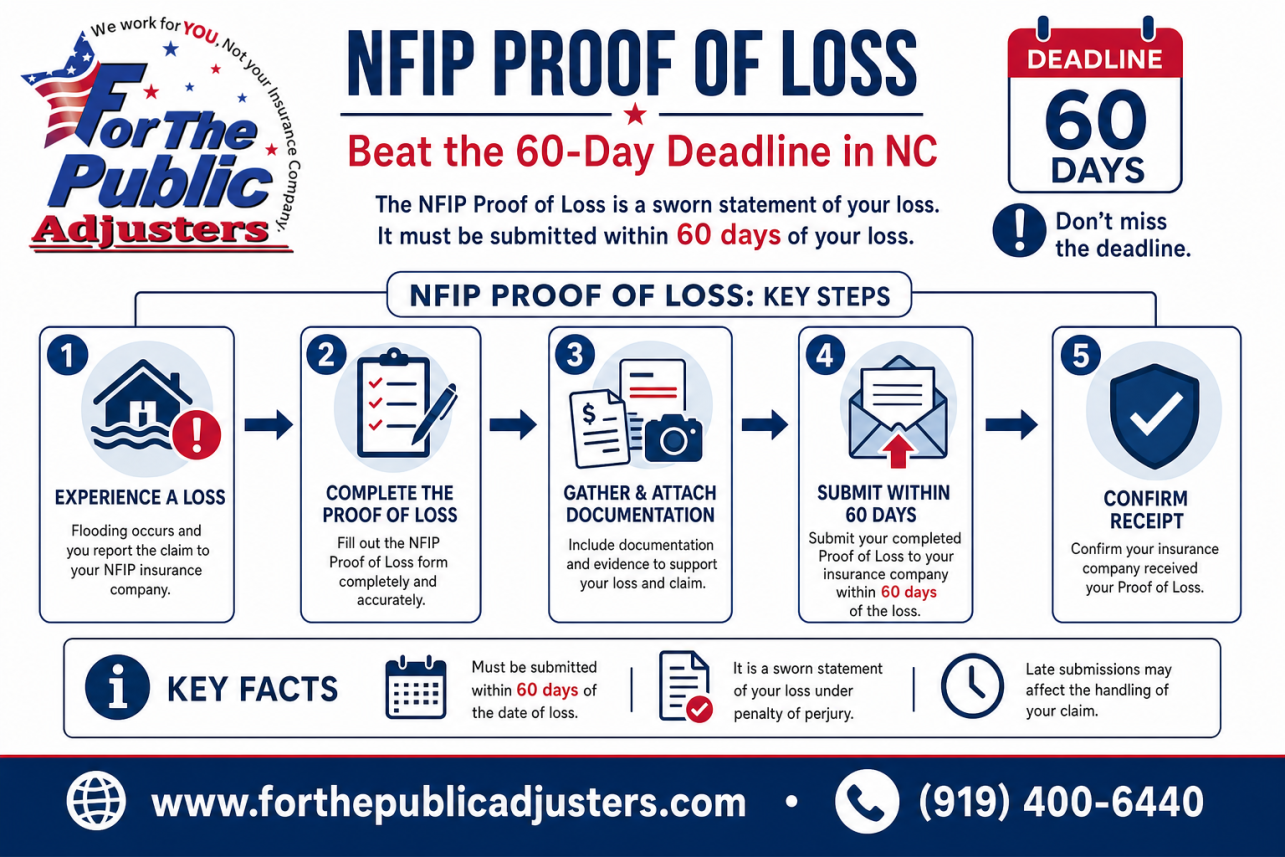
An NFIP proof of loss is a sworn, signed statement of the amount you are claiming under your Standard Flood Insurance Policy, and it must generally be submitted within 60 days of the date of loss. Miss that deadline without an official extension, and FEMA can deny payment on your flood claim entirely.
Key takeaways
- NFIP policyholders must submit a signed, sworn proof of loss within 60 days of the flood loss date — missing it can forfeit your entire claim.
- The adjuster’s estimate is NOT your proof of loss; you must personally sign and swear to the form yourself, even if the adjuster prepares paperwork.
- If hidden damage surfaces after payment, you can file a supplemental proof of loss with new documentation — but do it promptly and in writing.
- Attach itemized repair estimates, photos, receipts, and a room-by-room inventory to your proof of loss; FEMA expects documentation supporting every dollar claimed.
- FEMA sometimes extends the 60-day deadline after major disasters, but never assume an extension applies — confirm it in writing for your specific event.
Unlike most homeowners insurance claims, flood claims under the National Flood Insurance Program run on federal rules, not just your insurance company’s goodwill. The Standard Flood Insurance Policy (SFIP) is a federal contract, and courts have consistently enforced its terms strictly. That means the proof of loss requirement is not a formality you can catch up on later — it is a condition of getting paid.
What the Sworn Proof of Loss Actually Is
The proof of loss is a formal document, signed under penalty of perjury, in which you state the dollar amount of your flood damage and swear it is accurate. It typically must include:
- Your policy number and the date and cause of the flood loss
- The amount you are claiming for building damage and/or contents
- Your notarized or sworn signature attesting to the figures
- Supporting documentation that substantiates the claimed amounts
Simply reporting the flood, letting the adjuster inspect, or emailing photos does not satisfy this requirement on its own. The signed, sworn document is what stops the clock. Many homeowners assume their carrier will handle it for them — a costly assumption, and one reason property owners often seek flood insurance claim help in Apex and other flood-prone North Carolina communities before the deadline slips away.
Why the 60-Day Clock Is Especially Urgent in North Carolina Right Now
The 60-day clock starts on the date of loss — the day the flooding occurred — not the day you filed your claim or the day the adjuster showed up. For NC homeowners hit during hurricane season, that timing is brutal. In the first weeks after a storm, most families are focused on drying out the house, tearing out wet drywall, and finding a place to stay. It is easy for two months to disappear while you wait on contractor estimates or an adjuster’s report.
FEMA sometimes issues bulletins extending the proof of loss deadline after major declared disasters, but you should never assume an extension applies to your specific event or policy. Treat 60 days as the hard deadline unless you have written confirmation otherwise. If you are unsure whether your paperwork meets the sworn requirements, getting flood damage claim help in Mebane or your local area early gives you time to document damage properly instead of scrambling at day 55.
The bottom line: the proof of loss is your formal demand for payment, the 60-day window is enforced strictly, and the clock is already running the moment floodwater enters your home.

Is the Flood Adjuster’s Estimate the Same as My NFIP Proof of Loss?
No. The flood adjuster’s estimate is not your proof of loss. The adjuster’s report is a recommendation to the insurer, while the NFIP proof of loss is a separate sworn form that you, the policyholder, must sign and submit within 60 days. If you never sign one, your claim may not be legally perfected.
This single misunderstanding costs flood victims more money than almost any other mistake in the NFIP claims process. Because the adjuster shows up, measures rooms, takes photos, and writes an estimate, it feels like the claim is being “handled.” It isn’t — at least not the part the law puts on your shoulders.
Why the Adjuster’s Estimate Is Not Your Proof of Loss
- The adjuster works the claim; you swear to it. The adjuster’s estimate is an internal evaluation prepared for the insurance carrier. The NFIP proof of loss is your own sworn statement, signed under penalty of perjury, stating the amount you are claiming.
- The adjuster has no authority to bind anything. Adjusters routinely tell homeowners that payment is “in process,” but under the Standard Flood Insurance Policy, an adjuster’s assurances do not waive your obligation to submit a signed and sworn proof of loss.
- The estimate may be too low. If you simply accept the adjuster’s figures, you may be swearing to an amount that misses hidden damage, code upgrades, or items the adjuster never inspected. Disagreements like a flood insurance claim dispute in Raleigh often trace back to homeowners signing whatever number was put in front of them.
What Happens When Homeowners Assume the Adjuster Handled It
Federal courts have repeatedly upheld claim denials where policyholders relied on the adjuster’s paperwork instead of submitting their own timely, signed proof of loss. Because NFIP claims are governed by federal law, courts apply the policy’s requirements strictly — sympathy for an honest misunderstanding generally does not save the claim. The typical pattern looks like this:
- The adjuster inspects and submits an estimate to the carrier.
- The homeowner waits for a check, believing the process is complete.
- The deadline passes with no signed and sworn form from the policyholder.
- When the homeowner later disputes the payment or seeks more, the insurer points to the missing proof of loss as grounds to deny.
In some cases the carrier issues payment based on the adjuster’s report anyway — but that payment only covers the adjuster’s numbers. Any amount above it that was never claimed on a sworn proof of loss can be lost forever. That’s why many property owners pursuing a flood damage insurance claim in Durham and across the Triangle bring in their own representative to prepare an independent estimate and a proof of loss that reflects the full scope of damage.
The bottom line: treat the adjuster’s estimate as one input, not the final word — and never assume anyone but you is responsible for getting that sworn form filed on time.
How Do I Complete and Sign a Sworn NFIP Proof of Loss Correctly?
To complete an NFIP proof of loss correctly, fill out FEMA’s official form with the full dollar amount you are claiming, itemized between building and contents coverage, then sign it and have it notarized as a sworn statement. Submit it to your flood insurer — with supporting documentation — before the 60-day deadline expires.
Step-by-Step: Filling Out the Form
The proof of loss is a sworn statement, which means errors aren’t just typos — they can be grounds for denial. Work through it methodically:
- Use FEMA’s current form. Ask your insurer or adjuster for the official NFIP proof of loss form rather than relying on an outdated version found online.
- State the full amount claimed. Enter the total you believe you are owed, not just what the adjuster estimated. You cannot easily recover more than the sworn amount later without filing a new proof of loss.
- Separate building and contents. These are distinct coverages with distinct limits. Claim each under the correct category and never exceed your policy limits for either.
- Apply your deductible correctly. The form asks for the amount claimed after the deductible is subtracted — a common math error that gets forms kicked back.
- Complete every field. Policy number, date of loss, property address, and mortgage information must match your policy declarations exactly.
Signing and Swearing to the Document
The proof of loss must be signed by the named insured — and typically notarized — because you are swearing under penalty of law that the figures are accurate. If the property is owned jointly, confirm whether your insurer requires all named insureds to sign. An unsigned or improperly sworn form is treated as if it was never submitted. Homeowners who feel uneasy swearing to numbers they didn’t calculate often bring in a licensed Public Adjuster in Raleigh NC to verify the amounts before signing.
Common Errors That Get a Proof of Loss Rejected
- Claiming an amount that exceeds policy limits for building or contents
- Missing signature or missing notarization
- Figures that don’t reconcile with the attached estimate or inventory
- Wrong policy number or mismatched insured names
- Submitting only the adjuster’s report without the sworn form itself
Where and How to Submit Before Day 60
Send the completed, sworn form to your Write Your Own flood insurance carrier (or FEMA directly if you have a policy serviced by NFIP Direct) using a method that creates proof of delivery — certified mail, or email with a delivery confirmation. Keep a complete copy of everything you send. The deadline is measured from the date of loss, not the date your claim was opened, so don’t wait for the insurer’s paperwork to catch up. If you’re already past a payment dispute or facing pushback on your sworn figures, professional help with a flood insurance claim dispute in Raleigh can keep your submission compliant while the disagreement is resolved.
What Documentation Does FEMA Expect Attached to an NFIP Proof of Loss?
FEMA expects your NFIP proof of loss to be backed by a complete supporting package: a room-by-room inventory of damaged contents, dated photos and videos showing flood lines and debris, itemized contractor repair estimates, receipts for purchases and cleanup costs, and proof that you own the property and the damaged items.
A signed proof of loss form on its own carries little weight. The dollar figure you swear to has to be traceable to evidence, and the stronger and more organized your documentation, the harder it is for the insurer to reduce or delay your payment. Think of the attachments as the case file that justifies every line of your claim.
The Core Documents FEMA Looks For
- Room-by-room contents inventory: List each damaged item with its description, age, quantity, and replacement cost. Work through one room at a time so nothing gets missed — closets, garages, and crawl spaces included.
- Photos and video: Capture the water line on walls, debris fields, damaged flooring, appliances, and any items you have to discard. Wide shots establish context; close-ups show severity. Keep timestamps intact.
- Contractor repair estimates: Itemized, line-by-line estimates from licensed contractors carry far more weight than lump-sum quotes. They should break out materials, labor, and scope for each trade.
- Receipts: Save receipts for emergency repairs, tarps, dehumidifiers, cleanup supplies, and any replaced items. Original purchase receipts for high-value contents also help establish pre-loss value.
- Proof of ownership: A deed, mortgage statement, or tax record for the structure, plus receipts, manuals, warranty cards, or credit card statements for major contents.
Fall-Specific Tip: Document Hidden Moisture Before Cold Weather Masks It
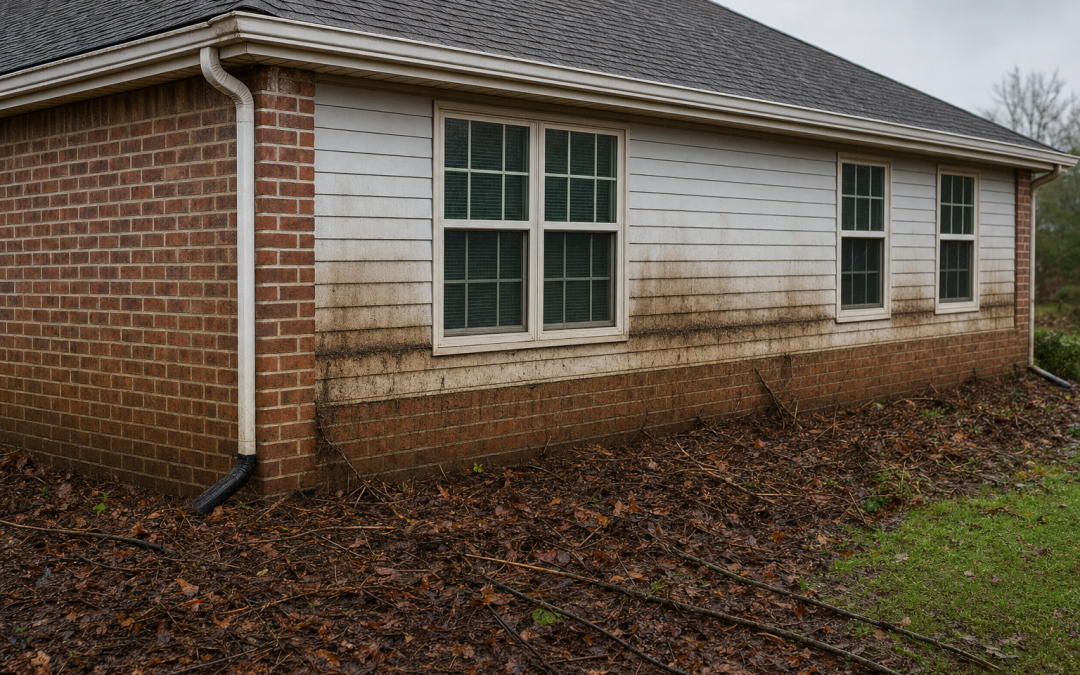
In North Carolina, fall flooding brings a documentation trap: as temperatures drop, wet materials feel cooler and drier to the touch, and moisture trapped in wall cavities, subfloors, and insulation becomes harder to detect. Use a moisture meter — or hire a professional with thermal imaging — to record readings now, while the evidence is measurable. Homeowners pursuing a flood damage insurance claim in Durham often discover that saturated framing behind intact drywall only shows up months later as mold or warping, long after the paperwork window has tightened.
Organize It Like the Reviewer Will
Group everything by category — structure, contents, emergency expenses — and cross-reference each estimate line and inventory item to a photo. Keep digital copies backed up in the cloud in case originals are lost. If assembling this package feels overwhelming, professional flood damage insurance claim help in Cary and surrounding areas can take over the documentation and valuation work so nothing is left off your sworn statement.
Can I File a Supplemental Proof of Loss If I Find Hidden Damage Later?
Yes. If you discover additional flood damage after your initial payment, you can submit a supplemental NFIP proof of loss requesting more money. It must be sworn, signed, and supported by documentation, and it must be filed within the same 60-day window — or within any extended deadline FEMA has issued for your disaster.
Flood damage rarely reveals itself all at once. Water wicks up drywall, sits inside wall cavities, and soaks insulation long after the standing water is gone. Weeks after your first payment, you may find mold blooming behind baseboards, subfloors buckling under vinyl or hardwood, or HVAC ductwork in the crawlspace that has failed and needs full replacement. None of that means your claim is closed — but it does mean you need to act deliberately.
How the Supplemental Process Works
- Document the new damage immediately. Photograph it before any demolition or repair, and keep samples of removed materials where practical.
- Get an itemized estimate. A contractor or independent estimate for the newly discovered damage supports the additional amount you are claiming.
- Submit a new sworn proof of loss. The supplemental form must state the additional amount claimed, be signed under penalty of perjury, and include your supporting documentation.
- Send it to the correct recipient. Deliver it to your Write-Your-Own carrier or NFIP Direct, and keep proof of the date it was sent and received.
Homeowners juggling hidden damage on top of an already-paid claim often benefit from professional help — the kind of flood damage insurance claim help in Cary that focuses on documenting supplemental losses the first adjuster never opened a wall to see.
FEMA Deadline Extensions After Major NC Disasters
After large flooding events, FEMA has sometimes issued bulletins extending the standard 60-day proof of loss deadline for affected policyholders. These extensions are disaster-specific and announced in writing — never assume one applies to your claim. Verify the current deadline for your event in writing with your carrier or FEMA before relying on it.
How Courts Treat Proof of Loss Disputes
State-court insurance cases show that policyholders can and do win coverage fights. In Howell v. State Farm Fire & Casualty Co., a homeowner defeated the insurer’s attempt to deny coverage for damage to his home, and the court sided with the policyholder. But be cautious: NFIP claims are governed by federal law, and courts apply strict compliance to the sworn proof of loss requirement. A late or unsigned supplemental form can forfeit the additional payment entirely, no matter how legitimate the damage. Working with an experienced public adjuster near Garner can help ensure every supplemental filing is complete, sworn, and delivered on time.

What Should NC Flood Victims Do Right Now to Protect Their NFIP Proof of Loss?
If you are inside the 60-day window, act immediately: confirm your deadline date, photograph and inventory all flood damage, gather receipts and repair estimates, and submit a signed, sworn NFIP proof of loss before the deadline — even if your documentation is not perfect. A timely filing preserves your rights; missing it can forfeit them.
Your 60-Day Action Checklist
- Calculate your deadline. Count 60 days from the date of loss (not the date the adjuster visited) and mark it on your calendar with a reminder a week ahead.
- Document everything now. Take dated photos and video of every damaged room, system, and belonging before any tear-out or disposal.
- Build your inventory. List damaged items with age, description, and replacement cost, and save receipts, invoices, and contractor estimates.
- Review the adjuster’s estimate line by line. Note anything missing or undervalued so your proof of loss reflects the full scope of damage.
- Submit in writing and keep proof of delivery. Send your sworn proof of loss so you can prove it arrived on time, and keep a complete copy.
Check Whether FEMA Has Extended the Deadline
In major flood events, FEMA sometimes extends the proof of loss deadline for policyholders in federally declared disaster areas. Never assume an extension applies to you — verify it in writing. Check FEMA’s flood insurance page and the official FloodSmart.gov site, or ask your insurer to confirm the current deadline for your specific loss in writing. If no extension exists, you can request one, but do not stop preparing your filing while you wait for an answer.
Consider Professional Help Before You Sign
A licensed and bonded public adjuster works for you — not the insurance company — and can inspect the property, prepare a complete damage estimate, assemble the required documentation, and submit the sworn NFIP proof of loss on your behalf. That matters because the burden of proving your loss falls entirely on you, and flood claims are frequently underpaid simply because damage was never properly documented. Homeowners seeking flood damage claim help in Mebane and surrounding areas often find that professional preparation catches damage the field adjuster’s estimate missed.
The same is true across the Triangle — if you need flood insurance claim help in Apex, getting a professional involved early in the 60-day window gives you the most room to document, dispute, and file correctly the first time.
An Honest Word About Outcomes
No adjuster, attorney, or advocate can guarantee a specific result on any flood claim — and you should be skeptical of anyone who promises one. What proper, timely documentation does guarantee is that your rights stay intact. A complete, sworn proof of loss filed before the deadline keeps every door open: negotiation, supplemental filings, and appeal. Miss the deadline with nothing on file, and those doors can close for good. Act today.
NFIP Proof of Loss vs. Adjuster’s Estimate: Key Differences
| Feature | Sworn Proof of Loss | Adjuster’s Estimate |
|---|---|---|
| Who signs it | You, the policyholder, under oath | The independent adjuster |
| Legal effect | Formal claim demand required by the policy | Advisory recommendation only — not binding |
| Deadline | 60 days from date of loss (unless FEMA extends) | No policyholder deadline attached |
| What it covers | The full amount YOU claim, including items the adjuster missed | Only damage the adjuster observed and scoped |
| Consequence if skipped | Claim can be denied entirely | None — but relying on it alone can underpay you |
Illustrative Example: A Supplemental Claim Done Right
Illustrative example
Consider a hypothetical composite: a homeowner in eastern North Carolina files a timely proof of loss after river flooding, based on the visible damage in the adjuster’s scope. Two months later, a contractor opening walls discovers saturated insulation and mold behind the drywall that the initial inspection missed. Because the homeowner photographs the hidden damage, obtains an itemized repair estimate, and promptly submits a supplemental sworn proof of loss with the new documentation, the additional damage is evaluated rather than dismissed. Had they simply emailed the adjuster or relied on the original estimate, the supplemental request could have stalled or been denied on procedural grounds.
Frequently asked questions
What happens if I miss the 60-day NFIP proof of loss deadline?
Missing the deadline can be fatal to your claim. Federal courts have consistently held that a signed, sworn proof of loss submitted within the deadline is a strict condition of payment under the Standard Flood Insurance Policy, and neither FEMA nor the insurer is required to waive it. If you’re close to the deadline, submit a proof of loss for the amount you can document now — you can supplement it later if FEMA allows.
Can the NFIP proof of loss deadline be extended?
Sometimes. After major flood disasters, FEMA occasionally issues a written bulletin extending the 60-day deadline for affected policyholders, but you should never assume an extension applies to your loss. Check with your flood insurance carrier or FEMA in writing, and get any extension confirmation in writing. Absent an official extension, treat the 60 days from the date of loss as a hard deadline.
Does an NFIP proof of loss have to be notarized?
The proof of loss must be signed and sworn to by the policyholder, which generally means it needs to be notarized or otherwise executed under oath. An unsigned or unsworn form may be rejected as invalid, which is the same as never submitting one. Sign it yourself as the named insured — a public adjuster or contractor signing on your behalf typically does not satisfy the policy requirement.
How long does it take to get paid after submitting a proof of loss?
There’s no single guaranteed timeline. Once the insurer receives a complete, signed proof of loss with supporting documentation, it reviews the claim and either pays, requests more information, or issues a written denial. Simple, well-documented claims tend to move faster; disputes over scope or pricing slow things down. Incomplete paperwork is the most common cause of delay, so attach your documentation the first time.
What if I don’t know the full amount of my flood damage before the deadline?
Submit a proof of loss anyway for the damage you can document by the deadline — don’t wait for a perfect number. Signing for a known amount generally does not prevent you from later requesting a supplemental payment when hidden damage, like moisture behind walls or subfloor rot, surfaces. Filing nothing because the total is uncertain is the worse mistake, since it can bar the entire claim.
Does accepting a partial payment from my flood insurer waive my right to more money?
Generally no. Accepting an initial payment based on the adjuster’s estimate does not, by itself, waive your right to seek additional amounts, but you typically must support the difference with a supplemental proof of loss and documentation. Read any release language carefully before signing, and keep pursuing the supplement in writing. What can bar additional recovery is failing to submit the required sworn paperwork on time.
Do I need a lawyer or public adjuster to file an NFIP proof of loss?
No — you can complete and submit it yourself, and the form itself is free. Many policyholders hire a licensed public adjuster or attorney for large or disputed claims because pricing the loss correctly matters, but professionals charge fees, often a percentage of recovery. Whoever helps you, remember the proof of loss must still be signed and sworn by you, the insured, and submitted on time.
What are the most common mistakes people make with NFIP proof of loss forms?
The big ones: assuming the adjuster’s estimate or the claim file counts as a proof of loss, missing the 60-day deadline while waiting for repair bids, submitting an unsigned or unsworn form, claiming an amount with no supporting documentation attached, and never filing a supplemental proof of loss when hidden damage appears. Any one of these can reduce or completely bar an otherwise valid flood claim.
Can I still sue if my NFIP flood claim is denied?
Yes, but the window is short. Under the Standard Flood Insurance Policy, you generally must file suit in federal court within one year of the insurer’s first written denial of your claim, and that deadline is strictly enforced. Filing a FEMA appeal is another option after a written denial, but pursuing an appeal does not automatically pause the one-year lawsuit deadline, so track both dates carefully.
Is a contractor’s repair estimate enough to support my proof of loss?
It helps, but it’s rarely enough on its own. A detailed, line-item contractor estimate is strong support, but FEMA expects it paired with the sworn proof of loss form itself plus evidence of the damage — photos, an inventory of damaged contents, receipts, and proof of ownership where possible. A one-page lump-sum bid without itemization is frequently rejected or heavily discounted, so ask your contractor for room-by-room detail.
NFIP Flood Claims help near you
Related local pages
Facing a flood claim deadline? Our licensed and bonded NC public adjusters can help you prepare and document your sworn proof of loss the right way. Call today for a free claim review. Get in touch.
Last updated: September 22, 2026