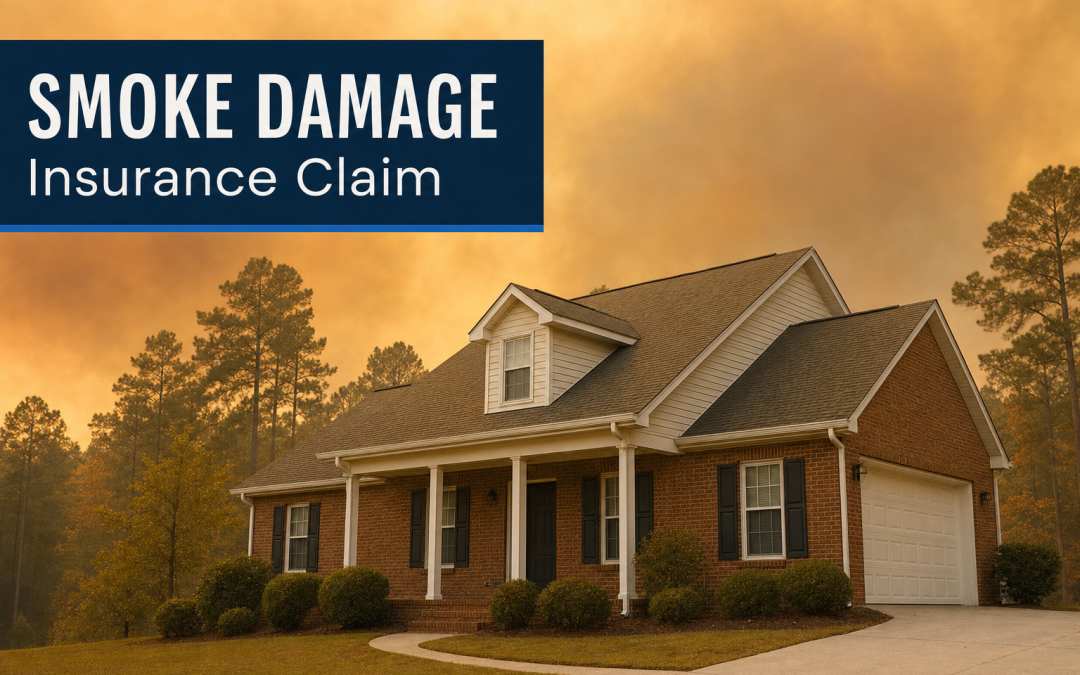
Can Smoke Alone Support a Smoke Damage Insurance Claim?
Yes — a smoke damage insurance claim can succeed even if flames never touched your property. Courts have held that smoke, soot, and lingering odor infiltrating a building can qualify as “direct physical loss” under a standard property policy, which means insurers cannot automatically deny a claim just because there was no visible fire damage.
Key takeaways
- A federal court in Oregon Shakespeare Festival v. Great American Insurance ruled that wildfire smoke infiltrating a building qualified as ‘direct physical loss’ even though flames never touched the property.
- Smoke residue, soot, and persistent odor can constitute real, compensable physical damage under standard property insurance language — a denial isn’t the final word.
- Insurers often deny smoke-only claims by arguing there’s no visible structural damage, but courts have repeatedly rejected that narrow reading of ‘physical loss.’
- NC homeowners whose smoke damage insurance claim was denied should get independent testing for soot and particulate contamination before accepting the carrier’s decision.
- Policy language varies, so the exact wording of your ‘direct physical loss or damage’ clause — and any smoke exclusions — determines how strong your claim is.
That answer surprises a lot of homeowners, because it directly contradicts what many insurance adjusters say when they deny or lowball these claims. The typical denial letter argues that smoke residue is merely “cosmetic,” that odor is “temporary,” or that nothing was physically altered. Courts that have looked closely at this question have often disagreed. When smoke particles settle into drywall, HVAC ductwork, insulation, carpet, and upholstered furniture, the property has been physically changed — it now contains a contaminant it didn’t have before, and that contaminant can affect health, habitability, and value.
What “Direct Physical Loss” Means in Plain Language
Most homeowners policies cover “direct physical loss or damage” to your property. The fight in smoke cases is over whether invisible or hard-to-see contamination counts. Courts siding with policyholders have reasoned along these lines:
- Physical presence matters: Soot and smoke particles are physical substances. When they coat surfaces or penetrate porous materials, the property is physically affected.
- Loss of use counts: If odor or residue makes a home unsafe or unfit to live in until it’s professionally remediated, many courts treat that as a real, compensable loss.
- Invisible doesn’t mean harmless: Damage doesn’t have to be visible to the naked eye to be “physical.” Contamination that requires cleaning, sealing, or replacement of materials is still damage.
Why This Matters for North Carolina Homeowners
Wildfire smoke, a neighbor’s house fire, a brush fire down the road — any of these can push smoke into your home without a single flame reaching your property. If your carrier denied your claim on the theory that “smoke isn’t damage,” that position is far from settled law, and a working public adjuster in Raleigh NC sees these disputes regularly across the Triangle.
The practical takeaway: a denial letter is the insurance company’s opinion, not the final word. Smoke claims are heavily fact-driven — professional testing, contamination sampling, and detailed documentation of residue and odor often make the difference between a denial and a fair payout. Homeowners in smaller communities are not exempt from these tactics either; a public adjuster serving Moncure NC handles the same smoke-infiltration disputes as those in larger cities.
In the sections that follow, we’ll look at what one influential court actually decided, why insurers keep pushing the “no real damage” argument anyway, and what steps to take if your own smoke damage insurance claim has been denied or underpaid.
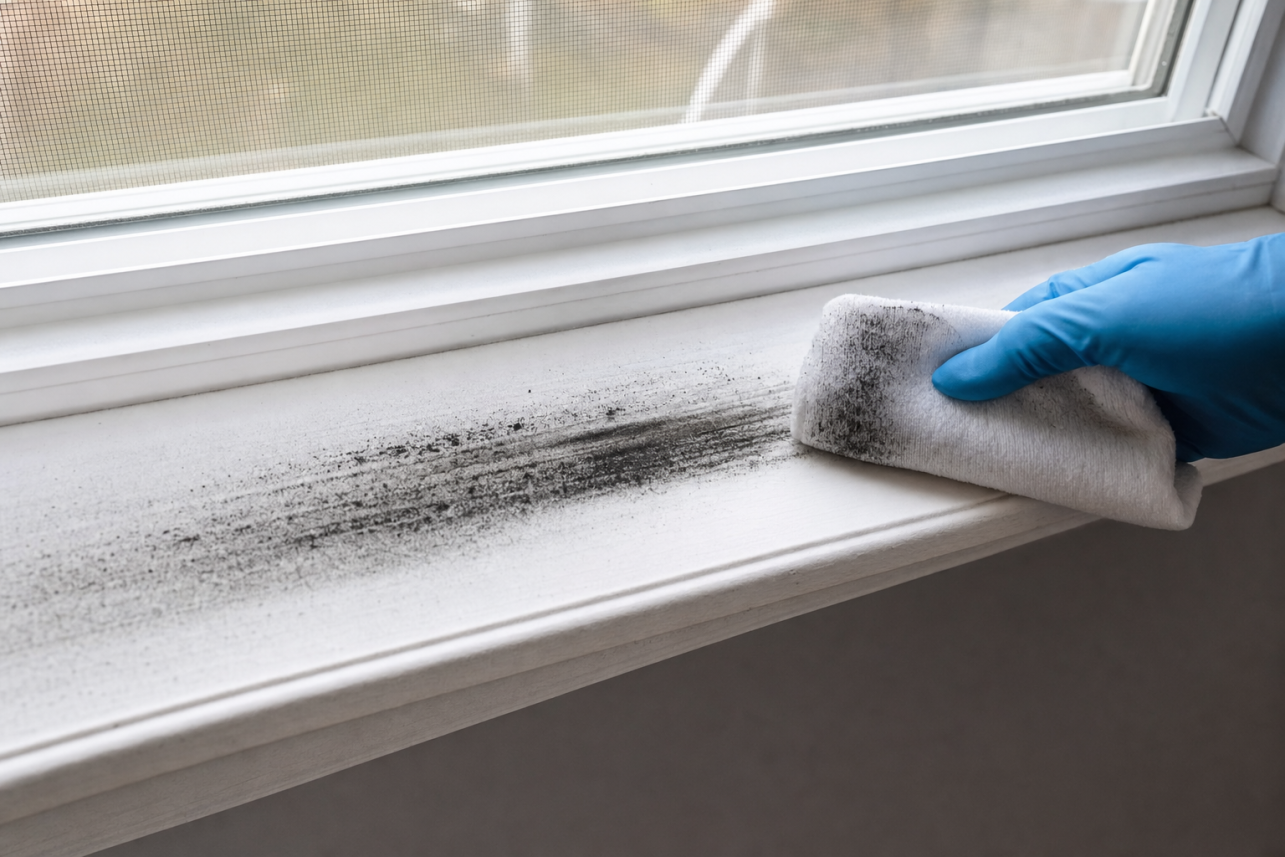
What Did the Oregon Shakespeare Festival Court Case Actually Decide?
In Oregon Shakespeare Festival v. Great American Insurance Co., a federal court in Oregon ruled that wildfire smoke — with no fire ever touching the property — caused “direct physical loss or damage.” The court found that smoke particles physically infiltrated and altered the theater, making it unusable, so the insurer had to pay the claim.
The backstory matters. In the summer of 2013, wildfires burning in the region sent heavy smoke drifting into Ashland, Oregon, where the Oregon Shakespeare Festival operates an open-air theater. The smoke made the air quality so poor that the festival had to cancel performances. No flames reached the property. Nothing burned. But smoke particles settled on seats, surfaces, and equipment and accumulated inside the venue.
When the festival filed a claim for its losses, Great American Insurance denied it, arguing there was no “direct physical loss of or damage to” the property — the standard trigger language in most commercial and homeowners policies. In the insurer’s view, smoke in the air and residue on surfaces didn’t count as physical damage.
Why the Court Sided With the Policyholder
The court disagreed with the insurer, and its reasoning is what makes this case so useful for anyone fighting a denied smoke damage insurance claim today:
- Smoke is physical. The court reasoned that wildfire smoke is made up of actual particles and chemicals — not something intangible. When those particles enter a building and settle on property, they physically alter it.
- Damage doesn’t require structural destruction. The property didn’t need to be charred or broken. The presence of smoke rendered the theater unfit for its intended use, and that was enough to constitute physical loss or damage.
- Cleanup itself proves the point. The fact that the smoke had to be physically removed supported the conclusion that a physical condition had changed on the property.
Why This Case Still Matters
The decision was later vacated as part of a settlement between the parties, so it’s not binding precedent — but its reasoning is still widely cited by policyholder attorneys and courts examining what counts as physical damage. It stands as a clear, well-reasoned example of a court rejecting the argument that smoke intrusion is somehow not “real” damage. Homeowners working with a public adjuster in Raleigh NC or elsewhere often lean on this same logic when an insurer claims soot and odor don’t trigger coverage.
The takeaway for property owners is simple: courts have looked at the science of smoke and concluded that particles, residue, and contamination physically change a building — even when the fire itself was miles away. If your carrier is denying that principle, you’re not out of options; claim professionals, such as a public adjuster serving Elon, use documentation and testing to establish exactly the kind of physical alteration this court recognized.
Why Do Insurance Companies Say Smoke Residue and Odor Aren’t ‘Real Damage’?
Insurers often deny or minimize smoke claims by arguing that residue and odor are merely cosmetic, that a surface cleaning solves the problem, or that no structural damage occurred. But standard homeowners policies cover “direct physical loss,” and many courts have held that smoke contamination physically alters property — meaning it can qualify as covered damage.
The Three Arguments Adjusters Lean On
When a carrier pushes back on a smoke damage insurance claim, the reasoning usually falls into one of a few familiar buckets:
- “It’s just cosmetic.” The adjuster treats soot film, staining, and discoloration as an appearance issue rather than damage to the property itself.
- “A cleaning will fix it.” The carrier offers a light wipe-down and deodorizing spray, ignoring that smoke particles penetrate drywall, insulation, HVAC ductwork, and soft materials where surface cleaning can’t reach.
- “There’s no structural damage.” Because the framing didn’t burn and nothing collapsed, the insurer claims there’s no “physical” loss to trigger coverage at all.
Each argument is designed to shrink the claim before it’s even measured. Homeowners who accept the first cleaning-only estimate often discover months later that odors return in humid weather or that soot has corroded electronics and metal fixtures.
What “Direct Physical Loss” Actually Means
Most homeowners policies promise to pay for “direct physical loss to property” without defining that phrase narrowly. Insurers read it to require visible destruction. Courts, however, have frequently disagreed, finding that a physical loss can occur when a substance — smoke, soot, ash, or persistent odor — infiltrates a property and makes it unsafe, unusable, or unfit for its intended purpose. Under that reasoning, a house saturated with smoke residue has been physically changed, even if every wall is still standing. The same logic applies whether the fire was accidental or intentional; property owners dealing with an arson insurance claim in Durham face many of the same “no real damage” arguments after a neighboring structure burns.
The practical takeaway: a denial letter reciting “no direct physical loss” is an interpretation of your policy, not a settled fact. Policy language that’s ambiguous is generally construed in favor of the policyholder, and smoke contamination is exactly the kind of gray area where that rule matters.
Why the “Cleaning Will Fix It” Offer Is Often the Real Problem
Even when carriers concede some coverage, they frequently lowball the scope — paying for cleaning walls but not sealing them, deodorizing rooms but not replacing contaminated insulation or ducts. If your fire-related claim has been rejected outright, resources like arson insurance claim denied help in Burlington show how disputed fire and smoke losses can be re-opened and properly documented. The gap between “wipe it down” and “restore it correctly” is often the largest number in the entire claim.

How Does This Apply to North Carolina Homes Right Now?
North Carolina homes face smoke exposure every summer from lightning-sparked fires during severe thunderstorms, fires at neighboring homes, and drifting wildfire smoke. The state’s intense heat and humidity make soot more acidic and corrosive, and drive smoke odor deeper into walls, insulation, HVAC systems, and belongings — which is exactly why insurers should not dismiss residue and odor as harmless.
The legal reasoning courts have used to reject the “smoke isn’t real damage” argument matters here because North Carolina properties are unusually vulnerable to the way smoke behaves. When a fire never touches your house but smoke fills it, the question of whether that counts as physical damage becomes the entire fight — and it comes up more often in this state than many homeowners realize.
Common Summer Smoke Scenarios in NC
- Lightning-sparked fires. Summer thunderstorms across the Piedmont and eastern counties regularly ignite attic fires, outbuildings, and trees near homes. Even a small, quickly extinguished fire can push smoke through soffits and attic spaces.
- Neighboring-structure fires. In denser neighborhoods and townhome communities, a fire next door can force smoke into your home through open windows, vents, and shared wall assemblies without a single flame reaching your property.
- Drifting wildfire smoke. Wildfires in the NC mountains and coastal plain — and even out-of-state fires — can blanket homes in smoke for days, coating contents and infiltrating ductwork.
Homeowners in the Triad have seen all three scenarios, and anyone working with a public adjuster in Greensboro after a summer fire knows how quickly a carrier will try to characterize widespread smoke contamination as a cleaning issue rather than covered damage.
Why NC Heat and Humidity Make Smoke Damage Worse
Smoke residue is not inert. Soot particles are acidic, and moisture activates that acidity. In North Carolina’s humid summers, this means:
- Corrosion accelerates. Humid air combined with acidic soot etches metals, tarnishes fixtures, and degrades electronics and appliance components over days and weeks — long after the fire is out.
- Odor bonds deeper. Heat opens the pores of wood framing, drywall, and finishes, letting odor-causing compounds penetrate. When temperatures drop, those materials trap the odor and re-release it every hot day.
- HVAC systems spread contamination. Air conditioners running constantly in summer pull smoke through returns and distribute soot into ducts, coils, and every conditioned room.
- Insulation absorbs and holds smoke. Attic and wall insulation acts like a sponge for odor and often cannot be effectively cleaned — replacement is frequently the only real remedy.
This is why a smoke damage insurance claim in North Carolina often involves far more scope than a carrier’s first estimate acknowledges. A homeowner in a rural area — say, someone consulting a public adjuster in Bahama NC after a nearby brush or outbuilding fire — may find that contamination inside wall cavities and ductwork dwarfs the visible surface soot. The damage is physical, it is progressive in our climate, and it deserves to be documented and claimed accordingly.
What Should I Do If My Smoke Damage Insurance Claim Is Denied or Lowballed?
If your smoke damage insurance claim is denied or underpaid, don’t accept the decision as final. Preserve the evidence before cleaning, get the denial in writing with the exact policy language cited, document the damage with photos and professional testing, and then challenge the decision through a supplement, appraisal, or a licensed public adjuster.
Don’t Clean Everything Before You Document It
The most common mistake homeowners make is scrubbing away the very evidence that proves their claim. Soot residue on walls, film on windows, and discoloration inside cabinets are physical proof of contamination. Once it’s wiped away, the insurer can argue there was never anything there. Take extensive photos and videos first, and only clean what’s necessary for safety.
Get the Denial in Writing — With the Policy Language
A verbal “we’re not covering that” isn’t good enough. Request a written denial letter that identifies the specific policy provisions the insurer is relying on. This matters for two reasons: it locks the company into its stated position, and it lets you (or a professional working for you) test whether that policy language actually says what the adjuster claims it says. Denials based on vague reasoning like “no physical damage” often fall apart when compared against the actual policy wording.
Build Independent Evidence
Insurers frequently deny smoke claims based on a quick visual walkthrough. You can counter that with objective proof:
- Photos and video of visible residue, staining, and odor-affected areas throughout the home
- Professional soot and char sampling by an industrial hygienist or environmental testing firm, which can detect combustion byproducts invisible to the naked eye
- HVAC inspection, since ductwork often traps and recirculates smoke particles long after the event
- Contractor or restoration estimates that itemize the actual cost of proper smoke remediation, not just surface cleaning
- A written log of odors, symptoms, and every conversation with the insurance company, including dates and names
Know Your Options for Pushing Back
A denial or lowball offer is a starting position, not a verdict. Depending on your situation, you can submit a supplemental claim with new evidence, invoke the appraisal clause in your policy to resolve a dispute over the amount of loss, file a complaint with the North Carolina Department of Insurance, or bring in professional representation. Many homeowners in smaller communities assume they have to handle this alone, but a public adjuster in Siler City NC or elsewhere in Chatham County can review the denial and the testing evidence before you respond to the carrier.
Timing matters, too. Policies contain deadlines for disputing decisions and filing suit, so don’t let a denial letter sit in a drawer. Whether you’re in a rural area or working with a public adjuster in Greensboro NC for an urban property, acting promptly keeps every option on the table.
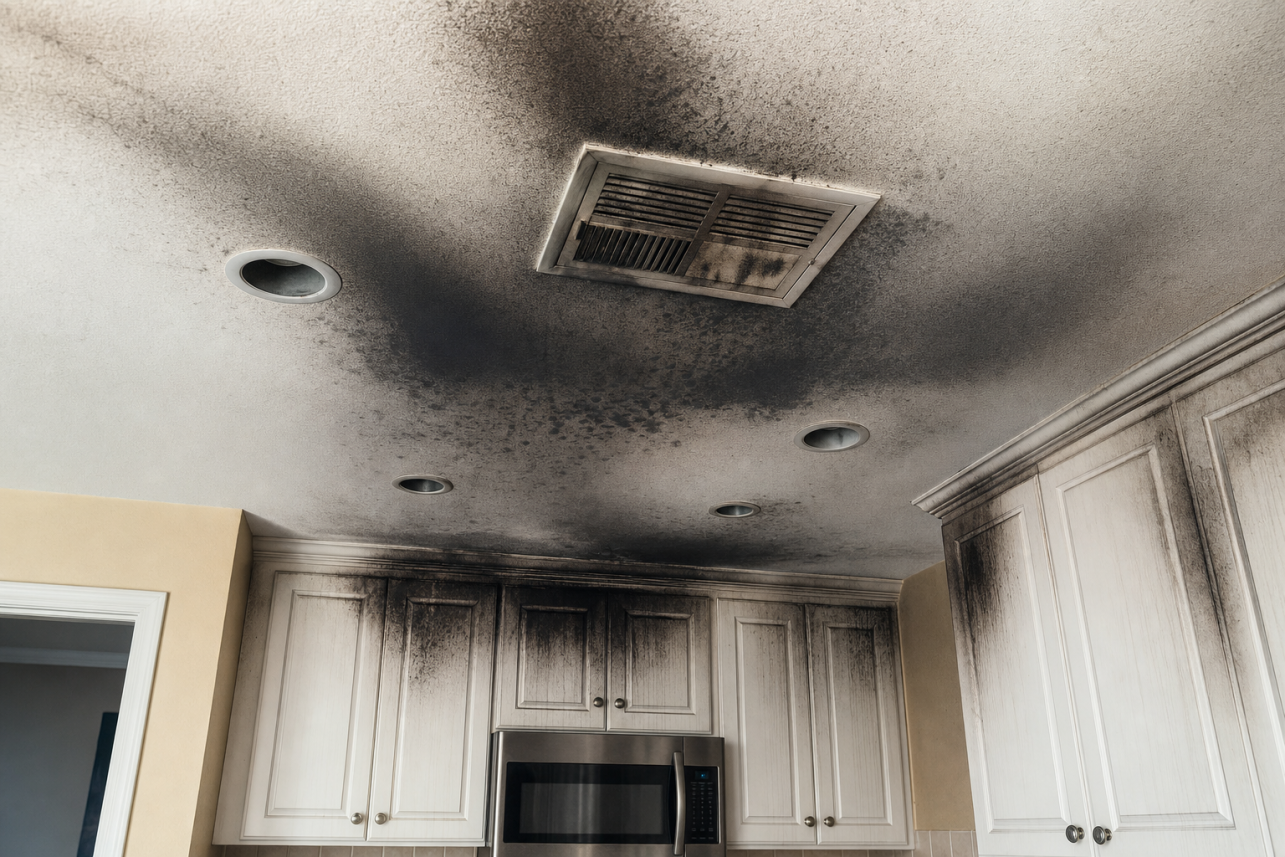
How Can a Public Adjuster Help With a Smoke Damage Insurance Claim in NC?
A licensed and bonded public adjuster works only for you, not the insurance company. They document hidden smoke residue and odor damage throughout your structure and contents, prepare a detailed independent estimate, cite favorable court precedent like the Oregon Shakespeare Festival ruling during negotiations, and advocate for a fair settlement — with no guarantees, but with your interests first.
Smoke claims are among the most technical property claims a homeowner can face. Unlike a burned-down kitchen, the damage is often invisible: soot inside wall cavities, acidic residue on wiring and HVAC components, and odor absorbed into insulation, drywall, and soft goods. An insurance company’s adjuster may spend an hour walking the property and conclude there is nothing to pay. A public adjuster’s job is to prove otherwise, room by room and item by item.
What a Public Adjuster Actually Does on a Smoke Claim
- Thorough documentation: Inspecting attics, ductwork, wall cavities, and contents where soot and residue hide, and recommending professional testing when appropriate.
- Detailed estimating: Building a line-item scope for cleaning, sealing, deodorization, HVAC remediation, and replacement of items that cannot be restored.
- Policy analysis: Reading your specific policy language on “direct physical loss” — the exact phrase courts have interpreted in the policyholder’s favor when smoke renders property unusable.
- Negotiation with precedent: Pushing back on “cosmetic only” denials by pointing to rulings like the Oregon Shakespeare Festival case, which recognized that smoke can constitute physical loss.
- Managing the process: Handling deadlines, proof-of-loss requirements, and communications so you don’t miss a step that could hurt your claim.
Public adjusters are regulated professionals. In North Carolina, they must be licensed through the North Carolina Department of Insurance, and reputable firms are also bonded — a layer of accountability the industry itself supports through standards published by the National Association of Insurance Commissioners.
Local Knowledge Matters in Chatham County
Smoke behaves differently in an older farmhouse than in new construction, and local experience helps. If a wildfire, brush fire, or nearby structure fire left soot and odor in your home, a public adjuster in Siler City NC can inspect the property before the insurer’s narrative hardens into a denial.
The same applies across the county’s smaller communities, where rural properties with wells, outbuildings, and detached structures are frequently underscoped. A public adjuster serving Bear Creek NC understands how to document those additional structures and contents so nothing is left off the estimate.
To be clear: no public adjuster can promise a specific outcome or dollar figure, and anyone who does should raise a red flag. What a good one can promise is diligence — a complete, defensible smoke damage insurance claim presented by someone whose only client is you.
Smoke Damage Insurance Claim: How Insurers Argue vs. How Courts Have Ruled
| Issue | Common Insurer Position | How Courts Like OSF v. Great American Ruled |
|---|---|---|
| Smoke without flames | No fire contact means no ‘direct physical loss’ | Smoke infiltration itself can be a physical loss to the property |
| Odor and residue | Odor is temporary and ‘cosmetic,’ not damage | Persistent contamination that impairs use of the property counts as damage |
| Loss of use | Building is still standing, so it’s usable | Property rendered unfit for its intended purpose supports coverage |
| Proof required | Visible structural harm or char marks | Testing showing soot, particulates, or contamination can establish loss |
Hypothetical Example: Smoke Contamination After a Nearby Brush Fire
Illustrative example
Consider a hypothetical North Carolina homeowner whose house sat downwind of a large brush fire that never reached their neighborhood. Weeks later, soot residue kept reappearing on surfaces, HVAC filters were blackened, and a persistent smoke odor made two bedrooms unusable — yet the carrier denied the claim, saying there was no ‘physical damage’ since the structure was intact. After the homeowner obtained independent air quality and surface testing documenting soot contamination throughout the ductwork and insulation, counsel challenged the denial citing case law like Oregon Shakespeare Festival v. Great American. This composite scenario illustrates why documentation and legal precedent can turn a denied smoke claim into a covered one — it does not describe any actual client or specific settlement.
Frequently asked questions
What should I do first if my smoke damage insurance claim gets denied?
Request the denial in writing with the specific policy language the insurer relied on. Then gather your own evidence: photos, video, an independent inspection, and air quality or surface testing if possible. Compare the cited exclusions against your actual policy. Many denials rest on the insurer’s interpretation of ‘direct physical loss,’ which courts have repeatedly rejected. A written appeal or a letter from an attorney often prompts insurers to reopen a claim they hoped you’d abandon.
Does homeowners insurance cover smoke damage if there was no actual fire on my property?
Usually yes. Most standard homeowners policies list smoke as a covered peril, and courts, including the federal court in the Oregon Shakespeare Festival case, have held that smoke infiltration alone can qualify as direct physical loss. The fire does not need to touch your property. If wildfire or neighboring-structure smoke left residue, soot, or persistent odor inside your home, that is generally compensable damage, even when the flames stayed miles away.
How do I prove smoke damage to my insurance company when they say it’s just odor?
Hire an independent industrial hygienist or restoration professional to test surfaces and air for soot, char, and combustion particulates. Lab results showing physical residue undercut the ‘it’s only a smell’ argument. Document discoloration on walls, HVAC filters, fabrics, and attic spaces with dated photos. Keep receipts for any cleaning attempts. Persistent odor itself often indicates embedded particles, which is physical alteration of the property, not a mere inconvenience.
How long does a smoke damage claim take to settle?
Straightforward claims with cooperative insurers can resolve in a few weeks to a couple of months. Disputed claims, especially those denied over the ‘physical loss’ question, can take many months or longer if litigation or appraisal becomes necessary. North Carolina requires insurers to acknowledge and investigate claims promptly, so document every communication date. Delays often shorten once you present professional testing results or involve an attorney.
Is smoke damage remediation expensive enough to be worth filing a claim?
Often, yes. Proper remediation can involve cleaning or replacing HVAC systems and ductwork, sealing and repainting surfaces, treating soft goods, and specialized deodorization, which frequently runs into the thousands or tens of thousands of dollars depending on severity and home size. Before filing, get a written estimate from a certified restoration company. If the estimate comfortably exceeds your deductible, filing usually makes financial sense.
What are the biggest mistakes people make after smoke gets into their house?
The most common: cleaning surfaces themselves before documenting damage, which destroys evidence; accepting the insurer’s first low offer or verbal denial without demanding it in writing; waiting too long to file; using ordinary household cleaners that smear soot deeper into materials; and skipping HVAC inspection, letting contamination recirculate. Also, many people never get independent testing, leaving them with no proof when the adjuster claims the damage is cosmetic.
Can I dispute my insurer’s finding that smoke residue isn’t ‘real damage’?
Yes, and you have solid ground. Courts have increasingly held that smoke residue and odor physically altering a structure constitute direct physical loss, the Oregon Shakespeare Festival ruling being a leading example. Dispute options include a written appeal with expert evidence, invoking the appraisal clause in your policy for valuation disputes, filing a complaint with the North Carolina Department of Insurance, or hiring a policyholder attorney to pursue bad faith remedies.
Should I hire a public adjuster or a lawyer for a denied smoke damage claim?
It depends on the dispute. A public adjuster helps when the insurer accepts coverage but lowballs the payout; they document and negotiate the damage value for a percentage of the recovery. A lawyer is the better choice when coverage itself is denied, especially on legal grounds like the ‘direct physical loss’ argument, since that is a legal interpretation fight. For outright denials, most attorneys offer free consultations, so start there.
Does the Oregon Shakespeare Festival ruling apply to homeowners in North Carolina?
Not as binding precedent, since it came from a federal court in Oregon, but it carries persuasive weight. North Carolina courts interpreting similar ‘direct physical loss’ language can consider its reasoning, and policyholder attorneys regularly cite it. Its real value is showing insurers that the ‘no flames, no damage’ position has lost in court, which strengthens your negotiating leverage during an appeal or settlement discussion.
Will filing a smoke damage claim raise my homeowners insurance rates?
It can. Smoke and fire-related claims typically stay on your claims history for several years and may affect renewal pricing, and multiple claims in a short period matter more than a single one. Weigh the remediation cost against your deductible and potential premium impact. For significant damage, filing is almost always worthwhile; for minor surface soot below or near your deductible, paying out of pocket may be the smarter long-term move.
Arson Homeowners Claim help near you
Related local pages
If your carrier is downplaying smoke residue or odor in your home, you don’t have to accept their first answer. Our licensed and bonded public adjusters review NC property claims, document the damage properly, and advocate for a fair settlement under your policy. Contact us for a free claim review today. Get in touch.
Last updated: August 20, 2026