Public Adjuster vs Attorney: What’s the Quick Answer?
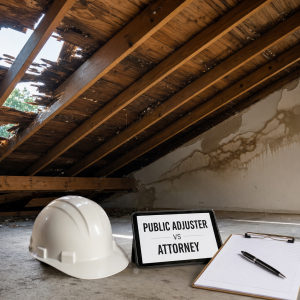
In the public adjuster vs attorney decision, the quick answer is this: a public adjuster documents, values, and negotiates your property insurance claim, while an insurance attorney litigates legal disputes. Most homeowners with storm, water, or fire damage start with a public adjuster and only escalate to an attorney if the insurer denies the claim or acts in bad faith.
Key takeaways
- Public adjusters handle claim documentation and negotiation for a percentage of your payout, while attorneys are needed when your insurer denies, delays, or acts in bad faith.
- A public adjuster cannot file a lawsuit or handle legal disputes — if litigation is on the table, only an attorney can represent you in court.
- Public adjuster fees are typically capped by state law (often around 10-20% of the settlement), while insurance attorneys usually work on contingency at roughly 30-40%.
- Start with a public adjuster for underpaid or complex property claims; escalate to an attorney if the insurer denies coverage or negotiations stall.
- Hiring the wrong professional first can cost you money — many attorneys and adjusters offer free consultations, so compare both before signing anything.
Both professionals work on your side against the insurance company — that’s what they have in common. The difference is the tool each one brings to the fight. A public adjuster’s job is built around the claim itself: inspecting the damage, reading your policy, preparing a detailed estimate, and negotiating with the insurance company’s adjuster. An attorney’s job begins when negotiation breaks down and the dispute becomes a legal matter rather than a valuation matter.
What Each One Handles
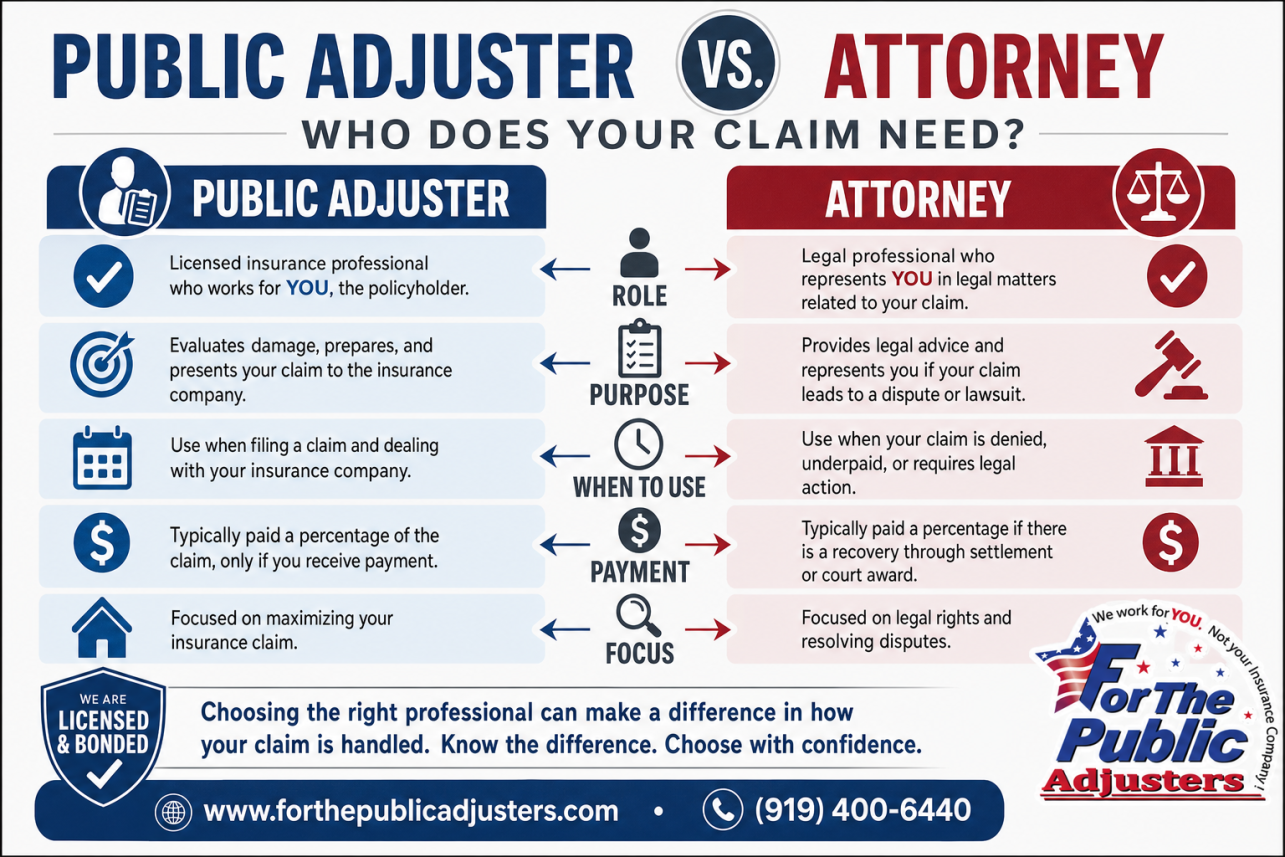
- Public adjuster: Inspects and documents damage, interprets your policy coverage, builds a line-item estimate, submits and manages the claim, and negotiates the settlement directly with your insurer. A licensed public adjuster in Burlington NC handles fire, water, and storm claims entirely on the policyholder’s side.
- Insurance attorney: Files lawsuits, handles bad-faith claims, responds to formal claim denials, manages litigation deadlines, and represents you in court or in formal legal proceedings against the insurer.
Why Most Homeowners Start With a Public Adjuster
The majority of property claims aren’t legal disputes — they’re valuation disputes. The insurance company isn’t refusing to pay; it’s offering less than the damage is actually worth, missing hidden damage, or applying the policy narrowly. Those are problems a public adjuster is specifically trained and licensed to solve, usually faster and at lower cost than litigation.
Think of it as a natural escalation path:
- Step 1 — Underpaid or complicated claim: Hire a public adjuster to document the full scope of damage and negotiate a fair settlement.
- Step 2 — Outright denial or bad faith: If the insurer refuses to pay a valid claim, ignores evidence, or handles the claim unfairly, that’s when an attorney enters the picture.
The One-Sentence Rule of Thumb
If your dispute is about how much the damage is worth, you likely need a public adjuster. If your dispute is about whether the insurer will pay at all — or whether it broke the law in handling your claim — you likely need an attorney. Many homeowners end up needing only the first, and a well-documented claim from a public adjuster often prevents the situation from ever reaching the second. The rest of this article breaks down exactly what each professional does, what they cost, and how to decide who to call first after storm damage in North Carolina or Virginia.

What Does a Public Adjuster Actually Do for Your Property Claim?
A public adjuster is a licensed claims professional who works exclusively for you, the policyholder — not the insurance company. They inspect and document your property damage, interpret your policy’s coverage, prepare a detailed repair and contents estimate, and negotiate directly with the insurance carrier’s adjuster to pursue a fair settlement.
That short description covers the job title, but the real value shows up in the details of how a claim gets built. Insurance companies send their own adjusters to evaluate your loss, and those adjusters answer to the carrier. A public adjuster levels the field by handling the same work from your side of the table.
The Core Tasks a Public Adjuster Handles
- Thorough damage inspection. They examine the structure, roof, interior finishes, and personal contents — including damage that’s easy to miss on a quick walkthrough.
- Policy review. They read your full policy, including endorsements and exclusions, so claimed damage is tied to actual coverage language rather than guesswork.
- Detailed estimating. They build line-item repair estimates using industry-standard pricing tools, along with contents inventories and, where applicable, additional living expense documentation.
- Negotiation with the carrier. They meet the insurance company’s adjuster on site, respond to lowball scope sheets, and push back with documentation when items are missed or underpriced.
- Claim management. They handle correspondence, deadlines, and proof-of-loss paperwork so nothing slips through the cracks.
A Summer Storm Example: The Damage You Can’t See
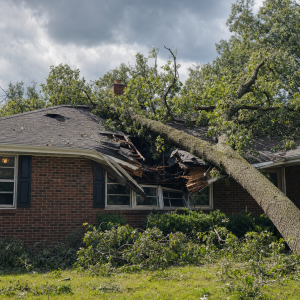
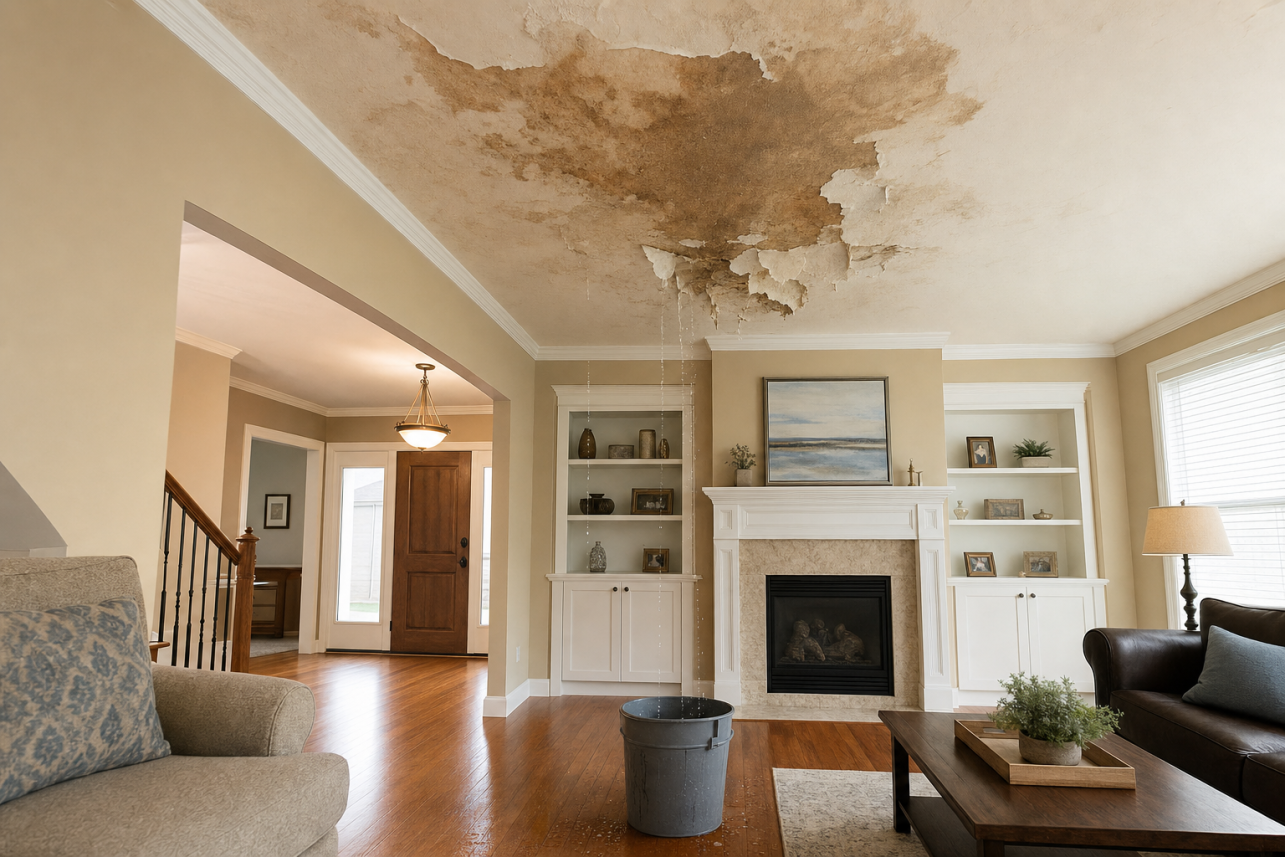
Picture a July thunderstorm that drives wind and rain across your roof. A shingle lifts, water sneaks in, and by the time you notice a faint ceiling stain, moisture has already traveled into insulation, wall cavities, and subflooring. The carrier’s adjuster may scope only the visible stain — a coat of paint and a patch. A public adjuster brings moisture meters and a trained eye to trace where the water actually went, then documents the full extent of the loss so hidden saturation doesn’t turn into mold and rot on your dime. If you’re dealing with this kind of storm-season water intrusion, this overview of water damage claim help in Burlington NC walks through how these claims typically get underpaid and how a policyholder-side adjuster responds.
Licensed and Bonded Professionals in NC and VA
Public adjusters aren’t unregulated consultants. In both North Carolina and Virginia, they must be licensed by the state’s Department of Insurance and bonded, which means they’re held to legal and ethical standards when representing policyholders. Before hiring anyone, it’s reasonable — and smart — to ask for their license number and verify it with the state. A legitimate public adjuster will expect that question and welcome it.
When Do You Actually Need an Insurance Attorney Instead?
You need an insurance attorney when your claim has become a legal dispute rather than a valuation dispute. That means a formal claim denial, a disagreement over what your policy language actually covers, suspected bad faith by the insurer, an approaching legal deadline, or any situation where a lawsuit is likely or already filed.
In the public adjuster vs attorney decision, the dividing line is simple: adjusters handle questions of how much a covered loss is worth, while attorneys handle questions of whether the insurer is legally obligated to pay at all — and what happens when they refuse. Here are the scenarios where an attorney is clearly the right call.
Your Claim Was Formally Denied
A written denial letter changes the nature of your claim. At that point, the insurer has taken a legal position, and reversing it usually requires legal arguments — not just better damage documentation. An attorney can evaluate whether the denial holds up against your policy terms and state law, and pressure the insurer to reconsider or face litigation.
The Dispute Is About Policy Language, Not Damage Amounts
Some fights aren’t about repair costs — they’re about interpretation. Common examples include:
- Whether an exclusion (like flood, earth movement, or wear and tear) actually applies to your loss
- Disputes over anti-concurrent causation clauses, where covered and excluded causes overlap
- Disagreements about whether damage counts as one occurrence or multiple
- Arguments over ordinance-and-law coverage or matching requirements
Interpreting ambiguous policy language is legal work, and courts often resolve ambiguity in the policyholder’s favor — something an attorney knows how to leverage.
You Suspect Bad Faith
Insurers owe policyholders a duty of good faith and fair dealing. Warning signs of bad faith include unreasonable delays, lowball offers with no supporting explanation, ignored communications, misrepresenting policy terms, or failing to properly investigate. If an insurer acted in bad faith, an attorney may be able to pursue remedies beyond the policy limits — something a public adjuster cannot do.
Deadlines Are Looming or a Lawsuit Is Involved
Every state imposes time limits on filing suit over a claim, and many policies contain their own contractual suit-limitation clauses that can be even shorter. If a deadline is approaching — or if the insurer has already involved its own lawyers — you need counsel immediately. Only a licensed attorney can file suit, take depositions, and represent you in court.
Adjusters and Attorneys Often Work as a Team
This isn’t always an either/or choice. Many attorneys bring in public adjusters to document damage and build the valuation side of a case, while adjusters refer claims to attorneys the moment a legal issue surfaces. A well-handled claim often benefits from both: the adjuster proves what the loss is worth, and the attorney forces the insurer to honor its obligations.
How Much Does a Public Adjuster Cost Compared to an Attorney?
Public adjusters typically charge a contingency fee — a percentage of your insurance settlement, often somewhere in the range of 5% to 20% depending on the claim and your state. Attorneys either bill hourly or work on contingency, commonly around one-third of any recovery. Neither should require large upfront payments for a standard property claim.
Understanding how each professional gets paid matters just as much as what they do, because the fee model shapes their incentives — and how much of your settlement you actually keep.
How Public Adjuster Fees Work
Public adjusters almost always work on contingency. If they don’t recover money for you, you generally owe nothing. A few things to know before signing:
- The percentage is negotiable. Larger or more complex claims often come with lower percentages, while smaller claims may sit at the higher end of the range.
- The fee usually applies to the total settlement — including payments the insurer already offered — so read the contract carefully and ask exactly what the percentage is calculated on.
- Some states regulate or cap public adjuster fees, particularly after declared disasters. Both North Carolina and Virginia license public adjusters, so verify the license and ask whether any fee limits apply to your situation before you sign.
How Insurance Attorney Fees Work
Attorneys give you two common paths:
- Contingency: The attorney takes a percentage of what they recover, frequently around one-third, sometimes more if the case goes to litigation. Like a public adjuster, no recovery generally means no fee — though you may still owe case costs such as filing fees or expert reports.
- Hourly billing: You pay for time regardless of outcome. This can make sense for a limited task, like reviewing a denial letter or sending a demand, but costs can climb quickly in a full lawsuit.
What the Fee Difference Means for Your Decision
In the public adjuster vs attorney comparison, the math often favors the adjuster for claims that are underpaid rather than wrongfully denied — a lower percentage on a properly documented settlement can leave more in your pocket. But percentage alone shouldn’t drive the choice. If your claim involves a denial, bad faith conduct, or a legal dispute over policy language, a public adjuster can’t litigate for you, and paying an attorney’s higher contingency may be the only realistic route to recovery at all.
Before hiring either, get the fee agreement in writing, ask what expenses are charged separately, and confirm exactly when the fee is triggered. A reputable professional in either field will walk you through this without pressure — hesitation to explain their fee is itself a warning sign.
Can a Homeowner Really Win Against an Insurance Company?
Yes. Homeowners can and do prevail against insurers, both at the negotiating table and in court. North Carolina’s own Supreme Court confirmed this in Gray v. North Carolina Insurance Underwriting Association (352 N.C. 61, 2000), where coastal homeowners successfully challenged the undervaluation of their Hurricane Fran storm damage claim.
It’s easy to feel outmatched when a billion-dollar insurance company tells you your roof damage is worth a fraction of what your contractor quoted. But the legal system — and the claims process itself — is not stacked entirely in the insurer’s favor. The Gray case is a powerful example of that for North Carolina property owners in particular.
What Gray v. NCIUA Showed Homeowners
After Hurricane Fran struck the North Carolina coast in 1996, the Grays’ home suffered roof and structural damage. When they believed their claim had been significantly undervalued, they didn’t simply accept the insurer’s number — they pushed back, and the dispute ultimately reached the North Carolina Supreme Court in 2000. The homeowners prevailed, and the case established something important: insurers who engage in unfair claim settlement practices can be held accountable under North Carolina law, with real consequences beyond just paying the original claim.
In other words, an insurer’s first offer is not the final word, and lowballing a legitimate claim is not a risk-free strategy for the company.
Why Documentation From Day One Decides These Fights
Cases like Gray aren’t won on outrage — they’re won on evidence. Whether your dispute is resolved by a supplemental payment, an appraisal, or a courtroom, the homeowners who succeed are the ones who can prove what the damage was and what the insurer knew. Starting on day one:
- Photograph and video everything before any cleanup or temporary repairs, including wide shots and close-ups of roof, siding, and interior damage.
- Keep every document — the policy, estimates, contractor invoices, receipts for tarps and emergency repairs, and hotel bills if you’re displaced.
- Get communications in writing. Follow up phone calls with a short email summarizing what was said, and save every letter and adjuster report.
- Note dates and names for every inspection, call, and deadline. Delay tactics are much easier to prove with a timeline.
Winning Doesn’t Always Mean a Lawsuit
Here’s the encouraging part: most homeowners who “win” never see a courtroom. Strong documentation plus the right professional advocate often produces a fair settlement long before litigation becomes necessary. That’s exactly why the public adjuster vs attorney question matters — the same evidence that wins a court case also wins a negotiation, and the professional you choose determines how that evidence gets put to work. The Gray decision simply guarantees that if an insurer refuses to deal fairly, homeowners have a proven path to accountability.
Who Should I Call First After Summer Storm Damage in NC or VA?
For most hurricane, tornado, hail, lightning, or heavy-rain damage in North Carolina or Virginia, call a licensed public adjuster first. An early, professional damage assessment documents your loss before evidence disappears, and it never closes the door on hiring an attorney later if your insurer wrongfully denies or underpays the claim.
The public adjuster vs attorney question usually resolves itself in sequence: the adjuster builds and negotiates the claim, and an attorney enters only if the dispute turns legal. Starting with the assessment keeps both paths open. Starting with nothing — or relying only on the insurance company’s adjuster — is where policyholders most often lose leverage.
Why the First 72 Hours Matter So Much
Summer storms in the Carolinas and Virginia create fast-moving damage: wind-driven rain gets into wall cavities, hail bruising on shingles becomes harder to distinguish from wear, and water damage spreads and turns into mold. What you do immediately shapes everything that follows:
- Make temporary repairs to prevent further damage. Tarp the roof, board broken windows, and shut off water to leaking lines. Most policies require you to mitigate, and insurers can reduce payment for damage you allowed to worsen.
- Photograph and video everything first. Capture the damage, debris, standing water, and serial numbers on destroyed items before anything is moved or thrown out.
- Keep every receipt. Tarps, hotel stays, fans, and emergency contractor invoices may all be recoverable under your policy.
- Report the claim promptly, but don’t guess at the scope. Notify your carrier of the loss; you are not required to estimate the damage on that first call.
- Get an independent damage assessment. A public adjuster’s inspection creates a documented record that exists independently of the insurance company’s file.
Flood and Heavy-Rain Water Damage Is Its Own Track
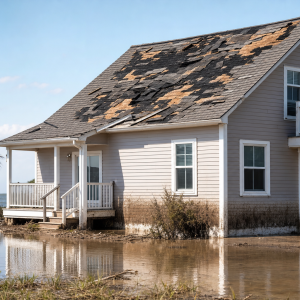
If rising water from heavy rain or storm surge entered your home, that damage typically falls under a separate flood policy through the National Flood Insurance Program (NFIP), not your homeowners policy. NFIP claims have their own deadlines and proof-of-loss requirements, so identify early which policy covers which damage. FEMA’s flood insurance resources explain how the program works and what to expect after filing.
How Escalation Stays Open
Hiring a public adjuster first doesn’t lock you out of legal action. If the insurer denies coverage, alleges misrepresentation, or refuses a reasonable settlement, the adjuster’s documentation becomes the evidentiary foundation an attorney needs. In practice, the strongest attorney-handled cases are often the ones where a public adjuster built the record from day one. No professional can promise a specific outcome — but preserving evidence, meeting deadlines, and getting an independent assessment early gives you the best position no matter which direction your claim ultimately goes.
Public Adjuster vs Attorney: Side-by-Side Comparison
| Factor | Public Adjuster | Insurance Attorney |
|---|---|---|
| Best for | Underpaid, complex, or poorly documented claims | Denied claims, bad faith, coverage disputes, litigation |
| Typical fee structure | Percentage of settlement, often 10-20% (state caps vary) | Contingency fee, commonly 30-40% of recovery |
| Can file a lawsuit? | No — negotiation and documentation only | Yes — full legal representation in court |
| Typical timeline impact | Often speeds up documentation and negotiation | Litigation can extend resolution by months or longer |
| Licensing | State-licensed insurance adjuster | State bar-licensed attorney |
Illustrative Example: When One Claim Needed Both
Illustrative example
Consider a hypothetical homeowner whose roof and interior were damaged in a storm, and whose insurer’s initial estimate covered only a fraction of the visible damage. A public adjuster re-inspected the property, documented hidden water intrusion, and negotiated a substantially higher settlement offer. When the insurer then disputed coverage for a portion of the interior damage and stopped responding, the homeowner brought in an insurance attorney to pursue the disputed portion. This composite scenario shows a common pattern: the adjuster maximizes the documented claim, and the attorney steps in only when the dispute turns legal.
Frequently asked questions
What’s the difference between a public adjuster vs attorney for an insurance claim?
A public adjuster is a licensed claims professional who documents your loss, estimates damages, and negotiates with the insurance company on your behalf. An attorney handles the legal side—disputes over policy interpretation, bad faith conduct, denied claims, and lawsuits. Adjusters can’t file lawsuits or give legal advice; attorneys typically don’t do detailed damage estimating. Many claims start with an adjuster and only escalate to an attorney if negotiations fail.
How much does a public adjuster cost compared to an insurance attorney?
Public adjusters typically charge a percentage of the claim settlement, often in the single digits to low teens depending on the state and claim size—some states cap these fees. Insurance attorneys usually work on contingency, taking a larger percentage of the recovery, or bill hourly for certain matters. Neither typically requires money upfront on contingency arrangements, but always get the fee agreement in writing before signing.
When should I hire an attorney instead of a public adjuster?
Hire an attorney when your claim has been formally denied, the insurer is acting in bad faith, there’s a dispute over what the policy covers, you’re facing a deadline to sue, or the insurer has stopped responding entirely. These are legal problems, not documentation problems. A public adjuster is better suited when the claim is open and the dispute is mainly about the scope or value of the damage.
Can I hire both a public adjuster and an attorney at the same time?
Yes, and on large or complicated claims it’s common. The public adjuster handles damage documentation and valuation while the attorney handles legal strategy and negotiations over coverage. Be mindful of combined fees, since each takes a percentage or charges separately. Coordinate so their roles don’t overlap, and make sure both fee agreements clearly state who does what so you’re not paying twice for the same work.
Will hiring a public adjuster or attorney slow down my claim?
Sometimes, but usually for a good reason. A public adjuster may reopen the scope of damages, which adds time but often increases the payout. Attorneys can extend timelines significantly if litigation begins—lawsuits can take a year or more. If your claim is simple and the insurer’s offer is fair, handling it yourself is fastest. Professionals make sense when the extra recovery justifies the extra time.
Is it too late to hire a public adjuster or attorney after I’ve already filed my claim?
No. Both can step in at almost any stage—after filing, after a lowball offer, or after a denial. A public adjuster can often reopen or supplement a claim if you’ve received payment but the settlement was inadequate, subject to policy deadlines. An attorney becomes especially important after a denial, since statutes of limitations apply. The earlier you bring in help, the more options you’ll have.
What are the biggest mistakes people make when choosing between a public adjuster and an attorney?
Common mistakes include hiring an attorney for a simple valuation dispute an adjuster could resolve more cheaply, hiring an adjuster when the real problem is a coverage denial requiring legal action, signing fee agreements without reading them, and waiting until deadlines have nearly passed. Another is choosing whoever knocks on your door after a disaster—always verify licenses with your state and check references before signing anything.
How do I verify that a public adjuster or insurance attorney is legitimate?
Public adjusters must be licensed in most states—verify through your state’s department of insurance website. Attorneys must be licensed with the state bar, where you can also check for disciplinary history. Be wary of anyone demanding large upfront payments, pressuring you to sign immediately, or making guarantees about your settlement amount. Ask for references from past clients with similar claims and read the contract carefully.
Can a public adjuster handle a denied insurance claim?
Only to a limited extent. A public adjuster can help you submit additional documentation, request reconsideration, or supplement the claim if the denial was based on incomplete information. But if the insurer denied the claim based on policy language, exclusions, or alleged misrepresentation, that’s a legal dispute a public adjuster cannot litigate. In those situations, an insurance attorney is the right professional because only they can pursue the matter in court.
Is hiring a public adjuster worth it for a small claim?
Often not. Because public adjusters charge a percentage of the settlement, a small claim may not generate enough extra recovery to justify the fee, and some adjusters won’t take claims below a certain size. For minor losses, thoroughly documenting the damage yourself and negotiating directly is usually more cost-effective. Professionals add the most value on large, complex, or disputed claims where their expertise meaningfully changes the outcome.
Related local pages
- Public Adjuster Burlington NC: Fire, Water & Storm Damage Claims Handled On The Policyholder’s Side
- Public Adjuster Elon NC — Fire & Water Claim Help For Alamance County Homeowners
- Public Adjuster Haw River NC — Fire, Flood & Storm Claim Help For Older Mill-Town Homes Along The Haw
Not sure which path your claim needs? Get a free, no-obligation claim review from our licensed and bonded public adjusters serving North Carolina and Virginia. Get in touch.
Last updated: August 14, 2026