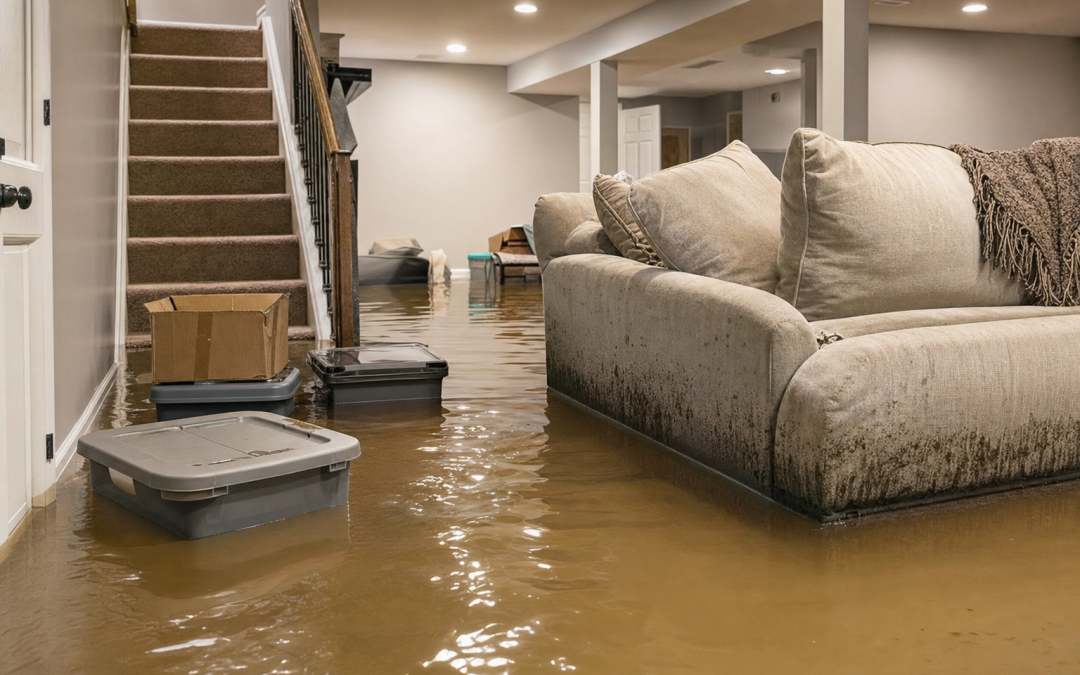
- Does Homeowners Insurance Cover Sewer Backups in North Carolina? (Why Sewer Backup Insurance Matters)
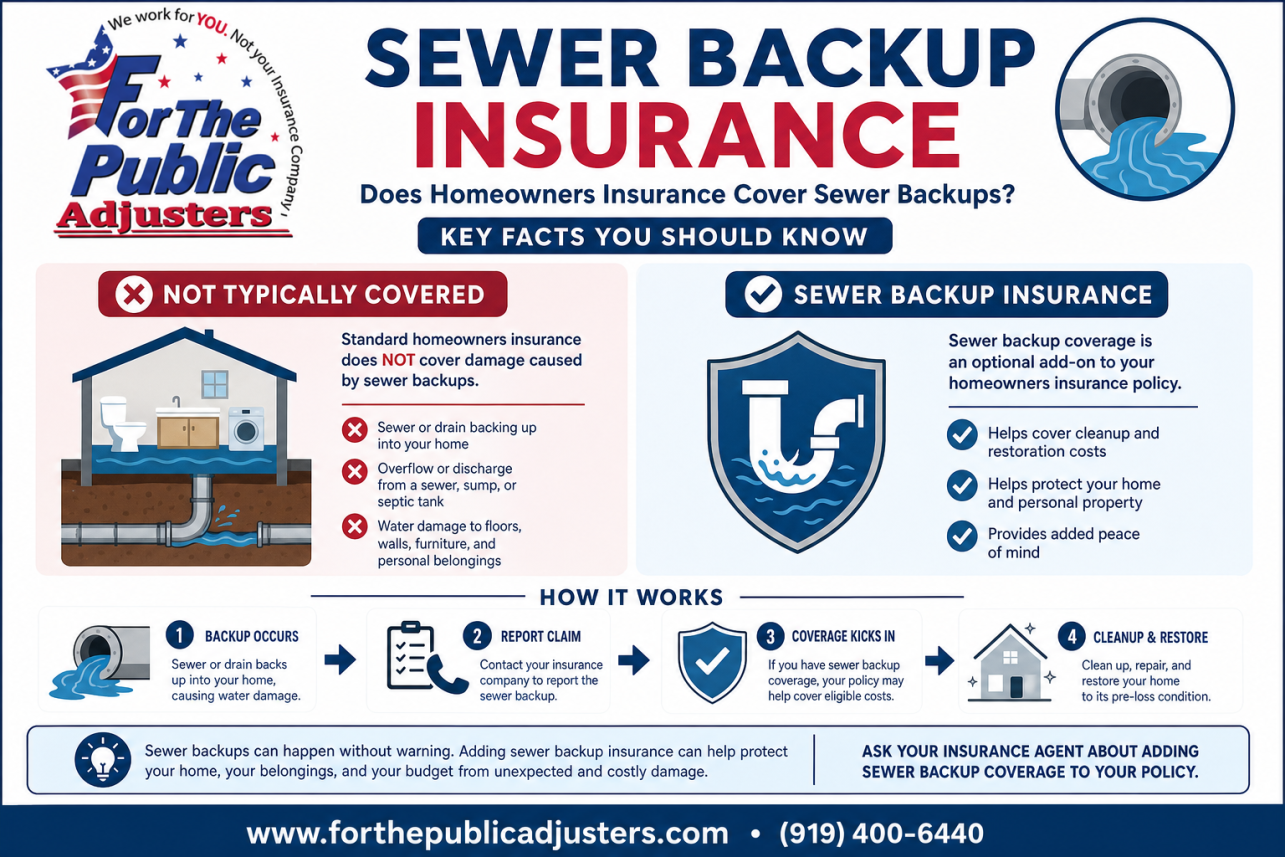
Most standard North Carolina homeowners policies do not include sewer backup insurance — water that backs up through sewers, drains, or sump pumps is typically excluded unless you purchased a separate endorsement. That means without this add-on coverage, damage from a sewer backup usually comes out of your own pocket, even with an active policy.
Key takeaways
- Standard homeowners insurance does not cover sewer backups — you need a separate water backup endorsement or rider.
- Sewer backup coverage is typically an inexpensive add-on, often costing roughly $50–$250 per year depending on limits and location.
- Sewer backup insurance covers damage from water backing up through drains or sump pumps, not flooding from outside — that requires flood insurance.
- Homeowners are usually responsible for the sewer lateral line on their property, so a backup or service line endorsement can fill a costly gap.
- Coverage limits on backup endorsements are often capped (commonly $5,000–$25,000), so check whether your limit matches your finished basement’s value.
This surprises a lot of homeowners. You pay premiums every year, water floods your basement or first floor through a drain, and then the insurance company points to a paragraph buried in the policy’s water damage exclusions. Understanding that language before disaster strikes is one of the most valuable things you can do as a homeowner.
What the Exclusion Language Actually Says
While wording varies by insurer, most standard homeowners policies in North Carolina contain a water damage exclusion that removes coverage for water or waterborne material that:
- Backs up through sewers or drains, or
- Overflows or is discharged from a sump, sump pump, or related equipment.
In plain English: if contaminated water enters your home through a floor drain, toilet, shower, or sump pit because the municipal sewer line or your own lateral line is overwhelmed or blocked, the base policy generally treats that as excluded water damage — not a covered peril. This is a different situation from, say, a pipe bursting inside your wall, which is often covered as sudden and accidental water discharge.
Why So Many NC Homeowners Get Caught Off Guard
Sewer backups tend to cluster around heavy rain events, and North Carolina’s summer thunderstorms and tropical systems can dump enormous amounts of water in a short window. Aging municipal sewer systems, tree root intrusion, and clogged lateral lines all add risk. Homeowners in fast-growing areas often assume their standard policy covers any water in the house — and a public adjuster in Raleigh NC will tell you this misunderstanding is one of the most common reasons water damage claims fall apart.
Compounding the confusion, sewer backup damage often overlaps with flood damage, which is excluded from homeowners policies entirely and requires separate flood insurance. Insurers sometimes lean on that overlap to deny claims that arguably should have been covered under an endorsement the homeowner did purchase. That’s exactly the kind of dispute where working with a public adjuster serving Gorman NC and the surrounding Triangle communities can change the outcome.
The Good News: Coverage Is Available
Nearly every major insurer offers a water backup endorsement (sometimes called sewer and drain backup coverage) that can be added to your policy for a relatively modest annual cost. Coverage limits are often capped, so it’s worth reviewing whether the limit you choose would realistically cover a finished basement, flooring, drywall, and professional sewage remediation — costs that add up quickly once contaminated water is involved.
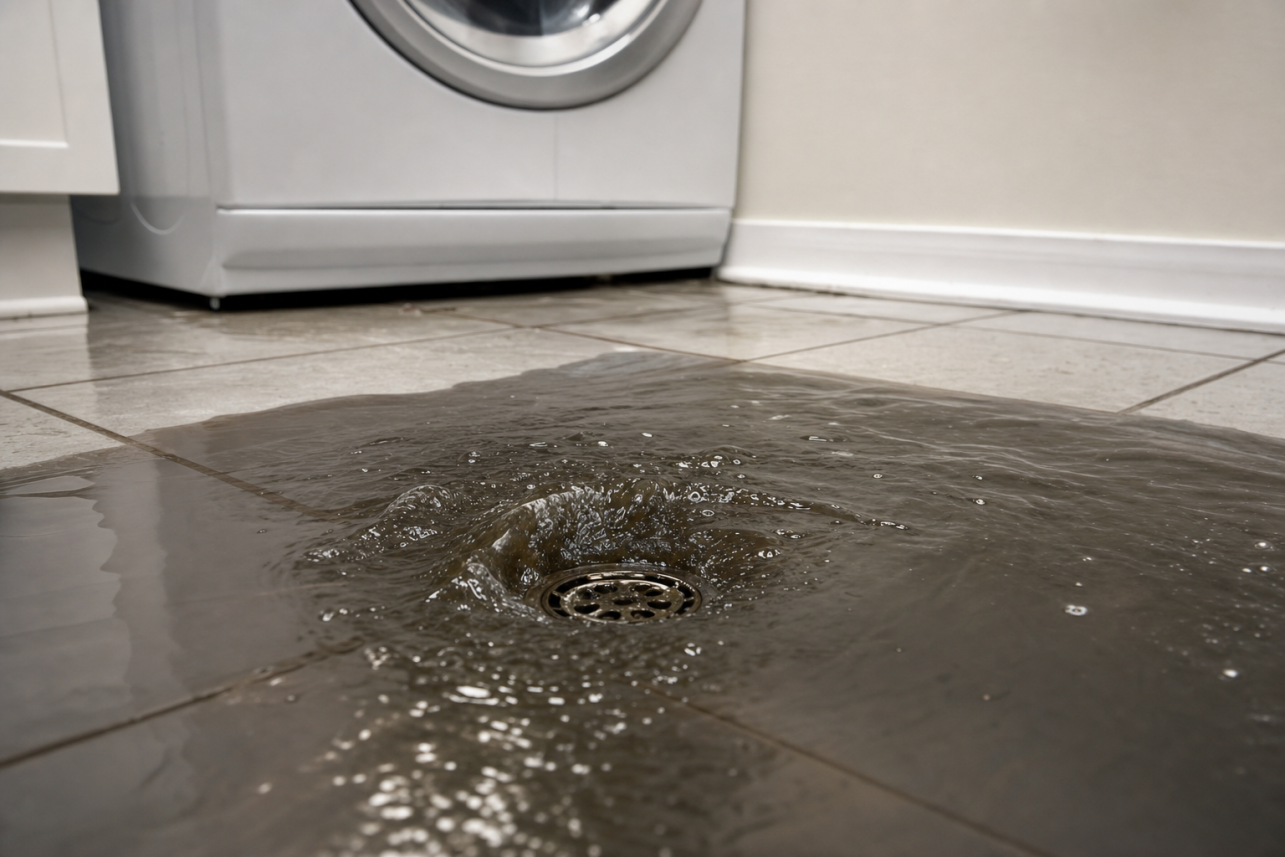
Why Do Sewer Backups Spike During NC’s Summer Storm Season?
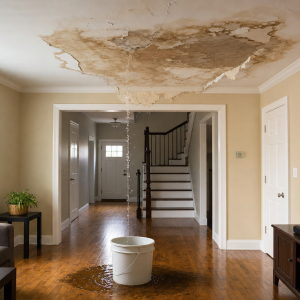
Sewer backups spike in North Carolina’s summer because intense thunderstorms and tropical-storm rainfall dump water faster than municipal sewer systems can carry it away. Saturated ground forces stormwater into aging sewer lines, pressure builds, and wastewater reverses course — pushing back up through floor drains, toilets, and basement fixtures in homes across the state.
If you’ve lived through a Carolina summer, you know the pattern: weeks of humid heat punctuated by sudden, violent downpours. Those storms can drop an inch or more of rain in under an hour, and that speed matters more than the total. Sewer and stormwater systems are designed around expected flow rates. When rainfall outpaces those design limits, the system has nowhere to send the excess — except back toward the lowest connected point, which is often someone’s home.
The Three Conditions That Combine in Summer
- Saturated soil: After repeated storms, the ground can’t absorb more water. Runoff increases, and groundwater seeps into sewer pipes through cracks and joints (a problem engineers call infiltration and inflow), swelling the volume in the lines.
- Overwhelmed municipal systems: Combined or undersized sewer lines fill quickly during cloudbursts. Once a main is at capacity, wastewater backs up through lateral lines into connected homes.
- Sump pump failure: Summer storms often knock out power at exactly the moment sump pumps are working hardest. A pump that stops mid-storm can let water rise fast, and an overworked pump can simply burn out.
Why Older Neighborhoods Get Hit Hardest
North Carolina’s older neighborhoods — from historic districts in the Triangle to established communities across the Piedmont — often sit on clay or cast-iron sewer laterals installed decades ago. These pipes crack, sag, and invite root intrusion, all of which restrict flow and make a backup more likely when the municipal main surges. Homeowners in fast-growing areas around Raleigh face a related problem: new construction upstream adds load to systems that were never sized for it, which is one reason a public adjuster in Raleigh, NC tends to see backup claims cluster after major storm events.
What This Means for Claims Right Now
Because summer backups are storm-driven, claims tend to arrive in waves. Insurers may receive hundreds of water-related claims from a single weather event, which can mean slower inspections, rushed evaluations, and more disputes over whether sewer backup insurance coverage applies to your specific loss. Smaller towns aren’t immune either — homeowners working with a public adjuster in Elon and similar communities report the same seasonal surge, often tied to a single line of severe storms moving through the Piedmont.
The takeaway: summer is when the risk peaks, when systems fail, and when documentation and timing matter most if you end up filing a claim.
What Does a Sewer Backup Endorsement (Sewer Backup Insurance) Actually Cover?
A sewer backup endorsement — often called water backup and sump overflow coverage — pays for damage when water or sewage backs up through drains, toilets, or a sump pump. It typically covers cleanup, damaged flooring, drywall, and personal belongings, usually with limits between $5,000 and $25,000 depending on the option you select.
Because standard homeowners policies exclude water that backs up through sewers or drains, this endorsement exists to fill that specific gap. It’s an optional add-on, which means if you never asked for it — or your agent never offered it — you may not have it at all.
What’s Typically Included
- Cleanup and sanitation: Water extraction, drying, and decontamination of affected areas, which is critical when raw sewage is involved.
- Building damage: Flooring, subflooring, drywall, baseboards, cabinetry, and built-in fixtures damaged by the backup.
- Personal property: Furniture, electronics, and stored belongings — often the biggest loss in finished basements.
- Additional living expenses: Some endorsements help pay for temporary housing if the backup makes your home uninhabitable, though this varies by insurer.
Sub-Limits and Common Exclusions to Watch For
The endorsement limit is usually a single combined cap covering both the structure and your contents, and it may be far lower than your main dwelling limit. Many policies also exclude damage caused by a homeowner’s failure to maintain drain lines, gradual seepage, or backups originating from long-standing tree root intrusion the insurer argues you should have addressed. Mold remediation may carry its own separate, smaller sub-limit. Policy language differs from carrier to carrier, which is one reason homeowners often bring in a professional such as a public adjuster in Elon to interpret exactly what their endorsement does and doesn’t pay for.
Sewer Backup Insurance Is Not Flood Insurance
These two coverages are frequently confused, and the distinction matters. Flood insurance (typically through the NFIP or a private flood policy) covers rising surface water entering your home from outside. A sewer backup endorsement covers water coming up through your plumbing system. If floodwater overwhelms the municipal sewer and pushes sewage into your home, insurers may dispute which policy applies — a gray area where documentation becomes essential.
How to Check Your Own Coverage
Pull out your declarations page and look for a line item labeled “water backup,” “sewer/drain backup,” or “sump pump overflow,” along with its stated limit. If you can’t find it, call your agent and ask directly whether the endorsement is on your policy and what it costs to add or increase. If you’ve already suffered a loss and the policy language seems ambiguous, a public adjuster serving Benson NC and surrounding areas can review your policy and identify every coverage that may apply to your claim.
Why Was My Sewer Backup Claim Denied — and Can I Fight It?
Sewer backup claims are most often denied because the insurer labels the damage as flood, groundwater, gradual seepage, or wear and tear — all of which fall under common exclusions. A denial is not final. You can dispute the cause of loss, demand the insurer’s reasoning in writing, and appeal, and courts frequently side with policyholders when exclusion language is ambiguous.
The Most Common Denial and Underpayment Tactics
Insurers know that water losses sit at the intersection of several exclusions, and adjusters sometimes reach for whichever label lets them pay less. Watch for these arguments in your denial letter:
- “It was flood or surface water.” If storm water entered through a drain or sewer line rather than over the ground, that characterization may not hold up.
- “It was groundwater seepage.” Water pushed backward through your plumbing is not the same as water seeping through a foundation, even if both happened during the same storm.
- “The pipe failed from wear and tear.” Even where a worn pipe isn’t covered, many policies still cover the resulting water damage to your home.
- “The damage was gradual, not sudden.” Insurers sometimes claim a one-time backup was actually long-term leakage to trigger a seepage exclusion.
- Lowball scope of damage. Rather than deny outright, some carriers accept the claim but underpay by minimizing contamination cleanup, flooring replacement, or drying costs.
Courts Often Read Ambiguous Water Exclusions in Your Favor
Policy language matters, and when it’s unclear, the law generally favors the policyholder. In Hicks v. American Integrity Insurance Co., a Florida appellate court sided with a homeowner over water damage stemming from a plumbing discharge, rejecting the insurer’s attempt to stretch an exclusion beyond its plain wording. The principle behind that decision — that ambiguous exclusions are construed against the insurance company that drafted them — applies broadly, including in North Carolina disputes over sewer backup insurance claims.
How to Push Back on a Denial
Start by requesting the specific policy provisions the insurer relied on, then compare that language to what actually happened in your home. Independent evidence — a plumber’s report identifying the point of entry, photos, and moisture readings — can directly contradict a “groundwater” or “seepage” theory. Homeowners in the Triangle area often bring in a public adjuster in Rougemont NC to document the true cause of loss before responding to the carrier.
If the insurer won’t budge, you can file a supplemental claim, invoke the policy’s appraisal clause where the dispute is about value, or file a complaint with the NC Department of Insurance. A public adjuster serving High Point NC can also reopen underpaid claims, since accepting a first check rarely closes the door on further recovery. The key takeaway: a denial letter is the insurer’s opinion, not the last word.
What Should I Do Immediately After a Sewer Backup in My Home?
Keep everyone away from the contaminated water, shut off power to affected areas if safe, and stop water use in the home. Photograph and video everything before touching it, then begin drying and mitigation as your policy requires. Save damaged items for inspection and get every insurer decision in writing before accepting a settlement.
Treat the Water as Hazardous — Because It Is
Sewage is classified as Category 3 (“black”) water, meaning it can contain bacteria, viruses, and other pathogens. Keep children and pets out of the affected area entirely. If you must enter, wear rubber boots, gloves, and eye protection, and avoid touching your face. Do not run faucets, flush toilets, or use washing machines until you know whether the blockage is in your line or the municipal main — adding water can make the backup worse. If standing water has reached outlets or appliances, cut power to those circuits at the breaker before stepping in.
Document Everything Before Cleanup Begins
Your documentation is the backbone of a sewer backup insurance claim, and it only exists if you create it before the mess is gone. Homeowners we’ve worked with as a public adjuster in Garner often lose leverage simply because cleanup crews hauled away the evidence first.
- Take wide shots of each affected room, then close-ups of waterlines on walls, saturated flooring, and damaged contents.
- Record video walking through the space, narrating what you see and when the backup occurred.
- Photograph the source point — the floor drain, toilet, or tub where water emerged.
- Keep receipts for every emergency expense: cleanup supplies, plumber visits, fans, dehumidifiers, and temporary lodging.
Mitigate Damage — It’s Required, Not Optional
Nearly every policy obligates you to take reasonable steps to prevent further damage. Once documented, extract standing water, run fans and dehumidifiers, and remove saturated materials from living areas. Failing to mitigate can give the insurer grounds to reduce or deny payment for damage that spreads afterward.
Save Damaged Contents for Inspection
Don’t throw anything away until the adjuster has seen it or given you written permission to dispose of it. Move contaminated items to a garage, tarp in the yard, or other holding area. Create an itemized inventory with photos of each object, including brand and model where visible. Discarded items are the single most common reason contents claims come up short.
Get Everything in Writing
Before you accept any settlement — or a denial — insist on the insurer’s estimate or denial letter in writing, with the specific policy language cited. Verbal explanations aren’t reviewable, and a written record is what a public adjuster in High Point NC or an attorney would use to challenge an unfair outcome. Never sign a release until you’re confident the offer covers structure, contents, and proper Category 3 remediation.
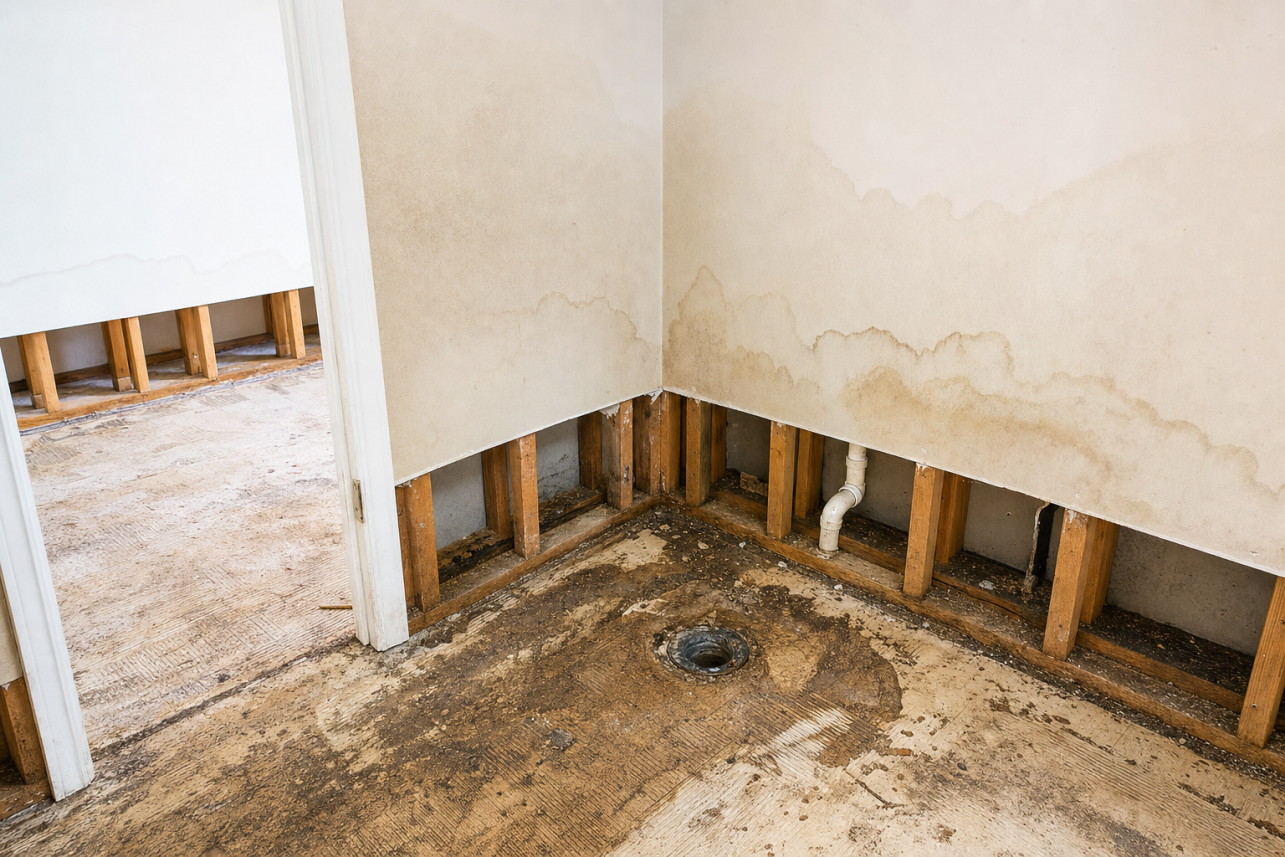
How Can a Public Adjuster Help With a Sewer Backup Insurance Claim?
A licensed and bonded North Carolina public adjuster works only for you, not the insurance company. They review your policy for overlooked coverage, document contamination and hidden damage thoroughly, prepare an independent repair estimate, and negotiate with your insurer to pursue a fair settlement on your sewer backup insurance claim.
Sewer backup claims are among the most technical losses a homeowner can face. The damage often extends well beyond what is visible, and the coverage itself usually lives in an endorsement with its own limits and conditions. A public adjuster’s job is to make sure nothing gets missed on either front — the policy or the property.
Reviewing the Policy for Overlooked Coverage
Many policyholders never realize their claim may touch multiple coverages at once: the water backup endorsement, dwelling coverage for tear-out and repair, personal property coverage for damaged belongings, and additional living expenses if the home is uninhabitable during cleanup. An experienced public adjuster in Garner reads the full policy — endorsements, exclusions, and sub-limits — to identify every provision that may apply to your loss.
Documenting Contamination and Hidden Damage
Category 3 water — the industry term for sewage-contaminated water — requires far more than drying and deodorizing. A public adjuster documents the loss with that standard in mind, including:
- Moisture readings and photos of affected walls, flooring, and cabinetry before materials are removed
- Contamination that migrated into wall cavities, subflooring, and insulation
- Porous contents that typically cannot be safely salvaged
- Proper sanitization and remediation protocols, not just surface cleaning
Preparing an Independent Estimate
Rather than relying solely on the insurance company’s figures, a public adjuster builds an independent, line-item estimate reflecting the true scope of remediation and reconstruction. Homeowners in smaller Chatham County communities are not overlooked either — a public adjuster serving Moncure NC can inspect the property in person and prepare documentation that stands up to insurer scrutiny.
Negotiating for a Fair Outcome — With Honest Expectations
Public adjusters in North Carolina are licensed and regulated by the North Carolina Department of Insurance, and reputable firms are bonded as required by state law. That licensing matters: it means your representative is accountable to a state regulator, not just to you.
It is important to be candid about what a public adjuster can and cannot do. No one can guarantee a specific settlement amount or promise a denied claim will be overturned. What a public adjuster provides is professional advocacy — a thorough claim presentation, knowledge of policy language, and negotiation experience — aimed at securing the fair outcome your policy actually provides. If your backup was tied to broader flooding, resources from FEMA’s flood insurance program can also help you understand where homeowners coverage ends and flood coverage begins.
Sewer Backup Insurance vs. Other Water Damage Coverage
| Coverage Type | What It Covers | Typically Included in Standard Policy? |
|---|---|---|
| Water backup endorsement | Water backing up through sewers, drains, or sump pump overflow | No — must be added as a rider |
| Standard homeowners policy | Sudden internal water damage (e.g., burst pipe) | Yes |
| Flood insurance (NFIP/private) | Rising water from outside the home, storm surge, overflowing rivers | No — separate policy required |
| Service line coverage | Repair of buried pipes and lines on your property, including sewer laterals | No — optional endorsement |
Hypothetical Example: A Finished Basement and a Blocked Main
Illustrative example
Consider a hypothetical homeowner with a finished basement whose municipal sewer main becomes blocked during heavy rain, forcing wastewater up through a floor drain. Because their standard homeowners policy excluded sewer backups, damage to flooring, drywall, and furniture would not have been covered on its own. Fortunately, in this illustrative scenario, the homeowner had added a water backup endorsement the year before, so cleanup and repairs fell largely within their coverage limit. This composite example shows why reviewing endorsements — and matching limits to the value of finished lower-level spaces — matters before a backup ever happens.
Frequently asked questions
Is sewer backup insurance worth adding to my homeowners policy?
For most homeowners, yes. Standard homeowners policies exclude sewer and drain backups, and a single incident can cause thousands of dollars in damage to flooring, drywall, and belongings. The endorsement is typically inexpensive relative to the risk, often costing far less per year than a fraction of one cleanup. It’s especially worth it if you have a finished basement, older municipal sewer lines, mature trees near your lateral line, or a sump pump.
How much does a sewer backup endorsement usually cost?
Sewer backup coverage is generally one of the more affordable add-ons to a homeowners policy, often priced in the range of a modest annual fee depending on your insurer, location, and the coverage limit you choose. Limits commonly start low and can be increased for more. Ask your agent for quotes at several limit levels so you can compare the cost against the value of your basement finishes and belongings.
What’s the difference between sewer backup coverage and flood insurance?
They cover different water sources. Sewer backup coverage pays when water or sewage backs up through drains, toilets, or a sump pump failure. Flood insurance covers surface water entering from outside, like overflowing rivers or heavy rainfall pooling against your home. Neither is included in a standard homeowners policy, and one won’t substitute for the other. Homes at risk of both events need both coverages, since insurers assign the cause of loss carefully.
What should I do first when sewage backs up into my house?
Stop using all water in the home immediately, since every flush or drain adds to the backup. Keep people and pets away from contaminated areas, and shut off electricity to affected rooms if it’s safe. Photograph and video the damage before touching anything, then call your insurer to report the claim and a plumber or water mitigation company to stop the source. Save receipts for any emergency expenses.
Will my insurance pay to fix the broken sewer pipe itself?
Usually not. Sewer backup endorsements typically cover damage the backup causes inside your home — flooring, walls, furniture, cleanup — but not the cost of repairing or replacing the damaged pipe. Pipe repair on your property often requires a separate service line endorsement, which many insurers now offer. Lines beyond your property boundary are generally the municipality’s responsibility. Ask your agent about both coverages together.
How long does a sewer backup insurance claim take to settle?
Straightforward claims are often resolved within a few weeks: you report the loss, an adjuster inspects or reviews documentation, and payment follows once the estimate is approved. Cleanup itself typically starts within a day or two because contaminated water is a health hazard and insurers want mitigation done quickly. Claims take longer if coverage is disputed, the damage is extensive, or the cause of the backup is unclear.
Why would a sewer backup claim get denied?
The most common reason is simply not having the endorsement — standard policies exclude backups. Claims are also denied when the damage stems from long-term neglect, like a known slow drain or deteriorated pipes you never addressed, or when the water is classified as surface flooding rather than a backup. Failing to mitigate damage promptly or exceeding your coverage limit can also reduce or eliminate payment. Read your endorsement’s exclusions carefully.
Does sewer backup coverage include sump pump failure?
Often, yes — many insurers bundle sump pump failure and overflow into the same water backup endorsement, but not all do, so verify with your agent. Note that coverage typically applies when the pump fails mechanically or is overwhelmed, not when damage results from a pump you knew was broken and didn’t repair. If your basement relies on a sump pump, confirm this specific peril is named in your endorsement.
How can I prevent a sewer backup in the first place?
Never flush wipes, grease, or paper towels, since these are leading causes of clogs. Have your sewer lateral inspected or snaked periodically, especially if you have large trees whose roots can invade the line. Installing a backwater valve, which blocks sewage from flowing back into your home, is one of the most effective safeguards. Maintain your sump pump and consider a battery backup for it in case of power outages.
What mistakes do homeowners make with sewer backup claims?
The biggest one is assuming their standard policy covers backups and discovering the exclusion after a loss. Others include choosing a coverage limit too low for a finished basement, throwing away damaged items before the adjuster documents them, delaying cleanup and letting mold develop, and attempting DIY cleanup of raw sewage, which is a biohazard. Also, many forget to document belongings beforehand, making it harder to prove what was lost.
Arson Homeowners Claim help near you
Related local pages
Dealing with a sewer backup claim in North Carolina? Contact our licensed and bonded public adjusters for a free claim review today. Get in touch.
Last updated: August 21, 2026