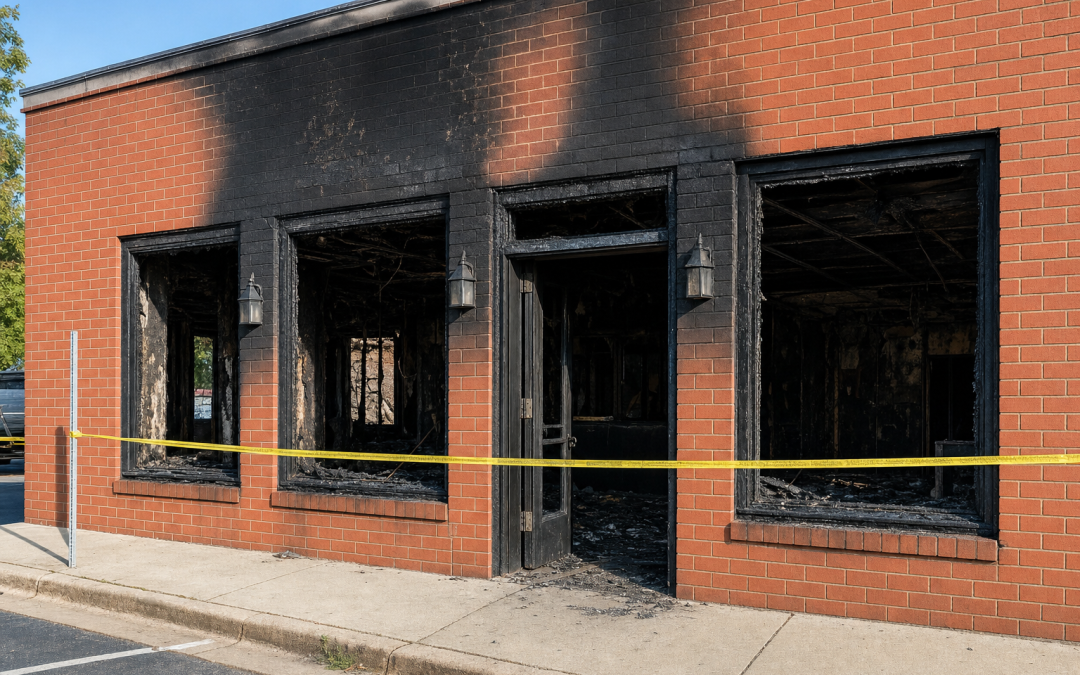
Why Was This Business Owner’s Fire Claim Denied — and Why Did He Win?
His fire claim was denied because his insurers accused him of arson and then refused to pay when he wouldn’t sit for an examination under oath while criminal charges were pending. He won because the California Supreme Court ruled the insurer’s duty of good faith is unconditional — it doesn’t disappear just because the policyholder allegedly breached a policy condition.
Key takeaways
- In Gruenberg v. Aetna (1973), the California Supreme Court held that an insurer’s duty of good faith and fair dealing is unconditional and does not depend on the policyholder’s performance first.
- A carrier cannot use a policyholder’s refusal to sit for an examination under oath while criminal charges are pending as an automatic excuse to deny a fire claim.
- If your fire claim was denied because of how the investigation unfolded, the insurer’s own conduct during that investigation can itself be evidence of bad faith.
- North Carolina policyholders can invoke the same principle through claims under N.C. Gen. Stat. 75-1.1 and 58-63-15 when a carrier weaponizes the claims process.
- Never navigate an examination under oath alone after a fire loss, especially if arson is suspected; get counsel before you speak or refuse to speak.
The case is Gruenberg v. Aetna Insurance Co., a 1973 California Supreme Court decision that remains one of the most influential insurance bad faith rulings in the country. Even though it’s a California case, its reasoning shaped how courts and policyholders across the U.S. — including North Carolina — think about what an insurance company owes you after a fire loss.
The Story in Plain Language
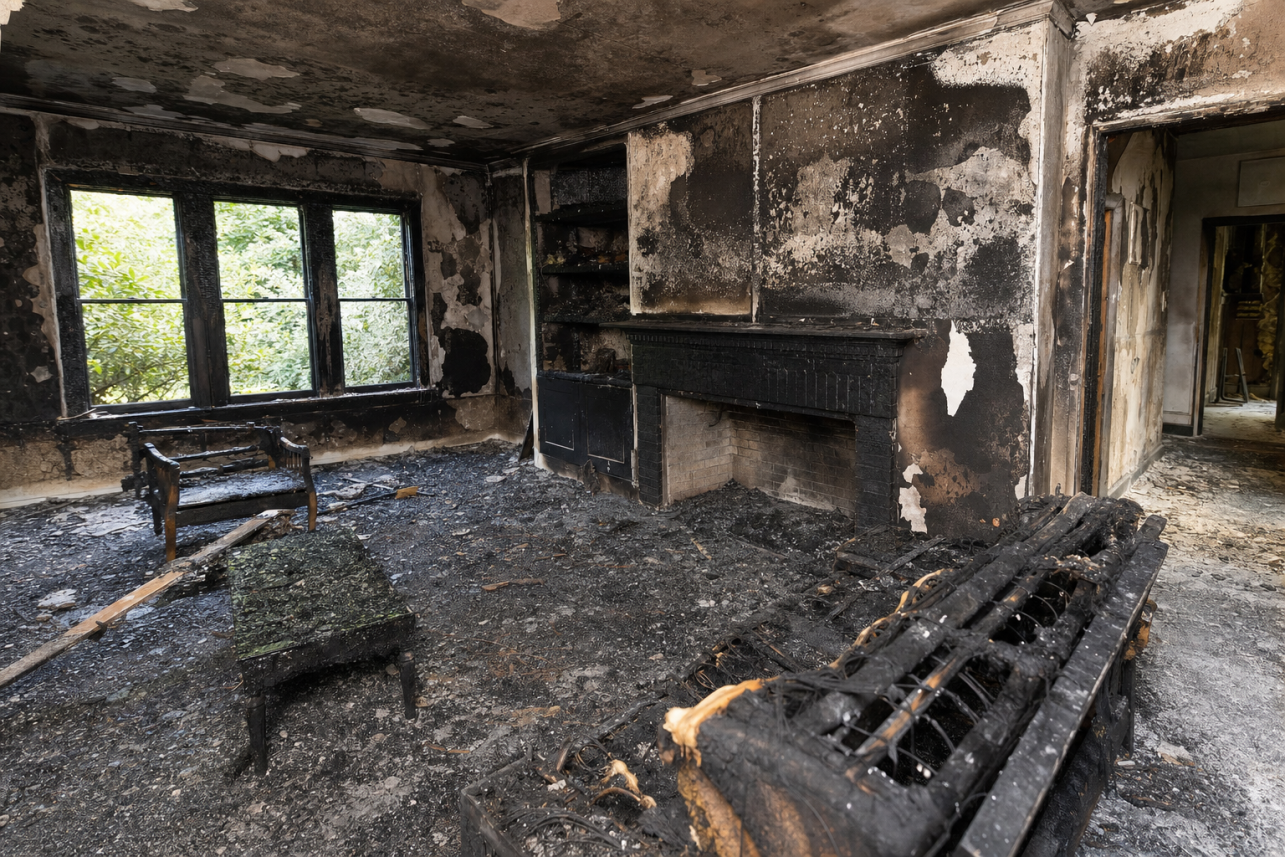
Mr. Gruenberg owned a cocktail lounge that was damaged by fire. What should have been a straightforward property claim quickly turned adversarial:
- The accusation: His insurers suspected arson and communicated that suspicion to authorities. Gruenberg ended up facing criminal charges connected to the fire.
- The examination under oath: While those criminal charges were pending, the insurers demanded he appear for an examination under oath — a formal, sworn interview required under the policy. On his attorney’s advice, he declined to testify while he was still facing prosecution.
- The denial: The insurers denied his fire claim, pointing to his failure to cooperate as required by the policy.
- The twist: The criminal charges against him were later dismissed. He then offered to sit for the examination — but the insurers stood by their denial.
Why the Court Sided With the Policyholder
Gruenberg sued, alleging the insurers acted in bad faith by encouraging the arson suspicion and then using his silence — a silence any criminal defense lawyer would have advised — as the excuse to deny payment. The California Supreme Court held that the implied covenant of good faith and fair dealing is unconditional: an insurer cannot escape its duty to deal fairly with its policyholder by claiming the policyholder breached first. Breaching that duty, the court said, is a tort, not just a contract dispute — opening the door to damages beyond the policy limits.
Why It Matters to You in North Carolina
If your own claim was denied after an arson accusation or a disputed investigation, the lesson is that a denial is not automatically the final word. Insurers must treat you fairly throughout the claim, and policyholders who get arson insurance claim denied help early are far better positioned to challenge a wrongful denial. The sections below break down exactly what the court decided — and what your rights look like under North Carolina law.
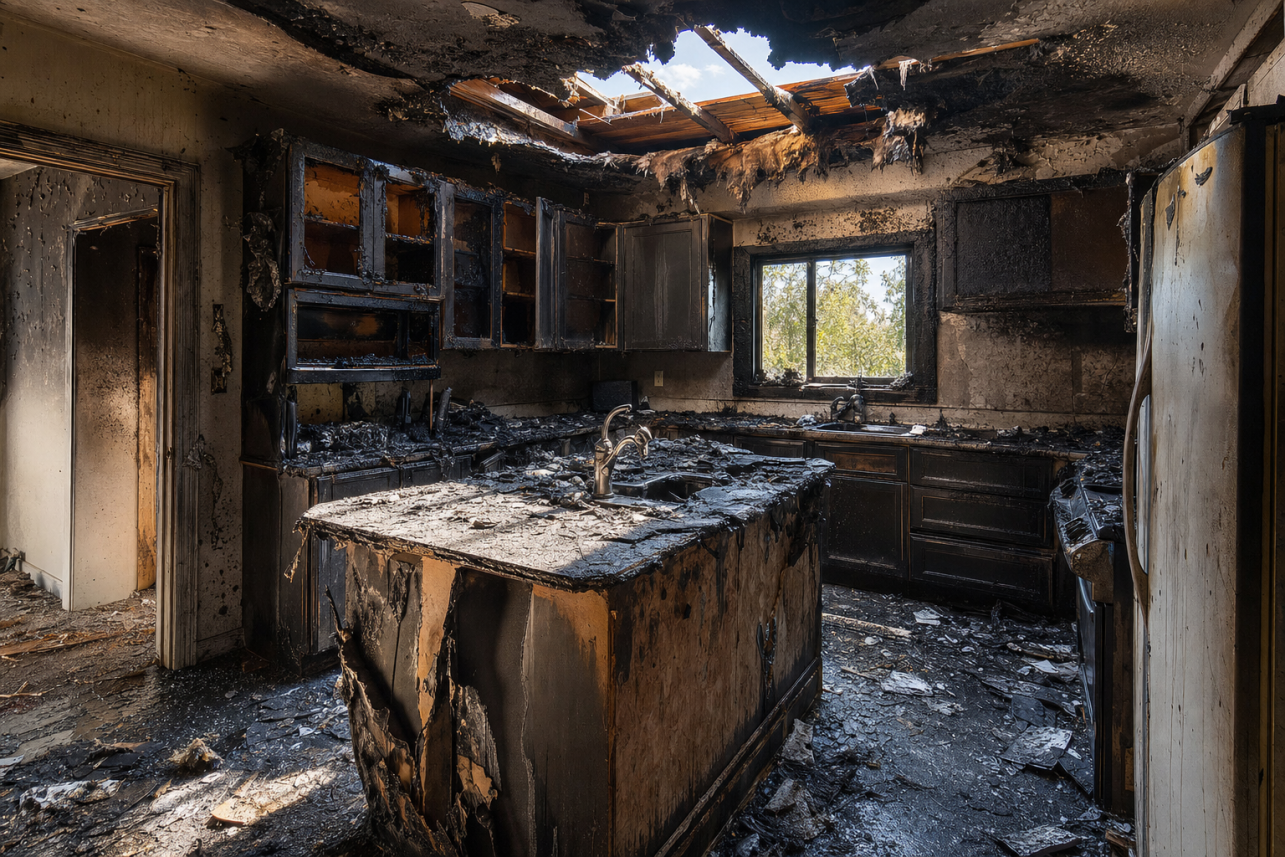
What Exactly Did the Court Decide in Gruenberg v. Aetna?
In Gruenberg v. Aetna, the California Supreme Court held that an insurer’s duty of good faith and fair dealing is unconditional — it does not depend on the policyholder first satisfying every policy requirement. An insurer that manipulates the claims and investigation process to manufacture a reason to deny a claim can be liable for bad faith as a tort.
That single ruling reframed the relationship between insurance companies and policyholders. Before Gruenberg, insurers often argued that if a claimant slipped up on any policy condition — missing an examination under oath, filing paperwork late — the insurer was excused from paying and from behaving fairly. The court rejected that logic.
The Duty of Good Faith Doesn’t Wait for You to Be Perfect
The court drew a critical distinction between two different kinds of obligations:
- Policy conditions are duties the policyholder owes, such as cooperating with the investigation or submitting proof of loss.
- The duty of good faith is a duty the insurer owes, and it exists independently. It attaches the moment the policy is issued and continues throughout the claim.
In other words, an insurer cannot say, “You didn’t perform a condition, so we were free to treat you unfairly.” If the insurer’s own bad-faith conduct — like scheduling an examination under oath at a time designed to trap the insured, or refusing to pay while criminal accusations were pending — is what caused the breakdown, the insurer cannot then use that breakdown as its defense.
Weaponizing the Investigation Can Itself Be Bad Faith
Gruenberg involved a fire loss where the insured was accused of arson. The insurer leaned on that accusation and on the insured’s failure to sit for an examination under oath (while criminal charges were still hanging over him) to deny the claim. The court recognized that using the investigative process as a sword — pressuring the insured into an impossible position and then denying based on the outcome — could constitute tortious bad faith, exposing the insurer to damages beyond the policy limits, including emotional distress damages. Policyholders facing similar accusations today often seek help when an arson-related insurance claim is denied, precisely because these investigations can be structured against them.
Why This Policyholder Victory Still Matters Nationwide
Gruenberg became one of the foundational cases in first-party bad faith law. Courts across the country have cited its core principles when shaping their own bad-faith doctrines:
- Good faith is a two-way street, but the insurer’s obligation stands on its own.
- An insurer cannot benefit from a failure of cooperation that it caused or exploited.
- Bad-faith claim handling can sound in tort, not just contract — opening the door to broader damages.
While North Carolina applies its own statutes and case law, the Gruenberg framework — that the investigation must serve the truth, not the denial — remains the lens through which unfair fire claim handling is judged.
Can an Insurance Company Use Its Own Investigation to Deny My Fire Claim?
Yes — an insurer can investigate your fire loss and deny the claim based on what it finds, but only if the investigation is fair, reasonable, and genuinely aimed at determining coverage. When a carrier uses examinations under oath, endless document demands, or vague arson suspicion as a pretext to build a denial file, that can cross the line into bad faith.
Every fire policy gives the insurance company the right to investigate. That includes inspecting the scene, hiring cause-and-origin experts, requesting financial records, and taking your sworn testimony. These tools are legitimate when they’re used to answer honest questions: What caused the fire? What was damaged? What is owed under the policy?
The problem arises when the investigation stops being a search for facts and becomes a search for an exit. Fire losses — especially total losses and business fires — get heightened scrutiny because carriers know arson and inflated claims exist. But suspicion is not evidence, and a policyholder who cooperates in good faith shouldn’t be treated as a suspect indefinitely.
Legitimate Investigation vs. Pretext for Denial
Here’s the practical difference:
- Legitimate: Requesting documents that actually relate to the loss — proof of ownership, receipts, photos, the fire department report.
- Pretext: Demanding years of unrelated financial records, tax returns, or personal information with no clear connection to the claim, then denying for “failure to cooperate” when you push back.
- Legitimate: Scheduling one examination under oath with reasonable notice and a defined scope.
- Pretext: Repeated, hostile examinations designed to trap you in inconsistencies or pressure you into abandoning the claim.
- Legitimate: Waiting for a fire investigator’s cause-and-origin report before paying.
- Pretext: Sitting on the claim for months with no updates, or citing “ongoing investigation” long after the facts are known.
Red Flags After a Fire Loss in North Carolina
If you’ve had a fire claim denied — or you sense a denial coming — watch for these warning signs:
- The adjuster hints at arson or fraud without pointing to any actual evidence.
- Document requests keep expanding every time you comply with the last one.
- The carrier won’t explain in writing what specific policy provision is at issue.
- You’re told cooperation is mandatory, but your questions go unanswered for weeks.
- The denial letter cites “material misrepresentation” or “concealment” based on minor inconsistencies in your statements.
None of these red flags means you automatically win, and none of them means you should stop cooperating — refusing outright can genuinely jeopardize coverage. What they mean is that you should start documenting everything: every request, every response, every deadline. If the investigation looks like it was engineered to justify a predetermined outcome, that record becomes your strongest evidence that the denial wasn’t made in good faith.
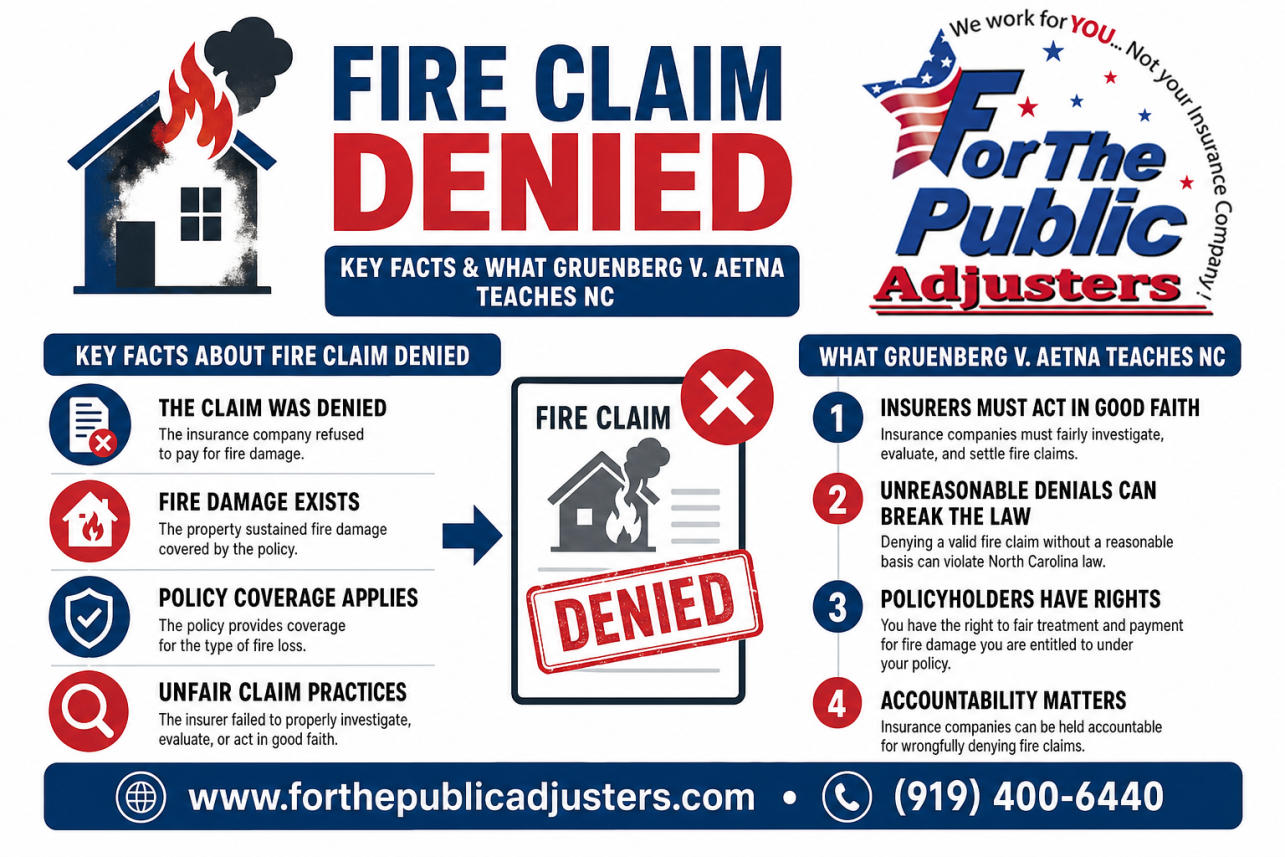
What Are My Rights in NC If My Fire Claim Was Denied After an Investigation?
In North Carolina, your insurer owes you a duty of good faith and fair dealing, and it must follow the state’s Unfair Claim Settlement Practices rules under N.C.G.S. § 58-63-15. If your fire claim was denied after an investigation, you have the right to a clear written explanation, a fair review of all evidence, and legal remedies if the denial was unreasonable.
The Duty of Good Faith and Fair Dealing
Every insurance policy in North Carolina carries an implied promise that the carrier will handle your claim honestly and fairly. That means the insurer cannot cherry-pick evidence, ignore facts that support coverage, or conduct an investigation designed to reach a predetermined “no.” A denial built on a one-sided investigation may expose the carrier to liability beyond the policy itself, including potential bad-faith and unfair trade practices claims.
What N.C.G.S. § 58-63-15 Prohibits
North Carolina’s Unfair Claim Settlement Practices statute lists specific conduct insurers must avoid. Among other things, carriers may not:
- Misrepresent policy provisions or the facts of your claim
- Fail to acknowledge and act reasonably promptly on claim communications
- Refuse to pay a claim without conducting a reasonable investigation based on all available information
- Fail to attempt a prompt, fair settlement once liability has become reasonably clear
- Deny a claim without providing a reasonable explanation of the basis for the denial
- Compel policyholders to file suit by offering substantially less than the claim is worth
A single violation won’t automatically win your case, but a pattern of this conduct — or an unreasonable denial after a slanted investigation — gives you real leverage. You can also file a complaint with the North Carolina Department of Insurance, which reviews carrier conduct and can prompt a response even when it can’t order payment.
Realistic Timelines to Keep in Mind
Insurers are expected to acknowledge communications and move claims along without unreasonable delay, but fire losses involving investigations often take months, not weeks. Meanwhile, your own deadlines matter: your policy sets time limits for submitting a sworn proof of loss and for filing suit, and North Carolina law imposes its own limitations periods. Read your policy’s conditions carefully, calendar every deadline, and never assume an ongoing investigation pauses the clock.
Why Careful Cooperation Beats Refusal
It can feel wrong to keep cooperating with a carrier that just denied you or is treating you like a suspect. But most policies make cooperation a condition of coverage — refusing document requests or interviews outright can hand the insurer a clean, contract-based reason to deny that’s much harder to fight than a shaky investigation. The stronger path is to cooperate carefully and on the record: respond in writing, keep copies of everything you provide, ask for requests to be put in writing, and get professional guidance before sitting for any formal proceeding. Cooperation with counsel or a licensed public adjuster in your corner protects your rights without giving the carrier an easy out.
What Should I Do Before an Examination Under Oath or Recorded Statement?
Before an examination under oath (EUO) or recorded statement, read your policy’s cooperation clause, gather documentation of your loss, and get professional guidance — a public adjuster for claim valuation, an attorney if fraud is alleged or a denial seems likely. Preparation doesn’t change the facts; it ensures your answers are accurate, complete, and consistent.
An EUO can feel intimidating, but it isn’t a criminal proceeding and you haven’t done anything wrong by receiving the request. Insurers routinely use EUOs and recorded statements in fire losses to verify facts. The goal of preparation isn’t to script answers — it’s to make sure honest answers are supported by records rather than memory alone.
Start With the Cooperation Clause in Your Policy
Most property policies require you to cooperate with the insurer’s investigation, sit for an EUO if requested, and produce relevant documents. Read that section carefully. Refusing outright can jeopardize coverage, but the clause doesn’t strip you of the right to prepare, to understand the scope of questions, or to have representation present.
Document Everything Before You Testify
Inconsistencies — even innocent ones — are what turn an investigation into a fire claim denied. Reduce that risk by organizing your records first:
- Photos and video of the damage, taken before any cleanup or repairs
- Proof of ownership for damaged contents: receipts, credit card statements, older photos showing items in the home
- A timeline of the fire, your whereabouts, and every contact with the insurer
- Copies of everything you’ve already submitted, so your testimony matches your paperwork
Understand What an EUO Is — and Isn’t
An EUO is formal sworn testimony, usually taken by the insurer’s attorney with a court reporter present. A recorded statement is less formal but still becomes part of your claim file. Neither is a casual conversation. Answer only what’s asked, say “I don’t know” when you genuinely don’t, and never guess at dates, values, or details you can verify later in writing.
Public Adjuster, Attorney, or Both?
- A licensed public adjuster helps document, value, and present the loss itself — the scope of damage, contents inventory, and repair estimates that support your figures.
- An attorney is the right call before an EUO if the insurer has raised suspicions of arson or misrepresentation, or if you sense a denial coming. Public adjusters cannot give legal advice or represent you in the examination itself.
None of this guarantees an outcome — no one honest can promise that. What preparation does is level the playing field. The insurer arrives with adjusters, investigators, and counsel; you’re entitled to arrive equally organized, with your documentation in order and professionals in your corner.
How Can a NC Public Adjuster Help After a Summer Fire Loss — or a Fire Claim Denied?
A licensed, bonded public adjuster works only for you, the policyholder — not the insurance company. After a summer fire loss, a public adjuster documents structure and contents damage, prepares and supports the claim, handles carrier communications, and advocates for you throughout the investigation, helping ensure the claims process itself isn’t used to weaken or deny your claim.
Why Summer Fire Losses Spike in North Carolina
Summer in North Carolina brings a familiar mix of fire risks: lightning strikes from severe afternoon thunderstorms, air conditioning systems and window units straining electrical circuits during heat waves, and grill or outdoor cooking fires that spread to decks, siding, and attached structures. According to the National Fire Protection Association (NFPA), cooking and electrical issues are consistently among the leading causes of home fires — and these seasonal losses often trigger detailed carrier investigations, especially when the cause isn’t immediately obvious.
What a Public Adjuster Actually Does for You
After a fire, you’re grieving, displaced, and facing a claims process built and staffed by the insurance company. A public adjuster levels that field in several practical ways:
- Thorough damage documentation: Room-by-room inventories of contents, photographs, moisture and smoke damage mapping, and structural damage assessments — including hidden damage like smoke infiltration in HVAC systems and heat damage behind walls that a quick carrier inspection can miss.
- Policy analysis: Identifying every coverage that applies — dwelling, other structures, personal property, additional living expenses, and code upgrade provisions — so nothing is left unclaimed.
- Managed carrier communications: Correspondence, document requests, and inspection scheduling go through your adjuster, creating a clear written record and reducing the risk of an offhand statement being taken out of context.
- Advocacy during the investigation: If the carrier’s origin-and-cause investigation raises questions, your adjuster helps you respond with organized documentation rather than improvised answers — the lesson at the heart of the Gruenberg story.
Turning the Process Into Protection, Not a Trap
Many policyholders don’t realize a fire claim denied often traces back to how the claim was handled in the first weeks — incomplete inventories, missed deadlines, or confusion during the carrier’s investigation. A public adjuster’s job is to keep the process orderly and documented from day one, so the record works for you instead of against you.
In North Carolina, public adjusters must be licensed, and you can verify any adjuster’s credentials through the North Carolina Department of Insurance. No one can promise a specific outcome on your claim — and you should be wary of anyone who does — but professional representation ensures your loss is fully documented, your rights are asserted, and you never face the carrier’s investigation alone. If your summer fire loss has stalled, been underpaid, or been denied outright, a consultation with a licensed, bonded public adjuster is a sensible next step.
Fire Claim Denied After an Investigation: Good Faith vs. Bad Faith Insurer Conduct
| Stage of the Claim | Good Faith Handling | Red-Flag (Potential Bad Faith) Handling |
|---|---|---|
| Initial investigation | Prompt, even-handed fact-gathering that looks for reasons to pay as well as deny | Investigation aimed only at building a denial file |
| Examination under oath (EUO) | Reasonable scheduling and accommodation, especially if criminal charges are pending | Demanding an EUO to pressure the insured, then denying solely for a justified delay or refusal |
| Suspected arson | Denial only when supported by actual evidence of intentional loss | Treating unresolved or dismissed criminal charges as proof the fire was set |
| Communication | Clear written explanations citing specific policy language for any denial | Vague, shifting, or unexplained reasons for delay and denial |
Illustrative Example: A Restaurant Fire and a Weaponized Investigation
Illustrative example
Consider a hypothetical, composite scenario: a small-town North Carolina restaurant owner suffers a devastating kitchen fire, and the local fire marshal briefly investigates the possibility of arson. While that inquiry is open, the insurer demands an immediate examination under oath, and on his attorney’s advice the owner asks to postpone until the criminal question is resolved. The carrier denies the claim outright, citing ‘failure to cooperate,’ even after investigators clear the owner of any wrongdoing. Drawing on the principle from Gruenberg v. Aetna, his coverage counsel argues the insurer used the investigation process itself as a pretext to deny a valid fire loss, and the dispute resolves in the policyholder’s favor. The lesson: a denial built on the mechanics of the investigation, rather than actual evidence, is a denial worth challenging.
Frequently asked questions
What should I do first if my fire claim denied letter says I failed to cooperate with the investigation?
Request the denial in writing, including the specific policy provision the insurer relied on. Then gather everything you did provide — documents, recorded statements, correspondence — to show your actual level of cooperation. Gruenberg v. Aetna shows courts scrutinize whether an insurer used the investigation process as a pretext to deny. Consult a policyholder attorney before responding, especially if any criminal investigation is open or pending.
Can my insurance company deny my fire claim just because I refuse an examination under oath?
Insurers often argue refusal breaches the cooperation clause, but context matters. In Gruenberg, the policyholder declined an examination under oath while facing arson charges that were later dismissed, and the California Supreme Court still allowed his bad faith claim to proceed. If you refuse for a legitimate reason — like protecting your rights during a criminal investigation — a blanket denial may itself be evidence of bad faith.
Does Gruenberg v. Aetna apply in North Carolina since it’s a California case?
Not directly — California decisions don’t bind North Carolina courts. But Gruenberg is a landmark case that influenced bad faith law nationwide, and its core principle — that an insurer’s duty of good faith doesn’t disappear because of a dispute over cooperation — reflects reasoning NC courts and lawyers draw on. North Carolina policyholders have their own remedies, including bad faith claims and unfair claim settlement practices statutes.
Should I do the examination under oath if I’m also being investigated for arson?
This is exactly the dilemma the Gruenberg policyholder faced: statements in an examination under oath can be used in a criminal case. Do not decide alone. Hire an attorney who handles both insurance and criminal exposure before agreeing, refusing, or scheduling anything. Sometimes counsel can negotiate timing — such as postponing the examination until the criminal matter resolves — which protects your rights without giving the insurer a clean cooperation-clause denial.
How long do I have to sue my insurance company after a fire claim denial in North Carolina?
Deadlines come from two places: your policy, which often contains its own suit-limitation clause, and state statutes of limitations for contract and bad faith claims. Policy deadlines can be shorter than statutory ones, so read your policy immediately after a denial. Because miscalculating a deadline can permanently bar your claim, confirm the applicable time limits with a North Carolina attorney as soon as possible rather than relying on general rules.
Is it worth hiring a lawyer to fight a denied fire insurance claim?
Usually yes, if the loss is significant. Fire losses often involve six-figure damage to a home or business, and denials based on cooperation clauses or arson suspicion are legally complex. Many policyholder attorneys work on contingency, so you pay from the recovery rather than upfront. Gruenberg itself shows why representation matters: a denial that looks final can become a bad faith case with damages beyond the policy limits.
What counts as bad faith by an insurance company on a fire claim?
Bad faith generally means the insurer denied or delayed payment without a reasonable basis, or failed to fairly investigate before denying. Warning signs include ignoring evidence that supports your claim, demanding endless documentation, using arson accusations that go nowhere, or — as in Gruenberg — treating your exercise of legal rights during an investigation as automatic grounds for denial. Bad faith can expose insurers to damages beyond the policy amount.
What happens after the criminal arson charges against me are dropped — does my insurer have to pay then?
Not automatically, but it changes the landscape significantly. Dropped or dismissed charges undercut an insurer’s arson defense, and in Gruenberg the insurer denied the claim even though the charges were dismissed — a fact that helped the policyholder’s bad faith case. After dismissal, notify the insurer in writing, offer to complete any reasonable outstanding cooperation, and demand reconsideration. If the denial stands anyway, that persistence may support a bad faith claim.
What mistakes do people make after a fire loss that give the insurer an excuse to deny?
Common mistakes: giving recorded statements or examinations under oath without counsel while under criminal suspicion, missing proof-of-loss deadlines, discarding damaged property before the insurer inspects it, signing broad authorizations without reading them, and communicating only by phone with no written record. Also, some policyholders stop responding entirely out of frustration — which hands the insurer a cooperation-clause defense. Document everything in writing and meet every deadline, even while disputing the claim.
Can I recover more than my policy limits if the insurer denied my fire claim in bad faith?
Potentially, yes. Gruenberg established that bad faith is a tort, not just a contract breach, which opened the door to damages beyond the policy amount — including consequential losses and, in appropriate cases, punitive damages. North Carolina law provides its own avenues, including statutory remedies for unfair claim settlement practices that can multiply damages. What you can actually recover depends on the facts, so have an attorney evaluate your denial.
Commercial Business Claim help near you
Related local pages
If your fire claim was denied or is stuck in an endless investigation, our licensed and bonded NC public adjusters can review your policy and fight for a fair settlement. Schedule your free claim review today. Get in touch.
Last updated: October 6, 2026