
What Is a Bad Faith Insurance Claim in North Carolina?
A bad faith insurance claim in North Carolina arises when an insurer doesn’t just underpay or deny a claim, but refuses to honor a valid claim through aggravated conduct — such as dishonesty, deliberate delay, or refusing to pay without any reasonable basis. It goes beyond an ordinary contract dispute and can expose the insurer to punitive damages.
Key takeaways
- In Dailey v. Integon, the NC Court of Appeals held that an insurer’s bad faith refusal to pay a valid fire loss claim can support punitive damages, not just contract damages.
- A bad faith insurance claim in North Carolina requires aggravated conduct — such as fraud, malice, or willful disregard of the policyholder’s rights — beyond a simple denial.
- Punitive damages exist to punish and deter insurer misconduct, meaning recovery can exceed the policy limits that cap an ordinary breach of contract claim.
- Warning signs of bad faith include denials with no investigation, shifting justifications, unexplained delays, and lowball offers far below documented losses.
- If your insurer refuses to explain a denial in writing or pressures you to accept a fraction of your fire loss, it may be time for an insurance dispute lawyer rather than another call to the adjuster.
Every homeowner who files a fire or property loss claim expects a fair review. Most disagreements with an insurance company are ordinary disputes: the adjuster values the damage lower than you do, or you disagree about what the policy covers. Those disputes are frustrating, but they are typically treated as breach-of-contract matters. Bad faith is different. It means the insurer knew — or should have known — the claim was valid and refused to pay anyway, often paired with tactics like stonewalling, misrepresenting policy language, or lowballing to pressure a desperate policyholder into settling for less.
Bad Faith vs. an Ordinary Claim Dispute
- Ordinary dispute: An honest disagreement over the amount owed or the scope of coverage. The remedy is usually the money you were owed under the policy.
- Bad faith: A refusal to pay a valid claim combined with aggravated conduct — fraud, malice, willful delay, or oppressive tactics. The remedy can include punitive damages on top of the policy payout.
Why Bad Faith Matters More Than a Simple Breach
When a court finds bad faith, the insurer’s exposure is no longer capped at the value of your claim. Punitive damages exist to punish and deter misconduct, which changes the negotiating dynamic entirely. That’s why the distinction matters: proving your insurer acted in bad faith can be the difference between recovering only what your policy owed and holding the company accountable for how it treated you. Homeowners dealing with a serious loss — like those seeking fire damage claim help in Holly Springs NC — should understand this framework before accepting a denial at face value.
A Timely Warning as Fall Heating Season Begins
This topic is especially relevant right now. As temperatures drop across North Carolina, space heaters, fireplaces, chimneys, and furnaces come back into use — and home fire risk rises with them. Later in this article, we’ll walk through an NC fire loss ruling in which a homeowner won the right to pursue punitive damages after an insurer’s handling of a fire claim crossed the line from disagreement into aggravated conduct. Understanding what that case teaches can help you spot the warning signs in your own denial. And if you’re already fighting an undervalued or stalled claim, a licensed Public Adjuster in Durham NC can document your loss properly before the dispute escalates further.
How Did One NC Homeowner Win the Right to Punitive Damages After a Fire Loss? A Bad Faith Insurance Claim Case Study
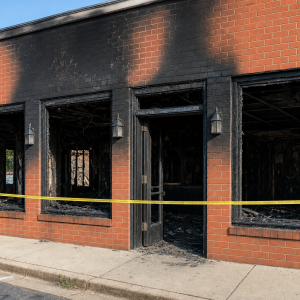
In Dailey v. Integon General Insurance Corp., a North Carolina homeowner whose house was destroyed by fire sued after the insurer refused to pay. The NC Court of Appeals ruled the homeowner could seek punitive damages because the denial involved aggravated, bad faith conduct — not just a simple breach of the insurance contract.
This decision matters to every property owner in the state because it drew a clear line: an insurance company that merely breaches its policy owes the policy benefits, but an insurer that acts in bad faith with aggravating conduct can be made to pay far more. Dailey remains one of the cases North Carolina courts look to when deciding whether a fire loss dispute is a contract fight or something worse.
What Happened in the Case?
The essential story is one many homeowners will recognize. A dwelling covered by a valid fire insurance policy burned. The homeowner submitted a claim and expected the insurer to honor its promise. Instead of paying, the insurer refused — and the homeowner alleged the refusal was not a good-faith coverage dispute but a deliberate effort to avoid a legitimate obligation. Rather than simply suing for the policy proceeds, the homeowner also pursued a bad faith insurance claim seeking punitive damages.
Why the Court Allowed Punitive Damages
The Court of Appeals recognized that when an insurer’s conduct goes beyond breaking the contract, the homeowner is not limited to contract remedies. In broad terms, the court’s reasoning rested on a few key points:
- An insurance policy is not an ordinary contract. The insurer holds enormous leverage over a policyholder who has just lost a home and needs funds to rebuild.
- Bad faith refusal to pay is a recognized wrong. Denying a valid claim without a legitimate, honest basis is more than a business disagreement.
- Aggravating conduct opens the door to punitive damages. Where the refusal is accompanied by elements such as fraud, malice, oppression, or willful disregard of the policyholder’s rights, a jury may punish the insurer — not just compensate the homeowner.
What Dailey Means for You Today
If your fire claim has been denied, Dailey is the reason your case may be worth more than the face value of your policy. Insurers know that a proven bad faith insurance claim exposes them to punitive damages, which is powerful leverage for policyholders who document their losses carefully. That documentation often starts with professional fire damage claim help in Garner or wherever your property is located, so the record shows exactly what you were owed and when.
The lesson from Dailey is simple: do not assume a denial is the end of the road. A wrongly denied fire claim can become a bad faith case, and building that case starts with an accurate, independent valuation of your loss — the kind of groundwork a Public Adjuster in Durham NC performs before an attorney ever gets involved.
What Counts as ‘Aggravated Conduct’ in a Bad Faith Insurance Claim?
Under North Carolina law, aggravated conduct means the insurer did more than get the claim wrong — it acted with fraud, malice, oppression, or a willful refusal to pay without any legitimate basis. In the Dailey decision, this standard is what separates an ordinary breach of contract from a bad faith insurance claim that supports punitive damages.
That distinction matters because insurers make honest mistakes all the time. A missed line item, a genuine disagreement over repair costs, or a reasonable coverage question is frustrating, but it is not bad faith. Courts look for something worse: conduct that shows the company knew better, or simply did not care.
The Four Categories of Aggravated Conduct
- Fraud — deliberately misrepresenting what your policy covers, altering documents, or hiding an engineer’s report that supported your fire loss.
- Malice — targeting a policyholder with hostility, such as accusing a homeowner of arson with no evidence in order to pressure a low settlement.
- Oppression — using the insurer’s superior position to grind you down: endless document demands, repeated re-inspections, or dragging out a claim while your family lives in a gutted house.
- Willful refusal without a legitimate basis — denying or slow-walking payment when the insurer has no honest, defensible reason to do so.
Wrong vs. Bad Faith: Real-World Home Claim Examples
Picture a kitchen fire. If the adjuster estimates smoke remediation too low because they misjudged how far soot traveled, the insurer is wrong — and you can dispute it. But if the company ignores its own hygienist’s report confirming contamination throughout the home and refuses to pay anyway, that starts to look like willful refusal without a legitimate basis. Homeowners who get professional fire damage claim help in Garner often discover this kind of gap between what the insurer’s own file shows and what it actually paid.
The same logic applies to building claims. An insurer that disputes whether wind or wear-and-tear damaged a roof is having a coverage disagreement. An insurer that keeps ‘reassigning’ the file to new adjusters for months, forcing you to restart the process each time until you give up, may be engaging in oppression. Documentation is what proves the difference — which is one reason many property owners bring in an independent professional like a public adjuster in Burlington to build a clear paper trail early.
Why This Standard Is Actually Good News for Homeowners
The aggravated conduct requirement is a high bar, but it cuts both ways. It protects insurers from punitive exposure over honest disputes — and it means that when a carrier’s behavior does cross the line, North Carolina courts have real teeth to punish it. If your fire loss file shows a pattern of ignored evidence, shifting excuses, or baseless accusations, you may be looking at more than a payment dispute.
What Are the Warning Signs Your Denied Claim May Be a Bad Faith Insurance Claim?
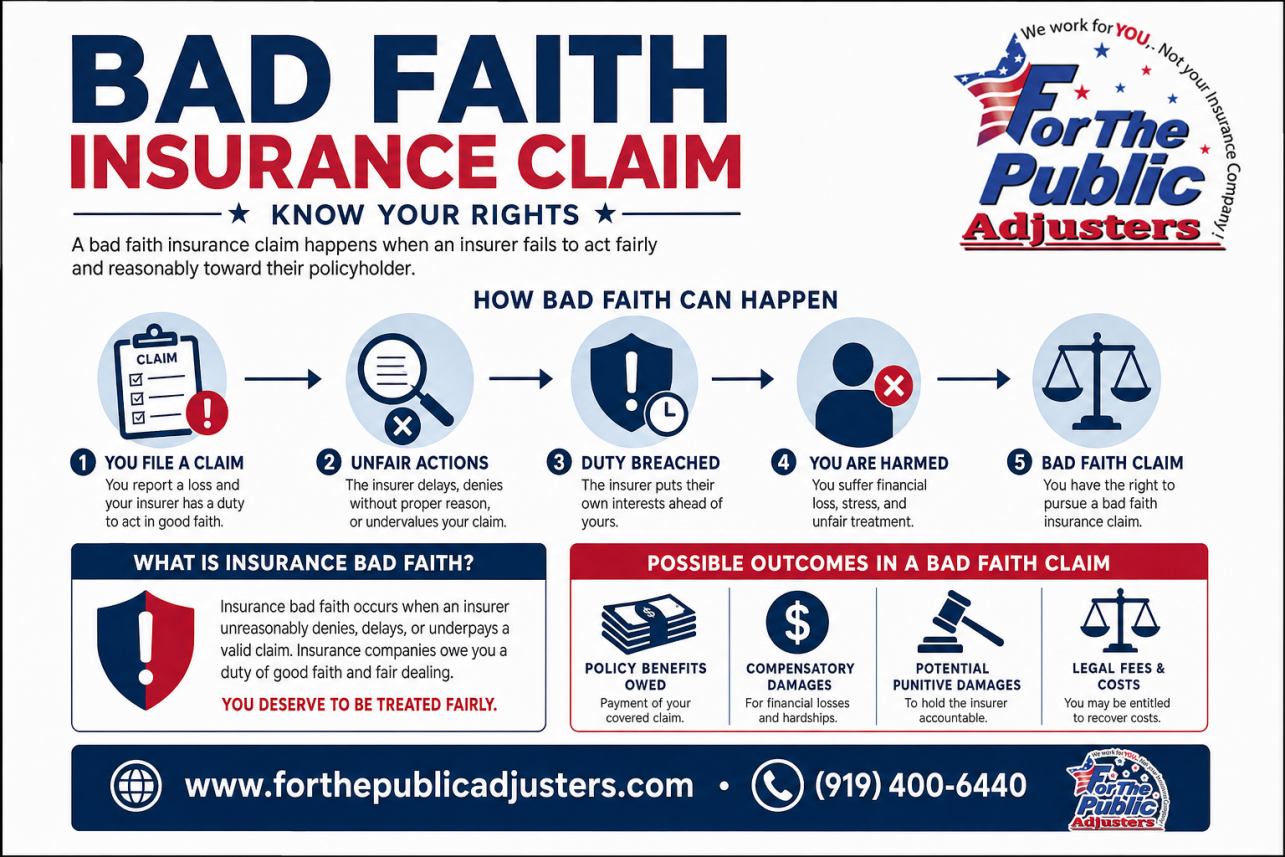
The clearest warning signs are a denial issued with little or no investigation, reasons for refusal that keep changing, lowball offers that ignore documented fire and smoke damage, unreturned calls and repeated delays, and pressure to accept a fast settlement before the full scope of repairs is known. One red flag may be sloppiness; several together suggest bad faith.
Not every denial is wrongful, and insurers are allowed to disagree with you about coverage. But North Carolina law expects carriers to handle claims honestly and reasonably. When the handling of your claim starts to look more like an effort to avoid paying than an effort to find the truth, it is worth documenting everything and taking the patterns below seriously.
Red Flags in How the Claim Was Investigated
- Denial without a real investigation. No adjuster visited the property, no fire or smoke inspection was performed, or the denial arrived suspiciously fast after you filed.
- Ignoring your evidence. Photos, contractor estimates, fire department reports, or receipts you submitted are never acknowledged or addressed in the decision.
- Cherry-picked findings. The insurer relies only on the parts of a report that support denial while skipping findings that support coverage.
Red Flags in the Reasons You’re Given
- Shifting explanations. First it’s an exclusion, then a documentation issue, then a late-notice argument. Moving targets often signal a decision made before the facts were reviewed.
- Vague policy citations. A denial letter that references “policy terms” without quoting the specific language, or misstates what your policy actually says.
- Lowball offers that ignore documented damage. An offer covering surface repairs while omitting smoke infiltration, odor remediation, HVAC contamination, or structural charring your documentation clearly shows. Property owners who bring in a public adjuster in Garner often discover the initial estimate missed entire categories of covered loss.
Red Flags in How You’re Treated
- Unreturned calls and stall tactics. Weeks of silence, repeated requests for documents you already sent, or a rotating cast of adjusters who each “start over.”
- Pressure to settle fast. Being urged to sign a release or cash a check before repairs have even been scoped is a classic tactic, because it can cut off your right to pursue the full value later.
- Discouraging outside help. Suggestions that hiring your own representative will “slow things down” or “hurt your claim” should raise suspicion, not compliance.
If you’re checking off multiple items on this list, start a written timeline now: log every call, save every letter and email, and photograph the damage before any cleanup. Homeowners in smaller Johnston County communities face these same tactics, which is why working with a public adjuster in Kenly NC or your local area can help you build the paper trail that separates an honest dispute from a bad faith insurance claim.
When Should a Denied Claim Go to an Insurance Dispute Lawyer Instead of Back to the Adjuster?
A denied claim belongs back with an adjuster when the dispute is about facts — scope, valuation, or missing documentation. It belongs with an insurance dispute lawyer when the insurer’s conduct itself is the problem: a refusal to pay a claim it knows is valid, unfounded fraud accusations, or stonewalling that no amount of new evidence will fix.
Most denied fire and smoke claims sit somewhere on a spectrum. On one end, the carrier made a defensible but wrong call based on incomplete information. On the other, the carrier’s behavior looks like the aggravated conduct courts have recognized in bad faith rulings. Knowing which situation you’re in determines your next move — and how much time and money you spend getting paid.
When the Adjuster Route Can Still Work
If the denial letter cites a factual or documentation issue, the claim can often be salvaged without litigation. Signs the dispute is still negotiable include:
- The insurer disputes the amount of damage, not whether it will pay at all
- The denial rests on an inspection you believe missed hidden damage — soot in wall cavities, HVAC contamination, or structural charring
- The carrier asked for records or proof-of-loss items you can still provide
- The insurer remains responsive and willing to schedule a re-inspection
In these cases, a licensed public adjuster can reopen the conversation with a documented estimate, moisture and soot testing, and a formal supplement. Homeowners dealing with lingering odor and residue issues, for example, often benefit from professional smoke damage claim help in Fuquay-Varina before ever considering a lawsuit — many underpaid fire claims are resolved through re-inspection and negotiation alone.
When It’s Time to Call an Attorney
Some denials can’t be fixed with better paperwork. Consider a consultation with an insurance dispute lawyer if you see:
- An outright refusal to pay despite clear evidence the loss is covered — the hallmark of a bad faith insurance claim
- Accusations of arson or fraud with no supporting investigation
- Repeated, shifting reasons for the denial
- Lowball offers paired with pressure to sign a full release
- Months of silence or ignored written requests
These patterns suggest the insurer’s position won’t change no matter what you submit, and only the leverage of litigation — including the possibility of punitive damages — will move the claim.
How the Two Roles Work Together
This isn’t an either/or choice. Attorneys routinely rely on the damage documentation, estimates, and claim timeline a public adjuster builds; that record often becomes the backbone of a bad faith case. Many homeowners start with a public adjuster in Gulf, NC or elsewhere in the region to establish the true value of the loss, then escalate to counsel only if the carrier’s conduct leaves no other option. Strong documentation helps you either way — it settles negotiable claims faster and strengthens litigation when negotiation fails.

How Can a Public Adjuster Protect Your Fire Claim This Fall?
A licensed and bonded North Carolina public adjuster protects your fire claim by documenting fire, smoke, and contents damage thoroughly from day one, reading your policy in full, and preparing a detailed, defensible estimate. That evidence trail pushes the insurer toward a fair settlement — and if the carrier still digs in, it gives your attorney a ready-made record.
Fall and winter are peak season for home heating fires. According to the National Fire Protection Association, heating equipment is one of the leading causes of home fires in the United States, with most occurring during the colder months. That seasonal surge means adjusters and restoration contractors get busy, files get rushed, and details get missed — often at the policyholder’s expense.
What a Public Adjuster Does Differently From Day One
Unlike the insurance company’s adjuster, a public adjuster works only for you, the policyholder. From the first site visit, the goal is to build a claim file that can stand up to scrutiny:
- Full-scope inspection: documenting not just the burn area but heat, smoke, soot, and water damage that carriers frequently minimize.
- Room-by-room contents inventory: photographing, listing, and valuing personal property before anything is discarded.
- Policy analysis: identifying every applicable coverage — dwelling, contents, additional living expenses, code upgrades — so nothing is left on the table.
- Independent estimating: preparing line-item repair estimates rather than accepting the carrier’s numbers at face value.
- A written record: logging every communication, deadline, and payment so delays and lowball offers are documented, not just remembered.
Smoke and soot are where fire claims are most often undervalued. Residue travels far beyond the fire’s origin, corroding electronics and embedding odor in soft goods and HVAC systems. Getting professional smoke damage claim help in Fuquay-Varina or anywhere in the Triangle early means that hidden damage is captured before it’s painted over or cleaned away.
Why This Evidence Trail Matters If the Insurer Digs In
If a carrier delays, underpays, or denies without a legitimate basis, the file a public adjuster builds becomes the foundation your attorney needs to evaluate a potential bad faith insurance claim. Dated photos, inventories, estimates, and correspondence show exactly what the insurer knew and when — the kind of record that separates an honest coverage dispute from aggravated conduct. Public adjusters in North Carolina are licensed and regulated through the North Carolina Department of Insurance, so verify any adjuster’s license before signing a contract.
If your home has suffered a fire this season, don’t wait until the claim goes sideways. Getting fire damage claim help in Holly Springs NC — or in your own community — starts with a free claim review. No one can guarantee a specific outcome, but starting with proper documentation gives your claim its strongest possible footing.
Simple Claim Denial vs. Bad Faith Insurance Claim in North Carolina
| Factor | Ordinary Breach of Contract | Bad Faith Insurance Claim |
|---|---|---|
| Insurer’s conduct | Honest dispute over coverage or value | Refusal to pay despite knowing the claim is valid, or reckless disregard of it |
| Legal standard | Failure to perform the policy’s terms | Aggravated conduct — fraud, malice, oppression, or willful and wanton disregard |
| Damages available | Policy benefits owed, plus interest | Policy benefits plus potential punitive damages and unfair trade practices remedies |
| Typical resolution path | Appeal, appraisal, or renegotiation with the adjuster | Litigation with an insurance dispute lawyer |
Illustrative Example: When a Fire Loss Denial Crossed the Line
Illustrative example
Consider a hypothetical composite scenario: after a kitchen fire destroyed much of their home, a North Carolina couple submitted a well-documented claim supported by the fire marshal’s report and contractor estimates. Their insurer denied the claim by vaguely alleging arson, conducted no meaningful investigation, and ignored months of written requests for an explanation. When the couple retained an insurance dispute lawyer, discovery revealed the insurer’s own file contained no evidence supporting the arson theory. Because the refusal to pay was made in bad faith and accompanied by aggravated conduct, the couple was able to pursue not only their policy benefits but also punitive damages — the exact framework the Dailey v. Integon ruling recognizes.
Frequently asked questions
What counts as a bad faith insurance claim in North Carolina?
In North Carolina, bad faith means your insurer refused to pay a valid claim without a legitimate reason and acted with aggravation—such as fraud, malice, oppression, or willful disregard of your rights. A simple disagreement over value or a good-faith coverage dispute is not bad faith. Courts look for conduct beyond an ordinary breach of contract, like manufacturing reasons to deny, ignoring clear evidence, or pressuring you to accept far less than the claim is worth.
How much can I recover if my insurer acted in bad faith?
You can potentially recover the amount owed under the policy plus additional damages. If aggravated conduct is proven, North Carolina law may allow punitive damages, which punish the insurer rather than just compensate you. Claims under the state’s unfair and deceptive trade practices statute can allow damages to be trebled. Actual recovery depends heavily on the facts, the strength of the evidence, and the severity of the insurer’s conduct.
How much does it cost to hire a lawyer for a bad faith insurance case?
Most insurance dispute attorneys handle bad faith cases on a contingency fee, meaning you pay nothing upfront and the lawyer takes a percentage of the recovery—commonly in the range of one-third, though percentages vary by firm and case stage. Initial consultations are typically free. Ask up front how case expenses like expert witnesses and court costs are handled, since those are separate from the attorney’s fee.
How long does a bad faith insurance lawsuit usually take?
Expect a year or more in many cases. Some resolve in months if the insurer settles after suit is filed, but contested cases involving discovery, depositions, expert witnesses, and possibly trial can stretch to two years or longer. Cases seeking punitive damages often take more time because insurers fight them harder. Your attorney can give a realistic timeline once they review your denial letter, policy, and claim file.
What are the warning signs my denied fire claim might be bad faith?
Red flags include a denial that doesn’t cite specific policy language, an investigation that ignored evidence supporting your claim, unexplained delays, repeated requests for documents you already provided, lowball offers far below documented losses, accusations of arson or fraud without real evidence, or an adjuster who won’t return calls or put reasons in writing. One red flag alone may not prove bad faith, but a pattern of them is worth showing to a lawyer.
Should I keep negotiating with the adjuster or go straight to a lawyer?
If the dispute is a genuine disagreement over repair costs or scope, continued negotiation or the policy’s appraisal process may resolve it. But if the insurer denied a clearly covered loss, accused you of wrongdoing, stalled for months, or offered a fraction of documented damages, get a legal consultation before responding further. A consultation costs nothing at most firms, and a lawyer can tell you whether you’re dealing with a dispute or misconduct.
What mistakes do homeowners make after an insurer denies a fire loss claim?
Common mistakes include accepting the denial without requesting the specific policy basis in writing, giving recorded statements without preparation, throwing away damaged property before it’s documented, missing policy deadlines for proof of loss or appraisal, signing releases without understanding them, and waiting too long to consult an attorney—which risks losing evidence and running into statutes of limitations. Keep everything in writing and save every letter, email, photo, and receipt.
What’s the difference between a breach of contract claim and a bad faith claim against my insurer?
Breach of contract simply means the insurer failed to pay what the policy requires—damages are generally limited to the amount owed. A bad faith claim alleges the insurer’s refusal was not just wrong but wrongful: done without legitimate justification and accompanied by aggravated conduct. That distinction matters because bad faith opens the door to punitive damages and other remedies unavailable in an ordinary contract dispute, which is what made the Dailey ruling significant for policyholders.
What evidence do I need to prove my insurer acted in bad faith?
Useful evidence includes your full policy, the written denial and all correspondence, claim notes and adjuster reports (obtainable in litigation), photos and documentation of the loss, expert opinions contradicting the insurer’s findings, and a timeline showing delays or shifting explanations. Proof of aggravated conduct—like ignoring favorable evidence or denying without investigation—is key to punitive damages. Start a file now; contemporaneous records are far more persuasive than reconstructed memories.
Can I file a complaint with the NC Department of Insurance instead of suing?
Yes, and it’s free. The North Carolina Department of Insurance accepts consumer complaints and can pressure insurers to respond and explain their position. However, the Department generally cannot force an insurer to pay a disputed claim or award you damages—that requires litigation or a negotiated settlement. Many policyholders do both: file a complaint to create a record while consulting an attorney about a lawsuit.
Car Hits Home Claim help near you
- Car Hits Home Insurance Claim Durham
- Car Hit MY House Insurance Claim Burlington
- Tree Damage Claim Denied
Related local pages
If your fire or property claim has been denied, delayed, or underpaid, talk to our licensed and bonded NC public adjusters today for a free claim review. Get in touch.
Last updated: October 5, 2026