
A Car Hits Your House in NC — Who Actually Pays for the Damage?
When a car hits your house in North Carolina, you generally have two paths to payment: the at-fault driver’s auto liability insurance or your own homeowners policy. Most homeowners get repaired faster by filing under their own policy first, then letting their insurer pursue the driver’s carrier to recover the money — including your deductible.
Key takeaways
- If a car hits your house in NC, you don’t have to wait for the driver’s insurance — you can file under your own homeowners policy right away.
- The at-fault driver’s liability carrier can take weeks or months to investigate and accept fault, leaving your home damaged and unsecured in the meantime.
- Filing with your own homeowners insurer is usually the fastest path to emergency repairs, tarping, and structural fixes.
- Through subrogation, your homeowners insurer pursues the driver’s carrier for reimbursement after paying your claim — and can recover your deductible for you.
- Document everything immediately: police report, photos, the driver’s insurance info, and receipts for emergency board-up or temporary repairs.
That answer surprises a lot of people. The natural assumption is that because the driver caused the damage, the driver’s insurance company should step up immediately and “handle everything.” In reality, that’s rarely how it plays out. The driver’s liability carrier owes you nothing until fault is established and the claim is investigated, and they have every incentive to take their time doing both.
Your Two Paths to Payment
- The driver’s auto liability policy: This carrier pays only after it accepts that its insured was at fault. Expect an investigation, recorded statements, possible disputes over the cause of the crash, and delays if the driver was uninsured, underinsured, or fled the scene.
- Your own homeowners policy: Vehicle impact is a covered peril under standard homeowners policies. Your insurer owes you a prompt investigation and payment under your contract — regardless of what the driver’s carrier is doing. You pay your deductible up front, but subrogation (covered later in this article) is the process designed to get it back.
This is not a small distinction. Structural damage from a vehicle strike often involves compromised load-bearing walls, foundation damage, broken gas or water lines, and a home that may not be safe to occupy. Waiting weeks or months for a liability carrier to accept fault means weeks or months of tarps, temporary shoring, and displacement. Homeowners dealing with a car hits home insurance claim in Durham and across the Triangle run into this exact bottleneck all the time.
Why This Matters Especially in Fall
Autumn in North Carolina is prime season for vehicles leaving the road. Wet leaves reduce tire traction dramatically, early morning frost catches drivers off guard, and shorter days mean more commuters navigating residential streets in the dark. Homes on curves, corners, hills, and T-intersections are especially exposed. If your house sits in one of those spots, it pays to understand your options before you ever need them.
The bottom line: the driver may be legally responsible, but your homeowners insurer is contractually responsible — and contractual obligations move faster. If you’re facing a car hit my house insurance claim in Cary or anywhere else in the state, the smartest first move is usually opening a claim under your own policy while preserving your rights against the driver.
The rest of this article walks through exactly how to do that — and how to protect yourself if either insurer drags its feet.

Why Can’t I Just Wait for the Driver’s Insurance to Pay When a Car Hits Your House?
Because the driver’s liability insurer won’t pay a dime until it finishes its own investigation and formally accepts fault — a process with no deadline that protects you. That can take weeks or months, and in the meantime your damaged wall, porch, or foundation sits exposed to rain, wind, and cold.
It feels obvious: the driver crashed into your home, so the driver’s insurance company should pay. But a liability carrier’s first duty is to its own policyholder, not to you. Before it cuts a check, it has to verify that its insured was actually at fault, that the policy was active, and that coverage applies to the loss. You are a third-party claimant in that process, which means you have very little leverage over how fast it moves.
What the Liability Investigation Usually Involves
- Recorded statements from the driver, any passengers, and witnesses — which can be hard to schedule if the driver stops cooperating.
- The police report, which may take days or weeks to be finalized and released.
- Coverage verification, confirming the policy was in force and the driver was permitted to use the vehicle.
- Liability disputes, such as claims of a medical emergency, a mechanical failure, or another vehicle forcing the driver off the road.
Any one of these can stall a claim. If the driver was uninsured, fled the scene, or was driving a borrowed or stolen car, the situation gets even murkier — there may be no liability carrier to pursue at all, or a long fight over which policy applies. Homeowners dealing with a car hit my house insurance claim in Cary often discover this the hard way after weeks of unreturned phone calls.
Your House Doesn’t Wait — and Neither Does the Weather
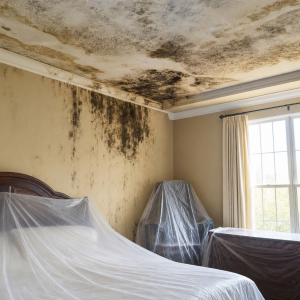
Here’s the part that catches most North Carolina homeowners off guard: while the liability carrier investigates, it owes you no interim payments and no timeline. There is no rule forcing it to tarp your wall, board up the opening, or stabilize your structure. Meanwhile, fall rain soaks exposed framing and insulation, cold snaps drive moisture into cracked masonry, and secondary damage like mold and rot starts compounding the original impact. Every week of delay can make the eventual repair bigger and more expensive.
That growing secondary damage can also become a point of dispute later, with the liability insurer arguing it shouldn’t pay for problems that developed after the crash. It’s a frustrating catch-22 that we see in situations like a car hit my house insurance claim in Burlington, where waiting on the at-fault driver only deepened the loss.
The practical takeaway: when a car hits your house, the driver’s insurance may eventually pay — but “eventually” is not a plan when your home is open to the elements. That’s exactly why the next question matters so much: whether to file under your own homeowners policy first.
Should I File Under Your Own Homeowners Policy First When a Car Hits Your House?
Yes, in most cases. Vehicle impact is a standard covered peril under North Carolina homeowners policies, and your own insurer owes you contractual duties and deadlines the driver’s carrier doesn’t. Filing first gets emergency repairs and payments moving now — and your deductible is typically recovered later, not lost forever.
It feels backwards to use your own insurance when someone else caused the damage. But your homeowners policy exists for exactly this situation, and it comes with something the at-fault driver’s liability policy never gives you: a direct contract. That contract obligates your insurer to acknowledge your claim, investigate it, and pay covered damages within reasonable timeframes under North Carolina law.
Why Your Own Policy Is the Faster Path
- Vehicle impact is a named peril. Standard NC homeowners forms cover damage caused by vehicles, so coverage for the structure is rarely in dispute.
- Emergency mitigation starts immediately. Your policy typically covers reasonable emergency measures — board-up, tarping, temporary shoring — and your insurer can authorize them quickly. A hole in your wall heading into a North Carolina winter invites frozen pipes, water intrusion, and pests, all of which compound the loss.
- Contents and structural payments move on your timeline. Damaged furniture, flooring, and personal property inside the impact zone get evaluated under your own coverage instead of waiting on a liability investigation.
- Additional living expenses may apply. If the impact makes part of your home unlivable, your policy may cover temporary housing — something the driver’s insurer won’t advance while fault is still being sorted out.
Homeowners in this exact situation — a car hit my house insurance claim in Burlington, for example — often assume they must wait on the driver, only to discover weeks later that their own policy could have had repairs underway from day one.
What About the Deductible?
This is the most common objection, and it’s understandable: why should you pay a deductible for damage you didn’t cause? The key word is temporary. When your homeowners insurer pays your claim, it pursues the at-fault driver’s carrier to recover what it paid — including, in most cases, your deductible. You’re fronting it, not forfeiting it. (The next section covers exactly how that recovery process works.)
Filing first doesn’t mean accepting whatever your insurer offers, either. Vehicle-impact claims often involve hidden structural damage — cracked foundations, shifted framing, compromised load-bearing walls — that a quick surface inspection can miss. Having your own representative, such as a public adjuster near Burlington, document the full scope before repairs begin helps ensure the claim reflects everything the crash actually damaged, not just what’s visible from the street.
The bottom line: your own policy is the tool built for speed. Use it, protect your home before weather makes things worse, and let the insurers fight over reimbursement behind the scenes.

How Does Subrogation Get My Deductible Back When a Car Hits Your House?
Subrogation is the process where your homeowners insurer, after paying your claim, steps into your shoes and pursues the at-fault driver’s auto liability carrier for reimbursement. If the recovery succeeds, your insurer is generally expected to recover your deductible on your behalf and return it to you.
In plain terms: you don’t have to chase the driver’s insurance company yourself. Once your homeowners carrier pays for the structural repairs after a car hits your house, it has a financial incentive to go after the responsible party’s insurer — and your deductible rides along with that claim. When the auto carrier reimburses your insurer, your deductible is typically part of what gets repaid, either in full or proportionally if the recovery is partial.
What the Subrogation Process Usually Looks Like
- Your claim is paid first. Your homeowners insurer inspects the damage, agrees on a repair scope, and issues payment minus your deductible.
- Your insurer sends a demand. Its subrogation department notifies the at-fault driver’s liability carrier and demands reimbursement for what it paid — plus your deductible.
- The auto carrier investigates liability. When a vehicle strikes a home, fault is usually clear, but the carrier still reviews the police report and coverage before paying.
- Recovery is distributed. If the auto carrier pays in full, you should receive your entire deductible back. If it pays only a portion — for example, because policy limits were exhausted — most insurers refund your deductible proportionally.
Realistic Timelines and Outcomes
Subrogation is rarely fast. Even in clear-liability cases, recovery commonly takes several months, and it can stretch longer if the driver was uninsured, disputes fault, or carried minimal coverage. Some outcomes to be aware of: full recovery with a complete deductible refund, partial recovery with a partial refund, or no recovery at all if the driver had no insurance and no assets worth pursuing. No one can promise a specific result, which is another reason filing under your own policy first matters — your repairs get funded while the reimbursement fight happens in the background. Homeowners working with a Public Adjuster in Garner often find it helpful to have someone documenting the full scope of damage up front, since the subrogation demand can only recover what was actually claimed and paid.
How to Keep Subrogation Moving
Stay engaged. Ask your insurer for the subrogation file or claim number, request status updates every month or two, and confirm in writing that your deductible is included in the demand. Keep copies of the police report and the driver’s insurance information, and forward anything the auto carrier sends you. If you’re unsure whether your claim was documented thoroughly enough to support full recovery, a Public Adjuster in Kenly, NC can review the estimate and payout before the subrogation demand goes out.
What If My Homeowners Insurer Delays or Underpays the Claim?
If your homeowners insurer delays or underpays after a car hits your house, you can dispute the estimate, demand a detailed written explanation, and bring in a licensed public adjuster to re-document and negotiate the claim. North Carolina courts also construe ambiguous policy language in the policyholder’s favor, which strengthens your position in coverage disputes.
Vehicle-into-structure claims are deceptively complicated, and that complexity is where underpayment tends to hide. The impact may crack a foundation, shift framing, or compromise load-bearing walls in ways a quick visual inspection misses. Common friction points include:
- Lowball structural estimates that price cosmetic patching instead of proper engineering evaluation and rebuilding of damaged framing or masonry.
- Matching disputes over brick, siding, or trim — the insurer offers to repair one wall even though the new materials won’t match the rest of the home.
- Contents undervaluation, where furniture, electronics, and personal items damaged in the crash are depreciated aggressively or overlooked entirely.
- Slow-walked timelines, with repeated requests for documents you’ve already provided while your home sits open to the weather.
North Carolina Law Leans Toward the Policyholder
When policy language is unclear, you don’t automatically lose the argument. In Gaston County Dyeing Machine Co. v. Northfield Insurance Co., 351 N.C. 293 (2000), the North Carolina Supreme Court sided with the insured in a property damage coverage dispute, reinforcing the principle that ambiguous policy terms are construed in favor of coverage. If your carrier is denying or narrowing coverage based on a debatable reading of the policy, that reading is not the final word.
How a Public Adjuster Levels the Playing Field
A licensed, bonded public adjuster works for you — not the insurance company. On a vehicle-impact claim, that means independently scoping the structural damage, documenting hidden issues like racked framing or cracked masonry, building a room-by-room contents inventory, and negotiating directly with the carrier’s adjuster using the same estimating software they use. Homeowners across the region, including those who search for a public adjuster in Gulf NC, often discover the initial estimate missed entire categories of damage.
One important note: a public adjuster handles the damage to your home and belongings — the building claim and the contents claim. The driver’s vehicle and any injury claims are separate matters handled through other channels. Whether the damage comes from a vehicle strike or another covered peril, the negotiation skills are the same ones our team brings as a public adjuster in Selma NC and throughout the surrounding counties.
If your claim has stalled or the numbers don’t come close to real repair costs, get an independent review before you accept a settlement. Once you cash the check and sign a release, reopening the claim becomes far harder.
What Should I Do Right After a Car Hits Your House?
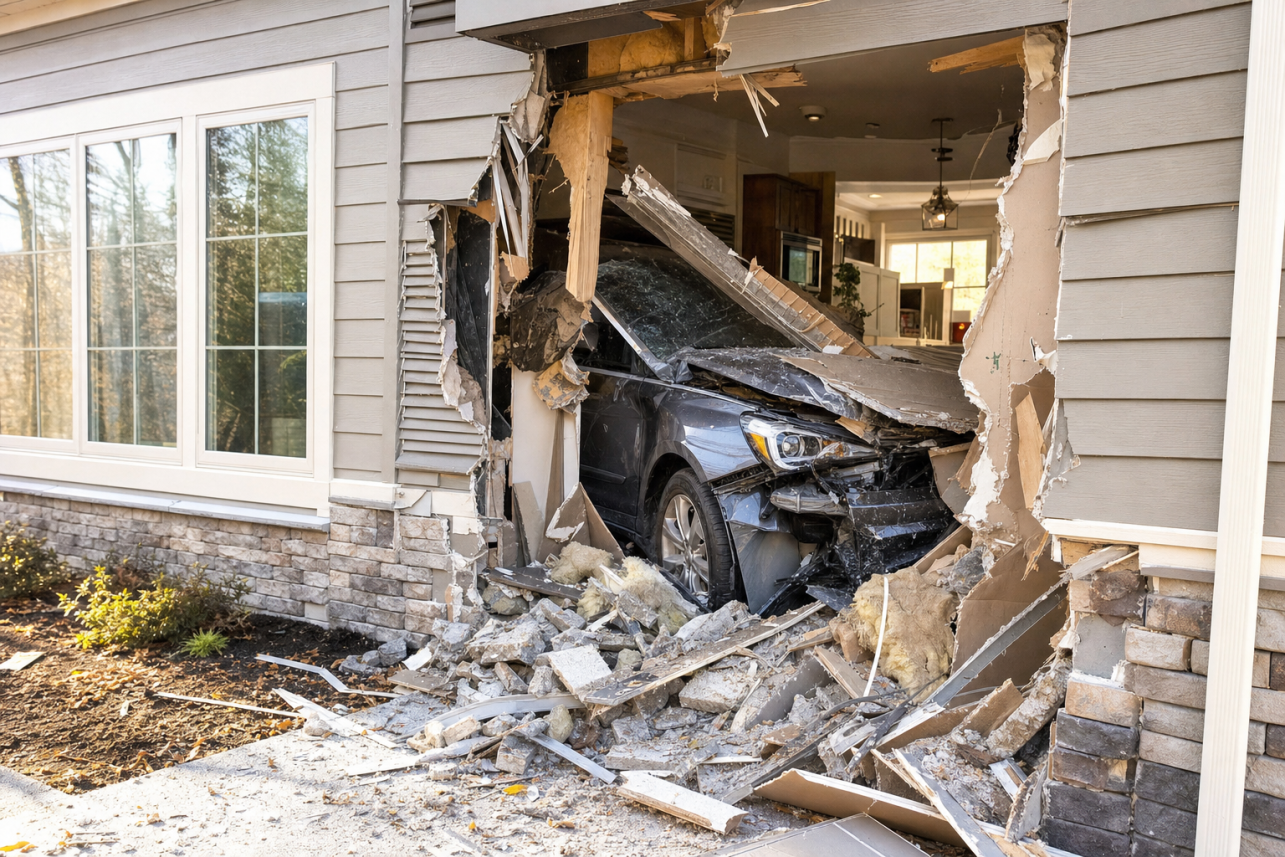
Get everyone to safety and call 911, then obtain the police report and the driver’s insurance information. Photograph all damage before any cleanup, arrange an emergency board-up to protect against wind and rain, notify your homeowners insurer promptly, and have a public adjuster review any settlement offer before you accept it.
The minutes and hours after a vehicle crashes into your home are chaotic, but the steps you take now shape how smoothly your claim goes later. Work through this checklist in order.
Step 1: Safety First, Then Call 911
- Move everyone away from the impact area — structural damage, gas leaks, and downed electrical lines are real risks.
- Do not attempt to move the vehicle or enter a compromised room.
- Call 911 so police, fire, and EMS respond. If you smell gas, evacuate and call your utility company from outside.
Step 2: Get the Police Report and Driver Details
The responding officer’s report is the backbone of both the liability claim and your homeowners claim. Get the report number, the driver’s name, license plate, and auto insurance information. If the driver flees, the police report documenting a hit-and-run becomes even more important.
Step 3: Photograph Everything Before Cleanup
- Take wide shots showing the vehicle’s position relative to your home, plus close-ups of cracked foundations, shifted framing, broken windows, and interior damage.
- Capture damaged personal property, landscaping, fencing, and driveways.
- Video walk-throughs are useful too — you cannot have too much documentation.
Step 4: Arrange an Emergency Board-Up
Your policy requires you to protect the property from further damage. A gaping hole in a wall invites wind, rain, and intruders. Hire a board-up or tarping service, keep the receipts, and note that reasonable emergency protection costs are typically reimbursable under your policy.
Step 5: Notify Your Homeowners Insurer Promptly
Report the loss quickly and provide the police report number. The North Carolina Department of Insurance offers consumer guidance on the claims process and your rights as a policyholder. Keep a written log of every call, adjuster visit, and document you send.
Step 6: Get a Professional Review Before Accepting Any Settlement
Structural impact damage is easy to underestimate — hidden framing, foundation, and load-bearing issues often surface later. Before you sign off, consider having a licensed professional review the estimate; the National Association of Public Insurance Adjusters explains how public adjusters represent policyholders rather than insurers. If your home was struck, a specialist experienced with a car hits home insurance claim in Durham can identify damage the initial estimate missed.
Homeowners in Johnston County can also get a policy and estimate review from a licensed and bonded public adjuster in Selma NC before accepting any offer. A second set of trained eyes costs you nothing to ask about — and it can make sure the settlement reflects the full scope of the damage.
Car Hits Your House: Filing With Your Insurer vs. Waiting on the Driver’s Carrier
| Factor | Your Homeowners Policy First | Waiting on Driver’s Liability Carrier |
|---|---|---|
| Speed of payment | Typically days to weeks after adjuster inspection | Often weeks to months while fault is investigated |
| Who you deal with | Your own insurer, which owes you contractual duties | A carrier that owes duties to the driver, not you |
| Out-of-pocket cost | Deductible up front, often recovered later via subrogation | Potentially nothing up front, but repairs stall until fault is accepted |
| Risk of denial or delay | Lower — coverage is based on your policy, not fault | Higher — disputes over fault, coverage limits, or an uninsured driver |
| Who chases reimbursement | Your insurer handles subrogation for you | You negotiate directly with the driver’s carrier |
Hypothetical Example: A Raleigh Homeowner’s Two Paths
Illustrative example
Consider a hypothetical Raleigh homeowner whose brick front wall is struck by a driver who ran a stop sign. The driver’s liability carrier says it must complete its investigation before accepting fault, and weeks pass with the wall braced by plywood. The homeowner instead files under her own homeowners policy, her insurer promptly pays for structural repairs minus her deductible, and repairs begin within days. Months later, her insurer’s subrogation team recovers its payout from the driver’s carrier and returns her deductible. This composite scenario is illustrative only, but it reflects how the process commonly plays out in North Carolina.
Frequently asked questions
What should I do first if a car hits your house in NC?
Make sure everyone is safe, call 911, and don’t enter any damaged area until it’s inspected. Get the police report number, the driver’s insurance details, and photos of the vehicle and damage. Then call your own homeowners insurer to open a claim — even if the driver was clearly at fault. Board up openings or tarp damage to prevent further loss, and keep receipts for any emergency repairs.
Why does the at-fault driver’s insurance take so long to pay for house damage?
The driver’s liability carrier owes you nothing until it accepts that its insured was at fault. That means completing its own investigation, obtaining the police report, contacting its driver, and evaluating coverage — a process that can drag on for weeks or months, especially if the driver doesn’t cooperate or coverage is disputed. Your own homeowners insurer, by contrast, has a contractual duty to handle your claim promptly regardless of fault.
Will filing a claim with my own homeowners insurance raise my rates if the accident wasn’t my fault?
It shouldn’t in most cases, because this is a not-at-fault claim, and if your insurer recovers its payment from the driver’s carrier through subrogation, the claim is essentially made whole. That said, rating practices vary by company, so ask your agent how a not-at-fault property claim is treated. The risk of a modest impact is usually far smaller than the cost of waiting months for the driver’s insurer.
Do I get my homeowners deductible back if my insurer subrogates against the driver?
Usually, yes. When your insurer pursues subrogation and recovers from the at-fault driver’s liability carrier, it typically recovers your deductible along with what it paid and refunds it to you. Recovery isn’t guaranteed — if the driver was uninsured or the carrier pays only part — but in a clear-liability case like a car striking your house, full recovery including your deductible is the common outcome.
What if the driver who hit my house was uninsured or fled the scene?
This is exactly why filing under your own homeowners policy first matters. Your insurer pays for covered structural damage regardless of whether the driver is identified or insured. Report the hit-and-run to police right away so there’s an official record. If the driver is never found or has no coverage, you may not recover your deductible, but you won’t be stuck paying for the entire repair yourself.
How long does it take to get paid after a car crashes into your house?
Under your own homeowners policy, the process typically moves in weeks: an adjuster inspects, estimates are written, and payment follows once the claim is approved. Waiting on the at-fault driver’s liability carrier can take months, since it must first investigate and formally accept fault. Complex structural damage requiring engineering inspections can extend either timeline, but your own policy is almost always the faster route to repairs.
Can I make the driver pay for my deductible and other out-of-pocket costs directly?
You can pursue the driver or their insurer for amounts your policy didn’t cover, like your deductible, if subrogation doesn’t recover them. In practice, it’s easier to let your insurer’s subrogation process handle the deductible. For other uncovered losses — landscaping, personal items excluded from coverage — you can submit those to the driver’s liability carrier or, if necessary, sue the driver in small claims court.
What mistakes do homeowners make after a vehicle hits their house?
Common mistakes include waiting for the driver’s insurance instead of filing their own claim, failing to get the police report and driver information at the scene, not securing the property against weather or intruders, throwing away damaged materials before an adjuster documents them, and accepting a quick settlement from the driver’s carrier before the full extent of structural damage is known. Hidden foundation or framing damage often surfaces later.
Does homeowners insurance cover structural damage from a vehicle impact?
Yes — vehicle damage to your dwelling is a standard covered peril under typical homeowners policies. That includes damage to walls, foundation, porches, garages, and attached structures. Coverage for detached structures like fences or sheds usually falls under other-structures coverage. Your deductible applies upfront, but subrogation can recover it later. One exception: many policies exclude damage caused by a vehicle you or a household member were driving.
Should I get my own contractor estimate or just use the insurance adjuster’s number?
Get at least one independent estimate from a contractor experienced in structural or impact repairs. Vehicle impacts can cause hidden damage to framing, foundations, and load-bearing walls that a quick visual inspection misses. If your contractor’s estimate is significantly higher than the adjuster’s, you can ask the insurer to reinspect or negotiate. For serious impacts, a structural engineer’s evaluation is worth requesting before repairs begin.
Car Hits Home Claim help near you
- Car Hits Home Insurance Claim Durham
- Car Hit MY House Insurance Claim Burlington
- Tree Damage Claim Denied
Related local pages
If a vehicle has damaged your home, you don’t have to navigate the claim alone. Contact our licensed and bonded NC public adjusters for a free, no-obligation review of your homeowners claim today. Get in touch.
Last updated: November 9, 2026