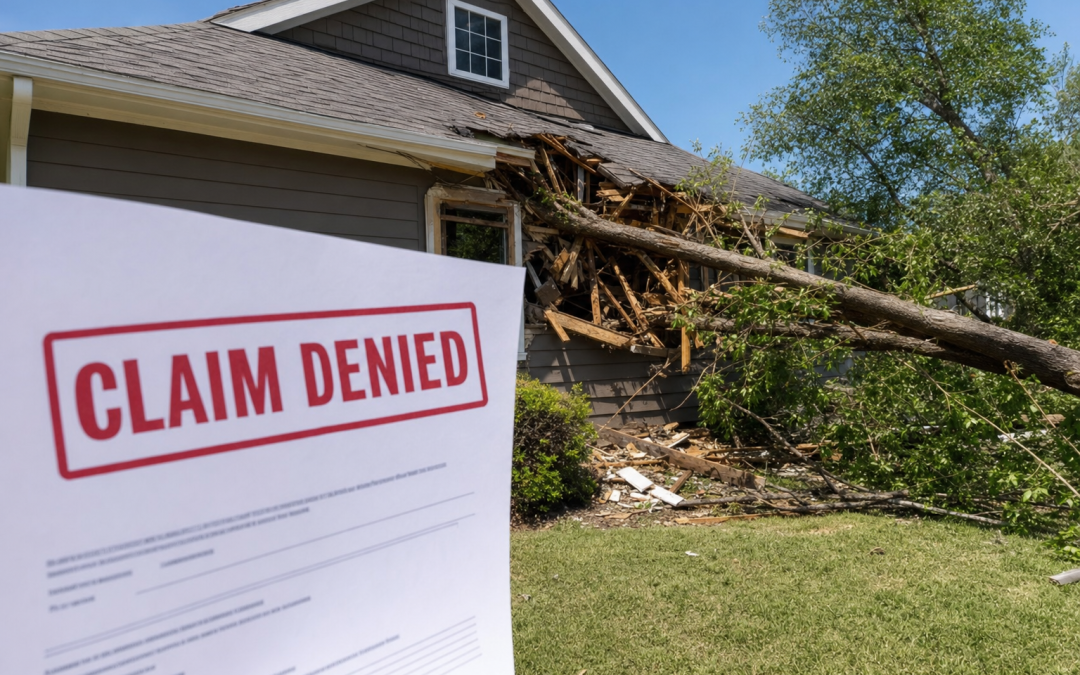
Tree Damage Claim Denied Because of ‘Rot’? Here’s the Quick Answer
If you had a tree damage claim denied because the insurer says the tree was rotten, know this: under a standard HO-3 policy, once you show a tree suddenly fell and physically damaged your home, the burden shifts to the insurance company to prove that rot, decay, or neglect actually caused the loss — not just assert it.
Key takeaways
- Under an HO-3 special form policy, all direct physical loss is covered unless the insurer proves a specific exclusion applies — the burden is on the carrier, not you.
- A denial letter claiming ‘rot’ or ‘internal decay’ is an allegation, not proof; ask what physical evidence and expert analysis the insurer relied on.
- Wind is a covered peril, so even a tree with some decay may still trigger coverage if wind was the efficient proximate cause of the failure.
- Preserve the fallen tree, stump, and photos before cleanup — the physical evidence often decides who wins the burden-of-proof battle.
- A public adjuster can commission an arborist report, document the storm event, and force the carrier to substantiate its exclusion or pay the claim.
That distinction matters more than most homeowners realize. A denial letter that cites “internal decay” or “pre-existing deterioration” without an arborist report, lab analysis, photographs of the failure point, or any other documented evidence is an assertion, not proof. Assertions can be challenged — and often should be.
Why “Rot” Is the Insurer’s Burden, Not Yours
An HO-3 is a special form (often called “open perils”) policy for the dwelling itself. That structure creates a two-step legal framework in most states:
- Step one — your burden: You show that a sudden, accidental physical loss occurred. A tree crashing through your roof, garage, or fence clearly qualifies.
- Step two — the insurer’s burden: If the carrier wants to deny coverage based on an exclusion such as rot, decay, wear and tear, or neglect, it must prove that the excluded condition actually caused the loss.
In other words, the carrier can’t simply glance at a fallen trunk, note some discoloration, and write “decay” on a denial letter. It needs evidence connecting the alleged rot to the reason the tree fell — especially when a storm, high winds, or lightning was clearly involved at the same time.
Red Flags in a Rot-Based Denial Letter
Take a close look at your denial. It may be weaker than it sounds if it includes any of the following:
- No inspection by a certified arborist or engineer — only a field adjuster’s opinion
- No photos of the actual failure point on the trunk or root system
- Vague language like “evidence of internal decay” with nothing attached to support it
- No explanation of why wind or storm forces weren’t the real cause
- A denial issued quickly, before the debris was even examined
What This Means for You Right Now
Don’t haul away the tree or the damaged debris yet if you can safely avoid it — that stump, trunk, and failure point are your evidence too. Photograph everything, request the insurer’s full basis for the denial in writing, and consider getting your own arborist opinion. Many homeowners successfully overturn rot-based denials once the carrier is pressed to actually support its conclusion. If you’re facing this situation in North Carolina, a policyholder-side professional can help — see our tree damage insurance claim help in Burlington for how that works in practice.
The sections below break down exactly how HO-3 coverage applies to fallen trees and who must prove what when a claim goes sideways.

How Does an HO-3 Special Form Policy Cover a Fallen Tree?
An HO-3 policy covers your house on an “open perils” basis, meaning a tree that falls on your dwelling is covered unless the insurer can point to a specific written exclusion that applies. You don’t have to prove what caused the loss — the carrier has to prove an exclusion, such as rot or decay, actually caused it.
This is the single most important thing to understand about your policy, because it flips the usual assumption on its head. Most homeowners assume they have to convince the insurance company the claim is covered. Under an HO-3, the starting point is the opposite: sudden, accidental physical damage to the dwelling and attached structures is presumed covered from the moment it happens.
Open Perils vs. Named Perils — Why the Difference Matters
Cheaper policy forms (like an HO-1 or HO-2) only cover losses caused by perils specifically listed in the policy. An HO-3 works differently for the dwelling itself:
- Everything is covered by default. The policy insures against “direct physical loss” to the home, full stop.
- Exclusions are the carrier’s burden. To deny, the insurer must identify a listed exclusion — wear and tear, rot, deterioration, neglect — and show it actually caused the damage.
- Doubt favors the policyholder. Exclusions are read narrowly, and ambiguity in the policy language is generally construed against the insurer that wrote it.
Why Storm-Related Tree Falls Are Presumptively Covered
Wind is not an excluded peril on the dwelling under a standard HO-3. So when a summer thunderstorm, downburst, or the remnants of a tropical system push a tree onto your roof, garage, or fence, the loss fits squarely within coverage. The tree fell suddenly, the damage is accidental and physical, and the triggering event — wind — is covered. If the carrier wants to escape that result by blaming pre-existing rot, it has to come forward with real evidence, not just an adjuster’s photo of a discolored stump. That’s exactly the fight covered in the tree damage insurance claim help work public adjusters handle for homeowners.
Debris Removal and Other Additional Coverages
A covered tree loss usually triggers more than just repair money for the structure:
- Debris removal. Policies typically pay to remove the tree and other debris from a covered loss, sometimes with a separate sub-limit for hauling the tree itself off the property.
- Trees, shrubs, and plants. Many HO-3 policies include limited coverage for landscaping damaged by certain perils, subject to per-item caps.
- Other structures. Detached garages, sheds, and fences crushed by the tree fall under a separate coverage limit, usually a percentage of the dwelling limit.
- Loss of use. If the damage makes your home unlivable while repairs are underway, additional living expenses are typically covered.
In short: under an HO-3, a storm-felled tree starts out covered — and it stays covered unless the insurer can genuinely prove otherwise.

Who Has to Prove the Tree Was Rotten — You or the Insurer?
The insurance company does. Under the law in both North Carolina and Virginia, once you show that a covered peril — like windstorm — caused the damage, the burden shifts to the insurer to prove that an exclusion, such as rot or decay, actually applies. You do not have to prove the tree was healthy.
How the Burden of Proof Works in a Property Claim
Courts in most states, including North Carolina and Virginia, follow a well-established two-step framework in insurance coverage disputes:
- Step one — your burden: The policyholder must show a loss occurred and that it falls within the policy’s basic grant of coverage. For a fallen tree on an all-risk policy, that’s usually straightforward: the tree fell, it damaged covered property, and a storm was blowing through at the time.
- Step two — the insurer’s burden: If the carrier wants to deny based on an exclusion (rot, decay, neglect, wear and tear), the carrier must prove that exclusion applies to the facts of your loss. Exclusions are also construed narrowly, and ambiguities are read in favor of the policyholder.
This matters enormously in practice. Many homeowners see a tree damage claim denied with a one-line reference to “rot or deterioration” and assume they have to hire an arborist to prove the tree was sound. Legally, it’s the other way around. If the adjuster’s file contains nothing more than a photo of some discoloration on the stump and a conclusory note, the carrier may not have met its burden at all.
What Real Proof of Rot Should Look Like
To legitimately carry its burden, an insurer generally needs evidence such as:
- A documented inspection of the actual failure point of the tree — not just surface photos
- An opinion from a qualified expert, such as a certified arborist, tying the failure to decay rather than wind
- Analysis showing the rot was the efficient proximate cause of the fall, not merely present in a tree that wind would have toppled anyway
A tree can have some internal decay and still fall because of wind. If the storm was the dominant cause, many courts hold the loss is covered despite a rot exclusion — though outcomes always depend on the specific policy language and facts.
What You Can Do With This Knowledge
Ask the insurer, in writing, for the specific evidence supporting the rot finding. If the answer is thin, you have grounds to dispute the denial. You can also file a complaint with your state regulator — the North Carolina Department of Insurance or the Virginia Bureau of Insurance — both of which review whether carriers handled claims fairly. Preserve the tree debris and take detailed photos before cleanup, because that physical evidence is often the only way anyone can evaluate what really caused the failure.
Tree Damage Claim Denied: Who Must Prove What Under an HO-3 Policy
| Question in Dispute | Homeowner’s Burden | Insurer’s Burden |
|---|---|---|
| Did a direct physical loss occur? | Show the tree fell and damaged covered property | N/A — this is the policyholder’s initial showing |
| Does the rot/decay exclusion apply? | None — no duty to disprove rot | Prove decay actually existed and caused the failure |
| What actually caused the tree to fall? | Point to the covered peril (e.g., documented windstorm) | Show the excluded cause, not wind, was the efficient proximate cause |
| Is the denial adequately supported? | Request the evidence behind the denial in writing | Produce inspection findings, expert analysis, or arborist opinion |
Illustrative Example: Turning a ‘Rotten Tree’ Denial Around
Illustrative example
In this hypothetical composite scenario, a Virginia homeowner’s oak fell onto their roof during a documented severe thunderstorm, and the carrier denied the claim citing ‘internal decay’ based on a brief drive-by inspection. A public adjuster secured the remaining trunk sections before removal, obtained weather data confirming damaging wind gusts, and retained a certified arborist who found the failure point showed sound wood consistent with wind overload.
The adjuster then sent a written demand asking the insurer to produce the evidence supporting its decay exclusion, which it could not do. Faced with an unsupported denial and a documented covered peril, the carrier reopened the file and paid the roof and structural repairs. This illustrative example shows how holding the insurer to its burden of proof — rather than accepting the denial letter at face value — can change the outcome.
Frequently asked questions
What should I do first if my tree damage claim denied letter blames rot or decay?
Request the denial in writing, ask the insurer to cite the exact policy exclusion, and preserve the evidence before cleanup. Do not let the tree be hauled away — photograph the trunk cross-section, root ball, and break point from multiple angles, and keep sections of the wood if possible. Then get the full claim file, including any engineer or arborist report the carrier relied on, and consider an independent review before accepting the denial.
Can I still fight the denial if the tree has already been removed?
Often yes. Photos taken by you, neighbors, tree crews, or even the insurer’s own adjuster may show sound wood at the failure point. Weather records, the removal company’s observations, and the absence of any documented decay in the carrier’s file can all support your position. It is harder without the physical tree, which is why preserving it matters, but a missing tree does not automatically doom the claim.
How much does hiring a public adjuster or arborist cost for a denied tree claim?
Public adjusters typically work on a contingency percentage of the amount recovered, so there is usually no upfront fee — if nothing is recovered, you generally owe nothing. Fee caps and rules vary by state, so confirm the percentage in the written contract. An independent arborist report is usually a separate flat fee paid out of pocket, and it can be one of the most valuable pieces of evidence in a rot-based denial.
How long does it take to overturn a tree damage denial?
It varies widely. A well-documented supplement or appeal with an arborist report can resolve in a matter of weeks if the carrier reconsiders. If the dispute escalates to appraisal, a Department of Insurance complaint, or litigation, it can take several months or longer. Acting quickly — preserving evidence and responding to the denial promptly — usually shortens the timeline and keeps you inside policy and statutory deadlines.
What evidence actually proves a tree was healthy when it fell?
Photos of the trunk and break point showing solid wood, an independent arborist’s inspection of the stump or retained sections, prior photos of the tree with a full canopy, records of recent trimming or care, and certified weather data showing high winds or storms at the time of loss. Neighbor statements and tree-service observations also help. Together these force the insurer to produce actual proof of decay rather than an assumption.
What mistakes do homeowners make after a rot-based tree claim denial?
The biggest ones: letting the tree and stump be removed before documenting them, accepting the adjuster’s verbal opinion as final, giving a recorded statement that speculates about the tree’s condition, missing appeal or suit deadlines in the policy, and never asking for the written basis of the denial. Another common error is assuming a partial rot finding ends the claim — decay in one spot does not prove the tree failed because of it.
Does homeowners insurance cover removing the tree itself, or just the damage it caused?
Under most HO-3 policies, if a tree hits a covered structure, the policy pays to repair the structure and typically includes some debris removal. Tree removal when nothing was hit is far more limited, often only in specific situations such as blocking a driveway, and usually subject to small sub-limits. Read the debris removal provision in your specific policy, because coverage hinges on what the tree struck and why it fell.
Should I file a complaint with the Department of Insurance or go straight to a lawyer?
A Department of Insurance complaint in North Carolina or Virginia is free, creates a record, and requires the carrier to respond in writing — often a useful first step for a weakly supported denial. A lawyer makes sense when the claim is large, the carrier refuses to move despite strong evidence, or bad faith is suspected. Many homeowners use a public adjuster first to rebuild the file, then escalate only if needed.
What if the insurer’s own arborist or engineer says the tree was rotten?
You are entitled to see that report — ask for it. Then have an independent arborist evaluate the same evidence. Carrier-hired experts sometimes rely on limited photos or never inspect the actual failure point, and a report noting some decay does not establish that decay caused the failure, especially during a storm. Conflicting expert opinions often push a claim toward reconsideration, appraisal, or settlement rather than a sustained denial.
If the tree was partly decayed but fell in a windstorm, is the damage still covered?
Frequently yes. Under an HO-3 special form, wind is a covered peril, and the insurer must prove an exclusion applies to escape coverage — not just show the tree had some decay. If a windstorm was a cause of the failure, many courts require the carrier to establish that decay alone would have brought the tree down. This causation question is exactly where independent arborist analysis and weather data become decisive.
Related local pages
- Public Adjuster Burlington NC: Fire, Water & Storm Damage Claims Handled On The Policyholder’s Side
- Public Adjuster Elon NC — Fire & Water Claim Help For Alamance County Homeowners
- Public Adjuster Haw River NC — Fire, Flood & Storm Claim Help For Older Mill-Town Homes Along The Haw
Got a denial letter blaming a ‘rotten tree’? Don’t accept it as the final word. Our licensed and bonded public adjusters serve homeowners across North Carolina and Virginia and will review your denial at no cost. Contact us today to find out whether the carrier actually met its burden of proof. Get in touch.
Last updated: August 30, 2026