
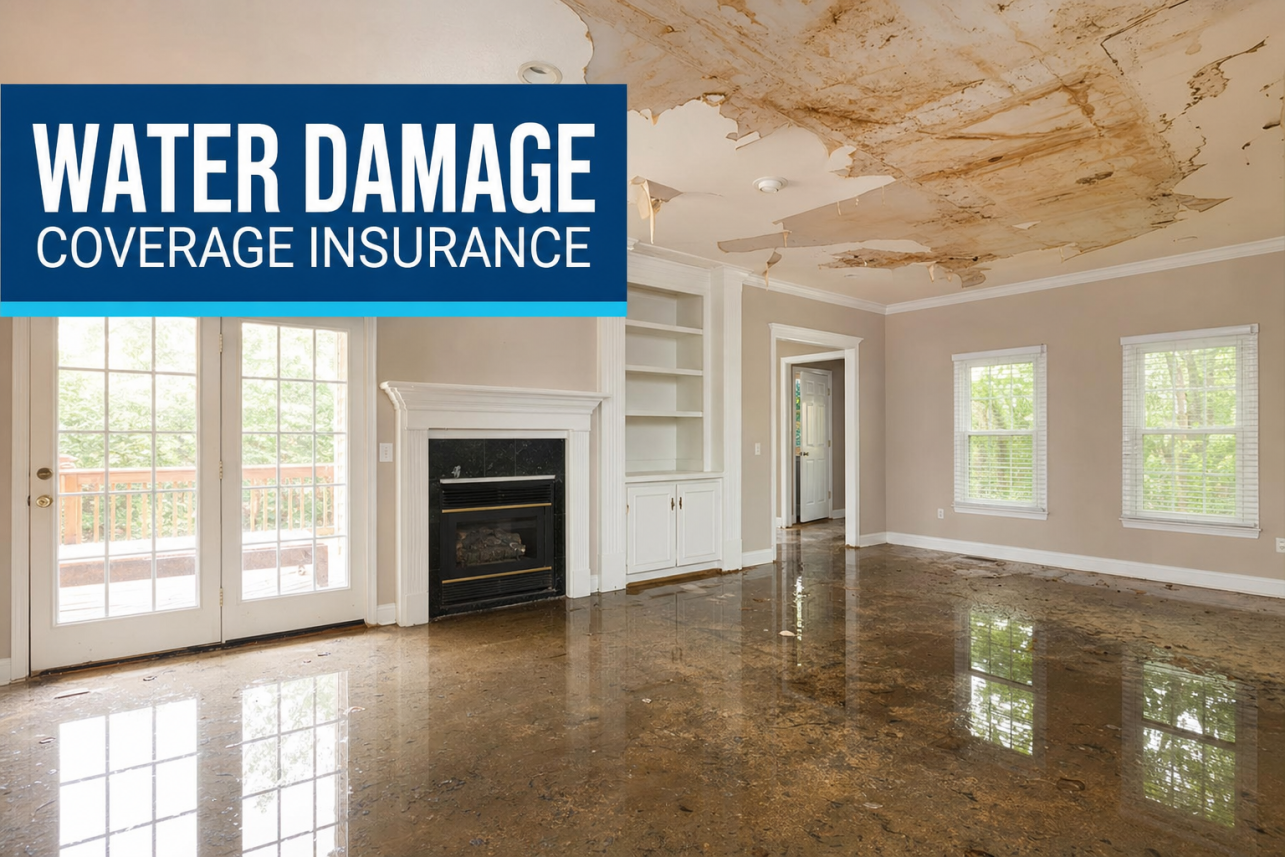
If you have a dispute over water damage coverage insurance Fuquay-Varina homeowners can hire a licensed public adjuster to review the policy, document the loss, and negotiate directly with the insurance company on their behalf. For The Public Adjusters, Inc. represents you — not the insurer — on burst pipes, roof leaks, appliance failures, and the hidden damage that follows them. We are licensed and bonded, and we only get involved on your side of the claim.
What This Service Is
Most homeowners assume that if water ruins their floors, drywall, or belongings, the policy simply pays for it. In practice, the outcome depends on how the loss is documented, how the policy language is read, and who is doing the reading.
A public adjuster is a state-licensed claims professional who works for the policyholder instead of the insurance company. When water from a failed supply line, a leaking roof, or an overflowing water heater damages your Fuquay-Varina home, we handle the claim from start to finish: reading your coverage, measuring and photographing every affected area, pricing the repairs, preparing the proof of loss paperwork, and negotiating the settlement.
That matters because water losses are rarely as small as they first look. Moisture wicks up inside walls, soaks subfloors, and settles in insulation where nobody sees it. If those areas never make it into the claim file, they never make it into the check.
The North Carolina Department of Insurance publishes the NCDOI Public Adjusters Guide, which explains that public adjusters must be licensed in this state and act solely for the insured. That is exactly the arrangement here — our fee comes from the recovery we help secure, and we never make promises about a specific dollar outcome. We also handle related residential and commercial claims, including fire, smoke, tree damage, and flood claims through the National Flood Insurance Program.
Common Problems
Why Is The Insurance Company’s Offer So Much Lower Than My Contractor’s Estimate?
This gap is the single most common frustration we see. The carrier’s estimate is often built on the visible damage only — the stained ceiling, not the soaked insulation above it — and priced at rates local contractors won’t actually work for.
Depreciation is another quiet reason checks come in small. Many policies pay actual cash value first, which is the replacement cost minus wear and tear, with the rest held back until repairs are done. Homeowners often never collect that held-back amount because nobody explains how to claim it.
Courts have pushed back on aggressive depreciation. In Sproull v. State Farm Fire & Casualty Co., the Illinois Supreme Court sided with the policyholder, ruling the insurer could not depreciate labor costs when calculating actual cash value on a property claim. Cases like that show these numbers are negotiable — but only if someone on your side knows how to challenge them.
What If My Water Damage Coverage Insurance Fuquay-Varina Claim Gets Denied?
Denials usually hinge on policy language, not on whether your home is genuinely damaged. Carriers often deny water losses by calling them gradual leaks, wear and tear, or maintenance issues — all common exclusions — even when the actual cause was sudden.
Another frequent denial reason is the flood line. Water that rises from outside the home is flood damage and falls under a separate NFIP flood policy, while water from a burst pipe or roof leak belongs on your homeowners policy. Insurers sometimes blur that line in their favor, and sorting out which policy truly applies can revive a claim that looked dead.
A denial letter is a position, not a verdict. We reopen and dispute denied water claims by re-inspecting the loss, establishing the true cause of the damage, and holding the carrier to what the policy actually says.
Should I Just Deal With The Insurance Adjuster Myself?
You can, and for a very small, simple loss that may be fine. The problem is that the adjuster who inspects your home is paid by the insurance company, and everything you say and sign shapes the outcome.
Water claims are especially easy to underdocument. If moisture readings, contents inventories, and mold-risk areas aren’t recorded early — before things are torn out or dry out on the surface — that evidence is gone. Emergency dry-out costs and temporary repairs also need to be tracked from day one, because they are typically reimbursable.
A good public adjuster does what you would do if you had the training and the time: reads the full policy including its limits and deductible, builds an independent repair estimate, prepares the proof of loss, and negotiates as your advocate. Before hiring anyone, confirm they hold a North Carolina public adjuster license — we do, and we’re bonded as the state requires.

Our Process
Free Policy Review And Damage Inspection
We start by reading your homeowners or commercial policy line by line — coverage limits, exclusions, deductible, and how it values your property. Then we inspect the loss ourselves, including the places water hides: wall cavities, subfloors, crawl spaces, and cabinets. You learn what your claim genuinely involves before you commit to anything.
Documentation, Estimate, And Proof Of Loss
We photograph and measure every affected area, inventory damaged contents room by room, and build an independent repair estimate at realistic Wake County pricing. We then prepare and submit the formal proof of loss paperwork correctly and on time — a step where small mistakes routinely stall or shrink claims.
Negotiation And Settlement
We meet the insurance company’s adjuster at your property, walk the damage together, and challenge low figures item by item with our documentation. We push the claim toward a fair, complete settlement and keep you informed on the timeline at every stage. We never guarantee a specific result — no honest adjuster can — but you will never negotiate alone.
| What Happens | Handling It Alone | With For The Public Adjusters, Inc. |
|---|---|---|
| Damage scope | Based on the carrier adjuster’s visual inspection, often just visible stains | Full moisture mapping, thermal imaging, and hidden-damage documentation |
| Policy interpretation | You rely on the carrier’s reading of exclusions like seepage and wear | Every exclusion checked against its exceptions and NC case standards |
| Estimate detail | Carrier’s estimate frequently omits matching, code upgrades, and tear-out | Line-item estimate including matching flooring, cabinetry, and code compliance |
| Negotiation | One homeowner vs. a trained claims department | Licensed NC adjusters negotiating with documented evidence on your side |
| Typical timeline | Delays from back-and-forth requests and re-inspections you must chase | Deadlines tracked, supplements filed promptly, escalation when carriers stall |
| Settlement pressure | Easy to accept the first offer just to move on | First offers treated as a starting point, not a final number |
Commonly Overlooked In The Public Adjusting Industry
- Moisture readings taken beyond the visible stain line — Carrier adjusters often only scope what they can see, while water routinely wicks two to four feet past any visible staining inside walls and under flooring.
- The exception clause that follows the seepage exclusion — Denial letters quote the 14-day seepage exclusion but frequently skip the very next sentence covering resulting damage and access tear-out.
- Matching for continuous flooring and cabinetry — Insurers propose patch repairs in one room even when discontinued hardwood or cabinet lines make a uniform match impossible without full replacement.
- Code-required upgrades during rebuild — Wake County code updates for electrical, plumbing, and insulation add real cost, and ordinance-or-law coverage sits unused because nobody claims it.
- Additional living expenses beyond the hotel bill — Homeowners forget that increased food costs, mileage, pet boarding, and laundry are all reimbursable while the home is uninhabitable.
- Depreciation recovery after repairs are complete — Replacement-cost policies hold back depreciation until work is finished, and thousands go unclaimed because owners never submit the final invoices.
- Contents inventory below and behind the water path — Items stored in lower cabinets, closets, and crawlspaces get missed because nobody empties them during the initial walkthrough.
- Drying documentation from the mitigation company — Daily moisture logs and drying certificates are the evidence that defeats later mold disputes, yet homeowners rarely ask the restoration crew for copies.
Case Studies
Case Study #1
Situation: A family in the South Lakes subdivision of Fuquay-Varina came home from a weekend at the coast to find their upstairs supply line to the master bathroom toilet had failed. Water had run for nearly two days, soaking the second-floor subfloor, the kitchen ceiling below, hardwood flooring, and cabinetry.
Problem: Their carrier’s field adjuster inspected quickly and issued an estimate of $18,400, covering drywall patches, paint, and partial flooring replacement. The estimate ignored the buckled hardwoods that ran continuously into adjacent rooms, treated the kitchen cabinets as repairable, and included nothing for matching materials or code-required upgrades.
Investigation: We performed moisture mapping with thermal imaging and pin-meter readings across both floors, documented elevated moisture behind the kitchen backsplash and inside cabinet toe kicks, and pulled samples showing the engineered hardwood was a discontinued product that could not be patched in.
Findings: Moisture had migrated well beyond the visibly stained areas. The cabinet boxes were particleboard and had swelled at the bases, making ‘repair’ impossible without replacement. Because the hardwood flowed room-to-room without transitions, NC matching standards and the policy’s replacement provisions supported continuous replacement, not spot repairs.
Solution: We rewrote the scope in a line-item estimate with photo documentation tied to each moisture reading, submitted a matching argument citing the discontinued flooring, and invoked the appraisal-avoidance route by requesting a re-inspection with the carrier’s adjuster present alongside our documentation.
Outcome: The claim settled at $67,900 — more than three and a half times the original offer — including full first-floor hardwood replacement, complete kitchen cabinet replacement, and additional living expenses for the family during the four-week rebuild.
Lesson: Water travels far beyond what stains show. If the carrier’s estimate is based only on visible damage and skips moisture mapping, it is almost certainly incomplete.
Case Study #2
Situation: A retired couple near Ballentine Elementary discovered a slow leak inside the wall behind their laundry room after noticing a musty odor and soft baseboards. A plumber confirmed a pinhole leak in a copper line that had likely been seeping for months.
Problem: The insurance company denied the claim outright, citing the policy’s exclusion for ‘constant or repeated seepage over a period of 14 or more days,’ arguing the entire loss was long-term and therefore not covered.
Investigation: We reviewed the actual policy language rather than the denial letter’s summary, obtained the plumber’s report and the removed pipe section, and had a moisture-restoration contractor distinguish between older staining and fresh saturation. We also documented that the couple acted the same day they discovered the odor.
Findings: The policy contained a resulting-damage provision: while long-term seepage itself may be excluded, sudden ensuing damage and the tear-out required to access the plumbing were still covered. The denial letter had quoted the exclusion but skipped the exception that followed it in the same paragraph.
Solution: We submitted a written rebuttal citing the exact policy sections, separated the scope into covered tear-out, drying, mold remediation of recently affected materials, and rebuild, and requested a formal coverage re-evaluation with the carrier’s claims supervisor.
Outcome: The carrier reversed its denial and paid $31,200 for access, remediation, and reconstruction of the laundry room, adjacent hallway, and shared wall — a full recovery on a claim the homeowners had been told was worth zero.
Lesson: A denial letter is an opinion, not a verdict. Exclusions almost always come with exceptions, and the exception is often exactly where your recovery lives.
| Water Damage Scenario | Usually Covered? | What It Depends On |
|---|---|---|
| Burst pipe or frozen pipe rupture | Yes, in most policies | Whether the home was heated or reasonably winterized; sudden bursts are core covered perils |
| Water heater or appliance supply line failure | Yes, typically | Sudden failure is covered; carriers may push back if rust or age suggests long-term leaking |
| Slow hidden leak inside a wall | Partially | Seepage over 14+ days may be excluded, but tear-out and resulting sudden damage often remain covered |
| Roof leak after a storm | Often | Coverage follows the roof opening — wind or fallen-tree damage yes, worn-out shingles usually no |
| Sewer or drain backup | Only with an endorsement | Standard NC homeowners policies exclude backups unless you purchased the water backup rider |
| Flooding from heavy rain or rising creek | No | Surface flooding requires a separate FEMA/NFIP or private flood policy — not homeowners insurance |
| Mold following a covered water loss | Limited | Most policies cap mold remediation ($5k–$10k typical); quick reporting and drying strengthen the claim |
| HVAC condensation or AC drain pan overflow | Sometimes | Sudden overflow may be covered; gradual condensation damage is frequently disputed and needs documentation |


Reviews
Our water heater let go in the garage and flooded into the hallway and two bedrooms. State Farm offered us $9,000 and we honestly almost took it. For The Public Adjusters found wet insulation inside walls the first adjuster never opened and got us $34,000. The moisture meter readings they documented made all the difference.
Melissa T., Fuquay-Varina
Pipe burst in the crawlspace during that January freeze and the carrier tried to say it was ‘lack of maintenance.’ These folks pulled the policy apart line by line and proved freeze damage to plumbing was covered. Went from a denial to a $22,500 settlement including new subfloor and ductwork. Worth every penny of their fee.
Daryl W., Wake County
Dishwasher supply line leaked under our kitchen floor for weeks before we caught it. I was sure we’d be stuck with the bill after the first denial letter. The team explained the resulting-damage language in plain English, handled every call with the insurance company, and got our cabinets and flooring fully covered. Only wish we’d called them before filing.
Renee C., Fuquay-Varina
Frequently Asked Questions
What Does Water Damage Coverage Insurance Fuquay-Varina Policies Typically Include, And What Gets Denied Most Often?
Most homeowners policies in Wake County cover sudden and accidental water damage — a burst supply line under the kitchen sink, a failed water heater, a washing machine hose that lets go while you’re at work. The resulting damage to drywall, flooring, cabinets, and personal property is generally covered, along with water extraction and drying.
What carriers routinely deny is anything they can label as gradual. A pinhole leak in a copper line behind a wall that dripped for months, seepage around a shower pan, or long-term condensation issues often get classified as maintenance problems rather than covered losses. The distinction between sudden and gradual is where most disputes start, and it’s rarely as clear-cut as the adjuster’s denial letter suggests.
Flood is a separate issue entirely. Standing water that enters from outside — a common concern in low-lying areas near Kenneth Branch or Middle Creek after heavy storms — requires a separate flood policy and is excluded from standard homeowners coverage.
At For The Public Adjusters, Inc., we review the actual policy language, not just what the carrier says it means. Many denials in Fuquay-Varina hinge on how the insurance company interprets phrases like “resulting damage” or “constant repetition of seepage.” Those interpretations are often more favorable to the carrier than the policy actually requires, and challenging them with documentation and proper cause-of-loss analysis frequently turns a denial into a paid claim.
My Insurance Company Already Sent An Adjuster To My Fuquay-Varina Home. Why Would I Hire A Public Adjuster Too?
The adjuster your carrier sent works for the insurance company. Their job is to close your claim efficiently, and their estimate reflects the carrier’s interests. A public adjuster works exclusively for you, the policyholder, and is licensed by the North Carolina Department of Insurance to represent your side of the claim.
The difference shows up in the numbers. Carrier estimates on water losses commonly miss hidden moisture in wall cavities and subflooring, undervalue matching costs for flooring and cabinetry, skip code-upgrade requirements, and leave out contents damage entirely. In a home off Judd Parkway or in one of the newer subdivisions near Holly Springs Road, a water loss that a carrier scopes at $8,000 can legitimately be a $30,000 claim once everything is properly documented.
Water damage claims are also time-sensitive in a way other losses aren’t. Moisture readings, thermal imaging, and photos need to be captured before demolition and drying erase the evidence. Once mitigation crews finish, proving the true extent of saturation gets much harder.
We handle the entire process: documenting the loss, preparing a detailed estimate, negotiating with the carrier’s adjuster, and pushing back when the settlement offer falls short. You’re not obligated to accept the first check the insurance company writes, and in our experience with Wake County water claims, that first check is rarely the right number.
How Long Do I Have To File A Water Damage Claim In North Carolina, And Does Waiting Hurt My Case?
North Carolina generally gives you three years to file suit on a property insurance dispute, but your policy imposes much tighter obligations. Nearly every homeowners policy requires “prompt” notice of a loss, and carriers use delayed reporting as grounds to deny claims — arguing they were prejudiced because they couldn’t inspect the damage in its original condition.
With water losses specifically, waiting hurts you twice. First, the carrier may argue the damage worsened because you failed to mitigate, which is a policy duty. Second, water damage evolves: what starts as a wet ceiling becomes sagging drywall, buckled hardwoods, and mold growth within days in our humid Piedmont climate. The carrier will then try to attribute part of the damage to your delay rather than the original event.
Our advice for Fuquay-Varina homeowners is simple. Stop the water source, document everything with photos and video before touching anything, take reasonable steps to prevent further damage, and report the loss quickly. Keep receipts for emergency mitigation, tarps, fans, and any temporary repairs — those costs are typically reimbursable.
If you’ve already waited weeks or even months, don’t assume the claim is dead. For The Public Adjusters, Inc. has successfully handled late-reported claims by establishing when the damage was actually discoverable and demonstrating that the delay didn’t prejudice the carrier’s investigation. A late claim is harder, not hopeless, and a denial based purely on timing is often worth challenging.
Was My Water Damage Coverage Insurance Fuquay-Varina Claim Underpaid? How Can I Tell?
Underpayment is the most common problem we see with water damage coverage insurance Fuquay-Varina homeowners bring to us — more common than outright denials. The claim gets accepted, a check arrives, and it covers maybe half of what proper repairs actually cost.
There are warning signs to look for. If the carrier’s estimate only addresses visibly wet materials without moisture mapping behind walls or under floors, hidden damage was likely missed. If it pays to patch a section of hardwood or replace a few cabinet boxes without addressing matching — a real issue when discontinued flooring or cabinetry can’t be blended — you’re being shorted. If depreciation seems steep, or if code-required upgrades like GFCI outlets and current plumbing standards aren’t included, the number is low.
Another red flag: contractor bids that come in well above the insurance estimate. In the current Wake County construction market, carrier pricing software frequently lags behind what local contractors actually charge for demolition, drying, and rebuild work.
For The Public Adjusters, Inc. offers a free review of your claim file and settlement. We compare the carrier’s scope against the real damage, identify what was omitted, and prepare a supplemental claim with supporting documentation. North Carolina policyholders can reopen and supplement claims — accepting an initial payment does not close the door. If your check didn’t come close to restoring your home to pre-loss condition, that gap is usually recoverable, and pursuing it costs you nothing out of pocket since our fee comes from the additional recovery.
Does Water Damage Coverage Insurance Fuquay-Varina Homeowners Carry Pay For Mold That Shows Up After A Leak?
Sometimes, but the details matter enormously. Most homeowner policies written in Wake County include a mold sublimit, often capped between $5,000 and $10,000, and that cap only applies when the mold resulted from a covered water loss. If a pipe bursts behind your kitchen wall and mold develops before the wall cavity dries out, that remediation is usually payable up to the sublimit. If mold grew from a slow, long-term leak the carrier classifies as neglect, expect a fight.
The humid climate here works against homeowners. In Fuquay-Varina, a crawl space or wall cavity can develop visible mold growth within 48 to 72 hours of a water event, especially in summer. Carriers know this and frequently argue the mold predates the loss, which lets them deny it as a maintenance issue.
Documentation is your best defense. Moisture readings, dated photos, and a clear timeline showing the mold followed a sudden covered event can shift the outcome from denial to payment. We routinely bring in independent moisture mapping and industrial hygienist reports to establish causation the carrier cannot easily dispute.
One more thing worth checking: some policies sold in North Carolina offer optional mold endorsements that raise the sublimit significantly. If your remediation estimate exceeds your cap, we look at whether tear-out and structural drying can be properly categorized under the water portion of the claim rather than the mold portion, since removing wet drywall is water mitigation even if mold happens to be present. That distinction alone often recovers thousands.
What Should I Do In The First 24 Hours After Finding Water Damage In My Fuquay-Varina Home?
Stop the water first. Shut off the supply valve at the fixture or the main, which in most Fuquay-Varina homes is near the water meter at the street or where the line enters the crawl space or garage. If water contacted outlets or your panel, cut power to affected circuits before stepping into standing water.
Then document everything before you touch it. Take wide photos of each affected room, close-ups of the source, and video walking through the damage. Photograph serial numbers on damaged appliances and electronics. This record becomes critical later, because carriers routinely question the scope of losses they never saw in original condition.
Your policy requires you to mitigate further damage, so extract standing water, move furniture off wet carpet, and get air movement going. Keep every receipt for fans, dehumidifiers, or emergency plumbing repairs, since these costs are typically reimbursable. Do not throw anything away yet, even ruined items. Adjusters want to inspect damaged contents, and discarded property is one of the easiest reasons for a carrier to slash a contents payout.
Be careful with what you say when reporting the loss. Describe what happened factually, but do not speculate about how long the leak existed. A casual guess like “it might have been leaking for weeks” can be used to reclassify a sudden loss as gradual damage, which most policies exclude.
Finally, consider calling us before the carrier’s adjuster arrives. Getting an independent assessment on record early prevents the insurer’s first inspection from becoming the only version of events.
How Much Does For The Public Adjusters, Inc. Charge, And Is Hiring A Public Adjuster Worth It For A Smaller Water Claim?
We work on contingency, meaning our fee is a percentage of what the insurance company actually pays you. There are no upfront costs, no hourly billing, and no fee at all if we recover nothing. North Carolina regulates public adjuster licensing and conduct, and our fee agreement is put in writing before any work begins so you know exactly what to expect.
Whether it makes sense for a smaller claim depends less on the initial estimate and more on what the carrier missed. Water losses are notorious for hidden scope. A kitchen supply line failure that looks like a $6,000 flooring claim often involves wet subfloor, saturated cabinet toe kicks, insulation in the wall cavity, and code-required upgrades during repair. In the newer construction common around Fuquay-Varina’s growing subdivisions, matching discontinued flooring and cabinetry frequently pushes claims well beyond the first offer.
As a practical benchmark, if the carrier’s estimate feels short, the repairs contractors quote exceed the settlement, or the claim involves multiple rooms, a crawl space, or any dispute over cause, professional representation typically returns far more than it costs. On genuinely minor claims that were paid fairly, we will tell you so. We review settlements at no charge, and we would rather give honest advice than take a fee that does not benefit you.
Homeowners also underestimate the time factor. We handle inspections, estimates, correspondence, and negotiations, which matters when you are simultaneously living through demolition and drying equipment running in your home.

My Claim Was Denied Because The Insurer Called It A Gradual Leak. Can Water Damage Coverage Insurance Fuquay-Varina Denials Like This Be Overturned?
Yes, and this is one of the most common denials we successfully challenge. Carriers frequently label losses as “long-term seepage” or “wear and tear” because those exclusions eliminate their obligation to pay. But the label the desk adjuster applies is not the final word, and the evidence often tells a different story.
The key legal and technical distinction is between the cause of the leak and the resulting damage. Under most policy language, even when a pipe corroded gradually, the water damage that resulted from its eventual failure can still be covered. Carriers blur this line constantly, and homeowners rarely know to push back.
Overturning a denial starts with independent evidence. We bring in plumbers, leak-detection specialists, and moisture-mapping data to establish when the failure actually occurred. In Fuquay-Varina, we see a lot of these disputes involving slab leaks, polybutylene and aging CPVC supply lines in homes from the 1980s and 1990s, and water heater failures in garages and crawl spaces. Each has physical signatures that help date the loss accurately.
We also scrutinize the carrier’s investigation. Many denials rest on a single brief inspection with no destructive testing and no plumber’s report. When the insurer cannot support its gradual-damage theory with actual evidence, North Carolina’s claims-handling standards give us real leverage to demand reconsideration.
If your denial letter cites seepage, deterioration, or maintenance exclusions, bring it to us before you accept it. We review denials at no cost, and a significant share of the ones we see should never have been issued.
Is Flooding From Heavy Storms Included In Water Damage Coverage Insurance Fuquay-Varina Homeowners Policies Provide?
No, and this distinction catches a lot of homeowners off guard. A standard homeowners policy covers sudden water damage that originates inside the home, like a burst supply line or a failed water heater. Flooding, which insurers define as surface water rising from outside and entering your home, is excluded from nearly every homeowners policy sold in North Carolina.
That matters here because Fuquay-Varina sits near several creeks that feed the Neuse River basin, including Kenneth Creek and Terrible Creek. During tropical systems and the intense summer storms Wake County sees, low-lying properties can take on water fast. If that water came up from the ground or overflowed a creek, only a separate flood policy through the NFIP or a private flood carrier will respond.
Where it gets complicated is mixed-cause claims. Say wind tears shingles off your roof during a storm and rain pours into the attic while stormwater also seeps into the crawlspace. The roof leak is typically a covered peril; the crawlspace intrusion may not be. Insurers sometimes lump everything together and deny the whole claim as flood damage.
That is exactly the kind of claim our team untangles. We separate the covered wind-driven rain damage from excluded surface water, document each cause independently, and push the carrier to pay what the policy actually owes. If your storm claim was denied as flood when part of it clearly was not, it is worth having us review the file.
My Crawlspace Flooded When The Sump Pump Failed. Will My Homeowners Policy In Fuquay-Varina Pay For That?
Only if you carry a specific endorsement, and many local homeowners discover too late that they do not. Standard policies exclude water that backs up through sewers or drains and water that overflows from a sump pump or sump pit. Coverage for these events comes through a water backup endorsement, which typically adds $5,000 to $25,000 in protection for a modest annual premium.
This comes up constantly around here. Many homes in older Fuquay-Varina neighborhoods and in newer subdivisions off Highway 401 and Judd Parkway are built over crawlspaces or have finished basements with sump systems. Our clay-heavy Wake County soil drains poorly, so when a pump fails during a wet stretch, water rises quickly and soaks insulation, ductwork, subfloors, and stored belongings.
If you have the endorsement, the fight usually shifts to scope and valuation. Carriers frequently pay for extraction but resist covering damaged ductwork, vapor barriers, insulation replacement, or the dehumidification needed to prevent mold in an enclosed crawlspace. Those items add up fast, and the endorsement limit itself is often too low for the real cost of repairs.
As your public adjuster, we document every affected component, price the repairs at actual local contractor rates, and make sure the carrier pays the full endorsement limit when the damage justifies it. First step: pull your declarations page and look for water backup or sump overflow coverage. If you are not sure what you have, we will read the policy with you at no charge.
The Insurance Company Depreciated My Payout And Says I Have To Finish Repairs To Get The Rest. How Does That Work On A Water Claim?
What you are describing is the difference between actual cash value and replacement cost value, and understanding it can mean thousands of dollars on a water claim. Most homeowners policies in North Carolina pay in two stages. First, the carrier issues an ACV payment, which is the replacement cost minus depreciation for age and wear. After you complete repairs and submit proof, the carrier releases the withheld depreciation, called recoverable depreciation.
The problem is how aggressively some carriers depreciate. We have reviewed water damage coverage insurance Fuquay-Varina claim files where hardwood flooring, cabinetry, and drywall were depreciated 40 to 60 percent, leaving the homeowner with an initial check far too small to even hire a contractor. That creates a trap: you cannot afford to start repairs, so you never collect the depreciation you are owed.
There are also strict deadlines. Policies typically require repairs to be completed within a set window, often 180 days to two years from the date of loss, to claim recoverable depreciation. Miss it and the carrier keeps that money.
We attack this from both ends. We challenge inflated depreciation on materials that should not lose much value, like framing and drywall, and we make sure the initial repair estimate reflects real Wake County contractor pricing so your ACV check is workable. Then we handle the depreciation release paperwork so nothing is left on the table. If your two-stage payout does not add up, bring us the estimate and we will tell you what is missing.
Can I Dry Out My House And Start Repairs Before The Insurance Adjuster Inspects, Or Will That Hurt My Claim?
You not only can begin emergency dry-out, your policy requires it. Every homeowners policy includes a duty to mitigate, meaning you must take reasonable steps to prevent further damage after a loss. In humid central North Carolina, standing water can trigger mold growth in 24 to 48 hours, so waiting for an inspection is genuinely risky and gives the carrier grounds to deny the mold portion of your claim later.
The key is mitigating without destroying your evidence. Photograph and video everything before anything is moved: standing water, the failed pipe or appliance, water lines on walls, soaked flooring, damaged contents. Then extract water, run fans and dehumidifiers, and move belongings to safety. Keep every damaged material. If a restoration company removes wet drywall or flooring, ask them to save cut sections and the failed component itself, because the carrier may want to examine the source of the leak.
What you should not do before the inspection is permanent repair work. Replacing flooring, closing up walls, or repainting before the damage is documented gives the insurer room to dispute what was actually there.
When we handle water damage coverage insurance Fuquay-Varina homeowners rely on, we often get involved at this exact stage. We document the loss to claims-file standards, coordinate with your mitigation contractor, and manage the carrier inspection so nothing gets minimized. Save every receipt for fans, dehumidifiers, tarps, and emergency services, because those mitigation costs are reimbursable under your policy.
My Water Damage Ruined Part Of My Hardwood Floor, But The Insurer Only Wants To Pay For That Section. Does Water Damage Coverage Insurance Fuquay-Varina Policies Require Them To Match My Flooring?
This is one of the most common fights we handle in Wake County, and the answer usually favors the homeowner more than the insurer admits. When continuous flooring runs through a kitchen, dining room, and hallway — which is typical in newer Fuquay-Varina homes off Judd Parkway and in neighborhoods like South Lakes — patching one section often leaves a visible mismatch in color, plank width, or finish.
North Carolina does not have a strict matching statute, but policy language requiring the insurer to return your home to its pre-loss condition gives you real leverage. If the original flooring is discontinued, or if a repair would create an obvious seam or color break, a strong argument exists for replacing the entire continuous run.
Carriers know this, which is why they frequently open with a line-item estimate covering only the wet boards. We counter with product documentation, discontinuation letters from manufacturers or flooring suppliers, and photos showing the sightlines between rooms.
The same logic applies to cabinets, tile, and carpet that runs room to room. If your lower kitchen cabinets were saturated by a dishwasher supply line failure, replacing three boxes with cabinets that almost match is not pre-loss condition.
Before you accept a partial-replacement offer, have someone review the estimate line by line. In our experience, matching disputes are one of the biggest gaps between a first offer and a fair settlement on water losses in this area.
The Water Damage Made Part Of My House Unlivable. Will My Policy Pay For A Hotel Or Rental While Repairs Happen?
In most cases, yes. Nearly every homeowners policy sold in Fuquay-Varina includes Additional Living Expenses coverage, often listed as Coverage D or Loss of Use. If a covered water loss makes your home uninhabitable — no working kitchen, no usable bathroom, subfloors torn out, industrial dryers running for days — ALE pays the extra costs of living elsewhere.
That can include a hotel near Highway 401, a short-term rental, restaurant meals beyond your normal grocery spending, pet boarding, extra mileage, and even laundry costs if your washer and dryer are offline. The key word is extra: the policy covers the difference between your normal living costs and what you’re spending because of the loss.
Two things trip up local homeowners. First, adjusters sometimes declare a home livable when it clearly isn’t — for example, a family of five with one functioning bathroom and open subfloor in the main living area. Uninhabitable is a judgment call, and it can be pushed back on with photos and drying logs.
Second, ALE claims fail on documentation. Keep every receipt from day one, including the first emergency hotel night. Note your normal monthly food spending so the extra portion is easy to prove.
When For The Public Adjusters, Inc. handles a water claim, we build the ALE claim alongside the structural claim, projecting realistic repair timelines so displaced families aren’t pressured to move back into a construction zone before the work is actually done.
My Insurance Company Wants Me To Use Their Preferred Water Mitigation And Repair Contractor. Do I Have To?
No. In North Carolina, you have the right to choose your own mitigation company and repair contractor. Insurer ‘preferred vendor’ programs are convenient for the carrier — the contractor agrees to the insurer’s pricing and scope guidelines — but that arrangement doesn’t always serve the homeowner.
Here’s the practical problem we see on claims across Fuquay-Varina and southern Wake County. A program contractor’s scope becomes the insurer’s estimate. If that contractor misses hidden moisture behind a shower wall, skips baseboard replacement, or underestimates drywall, the settlement is built on the shortfall. You’re then stuck arguing against a document the insurer treats as gospel.
An independent contractor works for you and writes a scope based on what your home actually needs, not on program pricing agreements. You can also get multiple bids, which is often the fastest way to prove an insurer’s number is too low.
One caution: policies do require you to take reasonable steps to prevent further damage, so don’t delay emergency water extraction and drying while sorting out contractors. Hire a reputable local mitigation company promptly, insist on daily moisture readings and drying logs, and keep every invoice.
If the carrier hints that using their vendor is required for coverage, that’s simply not accurate. When a water damage coverage insurance Fuquay-Varina dispute comes down to the insurer’s program estimate versus a legitimate independent scope, we’ve repeatedly shown the independent scope reflects the true cost of putting the home back together.

I Already Settled My Water Claim, But I’ve Since Found More Damage The Payout Didn’t Cover. Can A Closed Claim Be Reopened?
Often, yes. A ‘closed’ claim is largely an internal status at the insurance company, not a legal barrier. Unless you signed a full release of all claims — which is uncommon on standard homeowners settlements — you can typically submit a supplemental claim for damage that was missed or that revealed itself later.
This happens constantly with water losses in Fuquay-Varina homes. Contractors open a wall and find saturated insulation the original inspection missed. Engineered flooring cups weeks after the drying equipment leaves. Cabinets that seemed fine begin to swell and delaminate. None of that means you’re out of luck just because a check was already issued.
The process matters, though. Document the newly discovered damage with dated photos before anyone repairs it, get a written scope and pricing from your contractor, and notify the carrier in writing that you’re pursuing a supplement. Tie the new damage clearly to the original loss event — that connection is where insurers push back hardest.
Be mindful of deadlines. North Carolina policies generally impose a contractual limit, commonly three years from the date of loss, for legal action, and supplements are far stronger when filed well inside that window.
We review closed water damage coverage insurance Fuquay-Varina files regularly, and undervalued settlements are common — missed matching, skipped detach-and-reset line items, no contractor overhead and profit. If your repair bids exceed what the insurer paid, that gap alone can justify reopening the file, and our fee applies only to additional money we recover.
Local Relevance
Fuquay-Varina sits in a humid part of the North Carolina Piedmont where summer thunderstorms, tropical-system remnants, and occasional hard winter freezes all put water into homes. Frozen and burst pipes in unheated crawl spaces, storm-driven roof leaks, and failed water heaters are among the most common losses we handle here.
The town’s rapid growth also means a real mix of housing. Older homes near the historic downtown areas can have aging plumbing and roofing that carriers love to label as ‘wear and tear,’ while newer subdivisions south of Raleigh sometimes hide construction defects that only show up when water finds them. Either way, the cause of the loss becomes the whole fight, and documenting it correctly matters.
Our region’s humidity adds urgency: wet building materials in this climate can grow mold quickly, and delayed or disputed claims give it time to spread. When rising water from a storm is the culprit rather than a plumbing failure, the Federal Emergency Management Agency’s flood program — not your homeowners policy — is usually the right avenue, and we handle NFIP flood claims as well.
Many Fuquay-Varina homes, especially older ones, sit over vented crawl spaces, and in our humid climate a slow supply-line or drain leak under the floor can saturate subflooring and insulation for weeks before anyone notices — so a thorough under-house inspection often adds significantly to what a water claim should actually include.
Get A Second Opinion On Your Water Damage Claim
Whether your claim was denied, the offer feels low, or you haven’t filed yet, talk to a licensed, bonded public adjuster who works only for you. For The Public Adjusters, Inc. serves Fuquay-Varina and all of Wake County, and the initial policy and claim review costs you nothing.
Request Your Free Claim Review
Call us: (919) 400-6440
Helpful Resources
- NCDOI Public Adjusters Guide
- National Flood Insurance Program (NFIP)
- Federal Emergency Management Agency (FEMA)
- FEMA flood insurance information — Official federal resource on flood coverage and the NFIP
- North Carolina Department of Insurance — State regulator that licenses public adjusters and assists consumers
Serving Fuquay-Varina · Wake
Last updated: August 16, 2026