

If you need help with a Wind Damage Claim Elon NC, For The Public Adjusters, Inc. represents you — not the insurance company — after hurricanes and tornadoes damage your home or business. We are licensed and bonded North Carolina public adjusters who inspect the damage, document every item the storm affected, and negotiate the settlement on your behalf. You pay nothing up front, and we only get paid from what we help recover. Deadlines in your policy start running the day of the storm, so it pays to call early.
What This Service Is
A public adjuster is a state-licensed professional who works only for the policyholder. When the remnants of a hurricane push through the Piedmont, or a tornado spins up along a squall line, the damage to a roof is rarely limited to what you can see from the driveway. Lifted shingles, broken seals, and torn flashing let wind-driven rain into the decking, attic insulation, and interior ceilings — sometimes weeks before the first stain appears.
Our job is to find all of it. We perform a full structural inspection, photograph and measure the damage, build a line-item repair estimate, and compare it against your actual policy language — coverage limits, your windstorm deductible, and whether your policy pays replacement cost or only depreciated actual cash value. Then we present and negotiate the claim with your insurer.
The North Carolina Department of Insurance, in its NCDOI Public Adjusters Guide, explains that public adjusters are the only category of adjuster licensed to represent the insured rather than the insurance company. That distinction matters, because the adjuster your carrier sends works for the carrier. We handle hurricane and tornado wind claims across Alamance County, and homeowners often find us through our Wind Damage Claim Help Burlington work just a few miles down the road.
Common Problems
The Insurance Company’s Check Won’t Cover What My Roofer Says The Repair Actually Costs
This is the most common call we get after a storm. The carrier’s estimate says a few hundred dollars of shingle repair; your contractor says the roof needs full replacement because the wind broke the shingle seals across entire slopes.
Part of the gap is often depreciation — the insurer deducts for the age of your roof and holds that money back, or never pays it at all if your policy is actual cash value. Another part is scope: interior water staining, wet insulation, and damaged gutters get left off the first estimate entirely.
Courts have sided with policyholders in exactly this kind of fight. In Windridge of Naperville Condominium Association v. Philadelphia Indemnity Insurance Co., the insurer wanted to replace only the storm-damaged sides of the buildings; the court ruled the insured was entitled to have the property restored to a matching, pre-loss condition. We build estimates with that standard in mind — never a guarantee of outcome, but a documented, defensible number.
What Do I Do About A Denied Or Stalled Wind Damage Claim Elon NC Homeowners Are Dealing With?
Denials after hurricane remnants often lean on two arguments: that the damage is old wear and tear rather than storm damage, or that the loss came from surface flooding, which a standard homeowners policy excludes. Delays are just as frustrating — repeated document requests, a second inspection that never gets scheduled, a reviewer who never calls back.
A denial is not the end of the claim. We re-inspect the property, tie the damage to the specific storm event with weather data and physical evidence, and file a formal supplement or dispute with your carrier. If a claim was underpaid rather than denied, it can often be reopened and re-negotiated.
When a tornado drops a tree through the roof, the claim gets even messier because removal, structural repair, and interior damage all get valued separately. It is the same untangling we do on a tree damage insurance claim help Carrboro file — every piece has to be documented before it can be paid.
Should I Just Handle The Claim Myself, Or Is Hiring A Public Adjuster Worth It?
For a small, straightforward loss, handling it yourself can make sense. Where policyholders get hurt is on larger hurricane and tornado claims — hidden decking damage, wind-driven rain inside walls, a separate windstorm deductible calculated as a percentage of the dwelling limit rather than a flat amount. Miss one of those and the shortfall comes out of your pocket.
When you’re vetting help, verify the license with the state, confirm bonding, and ask how the fee works. Legitimate public adjusters in North Carolina are licensed, work on a percentage of the recovery, and never promise a specific dollar result — no honest adjuster can guarantee what a carrier will pay.
A good adjuster also knows the difference between claim types. Wind is not fire, and fire is not water; the documentation each requires is different. That’s why our firm handles them as distinct disciplines, from wind and tornado work here in Alamance County to a fire insurance claim dispute in Pittsboro.

Our Process
Free Inspection And Policy Review
We walk the roof, attic, and interior, photographing and measuring everything the wind touched — including damage a drive-by adjuster misses, like broken shingle seals and lifted flashing. At the same time we read your actual policy: coverage limits, exclusions, your windstorm deductible, and whether depreciation will be withheld. You’ll know where you stand before anything is filed.
Documentation, Emergency Protection, And The Estimate
Your policy requires you to prevent further damage, so we help coordinate tarping and temporary repairs and make sure those receipts go into the claim. Then we build a line-item repair estimate — roofing, decking, interior finishes, contents — using current local pricing. Keep every photo and invoice from day one; storm documentation is the backbone of the settlement.
Negotiation And Settlement
We present the claim to your carrier, meet their adjuster at the property, and negotiate line by line. If new damage surfaces during repairs, we file a supplemental claim rather than letting you absorb the cost. If the loss also involves rising water, we help sort the wind claim from the flood side — the Federal Emergency Management Agency administers flood coverage separately, and mixing the two is where many storm claims go wrong.
| What Happens | Filing on Your Own | With For The Public Adjusters, Inc. |
|---|---|---|
| Damage inspection | You rely on the carrier’s adjuster, who works for the insurance company | Independent inspection of every roof slope, interior, and contents by a licensed, bonded adjuster working only for you |
| Scope of the estimate | Often limited to visible damage — missing shingles, obvious holes | Includes wind-broken shingle seals, hidden moisture, code upgrades, matching issues, and contents |
| Storm documentation | Rarely gathered; carriers may dispute that a hurricane or tornado caused the damage | Weather data, warning records, and photo evidence tying damage to the specific storm event |
| Negotiation | You argue policy language against trained company adjusters | Professional negotiation backed by line-item estimates and, where relevant, case law supporting policyholders |
| Flood-related damage | Confusion over what falls under homeowners vs. flood coverage | Clear guidance on what belongs in the wind claim, with referral to FEMA and the NFIP for flood-specific losses |
Commonly Overlooked In The Public Adjusting Industry
- Wind-broken shingle seal strips on slopes with no missing shingles — A roof can look intact from the ground while hurricane gusts have unsealed shingles across every slope, and a quick carrier inspection rarely lifts tabs to check.
- Discontinued or unmatchable roofing and siding materials — Adjusters often price a small patch without verifying the material is still made, leaving homeowners with a mismatched repair the policy may not actually require them to accept.
- Saturated attic insulation above dry-looking ceilings — Insulation holds storm water for weeks without visible staining below, so it gets skipped unless someone actually enters the attic with a moisture meter.
- Code-upgrade costs on older Alamance County homes — Rebuilding to current North Carolina building code adds real cost that ordinance-and-law coverage can pay for, but it’s invisible in an estimate written to pre-storm conditions.
- Separating wind losses from flood losses after a hurricane — Carriers sometimes push covered wind damage into the flood category, which belongs to a separate NFIP policy — courts addressed exactly this in Dickerson v. Lexington Ins. Co., where the homeowner prevailed on underpaid hurricane wind damage.
- Detached structures, fencing, and gutter systems — Sheds, fences, and gutters are covered under most policies but are routinely left off first estimates because the inspection focused only on the main roof.
- Documenting the storm event itself — Without radar data, tornado warnings, or wind-speed records tying damage to a specific hurricane or tornado, insurers can later reclassify the loss as wear and tear.
- Deadlines and proof-of-loss requirements in the policy — Policyholders focused on repairs miss contractual filing windows, and a missed deadline can weaken an otherwise strong claim regardless of how real the damage is.
Case Studies
Case Study #1
Situation: A family on Westbrook Avenue in Elon came home after the remnants of a hurricane pushed through Alamance County with sustained winds and gusts strong enough to peel back a section of their architectural shingle roof.
Problem: Their carrier’s field adjuster spent under thirty minutes on site and approved a small repair for one roof slope only, ignoring water staining on interior ceilings and the attic insulation that had been soaked when the underlayment failed.
Investigation: Our team performed a full inspection: every slope of the roof, the ridge and hip caps, the soffits, gutters, and window seals. We used moisture meters in the attic and on second-floor ceilings and pulled weather-station data documenting the storm’s peak gusts over Elon that day.
Findings: Wind uplift had broken the seal strips on shingles across three slopes, not one. Unsealed shingles no longer perform as a system, and matching discontinued shingles was impossible. We also documented saturated insulation, ceiling damage in two bedrooms, and a bent gutter run the first estimate skipped entirely.
Solution: We prepared a line-item estimate covering full roof replacement, interior drying and repairs, insulation replacement, and code-required upgrades, then presented the documentation and moisture readings to the carrier and requested a joint reinspection.
Outcome: After the reinspection, the carrier revised its position and issued payment for the full scope we documented — a settlement several times the original repair figure. We never promise a specific result, but thorough documentation gave this family a fair one.
Lesson: A hurricane’s wind field damages a roof as a system, not slope by slope. If the first inspection only looks where shingles are visibly missing, the claim is almost certainly incomplete.
Case Study #2
Situation: A small commercial property owner near downtown Elon had a tornado-warned storm cell pass directly over his building, tearing HVAC equipment loose on the flat roof and driving rain into the structure through the openings.
Problem: The insurer argued that much of the interior water damage was ‘wear and tear’ on an aging membrane roof, and its first offer covered little more than patching the membrane and replacing a few ceiling tiles.
Investigation: We brought in documentation of the tornado warning and radar-confirmed rotation over Alamance County, photographed the displaced rooftop units and torn membrane at the attachment points, and had the interior professionally moisture-mapped before demolition began.
Findings: The membrane tears radiated from the points where wind lifted the equipment — a classic storm-created-opening pattern, not deterioration. Interior damage included wet drywall, damaged inventory, and electrical components that inspection showed were compromised by water intrusion.
Solution: We rebuilt the claim from the ground up with a complete building and contents inventory, and pointed the carrier to precedent like Dickerson v. Lexington Insurance Co., 556 F.3d 290 (5th Cir. 2009), where a policyholder prevailed after an insurer wrongly minimized covered hurricane wind damage to a home — a reminder that courts have held insurers accountable for underpaying storm claims.
Outcome: The carrier withdrew the wear-and-tear position on the disputed openings and paid on the documented scope, including business contents. The owner reopened weeks earlier than he expected under the original offer.
Lesson: When a tornado or hurricane creates an opening in a building, resulting interior damage is typically covered — but only if you prove the storm created the opening. Documentation gathered early wins that argument.
| Damage You’re Seeing | Immediate Step | What It Usually Depends On |
|---|---|---|
| Shingles missing or lifted | Photograph from the ground, tarp only if safe, keep all receipts | Whether wind broke seal strips across multiple slopes — often the whole roof, not a patch, is warranted |
| Tree or limb on the structure | Do not move it until it’s documented; get emergency board-up | Point of impact, structural damage beneath, and whether removal costs are itemized in the claim |
| Water stains on ceilings after the storm | Moisture-map before painting or drying it out yourself | Proving the storm created the opening the water came through — timing and documentation matter |
| Siding, gutters, or fencing torn away | Save damaged pieces; don’t discard anything before inspection | Matching availability — discontinued materials can justify broader replacement |
| Damaged furniture, electronics, or inventory | Inventory item by item with photos before disposal | Contents coverage limits and proof each item was damaged by the storm, not pre-existing |
| Rising water or flooding alongside the wind | Report separately to your flood insurer; visit FEMA.gov and FloodSmart.gov (NFIP) | Flood losses fall under NFIP flood policies, not your homeowners wind coverage — the two claims must be kept distinct |
| Carrier already made a low offer | Don’t cash anything marked final; request the estimate in writing | Whether the scope missed hidden damage — claims can often be supplemented or reopened with new documentation |

Reviews
When the tornado-warned storm came through last spring, half our roof decking was exposed and the insurance company’s estimate wouldn’t have covered the shingles, let alone the ceilings inside. For The Public Adjusters found damage on slopes we didn’t even know were hit and handled every call with the carrier. The final settlement actually let us rebuild properly.
Marcus T., Elon
Hurricane remnants dropped a huge oak limb through our roof and the adjuster the insurer sent treated it like a minor patch job. This team measured moisture in walls the carrier never touched, inventoried our damaged contents room by room, and reopened the claim. Night and day difference from doing it alone.
Denise R., Alamance County
Our claim had been sitting for two months after hurricane winds tore up our roof and gutters. Within weeks of hiring these adjusters we had a joint reinspection scheduled and real movement. Honest people — they told us up front what they could and couldn’t do, and they delivered on the work.
Kevin B., Elon
Frequently Asked Questions
What Does A Public Adjuster Do For A Wind Damage Claim Elon NC Homeowners File After A Hurricane Or Tornado?
When a hurricane remnant or tornado tears through Alamance County, a public adjuster works exclusively for you, the policyholder — never for the insurance company. For The Public Adjusters, Inc. documents every element of the damage, from lifted shingles and torn ridge caps to structural racking, broken windows, and water intrusion that follows a breached roof.
We start by reading your policy line by line, because coverage for storm-created openings, debris removal, and additional living expenses is often buried in language most homeowners never see. Then we build the claim file: photographs, moisture readings, contractor estimates, and a detailed inventory of damaged contents inside the home.
From there, we handle communication and negotiation with the carrier’s adjuster so the settlement reflects the true scope of the loss, not a drive-by estimate. Courts have recognized how important that fight can be. In Broussard v. State Farm Fire & Casualty Co., a case arising from Hurricane Katrina, the homeowners took their insurer to trial over wind damage to their home and won, with the jury finding the carrier had wrongly denied covered wind losses.
We are licensed and bonded in North Carolina, and while we can never guarantee a specific outcome, our job is to make sure nothing covered under your policy gets left on the table after a storm hits Elon.
How Soon After A Tornado Or Hurricane Should I Start My Wind Claim In Elon?
Start immediately — ideally within days of the storm. North Carolina policies require “prompt” notice of loss, and delays give insurers room to argue that damage worsened because you waited or that it came from an unrelated event.
After a tornado touches down in Alamance County or a hurricane remnant pushes through the Piedmont, take these steps right away. First, make temporary repairs to prevent further damage — tarp the roof, board broken windows — and keep every receipt, because reasonable emergency repairs are typically reimbursable. Second, photograph and video everything before anything is moved or repaired, including damaged contents like furniture, electronics, and clothing.
Third, do not sign anything from a roofer, contractor, or the insurance company’s adjuster until you understand what it commits you to. Assignment-of-benefits contracts and quick settlement checks can limit your options later.
Bringing in a policyholder advocate early matters because the first inspection often sets the tone for the entire claim. If the carrier’s adjuster scopes only visible shingle damage and misses interior water staining, damaged decking, or wind-lifted fasteners, you may spend months fighting to reopen the file. When we get involved before that first inspection, we walk the property alongside the carrier’s representative and make sure the full scope is documented from day one.
Even if weeks have passed, don’t assume it’s too late. Supplemental claims and re-inspections are common, and we regularly help Elon homeowners revisit underpaid storm losses.
My Insurer Says The Tornado Damage To My Elon Home Is ‘wear And Tear.’ Can That Denial Be Challenged?
Yes, and it’s one of the most common disputes we see after tornadoes and hurricane-force winds hit homes in Elon and the surrounding Alamance County area. Carriers frequently attribute lifted or creased shingles, cracked flashing, and interior water stains to age or poor maintenance rather than the storm — which shifts the loss off their books and onto yours.
Challenging that position takes evidence, not argument. We document wind-specific damage patterns: directional shingle creasing consistent with the storm’s wind path, fresh sealant-bond breaks, impact marks from wind-driven debris, and interior damage that lines up with breach points in the roof. We also pull weather data showing recorded wind speeds and tornado tracks for the date of loss, which ties the damage to a specific covered event.
Policyholders have prevailed in exactly these fights. In the Hurricane Katrina litigation Broussard v. State Farm, the insureds proved at trial that wind — a covered peril — destroyed their home, and the jury ruled against the insurer’s attempt to blame the loss on an excluded cause. Cases like that show that a well-documented causation argument can carry the day for a homeowner.
If flooding accompanied the windstorm, be aware that flood damage falls under separate coverage through the National Flood Insurance Program; FEMA and NFIP resources at FloodSmart.gov explain how those claims work. We can’t promise any particular result, but a denial letter is the beginning of the conversation, not the end of it.
How Much Does It Cost To Hire For The Public Adjusters For A Wind Damage Claim Elon NC Property Owners Are Disputing?
For a Wind Damage Claim Elon NC policyholders bring to us, there is no upfront cost. We work on a contingency-fee basis, meaning our fee is a percentage of the settlement your insurer pays. If there is no recovery, you owe us nothing for our adjusting work. The percentage is agreed to in writing before we begin, and North Carolina regulates how public adjusters may charge, so the terms are transparent from the start.
The initial policy review and damage consultation are free. We’ll look at your declarations page, the carrier’s estimate or denial letter, and the tornado or hurricane damage itself, then tell you honestly whether we believe the claim was underpaid or wrongly denied. If we don’t think we can add value, we’ll say so.
Homeowners sometimes worry that a fee will eat into their recovery. In practice, insurance industry and OPPAGA studies have found that professionally represented claims often settle for substantially more than unrepresented ones, though we never guarantee any specific dollar outcome — every loss and every policy is different.
One important note on scope: we handle claims involving damage to homes, commercial buildings, and their contents. We do not handle claims involving motor vehicles, cell phones, health, or life insurance. If a tornado damaged both your house and your car, we’ll manage the structure and contents claim while your auto carrier handles the vehicle. We are licensed and bonded in North Carolina and serve Elon and all of Alamance County.
What Evidence Should I Gather Before Filing A Wind Damage Claim Elon NC Insurers Will Actually Take Seriously After A Tornado?
Start with photos and video before anything is moved or repaired. Capture the roof from the ground, missing or lifted shingles, bent gutters, broken windows, fence lines, and any tree limbs or debris that struck the structure. Interior shots of water staining on ceilings and walls matter too, because wind-driven rain often enters through storm-created openings.
Save every receipt for emergency tarping, board-up work, and temporary lodging if the home is unlivable. North Carolina policies require you to mitigate further damage, and those out-of-pocket costs are typically reimbursable when documented.
Pull weather records for the date of loss. National Weather Service storm reports for Alamance County confirming a tornado touchdown or hurricane-force gusts give your file objective support the carrier cannot easily dismiss.
Finally, request a certified copy of your full policy, not just the declarations page. Coverage disputes often turn on exact policy language. Courts have sided with policyholders when insurers overreach on exclusions — in Corban v. United Services Automobile Association (Mississippi Supreme Court, 2009), a hurricane case, the court held the insurer bears the burden of proving how much damage falls under an excluded cause. Our team at For The Public Adjusters, Inc. organizes all of this evidence into a documented claim package before the carrier’s adjuster ever sets foot on your property.
Will My Homeowner Policy Cover Both The Wind And The Rain Damage If A Hurricane Comes Through Alamance County?
Usually, yes — with an important distinction. Standard homeowner policies in North Carolina cover wind damage from hurricanes and tornadoes, and they also cover interior water damage when wind first creates an opening, such as a torn roof or a blown-out window, that lets rain inside.
What those policies do not cover is flooding, meaning rising surface water. Flood coverage comes only through the National Flood Insurance Program or a private flood policy, and FEMA is the right resource for flood assistance questions. If a storm brings both wind and rising water, the carrier must sort out which damage came from which cause.
This is where hurricane claims get contested. Insurers sometimes attribute clearly wind-related damage to excluded flooding. In Corban v. USAA, decided after Hurricane Katrina, the Mississippi Supreme Court ruled that the insurance company — not the homeowner — must prove what portion of the loss falls under the flood exclusion. That burden-of-proof principle is a powerful tool when a carrier tries to lump everything under an exclusion.
As licensed and bonded public adjusters serving Elon and the rest of Alamance County, we document the wind sequence carefully: which opening the wind created, when the rain entered, and what damage flowed from it. That causation record is often the difference between a properly paid claim and a wrongly reduced one.
The Settlement Offer For My Tornado-Damaged Roof In Elon Seems Far Too Low. What Are My Options?
A low first offer is not the final word. When we review an underpaid Wind Damage Claim Elon NC carriers have lowballed, the gap usually traces to a few recurring problems: the adjuster scoped only the visibly missing shingles, ignored creased or lifted shingles that no longer seal, priced repairs below current Alamance County contractor rates, or skipped code-upgrade costs required when a roof is replaced.
Your first option is a supplement. We prepare a line-by-line estimate using the same software carriers use, backed by photos, moisture readings, and contractor documentation, and demand the difference in writing.
If the carrier still refuses, most North Carolina policies contain an appraisal clause. Each side selects an appraiser, the appraisers pick an umpire, and the panel sets the loss amount — often resolving the dispute without litigation. Beyond that, policyholders can and do prevail in court. In Corban v. USAA, a hurricane damage case, the court rejected the insurer’s attempt to shift the burden onto the homeowner and confirmed the carrier must prove any exclusion it invokes.
We cannot promise a specific dollar outcome — no honest adjuster can — but we can make sure every damaged component is documented, priced correctly, and pursued through every avenue your policy provides.

Do You Handle Commercial Buildings And Business Contents In Elon After Hurricane Or Tornado Wind Damage, Or Only Houses?
We handle both. For The Public Adjusters, Inc. represents homeowners, landlords, and commercial property owners throughout Elon and Alamance County on hurricane and tornado losses — retail buildings near downtown, rental properties around the university, churches, offices, and warehouses.
Commercial wind claims involve layers residential claims do not. Beyond the building itself, there is business personal property, tenant improvements, and often business income and extra expense coverage if the storm forces you to close or relocate. Each requires its own documentation: contents inventories with age and replacement cost, financial records supporting the income loss, and a repair timeline that justifies the claimed shutdown period.
Contents matter on residential claims too. After a tornado, furniture, electronics, clothing, and appliances damaged by wind or wind-driven rain are claimable, and carriers frequently depreciate these items too aggressively. We build room-by-room inventories that support full replacement value where the policy allows it.
A few honest limits: we do not handle claims involving motor vehicles, cell phones, health insurance, or life insurance — those fall outside a public adjuster’s role. And flood damage requires a separate NFIP or private flood policy; FEMA’s resources are the right starting point there. For wind losses from hurricanes and tornadoes, though, whether it is your home, your building, or what was inside it, that is precisely the work we do every day in this area.
How Long Does A Wind Damage Claim Elon NC Insurers Process Usually Take After A Hurricane Or Tornado?
Under North Carolina’s fair claims regulations, insurers must acknowledge a claim promptly and investigate within a reasonable time, but real-world timelines after a hurricane or tornado vary widely. A straightforward roof claim in Elon might resolve in 30 to 60 days, while a disputed or large-loss claim can stretch six months or longer, especially when a storm hits all of Alamance County at once and carrier adjusters are overwhelmed.
Delays often come from incomplete documentation, disagreements over scope, or the insurer waiting on engineer reports. Our role is to keep the file moving. We prepare the damage estimate, respond to carrier requests quickly, and document every conversation so the insurer cannot claim it is waiting on you.
North Carolina courts have shown they will hold insurers accountable when coverage is wrongly withheld on property losses. In Gaston County Dyeing Machine Co. v. Northfield Insurance Co., 351 N.C. 293 (2000), the North Carolina Supreme Court ruled in favor of the insured, rejecting the carrier’s narrow reading of its property damage coverage. Decisions like that give policyholders real leverage when a company drags its feet or undervalues a loss.
We are licensed and bonded, and while no one can promise a specific outcome or dollar amount, a professionally prepared claim with complete documentation typically moves faster than one a homeowner assembles alone after a tornado has torn through the neighborhood.
My Contractor’s Estimate And The Insurance Company’s Estimate For My Tornado Damage Are Far Apart. What Is The Appraisal Process?
Most homeowner policies covering Elon properties include an appraisal clause, and it exists for exactly this situation. When you and the insurer agree the tornado damage is covered but disagree on the dollar amount, either side can invoke appraisal in writing.
Here is how it works. You select an appraiser, the insurance company selects its own, and the two appraisers choose a neutral umpire. Each side presents its valuation of the damage. If the two appraisers cannot agree, the umpire weighs in, and any award signed by two of the three becomes binding on the amount of loss.
Before invoking appraisal on a wind loss in Elon, it is worth having a public adjuster review both estimates line by line. Carrier estimates after tornadoes frequently omit items like code-upgrade costs, matching shingles across roof slopes, damaged gutters and fascia, or interior water intrusion that followed the wind opening. Sometimes the gap can be closed through negotiation and supplemental documentation without the expense of appraisal at all.
If appraisal is the right move, we help you build the strongest possible presentation of your loss, including photographs, measurements, and a detailed line-item estimate. Because appraisal decisions on the amount of loss are binding, you want your side of the table thoroughly prepared before the process begins. We cannot guarantee any particular award, but going in organized and documented puts you in a far better position than reacting to the carrier’s numbers.
I Already Filed My Hurricane Claim Myself And Got A Partial Payment. Is It Too Late To Bring In A Public Adjuster In Elon?
No, and this is one of the most common situations we handle in Elon and across Alamance County. Accepting a partial payment on a hurricane loss almost never closes your claim. In most cases you can pursue a supplemental claim for damage that was missed, underpaid, or discovered later, as long as you are within your policy’s deadlines for that.
When we take over a claim mid-stream, we start by reviewing the carrier’s estimate against the actual damage. After hurricanes, we routinely find items left out of first estimates: wind-lifted shingles on slopes the field adjuster never walked, damaged ridge vents and flashing, siding and window damage, and interior ceilings and insulation soaked where wind opened the building envelope.
We then prepare our own detailed estimate, document the additional damage with photos and measurements, and present a supplement to the insurer. Depreciation that was withheld from your first check may also be recoverable once repairs are completed, depending on your policy language.
Timing still matters. North Carolina policies contain proof-of-loss requirements and suit limitation periods, so the sooner we review your file, the more options remain open. Bring us your policy, the insurer’s estimate, and your payment letters, and we will tell you honestly whether there is meaningful money still on the table. We work on a percentage of what we recover, so if your claim was paid fairly, we will say so.
How Does Depreciation Work On A Tornado Roof Claim, And Why Was My First Check So Small?
If you filed a Wind Damage Claim Elon NC carriers paid on an actual cash value basis, the first check reflects your roof’s replacement cost minus depreciation and your deductible. That is why it often looks shockingly low, sometimes half or less of what a new roof actually costs in Alamance County.
Most homeowner policies here are replacement cost value policies. That means the withheld depreciation, called recoverable depreciation, is paid out after you complete the repairs and submit invoices. Homeowners in Elon frequently leave this money unclaimed because no one explained the two-payment structure after the tornado.
There are traps to watch for. Some insurers apply aggressive depreciation percentages based on the roof’s age, even when the shingles were in good condition before the storm. Others depreciate labor as well as materials, which North Carolina policyholders can and should scrutinize under their specific policy language. And if the carrier’s replacement cost figure is too low to begin with, the depreciation holdback will be too small even after you recover it.
We audit the carrier’s estimate, verify the pricing against real local repair costs, challenge excessive depreciation where the policy supports it, and make sure the recoverable depreciation is actually released once work is done. We cannot promise a specific dollar figure, but we can make certain your claim is measured correctly and that no portion of what your policy owes gets quietly left behind.
My Tornado-Damaged Shingles Are Discontinued. Does A Wind Damage Claim Elon NC Insurer Has To Pay Include Matching The Whole Roof Slope?
Often, yes — and this is one of the most under-paid issues we see in Alamance County. When a tornado or hurricane strips shingles from part of a roof and that shingle line has been discontinued, patching the slope with mismatched material can leave the home with a visible defect and, in some cases, a voided manufacturer warranty.
Most homeowner policies in North Carolina promise to repair damage with material of “like kind and quality.” If a true match no longer exists, we argue the carrier owes replacement of the full slope, and sometimes all slopes visible from the same line of sight, so the repair actually restores the home’s pre-storm condition and value.
Courts have supported policyholders on the broader question of what full repair really means. In Corban v. United Services Automobile Association, the Mississippi Supreme Court sided with homeowners after Hurricane Katrina, holding the insurer could not escape paying for wind damage it owed under the policy by pointing to other causes. The principle carries weight everywhere: the carrier must pay what the policy actually promises, not the cheapest patch.
When For The Public Adjusters handles a wind damage claim in Elon, we document discontinued products with distributor letters, ITEL laboratory shingle testing, and slope-by-slope photo mapping. That evidence forces the matching conversation onto paper, where adjusters can no longer dismiss it verbally. We are licensed and bonded, and while no one can promise a specific outcome, a properly documented matching argument routinely changes the scope of a roof settlement.
The Insurance Company Says Water, Not Wind, Damaged My Elon Home During The Hurricane. Who Has To Prove What?
This wind-versus-water fight is the classic hurricane dispute, and the burden of proof matters more than most homeowners realize. In general, you must show that a covered peril — wind from the hurricane — caused damage. Once you do, the burden shifts to the insurer to prove that an excluded cause, such as flood, was responsible for any portion it refuses to pay.
The leading decision here is Corban v. United Services Automobile Association, decided by the Mississippi Supreme Court after Hurricane Katrina. The court ruled for the insured homeowners, holding that once wind damage occurs, the insurer owes for it, and the carrier bears the burden of proving how much loss was caused by excluded flood water. Carriers cannot lump everything under a water exclusion and walk away.
For an Elon or Alamance County home, that means documentation wins the argument: wind speed data for the storm’s path, the direction of debris, damage above any water line, roof and window breaches, and interior staining patterns that show rain entered through wind-created openings.
One important note: rising surface water and flooding are excluded under standard homeowner policies and are handled through the National Flood Insurance Program. If flooding contributed to your loss, review your options at FEMA.gov and FloodSmart.gov. Our team focuses on the wind-driven portion of hurricane and tornado losses, building the causation file so the covered damage is fully counted rather than blamed on excluded water.
A Tornado Made My Elon House Unlivable. What Should My Wind Damage Claim Elon NC Policy Pay While My Family Is Displaced?
Nearly every homeowner policy sold in North Carolina includes Coverage D, called Loss of Use or Additional Living Expenses. If tornado or hurricane wind damage makes your home uninhabitable, this coverage pays the reasonable increase in your living costs while repairs are made — not just a hotel bill.
That can include a comparable rental home in the Elon or Burlington area, the difference between restaurant meals and your normal grocery spending, pet boarding, extra mileage if your temporary housing is farther from work or Elon University, laundry costs, and storage fees for salvaged contents. The key word is “additional”: the carrier owes the amount above what you normally spend.
Two mistakes cost displaced families money. First, they accept a short hotel authorization and never ask for a rental comparable to their actual home. Second, they stop keeping receipts after the first few weeks. Coverage D typically runs for the reasonable time needed to repair or replace, which after a serious tornado strike can be many months.
When we manage a Wind Damage Claim Elon NC families bring to us, we set up an ALE ledger from day one, obtain rental comparables for the local market, and submit displacement costs alongside the structural claim so neither gets shortchanged. We are licensed and bonded, and while we never guarantee a specific dollar result, families who document every displacement expense consistently recover far more under Coverage D than those who rely on the carrier to volunteer it.
We Finished Repairs After Our Hurricane Claim In Elon, Then Found Hidden Wind Damage The Adjuster Missed. Can We Reopen The Claim?
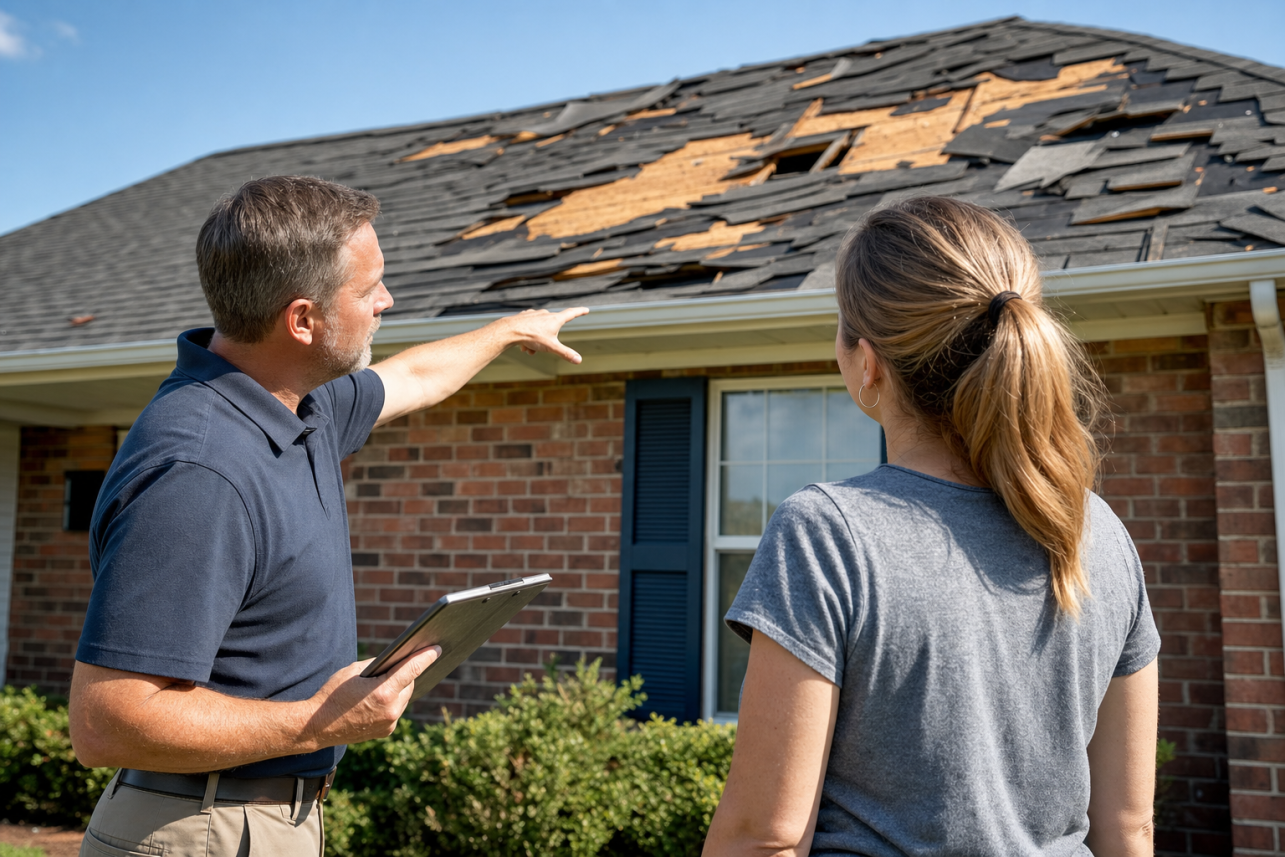
In most cases, yes. Accepting a payment on a hurricane or tornado claim does not usually close the door forever. What you file next is called a supplemental claim, and it covers damage that was hidden, missed, or underestimated in the original settlement.
Hidden wind damage is common in Alamance County storms. Contractors open a wall and find wind-driven rain soaked the insulation. A roofer discovers cracked decking under shingles the field adjuster inspected only from the ground. Nail pops and truss shifts from a tornado’s pressure wave sometimes do not show up until months later.
Timing matters. North Carolina policies impose deadlines for supplementing and for filing suit, often three years from the date of loss, though your specific policy language controls. Acting quickly protects your rights and preserves the evidence before repairs cover it up.
Courts have long held insurers to their duty to pay the full covered loss, not just the first estimate. In Dickerson v. Lexington Insurance Company, the Fifth Circuit upheld a judgment for a New Orleans homeowner after Hurricane Katrina, finding the insurer had failed to pay what the homeowner’s policy owed for damage to her house. The lesson applies broadly: the initial check is not necessarily the final word.
For The Public Adjusters documents newly discovered damage with photos, moisture readings, and revised estimates, then presents the supplement with the policy provisions that support it. We are licensed and bonded, and we handle supplements on both homes and commercial buildings across Elon.
Local Relevance
Elon sits in the Piedmont, far enough inland that hurricanes rarely arrive at full strength — but their remnants absolutely do. Tropical systems moving up from the Gulf or in from the coast regularly cross Alamance County as heavy wind-and-rain events, and the region also sees tornadoes spawned along spring and fall storm fronts. Mature hardwoods in Elon’s established neighborhoods make falling limbs and trees a common way that wind turns into structural damage.
Much of the housing around Elon and neighboring Burlington was built decades ago, and older asphalt roofs are especially vulnerable to seal failure in sustained gusts. That’s damage an insurance company’s adjuster can easily minimize as “wear and tear.” We know the difference, and we document it — the same way we do for a public adjuster Burlington client one town over.
Before hurricane season peaks, the National Hurricane Center’s forecasts are worth watching even this far inland, because inland wind damage from decaying tropical systems is one of North Carolina’s most consistent claim drivers.
Because Elon usually catches hurricanes as weakened remnants rather than direct hits, wind damage here tends to be subtle — broken shingle seals and lifted edges rather than missing roofs — which is exactly the kind of damage carriers most often dismiss as age-related wear. A documented inspection soon after the storm is what preserves the connection between the wind event and the loss.
Storm Damage In Elon? Get A Second Opinion Before You Settle
If a hurricane remnant or tornado damaged your home or business in Elon or anywhere in Alamance County, don’t accept the first number the insurance company offers. For The Public Adjusters, Inc. is licensed and bonded, we work only for policyholders, and the initial claim review is free. There’s no fee unless we recover for you.
Request Your Free Claim Review
Call us: (336) 331-8300
Helpful Resources
- NCDOI Public Adjusters Guide
- Hurricane Center
- Federal Emergency Management Agency (FEMA)
- North Carolina Department of Insurance — State regulator licensing public adjusters and handling consumer complaints
- National Hurricane Center — Official tropical storm and hurricane forecasts affecting inland NC
Last updated: September 15, 2026