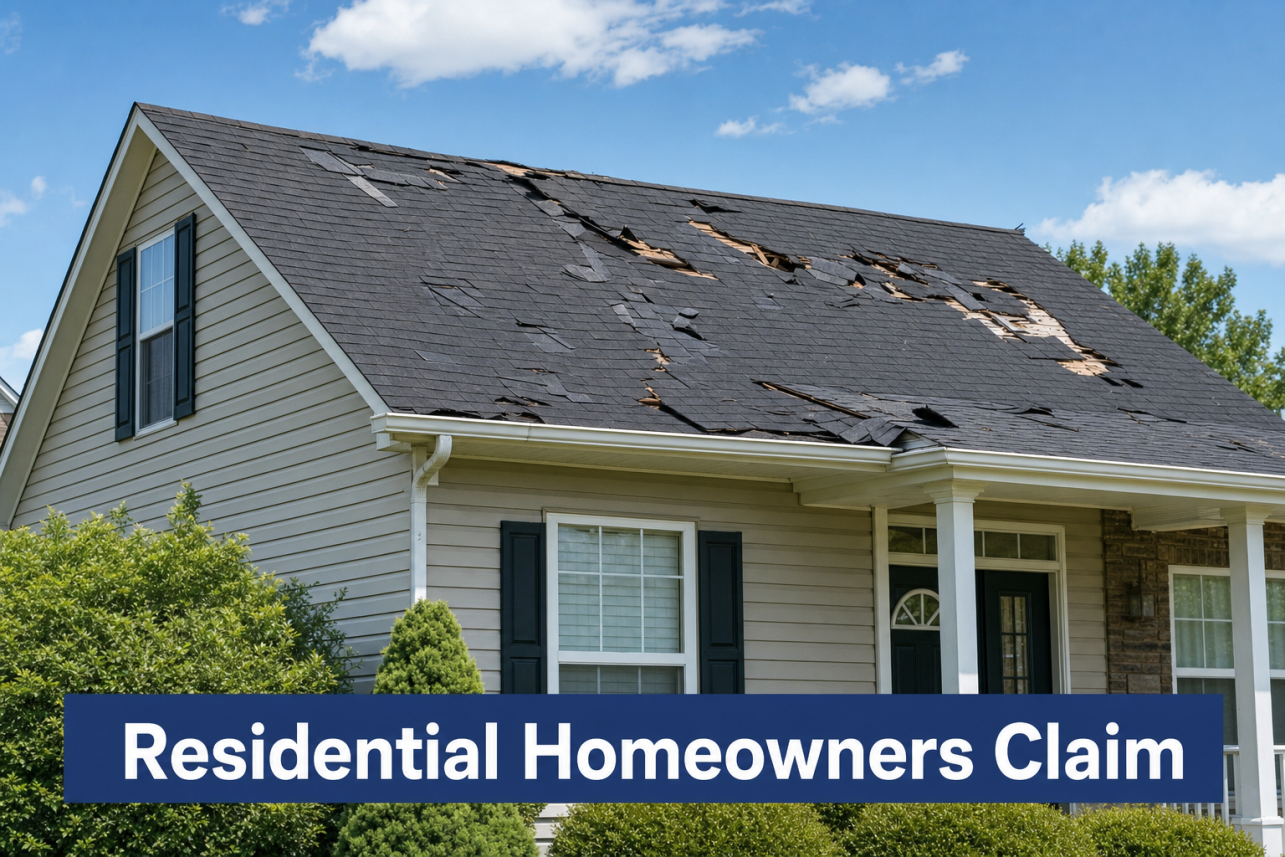
If you need help with a Residential Homeowners Claim Elon NC, For The Public Adjusters, Inc. works for you — the policyholder — not the insurance company. We are licensed and bonded public adjusters who assess your damage, document your loss properly, and negotiate directly with your insurer. From fire and smoke to water intrusion and fallen trees, we handle the claim so you can focus on getting your home back.
What This Service Is
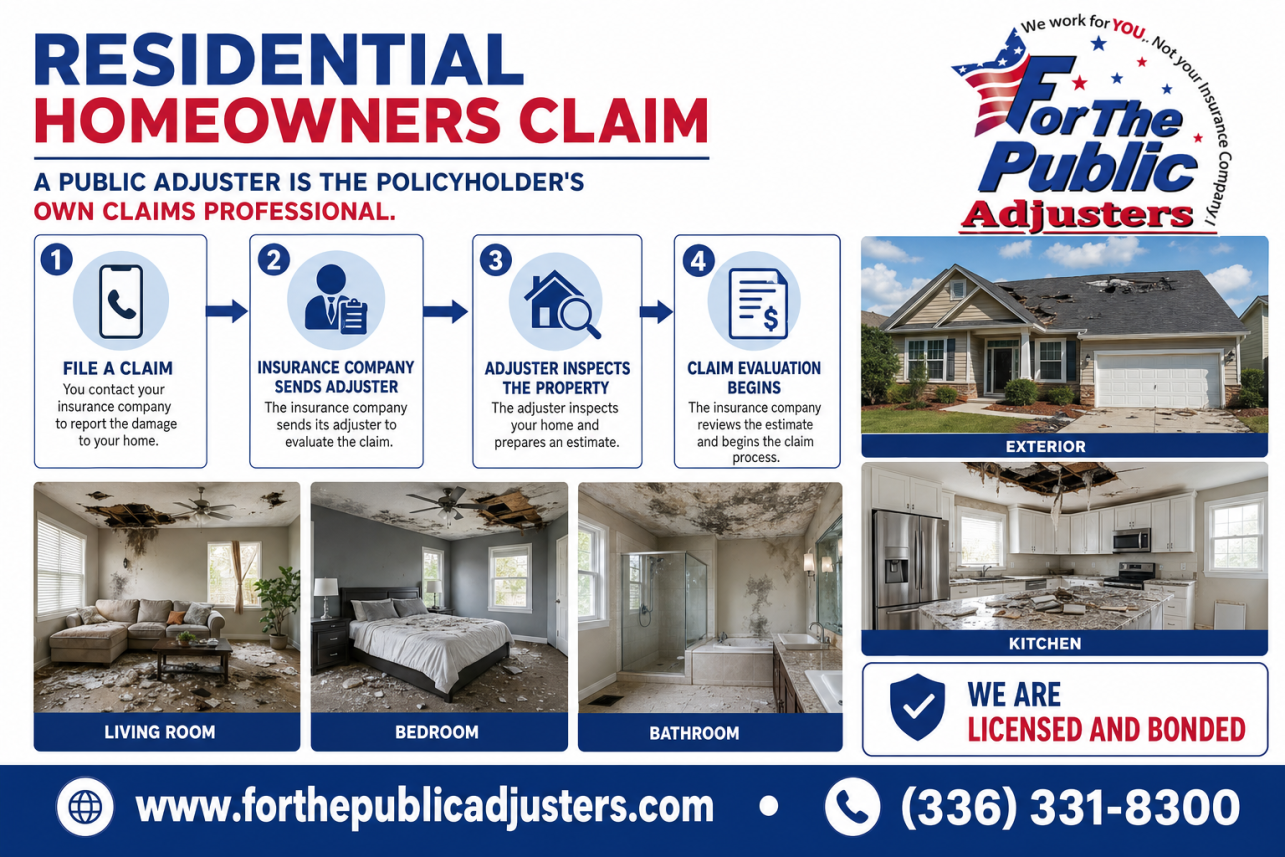
A public adjuster is the policyholder’s own claims professional. When your home in Elon suffers damage, your insurance company sends its adjuster to evaluate the loss — but that adjuster works for the insurer. We do the opposite. We read your policy line by line, measure and photograph every bit of damage, price the repairs at real local rates, and present a complete, well-supported claim on your behalf.
That matters because most underpaid settlements aren’t the result of bad luck. They come from missed damage, incomplete documentation, and repair estimates written to the insurer’s numbers instead of what contractors in Alamance County actually charge.
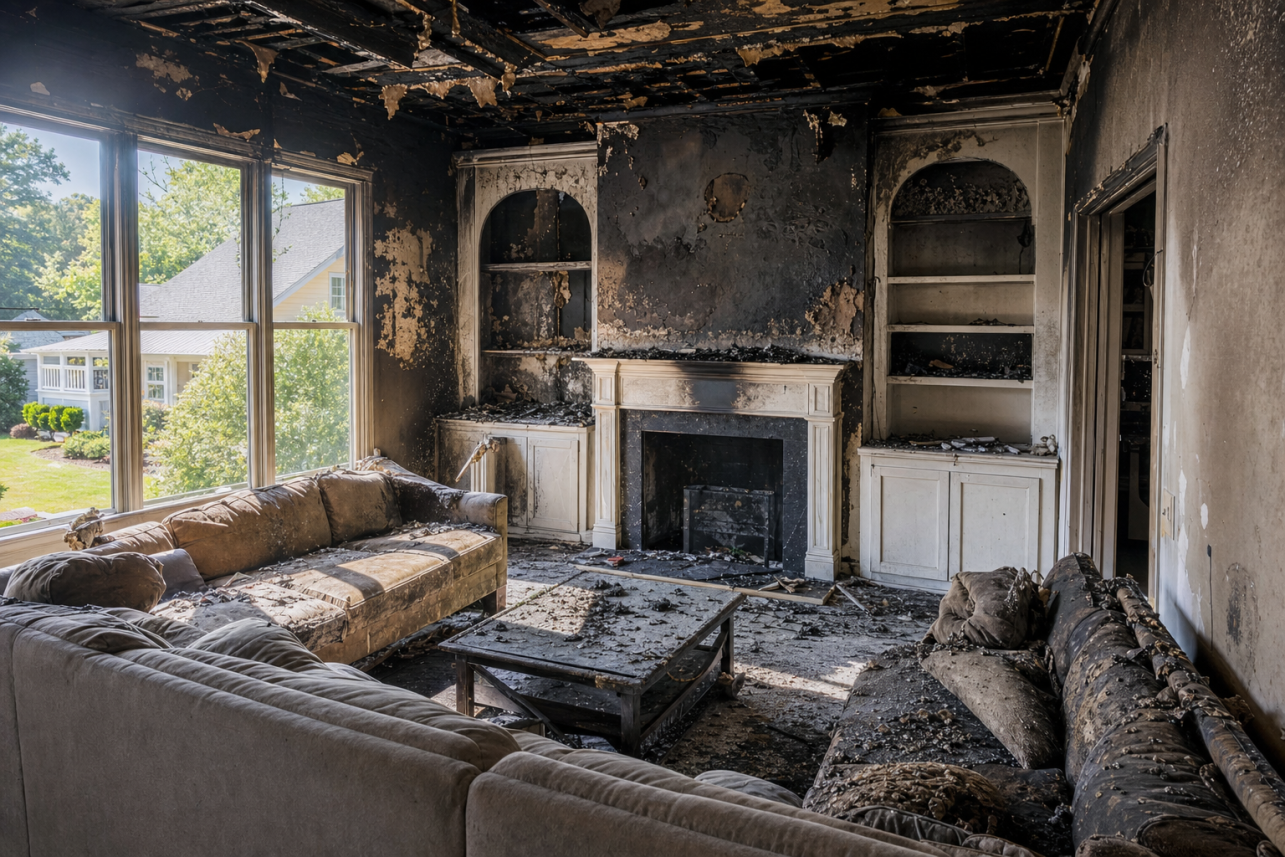
We handle homeowner losses of every kind: fire, smoke, water, tree damage, vandalism, and even the rare case where a car hits a home. We serve Elon and neighboring communities — if you’re a few miles east, we also handle every Residential Homeowners Claim in Burlington. And because flood losses fall under separate policies, we can guide you through National Flood Insurance Program coverage too, which is handled very differently from a standard homeowners policy.
Common Problems
Why Is The Insurance Company’s Offer So Much Lower Than My Contractor’s Estimate?
This is the single most common call we get from Elon homeowners. Your contractor quotes one number, the insurer offers a fraction of it, and you’re left staring at the gap — which comes out of your pocket if you accept.
The difference usually hides in the details. Insurers often pay actual cash value first, which is replacement cost minus depreciation for age and wear. If you don’t complete repairs and submit the right paperwork, that withheld depreciation may never be recovered.
Offers also shrink through missed items — smoke residue inside wall cavities, water damage behind cabinets, matching costs for siding or shingles. We build an independent damage assessment that captures everything your policy covers, then compare it against your coverage limits and deductible so you know exactly where the numbers should land.
My Claim Was Denied Or Keeps Dragging On — What Can I Actually Do?
A denial letter is not the end of the road. Neither is a claim that sits for months while your family lives around damage. Policyholders have real rights, including the right to dispute a denial, demand a written explanation, and file supplemental claims when new damage is found during repairs.
Courts have backed homeowners who push back. In Guessford v. Pennsylvania National Mutual Casualty Insurance Company, a North Carolina homeowner whose dwelling damage claim was persistently underpaid took the insurer to court — and a jury found in his favor, awarding damages well beyond the insurer’s offers. Cases like that exist because insurers sometimes get it wrong, and the insured who documents everything is the one positioned to win.
We reopen underpaid claims, challenge denials with evidence, and when a dispute needs to escalate, we work alongside insurance dispute lawyers. Whether it’s a fallen tree here in Elon or a Fire Damage Insurance Claim in Hillsborough, the approach is the same: build the file the insurer can’t ignore.
Should I Handle A Residential Homeowners Claim Elon NC Myself, Or Hire A Public Adjuster?
You can absolutely file on your own, and for very small, simple losses that may be reasonable. The trouble starts when the loss is significant — a kitchen fire, a burst pipe upstairs, a tree through the roof. Now you’re negotiating tens of thousands of dollars against professionals who do this every day.
The North Carolina Department of Insurance publishes guidance in its Public Adjusters Guide explaining exactly what public adjusters do and how they’re licensed, which is worth reading before you decide. A legitimate adjuster is licensed, bonded, works on the policyholder’s side only, and gets paid from the settlement — not upfront.
Judge any adjuster by three things: do they read your actual policy, do they produce their own detailed estimate rather than marking up the insurer’s, and will they put their license number in writing. We do all three, and we never guarantee a specific dollar outcome — anyone who does should worry you.
Our Process
Policy Review And Full Damage Assessment
We start by reading your homeowners policy — coverage limits, deductible, exclusions, and deadlines, because every policy has a window for filing and for submitting proof of loss. Then we inspect the property ourselves, looking past the obvious damage for the things insurers routinely miss: moisture in wall cavities, smoke migration into attics and HVAC systems, structural stress from tree impacts.
Documentation And Proof Of Loss
Next we build the evidence: photos, measurements, moisture readings, contents inventories, and a room-by-room repair estimate priced at real Alamance County rates. We prepare and submit the formal proof of loss documentation your insurer requires, done correctly the first time. Weak paperwork is where most claims lose money — it’s the same discipline we bring to water damage claim help in Bynum and every loss we handle.
Negotiation And Settlement
We meet the insurance company’s adjuster on site, walk them through our documentation, and negotiate every disputed line item. If repairs uncover hidden damage later, we file supplemental claims rather than letting you absorb the cost. Throughout, we track your additional living expenses coverage if you’re displaced, and we make sure recoverable depreciation is actually claimed once repairs are complete.
| Claim Stage | Homeowner Handling It Alone | With For The Public Adjusters, Inc. |
|---|---|---|
| Damage documentation | Photos of visible damage; hidden moisture, soot migration, and structural issues often missed | Moisture mapping, soot testing, and inspection openings to document damage the eye can’t see |
| Estimate preparation | Relies on the carrier’s estimate, written by an adjuster who works for the insurance company | Independent line-item estimate built to restore the home to pre-loss condition, including matching materials |
| Contents inventory | Lump-sum allowance or rushed list from memory, leaving items unclaimed | Room-by-room inventory with values, condition notes, and replacement documentation |
| Policy knowledge | Deadlines, proof-of-loss requirements, and coverages like ordinance & law often go unnoticed | Every applicable coverage identified and every deadline tracked from day one |
| Negotiation | One conversation, often ending with acceptance of the first offer | Documented reinspections and supported supplements until the scope reflects the actual loss |
Commonly Overlooked In The Public Adjusting Industry
- Recoverable depreciation left unclaimed — Many homeowners cash the initial actual-cash-value check and never realize they can recover the withheld depreciation after repairs are completed.
- Matching of undamaged siding, roofing, and flooring — Carriers often pay to patch one section, ignoring that courts — like the Seventh Circuit in Windridge of Naperville v. Philadelphia Indemnity, where the insured won — have required replacement of matching materials to restore pre-loss condition.
- Ordinance and law coverage for code upgrades — Rebuilding an older Elon home to current Alamance County code costs more than like-for-like replacement, and this coverage sits unused because nobody asks for it.
- Moisture trapped behind baseboards and inside wall cavities — Surface-level moisture readings taken on inspection day miss water that has already wicked into insulation and framing, where it later becomes a mold problem.
- Additional living expense (ALE) documentation — Homeowners displaced by fire or water damage often pay for hotels, meals, and mileage out of pocket without realizing the policy reimburses these costs when they are tracked.
- Soot and odor contamination in HVAC ductwork — Ducts are out of sight, so fire claim estimates frequently stop at the walls even though a running air handler spreads soot through the entire home.
- Proof-of-loss and suit-limitation deadlines in the policy — These clocks start running quietly at the date of loss, and missing them can undermine an otherwise valid claim before negotiations even begin.
- Category and class of a water loss — Whether water is classified as clean, gray, or black changes the required demolition and remediation scope, and initial carrier estimates often assume the cheapest category.
Case Studies
Case Study #1
Situation: A family in the Beth Schmidt Park area of Elon came home from a weekend trip to find a failed washing machine supply line had run water through their laundry room, hallway, and adjoining bedrooms for nearly two days.
Problem: Their insurance carrier’s field adjuster inspected quickly, measured only the visibly wet flooring, and issued an estimate that covered replacing a portion of the laminate and repainting one wall. The offer did not account for water that had wicked up into wall cavities or under continuous flooring.
Investigation: Our licensed and bonded adjusters brought in moisture mapping equipment and documented elevated readings behind baseboards two rooms beyond the visible damage. We opened inspection points in the drywall, photographed saturated insulation, and pulled the flooring specification to confirm the laminate ran continuously through the main living area.
Findings: The moisture had migrated well past the carrier’s scope. The wet insulation and drywall required removal, and because the laminate was a continuous, discontinued product, a partial patch would have left an obvious mismatch through the middle of the home.
Solution: We prepared a detailed line-item estimate covering full drywall and insulation replacement in the affected cavities and continuous flooring replacement. We supported the flooring position by pointing to how courts have handled matching disputes — in Windridge of Naperville Condominium Association v. Philadelphia Indemnity Insurance Co., the Seventh Circuit sided with the insured, holding the carrier had to replace undamaged matching materials to restore the property to its pre-loss condition.
Outcome: After reinspection and negotiation, the carrier revised its position and the homeowners received a settlement several times the original estimate — enough to properly dry the structure, replace the hidden damaged materials, and install matching flooring throughout the connected space.
Lesson: Water rarely stops where you can see it. An estimate written from visible damage alone almost always misses saturated wall cavities and the matching problem that comes with continuous flooring.
Case Study #2
Situation: A retired couple near downtown Elon had a stovetop grease fire in their kitchen. The flames were extinguished quickly, but smoke pushed through the entire single-story home while the HVAC system was running.
Problem: The carrier’s estimate treated it as a kitchen-only loss: replace the range hood, repaint the kitchen, and wipe down nearby surfaces. It offered a small allowance for cleaning contents and nothing for the duct system, attic insulation, or the couple’s soft goods and upholstered furniture.
Investigation: We arranged independent soot and odor testing throughout the home, including swab samples from supply registers in bedrooms on the far side of the house. We also walked the couple through a room-by-room contents inventory rather than accepting the carrier’s lump-sum cleaning allowance.
Findings: Lab results confirmed protein and grease-based soot residue in the ductwork and in rooms the carrier never inspected. Attic insulation above the kitchen had absorbed odor, and dozens of contents items — mattresses, upholstered pieces, clothing — could not be restored by surface cleaning.
Solution: We submitted a revised claim covering duct cleaning, insulation replacement, sealing and repainting of smoke-affected rooms, and a documented contents inventory separating restorable items from those needing replacement. We also documented the couple’s additional living expenses for the weeks the kitchen was unusable.
Outcome: The carrier accepted the testing results and the itemized inventory, and the final settlement funded whole-home smoke remediation, the contents replacement schedule, and their temporary living costs — a substantially different result than the original kitchen-only offer.
Lesson: Smoke damage follows the airflow, not the flames. If the HVAC system was running during a fire, the loss is almost never confined to one room, and a lump-sum contents allowance rarely reflects what was actually ruined.
| Loss Scenario | Is It Typically Covered by a Homeowners Policy? | What the Outcome Depends On | Worth Involving a Public Adjuster? |
|---|---|---|---|
| Burst pipe or appliance line water damage | Usually yes, if sudden and accidental | How far moisture traveled, how quickly it was mitigated, and whether hidden cavities are documented | Yes — hidden moisture is the most commonly underpaid part of these claims |
| Kitchen or electrical fire with smoke damage | Yes, including contents and living expenses in most policies | Whether soot migration through HVAC and distant rooms is tested and included | Yes — smoke scopes are routinely written too small |
| Hail damage to roofing and siding | Usually yes | Proper slope-by-slope inspection and whether matching materials are still manufactured | Yes — matching and full-slope replacement are frequent disputes |
| Tornado or hurricane structural damage | Yes for wind-driven structural damage; deductibles may differ | Separating wind damage from any excluded flood damage and documenting structural movement | Yes — mixed-cause storm losses need careful documentation |
| Rising water or flash flooding | No — standard homeowners policies exclude flood; NFIP or private flood coverage applies | Whether you carry a separate flood policy; start at FEMA.gov and FloodSmart.gov for NFIP guidance | Only if you hold flood coverage; otherwise pursue FEMA assistance directly |
| Mold discovered after a water loss | Sometimes, often with sublimits | Whether the mold traces to a covered water event and how the timeline is documented | Yes — tying mold to the covered loss is where these claims are won or lost |
| Theft or vandalism of home contents | Yes, subject to policy limits and documentation | Quality of the inventory, receipts or photos, and special limits on categories like jewelry | Yes for larger losses — inventories drive the payout |

Reviews
A pipe burst in our crawlspace over the winter and our insurer offered barely enough to replace the subfloor in one room. For The Public Adjusters found moisture damage in three rooms we didn’t know about and documented every bit of it. The final settlement was more than triple the first offer, and they handled every call with the carrier so we didn’t have to. If you’re dealing with a residential homeowners claim in Elon, call them before you cash any check.
Denise M., Elon, NC
After a hailstorm hit our neighborhood off University Drive, the insurance company said our roof only needed a handful of shingle repairs. Their team got on the roof, photographed the hail bruising the carrier’s adjuster skipped, and pushed for a full slope-by-slope inspection. We ended up with a properly documented roof claim instead of a patch job. They knew the policy language better than the adjuster the insurance company sent.
Marcus T., Alamance County
Our garage fire spread smoke into the whole house, and the carrier’s first estimate ignored our contents almost entirely. These folks sat with us for two evenings building a real inventory — furniture, clothing, tools, everything. They also caught that our policy covered additional living expenses we had never claimed. The process took a couple of months, but they kept us informed the whole way and the outcome reflected what we actually lost.
Sharon and Bill K., Elon, NC
Frequently Asked Questions
What Does A Public Adjuster Do For A Residential Homeowners Claim Elon NC Homeowners Are Filing?
A public adjuster works exclusively for you, the policyholder — never for the insurance company. When your Elon home suffers fire, smoke, water, hail, hurricane, or tornado damage, we step in to document the loss, interpret your policy, and negotiate directly with the insurer’s adjuster on your behalf.
The insurance company’s adjuster is trained to protect the carrier’s bottom line. Our job is the opposite. We inspect every affected area of your home, from crawl spaces common in older Alamance County houses to attic framing and finishes, and we prepare a detailed, line-item estimate of the damage — structure and contents alike.
Many homeowners in Elon accept the first settlement offer without realizing how much was missed: hidden moisture behind drywall, smoke residue in HVAC systems, code-upgrade costs required by current North Carolina building standards, or personal property that was never inventoried. We build that documentation before the numbers are locked in.
For The Public Adjusters, Inc. is licensed and bonded in North Carolina. We handle residential property losses only — we do not work on claims involving cell phones, motor vehicles, health, or life insurance. From the first inspection through the final negotiation, you have an advocate who reads the policy the way courts have said it must be read: any genuine ambiguity is construed in favor of the insured, not the insurer.
Have Homeowners Actually Won In Court Against Insurance Companies Over Property Damage Settlements?
Yes, and the case law matters because it shapes how claims get negotiated long before anyone sees a courtroom.
A good example is Windridge of Naperville Condominium Association v. Philadelphia Indemnity Insurance Co., 932 F.3d 1035 (7th Cir. 2019). Hail from a severe storm damaged the siding on one side of the association’s residential buildings. The insurer wanted to replace only the damaged panels, even though matching siding was no longer available — leaving buildings with mismatched exteriors. The court sided with the insured, ruling the buildings had to be restored to their pre-loss condition, which meant replacing all of the siding so it matched.
That principle comes up constantly in Elon and across Alamance County. Roofing shingles, siding profiles, and brick from homes built decades ago are often discontinued. When an insurer offers to patch a hail-battered roof slope or replace a handful of siding panels, the matching issue can be the difference between a partial repair and a proper restoration.
As your representative, we raise these arguments during the claim itself, supported by documentation, manufacturer discontinuation letters, and estimates from local contractors. Most disputes resolve at the negotiation table precisely because carriers know how courts have ruled.
We never guarantee a specific outcome — no ethical adjuster can — but we do make sure the insurer’s offer is measured against what your policy and the case law actually require, not just what the carrier’s first estimate happens to say.
Does My Homeowners Policy Cover Flood Damage To My House In Elon Or Elsewhere In Alamance County?
In almost every case, no. Standard homeowners policies in North Carolina exclude flooding — meaning rising water from heavy rain, overflowing creeks, or storm surge. That surprises many local homeowners, especially those near low-lying areas around the Haw River watershed, where heavy rainfall can push water into crawl spaces and finished basements.
Flood coverage comes from a separate policy, usually through the National Flood Insurance Program (NFIP), which is administered by FEMA. You can learn about coverage options and flood-zone maps at fema.gov and floodsmart.gov. If you carry an NFIP policy, that claim follows its own rules, deadlines, and proof-of-loss requirements, which are stricter than a typical homeowners claim.
Here is where it gets complicated: many storm losses involve both covered and excluded water. If a hurricane tears open your roof and rain pours in, that interior water damage is typically covered under your homeowners policy — while rising groundwater in the same event may not be. Insurers sometimes lump everything under the flood exclusion and deny the whole loss.
Sorting out which damage came from which cause is exactly the kind of work a policyholder advocate does. We document the sequence of the loss, separate wind-driven rain and roof-opening damage from true flood damage, and pursue the covered portions under the correct policy. If part of your loss belongs with an NFIP flood policy, we help you understand where that line falls so nothing slips through the gap between the two.
My Insurance Company Underpaid Or Denied My Claim — Can You Still Help?
Yes. A denial or a low settlement offer is often the beginning of the process, not the end of it. Handling a Residential Homeowners Claim Elon NC policyholders have already filed is one of the most common ways we get involved.
First, we review the denial letter or settlement worksheet against your actual policy language. Carriers sometimes cite exclusions that do not apply to the facts, or they pay for surface repairs while ignoring structural damage, hidden moisture, smoke contamination, or code-required upgrades under North Carolina building regulations.
Second, we re-document the loss. That may mean a fresh inspection of your Elon home, moisture mapping, a full contents inventory, and independent repair estimates from contractors familiar with local construction and Alamance County permit requirements. A claim supported by detailed evidence is far harder for a carrier to dismiss.
Third, we present a supplemental claim or formal dispute. North Carolina policies generally allow policyholders to contest a settlement, and many contain an appraisal provision for resolving disagreements over the amount of loss. Courts have repeatedly held insurers to their contractual promises — the Windridge siding decision mentioned above is one example of an insured prevailing when the carrier tried to pay less than full restoration required.
Be mindful of deadlines: policies impose time limits for supplemental claims and suits, so acting quickly matters. We are licensed and bonded, and while we cannot promise any particular result, we can promise the insurer will be answering to a professional who knows the policy as well as they do.
What Types Of Damage Can For The Public Adjusters Handle For A Residential Homeowners Claim Elon NC Families Are Dealing With?
We handle the property losses Elon homeowners see most often: fire and smoke damage, water damage from burst pipes or appliance failures, hail damage to roofs and siding, lightning strikes, hurricane and tornado damage, theft, vandalism, and damage to personal contents inside the home. Older homes near downtown Elon and newer builds off University Drive each present different construction details, and we document both accurately.
We also assist when flood water is involved, though flood losses are typically covered under a separate National Flood Insurance Program policy rather than your standard homeowners policy. If flooding affected your home, resources at FEMA.gov and FloodSmart.gov (the official NFIP site) explain that coverage in detail, and we can help you sort out which policy responds to which portion of the damage.
There are a few things we do not handle: claims involving motor vehicles, cell phones, health insurance, or life insurance fall outside our practice. Our focus is strictly damage to homes, other structures, and the contents inside them.
Because we are licensed and bonded public adjusters, we work only for you, the policyholder — never for the insurance company. We inspect the damage, prepare a detailed independent estimate, inventory damaged contents, and negotiate with the carrier’s adjuster on your behalf. Every loss is different, so we can’t promise a specific dollar outcome, but we can promise your claim will be documented thoroughly and presented professionally from day one.
How Much Does It Cost To Hire A Public Adjuster For A Homeowners Claim In Elon?
Most of our work is done on a contingency-fee basis, meaning our fee is a percentage of the insurance settlement rather than an upfront charge. If you don’t recover, you generally don’t owe a fee for the adjusting work. That structure keeps our interests aligned with yours: the better your claim is documented and presented, the better for both of us.
The exact percentage depends on the size and complexity of the loss, and it is spelled out in writing before we begin. North Carolina regulates public adjuster contracts, so you’ll see the fee, your cancellation rights, and the scope of our services clearly stated. We are licensed and bonded in North Carolina, which is a protection every Alamance County homeowner should verify before signing with any adjuster.
Many homeowners ask whether the fee is worth it. Consider that insurance company adjusters handle dozens of files at once and work for the carrier — not for you. An independent estimate frequently identifies damage the first inspection missed, such as hidden water intrusion behind drywall, smoke residue in HVAC systems, or code-upgrade costs required by Alamance County building requirements. We can never guarantee a particular result, because every policy and every loss is different. What we can do is make sure nothing legitimate is left off the table when your Elon claim is valued.
If you’d like a no-obligation review of your damage and policy first, we offer that before you commit to anything.
How Long Does The Settlement Process Usually Take For An Elon Homeowners Insurance Claim?
Timelines vary with the size of the loss. A straightforward pipe-break claim on a home in Elon might resolve in four to eight weeks once properly documented. A major fire or a tornado loss involving structural damage, contents inventory, and additional living expenses can take several months, especially if the carrier disputes scope or pricing.
North Carolina requires insurers to acknowledge and investigate claims promptly, and our job is to keep the file moving. We prepare the estimate, respond to the carrier’s requests, and push back with documentation when their numbers come in low. Homeowners handling claims alone often lose weeks to back-and-forth requests they didn’t know were coming.
It’s worth knowing that North Carolina courts have held insurers accountable when claims are mishandled. In Gray v. North Carolina Insurance Underwriting Association, the North Carolina Supreme Court allowed homeowners whose hurricane-damaged dwelling claim was improperly handled to pursue punitive damages against the insurer for unfair claim settlement practices. That case remains a reminder that carriers have legal obligations to policyholders — and that homeowners who stand their ground can prevail.
A well-organized claim usually moves faster than a disorganized one. Complete photo documentation, a line-item estimate, and a detailed contents inventory give the carrier fewer reasons to delay. While no adjuster can guarantee a specific timeline or dollar amount, getting the file right the first time is the most reliable way to shorten the process for any Alamance County homeowner.
Is There A Deadline To File Or Reopen A Residential Homeowners Claim Elon NC Policyholders Should Know About?
Yes, and the deadlines matter more than most homeowners realize. Your policy itself sets reporting requirements — most homeowners policies require “prompt” notice of a loss, and many contain a contractual limitation period, commonly three years in North Carolina, for bringing legal action against the insurer. Miss those windows and you can lose otherwise valid rights.
Separately, North Carolina law generally provides a three-year statute of limitations for breach-of-contract actions, which is what an underpaid or denied claim ultimately becomes if it can’t be resolved. The clock typically starts at the date of loss or breach, so waiting is never in your favor.
Reopening a claim is also possible in many situations. If you accepted a payment and later discovered additional damage — hidden water damage under flooring, smoke contamination in ductwork, or hail damage that worsened — a supplemental claim can often be filed as long as you’re within the policy’s time limits. We handle supplements regularly for homeowners throughout Elon and the rest of Alamance County.
Flood losses under an NFIP policy have their own, much stricter rules, including a signed Proof of Loss typically due within 60 days of the flood. FEMA.gov and FloodSmart.gov publish those requirements, and we recommend reviewing them immediately after any flood event.
If you’re unsure where your deadline stands, contact us for a policy review. As licensed and bonded public adjusters, we can read your specific policy language and tell you exactly what timeframes apply — before any of them expire.
What Are The First Steps I Should Take After Fire Or Storm Damage To My Home In Elon?
First, make sure everyone is safe and the property is secure. Your policy requires you to take reasonable steps to prevent further damage, so board up broken windows, tarp a damaged roof, and shut off water to a burst pipe if you can do so safely. Keep every receipt for emergency repairs — those costs are typically reimbursable.
Second, document everything before anything is moved or thrown away. Take wide photos of each room, close-ups of damaged items, and video walkthroughs. In older Elon neighborhoods and newer subdivisions alike, hidden damage behind walls and under flooring is common, so do not let anyone rush a cleanup that destroys evidence.
Third, report the loss to your insurance company promptly, but be careful with recorded statements. Stick to facts — what happened, when, and where — and avoid guessing at causes or values.
Finally, consider bringing in a licensed and bonded public adjuster in Elon before the insurance company’s adjuster inspects. We prepare our own damage estimate, attend inspections, and advocate for you rather than the carrier. Homeowners who involve us early tend to avoid the common mistakes — signed releases, incomplete inventories, rushed repairs — that make claims harder to resolve later. There is no obligation to talk with us, and an early conversation costs you nothing.
Should I Accept The Insurance Company’s First Settlement Offer On A Residential Homeowners Claim Elon NC Policyholders Receive?
Not before you understand what the claim is actually worth. First offers are frequently based on the carrier’s own estimate, which may miss hidden damage, use below-market local pricing, or overlook coverages like code upgrades, debris removal, and additional living expenses.
Courts have repeatedly sided with policyholders who pushed back. In Bi-Economy Market, Inc. v. Harleysville Insurance Co. (New York Court of Appeals, 2008), a fire destroyed a family business’s building and contents. The insurer delayed and underpaid, and the court held the policyholder could recover consequential damages caused by the insurer’s failure to promptly pay what the policy promised. The decision is widely cited as a warning to carriers that lowballing a fire loss has real consequences.
Before you sign anything, have an independent professional review the offer against your policy language and a line-by-line estimate of repairs at Alamance County labor and material rates. We regularly find categories of damage the initial estimate never addressed — smoke residue in HVAC systems, water migration under subfloors, matching issues with roofing and siding.
Accepting an offer is your decision, and we never guarantee a specific outcome. But you should make that decision with a complete picture of the loss, not the carrier’s version of it. If the numbers do not line up, we can reopen negotiations, invoke appraisal where the policy allows it, or support your attorney if litigation becomes necessary.
Do You Handle Hurricane And Tornado Damage To Houses In Elon And The Rest Of Alamance County?
Yes. Even though Elon sits well inland, remnants of hurricanes moving up from the Gulf and the Carolina coast regularly bring damaging conditions to Alamance County, and the Piedmont sees tornado activity most years. These storms can tear shingles and decking off roofs, drive rain into wall cavities, and drop trees onto homes.
Hurricane and tornado claims get complicated fast because a single storm often causes several types of damage at once — roof damage, interior water intrusion, tree impact, and spoiled food from power outages. Carriers sometimes pay for the obvious roof repair while overlooking saturated insulation, damaged trusses, or mold that develops weeks later. We inspect for all of it and build one comprehensive estimate.
One important distinction: rising water from a storm is flood damage, and standard homeowners policies exclude it. Flood losses fall under separate coverage through the National Flood Insurance Program (floodsmart.gov), and disaster assistance may be available through FEMA (fema.gov). We can help you sort out which damage belongs to which policy so nothing falls through the cracks.
For The Public Adjusters, Inc. represents only the policyholder — never the insurance company — on every Residential Homeowners Claim Elon NC storm victims bring to us. We document the loss, meet the carrier’s adjuster on site, and negotiate based on evidence, not the carrier’s first drive-by estimate.
I’ve Been Displaced From My Elon Home — Can You Still Manage The Claim, And What About My Extra Living Costs?
Yes, we handle claims for displaced homeowners all the time, and displacement is actually one of the strongest reasons to bring in professional help. When you are living in a hotel off University Drive or renting temporarily in Burlington or Gibsonville, you have little time to chase adjusters, gather estimates, and inventory a damaged house across town.
Most homeowners policies include Additional Living Expenses (ALE) or Loss of Use coverage. It pays the reasonable increase in your living costs while your home is uninhabitable — temporary rent, hotel bills, extra mileage, pet boarding, even the difference in food costs if you are eating out because you have no kitchen. Many families never claim the full amount because they do not track these expenses or do not realize they are covered.
We help you set up a simple system for saving receipts, calculate your normal monthly costs as a baseline, and submit ALE claims on a rolling basis so reimbursement keeps pace with your spending. We also push the structural claim forward, because every week of delay on repairs is another week of displacement costs.
Everything can be handled by phone, email, and scheduled site visits, so you do not need to be at the property for inspections — we attend them for you. Our fee is a percentage of what the carrier pays, so there is no upfront cost while your budget is already stretched by living in two places at once.
Why Is My Insurance Company’s Estimate So Much Lower Than My Contractor’s Estimate For The Damage To My Elon Home?
This gap is one of the most common reasons Elon homeowners call us. Insurance carrier estimates are often written from a brief inspection using pricing software set to minimal parameters. They frequently miss hidden damage behind walls, under flooring, or inside attic spaces, and they may omit code-required upgrades, proper tear-out, matching materials, overhead and profit for a general contractor, and debris removal.
A local contractor bidding the actual repair sees the full scope of work needed to restore your home to its pre-loss condition, which is what your policy generally promises. When the two numbers are far apart, it usually means the carrier’s scope is incomplete, not that your contractor is inflating the price.
Courts have sided with policyholders on exactly these scope disputes. In Windridge of Naperville Condominium Association v. Philadelphia Indemnity Insurance Co. (7th Cir. 2019), hail damaged the siding on some elevations of the insured buildings, and the insurer wanted to replace only the damaged panels. The court ruled for the insured, holding the carrier had to replace siding on all sides so the buildings matched — a much larger recovery than the insurer’s original position.
As your Alamance County public adjuster, we prepare our own detailed, line-item estimate, document every element of the loss, and negotiate from evidence. We are licensed and bonded, and while no one can guarantee a specific outcome, a complete scope is the foundation of a fair settlement.
Are You Licensed And Bonded To Handle A Residential Homeowners Claim Elon NC Families Need Help With?
Yes. For The Public Adjusters, Inc. is licensed and bonded, which matters more than many homeowners realize. In North Carolina, public adjusters must hold a state license, and bonding provides an additional layer of accountability that protects the policyholders we represent.
Why does this matter to you in Elon? Because after a serious loss — a kitchen fire, a burst pipe, hail through the roof, or tornado damage tearing into your home — you will be approached by all kinds of people offering to “handle everything.” Unlicensed claim consultants and door-knocking contractors acting as adjusters are a real problem after storms move through Alamance County. Working with someone who is not licensed can jeopardize your claim and leaves you with no regulatory recourse if things go wrong.
Our license means we answer to the North Carolina Department of Insurance, we operate under its rules for fee agreements and conduct, and we owe our duty to you — never to the insurance company. Our bond backs that up financially.
We focus exclusively on property claims involving homes, buildings, and their contents. We do not handle claims for motor vehicles, cell phones, health, or life insurance, so our experience is concentrated where you need it. Before hiring anyone to represent your interests, ask for their license number and verify it with the state. We are happy to provide ours, along with local references from homeowners we have represented throughout Elon and the surrounding communities.
The Adjuster Approved Repairs To Only Part Of My Roof Or Siding After A Hailstorm — Is That All I’m Entitled To?
Not necessarily. Partial approvals after hail are a frequent point of dispute for homeowners in Elon and across Alamance County, especially on homes with discontinued shingles or siding profiles that can no longer be matched.
North Carolina policies typically require the carrier to return your home to its pre-loss condition. If replacement shingles or siding panels are visibly mismatched in color, texture, or profile, a patch job arguably does not accomplish that. Many policies and state guidelines address “matching,” and insurers often resolve these disputes by paying for full slopes, full elevations, or complete replacement once the mismatch is properly documented.
The Windridge of Naperville decision mentioned above is a strong example: the insurer wanted to replace hail-damaged siding on only two sides of the buildings, and the federal appeals court held the insured was entitled to replacement of all siding so the property matched. That principle — that a checkerboard repair is not a true restoration — is one we put to work in negotiations regularly.
Our process starts with a thorough inspection, including test squares, photographs of every slope and elevation, and product-availability research showing whether your materials are discontinued. We then present a documented supplement to the carrier and negotiate for a scope that actually restores your home. We cannot promise a particular result, but we can promise your claim will be fully documented and professionally argued rather than quietly closed on a partial payment.

What Documentation Should I Keep To Protect My Claim After Damage To My House In Elon?
Strong documentation is the backbone of every Residential Homeowners Claim Elon NC policyholders pursue, and the earlier you start, the better. Begin with photographs and video of all damage before anything is moved, cleaned, or repaired — wide shots of each room or elevation, plus close-ups of specific damage. Date-stamp everything if you can.
Next, protect the paper trail. Keep your full policy, including the declarations page and all endorsements. Save receipts for emergency repairs like tarping or water extraction, and hold onto damaged materials when it is safe to do so — a cut section of soaked carpet or a charred cabinet door can be powerful evidence later.
For contents, build a room-by-room inventory listing each damaged item, its age, and its approximate replacement cost. Old photos, gift receipts, credit card statements, and even product boxes in the garage help establish ownership and value. Families in Elon often underestimate contents losses badly because they inventory from memory instead of methodically.
Finally, log every interaction with your insurance company: dates, names, claim numbers, and what was said. Follow up phone calls with a short email summarizing the conversation so there is a written record.
If flooding is involved, note that standard homeowners policies generally exclude flood, so review resources from FEMA (fema.gov) and the National Flood Insurance Program (floodsmart.gov) as well. When we take over a claim, we organize and expand this documentation into a professional submission — but anything you preserve early makes your position stronger.
Local Relevance
Elon sits in the North Carolina Piedmont, where humid summers bring severe thunderstorms and hail, winters occasionally deliver damaging ice storms, and the remnants of hurricanes moving inland can drop heavy rain and topple the mature hardwoods that shade so many local neighborhoods. Tree-on-roof losses and the water intrusion that follows are among the most common homeowner claims we see in this part of Alamance County.
The housing stock adds its own wrinkles. Elon has a real mix — older homes near the university and downtown alongside newer subdivisions built during the area’s recent growth. Older homes often carry aging plumbing, original wiring, and materials that raise matching and code-upgrade questions during repairs; newer homes bring their own disputes over builder-grade versus like-kind replacement.
We work throughout the county, including as the neighboring Public Adjuster in Burlington, and across the Triangle — from kitchen fires to smoke damage claim help in Fuquay. One important local note: standard homeowners policies do not cover rising water. If heavy rain floods your home, that falls under a separate flood policy through the Federal Emergency Management Agency’s flood program, and we can help you sort out which policy responds to which damage.
Many Elon neighborhoods pair mature oak and pine canopies with homes built decades apart, so a single ice storm or hurricane remnant often produces two very different claims next door to each other — a tree impact on an older roof with matching-material disputes, and hidden water intrusion in a newer home. Documenting the interior moisture damage early, not just the visible roof hole, is usually what determines whether the settlement covers the real repair.
Talk To A Public Adjuster Before You Accept The Insurer’s Number
If your Elon home has fire, smoke, water, or tree damage — or your claim has been denied, delayed, or underpaid — get a second opinion from professionals who work only for policyholders. For The Public Adjusters, Inc. is licensed and bonded, and the consultation costs you nothing. We can’t promise a specific outcome, but we can promise your claim will be documented, priced, and argued the way it should have been from day one.
Call us: (336) 331-8300
Helpful Resources
- NCDOI Public Adjusters Guide
- Federal Emergency Management Agency (FEMA)
- National Flood Insurance Program (NFIP)
- North Carolina Department of Insurance — State regulator overseeing insurers and adjuster licensing
- FEMA flood insurance information — Official resource on National Flood Insurance Program coverage
Last updated: September 18, 2026