
WHAT IS A PUBLIC ADJUSTER? When your home or business is damaged, you file an insurance claim, expecting your provider to make things right. But what happens when their idea of “right” doesn’t even come close to covering your actual losses? Big insurers like Allstate and State Farm often look for ways to pay as little as possible, leaving you to fight for what you’re owed.
This is where a public adjuster comes in. A public adjuster is a state-licensed insurance expert who works exclusively for you, the policyholder. They don’t work for the insurance company. Their only job is to manage your entire claim from start to finish and fight to get you every single dollar you’re rightfully owed.
Your Advocate in the Fight Against Insurance Companies
After a disaster, your insurance company will send out their own adjuster. It’s easy to assume this person is there to help you, but here’s the hard truth: their loyalty is to their employer—the insurance company. Their primary goal is to protect the company’s bottom line, which often means delaying, denying, or lowballing your claim.
During the turmoil of the claim, policyholders will mention their displeasure amongst friends or coworkers, or go online to search for guidance. At some point they will come across the term, “public adjuster.” The immediate reaction is always, “What is a public adjuster?”
As mentioned, the carrier’s primary goal is to protect the company’s bottom line, which often means delaying, denying, or lowballing your claim. A public adjuster completely flips that dynamic. They become your dedicated advocate, leveling a playing field that is heavily tilted in favor of massive insurance carriers who are not looking out for you. Think of them as your personal claims expert in a complex, high-stakes dispute with your insurer.
The Role of a Public Adjuster
Hiring a public adjuster means you can step back from the stress and confusion of fighting your insurer and focus on getting your life back in order. They take over completely, handling the crucial, time-consuming tasks that make or break a claim:
- Total Loss Documentation: They perform a forensic-level inspection of your property, documenting every bit of damage with photos, videos, and expert reports. They find the hidden damage that the company adjuster almost always misses or deliberately ignores.
- Deep Policy Analysis: Insurance policies are dense legal contracts designed to confuse policyholders. A public adjuster deciphers the fine print, identifying every piece of coverage you’re entitled to—coverages your insurer hopes you don’t know exist.
- Aggressive Negotiation: They handle all communication with the insurance company. Armed with overwhelming evidence, they build an ironclad claim and negotiate from a position of strength to counter the inevitable lowball offers and delay tactics.
The infographic below shows exactly where a public adjuster fits into the process—firmly on your side, disputing the insurance company’s low offer.
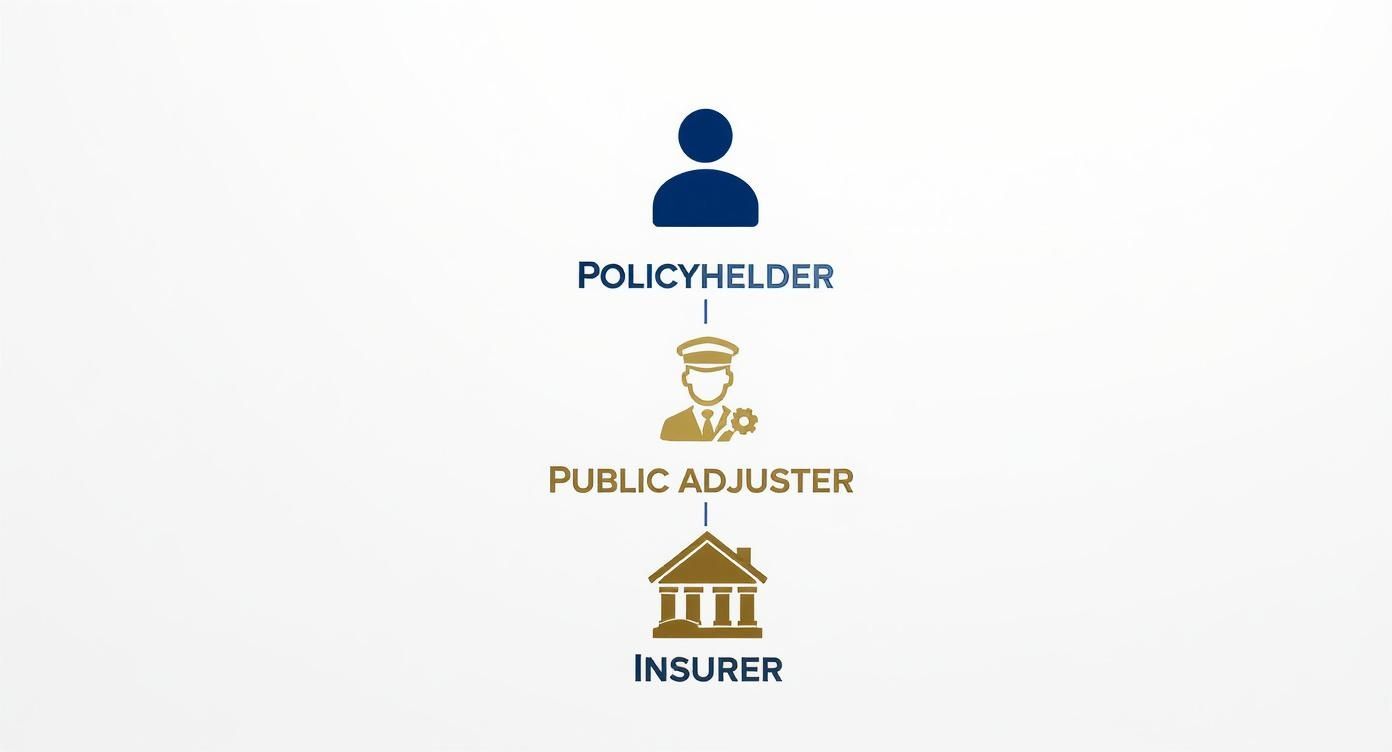
They act as the critical buffer and expert negotiator between you and your insurer, ensuring your rights are protected every step of the way.
It’s crucial to understand the fundamental difference between the adjuster your insurance company sends and the public adjuster you can hire. One works to protect the company’s profits; the other works to protect your financial recovery.
Public Adjuster vs Company Adjuster Who Works For You
| Attribute | Public Adjuster (Your Advocate) | Company Adjuster (Insurer’s Employee) |
|---|---|---|
| Who they work for | You, the policyholder. | The insurance company. |
| Primary Goal | Maximize your claim settlement. | Minimize the insurance company’s payout. |
| Loyalty | 100% to you and your best interests. | To their employer’s financial goals. |
| Compensation | Paid a small percentage of your claim settlement. | Paid a salary by the insurance company. |
The takeaway is simple: the company adjuster is not on your team. A public adjuster is the only claims professional licensed by the state to represent your interests exclusively in a dispute.
Why Your Insurer’s Adjuster Works Against You
Insurance giants like State Farm and Allstate spend billions of dollars on slick marketing campaigns. They want you to think of them as a “good neighbor” or that “you’re in good hands.” But when a real disaster strikes and you file a serious homeowner or business claim, that friendly image can disappear in a flash.
The reality is, the adjuster your insurance company sends to your damaged property isn’t there to help you. They work for the insurance company.

Their job, their loyalty, and their paycheck all come from one place: the insurer. This creates a massive conflict of interest. Their primary goal is to protect their employer’s bottom line by minimizing how much money the company pays out on your claim.
These company adjusters are trained professionals, but their training is all about finding ways to pay you less. They know how to twist confusing policy language against you, overlook hidden damage, and justify repair estimates that are laughably low.
The Insurer’s Playbook for Underpayment
When that company adjuster walks through your damaged property, clipboard in hand, they are on a mission to find every possible reason to reduce your settlement. It’s a game, and they know all the moves to delay and lowball claims.
Here are a few of their go-to tactics:
- Delay, Delay, Delay: They’ll drag out the claims process for weeks or even months. Constant requests for more paperwork, unreturned phone calls—it’s all designed to wear you down until you’re so exhausted you’ll accept any offer just to make it stop.
- Ridiculously Low Estimates: The adjuster will often use specialized software that spits out repair costs based on cheap materials and below-market labor rates. The estimate they give you has no connection to what a reputable local contractor would actually charge to do the job right.
- “That’s Not Covered”: They will confidently tell you that certain types of damage aren’t covered under your policy. They’re banking on the fact that you haven’t memorized every line of your insurance contract. Getting a handle on understanding homeowners insurance coverage is your first line of defense against this tactic.
The real fight often begins after the storm is over. It’s navigating the complex, red-tape-filled insurance claim process that too often leaves homeowners and business owners feeling overwhelmed in their most vulnerable moments.
At the end of the day, every dollar the insurance company doesn’t pay you is a dollar of profit for them. It’s a dollar that should have gone toward rebuilding your home or business. This is precisely why having a public adjuster on your side is so critical. They are the only adjusters who work exclusively for you, the policyholder, to fight back.
How a Public Adjuster Flips the Script on the Insurance Company
Hiring a public adjuster is more than just getting help; it’s a strategic move to level the playing field. When your insurance company sends their adjuster, that person is trained to protect one thing: the company’s bottom line. A public adjuster shows up with the same professional expertise but has a completely different mission—to protect your interests.
They systematically take apart the insurance company’s lowball strategy by building an evidence-based case that’s nearly impossible for them to deny.
This whole process kicks off with a forensic-level inspection of your property. We’re not talking about a quick walkthrough. A public adjuster digs deep to find every last bit of damage, including the hidden problems that often show up months down the road.
Building a Case They Can’t Ignore
Their documentation isn’t just a few snapshots on a phone; it’s a professional, comprehensive portfolio of proof designed to leave no room for argument. This includes:
- Detailed Photo and Video Evidence: They catalogue all the damage from every conceivable angle, creating a clear visual record that tells the whole story.
- Independent Expert Reports: When needed, they’ll bring in engineers, roofing consultants, or mold specialists to provide unbiased, third-party validation that the damage is real and severe.
- A Precise Scope of Work: They create a detailed, line-by-line repair estimate using the same industry-standard software the insurers use. The crucial difference? They use accurate, local costs for labor and materials, not the cheap shortcuts the company adjuster often tries to slip in.
Next, they take this mountain of evidence and cross-reference it with the dense, confusing language in your insurance policy. A public adjuster acts as your translator, pinpointing every bit of coverage you’re entitled to. This often includes things the company adjuster conveniently “forgets” to mention, like code upgrade coverage or temporary living expenses.
A public adjuster’s job is to make sure your claim reflects the full reality of your loss—not the minimized version the insurance company wants to pay for. They build a case so strong that it becomes more expensive and difficult for the insurer to fight it than to simply pay you fairly.
Finally, they take over all communications. You can stop dreading the stressful, manipulative phone calls and endless requests for more information. Your public adjuster becomes your shield, your advocate, and your spokesperson, managing the entire negotiation from start to finish.
They know exactly how to negotiate with an insurance adjuster because they speak the same language and have seen every play in the insurer’s playbook. They take command of the process and fight relentlessly until you get the full and fair settlement you are rightfully owed.
Knowing the Right Time to Hire a Public Adjuster
Knowing when to call in a professional is the most critical decision you’ll make when you’re going up against a powerful insurance company. While a public adjuster is an asset in almost any property claim, certain situations are giant red flags. They signal that you don’t just need help—you need an expert to fight for your financial survival.
If you don’t act, your insurance company will gladly take advantage of your inexperience and wear you down.
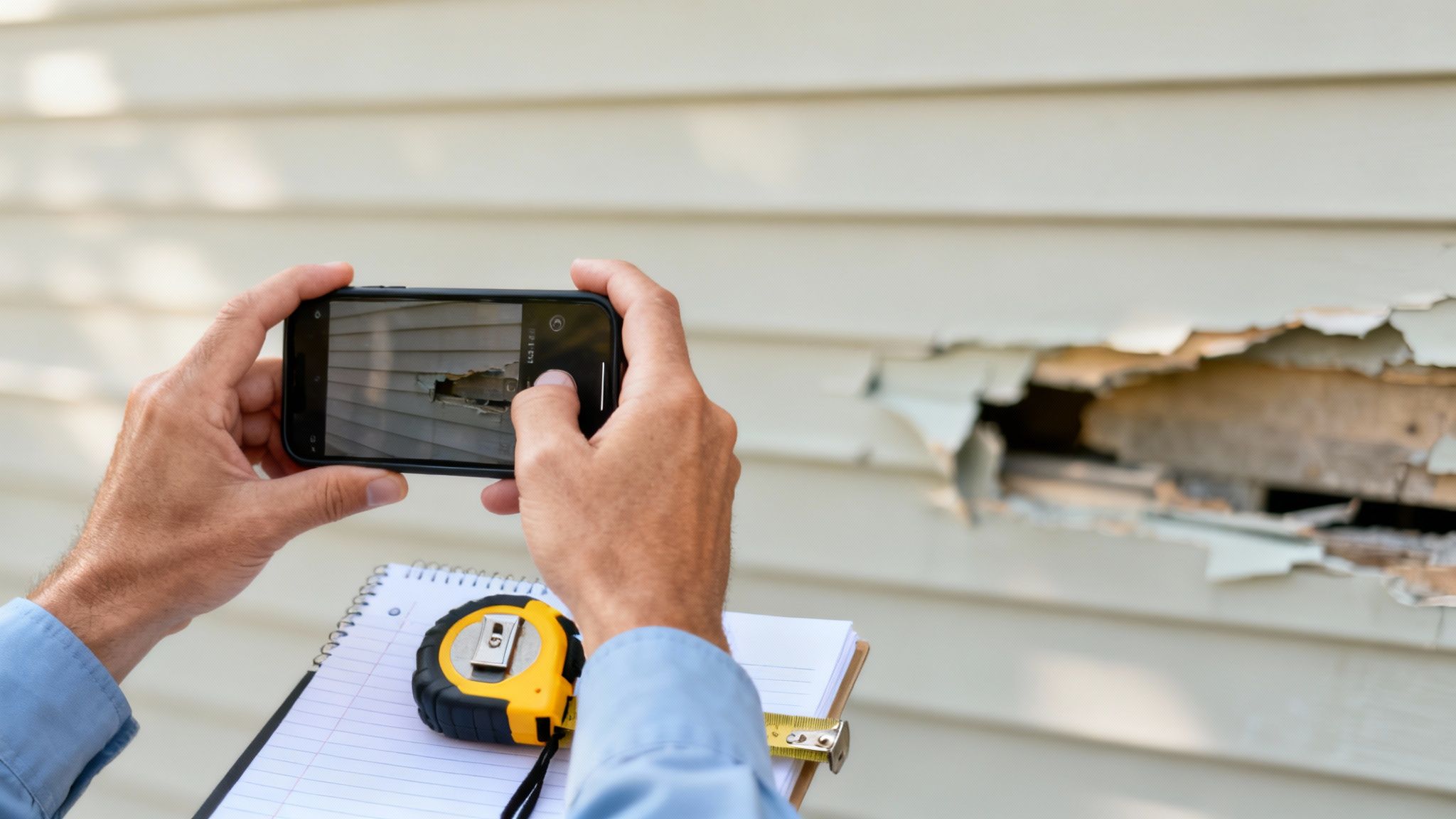
If you’re facing any of the scenarios below, it’s time to seriously consider hiring a public adjuster. These are clear signs that your insurer isn’t playing fair and it’s time to fight back.
Clear Signs You Need a Public Adjuster
- The Damage Is Significant: When you’re dealing with a large, complex homeowner or business claim from a fire, hurricane, or major flood, the financial stakes are incredibly high. A public adjuster has the expertise to make sure nothing gets overlooked.
- The Offer Is Insultingly Low: Did you get a settlement offer that wouldn’t even cover a fraction of the repair costs from a reputable contractor? That’s not a mistake; you’re being lowballed. This is a common tactic by insurers to protect their profits.
- Your Claim is Denied: A wrongful denial is not the final word. It’s a clear signal that you need a professional to dismantle the insurer’s weak reasoning and fight back with facts and evidence.
- You’re Facing Endless Delays: If your insurer is dragging its feet, demanding endless paperwork, and ignoring your calls, it’s a classic delay tactic. They’re trying to wear you down so you’ll accept less or give up.
Don’t wait for the insurance company to make a bad offer before you get representation. Bringing a public adjuster in early prevents costly mistakes and positions your claim for success from day one. For a deeper look into this decision, you can explore our guide on if you should hire a public adjuster.
The need for this kind of professional advocacy is only growing. In a recent year, weather-related catastrophes caused an estimated $368 billion in damages globally, flooding the system with complex claims from property owners like you. You can find more insights about these property claims trends on sedgwick.com.
Understanding the Value of Public Adjuster Fees
When you’re staring at a devastating property loss, the last thing you want to think about is another expense. Your insurance company is already trying to lowball you on the settlement, so the thought of paying someone else can feel completely out of reach.
That leads to the big question: “Can I even afford to hire a public adjuster?”
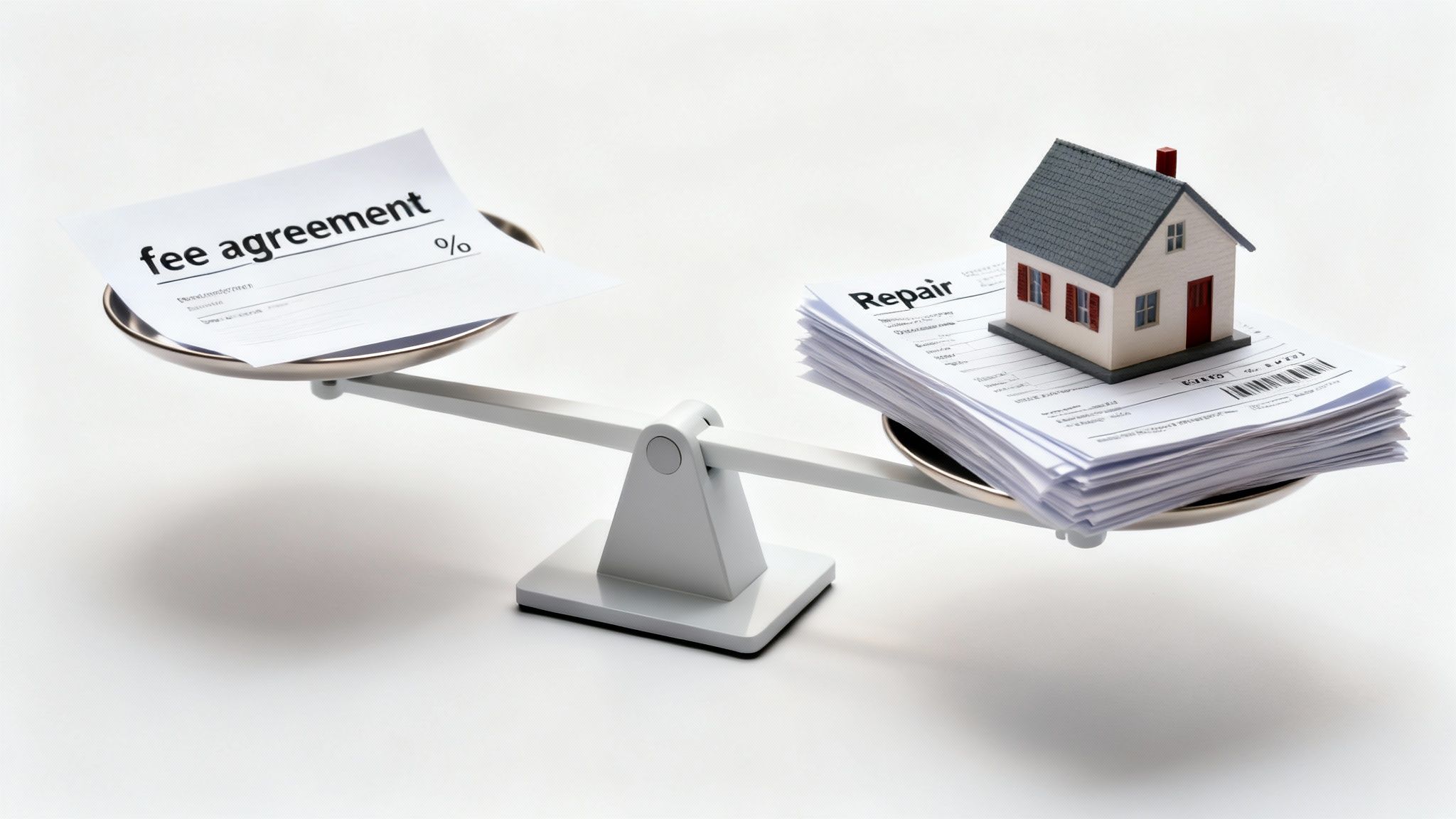
The answer is yes, because of how we get paid. A public adjuster works on a contingency fee basis. In plain English, that means we take a small, agreed-upon percentage of the final claim settlement we win for you. There are no upfront retainers, no hourly bills, and no hidden costs.
We only get paid when you get paid. Our success is tied directly to yours—a powerful partnership you will never have with the adjuster your insurance company sends out.
This fee isn’t just another bill. It’s an investment in getting a far better outcome. By bringing in an expert to document everything, negotiate aggressively, and fight for a settlement that is often multiples higher than what you’d get alone, a public adjuster’s fee more than pays for itself.
The Return on Investment
Instead of leaving you with just enough to patch things up, a public adjuster’s only goal is to maximize your claim. We work to make sure the final check you receive is actually enough to rebuild your home or business properly.
This is a specialized skill, and it’s why claims adjusting can be a high-earning profession. According to the U.S. Bureau of Labor Statistics, the median annual wage for claims adjusters was around $75,770 in a recent year, with the top earners making over $105,440. That earning potential comes from the expertise required to navigate complex policies and secure large settlements—the very same expertise a public adjuster puts to work for you. You can see more data about insurance adjuster income on adjusterpro.com.
When you weigh the cost, consider the alternative. The value an expert delivers—a maximized settlement, relief from stress, and hundreds of hours saved—far outweighs the financial devastation of accepting an insurer’s lowball offer.
Common Questions About Fighting Your Insurance Company
When you’re staring down a battle with your insurance company, it’s easy to feel overwhelmed. The thought of bringing in your own expert—a public adjuster—can feel like a huge step. But honestly, it’s often the single most important move you can make to protect yourself after a major property loss.
Here are some straight answers to the questions we hear all the time from policyholders who realize they’re in for a fight.
Can My Insurer Retaliate for Hiring a Public Adjuster?
This is a huge fear for many homeowners and business owners, but the answer is a hard no. It is completely illegal for an insurance company to punish you for exercising your right to hire a licensed professional to advocate on your behalf. They can’t drop your policy, jack up your rates, or slow-walk your claim just because you got an expert in your corner.
Using a public adjuster is a protected right in most states. In fact, if your insurer starts making threats or trying to intimidate you for hiring help, that’s a massive red flag—and a classic sign they’re operating in bad faith.
Is It Too Late to Hire an Adjuster if My Claim Was Denied?
Absolutely not. A wrongfully denied claim is one of the biggest reasons to bring in a public adjuster. It’s what they do best.
They are experts at tearing down denial letters, finding the insurer’s faulty logic or misreading of the policy, and building a rock-solid case to force them to reverse their decision. They know how to find the evidence needed to reopen the claim and successfully appeal it, often turning a dead-end denial into a paid settlement.
How Is a Public Adjuster’s Estimate Different From a Contractor’s?
This is a critical distinction. A contractor gives you an estimate to fix what they can see. It’s a quote for the work, plain and simple.
A public adjuster’s assessment is a completely different beast. It’s a strategic tool designed to get you the maximum payout for your entire loss under the full terms of your policy. They don’t just look at the visible damage; they dig into your policy to find every ounce of available coverage, including things most insurers hope you miss:
- Code Upgrade Costs: The money needed to bring your property up to current building codes during the repair process.
- Temporary Living Expenses: Getting you reimbursed for hotel stays, rent, and other costs if your home is unlivable.
- Business Interruption Losses: For a commercial policy, this covers the income you lose while your doors are shut for repairs.
A contractor’s estimate is about repairs. A public adjuster’s valuation is about making you whole, forcing the insurer to pay for the full financial scope of your disaster by not only writing an estimate, but to also “apply coverage” to the amount you are owed under the policy.
What is the main difference between a Public Adjuster and the adjuster assigned by my insurance company?
The main difference is who they legally represent. The Insurance Company Adjuster (or staff/independent adjuster) is employed and paid by the insurer, and their fiduciary duty is to their employer—the company—often resulting in lowball offers. The Public Adjuster is hired and paid by you, the policyholder, and their sole duty is to protect your best financial interests.
When is the best time to hire a Public Adjuster for a property damage claim?
The most beneficial time to hire a public adjuster is immediately after the loss occurs, or before you even file the claim. Getting them involved early ensures the claim is documented meticulously from the start, preventing the insurer from establishing an inaccurate scope of damage or prematurely denying coverage.
What does a Public Adjuster actually do during the claims process?
A public adjuster manages the entire claim process, which includes:
- Damage Assessment: Conducting a thorough, independent inspection and creating a detailed scope of damage.
- Policy Review: Scrutinizing your policy to maximize covered benefits and counter exclusions.
- Documentation: Preparing all claim paperwork, inventory lists, and estimates.
- Negotiation: Communicating and negotiating with the insurance company on your behalf.
How much does it cost to hire a Public Adjuster, and how do they get paid?
he most common payment structure is a contingency fee, meaning the public adjuster is paid a small percentage (typically 10% to 20%) of the final claim settlement amount. This fee is only collected after you receive payment from your insurance company. This structure ensures their financial interests are directly aligned with yours: No Recovery, No Fee.
Will hiring a Public Adjuster delay the final settlement of my insurance claim?
No. While complex claims require thorough documentation, a public adjuster often expedites the overall process by preventing delays caused by the insurer's lowball tactics, missing documentation, or disputes. By submitting an airtight, professional package, they move the claim quickly toward a fair final settlement, avoiding lengthy disputes.
Should I hire a Public Adjuster if my claim has already been denied or paid too low?
Yes, absolutely. If your claim was denied, or if you received a low settlement, a public adjuster can re-open the claim, perform a fresh, professional evaluation of the damages and policy, and aggressively challenge the insurer's decision to fight for the additional compensation you are owed.
Are Public Adjusters licensed and regulated?
es. Public adjusters are licensed professionals regulated by the Department of Insurance in each state they operate in. Licensing typically requires passing an exam, meeting continuing education requirements, and often posting a surety bond to protect the consumer. Always verify the license of any public adjuster you consider hiring.
For what types of property damage claims should I consider hiring a Public Adjuster?
Public adjusters specialize in all types of first-party property damage claims. Their services are particularly valuable for large, complex, or disputed claims, such as those involving:
- Fire and smoke damage (total loss).
- Major hurricane, wind, or storm damage.
- Extensive water damage or burst pipes.
- Commercial property and business interruption claims.
Does my insurance company dislike or treat me differently if I hire a Public Adjuster?
While insurance companies prefer to deal directly with unrepresented policyholders, they are legally obligated to work with your public adjuster. It is a serious violation for an insurer to discriminate against or penalize you for exercising your right to expert representation. Hiring a public adjuster simply levels the playing field and ensures your rights are protected.
When you’re dealing with a frustrating denial or a lowball offer, you don’t have to take on the insurance company by yourself. The team at For The Public Adjusters, Inc. is here to step in, take over the fight, and get you the full and fair settlement you’re owed. Contact us today for a no-cost claim review and see how we can help you get back on your feet.