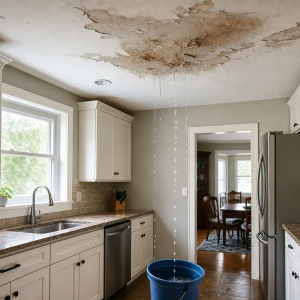
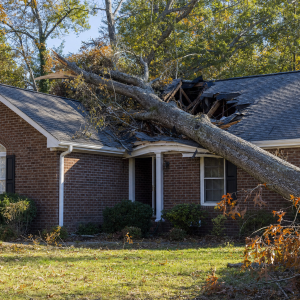
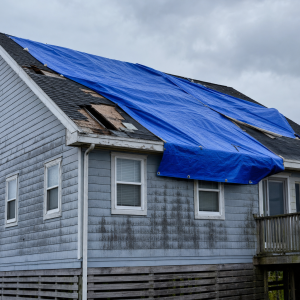
A homeowners claim should often move in weeks, not forever. A common property-claim benchmark is about 23.9 days, but storm and catastrophe claims can slow to 34+ days, and after a major disaster full repair and final closeout can drag into 18 to 24 months because insurers often pay in stages rather than one complete settlement (property-claim timing benchmark, disaster repair timeline and partial-payment pattern).
If you’re reading this, you’re probably living in the worst part of the process. The tarp is still on the roof, the kitchen still smells like smoke, the contractor wants answers, and the insurance company keeps saying it’s “under review.” That’s not just frustrating. It’s a pressure tactic. The longer they stretch the file, the more likely you are to accept a low-ball number, give up on parts of the claim, or pay out of pocket just to move on.
That is the core of how long does it take to settle homeowners claim disputes. On paper, the process can move quickly. However, insurers slow it down whenever the damage is expensive, the scope is disputed, or they think you don’t know the rules. If you want this claim to move, you have to treat the timeline like a fight, not a waiting game.
Table of Contents
- Your Claim Is Dragging On Here Is Why
- The Official Homeowners Claim Settlement Timeline
- Low-Balls and Logjams Insurer Tactics That Delay Your Claim
- Fight Claim Delays Using North Carolina and Virginia Laws
- Case Study A Public Adjuster Turns a Delayed Claim Around
- Stop Waiting and Start Fighting Your Claim Dispute Today
Your Claim Is Dragging On Here Is Why
You report storm damage. The adjuster comes out. Then silence.
A week later, you call. They say they’re waiting on a review. Then they need another photo. Then a contractor estimate. Then a revised estimate. Then a manager has to approve it. Then a different adjuster takes over and asks for the same documents again. Homeowners think the claim is stuck in red tape. A lot of the time, it isn’t. It’s stuck in a strategy.
They want you tired before they want you paid
Insurance companies like State Farm and Allstate don’t have to openly deny a claim to save money. Delay does the work for them. If they can drag the process out long enough, some homeowners accept a bad number just to start repairs and get their life back.
That is why your claim can feel strangely directionless. Nobody says no. Nobody says yes. The file just lingers.
Practical rule: If the carrier keeps changing what it needs, repeating requests, or moving your file between people, assume the timeline is being managed for their benefit, not yours.
This gets worse after a hurricane, wind event, or large neighborhood loss. Carriers know homeowners are under pressure. Roofers want deposits. Mitigation invoices keep coming. Family routines are wrecked. Every extra day gives the insurer a stronger position.
The real problem isn’t time alone
The problem is unanswered questions. Has the insurer acknowledged everything? Has anyone made a coverage decision? Are they disputing scope, price, cause, or depreciation? Is the payment they sent an advance or their attempt to close the file cheap?
Those are completely different fights.
When homeowners ask how long does it take to settle homeowners claim disputes, they’re usually asking a deeper question. They want to know whether the delay is normal or whether the insurer is playing games. That’s the right question to ask.
Here are the warning signs that your delay is becoming a claim dispute:
- Repeated document requests: You already sent photos, invoices, mitigation bills, or inventories, and they ask again.
- Adjuster turnover: A new desk adjuster or field adjuster appears and acts like the file is brand new.
- Partial acknowledgment: They discuss some damage while ignoring other rooms, line items, or categories of loss.
- Tiny first payment: They issue a check that doesn’t come close to real repair cost, then act like the claim is basically resolved.
If any of that sounds familiar, stop treating this as a routine claim. It’s not routine anymore. It’s a negotiation where the insurer controls the pace unless you force accountability.
The Official Homeowners Claim Settlement Timeline
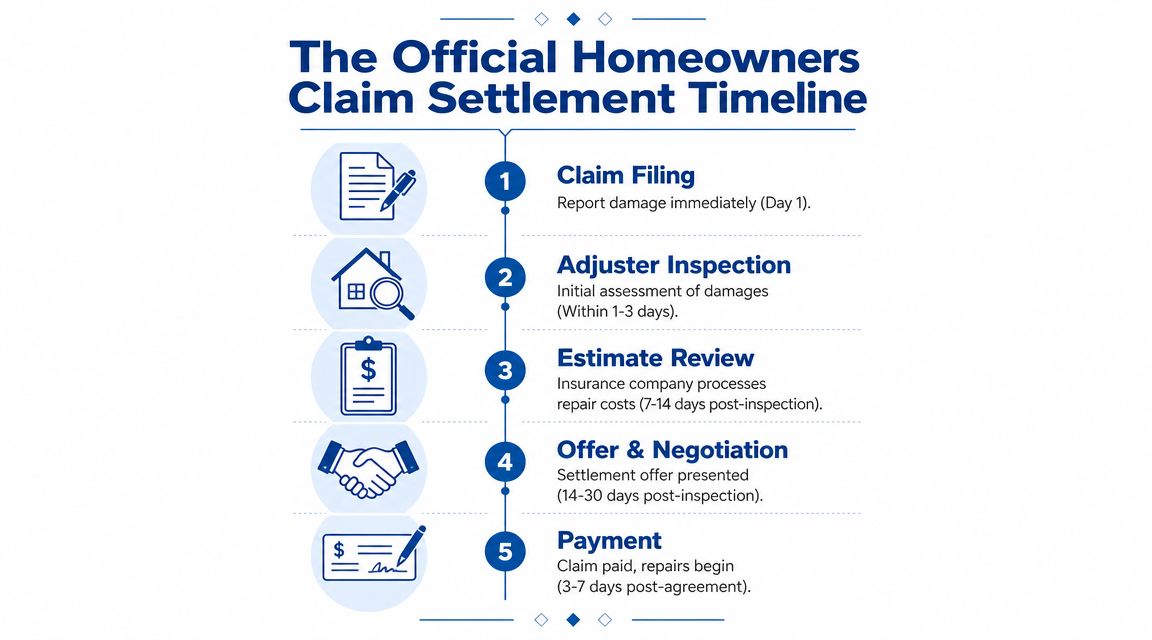
A pipe bursts on Friday night. By Monday, you have fans running, cabinets torn out, and a carrier representative telling you the process is “under review.” That sounds routine. It usually isn’t. The insurer is already controlling the clock, and every day of drift gives them more room to underpay, split the claim into pieces, or wear you down.
What the carrier calls the normal timeline
The official timeline is simple on paper. You report the loss. They assign the file. They inspect. They write their estimate. They issue a payment or a coverage decision. Carriers present that sequence like it moves on rails.
Outside guidance on property claims notes that inspections often happen within days for ordinary losses, but storm claims and heavy-volume events can stretch much longer because adjusters and vendors get backed up (property damage claim timing after storms). Homeowners need to hear the second half of that sentence. Backlog is real, but insurers also hide behind backlog long after it stops being a legitimate excuse.
Here is the timeline they want you to accept:
-
Claim reported
The file is opened, a claim number is assigned, and you get the first round of instructions. -
Inspection scheduled
A field adjuster or independent adjuster comes out to photograph and document visible damage. -
Carrier estimate prepared
The insurer writes its scope of loss. Problems often arise here, because missing line items at this stage become the insurer’s excuse for every later delay. -
Coverage decision or initial payment
The carrier accepts, limits, or denies parts of the claim, or sends a check based on its own estimate. -
Supplement review
Hidden damage, code items, overhead and profit, matching issues, or missed rooms get pushed into a second fight.
If you want the broader frame on how long an insurance company has to settle a claim, start there. Then come back to your file and compare what should have happened with what the carrier is doing.
What this timeline leaves out
The insurer’s version only tracks administrative events. It does not track whether the estimate is honest, whether the adjuster inspected the full loss, or whether the payment is enough to begin real repairs.
That distinction decides everything.
A claim is not meaningfully settled because someone visited the house. It is not settled because a small first check arrived. It is not settled because the carrier says the file is “partially resolved.” It is settled when the scope is accurate, the coverage position is clear, and the money reflects what it takes to restore the property.
Homeowners get trapped when each stage turns into a fresh stall. Inspection happens, then the estimate sits. The estimate arrives, then desk review stalls. A payment comes, then the carrier says supplements must wait. The file moves on paper while your house and your bank account stay stuck.
That is why you should track the timeline in writing. Save the date of first notice, inspection, estimate receipt, payment, and every document request. If the carrier misses a deadline, changes adjusters, or keeps asking for items you already sent, you need a clean record. That record matters even more in North Carolina and Virginia, where claim-handling rules can give you pressure points the insurer would rather you never use.
One more point. Settlement calculators are not very helpful in property disputes because homeowners claims turn on scope, policy language, depreciation, and code issues, not simple formulas. A personal injury settlement estimator may be useful in an injury case, but a house claim gets decided by documentation, persistence, and whether you force the carrier to answer for every omission.
Use the official timeline as a measuring tool. Do not treat it like proof that your claim is progressing fairly.
Low-Balls and Logjams Insurer Tactics That Delay Your Claim

You report serious damage, cooperate with the inspection, send photos, answer questions, and wait for the estimate. Then the carrier sends a small payment, ignores half the damage, and acts like your claim is already on track. That is not progress. It is a delay tactic dressed up as activity.
Carriers like State Farm and Allstate do this every day. They do not need to deny a valid claim outright if they can wear you down first. A weak estimate buys them time. Silence buys them more. By the time you are chasing updates for the fourth week in a row, the insurer is counting on fatigue, cash pressure, and repair urgency to force a cheap resolution.
The real strategy is attrition
A low-ball and a delay are usually part of the same plan. The carrier under-scopes the loss early, then makes you spend the next month proving obvious damage should have been included from the start. Roof accessories get omitted. Interior line items get reduced. Moisture-related work gets postponed pending “further review.” Code items disappear unless your contractor fights for them.
That is how a claim gets stuck without ever looking fully stalled on paper.
The usual tactics are easy to recognize once you know what to watch for:
- Adjuster rotation: The field adjuster disappears. A desk adjuster takes over. Then a new examiner “inherits” the file and asks to revisit issues that were already discussed.
- Document churn: They request bids, then revised bids, then room-by-room breakdowns, then more photos, then clarification on documents you already sent.
- Selective silence: They respond to easy emails and ignore the expensive disputes, especially missing scope, overhead and profit, code upgrades, and hidden damage.
- Artificial partial closure: They issue a small check so the file looks active while the actual dispute stays unresolved.
None of this is accidental. Every extra handoff and every recycled request slows your claim and improves the insurer’s bargaining position.
Why these tricks work so often
Homeowners are trying to get their house put back together. The insurer is trying to control payout. Those goals clash hard once the damage is expensive.
A carrier knows you are dealing with contractors, temporary living issues, family stress, and out-of-pocket costs. It also knows most policyholders do not keep a clean paper trail, do not challenge a bad scope line by line, and do not know the claim-handling rules in North Carolina or Virginia. That gap is where the insurer makes money.
The favorite phrase is “we’re still investigating.” Sometimes that is legitimate. Often it means they do not like the number, do not want to commit on coverage, or are hoping you accept less before the full damage is priced correctly.
If the company keeps asking for one more item, stop assuming the file is getting careful attention. Repetitive requests often mean the carrier is buying time.
If you want a plain-language breakdown of what a policyholder-side professional does when the carrier starts playing these games, read about a private insurance adjuster.
This short video hits the issue from the homeowner’s side:
Your response has to be disciplined. Compare the insurer’s estimate against actual scope, current pricing, contractor input, and photo evidence. Challenge missing line items in writing. Force the company to answer specific omissions instead of letting it hide behind vague status updates.
People use structured tools in other disputes to see how documented inputs affect case value. A personal injury settlement estimator is not for property damage, but it shows the same principle. Organized inputs shape bargaining power. In a homeowners claim, better documentation usually gets a better result.
If the insurer keeps your file moving in tiny, incomplete steps, call it what it is. Controlled delay.
I have seen this pattern too many times to call it bureaucracy. It is a claims tactic. The carrier drags the process out, keeps the estimate low, and waits for the homeowner to blink first. Do not.
Fight Claim Delays Using North Carolina and Virginia Laws
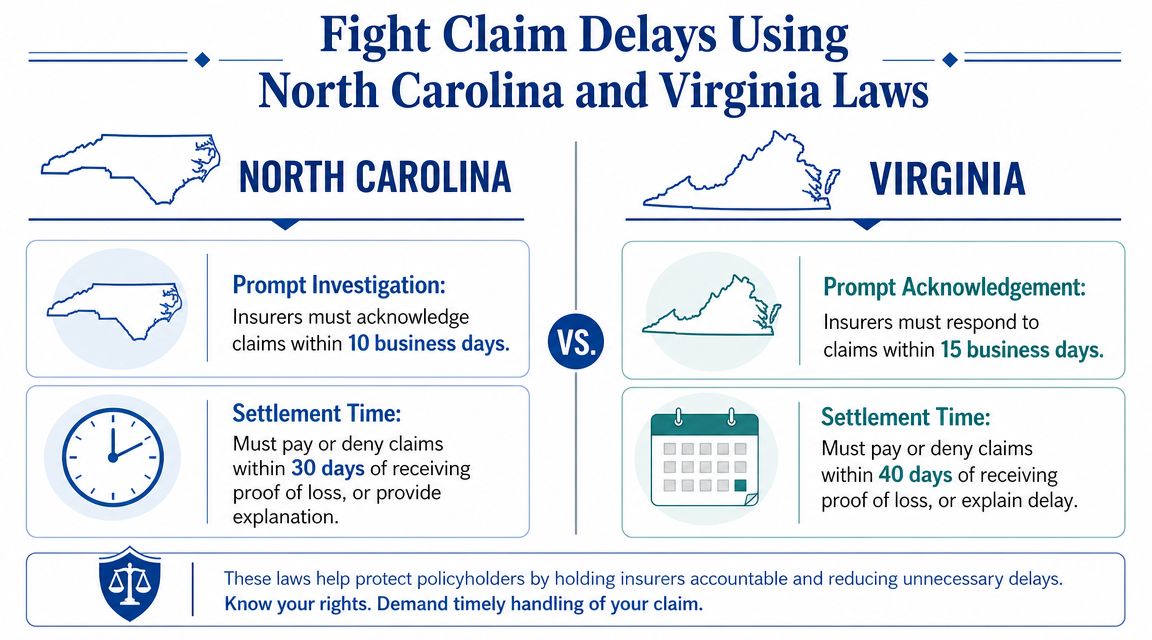
The law matters because it turns your complaint into a deadline problem. Carriers are comfortable brushing off frustration. They’re less comfortable when your emails track the exact stage of the claim and ask why a required response hasn’t happened.
Virginia gives you real deadline leverage
Virginia homeowners have useful timing rules. Insurers must generally acknowledge a property claim within 15 days of notice, and must affirm or deny coverage within 15 calendar days after receiving a properly executed proof of loss. Investigations are generally expected to conclude within 45 days of notification unless the insurer gives a valid reason for needing more time (Virginia claim deadlines).
That gives you a practical framework:
| Claim stage | What to track in Virginia |
|---|---|
| Acknowledgment | Did they respond within the required window after notice? |
| Proof of loss | Did you submit what they requested in usable form? |
| Coverage decision | Did they affirm or deny after receiving the proof? |
| Investigation | If they went past the normal window, did they explain why? |
If you’re in Virginia, stop sending vague follow-ups like “just checking in.” Send focused questions tied to the stage of the claim.
For example:
- After notice: Ask whether the claim has been formally acknowledged and who owns the file.
- After proof of loss: Ask whether the insurer is affirming or denying coverage, in whole or in part.
- If the investigation drags: Ask for the written reason more time is supposedly needed.
North Carolina homeowners need to watch the bigger clock
North Carolina policyholders dealing with hurricanes and wind losses face a different problem. A surge event can stretch a claim from weeks into months because assignment times, inspections, and estimate review all bog down. One analysis also notes a three-year limitations period for property policies in North Carolina, which means delay can become dangerous if the carrier keeps “negotiating” while the clock keeps running (hurricane claim delay and North Carolina limitations discussion).
That means your strategy in North Carolina is not passive patience. It is file control.
Use this checklist:
- Document the trigger date: Know the date of loss and keep it visible in every serious claim communication.
- Track every request: If the carrier says it needs something, send it in a form you can prove and log the date.
- Force issue identification: Ask whether the delay is about coverage, scope, pricing, or missing documents.
- Escalate before the limitations issue gets close: Ongoing conversation is not the same as protected rights.
The most effective homeowners don’t just ask, “How long is this taking?” They ask, “What exact deadline applies right now, and what has the insurer done to meet it?”
That approach changes the tone of the file. You stop sounding like a frustrated customer and start sounding like someone who can prove delay.
Case Study A Public Adjuster Turns a Delayed Claim Around
A storm tears through the neighborhood. The roof is compromised, water gets in, and the homeowner does what they are told to do. Report the claim. Send the photos. Wait for inspection. Wait for the estimate. Wait for the callback that never comes. Then the carrier sends a partial payment that does not cover the actual repair cost and acts like the claim is progressing.
That is how delay works in practice. The insurer creates the appearance of movement while keeping the file underpaid and unfinished.
In large loss claims, repairs and payments often happen in stages, so a quick first check means very little if the carrier refuses to address the full scope later. Homeowners get trapped by that false progress all the time. They cash the first payment, assume the rest is coming, and lose weeks or months while the company drags out review, reinspection, and supplement handling.
What changed when the homeowner stopped handling it alone
The case turned when the homeowner stopped arguing from memory and started pressing the claim with proof.
A public adjuster rebuilt the file from the ground up. Every damaged area was reinspected. Missing line items were documented. The estimate was rewritten to reflect actual repair needs, not the carrier’s stripped-down version of the loss. Every submission went in as an organized package with supporting photos, scope notes, and a written demand for a response on the disputed items.
That changes the fight. The carrier can ignore scattered emails. It has a harder time ignoring a documented claim package that exposes exactly what was missed.
One example of that kind of policyholder representation is a public claims adjuster who documents damage and negotiates with insurers for the policyholder. The point is not branding. The point is control. Once someone experienced takes over the file, the insurer loses one of its favorite advantages, a disorganized homeowner trying to manage repairs and a claim dispute at the same time.
The file also got cleaner. Instead of random attachments and mixed messages, the support was reviewed like an inspection record. Even adjacent tools can help spot weak points before submission. An AI solution for real estate professionals can help review inspection-style reports and flag inconsistencies that deserve a second look.
Why outside claim help changes the pace
Insurance companies delay claims for a reason. Delay wears people down. It pressures them to accept less, patch the house, and move on.
A qualified public adjuster disrupts that strategy by forcing the dispute into writing and forcing the carrier to answer specific omissions. If the insurer says the problem is documentation, the file answers that. If the insurer says the scope is still under review, the demand pins down which rooms, which line items, and which pricing issues remain open. That is how stalled claims start moving.
A real customer review helps show the difference in experience:

This matters even more in North Carolina and Virginia, where homeowners should use every deadline, acknowledgement rule, and unfair-claims standard available to pressure the carrier. A delayed file is not just an inconvenience. It is a tactic. The right representative treats it that way and answers with documentation, escalation, and deadlines the insurer cannot easily dodge.
Delayed claims turn around when someone stops asking for updates and starts forcing the insurer to answer for every missing dollar and every wasted week.
Stop Waiting and Start Fighting Your Claim Dispute Today
By the time most homeowners search how long does it take to settle homeowners claim, they’re already past the point of simple curiosity. They want to know whether what’s happening is normal. A lot of the time, it isn’t.
The carrier’s playbook is predictable. Slow the file. Narrow the scope. Issue a partial payment. Ask for more paperwork. Reassign the claim. Keep the homeowner reacting instead of pressing. That approach works because people are busy, stressed, and trying to repair a home while arguing with a company that’s supposed to help.
Your counter-move is just as clear:
- Pin down the stage: acknowledgment, inspection, decision, payment, or supplement.
- Identify the actual dispute: cause, coverage, scope, price, or missing documentation.
- Use the right deadline: especially if you’re in Virginia or dealing with prolonged storm-related delay.
- Stop feeding confusion: send organized documentation and insist on written responses.
- Escalate when needed: before “we’re still reviewing it” turns into another month gone.
One point matters more than all the rest. The most important question is not just “how long will my claim take,” but “which specific deadline applies to my claim right now, and what documents are needed to force the insurance company to act?” (deadline-focused claim question)
That is how you stop being managed by the insurer’s timeline. You start forcing the file forward.
If your homeowners claim has been delayed, underpaid, or tied up in endless back-and-forth, don’t keep waiting for the same company that caused the problem to suddenly fix it. Every day you wait, they keep the advantage.
2. Why does the "Proof of Loss" form act as the ultimate "start" button for your claim?
Direct Answer: Many policyholders mistakenly think the "start" of their claim is the day they call their agent. Legally, the clock for the insurance company’s investigation begins when you submit a signed, notarized Proof of Loss statement.
The Forensic Solve: If you don't submit this form, you haven't triggered the regulatory "investigation deadline." If your claim is dragging, demand a Proof of Loss form from your adjuster in writing. Filing it creates an enforceable legal milestone.
3. What are the top three reasons a claim settlement gets "stuck" in NC/VA?
The "Stuck" Trinity:
Scope Gap: The adjuster’s estimate doesn't match your contractor’s bid. This leads to weeks of "re-inspections" and back-and-forth phone calls.
Missing "Depreciation" documentation: The carrier has withheld funds (Replacement Cost) until you provide "Paid in Full" invoices. If you haven't uploaded those specific documents, the check will never arrive.
Third-Party Vetting: If your claim involves significant water damage or structural issues, the carrier may have outsourced the report to a "third-party engineering firm." These firms are not bound by the same 30-day DOI investigation rules, which often causes the delay.
4. Can I speed up a claim by hiring a Public Adjuster?
Direct Answer: Yes. A Public Adjuster (PA) acts as a professional force multiplier.
The Advantage: A PA knows exactly which line items to include to avoid the "Scope Gap" (see FAQ #3). They present a "clean" estimate to the carrier that is difficult for a desk adjuster to challenge, often turning a 6-month claim into a 6-week settlement.
5. What if the insurance company denies my claim after months of waiting?
Direct Answer: You have a legal right to a written denial that cites the specific policy exclusion.
The NC/VA Rule: Carriers cannot simply say "we won't pay." They must provide a letter within 30 days of closing the investigation that identifies the exact paragraph in your policy that justifies the denial. If they fail to cite the policy language, you can appeal the decision immediately to the NCDOI (North Carolina Department of Insurance) or the Virginia State Corporation Commission (SCC) Bureau of Insurance.
6. Is it true that I have to wait for the adjuster to approve repairs?
The Danger Zone: Many policyholders wait for an "approval" that never comes, leading to further damage (secondary rot/mold).
The Solve: You are contractually obligated to mitigate further damage. You do not need permission to board up a window or dry out a floor. Take photos, keep receipts, and perform the necessary emergency repairs. Do not wait for the adjuster to "greenlight" a standard water extraction.
7. What if the insurance company "ghosts" me for more than 45 days?
The Escalation Strategy: If your adjuster isn't returning calls, stop calling. Start emailing.
The Subject Line: "Formal Request for Status Update - Policy #[Number] - Claim #[Number]."
The Content: "It has been 45 days since my last contact. Per 11 NCAC 04 .0115, please provide a written update on the status of my investigation."
The Goal: You are creating a paper trail for the Department of Insurance. If they still don't respond, attach that email to a formal complaint with the state.
8. How does "Contractor Backlog" affect my settlement time?
The Reality Check: In markets like Raleigh or Richmond, contractors are often booked months out.
The Solve: If the carrier is using the "lack of a contractor" as an excuse to delay your settlement, provide them with a Letter of Intent from your chosen contractor. It proves the work is ready to begin the moment the funds are released. This removes the carrier's excuse that they are "waiting for you to find a contractor."
9. Why does my "Final Settlement" check take longer to arrive?
The "Check-Clearing" Phase: Once you and the adjuster agree on a number, the carrier's accounting department has a separate internal workflow.
Pro-Tip: Ask the adjuster, "Is the draft already issued, or is it pending supervisor approval?" If it's pending supervisor approval, ask for the name of the supervisor. Knowing exactly who is holding the signature pen can significantly speed up the internal red tape.
10. Does filing a complaint with the state (DOI) actually help or hurt?
The Misconception: Many fear filing a complaint will "anger" the insurer.
The Reality: Insurers are highly regulated entities. An inquiry from the NC Department of Insurance or the VA Bureau of Insurance forces the carrier to open a "Regulatory File." This usually results in a senior-level claims supervisor taking over your file within 48-72 hours. It is one of the most effective tools for unsticking a stalled claim.
If your insurance company is dragging out your homeowners, dwelling, or business property claim, get help from For The Public Adjusters, Inc.. They offer a no-cost, no-obligation claim review for policyholders dealing with delays, low-ball estimates, and claim disputes in North Carolina and Virginia.