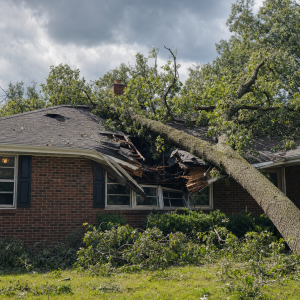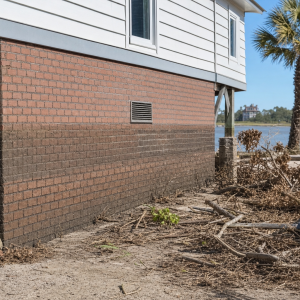

After policyholders receive a check from the insurance company that is less than expected, they often ask, “What Is Actual Cash Value Insurance?” Actual Cash Value (ACV) in insurance is the current value of your property at the time of loss, after accounting for depreciation (wear and tear, age, condition, and obsolescence).
What ACV Means
Actual cash value represents the worth of an asset immediately before it was damaged, lost, or destroyed, factoring in its age, condition, and wear and tear. It reflects what a buyer would reasonably pay for a similar item in the current market, not the price originally paid or the cost to replace it with a new item. ACV is commonly used in auto, property, and personal property insurance to determine claim payouts.
How ACV Is Calculated
The standard formula for ACV is:
ACV = Replacement Cost minus Depreciation
Replacement Cost (RC): The current cost to purchase a new item of similar kind and quality.
Depreciation: The reduction in value due to age, usage, wear and tear, functional obsolescence, or economic factors.
For example, if a laptop originally cost $1,000 and its replacement cost today is $1,200, but it has depreciated by 50% due to age and condition, the ACV payout would be $600.
Key Features
Depreciation-Based: ACV accounts for the diminished value of the item over time.
Indemnity Principle: The payout restores the policyholder to their financial position before the loss, without providing a profit.
Lower Premiums: Policies using ACV often have lower premiums compared to replacement cost coverage because the insurer’s liability is reduced.
ACV vs Replacement Cost
Unlike ACV, replacement cost coverage reimburses the full cost to replace the item with a new one, ignoring depreciation. While replacement cost provides higher financial protection, it usually comes with higher premiums. ACV is more affordable but may result in a lower payout, which can be significant for older or heavily used items.
Practical Implications
Policyholders should understand that ACV payouts may not cover the cost of buying a brand-new replacement.
Reviewing depreciation assumptions and market valuations can help ensure a fair settlement.
Some insurers offer endorsements or riders to convert ACV coverage to replacement cost for certain items, which can reduce the risk of underpayment.
In summary, actual cash value insurance provides compensation based on the current value of an item after depreciation, making it a cost-effective option but one that may result in lower claim payouts compared to replacement cost coverage.
A Deeper Look
The fire is out. The water is gone. The tarp is on the roof. Then the insurance check arrives, and it’s nowhere close to what you need.
That’s the moment homeowners start asking what is actual cash value insurance. Not because they’re curious about policy language, but because the carrier just used that language to justify a low payment. The adjuster sounded helpful. The paperwork sounds official. The number still feels absurd.
You’re not crazy. You’re seeing one of the oldest payout-reduction tools in property insurance. Actual cash value, or ACV, usually means your insurer pays the value of damaged property after depreciation, not what it costs to replace it today. On paper, that sounds tidy. In a real claim, it often becomes the excuse for a settlement that leaves homeowners and business owners stuck.
Table of Contents
- Your Insurance Check Is a Joke Now What
- Decoding Actual Cash Value The Insurer’s Math Problem
- The Depreciation Deception How Insurers Low-Ball Your Payout
- ACV vs Replacement Cost A Policyholders Battleground
- Building Your Case How to Fight Unfair ACV Calculations
- Why a Public Adjuster Is Your Best Weapon in an ACV Dispute
- Stop Being a Victim Take Control of Your Claim
Your Insurance Check Is a Joke Now What
A lot of claim disputes start the same way. A homeowner in North Carolina gets hit with storm damage, fire damage, or a major water loss. The insurer sends someone out, takes photos, asks a few questions, and then issues a check that barely scratches the surface.
The letter says “actual cash value.” The estimate mentions depreciation. The carrier acts like the number is objective, final, and fair. It usually isn’t.
Why this hits people so hard
Most policyholders don’t realize until after a major loss that an ACV policy is not a rebuilding budget. It’s a depreciated-value settlement, and after severe weather, fire, and contents losses, the payment can land far below what’s needed to recover, as noted by Kelley Blue Book’s explanation of actual cash value.
That’s why the first check feels like a joke. You’re looking at today’s construction prices, contractor deposits, debris removal, damaged flooring, cabinets, roofing, drywall, business contents, and temporary disruption. The insurance company is looking for every excuse to shave value off the claim.
What the carrier is counting on
They’re counting on confusion.
They know many policyholders don’t speak insurance math. They know words like “depreciation,” “condition,” and “actual value” sound technical enough to stop the argument before it starts. Carriers like State Farm and Allstate don’t need you to agree with their number. They just need you to feel overwhelmed enough to cash the check and move on.
Practical rule: If the payment won’t reasonably let you repair or replace what was damaged, treat the ACV number as a dispute target, not a finished result.
The right question isn’t “why is my check so low?” The right question is “how did they calculate that number, and what proof do they have for every deduction?”
Once you ask that, the fight changes.
Decoding Actual Cash Value The Insurer’s Math Problem
Actual cash value sounds harmless. It isn’t. It’s the math insurers use to reduce what they pay on property claims.
The core formula is straightforward. Replacement cost minus depreciation. American Express explains ACV that way, and gives a stark example: a business computer bought for $10,000 and depreciated by $4,000 would have a replacement cost value of $6,000, but an actual cash value of only $2,000 at the time of loss, which means the payable amount can be cut by two-thirds in a single claim according to this ACV explainer from American Express.
What that means in plain English
Replacement cost asks what it costs today to buy new materials or items of like kind and quality.
Depreciation is the insurer’s deduction for age, wear, and condition.
Put those together and you get the number on your check. The problem is obvious. The replacement side reflects today’s market. The depreciation side gives the insurer room to drive the number down.
Why policyholders get blindsided
Most homeowners and business owners focus on whether the damage is covered. That’s only half the battle. The bigger fight often comes after coverage is accepted, when the carrier starts discounting the value of what was damaged.
If you want a plain-language breakdown of how carriers use this tactic on real property claims, this guide on depreciation on insurance claims is worth reading.
Here’s the issue. Depreciation isn’t just bookkeeping. In a claim, it becomes a distinct advantage for the insurer. A roof with years of life left gets treated like it was nearly spent. Cabinets in solid condition get labeled worn. Flooring that functioned perfectly before the loss gets discounted because it wasn’t brand new.
The math is only as honest as the inputs
That’s why ACV is dangerous in the hands of a carrier adjuster. The formula looks neutral. The assumptions behind it often aren’t.
A practical way to look at this concept:
- Replacement pricing can vary: Labor and material costs change fast, especially after storms.
- Condition gets judged subjectively: The carrier’s adjuster may never have seen the item before the loss.
- Depreciation can be inflated: The older the property, the easier it is for the insurer to slash value.
For people trying to understand how storage and property coverage costs can differ depending on valuation method, Endless Storage’s overview of storage unit insurance cost is a useful outside reference because it helps frame why coverage type matters before a loss happens.
The insurer’s estimate is not the property’s true value. It’s the carrier’s opening position in a money dispute.
If you remember one thing, remember this. ACV is not the same as what you need to repair the damage. It’s what the insurer says your damaged property was worth after they subtract enough depreciation to protect their bottom line.
The Depreciation Deception How Insurers Low-Ball Your Payout
Depreciation is where the low-ball happens.
Carriers talk about it like it’s a fixed science. It’s not. It’s a judgment call dressed up as math, and that gives adjusters plenty of room to push your claim downward. If your roof, flooring, cabinets, siding, or business contents weren’t brand new, the insurer will usually try to use age as a weapon.

The trick is simple. The adjuster starts with a number that sounds plausible, then applies enough depreciation to turn a real loss into an underfunded repair project. Homeowners in NC and VA see this after hail, wind, fire, and water losses all the time.
The three methods carriers may use
Actual cash value is not always calculated one single way. IRMI notes that insurers may use replacement cost minus depreciation, fair market value, or the broad evidence rule, and that the broad evidence rule allows consideration of all relevant evidence of value, including market pricing, condition, and obsolescence, which can help policyholders challenge a mechanical age-based deduction in a dispute through IRMI’s definition of actual cash value.
That matters because each method creates a different battlefield.
| Method | How it gets used against you | How you push back |
|---|---|---|
| Replacement cost minus depreciation | The adjuster inflates wear and tear | Show condition, maintenance, and useful life evidence |
| Fair market value | The carrier argues what a buyer would pay, not what replacement costs | Focus on policy language and real replacement needs |
| Broad evidence rule | The insurer may still cherry-pick evidence | Bring better evidence than they do |
Why the broad evidence rule can help you
This is one area where policyholders can hit back effectively.
If value can be judged using all relevant evidence, then the carrier doesn’t get to hide behind a crude age chart. You can bring in pre-loss photos, service records, contractor opinions, invoices for upgrades, and proof that the item or building component was in better condition than the insurer claims.
That changes the conversation from “it’s old” to “prove it was worn out.”
A ten-year-old roof is not automatically a worn-out roof. A used floor is not automatically a failing floor.
Common depreciation games
Watch for these tactics in ACV claims:
- Age-only valuation: The adjuster acts as if age alone decides value, while ignoring maintenance and condition.
- Blanket depreciation: The insurer applies one broad depreciation percentage across very different items.
- Mismatched quality assumptions: Better-grade materials get priced like builder-grade replacements.
- Hidden condition judgments: The estimate uses harsh wear assumptions without photos or written support.
- Contents undervaluation: Household or business items get reduced with little explanation beyond “used condition.”
What to demand from the insurer
Don’t argue in general terms. Ask for specifics.
- Item-by-item support: Require the carrier to explain depreciation line by line.
- Condition basis: Ask what inspection notes or photos support each condition judgment.
- Age evidence: Make them identify where they got installation or purchase dates.
- Valuation method: Ask which ACV method they used and why it applies under your policy.
Most low-ball estimates get weaker the moment you force the adjuster to explain the math instead of just sending a summary sheet. That’s when inflated depreciation starts to crack.
ACV vs Replacement Cost A Policyholders Battleground
The fight between ACV and replacement cost isn’t academic. It’s the difference between a claim payment that helps you recover and one that leaves you financing the gap yourself.
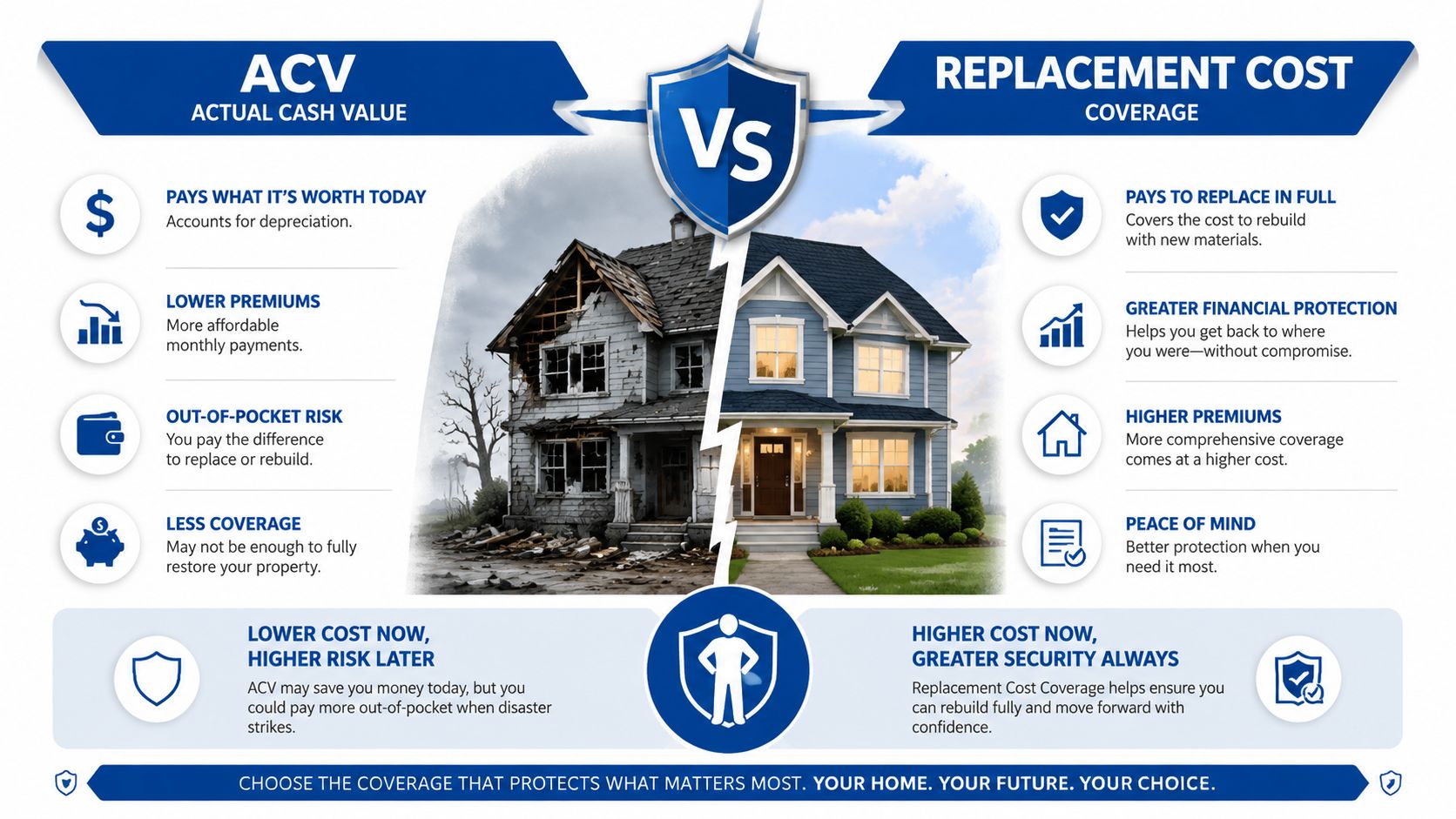
ACV policies often cost less up front. Insurers like that sales pitch because the pain shows up later, after the loss, when the policyholder needs full repair money and gets a depreciated check instead.
What the gap looks like in the real world
The Hartford explains that ACV often doesn’t pay enough to fully replace damaged property, and gives an example where a $1,000 set of business tools might be valued at only $400 under ACV. It also notes that in states such as NC and VA, the deductible is applied after depreciation, which can leave policyholders with a much larger out-of-pocket burden after a storm, as described in The Hartford’s ACV overview.
That’s the battleground.
If your roof is damaged by hail in North Carolina, your contractor cares about today’s material and labor cost. The carrier on an ACV claim cares about how old the roof was and how much value they can subtract before applying the deductible. That can leave you short before work even starts.
Side-by-side comparison
For a broader explanation of policy language and payout differences, this article on the difference between actual cash value and replacement cost lays out the issue clearly.
Here’s the practical comparison policyholders need to see:
ACV vs. RCV Payout Example: $30,000 Roof Damage Claim
| Metric | Actual Cash Value (ACV) Policy | Replacement Cost Value (RCV) Policy |
|---|---|---|
| Basis of payment | Current depreciated value | Cost to repair or replace with like kind and quality |
| Effect of roof age | Usually used to reduce payment | May affect initial payment, but replacement terms can restore withheld value depending on policy |
| Deductible impact | Applied after depreciation in many claim situations | Still owed, but the payment basis is stronger |
| Contractor deposit problem | Common. Initial check may not be enough to start work | Less likely to create a major cash gap |
| Out-of-pocket pressure | Higher | Lower |
Why insurers prefer ACV
ACV shifts more of the recovery burden onto you. That’s why large carriers push it, defend it, and hide behind it.
The policyholder hears “covered loss” and expects meaningful help. The insurer hears “covered loss” and starts calculating what it can withhold. If you own an older home, an aging commercial building, or contents with years of use, ACV gives the carrier a built-in discount lever.
Bottom line: If your claim is being adjusted on an ACV basis, don’t confuse “covered” with “fully funded.”
That distinction is where many disputes in NC and VA begin.
Building Your Case How to Fight Unfair ACV Calculations
You don’t beat a low ACV offer by saying it feels unfair. You beat it with documentation the insurer can’t easily dismiss.
Most adjusters count on the policyholder having poor records, limited photos, no contractor support, and no time to push back. Once you build a file that shows actual condition, actual quality, and actual replacement needs, the carrier has to defend its depreciation choices instead of just asserting them.
Start with proof from before the loss
The strongest ACV dispute file usually includes evidence created before the damage happened.
Gather what you can:
- Pre-loss photos: Pull images from your phone, listing photos, renovation records, family pictures, and business marketing photos that show the condition of rooms, finishes, roofing, siding, and contents.
- Receipts and invoices: Look for appliances, flooring, cabinetry, electronics, tools, equipment, and building upgrades.
- Maintenance records: Service records for roofing, HVAC, plumbing, painting, flooring care, sealing, or other upkeep can undercut the insurer’s “worn out” narrative.
- Installation dates: If the adjuster guessed the age wrong, correct it with permits, invoices, inspection tags, or contractor records.
Then build the replacement side
ACV fights aren’t only about reducing depreciation. They’re also about proving what the insurer should have started with on the replacement side.
Useful support includes:
- Contractor estimates that describe scope in detail, not vague lump sums.
- Material descriptions showing grade and quality.
- Specialty opinions for roofing, hardwood flooring, cabinetry, millwork, commercial fixtures, or moisture-damaged interiors.
- Contents lists that identify make, model, purchase source, and condition where possible.
If the claim involves a home or commercial building, insist on line-item detail. A carrier estimate full of generic categories gives the insurer too much room to hide bad assumptions.
How to present the dispute
Don’t send a pile of documents with no explanation. Organize the argument.
A clean dispute package should show:
| What to submit | Why it matters |
|---|---|
| Photos of pre-loss condition | Counters exaggerated wear-and-tear claims |
| Repair and maintenance records | Proves useful life and upkeep |
| Replacement estimates | Challenges low pricing and incomplete scope |
| Receipts or model information | Supports quality and value of damaged property |
| Written rebuttal | Forces the adjuster to respond to specific issues |
What to say to the adjuster
Keep it simple and pointed.
- Ask for line-by-line support: Don’t accept a summary total.
- Challenge unsupported depreciation: If they can’t show the basis, they shouldn’t get the deduction.
- Correct factual errors: Wrong age, wrong material, wrong quality, wrong room dimensions, wrong condition.
- Tie everything back to the policy: If the policy language matters, make them cite it.
“Please provide the factual basis for the depreciation applied to each disputed item, including age, condition assessment, and the valuation method used.”
That kind of language changes the tone. You stop sounding frustrated and start sounding prepared.
What not to do
Some mistakes help the carrier.
- Don’t cash out mentally after the first payment: Initial checks are often positioned as if they’re final.
- Don’t argue only by phone: Put disputes in writing.
- Don’t rely on the insurer’s contractor to define your damages: That setup usually favors the carrier.
- Don’t assume the adjuster reviewed everything carefully: Many ACV estimates are rushed, incomplete, or based on generic assumptions.
If the insurer still won’t move after you present solid evidence, the claim has shifted from confusion to a position of strength. That’s when professional representation starts making a lot of sense.
Why a Public Adjuster Is Your Best Weapon in an ACV Dispute
A bad ACV offer is not a paperwork problem. It is a valuation fight, and the carrier starts with a built-in advantage.
The company adjuster knows the software, controls the estimate format, and sees the same depreciation arguments every week. You are trying to repair a home or business while the insurer trims line items, ages materials on paper, and treats condition like an afterthought. That is how low-ball ACV settlements happen in North Carolina and Virginia.

Why professional help changes the dynamic
As noted earlier, even regulators warn that ACV can leave policyholders short because depreciation cuts the payout before repairs even begin. Insurers know this. Many use ACV as a pressure point, especially when the owner is tired, busy, or unfamiliar with claim valuation.
A public adjuster changes that dynamic by forcing the claim onto solid ground. The argument stops being, “this check feels too low,” and becomes, “your depreciation on these items is unsupported, your scope is incomplete, and your numbers do not match the property.”
That shift matters. Carriers stall and posture when they think the policyholder will fold. They get more careful when every omission, pricing error, and exaggerated age deduction is being documented and challenged by someone who does this for a living.
What a public adjuster does in an ACV fight
If you want a plain-English overview, start with this explanation of what a public adjuster does.
In an ACV dispute, the job is part valuation expert, part file builder, and part negotiator. A good public adjuster will:
- Reinspect the loss with purpose: Find damage the carrier missed, under-scoped, or dismissed too quickly.
- Audit the insurer’s estimate line by line: Check measurements, material grades, unit pricing, useful life assumptions, and depreciation percentages.
- Tie the facts back to the policy: If the carrier is reducing value, it should be able to support that reduction under the policy and the file facts.
- Build a rebuttal that is hard to ignore: Photos, invoices, maintenance records, contractor input, and a corrected estimate carry more weight than complaints.
- Handle negotiations from a position of experience: The tone changes when the insurer knows sloppy math will be called out.
For The Public Adjusters, Inc. is a state-licensed public adjusting firm that represents policyholders in North Carolina and Virginia on property damage claims involving fire, water, wind, hail, and storm losses.
A client review
Customer Success Story: Tonya H.
| Review |
|---|
| A review for Tonya H. was referenced in the brief, but no verified review text was provided for exact quotation. Readers can review published customer feedback on For The Public Adjusters, Inc. reviews at CustomerLobby. |
When to bring in help
Some claims can be handled without outside help. ACV fights with serious money on the line usually should not be.
Bring in a public adjuster when:
- Depreciation looks inflated: Common targets include roofs, flooring, cabinets, trim, and contents that were still serviceable.
- The estimate leaves obvious holes: Missing rooms, missing trades, missing materials, or generic pricing are warning signs.
- The carrier keeps delaying without fixing the numbers: Delay is often used to wear people down.
- The payment will not fund meaningful repairs: If the check does not come close to the true cost of recovery, the valuation needs a hard challenge.
You do not win an ACV dispute by sounding upset. You win by building a better file, proving the insurer’s math is wrong, and pressing until the carrier pays on facts instead of shortcuts. That is where a skilled public adjuster earns the fee.
Stop Being a Victim Take Control of Your Claim
If you came here asking what is actual cash value insurance, the short answer is this. It’s a claim valuation method that often gives insurers the room to pay less than it takes to recover.
The longer answer matters more. ACV becomes dangerous when the carrier uses depreciation as a blunt instrument. That’s when a covered loss turns into a low-ball fight. The first check may look official, but it is not sacred. It can be challenged.
You paid premiums for protection. You didn’t pay for a technical excuse, a vague estimate, and a settlement that leaves your home, building, or business half-repaired. If the insurer is cutting your claim down with age, condition, or depreciation arguments that don’t hold up, push back hard and do it with evidence.
Use photos. Use maintenance records. Use contractor estimates. Demand line-by-line support. Force the adjuster to explain every reduction.
If the carrier still won’t deal fairly, stop trying to solve a professional valuation dispute by yourself. Property claim fights in North Carolina and Virginia often turn on documentation and negotiation, not just coverage. That means the right help can change the result.
You don’t have to accept a bad ACV number just because the insurance company printed it on a letter.
2. How do carrier adjusters manipulate "Useful Life" expectations to artificially inflate ACV depreciation?
The Trap: When calculating ACV, company adjusters utilize proprietary estimating platforms like Xactimate or Symbility. They assign arbitrary "useful life" metrics to components like roofing, cabinetry, and flooring to force a lower upfront check.
The Math: If a kitchen cabinet set has a replacement cost of $20,000, and the adjuster claims it has a 20-year useful life and is 15 years old, they will apply a 75% depreciation rate:
$$\text{Depreciation} = \left( \frac{15}{20} \right) \times \$20,000 = \$15,000$$$$ACV = \$20,000 - \$15,000 = \$5,000$$The Solve: Challenge the adjuster's pre-loss condition assumptions. If your cabinets or roof were exceptionally maintained, updated, or modified, they do not follow standard linear depreciation tables. Document historical maintenance to force the adjuster to reduce the depreciation percentage, increasing your initial ACV payout.
3. Why is the "Two-Check" system a dangerous financial hurdle for policyholders in NC and VA?
Direct Answer: An RCV policy does not pay out the full replacement cost immediately. It operates as a reimbursement mechanism split into two distinct payments.
The Structural Reality:
Check 1 (The ACV Check): The carrier issues an initial check for the ACV amount (RCV minus depreciation and your deductible).
Check 2 (Recoverable Depreciation): The remaining balance—the withheld depreciation—is only released after you prove that the repairs are fully completed and you have incurred the actual costs.
The Trap: If you lack the cash flow or a contractor willing to start work based only on the small ACV check, you may find yourself stuck. If you do not perform the physical repairs, you completely forfeit the right to claim Check 2.
4. Can an insurer legally depreciate labor costs on an ACV calculation in North Carolina versus Virginia?
The Statutory Reality: This is one of the most critical legal distinctions between the two states.
In North Carolina: Per the landmark case Accardi v. Hartford Underwriters Ins. Co., insurance carriers are permitted to depreciate the cost of labor when calculating ACV. The state supreme court ruled that "property" represents a whole unit, meaning labor cannot be separated from materials when evaluating depreciation.
In Virginia: The legal framework treats labor depreciation with far higher scrutiny. While many carriers still attempt to bury labor depreciation inside global Xactimate line items (such as tearing off a roof or painting a wall), consumer advocates argue that labor does not lose value with age.
The Solve: Carefully audit the PDF breakdown of the adjuster's estimate. If you are in Virginia, challenge any line item where an intangible service (like labor or cleaning) has a depreciation percentage attached to it.
5. How does the brand-new 2026 Virginia law (HB 808) protect policyholders from arbitrary adjuster reductions to RCV estimates?
The Legislative Edge: Enacted during the 2026 legislative session, Virginia House Bill 808 directly amends Code of Virginia § 38.2-510 (Unfair Claim Settlement Practices), targeting a common carrier tactic where desk adjusters slash field estimates without justification.
The Mandate: Effective July 1, 2026, if an insurer reduces a property loss estimate by $3,000 or more, they must provide the policyholder with a meticulous, line-by-line written explanation for every reduction. Furthermore, the carrier must document the exact identity of the specific individual who ordered or made the cut, and retain all previous versions of the estimate file.
The Application: If a carrier adjuster slashes your contractor’s RCV estimate by thousands to force a lower ACV or RCV settlement, demand the formal HB 808 compliance addendum. This forces transparency and stops anonymous desk adjusters from making arbitrary claim cuts.
6. What is the "Actual Replacement" trap, and how can it cause an RCV claim denial?
Direct Answer: Most RCV contracts contain explicit "Strict Performance" clauses stating that the insurer is not liable for any structural loss on an RCV basis until the damaged property is actually repaired or replaced.
The Trap: If your home suffers a major loss and you decide to take the insurance money to buy a different house, clear the land, or downsize, the carrier will refuse to pay the withheld depreciation. You are capped at the ACV amount.
The Solve: If you choose to replace the property by buying an existing alternative home rather than rebuilding, you must negotiate an alternative replacement allocation. If you buy a replacement home that costs less than the RCV of your damaged home, the carrier will reduce their total payout to match what you actually spent.
7. How does North Carolina's "Broad Evidence Rule" prevent unfair ACV calculations on older or unique structures?
Direct Answer: It prevents the insurance company from using a single, rigid software metric to artificially deflate your property's value.
The Case Law Strategy: North Carolina is a Broad Evidence Rule state (Surratt v. Grain Dealers Mutual Insurance Co.). This rule establishes that adjusters cannot solely rely on arbitrary replacement-cost-minus-depreciation formulas to find ACV if it defies economic logic.
The Application: If your property contains historic architectural features, antique framing, or custom craftsmanship in cities like Wilmington or New Bern, a standard Xactimate depreciation matrix will yield a wildly inaccurate ACV. Under the Broad Evidence Rule, the valuation must factor in real estate market values, expert contractor assessments, age, condition, and localized utility value to establish a fair ACV settlement.
8. What is the "Matching" crisis, and how do NC and VA laws differ when RCV cannot buy matching materials?
The Operational Issue: A storm damages a portion of your siding or roof. The original material is completely discontinued. RCV requires "like kind and quality," but a partial repair will leave your asset looking mismatched and severely damaged in terms of curb value.
In Virginia: Under administrative rule 14VAC5-400-80, insurers must provide a "reasonable uniformity" standard. If an item cannot be matched within a continuous area, the carrier must often pay to replace the undamaged portions (such as the entire roof or all four sides of siding) to preserve visual uniformity.
In North Carolina: There is no explicit matching statute. However, public adjusters successfully counter this by citing the fundamental principle of Indemnity. A mismatched, checkerboard patch creates an immediate Diminution of Value on the open market, meaning the ACV/RCV calculation has failed to return the policyholder to their pre-loss financial position.
9. Why can a routine "Inflation Guard" endorsement still leave you facing a massive coinsurance penalty under an RCV policy?
Direct Answer: Because inflation guards are automatic percentage increases (typically 2% to 4% annually) that rarely match localized spike-inflation in construction material and labor costs.
The Danger: If a commercial building or custom home in booming areas like Northern Virginia or the Raleigh-Durham Triangle has a policy with a 90% coinsurance clause, the "Should Carry" value is calculated on the exact day of the loss, not when the policy was written.
The Risk: If construction costs in your zip code surged by 15% due to regional supply shortages, but your inflation guard only clicked up by 3%, your total limit will fall short of the 90% threshold. The carrier will apply a Coinsurance Penalty, slashing both your upfront ACV check and your ultimate RCV recovery proportionally.
10. How can a policyholder use the Appraisal Clause to break an ACV or depreciation deadlock with a carrier adjuster?
Direct Answer: When a carrier refuses to alter an unfair depreciation factor or disputes the real-world RCV of local contractors, the policyholder can bypass the adjuster completely by invoking the policy's Appraisal Clause.
The Remedy: Appraisal is a form of alternative dispute resolution built into almost all NC and VA property policies.
The Process: You select an independent appraiser, the insurance company selects their own, and a neutral Umpire is chosen. The team evaluates the physical property files and localized construction costs. A binding award signed by any two of the three parties establishes the final, immutable RCV and ACV figures, entirely stripping the file from the original adjuster's hands.
11. What is the time limit to recover withheld depreciation in NC and VA, and can it be extended?
The Statutory Reality: Under standard policy language, you typically have 180 days (6 months) from the date of the loss or the initial ACV payment to notify the insurer of your intent to claim the remaining replacement cost.
The Virginia Exception: Under Va. Code § 38.2-2119(B), the six-month clock to assert an RCV claim for the difference between ACV and full replacement cost can be calculated from the last date you received an ACV payment or from a court order establishing your right to coverage.
The Solve: Never assume a carrier will grant an extension out of goodwill. If supply chain slowdowns or contractor backlogs in Wake County or Fairfax County prevent you from finishing the work within 180 days, you must submit a formal, written request for an extension before the deadline passes. Cite specific regional delays to preserve your right to Recoverable Depreciation.
Settlement Mechanics Matrix: ACV vs. RCV vs. Functional RCV
| Operational Metric | Actual Cash Value (ACV) | Replacement Cost Value (RCV) | Functional Replacement Cost |
| Deduction for Depreciation? | Yes (Deducted upfront and unrecoverable). | Temporarily (Deducted upfront, released upon proof of repair). | No (But materials are downgraded to cheaper modern equivalents). |
| Material Quality Requirement | Same age/wear equivalent value. | Exact like kind and quality at today's retail market rates. | Functionally equivalent material (e.g., drywall replacing plaster). |
| Upfront Payment Base | $$RCV - \text{Depreciation} - \text{Deductible}$$ | $$RCV - \text{Depreciation} - \text{Deductible}$$ | Cost of modern functional equivalent minus deductible. |
| Strict Time Frame Limits? | No performance limits required. | Strict 180-Day Notice parameters apply in NC/VA. |
If your home or business claim in North Carolina or Virginia has been low-balled, delayed, or buried under unfair depreciation, contact For The Public Adjusters, Inc. for a no-cost claim review. They represent policyholders in property damage disputes and can help you evaluate the insurer’s ACV calculation, identify underpayment issues, and decide your next move.