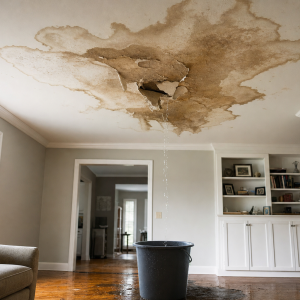

You're probably in the middle of it right now. A pipe leaked, a supply line burst, a toilet overflowed, or water showed up where it never should have. You called the carrier, they opened the claim, and now their adjuster is coming out to “inspect the damage.”
That sounds reassuring. It often isn't.
In water claims, the inspection is where the insurance company starts shaping the story. If they keep the inspection narrow, they keep the estimate narrow. If they treat hidden damage like it doesn't exist, they can act like your claim is smaller than it is. If they label contamination, scope, or cause in a way that favors them, you end up fighting over money while your property keeps deteriorating.
Table of Contents
- Your Water Damage Inspection Is Not for Your Benefit
- The Four Types of Water Damage Inspections
- What a Real Water Damage Inspection Uncovers
- Build Your Evidence to Fight Claim Denials
- How Insurers Use Inspections to Low-Ball You
- Special Claim Rules for Water Damage in NC and VA
- Take Control of Your Claim with an Independent Inspection
Your Water Damage Inspection Is Not for Your Benefit
The adjuster pulls up, steps inside, glances at the ceiling stain, checks the warped floor, takes a few photos, and tells you they'll “get things moving.” Most homeowners think that visit is about finding all the damage. Too often, it's about limiting what the carrier has to pay.

The conflict is obvious. The same company that writes the check controls the first inspection, the first scope, and the first number put on your loss. If that first inspection is shallow, every argument later gets harder. You're no longer discussing what was damaged. You're trying to prove that their version was incomplete from the start.
Given the financial implications, water damage is the second most common property claim, affecting 1 in 60 insured homes annually, and the average insurance payout exceeds $15,400 per incident, according to Rainbow Restoration's water damage statistics summary. This explains why carriers scrutinize these losses so aggressively.
Why the first inspection shapes the whole claim
A rushed visual inspection gives the insurer room to say:
- It was limited to one area when moisture migrated farther.
- The damage was minor because they didn't open cavities or test concealed materials.
- The issue was old because they didn't document the source carefully.
- The repairs are simple because they priced only what they could see.
Practical rule: If the carrier's inspection lasted a short time, involved no meaningful testing, and produced a small scope, assume you're looking at the beginning of a dispute, not the end of one.
What the adjuster is really building
They're building a claim position. Sometimes that position becomes a low-ball offer. Sometimes it turns into a partial denial. Sometimes it becomes a delay tactic while they ask for more documents they should've gathered during a competent inspection.
Homeowners get trapped because they assume the adjuster's inspection was neutral. It wasn't. It was an inspection performed by the party with a financial interest in keeping the claim small. If you understand that early, you stop waiting for fairness and start preparing to strengthen your position.
The Four Types of Water Damage Inspections
Not all water damage inspections do the same job. That's where many policyholders get blindsided. The insurer may call it an “inspection,” but that label tells you nothing about whether the full loss was thoroughly investigated.

The inspection the carrier prefers
The most limited inspections are the ones carriers like best.
| Inspection type | What it focuses on | How it can hurt your claim |
|---|---|---|
| Insurance adjuster visual inspection | Visible surfaces and quick observations | Hidden moisture and concealed damage get ignored |
| Contractor estimate inspection | Repair pricing for what can be seen | Drying science, contamination, and migration may be left out |
A visual adjuster inspection is usually fast. It may be enough to confirm there was water, but not enough to measure the full spread. That's how wet insulation, wall cavities, toe-kick areas, subfloor damage, and cabinet bases disappear from the estimate.
A contractor estimate inspection can be useful for pricing visible repairs, but it still isn't the same as a scientific moisture investigation. Many contractors are pricing rebuild work, not documenting the full chain of damage for a claim dispute.
The inspection you actually need
The more complete inspections are the ones that expose what the carrier would rather not include.
Restoration company initial assessment: This often involves moisture tools and a broader look at affected materials. It can be helpful, but remember their business model. Some restoration companies are focused on getting the mitigation job, not building a claim file designed to survive a coverage or scope dispute.
Policyholder-focused IICRC-style inspection: This is the inspection that holds up when the carrier starts pushing back. It's built around documentation, moisture mapping, category and class analysis, and hidden damage. It treats the property like a loss site, not a quick estimate stop.
A weak inspection asks, “What can I see right now?” A real inspection asks, “Where did the water go, what did it affect, and what will happen if we leave damaged materials in place?”
Four inspection purposes homeowners should recognize
People also confuse inspection purpose with inspection quality. In practice, these claims often involve four functional inspection types:
Mitigation inspection
This happens early. Its job is to identify what needs immediate drying, extraction, or emergency protection.Scope of work inspection
Repair items get listed during this inspection. Under-scoping also usually begins if hidden damage isn't included.Forensic inspection
This digs into source, travel path, timing, hidden moisture, and contamination issues. If the claim is disputed, this is often the inspection that changes everything.Post-repair or post-remediation inspection
This checks whether the property was dried and repaired properly, instead of just cosmetically patched.
If the insurer is acting like a simple visual scope is enough for every water loss, they're protecting their estimate, not your building.
What a Real Water Damage Inspection Uncovers
A proper inspection doesn't stop at stains, buckled flooring, or peeling paint. It goes behind the finish materials and measures what's still wet, what's contaminated, and how far the water moved.

Intrusive testing is the difference
Per the IICRC-focused inspection guidance published by DRS, a true inspection must be intrusive, using calibrated moisture meters to access hidden cavities. An IR camera alone is insufficient, as it only shows surface temperature, failing to quantify saturation depth or contamination level. That's the technical gap most carrier inspections never close.
A real inspector doesn't stand in the room waving an infrared camera and call it complete. They remove baseboards when needed, lift carpet edges, check under cabinets, and test concealed cavities. They use pin-type and non-pin moisture meters to compare affected materials against dry standards. That's how you separate surface appearance from actual moisture content.
If you're trying to understand what proper cleanup can involve after hidden moisture or microbial growth is found, this water and mold remediation guide gives a useful plain-English overview of what remediation work is supposed to address.
Category and Class decide the money
Water losses aren't just about “wet” and “dry.” They must be classified correctly.
According to National Water Damage Authority's summary of IICRC S500 standards, inspections should assign both a Category and a Class. Category deals with contamination. Class deals with the extent of absorption and evaporation load.
Here's the simple version:
- Category 1 means sanitary water.
- Category 2 means gray water with significant contamination.
- Category 3 means black water with gross contamination and acute health risks.
Class matters too:
- Class 1 is limited moisture affecting low-absorption materials.
- Class 4 involves deep saturation in low-permeability materials like hardwood or brick and requires specialized drying.
When these are misclassified, the carrier can strip major cost out of your claim. Category 3 can demand removal of porous materials and antimicrobial treatment. A higher class can require more aggressive drying methods. If the insurer labels the loss too low, the estimate shrinks with it.
If a sewer backup, contaminated overflow, or flood-like intrusion is being treated like a simple clean-water event, challenge that immediately. Classification errors don't stay on paper. They show up in what gets torn out, what gets cleaned, and what gets left behind.
What the report should document
A serious report should clearly identify:
- The source of water
- The likely travel path
- The time of intrusion if known
- Pre-existing conditions, if any
- Materials affected, including concealed areas
- Moisture readings and comparison points
If those details aren't in the inspection record, the insurer has room to dispute cause, extent, and value later.
Build Your Evidence to Fight Claim Denials
When the carrier says, “We don't see evidence that area was affected,” they're usually not making a scientific point. They're exploiting a documentation gap. Fix that gap before it costs you.

The photo sequence that protects you
The best claim files tell a visual story from start to finish. Per the documentation guidance highlighted in this discussion of travel paths and claim photography, insurers frequently underpay or deny claims when policyholders fail to document travel paths and take multi-angle context shots.
That means you don't just photograph the wet ceiling or the damaged cabinet. You photograph how the loss connects.
Take photos of the origin area from close range. Then step back and show the room. Then show the route from the point of entry or source to every affected area. Then repeat from different angles. The goal is to make it impossible for the carrier to argue that one damaged room is unrelated to the rest.
Document the damage like you're explaining it to a stranger who wants to deny it.
The claim file you should build
Use this checklist and do it early:
- Start before cleanup changes the scene: Photograph and video the damage before debris is removed or materials are opened.
- Capture the origin area tightly: Get clear images within close range from multiple angles.
- Show the room in context: Step back for across-the-room shots so the adjuster can't claim the close-up lacks spatial context.
- Trace the travel path: Walk the camera from the source to every room, hallway, ceiling, floor edge, and cabinet run the water reached.
- Keep a communication log: Note dates, names, promises, inspection times, and what each representative said.
- Preserve receipts and emergency invoices: Temporary repairs, drying, hotel costs if applicable under your policy, and mitigation expenses belong in the file.
- Get independent reports: A strong moisture report can neutralize a weak carrier inspection.
If the insurer later demands more formal claim support, review this proof of loss guidance so you understand what documentation needs to be organized and how to avoid handing in something incomplete.
Don't let the adjuster control the narrative
Many policyholders make one mistake. They rely on the carrier's photos. That's reckless.
The adjuster's file is built for the insurer. Your file needs to be built for a dispute. The difference is intent. Their photos may be enough to support a limited estimate. Yours should be strong enough to expose that estimate as incomplete.
How Insurers Use Inspections to Low-Ball You
You walk the adjuster through a kitchen with swollen cabinets, buckled flooring, stained drywall, and a musty odor that was not there before. Two days later, the estimate shows a small drywall patch, a little paint, and almost nothing else. That did not happen by accident. The inspection was used to shrink the claim before the numbers ever reached your hands.
This is the point where many carriers start building their defense. They know the first inspection often becomes the foundation for the estimate, the coverage position, and the excuses that follow. If that inspection is narrow, rushed, or slanted toward the cheapest explanation, the offer will usually follow the same pattern.
The low-ball playbook
Watch for these tactics:
- Visible-only scoping: The adjuster writes for what can be seen in a quick walk-through and leaves out insulation, subflooring, wall cavities, toe-kicks, cabinet interiors, and other materials that often hold moisture.
- Cause-shifting: Damage tied to the loss gets labeled as age, wear, deferred maintenance, or prior condition so the carrier can cut it from the claim.
- Category minimization: Water that should trigger more serious removal or cleaning gets described in softer terms to avoid paying for proper treatment.
- Cheap repair logic: The estimate is built around the lowest repair path, not the one that returns the property to its pre-loss condition.
That pattern is common for one reason. It works when the policyholder accepts the first version of events.
If the loss involves a drain line, sewer issue, or backup, source evidence matters. An outside vendor may be the difference between a weak assumption and a documented cause. If you need that proof, review how much a drain inspection costs before the carrier argues that no further investigation was necessary.
Use the Appraisal Clause when the fight is about numbers
When State Farm disputes the scope or cost of water damage repairs, the Appraisal Clause allows the policyholder to hire an independent expert appraiser and force a binding resolution, as outlined in this State Farm claim dispute explanation. Policyholders miss this far too often.
Use appraisal when coverage is not the main fight and the dispute is amount of loss, scope, pricing, or all three. That process takes part of the decision away from the adjuster who wrote the low estimate and puts it into a formal valuation process with competing appraisers and, if needed, an umpire.
If the carrier keeps repeating, “We already inspected it,” do not treat that as the last word. Read the policy. If the disagreement is price or scope, the Appraisal Clause may be a powerful tool.
Before your next call, read what not to say to a water claim adjuster. One careless comment about old staining, prior leaks, or when you first noticed the problem can be twisted into a smaller estimate or a denial argument.
Inspections decide more than moisture readings. They decide who gets to define the loss. If you let the insurer control that definition, expect an estimate built to protect the carrier, not your property.
Special Claim Rules for Water Damage in NC and VA
North Carolina and Virginia policyholders run into an extra layer of trouble when a water claim starts looking like a flood claim. That distinction matters because standard homeowners coverage and NFIP flood coverage are not the same thing, and the adjusters handling them may be operating under a different framework.
Homeowners water claims are not flood claims
If the loss involves burst pipes, appliance failures, plumbing leaks, supply line breaks, or interior overflows, you're usually dealing with a homeowners or business owners property claim. If the damage came from rising water or a true flood event, that's a different coverage track entirely.
For flood losses, the dispute may involve NFIP or a Write Your Own carrier administering flood coverage. Those claims can be difficult because the rules, documentation expectations, and adjustment process differ from a normal homeowners water claim. If your carrier starts blurring those lines, slow down and verify which policy is being invoked before you accept their position.
Regulatory pressure matters
When the insurer is dragging its feet, ignoring evidence, or failing to investigate properly, policyholders in this region have a pressure point. In North Carolina and Virginia, policyholders can file a formal complaint with the NC Department of Insurance or the VA SCC Bureau of Insurance when they face unreasonable delays or bad faith tactics, according to this guidance on disputes with carriers in NC and VA.
That complaint won't replace your evidence, but it can force attention onto a file that has been stalled or mishandled.
Use that option when you're dealing with problems like these:
- Unexplained delay: The carrier keeps extending the investigation without telling you what's missing.
- Ignored documentation: You send photos, invoices, or reports and get no meaningful response.
- Shifting reasons for underpayment: The explanation changes every time you challenge it.
- Failure to inspect properly: The company relies on a flimsy visit while refusing to address hidden damage evidence.
If you're in NC or VA, don't assume you have to accept stonewalling. Carriers respond differently when they know the file may be reviewed outside their own claim department.
Take Control of Your Claim with an Independent Inspection
The insurance company has its inspection. You're entitled to your own.
That's the bottom line. Water damage inspections decide scope, classification, repair method, and money. If the carrier's inspection was quick, visual, and self-serving, then the most effective move you can make is to replace their weak narrative with a documented, independent one.
An independent inspection gives you facts the adjuster can't casually wave away. Moisture readings. Hidden damage documentation. A clear travel path. A defensible repair scope. That's how claim disputes get turned around.
One reason many policyholders go this route is simple. They get tired of being told the obvious damage in front of them somehow doesn't count because it wasn't written down the right way by the carrier's representative. If you want a better sense of why independent representation changes that dynamic, review the benefits of hiring an independent claims adjuster.
Here's what one client had to say:
"After my insurance offered a ridiculously low amount for my water damage, I was lost. For The Public Adjusters came in, did their own inspection, and found so much the company adjuster 'missed.' They took over the fight and got me a settlement that actually covered my repairs. A total game-changer." – Sarah K., Raleigh, NC
Have your water damage claim questions answered at NO COST. Call 919-400-6440 to speak with a licensed Public Insurance Adjuster or Contact Us here with questions. WE Work For YOU… NOT Your Insurance Company!
If your insurer is using a weak inspection to support a denied, delayed, or low-ball water claim, For The Public Adjusters, Inc. can step in on the policyholder's side. They represent homeowners and business owners in North Carolina and Virginia, review the carrier's scope, document hidden damage, and push back when the insurance company's inspection doesn't match the actual loss.