What Not To Say To Water Claim Adjuster – When a home or business experiences water damage in North Carolina or Virginia, the initial conversation with the insurance company’s adjuster dictates the entire trajectory of the claim. Water claims are the most highly scrutinized files in the property insurance industry because carriers look for any indication that a loss was “gradual” rather than “sudden and accidental.”
Your Words Are Ammunition: Stop Helping Them Deny Your Claim. The phone rings. It’s the adjuster from your insurance company, and they sound friendly and concerned about your water damage. You answer their questions directly, thinking you’re helping. A week later, you get a denial letter or a low-ball offer, quoting your own words back at you.
This isn’t an accident. It’s a strategy. Companies like State Farm and Allstate aren’t looking for a fair conversation when a water loss happens. Their adjusters are trained to control the narrative early, lock your statements into the file, and use any uncertainty, minimization, or loose language to cut what they pay.
If you’re searching for what not to say to water claim adjuster representatives, you need a defensive mindset. This is not a friendly chat. It’s the start of a claim dispute. One wrong sentence can turn hidden moisture, mold, damaged flooring, soaked insulation, and wall cavity saturation into an “unproven” or “limited” claim.
You need to speak like every word will be reviewed later by someone looking for a reason to delay, deny, or underpay. Because it will.
Table of Contents
- 1. 1. “The damage is not that bad” or “It’s just a little water”
- 1. 1. “The damage is not that bad” or “It’s just a little water”
- 2. 2. “I’ve already started repairs” or “We cleaned most of it up”
- 3. 3. “I don’t have receipts for everything”
- 4. 4. “I think the water came from specific cause”
- 6. 6. “I really need the money quickly” or “I can’t afford these repairs”
- 7. 7. “I’ll accept whatever you think is fair”
- 7. 7. “I’ll accept whatever you think is fair”
- 7 Phrases to Avoid with a Water Claim Adjuster
- Stop Fighting Alone Get Expert Claim Help to Fight Your Insurer
1. 1. “The damage is not that bad” or “It’s just a little water”
Say “it’s just a little water” once, and you hand the carrier a framing device they will use against you for the rest of the claim.
Adjusters are trained to listen for minimizing language because it helps them keep the inspection narrow. If your first description sounds small, the file often gets built around visible surface damage instead of hidden moisture in subfloors, insulation, drywall, cabinetry, trim, and wall cavities. That is how a serious water loss gets priced like a cosmetic cleanup.
Water moves. It wicks, spreads, and stays where you cannot see it.
Why minimizing the loss hurts you
Here is how this plays out in practice. A homeowner reports “a little leak under the sink.” The adjuster writes for minor cabinet work and a basic dry-out. Later, the toe-kicks are swollen, the flooring has cupped, drywall behind the cabinet line tests wet, and microbial growth shows up after demolition. By then, the insurer already has your first statement in the file. They use it to argue the damage was limited at the time of reporting, or that later damage came from delay, neglect, or an unrelated issue.
That is not a misunderstanding. It is a claims tactic.
The psychology is simple. If they can get you to minimize the event, they can anchor the entire claim to a lower number early. Once that number is in the file, every later disagreement becomes your burden to prove.
Do not diagnose. Do not downplay. Do not try to sound reasonable.
Say this instead: “I can see visible water damage, and I am concerned about hidden moisture and damage behind finished surfaces. I need a full inspection before anyone decides the scope.”
That answer does three things. It avoids speculation. It preserves your right to a broader inspection. It signals that you understand water losses are rarely limited to what is visible on day one.
A Texas water claim I reviewed followed this exact pattern. The insured described the loss as minor during the first call because the leak looked contained to one cabinet area. Demolition later revealed wet drywall, damaged insulation, and flooring impact beyond the kitchen footprint. The carrier tried to hold the insured to the original description and resisted expanding the estimate until outside documentation forced the issue. That fight started with one casual sentence.
Legal context matters here too. Under standard property claim handling, the carrier must investigate the full extent of a covered loss. Your job is to report facts, protect the scene, and avoid statements that let them shrink the scope before the evidence is documented.
Keep your language tight. “There is visible damage.” “I do not know the full extent yet.” “I want all affected areas tested and documented.”
That is how you protect the claim.
1. 1. “The damage is not that bad” or “It’s just a little water”
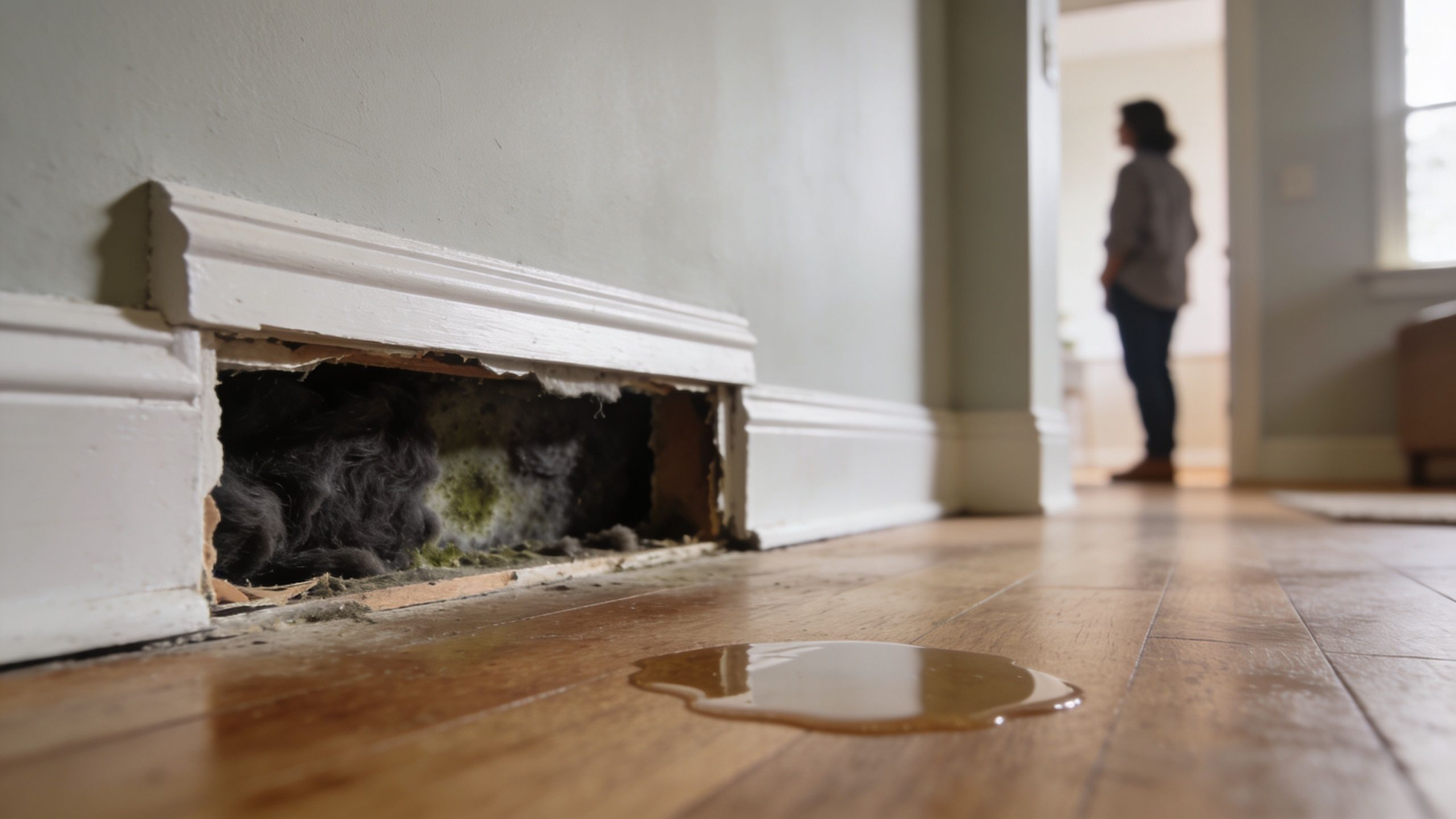
That sentence can cost you more than almost anything else you say.
Water does not remain only where it is visible. It migrates into baseboards, subfloors, insulation, wall cavities, cabinets, and trim. When you inform the adjuster that the damage is minor, you provide a reason to perform a surface-level inspection and draft an estimate that overlooks the components of the loss that typically determine actual repair expenses.
In the U.S. property insurance market, 78% of homeowners who handled water damage claims directly without professional representation received payouts at least 45% lower than actual replacement cost value, according to an analysis summarized by Otero Adjusting. That same source states mold affects 30% of water claims within 48 hours if not addressed.
Why minimizing the loss hurts you
A common real-world example is the homeowner who says, “It’s only a little leak under the sink.” Then the carrier adjuster writes for a small cabinet repair and ignores wet toe-kicks, swollen flooring, saturated drywall behind the cabinet line, and moisture migration into the adjacent room.
If hidden damage shows up later, the insurer points to your first statement and argues the loss was never serious to begin with.
Practical rule: Never grade your own damage for the insurance company. Describe what you observed, where you observed it, and what materials were affected.
Use language like this instead:
- State what you saw: “Water affected the kitchen cabinet base, drywall, and flooring.”
- State what you don’t know yet: “I don’t know the full extent until proper moisture testing is done.”
- State what you need documented: “All visible and concealed moisture needs to be inspected.”
That approach protects you. It keeps the file focused on evidence, not your casual guess that the damage is “small.”
2. 2. “I’ve already started repairs” or “We cleaned most of it up”
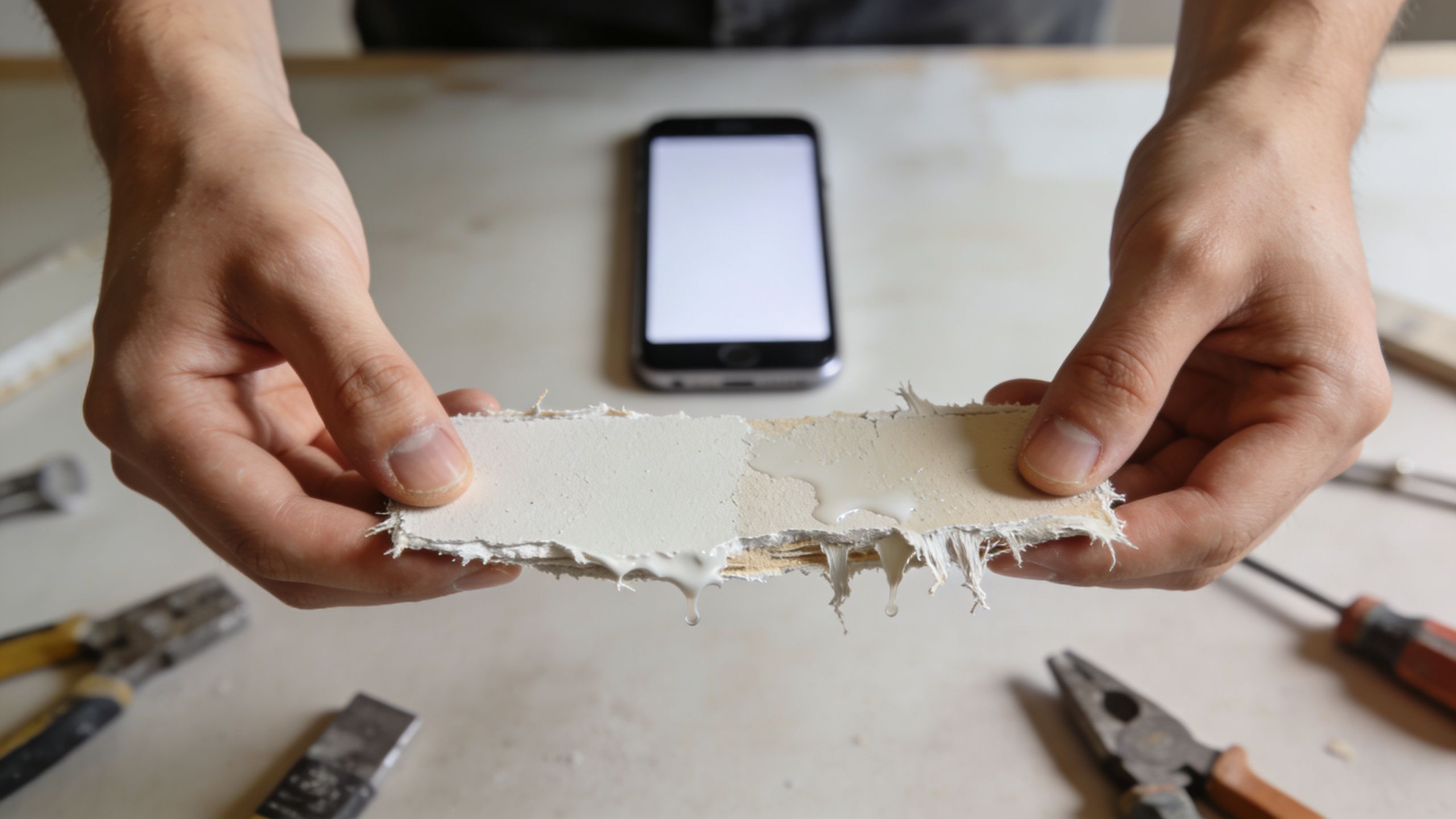
You do have a duty to protect the property from further damage. That’s different from telling the insurer you already handled most of the problem.
Adjusters love hearing that cleanup is largely done. It gives them room to say they couldn’t inspect original conditions, couldn’t verify the extent, or couldn’t confirm whether the material removal was necessary. Then they try to slash the claim or deny part of it because the evidence is gone.
Carrier adjusters also lean on estimating software that often doesn’t reflect real post-disaster pricing. According to First Coast Contracting’s discussion of water damage claim negotiations, insurer estimating software like Xactimate can lag current market pricing, especially when labor and material costs spike after a storm. That same source says public adjusters often improve water damage settlements by presenting independent evidence that challenges those low carrier numbers.
Mitigate the loss without destroying your proof
Here’s the right way to think about it. Drying and emergency protection are fine. Untracked demolition and undocumented disposal are dangerous.
If you tear out drywall, throw away soaked insulation, discard buckled laminate, and then casually tell the adjuster, “We already cleaned most of it up,” you’ve made their job easier and your dispute harder.
Don’t erase the crime scene and expect the insurance company to fill in the blanks in your favor.
Do this instead:
- Document first: Photograph and video every affected room before removal.
- Preserve samples when possible: Keep damaged materials if they’re safe to retain.
- Use professionals early: Independent moisture readings and thermal imaging help establish what was wet before anything is opened up.
- Describe emergency work correctly: Say, “We took temporary steps to prevent further damage and documented the affected areas.”
That wording shows you acted responsibly without handing the carrier an excuse to say the proof disappeared.
3. 3. “I don’t have receipts for everything”
This is one of those honest statements that insurers use like a weapon.
Many homeowners do not maintain a neat archive of every lamp, chair, rug, tool, appliance, or piece of clothing they have ever bought. But if you open with “I don’t have receipts for everything,” the adjuster hears something else. They hear, “You can challenge my contents claim from the start.”
That leads to delay, depreciation games, and insulting values. A soaked area rug turns into “used household item.” A damaged coffee maker turns into “minimal actual cash value.” A room full of affected contents gets picked apart item by item because you volunteered weakness before the discussion even started.
Don’t volunteer weakness in your contents claim
A better approach is to stay disciplined. Don’t announce what you lack. Present what you can build.
Use photos from your phone, old real estate listing images, moving photos, warranty cards, product manuals, bank statements, store accounts, email confirmations, and replacement links for like-kind items. For business owner claims, use inventory reports, vendor records, and fixed asset schedules.
A common scenario is a finished basement water loss where boxes of seasonal clothing, books, electronics, décor, and small furniture were affected. The policyholder says, “I don’t have receipts.” The carrier responds by valuing the contents as if they came from a yard sale.
Insider advice: Make the adjuster ask for support. Then provide organized proof. Don’t start by apologizing for what you haven’t found yet.
Say this instead:
- Keep it neutral: “I’m preparing a complete contents inventory with supporting documentation.”
- Stay open-ended: “I’ll provide available photos, purchase records, and replacement information.”
- Protect the scope: “Please include all affected contents pending final documentation.”
That language keeps your claim alive. It doesn’t shrink it before the formal review even begins.
4. 4. “I think the water came from specific cause”
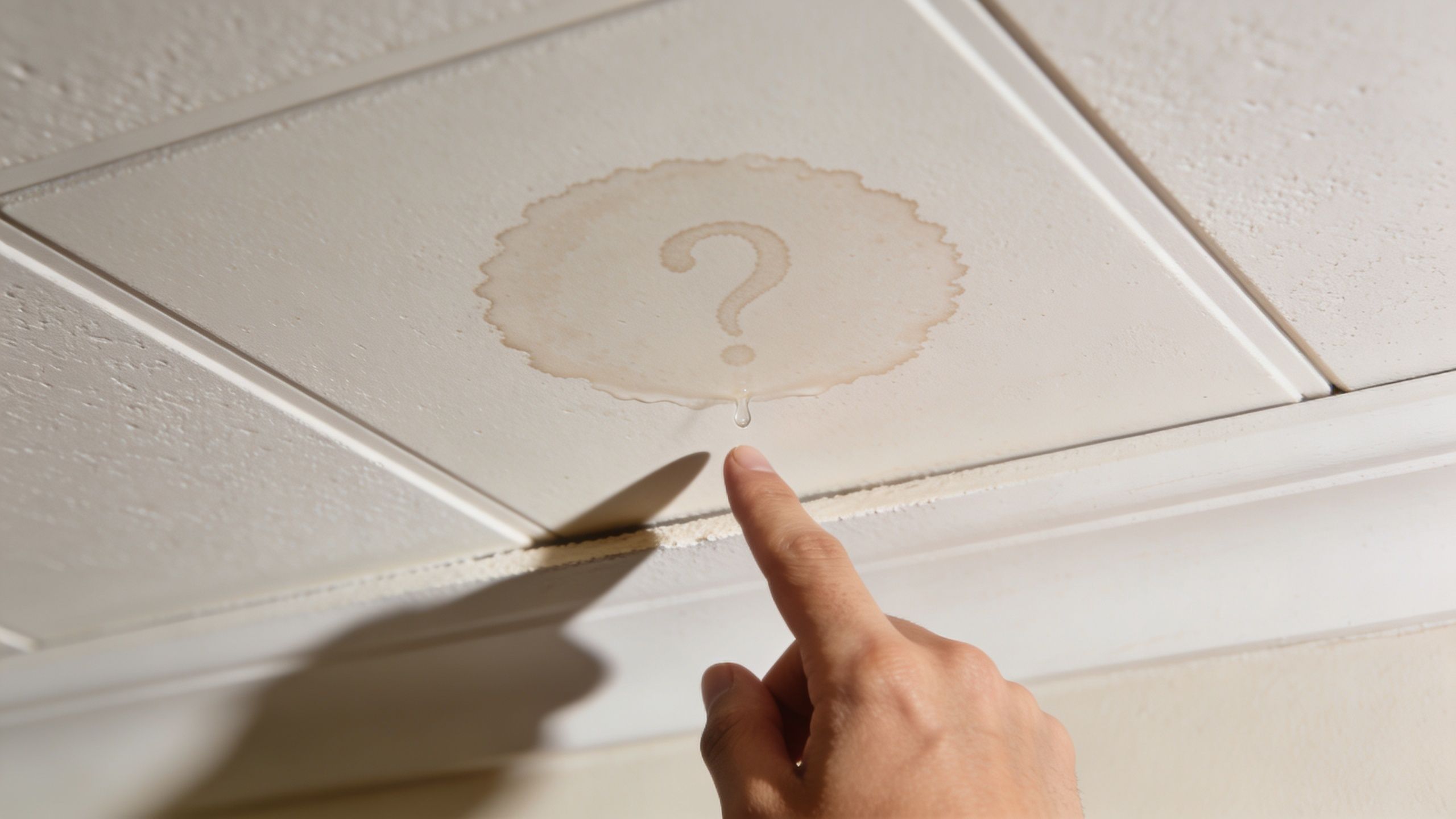
Speculation is deadly in a water claim.
Coverage often turns on a narrow distinction. Sudden pipe failure can be treated very differently than long-term seepage. Overflow can be treated differently than groundwater. Rain entering through storm-created damage can trigger a different fight than water the carrier tries to label as maintenance-related intrusion.
According to For The Public Adjusters’ explanation of water damage claim disputes, a major communication trap is the adjuster’s use of exclusion language around “gradual leak” versus “sudden loss.” The same source notes that 40% to 50% of water damage underpayments stem from adjusters focusing only on visible damage while missing structural saturation behind walls and under flooring.
Describe evidence, not theories
Here’s how homeowners get trapped. The adjuster asks, “So you think this had been leaking for a while?” The insured, trying to be cooperative, says, “Maybe. I’m not sure. I think it was probably the pipe.”
That answer gives the insurer room to build an exclusion defense around wear, tear, seepage, or long-term leakage.
Use fact language instead:
- What you observed: “I discovered water damage in the ceiling and flooring on this date.”
- What changed suddenly: “This condition was not known to me before it was discovered.”
- What you need from the insurer: “The source and scope should be determined through inspection and documentation.”
A real example is a ceiling stain below an upstairs bathroom. If you guess that the shower pan has “probably been leaking for a long time,” you may have just handed the carrier a gradual damage argument. If you stick to observed conditions, the insurer has to prove its exclusion instead of leaning on your speculation.
Speak to facts, dates, locations, and visible conditions. Don’t diagnose causation for the company trying to avoid paying.
6. 6. “I really need the money quickly” or “I can’t afford these repairs”
It happens like this. A homeowner calls after a water loss, says they are out of pocket, behind on cleanup, and need the check fast. The adjuster hears something different: this file can probably be settled cheap.
Do not hand the carrier that information.
Your financial stress does not increase what they pay. It often does the opposite. An adjuster who knows you are under pressure may rush out a partial payment, present a thin estimate as if they are helping, and wait for you to accept it before the full scope is documented. That tactic works because people in a bind want movement, not a fight.
That is the psychology behind the question. They are not asking because they care how hard this is on you. They want to know whether you are likely to trade dollars for speed.
As noted earlier, statements made directly to adjusters can be used to shrink, delay, or dispute a claim. Financial desperation fits that pattern because it tells the insurer what kind of pressure will make you bend.
Keep urgency factual, not emotional
A better approach is simple. Make the timeline about the property and the claim file, not your personal cash problem.
Use language like this instead:
- State the claim need: “The property requires prompt handling to prevent further damage.”
- Demand a written timeline: “Please confirm your inspection, coverage decision, and payment timeline in writing.”
- Keep the focus on covered loss: “I expect timely payment for all covered damage once the scope is properly documented.”
- Shut down verbal pressure: “Send your estimate, scope, and any limitations in writing so I can review them.”
That keeps control in your hands. It also forces the adjuster to respond to documented damage instead of your stress level.
Here is a common real-world pattern. A pipe break affects cabinets, baseboards, flooring, and moisture behind the wall. The insured says, “I can’t afford this. I need money now.” The carrier sends a quick estimate for drying and patchwork repairs in the visibly wet area only. Later, when the owner realizes the flooring cannot be matched or the cabinets were under-scoped, the insurer points to the early payment and acts like the matter was close to resolved.
Do not set that trap for yourself.
If you need immediate help with mitigation or temporary protection, ask for written approval of reasonable emergency measures, ask what documentation they require, and keep every invoice, photo, and date. That is a claim strategy. Telling them you are desperate is not.
7. 7. “I’ll accept whatever you think is fair”
A burst supply line soaks the kitchen. Cabinets swell, flooring cups, and moisture spreads behind the walls. The adjuster walks through for twenty minutes, types a few notes, and asks a question that sounds harmless: “Are you willing to work with us on a fair number?”
If you answer, “I’ll accept whatever you think is fair,” you just gave away your strongest advantage.
Adjusters are trained to test your resistance. That phrase tells them you are unlikely to dispute omitted rooms, low unit pricing, missing tear-out, code items, matching issues, or concealed moisture work. It also helps them frame their estimate as “reasonable” before the full damage is documented. That is the psychology behind the question. They want agreement first, detail later.
Fair is not a claim standard. Coverage, scope, and pricing are.
Water losses are especially dangerous here because the largest dollars often sit in the parts of the claim the first estimate leaves out. Drywall cuts. Insulation removal. Detach and reset. Base cabinet replacement when panels cannot be matched. Continuous flooring through connected areas. Extra drying and access. If you accept “fair” before those items are pinned down, you make underpayment easier.
Say this instead:
- Hold settlement until the scope is complete: “I will not discuss settlement until all damage is fully documented and priced.”
- Force the adjuster onto specifics: “Please identify every affected area, line item, and exclusion in writing.”
- Reserve your right to dispute: “If your estimate omits damaged materials, concealed moisture work, or matching-related replacement, I dispute the scope.”
- Keep control of the file: “Send the estimate and coverage position in writing so I can review it against my documentation.”
That language does two things. It stops the adjuster from treating a casual comment as agreement, and it forces the file back onto facts they can be held to later.
A real pattern looks like this. After a water loss, the carrier writes for drying, a small drywall patch, and replacement of only the visibly damaged flooring. The owner says the number seems fair and deposits the check. Weeks later, the contractor opens the wall, finds trapped moisture, and confirms the flooring cannot be matched across the connected living area. The insurer then argues the earlier payment shows the scope was largely resolved. That fight gets harder because the policyholder handed over implied agreement at the start.
Do not do that.
If the adjuster asks what you think is fair, answer like someone protecting a claim, not closing a garage sale: “I’m not agreeing to any amount until the full covered damage is inspected, scoped, and valued correctly.” That is the right posture. Firm, documented, and hard to exploit.
7. 7. “I’ll accept whatever you think is fair”
This is surrender disguised as cooperation.
The adjuster does not work for you. Their paycheck comes from the company trying to close your file for as little as possible. If you tell them you’ll accept whatever they think is fair, you’ve handed pricing power to the party with every incentive to undervalue your loss.
That mistake gets worse when the claim involves hidden moisture, mold risk, flooring replacement continuity, cabinetry matching, or business interruption impacts. Those are exactly the areas where carriers try to narrow scope and shave money.
Fair to them is cheap for you
In one verified data set, homeowners who handled water damage claims directly with insurers averaged settlements of $12,400, while those using public adjusters averaged $22,700, according to the same Otero Adjusting summary of an Insurance Information Institute analysis. You don’t need to be told twice what that means. Going along with the carrier’s number is expensive.
A better response is short and controlled.
I won’t agree to any amount until the full damage is documented, scoped, and priced correctly.
Use variations like these:
- Hold your position: “I’m reviewing the full scope before discussing settlement.”
- Challenge the estimate: “If your estimate omits affected areas, concealed moisture, or code-related work, I dispute it.”
- Keep negotiations open: “Please send all supporting calculations, line items, and depreciation details.”
Actual instance. The adjuster documents localized repairs for a single room following a supply line failure, yet the materials extend without interruption into neighboring zones and dampness has migrated past their initial scope. If you state, “Whatever you think is fair,” that flawed calculation establishes the starting point. If you challenge it right away, you still maintain an advantage.
7 Phrases to Avoid with a Water Claim Adjuster
A common claim call goes wrong in the first five minutes. The adjuster sounds friendly, asks a few casual questions, and the policyholder tries to be helpful. Then the file gets framed around minimization, missing proof, guessed causation, and financial pressure. That is not an accident. Adjusters are trained to ask questions that narrow scope, cap payment, and lock you into statements they can cite later.
Use the table below as a control sheet. It shows the phrase to avoid, why the insurer wants to hear it, and what position protects your claim instead.
| Statement | Complexity ???? | Resources ⚡ | Expected Outcomes ???? | Ideal Use Cases ???? | Key Advantage ⭐ |
|---|---|---|---|---|---|
| “The damage is not that bad” / “It’s just a little water” | Low, simple wording change to request investigation | Minimal, basic documentation and photos | Prevents superficial inspection; preserves claim value | Initial adjuster contact; visible but possibly hidden damage | Protects against low-ball estimates and undiscovered damage |
| “I’ve already started repairs” / “We cleaned most of it up” | Moderate, requires documenting before/after emergency measures | Moderate, photos, timestamps, contractor notes or public adjuster | Maintains evidence chain; reduces excuse for denial | After emergency mitigation when adjuster hasn’t inspected | Preserves entitlement to proper reimbursement |
| “I don’t have receipts for everything” | Low, say you are compiling documentation | Moderate, photos, bank statements, appraisals, inventory tools | Avoids automatic undervaluation or denial of contents | Personal property claims with incomplete paperwork | Increases ability to prove value without receipts |
| “I think the water came from [specific cause]” | Low, restrict to factual descriptions rather than speculation | High, expert causation testing may be required later | Avoids misattributing cause and potential claim denial | When cause is unclear at discovery; before technical inspection | Forces insurer to investigate rather than rely on your guess |
| “My insurance agent told me it was covered” | Moderate, citing policy sections requires review | Moderate, policy copy, section references, possibly expert review | Shifts focus to written policy; reduces hearsay reliance | Coverage disputes or denial based on verbal promises | Grounds arguments in contract language, not memory |
| “I really need the money quickly” / “I can’t afford these repairs” | Low, maintain neutral, professional tone | Minimal, no financial disclosure; request fair timeline | Reduces the insurer’s advantage for making low-ball offers and using stalling tactics | During negotiation and payment discussions | Removes negotiating power from the insurer |
| “I’ll accept whatever you think is fair” | Low, state intent to review and consult experts | Moderate, independent estimates or contractor bids | Preserves negotiating power; prevents preset low offers | When receiving the adjuster’s estimate | Prevents surrendering claim valuation to the insurer |
Each phrase above does more than sound bad. It gives the carrier a usable theme for the claim file.
If you say the loss is minor, they inspect it like it is minor. If you say you cleaned it up, they argue the best evidence is gone. If you guess at cause, they may stop investigating and adopt your guess if it helps them deny or limit coverage. If you mention money problems, they know pressure is building on your side.
That psychology matters. Adjusters are not just collecting facts. They are testing whether you will minimize, speculate, or settle cheap.
A real water claim often proves the point. A homeowner finds wet flooring after a line failure, sees damage in one room, and tells the adjuster it “doesn’t look too bad.” Later, moisture mapping shows spread into adjacent materials and lower cabinetry, plus work needed to match continuous finishes. The early statement becomes a problem because the carrier points back to the insured’s own description to justify a narrow scope. The better move from day one is simple: describe what you observed, request a full inspection, and keep conclusions open until the damage is properly documented.
Legal context matters too. Coverage decisions turn on policy language, cause, timing, mitigation, exclusions, and proof of loss. Casual comments are not harmless chatter when they end up in the claim notes. Treat every call like part of the record.
Use controlled language instead:
- “I am reporting visible damage and possible hidden moisture. I want a full inspection.”
- “Emergency steps were taken to prevent further damage. I am preserving photos, materials, and invoices.”
- “I am still compiling documentation for damaged contents.”
- “I can describe what I observed, but I am not making a technical conclusion about cause.”
- “Please identify the policy language you are relying on.”
- “I expect prompt handling, but I will not discuss settlement until the scope and pricing are complete.”
Say less. Say it precisely. Make the insurer do its job.
Stop Fighting Alone Get Expert Claim Help to Fight Your Insurer
Talking to a water claim adjuster is not a casual customer service interaction. It’s an adversarial process, and the insurance company starts with the advantage. Their adjusters handle claims every day. They know how to phrase questions, narrow scope, lock in statements, and turn your own words into justification for delay, denial, or underpayment.
That’s why knowing what not to say to water claim adjuster representatives matters so much. Don’t minimize the loss. Don’t speculate about cause. Don’t confess missing documents before you’ve assembled your proof. Don’t show financial desperation. And never hand over the value decision by saying you’ll take whatever they think is fair.
If your insurer is low-balling the estimate, dragging out the investigation, misreading policy language, or pretending visible damage is the whole loss, you need someone on your side who knows how to fight back. A licensed public adjuster works for the policyholder, not the carrier. That changes the whole dynamic.
We document the damage the way it should’ve been documented from the start. We review policy language. We challenge bad scope decisions. We push back when the insurer ignores concealed moisture, undervalues repairs, or uses your statements against you. We handle the communication so you don’t keep stepping into traps the company set for you.
For homeowners and business owners dealing with water damage in North Carolina and Virginia, the smartest move is getting expert help before the carrier locks the file into a weak version of your claim. The longer a bad narrative sits in the claim notes, the harder it becomes to reverse.
Don’t let one phone call cost you a large part of what you’re owed. If your claim has been delayed, disputed, denied, or low-balled, get it reviewed by a professional who represents you and only you. Contact For The Public Adjusters, Inc. for a no-cost, no-obligation review of your water damage claim.
2. Why should I never tell an adjuster, "The roof has been leaking, but I just noticed this ceiling stain"?
Conflating an old roof leak with a new interior stain.
Adjusters frequently use the "Pre-Existing Damage" exclusion to deny interior water damage. If you admit the roof had an unresolved maintenance issue before a windstorm or hurricane caused the ceiling to fail, the carrier will argue the loss was inevitable due to neglect.
Separate the events clearly. In Virginia, under VA Code § 38.2-112, water damage insurance covers sudden leakage from conduits or pipes and casual water entering through storm openings. If a recent storm tore shingles away and allowed rain to pour in, focus purely on that specific weather event and the sudden manifestation of the water.
3. What is the danger of telling a Raleigh or Richmond adjuster, "I fixed the pipe and threw it away"?
"The broken pipe is already in the dumpster, but look at my wet drywall."
This triggers a Spoliation of Evidence issue. The insurance carrier has a contractual right to inspect the failed plumbing component (e.g., a burst supply line or failed appliance regulator) to verify the root cause of the loss and determine if subrogation against a manufacturer is possible. If you destroy the evidence, they can deny the claim for violating post-loss duties.
Tell your plumber to cut out the broken section of pipe or save the failed valve, and place it in a secure plastic bag. Do not discard any damaged physical property until the insurance field adjuster has inspected it and documented it in writing.
4. Should I say "I didn't turn the heat on while I was away" for a winter pipe burst claim?
Avoid: "I wanted to save money on utility bills while vacationing, so I turned the thermostat off."
In the mountainous or colder regions of NC (like Asheville) and VA (like Roanoke), frozen pipe claims are heavily investigated. Policies explicitly require the insured to "maintain heat in the building" or shut off the water supply and drain the systems entirely if the property is unoccupied. Admitting you turned off the heat constitutes a direct breach of policy conditions.
If the heat failed due to a mechanical breakdown or a utility power outage during a freeze, that is a covered accident. State the facts: "The home was secured, and the heating system malfunctioned during the freezing temperatures."
5. Why shouldn't I tell the adjuster, "I have some mold growing, but it’s no big deal"?
Volunteering information about mold before the water source is mitigated.
Most standard insurance policies in NC and VA carry a restrictive Mold Sublimit (typically capped at $5,000 or $10,000) or exclude mold entirely unless it directly results from a covered water peril. If you casually mention mold, the adjuster may categorize the entire remediation budget under the restrictive mold cap rather than the uncapped water mitigation limits.
Keep the focus entirely on the active water extraction and drying. Let the certified mitigation technicians handle the microbial protocols. Frame the description purely around structural saturation: "The drywall, subfloor, and framing are heavily saturated and require emergency structural drying."
6. What happens if I tell the adjuster, "I'm waiting for your approval before I clean up"?
"I'm leaving the standing water there until you come out next week to look at it."
Every property policy contains a mandatory "Duties After Loss" clause requiring the policyholder to take all reasonable steps to protect the property from further damage. Leaving standing water to sit for days causes secondary damage (like rot and black water contamination), which the insurer will legally refuse to pay for due to a "failure to mitigate."
Turn off the main water valve immediately, take extensive photos and videos of the standing water, and hire an independent, certified IICRC water mitigation firm to extract the water right away. You do not need prior carrier approval to stop active destruction.
7. Why is it a mistake to tell the adjuster, "I'll accept whatever your Xactimate software says"?
"Your software price must be accurate, so let's just use that number."
Carrier adjusters use localized estimating databases like Xactimate or Symbility. However, these databases often reflect national averages that fail to track the real-world contractor labor costs in booming Mid-Atlantic metros like Northern Virginia or the Raleigh-Durham Triangle.
Never accept the adjuster's estimate as absolute truth. In North Carolina, use the Broad Evidence Rule (Surratt v. Grain Dealers) to argue that real-world local contractor estimates must be factored into the actual value of the loss. If the carrier’s software misses critical line items like overhead and profit (O&P) or local code requirements, dispute it with an independent estimate.
8. What is the risk of saying, "The water came from the yard and backed up into my basement"?
Mixing up "water backup" with "surface water" or "groundwater."
Standard property policies completely exclude Flood, Surface Water, and Groundwater Seepage through foundation walls. However, you can purchase an endorsement for Sewer and Drain Backup. If you tell the adjuster the water came from the "yard" or "ground" instead of a failed sump pump or backed-up drain, the entire claim will be instantly denied under the anti-concurrent causation clause.
Be precise about the point of origin. If a sump pump failed or a floor drain overflowed, state exactly that: "The municipal sewer system backed up through my floor drain," or "The mechanical sump pump failed to discharge water from the pit."
9. Why should I never say, "Can we just patch the damaged flooring in the living room"?
Avoid: "Just fix the wet spot; I don’t mind if it doesn't look perfect."
Admitting you're fine with an uneven repair allows the adjuster to bypass the cost of a full room replacement.
The Policyholder Solve:
In Virginia: You are protected by 14VAC5-400-80, which requires "reasonable uniformity." If a continuous wood or tile floor is damaged and cannot be perfectly matched, the carrier must replace the entire continuous area to maintain uniform appearance.
In North Carolina: Demand compensation for the Diminution of Value. A house with a mismatched, patched living room floor loses significant fair market value, violating the core legal tenant of insurance indemnity.
10. Should I guess the "Date of Loss" if the adjuster pressures me on the phone?
Avoid: "It probably happened last Tuesday, or maybe over the weekend... let's just write down Tuesday."
Adjusters use meteorological databases to cross-reference your stated date of loss with local weather data or municipal water usage reports. If you guess a date and the weather data shows no freezing temperatures on that day (for a burst pipe) or no high winds (for wind-driven rain), they will deny the claim based on misrepresentation or lack of a verifiable occurrence.
If you were away or the leak was hidden, be completely transparent about the gap in knowledge: "The loss occurred at an unknown time between my departure on Friday and my return today. The date of discovery is today."
Red Flag Words vs. Safe Structural Terms
| The Red Flag Word (Denial Risk) | The Safe Technical Term (Accurate/Covered) | The Legal Contractual Reason |
| Seepage / Leakage | Sudden Burst / Accidental Discharge | Avoids the 14-day gradual maintenance exclusion. |
| Mold | Wet Structural Elements / Saturation | Prevents costs from being trapped under a low mold sublimit. |
| Guessing Dates | Date of Discovery | Eliminates fraud flags caused by conflicting weather data. |
| Yard Water | Sump Pump Failure / Drain Backup | Separates excluded floodwater from covered drain backup riders. |
If your insurance company is delaying, denying, or low-balling your water damage claim, For The Public Adjusters, Inc. can step in, document the full loss, handle the adjuster, and fight for the settlement your policy should pay.