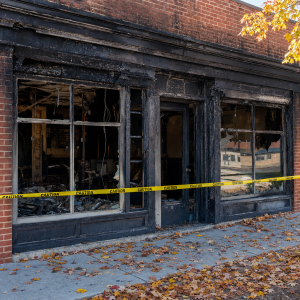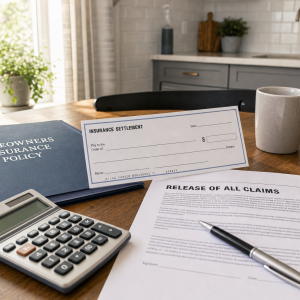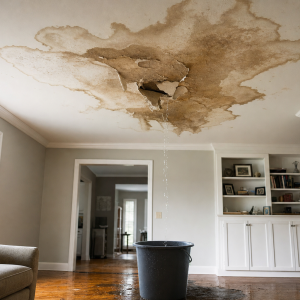

A Proof of Loss isn’t just a form; it’s a formal, sworn legal statement you send your insurer detailing the exact value of what you’ve lost. Let’s get one thing straight: major insurance companies like State Farm and Allstate often treat this document as a weapon to delay, underpay, or flat-out deny legitimate property claims. The Proof of Loss (POL) is arguably the single most critical document in the entire claims process. It is a sworn, legal statement that fixes the amount of money you are claiming from the insurer. If not prepared correctly, it becomes the primary tool the insurance company uses to limit your recovery, delay payment, or outright deny coverage.
The Proof of Loss Is Your Claim’s Battleground
After your home or business gets hit hard, your insurance company might send you a blank Proof of Loss form. This isn’t a friendly gesture. It’s a test. They are betting that, in the chaos following a disaster, you’ll rush through it, make mistakes, or undervalue your own damages.
Every error, every missing detail, and every number you can’t back up with evidence becomes ammunition for their company adjuster to pick apart your claim and protect their bottom line.

You need to see this document not as simple paperwork, but as your official, sworn declaration in the fight for a fair settlement. It’s a statement you sign under oath—often in front of a notary—where you formally tell them the total amount of money they owe you under your policy.
Why Insurers Take This Document So Seriously
From the carrier’s perspective, the Proof of Loss is a strategic tool, and none of its purposes are designed to help you. It’s their way to:
- Lock you into a number: Once you sign and swear to a specific dollar amount, it becomes incredibly difficult to add damages you find later. They are counting on you to miss the hidden water damage behind the walls or the lingering smoke damage in the attic.
- Find inconsistencies: Their team will scrutinize your Proof of Loss and compare it against every email, photo, and conversation you’ve had. They are hunting for any discrepancy they can use to label your claim as suspicious.
- Create grounds for denial: A simple mistake—like miscalculating depreciation or missing their arbitrary deadline by a day—can be enough for them to deny your entire claim on a technicality.
This document is where the power dynamic of your claim is decided. A sloppy, incomplete form hands all the control over to the insurance company. But a meticulously prepared, professionally documented, and evidence-backed Proof of Loss puts you in command.
This table breaks down how the same document can be used as a weapon against you or as your shield in a claim dispute.
How Your Proof of Loss Shapes the Claim Dispute
| Element | How Insurers Use It to Deny a Claim | How You Use It to Fight Back |
|---|---|---|
| The Final Claim Value | They treat your initial number as an absolute cap, refusing to consider any newly discovered damages. | You present it as a well-documented, professional assessment of the known damages, backed by expert estimates. |
| Sworn Statement | Any minor error or inconsistency is framed as intentional misrepresentation or potential fraud. | The notarized signature proves you are acting in good faith and underscores the seriousness of your documented claim. |
| Itemized Details | They pick apart any vague descriptions or missing receipts to challenge the existence or value of your property. | A detailed, exhaustive inventory with photos, receipts, and replacement costs leaves no room for them to argue. |
| Submission Deadline | They strictly enforce the deadline, using a late submission as a reason for an outright denial on a technicality. | You submit it well ahead of schedule, with proof of delivery, showing you’re organized and serious about enforcing the policy terms. |
Ultimately, the Proof of Loss becomes the central piece of evidence. For the insurer, it’s a trap. For you, it’s the foundation of your entire case.
The Rising Stakes of Getting It Right
The financial stakes for property owners have never been higher. In recent years, global insured catastrophe losses soared to $140 billion, and North America was hit with nearly 80% of that astronomical figure. This explosion in high-value claims means insurers are now scrutinizing documents like the Proof of Loss more aggressively than ever before.
A critical piece of getting this right is understanding fair market value for everything you lost. This isn’t just about what you paid for an item years ago; it’s about what it was worth the moment before it was destroyed. Insurers love to argue about these values to shrink their payout, which is why your valuation must be well-reasoned and supported by solid proof. This document is your first, best chance to fight back with facts and force them to take your claim seriously.
Building a Bulletproof Proof of Loss Form
Let’s be blunt: your Proof of Loss isn’t just another form. It’s the blueprint for rebuilding your life, and your insurer is looking for any crack in the foundation. Getting the policy number and date of loss right is simple. The real fight happens in the valuation sections.
Insurance giants like Allstate and State Farm know that policyholders under extreme stress make mistakes. They bank on you fumbling the numbers for “Actual Cash Value” and “Replacement Cost Value.” This is where they save their money, and it comes directly out of your pocket.
Your job is to build an ironclad case packed with so much evidence that their adjusters have no room to argue. This isn’t just about filling in blanks on a form—it’s about constructing a fortress of facts and figures. Every single number you claim must be backed by a mountain of proof.
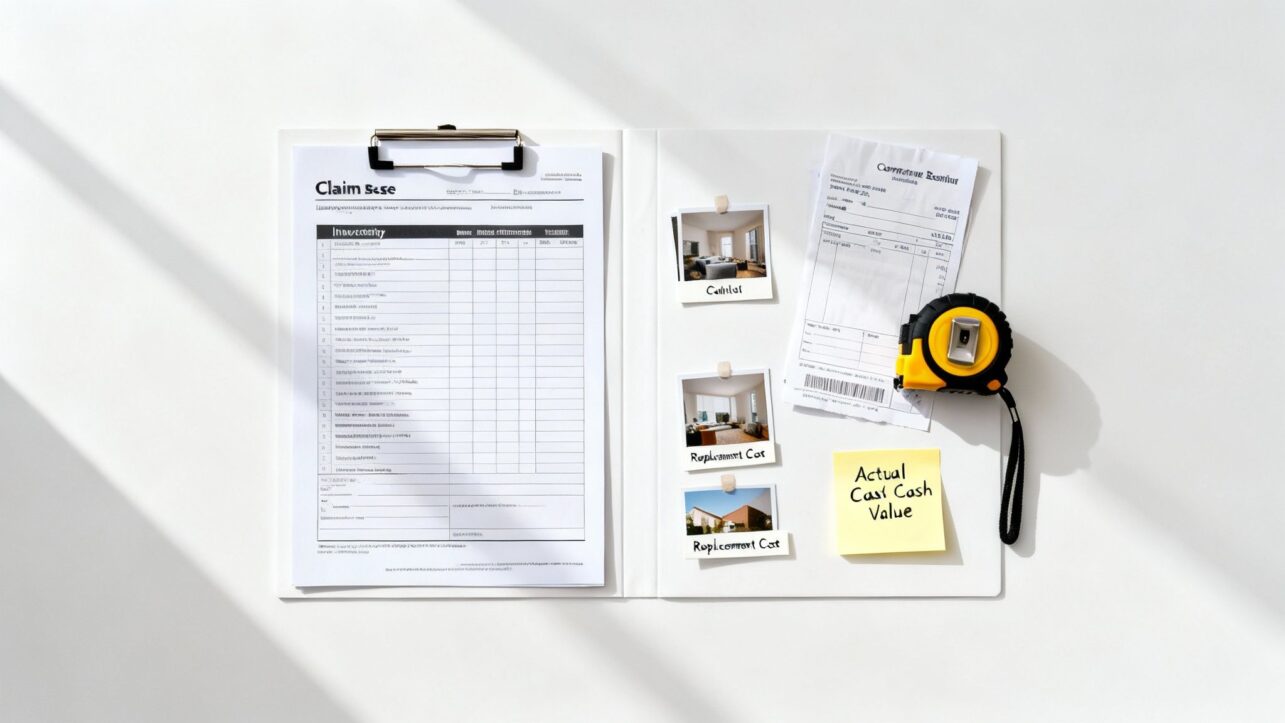
Think of the completed Proof of Loss as the cover letter for a massive package of evidence. This package must include every contractor estimate, expert report, receipt, photograph, and video you can get your hands on. You have to anticipate the carrier’s attempts to lowball you and shut them down before they even start with a claim so thoroughly documented that challenging it would be ridiculous.
Deconstructing the Key Sections
Let’s break down the most critical parts of the form. These are the battlegrounds where claims are won or lost and where insurers hunt for weaknesses. A vague or unsupported number here is a direct invitation for them to slash your settlement.
- Specifications of Damaged Buildings and Detailed Repair Estimates: Ballpark figures are worthless here. You need detailed, line-item estimates from reputable, licensed contractors—not handymen. Get multiple quotes that break down every single cost: materials, labor, permits, overhead, and profit. The insurance company will use their own software (like Xactimate) to generate a lower number; your professional quotes are your ammunition to fight back.
- Inventory of Damaged Personal Property: For your personal belongings or business inventory, “a list of everything lost” is not nearly enough. You need to create an exhaustive spreadsheet. List the item, brand, model number, where and when you bought it, what you paid for it, and what it costs to replace it today.
- Receipts and Supporting Records: Dig up every piece of paper that proves you owned something and what it was worth. This means original purchase receipts, credit card statements, user manuals, and even old photos of the items in your home. For a business claim, pull every supplier invoice and sales record you have.
Remember, the insurance company adjuster is not on your side. Their job is to protect their employer’s bottom line by paying you as little as possible. A meticulously documented Proof of Loss flips the script and puts them on the defensive, forcing them to justify why they shouldn’t pay the amount you’ve proven you are owed.
The Sworn Statement: A Binding Declaration
Here’s a detail many policyholders miss, often with disastrous consequences: the Proof of Loss is a sworn statement. You have to sign it in front of a notary, legally swearing under oath that everything in it is true.
This legal formality is a double-edged sword. It gives your claim credibility, but it also gives the insurance company a weapon. Any mistake—even an honest one—can be twisted into an accusation of misrepresentation or insurance fraud. This is a classic tactic they use to deny a claim entirely.
Recent court decisions, like the one in Kang v. Travco Insurance Company, show just how ruthless insurers can be with this technicality. In that case, the policyholder sent in piles of documentation, but the court sided with the insurer, ruling that only a formally “signed, sworn proof of loss” fulfilled the policy’s strict requirements. The policyholder lost big.
This underscores the need for absolute precision. Never guess at values. Never estimate dates. If you’re unsure about an item’s value, state that the figure is a placeholder pending a formal appraisal. It is far better to be conservative and correct than to inflate a number you can’t defend. By treating this document with the legal seriousness it demands, you protect yourself and build a solid foundation for your claim. This is exactly where a public adjuster proves invaluable—ensuring every detail is accurate, defensible, and legally sound.
Navigating Deadlines and Insurer Stall Tactics
Think of the Proof of Loss document not as a form, but as a timed test where the insurance company holds the stopwatch. They know this, and they often weaponize deadlines and delays, turning a simple requirement into a major hurdle for policyholders.
Missing their strict submission window—often just 60 days from their request—is one of the fastest ways for carriers like Allstate to deny your entire claim on a technicality. It doesn’t matter how legitimate your damage is; a missed deadline gives them an easy way out.
This isn’t an accident. It’s a deliberate strategy. Insurers are fully aware that you’re picking up the pieces after a disaster. They know that gathering every single receipt, estimate, and photo takes an immense amount of time and energy. They’re counting on that pressure to force you into a mistake or to miss the deadline completely, handing them a legal excuse to close your file and pay nothing.

This tactic is especially harsh when dealing with National Flood Insurance Program (NFIP) claims, which are notorious for their rigid rules. FEMA and the private carriers that service these policies show almost no flexibility. If you miss that Proof of Loss deadline, it’s almost always an automatic denial that is incredibly difficult, if not impossible, to reverse.
Common Insurer Stall Tactics to Watch For
Beyond just setting a tight deadline, insurance companies have a whole playbook of stall tactics designed to run out the clock and frustrate you into giving up. Recognizing these moves is the first step in protecting your rights and fighting back.
- The “We Never Received It” Ploy: This one is a classic. You send the document, hear nothing, and weeks later the adjuster claims it never showed up. They use this to make you blow past the deadline while you assume everything is being processed.
- Endless Requests for More Information: They might accept your initial Proof of Loss, but then they’ll start bombarding you with repetitive or nit-picky requests for more documents. Every request is another delay, and the goal is to wear you down until you accept a lowball offer just to be done with it.
- Vague and Confusing Communication: Instead of giving you clear instructions or timelines, they use confusing jargon and non-committal language. This intentional ambiguity makes it easier for them to later claim you failed to meet some unstated requirement.
These delays aren’t just annoying; they’re a weapon. The more time that passes, the more financial pressure you’re under to repair your property, making you more likely to settle for far less than you’re actually owed. To get a better handle on these timelines, check out our guide on how long an insurance company has to settle a claim.
Seizing Control of the Timeline
Let’s be blunt: you don’t have to be a victim of these bad faith practices. You can seize control of the timeline by being proactive, organized, and assertive.
The key is to create an undeniable paper trail that documents every single interaction. This trail becomes your most powerful evidence if you need to escalate the dispute or prove the insurer is acting in bad faith.
Here’s how you build your defense and beat them at their own game:
- Always Send via Certified Mail: Never just drop your Proof of Loss in a regular mailbox. Spend the extra few dollars to send it via certified mail with a return receipt requested. This gives you ironclad legal proof of the exact date and time they received it, completely shutting down the “we never got it” excuse.
- Formally Request Extensions in Writing: If you honestly can’t meet the 60-day deadline, don’t just ignore it. Send a formal, written request for an extension well before it’s due, clearly explaining why you need more time to be accurate.
- Document Everything: Keep a detailed log of every phone call, email, and letter. Write down the date, time, the name of the person you spoke with, and a summary of what was discussed. Immediately follow up every phone call with a “per our conversation” email to create a written record.
By managing the process with this level of professionalism, you flip the power dynamic. You’re no longer just reacting to their demands; you are proactively building a case that is too strong for them to ignore or dismiss on a cheap technicality.
Avoiding Common Mistakes Insurers Expect You to Make
Let’s be blunt: insurance companies have spent decades watching how policyholders act after a disaster. They know you’re stressed, out of your home, and completely new to the claims process. They bank on this.
The proof of loss is where they set their most effective traps, fully expecting you to make mistakes that save them a fortune. This isn’t about you making a typo; it’s a calculated business strategy. They are counting on you to guess at repair costs, miss hidden damages that won’t show up for months, and sign whatever incomplete form their adjuster shoves in front of you.
Every one of those missteps is an open door for them to delay, underpay, or flat-out deny your claim. They know a bad claims experience can hurt them—one Accenture study found that up to $170 billion in global insurance premiums are at risk from poor claims handling. The research revealed that 31% of claimants were unhappy, often because of slow settlements and a difficult process—problems that start with a flawed proof of loss.
The Adjuster Is Not Your Friend
The single most dangerous assumption you can make is that the insurance company’s adjuster is on your side. Their job title is a masterclass in misdirection. They are hired, trained, and rewarded by the insurance carrier for one primary mission: to minimize how much money their employer pays you.
So when that “friendly” adjuster hands you a pre-filled proof of loss form and tells you to “just sign here to get the ball rolling,” that’s your signal to stop everything.
That document is a weapon disguised as paperwork. It will almost certainly be loaded with:
- Lowball Valuations: Their estimates are based on corporate software that has no connection to the real-world cost of local materials and quality labor.
- Omitted Damages: They will conveniently forget to include costs for critical items like smoke remediation, testing for hidden mold, bringing your property up to current building codes, or matching materials across continuous surfaces.
- Finality Language: Buried in the fine print will be a clause stating that by signing, you agree their number is the final and complete amount. When you discover more damage later—and you will—it will be too late.
Never, ever sign a proof of loss prepared by the other side. It’s their settlement offer, not a form to help you.
Case Study: A Public Adjuster Uncovers $100,000 in Hidden Costs
A North Carolina family whose home was ravaged by a fire damage claim felt hopeless. The insurance company’s adjuster was on site within hours, radiating sympathy and offering help. He quickly presented them with a completed proof of loss and a settlement offer for $180,000, pressuring them to sign so they could “get things moving.”
Overwhelmed and exhausted, the family almost agreed. But something felt wrong, so they called For The Public Adjusters for a second opinion. What happened next was a masterclass in why you never trust the company adjuster. The public adjuster brought in his own team—engineers, industrial hygienists, contractors—and they tore the insurance company’s offer apart.
What he found was staggering. The company adjuster had completely ignored the cost of structural repairs required by new building codes, missed widespread smoke damage inside the walls, and failed to account for the specialized cleaning needed for the HVAC system. The public adjuster prepared a new, meticulously documented proof of loss for over $280,000.
After a fight backed by undeniable evidence, the insurer paid the full amount. That $100,000 difference wasn’t a clerical error. It was a calculated gamble that a distressed family wouldn’t know any better. Their story is a brutal reminder that your insurer is protecting their bottom line, not you.
Why You Need a Public Adjuster in Your Corner
Let’s get one thing straight: going up against a major insurance carrier after a disaster is not a fair fight. They show up with a team of experts, including their own company adjuster whose entire job is to protect their bottom line. That means minimizing what they pay you.
You need your own expert in that fight. You need a public adjuster.
A public adjuster works for one person and one person only: you, the policyholder. They are your professional advocate, your strategist, and your shield through the entire claims process, especially when it comes to the all-important proof of loss document. They exist to level a playing field that is tilted heavily in the insurance company’s favor.
This is more critical now than ever. According to a recent report from Verisk, the global modeled insured average annual property loss from natural catastrophes has soared to $152 billion. That kind of pressure forces insurers to tighten their purse strings, making an expertly prepared proof of loss your most powerful weapon. You can see the full breakdown in Verisk’s full natural catastrophe report.
From Forensic Assessment to Ironclad Documentation
A good public adjuster’s work starts long before anyone signs a proof of loss. They don’t just walk through and point out the obvious damage. They conduct a forensic-level investigation of your property, bringing in thermal imaging cameras to find hidden water damage behind walls and engineers to check the structural integrity.
Their process is built to dismantle the insurance company’s lowball tactics from the start:
- Independent Damage Assessment: They build their own scope of loss from the ground up, documenting every single repair required, from the foundation to the last shingle on the roof.
- Meticulous Inventory: They help you assemble a painfully detailed list of every single item you lost, then research what it costs to replace them today, not what you paid for them years ago.
- Professional Valuations: They use the same industry-standard software the insurers use, like Xactimate, to build an estimate that leaves no money on the table.
This exhaustive groundwork means the proof of loss they prepare isn’t just a form—it’s a comprehensive, evidence-backed demand for every penny you are owed.
The Power of an Expert Negotiator
Submitting a bulletproof proof of loss is just step one. The real fight begins the moment the insurance company receives it. This is where a public adjuster proves their worth ten times over. They are seasoned negotiators who speak the insurer’s language and know every delay-and-deny tactic in their playbook.
A public adjuster turns the negotiation from an emotional back-and-forth into a business transaction based on cold, hard facts. When the company adjuster tries to argue a cost or deny coverage, your PA is ready with contractor bids, engineering reports, and direct quotes from your own policy to shut them down.
This professional buffer removes you from the stress and lets you focus on getting your life or business back on track. They handle every phone call, manage every deadline, and build a case so strong that the insurance company often has no choice but to pay what’s fair. You can learn more about this role in our guide on what a public claim adjuster does.
Success Story: Overturning a Lowball Offer
A Garner, NC business owner’s property was hit with severe water damage. Allstate’s adjuster showed up, rushed through an inspection, and slid a pre-filled proof of loss across the table for $75,000, pressuring him to sign on the spot. Overwhelmed, the owner reached out to For The Public Adjusters instead.
The PA immediately launched a proper investigation. He discovered Allstate’s estimate had conveniently “forgotten” business interruption losses, damage to specialized equipment, and the massive cost of bringing the building up to current code. He prepared a new, meticulously documented proof of loss demanding $210,000.
After a tough negotiation backed by indisputable proof, Allstate paid the full amount. That $135,000 difference wasn’t a miracle; it was the direct result of having an expert Garner, NC Public Adjuster in the policyholder’s corner.
What Happens After You Submit Your Proof of Loss
Submitting that meticulously prepared proof of loss isn’t the end of the fight. Not even close. It’s just the official start of the next round—the one where the insurance company finally has to show its hand.
You’ve laid out your case in black and white. Now, that document gets fed into the carrier’s internal machine. It can feel like a black box, and frankly, that’s by design. While many use complex automated approval workflow systems, the goal is always the same: find a reason to pay you as little as possible.
Once you send it in, expect one of three responses. Only one of them is good news.
The Insurer’s Next Move
After your sworn statement lands on their desk, the clock starts ticking for your insurance carrier. State law often dictates their response time, but their reply will almost always fall into one of these buckets:
- Acceptance: They agree with everything you’ve claimed and cut a check for the full amount. This is the dream scenario, but let’s be realistic—it’s incredibly rare, especially on a high-value, professionally prepared claim.
- Rejection: An outright denial. They’ll throw a reason at you—a missed deadline, a creative interpretation of a policy exclusion, or a baseless accusation of misrepresentation. A flat-out rejection isn’t a final decision; it’s a hardball negotiation tactic.
- Request for More Information / Partial Payment: This is the move you’ll see most often. They’ll send an “undisputed” payment—usually an insultingly low amount—while simultaneously rejecting other parts of your claim or bogging you down with requests for more paperwork. It’s a classic strategy to exhaust you into submission.
A denial or a pathetic lowball offer is not the end of the road. It’s an opening bid in a negotiation you never wanted to have. You have to be ready to escalate and force them to put their justifications in writing.
This is where the decision to go it alone versus hiring a professional advocate becomes critical.

As you can see, a public adjuster’s entire purpose is to level the playing field, shifting the balance of power back in your favor to secure a fair settlement.
Your Roadmap for Fighting Back
If their response is anything less than full payment, don’t waste your energy on angry phone calls. It’s time for strategic, documented action.
- Demand a Written Explanation: Immediately send a certified letter demanding a point-by-point explanation for their denial or underpayment. Make them cite the specific policy language they’re hiding behind. Vague answers aren’t good enough.
- Invoke the Appraisal Clause: Dig out your policy and find the appraisal clause. This is a powerful tool built into most homeowner and business policies. It allows both you and the insurer to hire independent appraisers who then agree on a neutral “umpire.” A decision by any two of those three is binding. It takes the decision out of the company adjuster’s hands.
- File a Complaint: If you believe the insurer is operating in bad faith—using unreasonable delays, deceptive tactics, or lies—file a formal complaint with your state’s Department of Insurance. This puts official pressure on them and creates a paper trail of their bad behavior.
A rejection is a test. They want to see if you’ll just give up and go away.
Our guide on how to fight back after an insurance claim denial goes deeper into these strategies. Remember, this is a business negotiation, and you never have to accept their first offer. With the right plan, you can stand your ground and win.
Common Questions About Proof of Loss Forms
When you’re trying to navigate a property claim, the questions pile up fast. Here are some straight answers to the most common problems homeowners and business owners run into when dealing with a proof of loss.
The Adjuster Filled Out My Proof of Loss. Should I Sign It?
Absolutely not. Let me be blunt: never sign a proof of loss form handed to you by the insurance company’s adjuster. Don’t even think about it until your own expert, like a public adjuster, has torn it apart line by line.
Their form is a weapon designed to serve their employer. It will be filled with rock-bottom numbers that protect their profits, not your future. Signing that document is the same as legally agreeing to their lowball assessment. It slams the door shut on your ability to claim more money when you inevitably discover more damage down the road. You’ll be stuck with their number, and your claim will be over.
What if I Can’t Figure Out the Exact Value of My Business Inventory?
Whatever you do, don’t guess. For a business claim, having bulletproof inventory documentation is everything. Insurers prey on uncertainty and will use any fuzzy numbers to slash your payout. Your best defense is to dig into historical sales data, pull supplier invoices, and lean on your accounting records to build a rock-solid valuation.
If the fire or flood destroyed your records, it’s time to bring in reinforcements. Work with your accountant and a public adjuster to meticulously reconstruct everything. A detailed, well-supported estimate isn’t just a suggestion—it’s your shield against the insurer’s inevitable attempt to gut your business interruption claim.
My Flood Claim Was Denied After I Submitted the NFIP Proof of Loss. What Now?
Getting a denial from the National Flood Insurance Program (NFIP) feels like the end of the road, but it doesn’t have to be. Understand this: the appeals process is a nightmare by design, with deadlines so strict they’re practically designed to make you fail. Your only real shot is often to file a lawsuit in federal court.
The complexities of dealing with FEMA and their Write-Your-Own (WYO) carriers are legendary—they are notoriously difficult. This is not a fight you can win by yourself. You absolutely need to hire a public adjuster and an attorney who specializes in NFIP litigation. They know how to navigate the bureaucratic maze and have the experience to get a denial overturned.
Is the insurance company's "Proof of Loss" form designed to help me maximize my settlement?
Absolutely not. The form sent by the insurance company is almost always based on their own adjuster’s low estimate. Their goal is to get you to sign the form quickly, legally binding you to a minimal settlement amount. Our advice: Never sign a Proof of Loss sent by the insurance company until it has been verified and fully prepared by a professional advocate.
My insurance policy says I must submit a POL. If I don't submit one, will my claim be denied?
Yes, (if/when the carrier requests it) failure to submit a POL is a breach of policy conditions and can lead to a technical denial. However, the crucial point is whose POL is submitted. You must submit a POL, but it must be one that reflects the true, maximized value of the loss—one prepared by your Public Adjuster, NOT THE CARRIER.
What is the difference between my initial Notice of Loss and the formal Proof of Loss?
The Notice of Loss is a simple initial report (e.g., "Fire on Monday"). The Proof of Loss is a detailed financial document that outlines the exact cause, the specific coverages being claimed (Dwelling, Contents, ALE), and the exact monetary amount being sworn to under oath. The POL requires comprehensive supporting documentation, which the initial notice does not.
How does a Public Adjuster ensure the dollar amount on the Proof of Loss is maximized and accurate?
We first conduct a meticulous, independent inspection to identify all visible and hidden damages (using tools like thermal imaging and moisture meters). We then generate a complete, itemized Xactimate estimate that includes Code Upgrades, General Contractor Overhead & Profit (GCOP), and all necessary line items. This expert-generated estimate forms the accurate, defensible basis for the final, maximized dollar amount placed on your POL.
What is the correct timeline for submitting the Proof of Loss, and can a PA request an extension?
Most policies require the POL to be submitted within 60 days of the carrier's request. For a large, complex loss, this is nearly impossible for a homeowner. A Public Adjuster immediately requests a formal written extension from the carrier. This protects your compliance while ensuring the claim value isn't rushed and undercounted.
What essential supporting documents must a Public Adjuster attach to the POL to prevent denial?
The POL must be supported by evidence that justifies the full claim value. This includes: 1) The full, itemized Xactimate estimate (your scope). 2) Forensic/Structural Engineer Reports (proving causation). 3) Contents Inventory (itemized RCV). 4) ALE logs (temporary living expenses). A POL submitted without these documents is vulnerable to immediate denial for being unsubstantiated.
If I discover hidden damage (like mold) after submitting the POL, am I prevented from claiming the additional cost?
If you signed the carrier's POL, it is extremely difficult to claim more. If you used a Public Adjuster, the claim is protected. We can submit a Supplemental Proof of Loss or argue that the original POL was based on the information available at the time, and the policy's duty to indemnify requires payment for the newly discovered, covered damage.
Is the Proof of Loss the same as the final settlement or a Release of Liability?
No, but they are related. The POL is your sworn claim amount; the Release is the document you sign after agreeing to the settlement, releasing the carrier from further liability for the claim. A Public Adjuster reviews both documents meticulously to ensure the final payment matches the agreed-upon amount before any release is signed.
Can signing an inaccurate Proof of Loss be construed by the insurance company as insurance fraud?
Yes, potentially. Because the POL is a sworn statement under oath, any intentional misstatement of the facts or gross exaggeration of the loss can lead to accusations of fraud, which voids the policy entirely. This high liability is why professional preparation by a Public Adjuster is essential—we ensure all numbers are factual and backed by objective evidence.
How does the involvement of a Public Adjuster neutralize the legal risks associated with the Proof of Loss?
A Public Adjuster shifts the risk. We legally assume the duty of preparing and presenting the POL, ensuring it is accurate, comprehensive, and timely. Our expertise protects the policyholder from technical errors, underreporting, and the potential legal pitfalls of submitting a sworn statement without full documentation.
What if the insurance company waives or doesn't request a Proof of Loss? Do I still need to worry?
Yes, always. While some companies, particularly on small claims, may waive the POL to expedite the process, you should never assume the policy requirement has been legally waived. For any significant loss, a Public Adjuster recommends preparing and submitting a formal, well-documented POL regardless, as it forces the carrier to formally acknowledge and respond to your full, maximized claim valuation.
Don’t let the insurance company dictate what your loss is worth. The team at For The Public Adjusters, Inc. offers expert, no-cost claim reviews to give you the evidence and aggressive advocacy you need to force a fair settlement. Contact us today to level the playing field.