Does Home Insurance Cover a Broken Pipe Under Your Concrete Slab? Understanding Slab Leak Insurance in NC and VA
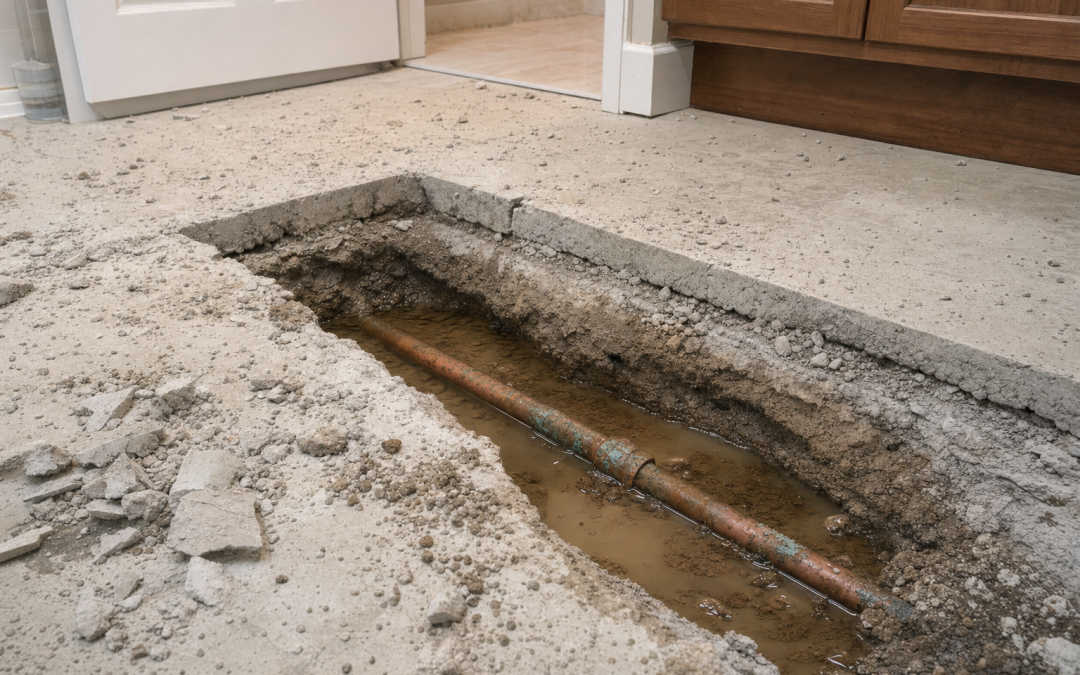
Slab leak insurance coverage under most North Carolina and Virginia home policies works like this: the insurer typically will not pay to repair the broken pipe itself, but a standard policy often does cover the resulting water damage — and the cost to tear out and replace the concrete slab to access the leak — as long as the damage was sudden and accidental.
Key takeaways
- Most standard HO-3 home insurance policies in NC and VA cover sudden, accidental water damage from a burst pipe under the slab, but usually not the cost of repairing the pipe itself.
- Slab leaks caused by gradual wear, corrosion, or long-term seepage are commonly excluded, which is why insurers often focus on how long the leak existed.
- Many policies pay for tearing out and replacing the concrete slab to access the broken pipe, even when the pipe repair itself is excluded.
- Courts have sided with homeowners on hidden plumbing leaks — in Cheetham v. Southern Oak Insurance Co. (Fla. App. 2013), the appellate court ruled in favor of the insureds, finding that water damage from a concealed plumbing leak was covered despite the insurer’s exclusion arguments.
- Reading your policy’s water damage and ‘tear out’ provisions — or having a licensed public adjuster review them — is the fastest way to know where you stand before you file.
That distinction surprises a lot of homeowners, so it’s worth slowing down and reading it again. The pipe is usually considered a maintenance item. The destruction the escaping water causes to your floors, drywall, cabinets, and belongings is a different story, and so is the concrete you have to break through to fix the problem. Most standard HO-3 homeowners policies in NC and VA treat those as covered losses when the leak was sudden and accidental rather than a slow drip you ignored for months.
What a Typical Policy Pays For — and What It Doesn’t
- Usually covered: water damage to flooring, walls, baseboards, cabinetry, and personal property caused by the sudden release of water.
- Usually covered: “tear-out and access” costs — demolishing and replacing the portion of the slab needed to reach and repair the pipe. Many policies state this explicitly.
- Usually not covered: the cost of the pipe repair or re-plumbing itself.
- Usually not covered: damage from long-term, gradual seepage, wear and tear, or corrosion the insurer argues you should have noticed.
Policy language varies by carrier, and the difference between “sudden discharge” and “gradual leakage” is exactly where many slab leak claims get disputed. Insurers sometimes deny the entire claim by labeling it a maintenance issue, even when the policyholder had no reasonable way to see a pipe buried under four inches of concrete. If you’ve received a denial or a lowball offer on a slab leak in the Triangle area, talking with a public adjuster in Raleigh NC before accepting the insurer’s position can help you understand what your specific policy language actually says.
Why the Fine Print Matters So Much
Two neighbors with nearly identical houses can have very different outcomes on the same type of leak simply because one carrier’s policy includes broader tear-out language or an added water damage endorsement and the other’s excludes it. Some policies also offer optional “service line” or enhanced water coverage that extends protection further than the base form. Reviewing the declarations page and the exclusions section — not just the summary your agent gave you — is the only way to know where you stand. Homeowners dealing with hidden water damage near Duke Park or elsewhere in the Bull City often turn to a public adjuster in Durham NC to interpret that fine print and document the loss properly.
The sections below break down which policies include this coverage, which exclude it, and what to do if your insurer says no.
Which Policies Include Slab Leak Insurance Coverage — and Which Exclude It?
Most open-peril HO-3 policies include slab leak insurance coverage for sudden and accidental pipe bursts, including the cost of tearing out and replacing the concrete slab to reach the pipe. Named-peril HO-1, HO-2, and older HO-8 forms often exclude or sharply limit this coverage, and nearly all policies exclude gradual leaks and wear and tear.
The difference between these policy forms can mean tens of thousands of dollars when water starts seeping up through your foundation, so it pays to know which one is sitting in your filing cabinet.
HO-3 Open-Peril Policies: The Strongest Protection
An HO-3 is the most common homeowners policy in North Carolina and Virginia, and it covers your dwelling against all risks except those specifically excluded. That structure works in your favor: if the policy does not clearly exclude the cause of your slab leak, the damage is generally covered. Critically, most HO-3 forms also pay the cost of accessing the pipe — jackhammering and replacing the slab — even though the pipe itself usually is not covered. Homeowners who are unsure how their carrier is interpreting this language often benefit from having a licensed Public Adjuster in Durham NC review the policy before accepting the insurer’s first answer.
Named-Peril and HO-8 Policies: Read Carefully
Named-peril forms flip the burden. Nothing is covered unless it appears on the policy’s list of perils. Sudden discharge of water is often listed, but access costs and resulting foundation damage may be treated differently. HO-8 policies, frequently written for older homes, are especially restrictive and may pay only actual cash value rather than full replacement cost.
Common Exclusions to Watch For
- Wear and tear or deterioration — corroded copper or aging cast iron pipes are routinely cited as excluded causes.
- Long-term seepage — leaks the insurer believes occurred over weeks or months are typically excluded, even if you had no way to see them under a slab.
- Earth movement — soil settling or shifting beneath the foundation is usually excluded, and insurers sometimes blame the soil rather than the pipe.
- Anti-concurrent causation clauses — language stating that if an excluded cause contributes to the loss alongside a covered one, nothing is paid. This clause drives many slab leak denials.
Endorsements That Strengthen Your Coverage
Two add-ons are worth asking your agent about. Service line coverage pays to repair or replace underground water, sewer, and utility lines on your property — often the exact pipes excluded under the base policy. Water backup coverage addresses damage from drains and sewer lines backing up into the home. If your carrier is leaning on an exclusion you believe does not apply, a Public Adjuster in Raleigh NC can document the cause of loss and present the claim in the strongest light the policy allows.
Why Does the Insurance Company Say My Slab Leak Isn’t Covered — and Is Slab Leak Insurance Really Excluded?
Insurers typically deny slab leak claims by citing policy exclusions for gradual damage, pipe corrosion, or earth movement. The key issue they often gloss over: even when the cause (an aging pipe) is excluded, the consequence — sudden water damage and the cost of tearing out the slab to reach the pipe — is frequently covered.
If you’ve received a denial letter in North Carolina or Virginia, the language probably sounded final. It usually isn’t. Denials rely on how the adjuster characterizes what happened, and that characterization can be challenged. Here are the three explanations homeowners hear most often.
“The Leak Was Gradual”
Most policies exclude damage from seepage or leakage occurring over weeks or months. The problem is that a pipe under a concrete slab is, by definition, hidden — no reasonable homeowner could have spotted it early. Many policies, and court decisions interpreting them, distinguish between a leak that was hidden and one that was neglected. If the water release was sudden or concealed from view, a blanket “gradual damage” denial may not hold up.
“The Pipe Failed From Corrosion or Wear and Tear”
Corrosion, deterioration, and wear and tear are standard exclusions. But here’s the distinction that matters: the policy may exclude paying to repair or replace the corroded pipe itself, while still covering the resulting water damage to your floors, walls, and belongings — and, critically, the cost of breaking through and restoring the slab to access the broken pipe. Many policies contain tear-out language that preserves exactly this coverage. An adjuster who denies the entire claim because the pipe corroded may be applying the exclusion far more broadly than the policy actually allows. This is where having a public adjuster in Raleigh NC review the full policy language, not just the denial letter, can change the outcome.
“Earth Movement Caused It”
Earth movement exclusions were written primarily for earthquakes, landslides, and sinkholes. Insurers sometimes stretch them to cover ordinary soil settling under a slab. Whether that stretch is valid depends on the exact exclusion wording and how courts in your state interpret it — it is rarely as open-and-shut as the denial suggests.
The Cause vs. Consequence Distinction
- Often excluded: the aging, corroded, or worn pipe itself
- Often covered: sudden and accidental water damage flowing from that failure
- Often covered: tear-out and restoration of the concrete slab needed to reach the pipe
When a denial conflates these categories, you have grounds to push back. Before assuming litigation is your only path, it’s worth knowing that many disputes resolve through a properly documented supplemental claim — though in contested cases, consulting insurance dispute lawyers in Cary alongside a licensed, bonded public adjuster gives you both negotiation and legal leverage. The denial letter is the insurer’s opening position — not necessarily the final word.

Has a Homeowner Ever Beaten an Insurer Over Hidden Pipe Damage? Yes — Here’s the Case
Yes. In Hicks v. American Integrity Insurance Co., a Florida appeals court sided with a homeowner whose water damage claim was denied under a “constant or repeated seepage over 14 days” exclusion. The court found the policy language ambiguous and ruled it must be interpreted in the insured’s favor — a precedent that matters for slab leak insurance disputes everywhere.
What Happened in the Hicks Case
The homeowner discovered water damage caused by a plumbing leak that had been quietly seeping for weeks before anyone could have noticed it — exactly the pattern you see with a broken pipe under a concrete slab. The insurer denied the claim, pointing to an exclusion for damage caused by “constant or repeated seepage or leakage of water over a period of 14 or more days.”
The insurer’s position was simple: the leak lasted longer than 14 days, so nothing is covered. The homeowner pushed back, and Florida’s Second District Court of Appeal agreed with the homeowner. The court reasoned that the exclusion did not clearly wipe out coverage for damage that occurred during the first 13 days of the leak. Because the policy could reasonably be read more than one way, the ambiguity had to be resolved against the insurance company — the party that drafted the language.
Why This Matters for NC and VA Homeowners
While Hicks is a Florida decision and not binding on North Carolina or Virginia courts, the underlying rule it applied is a bedrock principle in both states: when policy language is ambiguous, courts construe it in favor of the policyholder. That means a denial letter is not the final word. Homeowners facing a denied slab leak claim have successfully pursued water damage insurance claim help and recovered compensation the insurer initially refused to pay.
Here is what the case teaches you about reading your own policy:
- Long-term seepage exclusions are not absolute. Damage that occurred early in the leak may still be covered even if the leak ran for weeks.
- The burden often sits with the insurer. In many disputes, the insurance company must prove an exclusion clearly applies — not the other way around.
- Ambiguity favors you. If two reasonable readings of an exclusion exist, courts in NC and VA generally adopt the one that preserves coverage.
- Documentation is leverage. Plumber reports, moisture readings, and photos help establish when damage actually occurred.
If your insurer cites a seepage or wear-and-tear exclusion to deny a hidden pipe claim, it is worth getting a professional second opinion before accepting the denial. Experienced insurance dispute lawyers in Cary and licensed public adjusters review exactly this kind of exclusion language every day, and the Hicks decision shows that careful reading of the policy can turn a denial into a recovery.
Why Do Slab Leaks Show Up in Fall — and What Should NC and VA Homeowners Watch For?
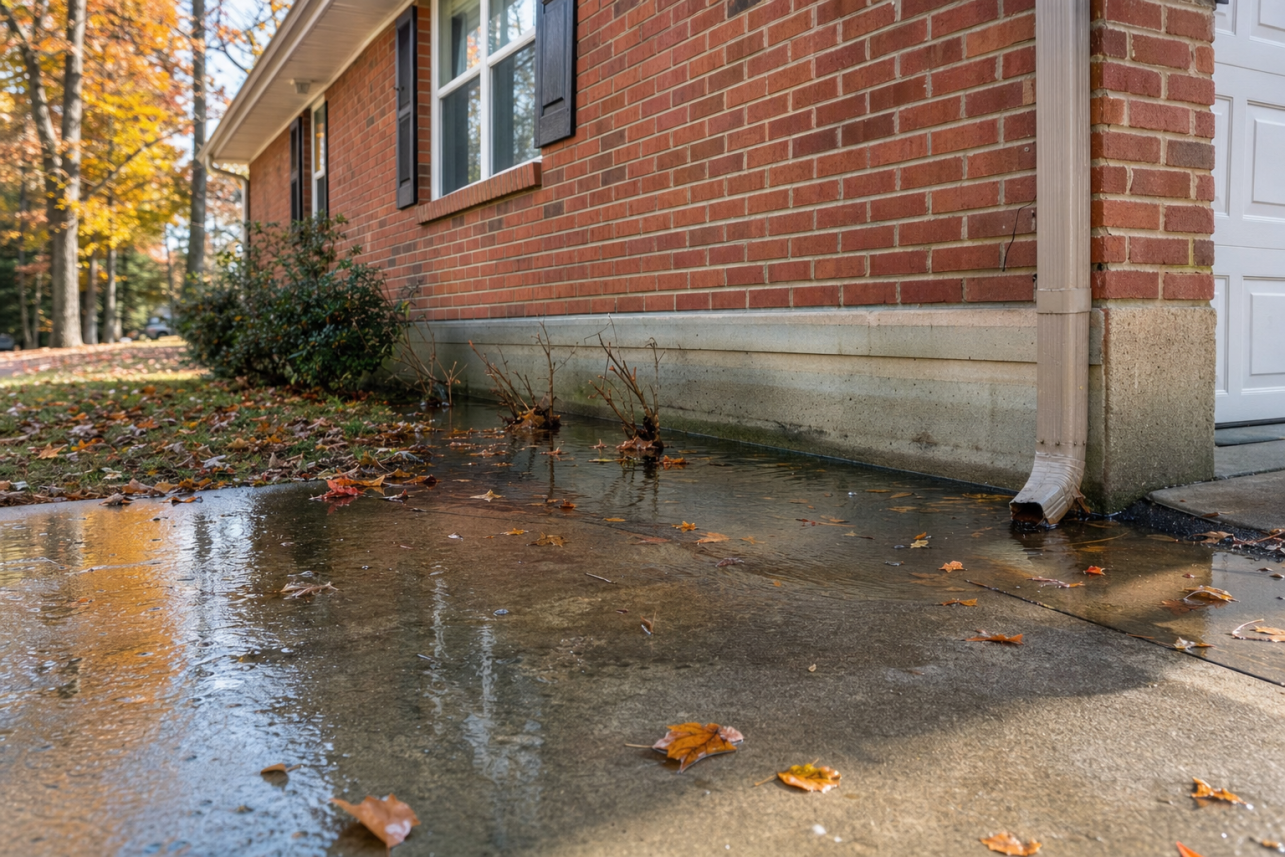
Slab leaks often surface in fall because cooling temperatures and early cold snaps cause under-slab copper and galvanized pipes to contract, while shifting soil moisture puts added pressure on the slab itself. Warning signs include warm spots on the floor, unexplained water bill increases, the sound of running water, and new foundation cracks.
North Carolina and Virginia both sit in a transitional climate zone where summer heat can give way to sharp overnight freezes surprisingly fast. That swing matters more than many homeowners realize. Metal pipes expand in heat and contract in cold, and when that cycle happens repeatedly, aging joints and thin-walled sections of copper line can fail. Galvanized pipe, common in older Carolina and Virginia homes, is especially vulnerable because decades of internal corrosion leave the walls weakened before the seasonal stress ever begins.
How Fall Weather Stresses Under-Slab Pipes
- Temperature contraction: Cold water running through warm pipes — or an early frost cooling the soil — causes metal lines to contract and flex at joints and bends.
- Shifting soil moisture: After a dry late summer, fall rains cause clay-heavy soils in the Piedmont and coastal plain to swell. That movement can shift the slab and strain the pipes beneath it.
- Corrosion reaching a tipping point: Pinhole leaks that developed slowly over the summer often become noticeable once seasonal pressure changes widen them.
Warning Signs to Watch For
- Warm spots on the floor — a classic sign of a hot water line leaking under the slab.
- An unexplained jump in your water bill with no change in household usage.
- The sound of running water when every fixture and appliance is turned off.
- New or widening foundation cracks, or cracks appearing in floor tile and drywall.
- Damp carpet, cupping hardwood, or a musty smell near interior walls or floors.
Catching these signs early matters for two reasons. First, the sooner the leak is stopped, the less damage spreads through flooring, framing, and belongings. Second, documenting when you first noticed the problem can be important to your claim, since insurers scrutinize how long a leak went unaddressed. Homeowners dealing with this kind of loss often benefit from professional water damage insurance claim help in Bennett and surrounding communities before accepting the insurer’s first position.
If you spot any of these symptoms this fall, don’t wait for the problem to announce itself more loudly. Shut off the water, document what you see with photos and dated notes, and review your policy’s slab leak insurance language carefully. A licensed and bonded public adjuster for water damage near Bear Creek can help you understand what your policy actually covers before the conversation with your carrier begins.
What Should You Do If You Suspect a Broken Pipe Under Your Slab?
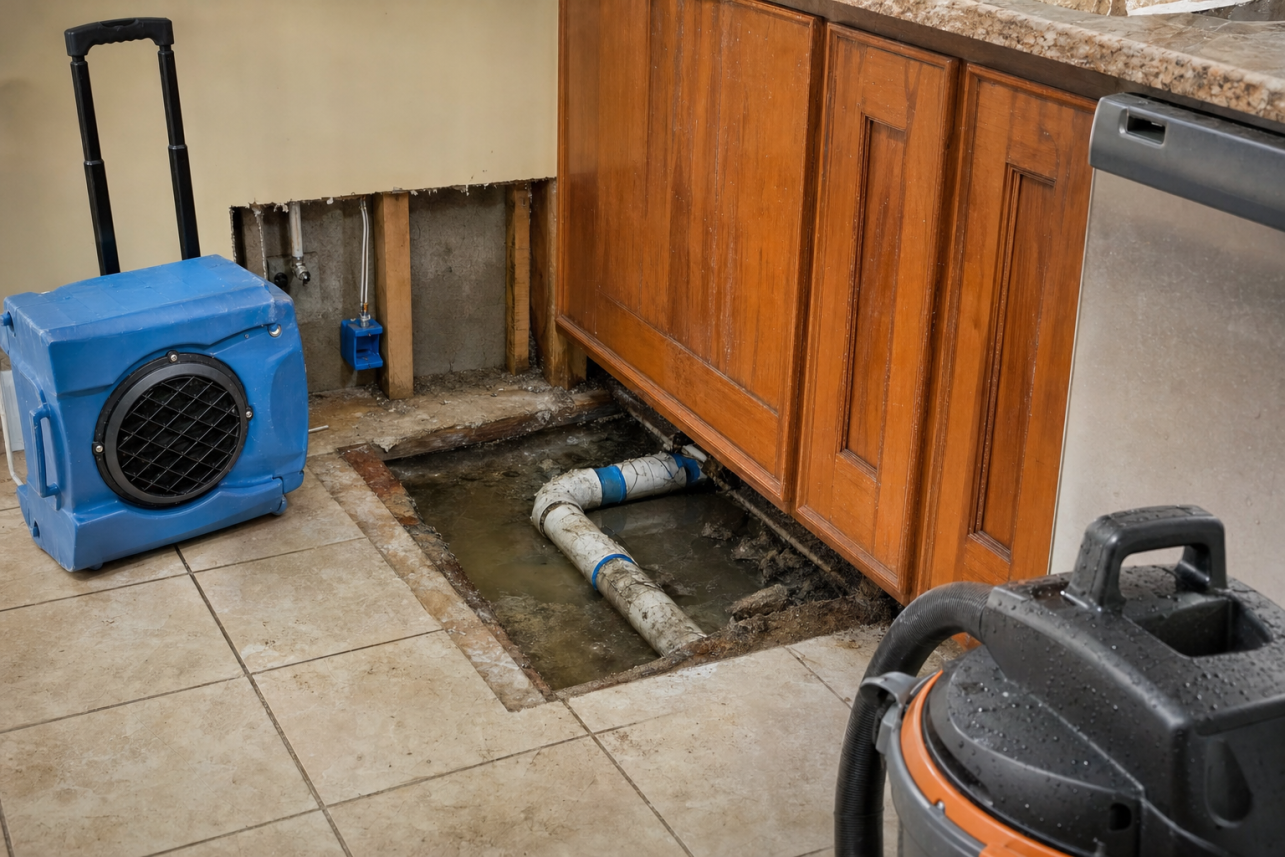
If you suspect a slab leak, shut off your main water supply immediately, photograph and document all visible damage, take reasonable steps to prevent further harm, and read your policy carefully before calling your insurance company. Before accepting a denial or low offer, consider having a licensed public adjuster review your policy and claim independently.
Step 1: Shut Off the Water
Locate your main shut-off valve — usually near the water meter, in a crawl space, garage, or where the service line enters the home — and close it. Every hour water keeps flowing under the slab, the damage to flooring, drywall, and the foundation grows, and so does the risk the insurer argues you failed to limit the loss.
Step 2: Document Everything
- Photograph warm spots, buckled flooring, cracks, damp carpet, and mold before any cleanup.
- Save your recent water bills — a sudden spike is strong evidence of a hidden leak.
- Keep every receipt for plumbers, leak-detection services, hotels, and emergency repairs.
- Get the plumber’s findings in writing, including the pipe location and suspected cause.
Step 3: Mitigate, but Don’t Repair Everything Yet
Your policy requires you to take reasonable steps to prevent further damage — drying the area, stopping the leak — but major repairs should wait until the loss has been inspected and documented. Homeowners who rush can accidentally destroy evidence the claim depends on. If you need help understanding how hidden leaks are documented, a specialist in water damage insurance claim help in Bennett handles exactly these situations.
Step 4: Read Your Policy Before Calling the Carrier
Before you report the claim, review your declarations page and the water damage and wear-and-tear provisions. Knowing whether your policy treats sudden pipe breaks differently from long-term seepage — the core of most slab leak insurance disputes — helps you describe the loss accurately. The National Association of Insurance Commissioners offers consumer guides on reading homeowners policies, and the North Carolina Department of Insurance provides consumer assistance for policyholders with claim questions.
Step 5: Get an Independent Review Before Accepting a Denial or Lowball Offer
The carrier’s adjuster works for the insurance company. A licensed, bonded public adjuster works only for you, reviewing the policy language, the cause-of-loss findings, and the full scope of damage before you sign anything. If your home is in central North Carolina, a public adjuster for water damage near Bear Creek can evaluate whether a denial actually holds up against your policy’s wording. No one can guarantee a specific outcome, but an independent review ensures the first answer you get from the carrier isn’t the only one you ever hear.
Slab Leak Insurance Coverage: How Different Policies Typically Respond in NC and VA
| Policy Type | Typically Covered | Typically Excluded |
|---|---|---|
| HO-3 (Open Peril) | Sudden water damage to floors, walls, and contents; tear-out of slab to reach the pipe | Repair or replacement of the broken pipe itself; gradual leaks |
| HO-1 / HO-2 (Named Peril) | Water damage only if caused by a specifically listed peril | Slab leaks not tied to a named peril; long-term seepage |
| Policy with Water Damage Endorsement or Service Line Coverage | Broader protection, sometimes including underground pipe repair | Pre-existing damage; poor maintenance or known leaks left unaddressed |
| Older or Bare-Bones Policies with Water Exclusions | Little to no slab leak protection | Most water damage from plumbing under the foundation, gradual or sudden |
A Hypothetical Slab Leak Claim: How Coverage Can Turn Around
Illustrative example
Consider a composite example drawn from situations we commonly see: a homeowner in the Piedmont region notices warm spots on the floor and rising water bills, and a plumber confirms a broken hot water line under the concrete slab. The insurance company initially denies the claim, calling it a long-term leak excluded under the policy. A careful review of the policy language shows that the resulting water damage was sudden and that the tear-out provision requires the insurer to pay for opening and restoring the slab to reach the pipe. With documentation from the plumber and a properly presented claim, the homeowner receives a fair settlement for the water damage and slab restoration, while paying out of pocket only for the pipe repair itself. Every policy and claim is different, but this illustrates why an initial denial is not always the final word.
Frequently asked questions
Does slab leak insurance coverage actually exist, or is it part of my regular homeowners policy?
There’s no standalone slab leak insurance for most homeowners — coverage comes from your standard policy. Most open-peril policies, like the common HO-3 form, cover sudden and accidental water discharge from plumbing, including pipes under a slab. Many policies also pay to tear out and replace the concrete needed to reach the pipe. However, named-peril or bare-bones policies may exclude this entirely, so reading your specific policy language matters.
What part of a slab leak will my insurance company refuse to pay for?
Even when a claim is covered, most policies pay for the water damage and the cost of accessing the pipe through the slab — but not the repair of the pipe itself, since that’s considered a maintenance item. Insurers also commonly deny claims caused by long-term seepage, corrosion, wear and tear, or earth movement. The key distinction is sudden and accidental damage versus gradual deterioration.
How do I know if I have a slab leak before it becomes a disaster?
Watch for warm spots on the floor, unexplained spikes in your water bill, the sound of running water when everything is off, cracks in flooring or walls, musty odors, or damp carpet. If you suspect a leak, shut off the water, document everything with photos, and report it promptly. Delayed reporting is one of the most common reasons insurers deny otherwise valid slab leak claims.
How much does it cost to fix a broken pipe under a concrete slab?
Costs vary widely depending on the pipe’s location, how much concrete must be removed, and whether rerouting the line is a better option than breaking the slab. Jackhammering, plumbing repair, and restoring flooring can add up quickly, which is why the tear-out coverage in many policies is so valuable. Get written estimates from licensed plumbers before accepting any insurance settlement, so you know the true scope of repairs.
What should I do first if my insurance denies my slab leak claim in NC or VA?
Don’t panic — a denial isn’t the final word. Request the denial in writing with the specific policy language cited, gather your plumber’s report, photos, and water bills, and consider having a licensed public adjuster review the claim. Many denials hinge on whether the leak was ‘sudden’ or ‘gradual,’ and independent evidence can change that conclusion. You can also file a complaint with the NC or VA Department of Insurance.
Has a homeowner ever won in court against an insurance company over hidden water damage?
Yes. In Sebo v. American Home Assurance Co. (Florida Supreme Court, 2016), a homeowner’s house suffered major water intrusion damage, and the insurer denied the claim arguing excluded causes contributed. The court sided with the homeowner, ruling that when covered and excluded causes combine to damage a home, coverage can still apply. While every state’s law differs, it shows denials can be successfully challenged with persistence and proper documentation.
What’s the difference between North Carolina and Virginia when it comes to slab leak claims?
Both states follow similar principles: standard open-peril policies generally cover sudden pipe bursts, while gradual leaks are typically excluded. Deadlines to file suit over a denied claim, bad-faith remedies, and complaint processes differ between the two states’ insurance departments, so confirm your state’s specific rules. In both states, documenting the damage immediately and reporting promptly gives you the strongest footing regardless of which side of the border you’re on.
Should I file a claim for a slab leak or just pay out of pocket?
Compare the total repair and restoration cost against your deductible first. If the damage is extensive — ruined flooring, cabinetry, or drywall — a claim usually makes sense. If it’s barely above your deductible, paying out of pocket may protect your claims history. Before deciding, get the plumber’s diagnosis in writing and understand your policy’s water damage limits. A licensed public adjuster can help you evaluate whether a claim is worthwhile.
What mistakes do homeowners make with broken pipe claims under a slab?
The biggest mistakes: waiting too long to report, throwing away the damaged pipe section before the insurer inspects it, letting a contractor start repairs without documentation, accepting the first settlement offer without estimates, and describing the leak as ‘ongoing’ when it was actually sudden. Keep every photo, invoice, and report. How you document and describe the loss can make the difference between an approved claim and a denial.
Is there extra coverage I can buy to protect against pipe leaks my policy excludes?
Yes. Many insurers offer endorsements worth asking about, such as service line coverage for underground pipes running to your home, water backup coverage, and hidden water damage or ‘limited water’ endorsements that address gradual leaks standard policies exclude. These add-ons are usually inexpensive relative to the protection they provide. Review your policy annually with your agent, especially if your home is older or has original plumbing under the slab.
Car Hits Home Claim help near you
Related local pages
Suspect a slab leak? Before you accept the insurance company’s first answer, get a free policy review from our licensed and bonded public adjusters serving North Carolina. We’ll help you understand what your policy really says — no pressure, no guarantees, just straight answers. Get in touch.
Last updated: October 12, 2026