
When you file an insurance claim, one question always jumps to the front of the line: how long does insurance company have to settle claim? There’s no single, one-size-fits-all answer. Most states operate on a “reasonable time” standard, which usually shakes out to somewhere between 30 and 60 days.
But that’s just a ballpark figure. The actual timeline can be a rollercoaster, influenced by your state’s specific laws, how complicated your claim is, and the type of damage you’ve suffered.
If you have any questions about anything claim related we are here to help. Have your claim questions answered at NO COST. Call 919-400-6440 to speak with a licensed Public Insurance Adjuster.
Your Insurance Claim Timeline: What to Expect
Waiting for an insurance settlement can feel a lot like being stuck in rush hour traffic. You know where you need to go, but the slow, stop-and-go pace is absolutely maddening. Getting a handle on the typical stages of a claim can help you set realistic expectations and ease some of that anxiety.
Think of it as a roadmap with several key stops. The journey from filing your claim to getting a check in hand isn’t instant; it’s a structured process that you have to move through step-by-step.
Breaking Down the Stages of How Long Does Insurance Company Have to Settle Claim
While every claim is unique, they all generally follow the same path. Here are the core stages you can expect to go through: (How long does insurance company have to settle claim.)
- Filing the Claim: This is step one, where you officially let your insurance company know what happened and provide the initial details.
- Investigation: An adjuster gets assigned to your case. Their job is to inspect the damage, go over your documents, and figure out what’s covered under your policy.
- Settlement Offer: Once the investigation wraps up, the insurer will make a settlement offer. You can either accept it or, if it feels low, start negotiating.
- The Payout: After everyone agrees on a number, the final payment is sent out.
This is the standard flow, and the infographic below helps visualize how you get from point A to point B.
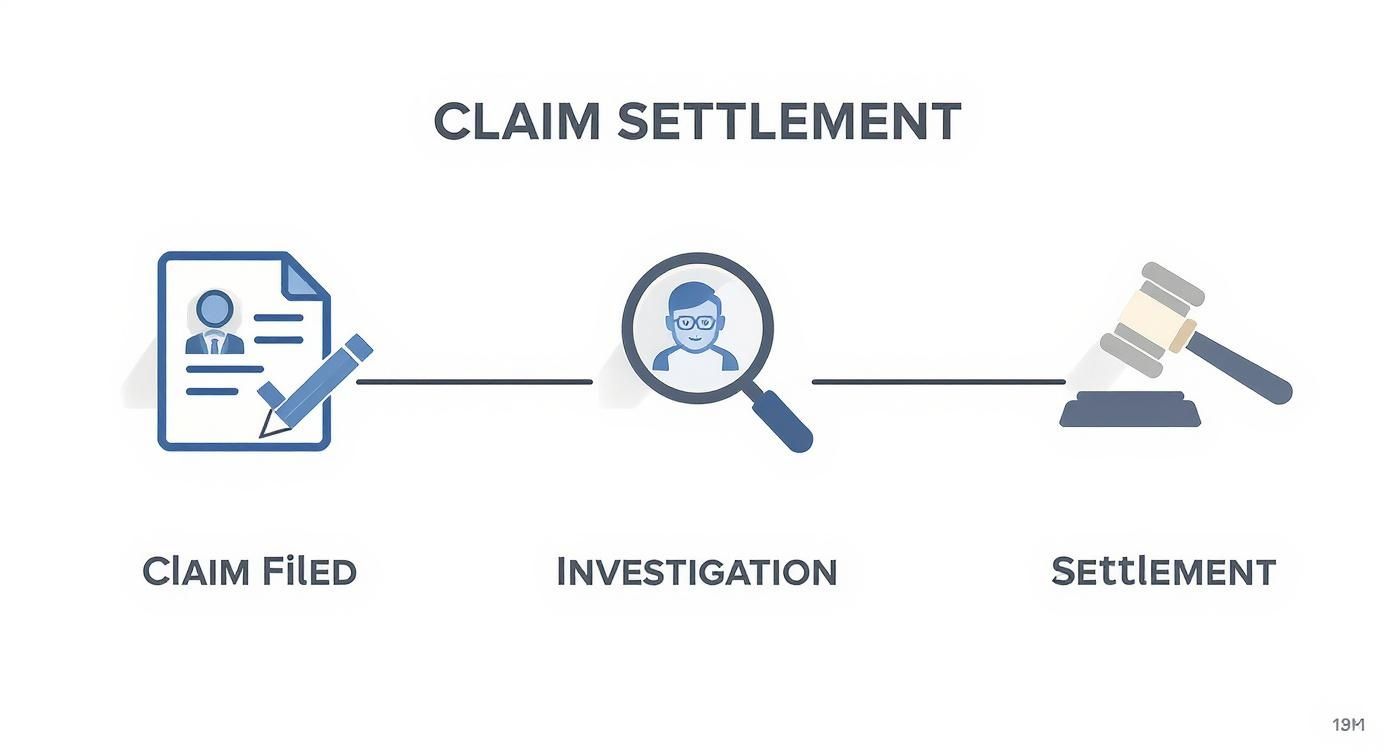
As you can see, it’s a pretty straightforward progression. Each stage has to be completed before you can move on to the next one, all leading up to the final resolution.
Average Settlement Durations
State laws give us the official rulebook, but real-world data paints a much clearer picture of what you should actually prepare for when considering how long does insurance company have to settle claim.
The table below gives a snapshot of what you can typically expect for common claim types.
Average Claim Settlement Times by Type
This table provides a snapshot of the average time it takes for insurance companies to settle different types of common claims, helping you set realistic expectations.
| Claim Type | Average Settlement Duration | Key Factors |
|---|---|---|
| Auto Claims | 22.3 days | Severity of damage, liability disputes, extent of injuries |
| Property Claims | 23.9 days | Complexity of damage, documentation quality, weather events |
| Catastrophic Events | 34+ days | Widespread damage, adjuster availability, federal involvement |
These numbers give you a solid baseline. Auto claims, for instance, tend to move a bit faster, averaging around 22.3 days, while property claims take just a little longer at 23.9 days on average. Of course, a major disaster or a particularly complex claim can easily push these timelines past the 34-day mark.
If you want to dive deeper, you can find more insights about claim payout statistics and see how these numbers have trended over the years.
The Role of State Laws in Your Claim Settlement
Think of your state’s Department of Insurance as the referee in the game between you and your insurance company and how long does insurance company have to settle claim. They aren’t on anyone’s team, but their job is to make sure the insurer plays by the rules. When it comes to how long an insurance company can legally take to handle your claim, these state-specific rules are everything.
Without them, you’d be completely in the dark, left to the mercy of the insurance company’s internal timelines. Thankfully, almost every state has put laws on the books to protect you from being dragged through unreasonable delays.
Understanding Your State’s Playbook
Two main types of laws form the foundation of these protections for policyholders like you:
- Prompt Payment Laws: These are the big ones. They set hard, non-negotiable deadlines for how quickly an insurer has to move through each stage of your claim.
- Unfair Claims Settlement Practices Acts: This is a broader set of rules that basically outlines what an insurance company is forbidden from doing. Things like ignoring your calls, failing to communicate, or denying a perfectly valid claim without a good reason all fall under this umbrella.
These laws work together to create a system that forces insurance companies to act. They can’t just let your claim file gather dust on someone’s desk; they are legally obligated to keep the ball rolling.
Key Takeaway: State laws are what stop insurance companies from making up their own timelines. They create legally-binding deadlines to make sure you aren’t left in limbo after a disaster.
The Three Critical Deadlines Insurers Must Meet
While the exact number of days can change from state to state, the laws generally create three critical deadlines that every insurance company has to follow. Knowing what these timelines are is your biggest advantage—it tells you exactly when you should expect to hear from your adjuster and when it’s time to start asking questions.
The process is usually broken down into these phases: (How long does insurance company have to settle claim.)
- Acknowledging Your Claim: The moment you file your claim, a clock starts ticking. The insurance company has a set amount of time—often around 15 business days—to simply send you a letter or email confirming they’ve received it and are starting their process.
- Investigating and Making a Decision: This is usually the longest part of the journey. Once they have all the information they need from you, they have another deadline—typically 15 business days—to investigate your claim and officially decide whether to approve or deny it. In many states, however, they can ask for an extension of up to 45 days, but they have to give you a valid reason for the delay in writing.
- Paying After an Agreement is Reached: Once you and the insurance company have agreed on a settlement amount, one last timer starts. They usually have a very short window, often just 5 to 10 business days, to cut the check and get your payment to you.
These aren’t just polite suggestions; they are the law. For example, Texas law gives insurers 15 business days to acknowledge a claim, while other states might allow 30 calendar days. This is exactly why understanding your local rules is so powerful. It gives you the knowledge you need to hold your insurer accountable and make sure your claim is being handled fairly and on time.
Common Reasons Your Insurance Claim Is Delayed
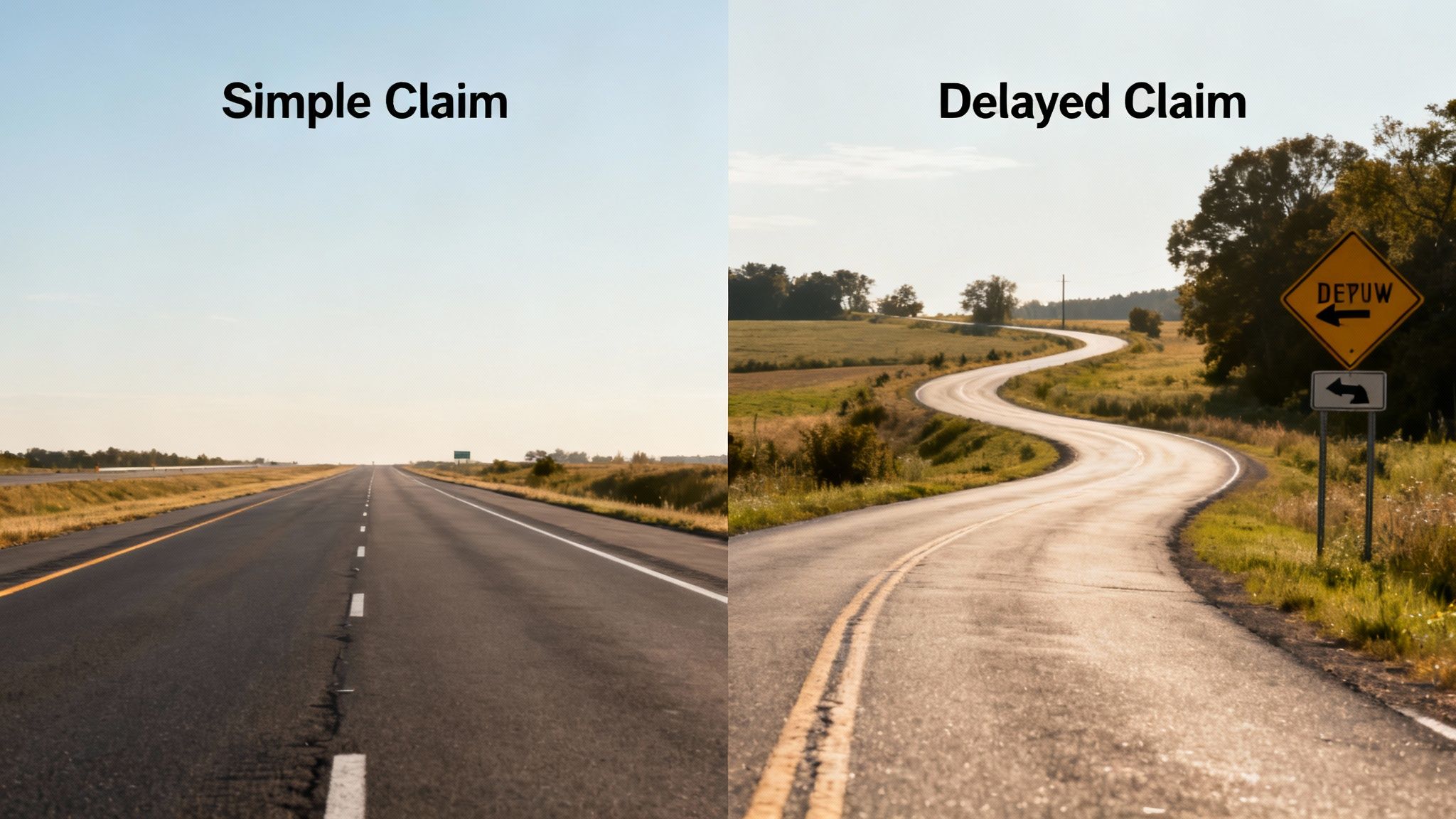
Even though state laws set a rulebook for how long things should take, the real world is messy. Unexpected curveballs can bring your claim to a screeching halt.
Think of it this way: a simple claim is like a straight shot down an empty highway—fast and predictable. But a complex claim? That’s more like a winding country road with detours, traffic jams, and maybe a washed-out bridge.
It’s crucial to understand these common roadblocks so you can spot what’s happening with your own claim. Not every delay is a sign of bad faith; sometimes, the process just gets tangled.
Disputes Over Liability and Fault
One of the most common reasons things slow down and how long does insurance company have to settle claim is a fight over who was at fault. If the insurance company isn’t convinced, you’re blameless or thinks someone else should be paying the bill, they’ll pump the brakes on your claim.
This kicks off a much longer investigation. They’ll need to dig for more evidence, track down and interview witnesses, and maybe even bring in accident reconstruction experts. This is a frequent headache in multi-car pile-ups or complicated property damage situations where the blame isn’t obvious. Until liability is crystal clear, your claim is stuck in neutral.
The Complexity of Your Claim
The nature of your claim itself plays a huge role in the timeline. A minor fender-bender with a clear dent is worlds away from a homeowner’s claim for a house fire that took everything.
Several factors can turn a simple claim into a complicated mess:
- Severity of Damage: If your home has major structural damage, it’s going to require more detailed inspections, multiple quotes from specialized contractors, and a much longer review process by the insurer.
- Type of Loss: A claim for a broken window is simple. A claim involving a serious personal injury is not. Calculating medical bills, lost wages, and future care needs is an incredibly detailed and time-consuming task.
- External Events: When a major hurricane or wildfire hits, insurance companies are flooded with a massive surge of claims. This overwhelms their adjusters and creates system-wide backlogs. In fact, many victims are still dealing with storm damage claims issues from Hurricane Irma years after the fact.
Key Insight: The more moving parts your claim has, the more time the insurance company will need to connect all the dots before they can even think about making a settlement offer.
Missing or Incomplete Paperwork
Your insurance adjuster can’t move forward with an incomplete file. It’s that simple. If you haven’t sent over crucial documents—like photos of the damage, receipts for emergency repairs, or your medical records—the process will grind to a halt.
Think of it like a stopwatch. The clock on their end often pauses the moment they request information from you and doesn’t start again until they have everything they need. Your promptness matters, and any delays in getting them what they need will only delay your check. (How long does insurance company have to settle claim.)
How Different Claim Types Impact Settlement Speed
It’s a common misconception to think all insurance claims move at the same speed. They absolutely don’t. Expecting a simple fender-bender claim to wrap up as quickly as a major house fire investigation is like thinking a quick trip to the grocery store will take as long as a cross-country drive.
Every claim has its own unique roadmap, complete with potential detours and traffic jams. So, when you ask, “how long does an insurance company have to settle a claim?” the real answer starts by looking at the specific type of loss you’ve suffered. The complexity, the severity of the damage, and the claim category are the biggest drivers of the timeline.
Auto Claims: From Simple Dents to Complex Injuries
Even within the world of auto insurance, the timelines can swing wildly. A minor parking lot collision where fault is obvious and the only damage is a dented bumper? That’s usually the fastest claim to resolve. An adjuster can often look at a few photos and estimates and have the repairs approved in just a few days.
But things get complicated fast when you add a few other ingredients: (How long does insurance company have to settle claim.)
- A Total Loss: If the insurance company decides your car is a total loss, the brakes get pumped. Now, they have to figure out its actual cash value (ACV), which means digging into market research and valuation reports. This adds several extra steps you don’t have with a simple repair job.
- Personal Injuries: The moment someone gets hurt, the timeline stretches out dramatically. A settlement can’t even be discussed until the injured person reaches what’s called Maximum Medical Improvement (MMI). That’s the point where their medical condition is stable, and it’s the only way to make sure all the medical bills, lost income, and potential future care costs are fully accounted for. This process alone can take months, and sometimes, even years.
Homeowner Claims: Widespread Damage and Supply Chain Headaches
Homeowner claims, especially after a natural disaster, are in another league of complexity. Trying to assess widespread structural damage from a hurricane, wildfire, or a major hailstorm is a huge undertaking. It requires specialized inspectors, engineers, and a whole lot of patience. For instance, correctly documenting a hail-pummeled roof is a detailed process that can be slowed down by everything from bad weather to a shortage of qualified roofers. If you find yourself in this situation, our guide on hail damage roof insurance claims is a great resource.
After a catastrophic storm, you’re not just dealing with your own damage; you’re competing with your entire community for limited resources. This creates some serious bottlenecks:
- Contractor Shortages: Suddenly, every homeowner in a 100-mile radius needs a good roofer or builder. This creates long waiting lists just to get an estimate.
- Supply Chain Issues: Materials like lumber, shingles, and windows can become incredibly scarce, delaying repairs and keeping your claim open much longer.
Key Insight: Unlike a simple car repair, rebuilding part of a home involves juggling multiple contractors, materials, and permits. This makes the homeowner claim process naturally longer and much more vulnerable to outside delays.
Liability Claims: The Longest Reason of How Long Does Insurance Company Have To Settle Claim
Liability claims—things like a slip-and-fall at a local business or a dog bite incident—are almost always the ones that drag on the longest. These cases aren’t just about damage; they’re about proving who was negligent, and that requires a deep, and often contentious, investigation.
The insurer has to interview everyone involved, track down witness statements, review security footage, and sometimes bring in experts to figure out who is legally responsible. Because these claims often involve lawyers negotiating back and forth and always carry the threat of ending up in court, they move at a much slower, more deliberate pace. The path to a settlement here is rarely a straight line, making it the longest journey of all.
Actionable Steps to Speed Up Your Insurance Claim

Instead of just sitting back and wondering, “how long does an insurance company have to settle a claim?”, you can take control of the process. Delays are beyond frustrating, but you have more power here than you might realize. By being organized, persistent, and a step ahead, you can dodge the common hurdles that slow everything down.
Think of yourself as the project manager for your own recovery. Your insurance adjuster is a key player, but you’re the one steering the ship. This mindset shift changes you from a passive victim into an active participant, which can make a huge difference in how quickly your claim gets settled.
Report Your Claim Immediately
The stopwatch on your claim settlement doesn’t even start until you officially file it. Waiting even a day or two gives the insurance company a perfectly valid reason for things to get off to a slow start. As soon as it’s safe, make that call.
When you report the damage, have this information at your fingertips:
- Your Policy Number: This is the magic key that lets them find your file instantly.
- Date and Time of Loss: Get as close to the exact time as you can.
- A Brief Description: Just the facts. What happened, plain and simple.
Getting that claim number assigned is your first big win.
Document Everything Meticulously
If there’s one thing that brings a claim to a grinding halt, it’s missing or messy paperwork. Your adjuster can’t approve what they can’t prove, and the burden of providing that proof falls squarely on you. Get a dedicated folder—a real one or a digital one—and keep every single scrap of paper and every email related to your claim in it.
Your documentation checklist should be your bible. Make sure it includes:
- Photos and videos of all the damage, taken from every possible angle, before you clean up a single thing.
- A detailed list of your damaged stuff, including how old it was, what you paid for it, and what it would cost to replace today.
- Receipts for any temporary repairs you had to make, like boarding up a window to keep the rain out.
- Copies of every email, letter, and note from your conversations with the insurance company.
Key Takeaway: Solid, organized documentation is your best weapon. It stops the endless back-and-forth for more information that can tack weeks, or even months, onto your claim.
Maintain Proactive Communication
Don’t just wait by the phone for your adjuster to call. A friendly, professional, and consistent follow-up strategy is what keeps your file on the top of their pile. I always tell my clients to start a communication log. Every time you talk to someone, write down the date, time, who you spoke with, and what you talked about.
After a phone call, send a quick, polite email confirming what was discussed. This creates a paper trail and makes sure everyone is on the same page about what happens next. When you’re this organized and persistent, it sends a clear signal to the insurer: you’re serious. If things get complicated and the communication just isn’t working, it might be time to understand the role of a public insurance adjuster, who can step in and handle all of that for you.
What to Do When Your Insurance Company Is Stalling
Look, there’s a massive difference between a claim that’s taking a while because it’s complicated and one that’s being intentionally dragged out. If the phone calls stop, emails go unanswered, and deadlines fly by without a single word of explanation, your insurer might be stalling. Spotting this shift from a legitimate delay to a deliberate one is your first step in fighting back.
You don’t have to sit there feeling powerless. If you suspect your insurance company is giving you the runaround, there’s a clear, step-by-step process to force the issue. It’s about taking back control and making them answer for the delays.
Send a Formal Letter Demanding Action
Your first and most important move is to create a paper trail. You need to draft a formal letter and send it via certified mail with a return receipt requested. Address it to your adjuster and copy their supervisor.
In the letter, clearly state your claim number, politely lay out the history of delays, and reference the specific deadlines your state’s laws require them to meet. This isn’t just a complaint letter; it’s a legal notice. You’re officially putting them on the clock and showing them you know your rights. More often than not, this simple, formal step is enough to get the gears turning again. (How long does insurance company have to settle claim.)
File a Complaint with Your State’s Department of Insurance
If that letter doesn’t light a fire under them, your next stop is your state’s Department of Insurance (DOI). Filing a formal complaint here is a huge power move. The DOI is the industry’s watchdog, and they are legally required to open an investigation for every complaint they receive.
Once you file, the insurance company has to answer directly to a state regulator, not just you. They’ll have to explain their actions and justify every single delay. This kind of outside pressure is incredibly effective at breaking through the stall tactics.
Know When to Call for Professional Help
Sometimes, stalling is a symptom of a much bigger problem, like an insurer acting in bad faith. If your claim is complex, the dollar amount is high, or the company simply won’t budge, it’s probably time to bring in a professional.
- Public Adjuster: A public adjuster works for you, not the insurance company. They can take over all communications, reassess the full extent of your damages, and negotiate with the insurer from a position of strength.
- Attorney: If you truly suspect bad faith or legal action seems inevitable, an attorney who specializes in insurance law can step in to fight for your rights and even pursue damages for the delays themselves.
It’s fascinating how settlement rates—the percentage of claims resolved by agreement—differ around the world. In places like the US and Australia, the rates often top 20% (with Australia exceeding 66%), showing systems built for resolution. Yet, in other countries, the rate dips below 20%, meaning more people are left hanging. You can explore more about these global claim trends to get a better sense of how different insurance systems affect policyholders.
Common Questions We Hear About Claim Settlements
Even after you understand the basic timeline, the little details of the claim process can leave you feeling uncertain. Let’s walk through a few of the questions that come up all the time so you can move forward with confidence.
Can an Insurance Company Just Deny My Claim Without Explaining Why?
Absolutely not. State laws, like the Unfair Claims Settlement Practices Acts, force insurers to put it in writing. They must send you a formal denial letter that spells out exactly why they are denying the claim, pointing to the specific language in your policy they’re using to back up their decision.
If you get a denial over the phone or never receive a letter, you need to demand one in writing immediately. A verbal “no” isn’t official and leaves you with nothing to fight back against.
If I Take the Settlement, Can I Ask for More Money Later?
Once you sign, the door is closed for good. Accepting a settlement offer means you’ll have to sign a release form. This is a final, legally binding document that closes your claim forever and stops you from seeking any more money for that incident.
This is a critical moment. Before you even think about signing, you must be 100% sure the offer covers everything—not just your current bills, but any future expenses that might pop up because of the damage. If you have the slightest doubt, get a second opinion from a professional.
What’s This “Reservation of Rights” Letter I Got?
Getting a reservation of rights letter can be unsettling. It’s the insurance company’s formal way of saying, “Okay, we’re going to start investigating your claim, but we’re not promising we’ll pay for it.”
This letter gives them the legal wiggle room to deny your claim later if their investigation turns up something that isn’t covered by your policy. It’s not a denial, but it is a major red flag that a coverage dispute could be on the horizon. From this point on, document everything, save every email, and pay close attention—the insurer is officially protecting its right to say no. (How long does insurance company have to settle claim.)
Trying to piece all this together after a disaster is a heavy burden, but you don’t have to carry it alone. The licensed team at For The Public Adjusters, Inc. is here to take over, handling everything from documenting the loss to negotiating a settlement that’s truly fair. Visit us at https://forthepublicadjusters.com to get the expert help you deserve.
Once an adjuster is actually assigned to your file, the clock starts moving in stages. Expect the inspection itself within one to two weeks of filing, then another one to three weeks for the adjuster to write their estimate and push it through internal review before an offer lands in your mailbox. Straightforward claims — a single water leak, a small roof repair — can wrap up in that first pass. But the moment the adjuster’s estimate misses damage or lowballs the scope, you’re into supplement territory, and each round of back-and-forth can tack on two to four weeks.
Here’s what most policyholders don’t realize: the adjuster’s speed often depends on their workload, not your urgency. After a major storm in North Carolina, a single carrier adjuster might be juggling 50 to 100 files at once, which is why calls go unreturned and inspections get rescheduled. Documenting everything in writing and following up on a set schedule keeps your claim from sitting at the bottom of the stack — and it’s exactly the kind of pressure a public adjuster applies on your behalf every day.



So far at this moment I don’t think my insurance is working for me? Wife had an accident with no injury. Other motorists d my wife in our truck. Truck paid to a paid off and now she has been inconvenienced for almost two weeks with out transportation. Now we will be burden with having to go and invest in another car/truck due to the fact that the other motorists failed to yield and strike our vehicle! Insurance main view is totally on the car and not any inconveniences that this other driver has caused us , let alone my wife not feeling good behind the wheel after accident?
One of the biggest frustrations for consumers is that insurance claims are often focused on repairing or replacing the vehicle itself, while the personal inconvenience and stress caused by the accident may not be fully compensated. Depending on the circumstances, some policies provide rental car coverage or reimbursement for transportation expenses, but those benefits vary by policy.
It’s also important to recognize that emotional effects after a crash can linger, even when there are no physical injuries. Feeling anxious or uncomfortable driving again is a common reaction.
I hope your wife continues to recover her confidence behind the wheel and that you’re able to find a replacement vehicle quickly. If there are questions about what benefits may still be available under your policy or through the at-fault driver’s insurance, it may be worth discussing them directly with your claims representative.