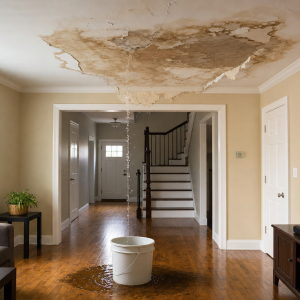

Insurance Claim Denied What to Do? If your homeowner or business insurance claim was denied, your first step is to formally appeal the decision in writing. Don’t just accept their verdict.
Let’s get one thing straight: Insurers like State Farm and Allstate often deny valid homeowner and business claims as a standard tactic. They are banking on you not fighting back. You have to understand that this denial isn’t the end—it’s the beginning of a dispute you can win.
Don’t Panic: This Is Their First Move, Not the Final Word
That denial letter is designed to feel like a gut punch. It’s intentionally intimidating, packed with confusing policy jargon and firm, final-sounding language. But for major insurance companies like State Farm or Allstate, this is often just a calculated business move. Their primary goal is protecting profits by minimizing payouts, and an outright denial is the quickest way to lowball you and close a claim without cutting a check.
They’re counting on you—the homeowner or business owner—to feel overwhelmed and just give up. You need to reframe this situation immediately. This isn’t a rejection; it’s their opening offer in a dispute. You have rights, a valid policy, and a clear path to challenge their decision.
The Proactive Path to Overturning a Denial
Instead of feeling defeated, it’s time to get tactical. The actions you take in the first few hours and days after getting that denial letter are critical. This isn’t about getting angry or emotional; it’s about methodically building an evidence-based case they can’t ignore. The goal is to shift from being a passive policyholder to an active advocate for your own claim.
To get started, here are the immediate actions you should take the moment you receive that denial.
Immediate Actions After a Claim Denial
| Action Item | Why It Matters | Your Next Move |
|---|---|---|
| Request Your Complete Claim File | The file contains the adjuster’s notes, reports, and photos—the evidence they used against you. | Send a certified letter to your insurer formally requesting a complete and unredacted copy of your entire claim file. |
| Document Every Communication | A clear paper trail prevents them from denying what was said or promised. | Start a log immediately. Note the date, time, person you spoke with, and a summary of every phone call, email, or letter. |
| Review the Denial Letter Line by Line | You need to understand the exact reason they cited for the denial. It’s often buried in complex legal language. | Highlight the specific policy language or exclusion they are using. This is the argument you’ll need to dismantle. |
| Set an Internal Deadline | Insurance companies can and will drag their feet. Deadlines create urgency. | Give yourself a firm date to submit your appeal. This keeps the pressure on and prevents the process from stalling. |
Taking these steps puts you back in control and signals to your insurer that you’re not going away quietly.
To successfully fight back, you need to understand the basic process for challenging their decision. This visual flow chart outlines the essential stages of disputing a denial.
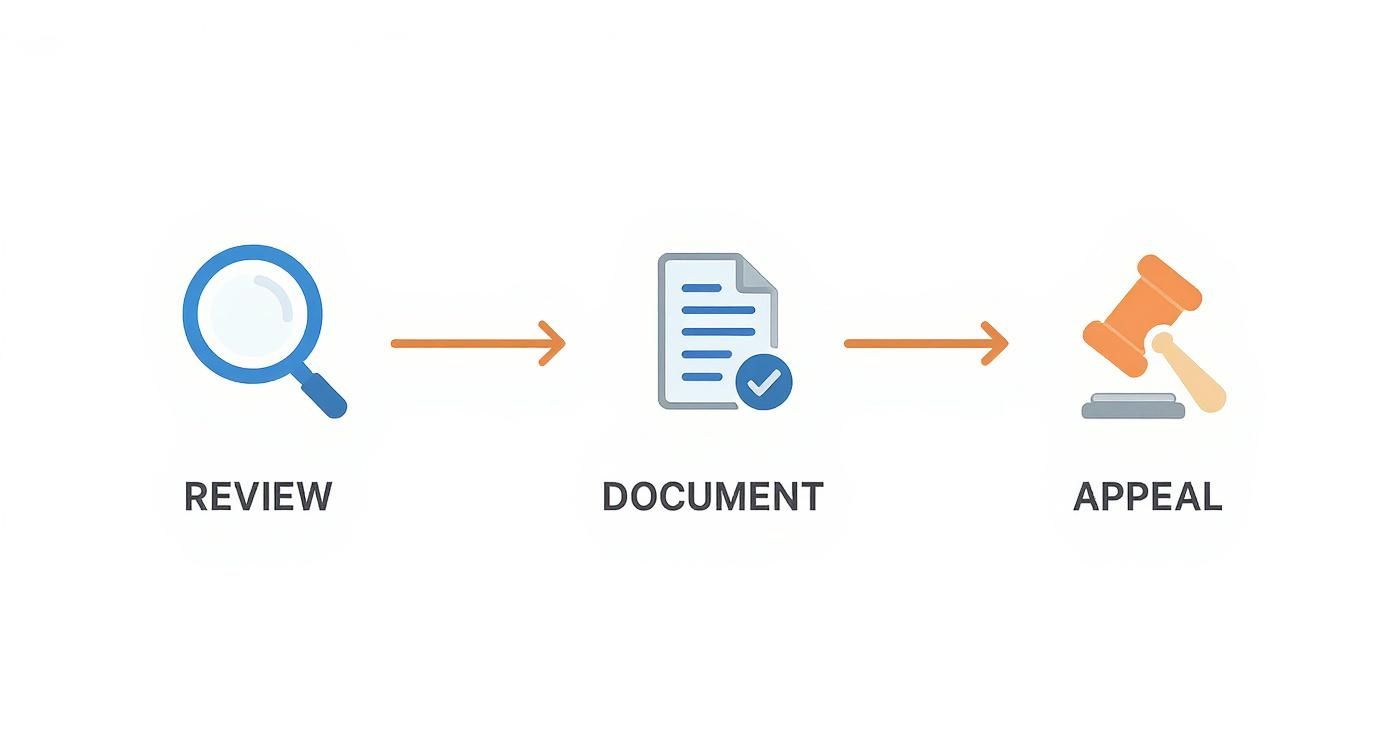
As you can see, the fight begins with a meticulous review of their reasoning. From there, you compile your own documentation to tear their argument apart. Finally, you launch a formal appeal. Each step builds on the last, creating a powerful counter-argument to the insurer’s initial stance.
Think of it this way: your original claim was your story of what happened. The denial is the insurer’s attempt to rewrite that story to fit their bottom line. Your job now is to prove, with indisputable facts and documentation, that your version is the only one that matters. It’s about taking control of the narrative and forcing them to re-evaluate based on the strength of your evidence.
Find the Weakness in Their Denial Letter
That denial letter from your insurance company isn’t just a rejection—it’s their entire game plan laid out on paper. They’ve built their case, hiding behind tangled legal phrases and referencing obscure policy sections they’re betting you won’t bother to check. Your job is to treat this letter like a battle map where “X” marks the weak spot in their defense.
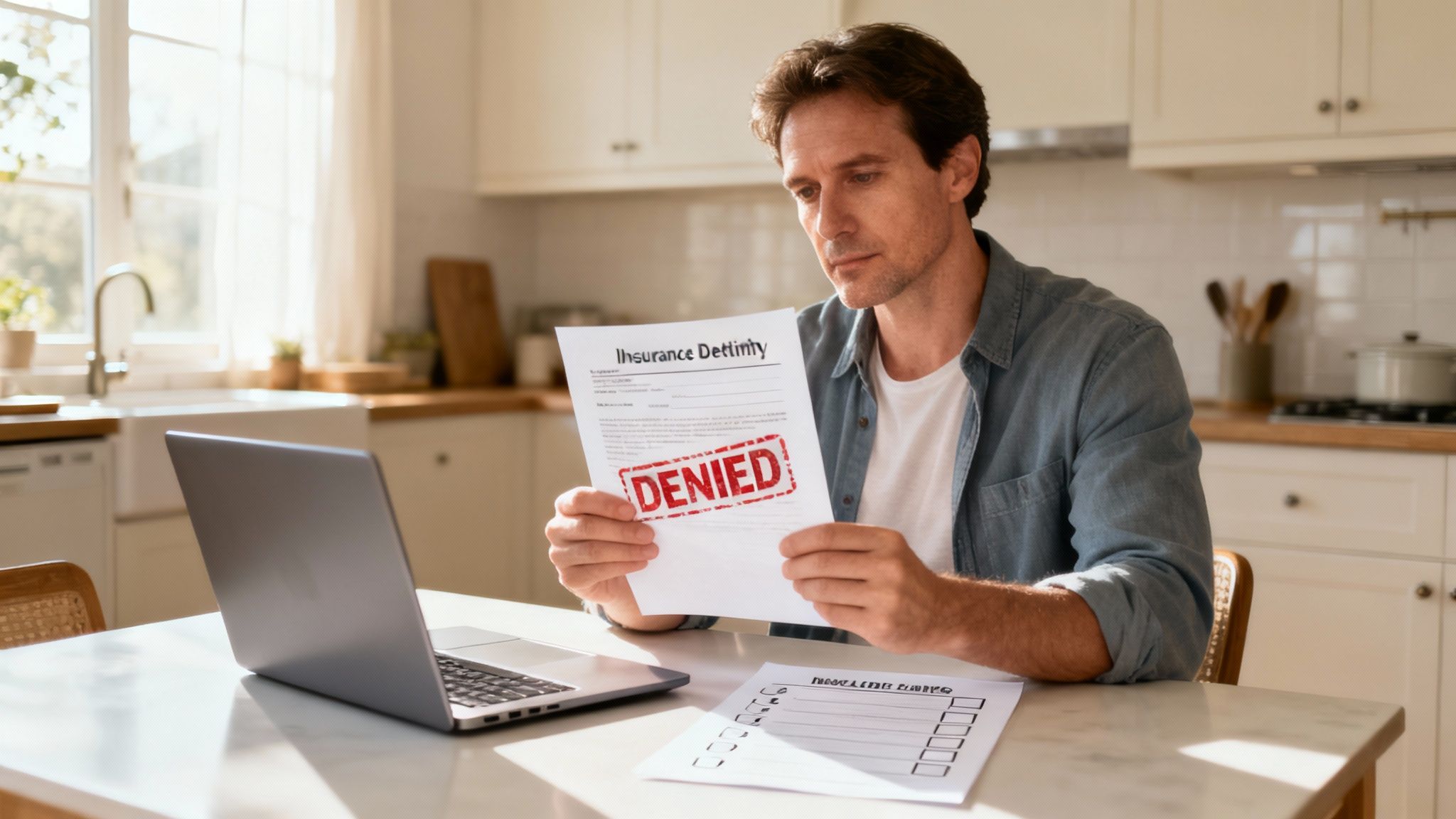
This isn’t just a “no.” It’s a calculated explanation of why they’re saying no. Corporate giants like Allstate and State Farm have armies of attorneys who draft these letters with one goal: to intimidate you into giving up. They will point to specific exclusions or conditions, hoping the sheer complexity is enough to make you walk away.
Don’t fall for it. This is where you start building your counterattack. You have to break down their reasoning piece by piece, check every single claim against your actual policy, and find exactly where their interpretation is self-serving or just plain wrong.
Pinpoint Their Exact Reason for the Denial
Let’s be clear: your denial letter has to give a specific, legally valid reason for turning you down. Vague excuses won’t cut it. You need to look for the key phrases that expose their strategy, which usually boils down to a few old tricks.
You’ll probably see one of these classic justifications:
- The “Policy Exclusion” Ploy: They’ll say the cause of the damage—like a certain kind of water leak or mold—is specifically excluded in the fine print.
- The “Insufficient Documentation” Stall: A favorite delay tactic. They claim you didn’t provide enough proof of the loss or that your evidence wasn’t good enough.
- The “Wear and Tear” Excuse: They argue the damage wasn’t from a covered event but from you failing to maintain your property or just because it’s old.
Once you’ve nailed down their core argument, you can zero in on gathering the exact proof needed to tear it apart. It’s a surgical strike that turns their own reasoning into the blueprint for your win.
Key Takeaway: The denial letter is not a dead end; it’s a roadmap. It tells you exactly what you need to disprove to win your appeal. Every policy clause they throw at you is a potential weak point to exploit.
Flip Their Own Policy Language Against Them
You have to remember that insurers thrive in the shadows. The homeowner insurance industry isn’t forced to be transparent like other sectors, which makes it nearly impossible for you to compare denial rates or hold them accountable. This lack of public data gives them the power to deny claims on technicalities, because they know most people don’t have the information to fight back. You can get more insights on the challenges in tracking rejected claims to see just how stacked the deck is.
Your complete insurance policy is the most powerful weapon you have. Get the full document—not the one-page summary, the whole thing—and find the exact clause they’re quoting in the denial letter. Don’t just read the single line they picked out; read the entire section. The context of the surrounding paragraphs or a definition buried pages away can completely flip the meaning and expose their twisted interpretation.
This is the hard work that uncovers the cracks in their argument and builds the foundation for your fight.
How to Gather Evidence They Can’t Ignore
Let’s be blunt: a powerful appeal isn’t built on complaints. It’s built on a mountain of undeniable proof that makes it too costly and risky for the insurer to keep fighting you.
The insurance company has its own team—adjusters, “experts,” and photographers—whose only job is to find evidence that supports their denial. Now, it’s your turn to build a case that systematically dismantles their argument, piece by piece.
Your goal is to assemble a professional loss file that leaves absolutely no room for doubt. This isn’t about snapping a few pictures on your phone. It’s about constructing a case that proves the real extent of your damages and exposes the flaws in their denial.
Build Your Independent Damage Assessment
First things first: never, ever accept the insurance company’s damage estimate as the final word. Their adjuster is paid to protect the company’s bottom line, which means minimizing your payout. Your job is to prove what it really costs to make you whole.
You need to get your own independent assessments from trusted, licensed contractors.
- Get Multiple Detailed Estimates: Call at least two reputable local contractors who specialize in the exact type of repair you need, whether it’s roofing, water mitigation, or fire restoration.
- Insist on Itemized Bids: A one-page summary is garbage. Demand a line-by-line estimate that breaks down the costs of materials, labor, and every single task. This is how you directly compare their numbers to the insurer’s lowball offer.
- Ask Them to Document Hidden Damage: A good contractor will find what the company adjuster conveniently “missed.” Think smoke damage inside your walls or water saturation lurking under the flooring.
These independent estimates are often the most powerful weapon in your arsenal. They come from third-party professionals and directly contradict the insurer’s bogus valuation of your claim.
Create an Unassailable Inventory of Lost Property
If your claim involves damaged personal or business property, you must create a painfully detailed inventory. Insurers love to deny these claims by arguing you failed to provide sufficient proof of what you owned. Don’t give them the chance.
Fire up a spreadsheet and create columns for every single item that was damaged or destroyed:
- Item Description (e.g., “Samsung 65-inch 4K Smart TV”)
- Brand and Model Number
- Age of the Item
- Original Purchase Price
- Estimated Replacement Cost Today
Now, start digging. Find receipts, credit card statements, and old photos to prove ownership and value. It’s not enough to just list things; you have to understand the best strategies for collecting and validating documents to make your proof airtight. This level of detail makes it nearly impossible for them to dispute your losses.
Pro Tip: Start a communication log today. Document every single interaction you have with the insurance company. Note the date, time, name of the person you spoke with, and a summary of what was said. This log becomes critical evidence, especially when they start using delay tactics or contradict what they told you last week. This paper trail is invaluable when you begin to negotiate with the insurance adjuster.
By methodically gathering contractor estimates, building a bulletproof inventory, and logging all communications, you are no longer just asking them to reconsider. You’re presenting them with a well-documented, evidence-based case that proves their denial was unreasonable, unsupported, and will not stand up to a real fight.
Get a Public Adjuster on Your Side—Immediately
When your insurance company denies your claim, you aren’t just dealing with an adjuster. You’re going head-to-head with a massive corporation armed with a team of lawyers. It’s a classic David vs. Goliath setup, and giants like State Farm and Allstate have stacked the deck to make sure Goliath wins.
They’re banking on you feeling overwhelmed and giving up.
This is exactly why you bring in a public adjuster. They exist to level that playing field. The adjuster your insurance company sends out works for them, not you. Their entire job is to protect their employer’s bottom line, which means paying you as little as possible—or nothing at all.
A public adjuster is the complete opposite. They are a state-licensed professional who works exclusively for you, the policyholder. They are your advocate.
How a Public Adjuster Evens the Odds
Think about it like this: the insurance company’s adjuster is their representative in a high-stakes negotiation. Would you ever walk into a legal battle without your own lawyer? Trying to fight a claim denial alone is the same disastrous mistake.
A public adjuster becomes your expert representative, taking over every grueling detail of the fight.
They handle the heavy lifting you don’t have the time or specialized knowledge for:
- Deep Policy Dive: They tear your policy apart, finding every bit of coverage the company adjuster conveniently “missed.”
- Expert Damage Valuation: They bring in their own trusted network of engineers, contractors, and inventory specialists to document the true, full cost of your damages.
- Aggressive Negotiation: They build an ironclad claim package and negotiate from a position of power, not desperation.

Hiring a professional sends a clear signal to your insurer: their usual games of delay, deny, and defend won’t work this time. It shows them you’re serious. To get a better handle on their role, you need to understand what a public adjuster is and how they turn the tables on insurance companies.
It’s crucial to understand who is actually fighting for your interests. The difference between the adjuster sent by your insurer and the one you hire is night and day.
Company Adjuster vs Public Adjuster: Who They Really Work For
| Attribute | Company Adjuster | Public Adjuster |
|---|---|---|
| Loyalty | The insurance company | You, the policyholder |
| Primary Goal | Minimize the claim payout | Maximize your settlement |
| Paid By | The insurance company (salary/bonus) | A small % of the settlement they win for you |
| Motivation | Protect the insurer’s profits | Secure your financial recovery |
The table makes it painfully clear. The company adjuster is a trained professional whose job is to find ways to pay you less. A public adjuster is your trained professional, and their only job is to get you paid what you are rightfully owed.
A Real-World Example: The Fire Claim They Tried to Bury
A North Carolina business owner watched his warehouse burn to the ground. His insurer slammed the door on his claim, blaming “faulty wiring” and pinning it on him. He was facing total ruin.
As a last-ditch effort, he hired a public adjuster. The PA immediately launched a counter-investigation, bringing in an independent forensic engineer. The real cause? A power surge from a faulty transformer down the street—a covered event. Better yet, the public adjuster uncovered the insurance company’s own internal expert reports that mentioned this possibility but were conveniently left out of the denial letter.
Armed with irrefutable proof, the public adjuster forced the insurer to reopen the claim. Faced with clear evidence of bad faith, the company caved and reversed its decision. The business owner got a settlement for his full policy limits, saved his company, and rebuilt everything.
This isn’t a rare story. It happens every day. When you’re dealing with a major loss or a flat-out denial, hiring a public adjuster isn’t just a good idea—it’s a necessity.
Executing Your Formal Appeal and Escalating Your Fight
You’ve gathered your evidence. Now it’s time to stop reacting and go on the offensive. The formal appeal is your opening shot—a calculated, professional, and powerful argument designed to force your insurer to reverse course. Forget angry letters. This is about dismantling their denial, piece by piece, with cold, hard facts.
Your appeal letter is a direct counterargument to their denial. It needs to be surgical. Reference your claim number and date of loss, then get straight to the point. Line by line, you will address every reason they gave for the denial and systematically prove them wrong, citing the specific evidence—like your engineer’s report or a contractor’s estimate—that invalidates their position.

Crafting a Letter They Can’t Ignore
Your tone should be assertive, professional, and all business. Use clear headings to break down each point you’re disputing. To make your case airtight, you need to understand how to write a persuasive document that influences decisions, as this isn’t just a letter—it’s a legal challenge.
Sprinkle in phrases that show them you’re serious and have done your homework:
- “Your denial letter references exclusion B.3; however, your own policy language in section D.5 clearly provides coverage for this event…”
- “Attached are three independent estimates from licensed, bonded contractors, all of which directly contradict the field adjuster’s lowball assessment…”
- “Failure to reconsider this claim based on the overwhelming evidence enclosed will be viewed as a breach of your contractual duty of good faith and fair dealing.”
End the letter with a specific, non-negotiable demand for the full amount you are owed and set a firm deadline for their response. Send it via certified mail with a return receipt. This isn’t optional. It creates a legal paper trail proving they received your appeal. For more detail, check out our in-depth guide on how to appeal a denied insurance claim and the specific steps to take.
When They Still Say No
Don’t be shocked if they deny the appeal. For corporate giants like State Farm, a second denial is just another day at the office—a tactic to see if you’ll give up. You won’t. This is where you escalate the fight.
Your next move is to file a complaint with your state’s Department of Insurance. This drags them out of their internal system and puts your case in front of a government regulator. Suddenly, they have to justify their flimsy denial to a third party with oversight powers.
If that pressure still doesn’t break the stalemate, it’s time to bring out the big guns: legal action for insurance bad faith. This isn’t just about a disagreement over a claim. Bad faith is when an insurer denies, delays, or underpays a claim without any reasonable basis for doing so. It’s a serious violation of your rights as a policyholder.
A landmark case, Vaughn v. State Farm, put insurers on notice that acting in bad faith could cost them millions in punitive damages. Homeowners sued their insurer for wrongfully denying their claim after a house fire and trying to pressure them into a lowball settlement. The court didn’t just award them the full claim amount—it hammered the company with $1.4 million in punitive damages to punish their blatant misconduct.
That’s the power you have. Their denial letter isn’t the final word. It’s a challenge. And with the right strategy and evidence, it’s a challenge you can absolutely win.
Common Questions About Denied Insurance Claims
https://www.youtube.com/embed/Jt6KRiq5VeA
When your property insurance claim gets denied, you’re slammed with a wave of urgent, stressful questions. That confusion is exactly what insurance companies count on.
Here are the direct, no-nonsense answers to the questions we hear most often from homeowners and business owners fighting back against a wrongful denial.
How Long Do I Have to Appeal a Denied Homeowners Claim?
Let’s be blunt: time is your enemy. The window you have to appeal a denied claim is buried deep in your policy and varies by state, but you have to act immediately.
While you might have a year or even two to file a lawsuit, the deadline for an internal appeal with the insurance company itself is often much, much shorter. Insurers know that confused and overwhelmed policyholders often miss these critical dates. When that happens, they get to close the file for good.
Check your denial letter and policy documents the second you get them. Find that deadline and don’t let them rob you of your right to fight.
Can My Insurance Company Drop Me for Appealing a Denial?
It is flat-out illegal for an insurer to cancel your policy as retaliation for filing or appealing a valid claim. But that doesn’t mean they won’t try other dirty tricks.
They can, and often do, choose not to renew your policy when it expires, citing some vague reason like “increased risk.” Don’t let this threat scare you out of fighting for what you are owed.
A successful appeal, especially one handled by a public adjuster, proves the claim was legitimate from the start. It also builds a powerful case for bad faith if they try a retaliatory non-renewal down the road.
What Exactly Is Insurance Bad Faith and How Do I Prove It?
Insurance bad faith is when your insurer unfairly denies, delays, or underpays your claim without a reasonable, justifiable basis. This isn’t just a simple disagreement over the numbers; it’s a violation of their contractual duty to act in good faith and fair dealing with you.
We see it all the time. Bad faith can look like:
- Failing to conduct a thorough and prompt investigation of your loss.
- Deliberately twisting the language in your policy to get out of paying.
- Using endless delay tactics to wear you down until you accept a garbage offer.
- Making threatening statements or implying you committed fraud with no evidence.
Proving bad faith requires meticulous documentation of every single email, phone call, and letter. If you suspect your insurer is acting in bad faith, it’s a serious accusation—one that could entitle you to damages far beyond your original claim amount.
Is Hiring a Public Adjuster Really Worth the Cost?
Public adjusters work on a contingency fee. That means we only get paid if you get paid. There are absolutely no upfront costs. We take a small, agreed-upon percentage of the final settlement we recover for you.
Our goal is identical to yours: force the insurance company to pay the maximum amount possible.
The data doesn’t lie. Studies consistently show that policyholders who hire a public adjuster receive significantly higher settlements—often several times more—than those who go it alone. In almost every single case, the massive increase we secure in your claim payout far outweighs our fee, leaving you with substantially more money than you would have ever gotten on your own.
How do I legally interpret the denial letter to understand the insurer's true reason for denial?
The denial letter must cite the specific policy section, exclusion, or condition they claim was violated. A Public Adjuster analyzes this legal language to determine if the insurer is misinterpreting the policy or if a valid counter-argument (e.g., an endorsement that overrides the exclusion) exists.
How can I challenge a claim denial based on "Insufficient Documentation" or "Lack of Evidence"?
You challenge this by commissioning an independent expert assessment. For property claims, this means a Public Adjuster obtains forensic engineering reports, detailed Xactimate estimates, and thermal imaging evidence that the insurer's initial adjuster overlooked or ignored.
What is the most effective way to address the insurer's denial based on alleged "lack of maintenance" or "gradual damage"?
This tactic is rebutted with forensic engineering evidence. The expert report must scientifically establish the loss was caused by a sudden, abrupt event (covered peril) and not the long-term, preventable deterioration (excluded peril) cited by the carrier.
What is the Appraisal Clause, and when is it the best option to reverse a denial?
The Appraisal Clause is a contractual dispute resolution method used only when the insurer acknowledges coverage but disputes the dollar amount. If the denial is based on low valuation, Appraisal (where both parties hire an independent appraiser) is often the quickest, most binding path to resolution.
Can I still file an appeal if I missed the insurer's initial appeal deadline?
While missing the deadline is dangerous, a Public Adjuster can still often proceed by filing a formal request for reconsideration backed by substantial new evidence or by leveraging the time allowed under the state's statute of limitations for filing a lawsuit for breach of contract.
What specific evidence must be included in a formal written appeal letter to maximize success?
The appeal letter must be a rebuttal memorandum, including: 1) A clear citation of your policy provision; 2) A direct counter-argument to the insurer's cited exclusion; and 3) Attached, new expert evidence (e.g., engineering report, contractor estimate) proving your loss is covered and valued higher.
How does filing a complaint with the State Department of Insurance (DOI) help overturn a denied claim?
While the DOI cannot force a payout, filing a complaint initiates an investigation into the insurer's claims practices. This formal regulatory scrutiny often prompts the insurer to re-evaluate the denial internally, especially if they are concerned about a finding of bad faith or improper handling.
If my claim was denied because the adjuster claims I committed "material misrepresentation," how is that proven wrong?
A denial based on alleged misrepresentation (e.g., policy application or claim statement) is countered by a Public Adjuster through the submission of objective, verifiable facts and documentation that prove any initial inaccuracy was a good-faith error and not an intentional act to defraud the insurer.
When should I stop the appeals process and start considering a bad faith lawsuit against the insurer?
Litigation should be the last resort. A Public Adjuster first exhausts all contractual remedies (Appraisal, formal appeals). A lawsuit is typically considered when the insurer's denial is unreasonable or unfounded and demonstrates a clear pattern of violating state statutes governing fair claims practices.
Does hiring a Public Adjuster after a denial delay the claim further, or does it speed up the final resolution?
Hiring a Public Adjuster generally speeds up the final resolution. The Public Adjuster assumes control of the claim, preventing the insurer from using stall tactics and applying pressure by setting strict timelines and submitting a complete, undisputed, legally-sound scope of loss.
Can a Public Adjuster help me recover money even if the claim denial was issued months or even years ago?
Yes. If the claim is within the state's statute of limitations (often 2-5 years), a Public Adjuster can gather the necessary retrospective evidence, argue that the original denial was incorrect based on policy language, and successfully file a Supplemental Claim or challenge the original decision.
When your insurance company is playing games, you need an expert in your corner. The team at For The Public Adjusters, Inc. fights exclusively for policyholders to turn wrongful denials into fair settlements. If you’re a homeowner or business owner in North Carolina or Virginia facing a denied claim, contact us for a free, no-obligation review of your case at https://forthepublicadjusters.com.