
Insurance Claim Storm Damage NC – The storm hit, your house took damage, and you did what responsible policyholders do. You opened the claim, waited for the adjuster, and expected a fair number.
Then the estimate came back and it felt insulting.
Maybe the roof scope is thin. Maybe the water damage is missing rooms you know were affected. Maybe the adjuster blamed “wear and tear” for damage that showed up right after the storm. That’s where a lot of homeowners get stuck. The weather event ends, then the insurance claim storm damage NC fight starts.
If that’s where you are, stop treating this like a routine paperwork issue. It’s a dispute. You need evidence, pressure, and a plan.
Table of Contents
- After the Storm Comes the Insurance Company Battle
- The Insurer’s Playbook Exposing Low-Ball and Delay Tactics
- Building Your Case How to Document and Prove Your Loss
- The NFIP Flood Claim A Completely Different Fight
- When to Hire a Public Adjuster and Escalate Your Dispute
- Get Expert Claim Help to Secure Your Recovery
After the Storm Comes the Insurance Company Battle
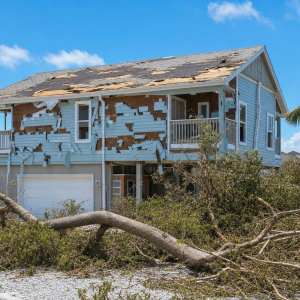
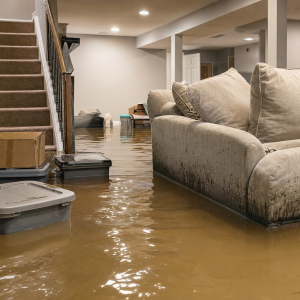
You already know the feeling. Buckets on the floor. Wet drywall. Shingles in the yard. A contractor tells you the damage is serious, then the insurance company sends an estimate that barely covers a patch job.
That’s not a misunderstanding. It’s the point where many claims turn adversarial.
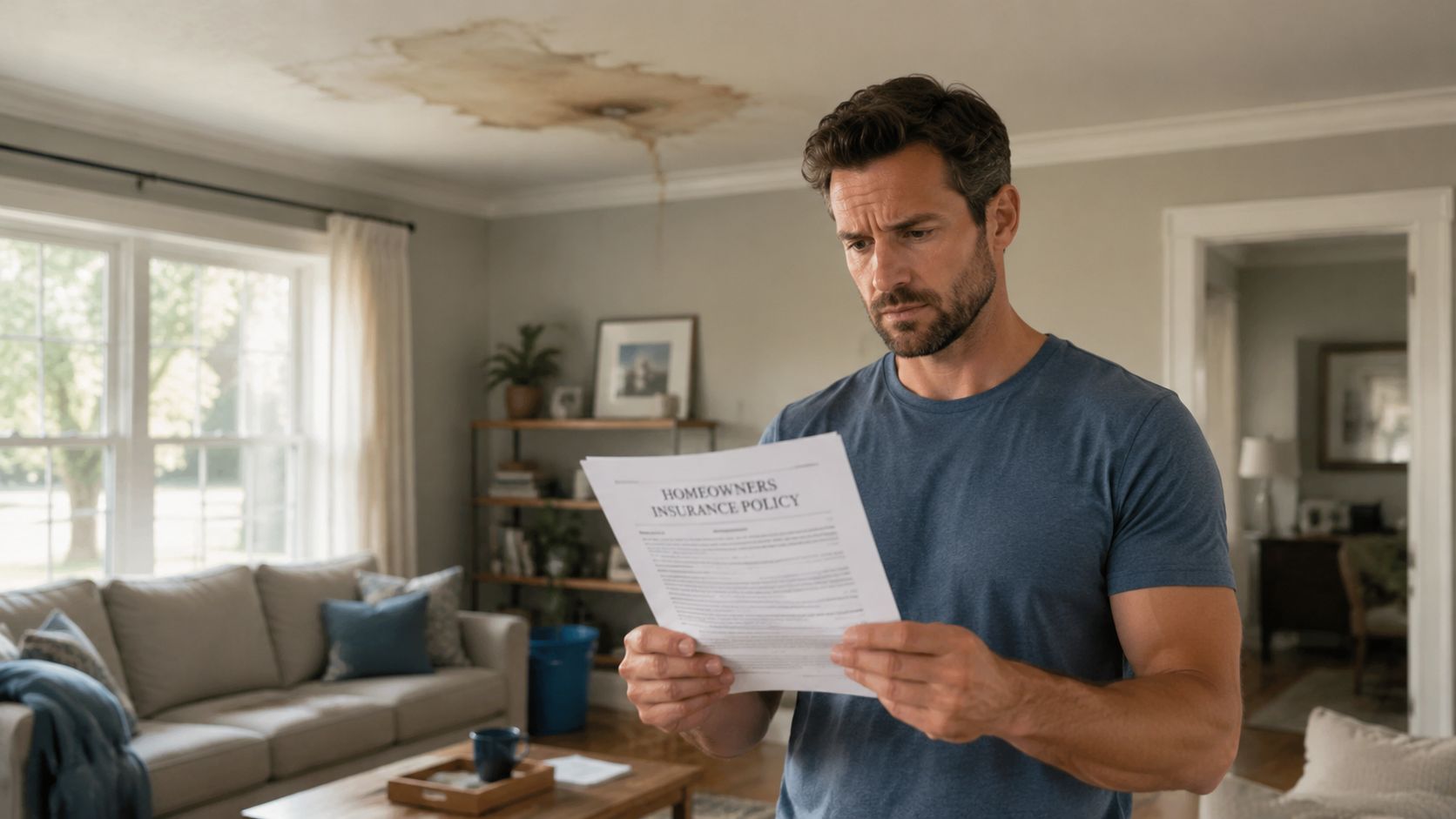
In North Carolina, this isn’t happening in a vacuum. Between 1980 and 2024, North Carolina experienced 121 billion-dollar disasters, and from 2018 through 2023, the average homeowner’s insurance rate in North Carolina surged by more than 36% according to BPR’s reporting on disaster risk and premiums. Homeowners are paying more and still finding themselves in a fight when the claim arrives.
Why this fight is getting harder
Carriers aren’t looking at your claim with the same mindset you have. You’re trying to get your house put back the way it should be. They’re measuring cost, scope, and coverage through their internal process.
That gap shows up fast after a storm. A roof may need full replacement to match the actual damage pattern, code issues, and repair feasibility, but the carrier may write for a repair. If you’re trying to understand the construction side of that dispute, this guide on repairing storm damaged roofs is a useful outside reference because it helps you compare what field repairs really involve against what an estimate says on paper.
You paid premiums for protection, not for a debate over obvious damage after a storm.
What the first estimate usually misses
The first number often ignores the full chain of damage. Not just shingles or siding, but underlayment, flashing, interior moisture migration, insulation, paint, detach-reset items, debris handling, and code-related work.
That’s why frustrated homeowners keep asking the same question. “How can my contractor say one thing and the adjuster say another?” The answer is simple. They’re not working from the same incentives.
Your insurance claim storm damage NC dispute won’t be won by being patient and polite alone. It gets won when you stop reacting to their estimate and start attacking it with better evidence.
The Insurer’s Playbook Exposing Low-Ball and Delay Tactics
Insurance companies know most policyholders are tired, busy, and under pressure to get repairs moving. They use that.
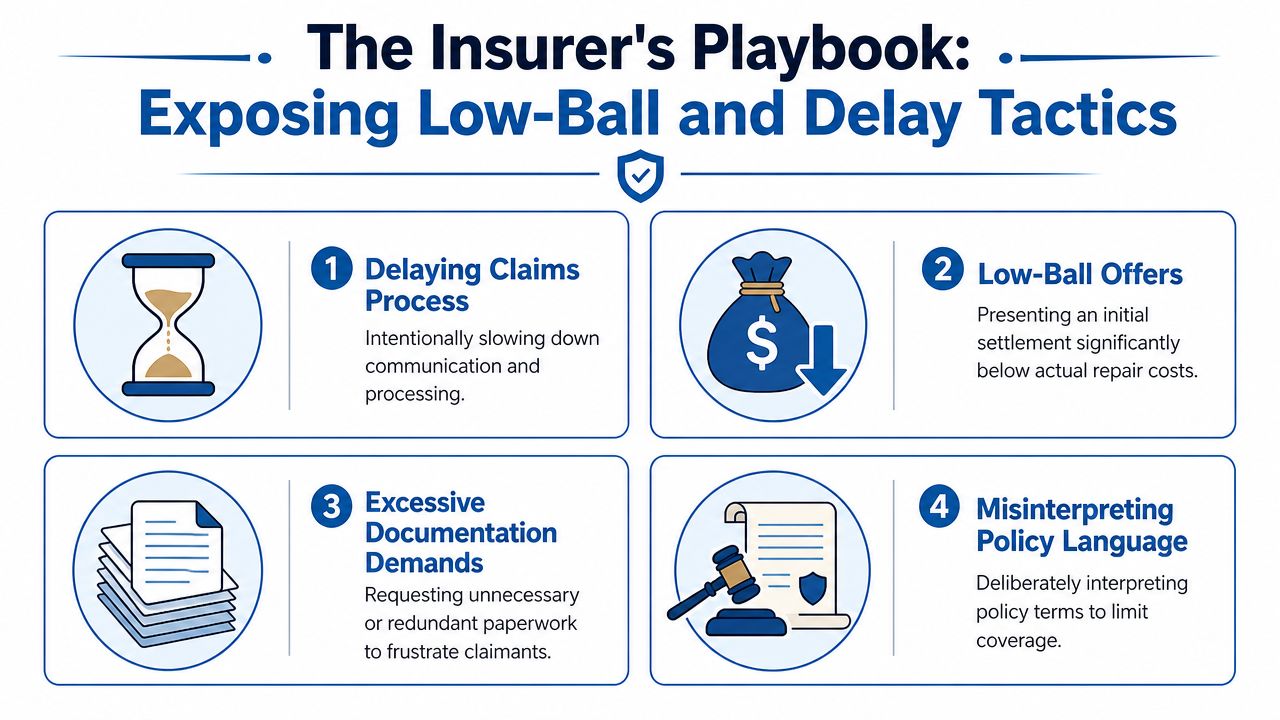
Insurance companies frequently deploy tactics such as delaying the claims process until policyholders give up and offering lowball settlement amounts that fail to cover the full scope of loss, as described by Higgins Berman Law Partners on common claim-avoidance tactics. If you feel like the process is wearing you down on purpose, you’re probably reading the situation correctly.
Delay is a strategy
Delay doesn’t always look dramatic. Sometimes it’s “we need one more document.” Sometimes it’s a reassignment to a new desk adjuster. Sometimes it’s silence after inspection, followed by a partial payment that dares you to accept it.
For homeowners, delay creates pressure from every side:
- Contractor pressure: Work can’t move cleanly when scope and funding are unresolved.
- Family pressure: Living around leaks, tarps, mold risk, or damaged ceilings wears people down fast.
- Financial pressure: Out-of-pocket emergency costs start stacking up.
A dragged-out claim helps the carrier if it makes you settle.
Low-ball estimates are built line by line
Most bad estimates don’t announce themselves as bad. They look official. They use estimating platforms, item codes, measurements, and pricing logic. That’s why homeowners overlook the problem. The total isn’t low by accident. It’s low because the scope is incomplete, the causation decision is narrow, or the pricing doesn’t reflect what the work really requires.
A standard storm claim process moves through notice of loss, inspection and adjustment, coverage determination, and then dispute options such as appraisal, mediation, or litigation, as outlined by National Storm Repair’s explanation of storm damage insurance claims. During adjustment, carriers often rely on tools like Xactimate and regional pricing databases. That in itself is not wrong. The problem starts when the human using the tool leaves out line items, misses hidden damage, or writes a scope that only works in software.
Practical rule: Don’t argue with the final dollar figure first. Attack the missing scope, bad measurements, wrong materials, and skipped repair steps that created it.
The pre-existing damage excuse
This is one of the oldest moves in the book. The carrier says the roof is old, the staining developed over time, the siding had prior issues, or the interior damage came from long-term seepage instead of a sudden storm event.
That argument lands because many homeowners don’t know how to separate old condition issues from new storm-related damage. The dispute is often physical and technical. Pattern of creasing, lift, impact marks, moisture path, and fresh openings matter. The gap in consumer guidance around this issue is discussed in Mag Mile Law’s article on handling a storm damage claim, including the problem of carriers framing damage as pre-existing and disputes over what the loss is really worth.
If the carrier uses that excuse, stop debating in generalities. Demand specifics. What exact damage are they calling old? What exact policy wording are they using? What evidence supports their conclusion?
Building Your Case How to Document and Prove Your Loss
You call in storm damage. The adjuster walks through fast, takes a few photos, and leaves. Two weeks later, the estimate shows a patch job where you need replacement, missing interior damage, and no money for the emergency work you already paid for.
That is the moment your claim stops being a report and becomes a case.
Build the file before the carrier builds the story for you
Insurance companies win disputed storm claims the same way over and over. They get their version into the file first, then force you to fight uphill. Fix that by building a record that is dated, visual, specific, and tied to the exact damage they ignored.
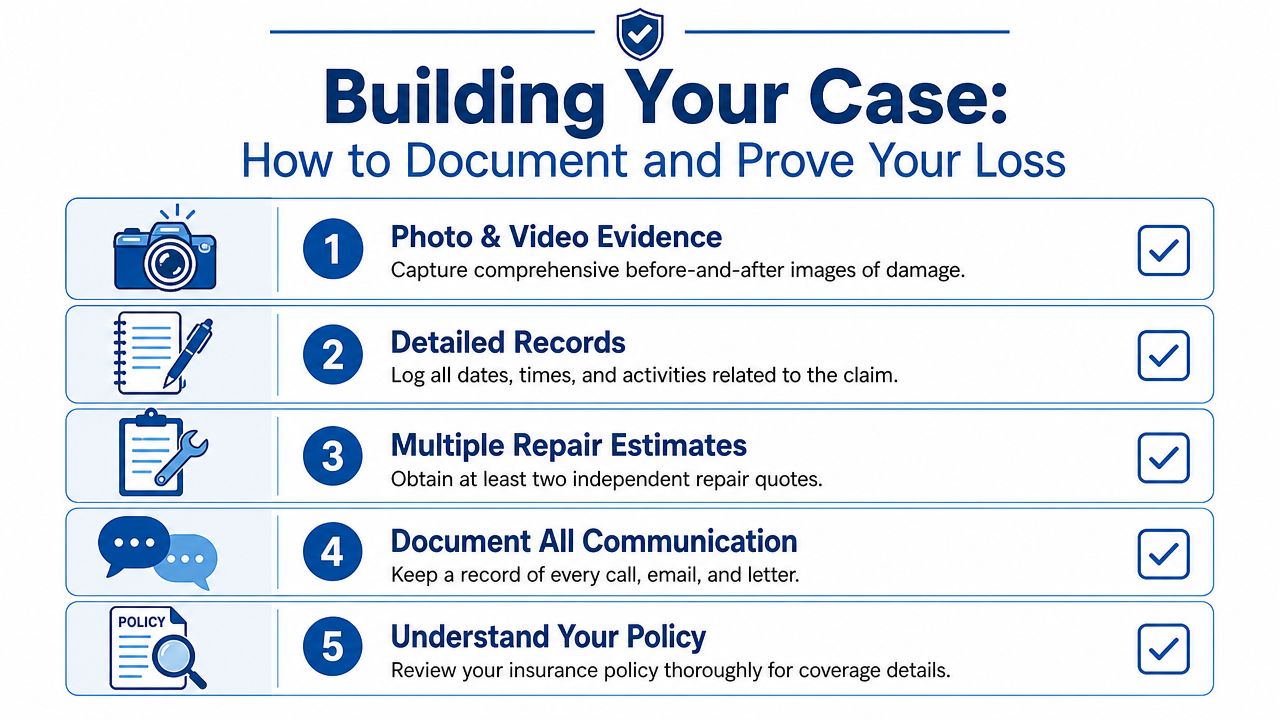
Start with photos, but do not stop there. Wide shots show location. Close-ups show the actual failure. Roof slopes, broken shingles, lifted tabs, dented metal, window damage, stained drywall, soaked insulation, flooring movement, damaged contents, and impact points all need their own images. Keep the originals. Metadata matters.
Video helps when photos miss context. Walk slowly. Say what room you are in, what part of the house you are showing, when you first saw the damage, and what happened after the storm. If water spread, say where it started and where it traveled.
Then lock down the emergency work. Save photos from before tarping, after tarping, before water extraction, and after dry-out. Keep invoices, receipts, moisture logs, and any mitigation reports. If the carrier later says your damages are exaggerated or unrelated, those records shut down a lot of nonsense fast.
One more point gets missed all the time. Save the damaged materials if you can do it safely. Broken siding pieces, cracked shingles, damaged vent caps, and fallen branches that caused impact damage can become evidence. If trees came down during the storm, document the tree, the strike point, and the sequence of damage before cleanup starts. This outside guide on removing storm-damaged trees safely covers the safety side while you preserve the proof.
This walkthrough gives a good visual primer on the claim side of storm losses:
What to collect so your dispute has teeth
A useful claim file does one job. It makes it hard for the insurer to say, “We did not see it,” or “You did not prove it.”
Collect and organize these items in one folder:
- A dispute letter listing each item the carrier underpaid, omitted, or wrongly denied.
- A room-by-room and elevation-by-elevation damage list matched to labeled photos.
- Independent estimates from contractors who wrote what the repair requires, line by line.
- Emergency mitigation records including invoices, receipts, photos, dry-out logs, and work authorizations.
- Relevant policy language for dwelling, other structures, personal property, ordinance and law, debris removal, or loss of use if those items are in dispute.
- A timeline showing the storm date, first notice of loss, inspections, payments, supplemental submissions, and every delay.
- Communication records including emails, letters, voicemail summaries, claim notes, and names of every adjuster or desk examiner involved.
Organization matters. Label your files by date and category. If your contractor estimate says the roof needs full replacement, your photo set should make that argument obvious. If interior water damage appeared in three rooms, your timeline should show when it was discovered, reported, and reinspected.
For a broader breakdown of how policyholders can organize evidence and challenge a weak carrier estimate, this guide on storm damage claim disputes is worth reviewing.
Build a rebuttal, not a rant
Anger is justified. It does not prove loss.
Your rebuttal package should read like something prepared for appraisal, litigation, or a regulator complaint. Clear headings. Numbered exhibits. Photos matched to estimate line items. Policy language tied to the exact part of the dispute. If the carrier says “repair,” your evidence should show why repair fails. If they left off code-required work, your documents should show where that requirement comes from and why the omitted step affects the full repair scope.
The carrier’s estimate is one opinion. Treat it that way. If your file is cleaner, better supported, and more specific, you put pressure back where it belongs, on the insurer to justify why it refused to pay what the damage requires.
The NFIP Flood Claim A Completely Different Fight
You report hurricane damage, open your claim, and assume one insurance process will cover all of it. Then the carrier splits the file, labels part of the loss as flood, and suddenly the rules change. That is where many homeowners lose money.
NFIP flood claims are not regular homeowners claims with extra paperwork. They are governed by federal rules, usually administered by a Write Your Own carrier, and the margin for error is small. If storm surge, rising water, overflow, or flood conditions caused the damage, you need to treat that portion of the loss as its own dispute from the start.
The insurer knows this. It also knows many policyholders do not.
Why flood claims get underpaid or denied
Flood claims break down because the carrier gets to hide behind procedure. A bad homeowners estimate can often be challenged and reworked. An NFIP mistake can kill payment altogether if you miss a filing requirement or sign off on the wrong numbers.
The biggest trap is the Proof of Loss. NFIP policies impose a strict deadline, often 60 days unless FEMA extends it after a declared disaster. Do not wait for the adjuster to finish, do not assume the carrier’s worksheet protects you, and do not miss the sworn filing while arguing over scope or price.
That is the playbook. Keep you waiting, keep you confused, then point to the calendar.
Treat the flood portion like a separate legal fight
Start by separating every item tied to flood from every item tied to wind or other causes. Mixed causation is where carriers save money. If you let them blur those lines, they will.
Your flood file should show exactly how high the water reached, what materials were wet, what had to be removed, and what systems were affected. Water lines matter. Drywall cuts matter. Insulation, flooring, cabinets, baseboards, contents, and mechanical equipment all need their own support. Vague photos and a contractor saying “flood damage throughout” will not carry this claim.
Then review the NFIP form itself. Standard homeowners assumptions will hurt you here. Coverage limits, exclusions, valuation rules, and documentation requirements are different, and the insurer will enforce those differences when it helps them.
What to do before the deadline closes on you
Use a tighter process than you would on a typical property claim:
- Separate flood-damaged items from wind-damaged items on your estimate and photo set.
- Photograph water lines, demolition, removed materials, and damaged contents before disposal.
- Match each damaged room or item to a dollar amount, not just a general complaint.
- Prepare and submit the sworn Proof of Loss on time, even if you dispute the carrier’s number.
- Keep copies of everything sent, including upload confirmations, emails, and mailing receipts.
If your loss involves rising water and you need a more targeted strategy, review this guide on disputing a flood insurance claim.
Flood claims reward precision and punish delay. Homeowners who treat the NFIP portion like an afterthought usually find out too late that the carrier was counting on exactly that.
When to Hire a Public Adjuster and Escalate Your Dispute
Some policyholders can push a small dispute on their own. Many can’t, and they shouldn’t pretend otherwise.
If the carrier is underpaying obvious repairs, blaming damage on age, slicing off major line items, or dragging the claim through repeated document requests, you’re already in escalation territory.
Know when you’re outmatched
A disputed claim usually stops being a simple homeowner task when one or more of these things happen:
| Situation | What it usually means |
|---|---|
| The estimate looks far below contractor pricing | The scope, pricing, or both are wrong |
| The carrier says damage is old or excluded | You need technical counter-evidence |
| Payment arrived but major repairs remain unfunded | You’re dealing with a low-ball partial acceptance |
| The desk adjuster keeps changing | Delay and loss of continuity are hurting you |
| Business property is involved | Scope, contents, and interruption issues get more complex |
For business owner claims, disputes can also arise when insurers rely on policy exclusions or argue the loss wasn’t covered under the specific peril language, as discussed by Zazueta Law in its overview of business insurance disputes. And when a commercial claim stalls, Stewart Karlin’s discussion of mediation and arbitration in business insurance disputes is a reminder that neutral dispute processes may become part of the path forward.
Your escalation options
You have rights when the claim is denied or disputed. You can request a written explanation detailing the specific policy language used for denial, and you can challenge the decision by obtaining independent damage assessments or hiring a licensed public adjuster, as explained by Merlin Law Group’s coverage dispute guidance.
That matters because many policyholders argue with conclusions instead of demanding the policy basis behind them.
A disciplined escalation path looks like this:
- Request the written basis: Ask for the exact policy language supporting the denial, limitation, or partial payment.
- Get an independent assessment: Have someone document the full damage picture without the carrier’s financial conflict.
- Challenge scope before arguing dollars: A bad scope guarantees a bad payment.
- Use dispute mechanisms if needed: Appraisal may help when the fight is about amount of loss rather than whether coverage exists.
If the company adjuster works for the insurer, stop expecting that person to build the strongest case for your side.
Independent help changes the leverage
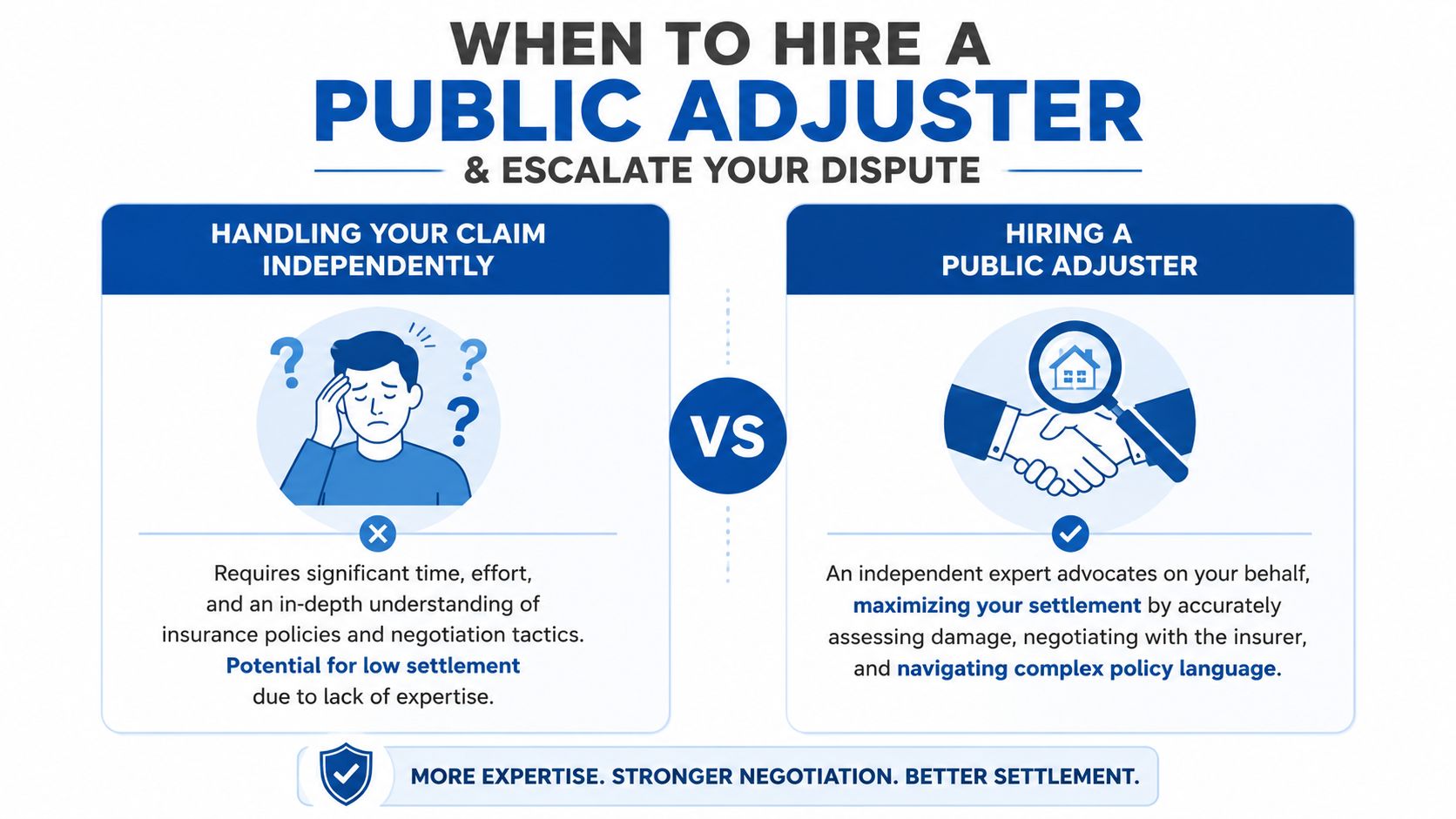
A licensed public adjuster works for the policyholder, not the carrier. That changes the claim dynamic because the file gets rebuilt from your side. Inspection. Scope writing. estimate review. policy analysis. negotiation. All of it.
If you’re comparing roles, this internal explainer on what a public adjuster does lays out the distinction clearly.
One option in North Carolina and Virginia is For The Public Adjusters, Inc., an independent public adjusting firm that represents homeowners and business owners in documenting and negotiating property damage claims. That kind of representation is useful when the dispute is no longer about reporting damage, but about proving value, causation, and coverage.
No honest adjuster should promise magic. But independent representation often shifts the power dynamic because the insurer is no longer dealing with a tired policyholder making verbal objections. They’re dealing with a documented, itemized challenge backed by someone who knows how claim files are built and where carriers cut them down.
Get Expert Claim Help to Secure Your Recovery
A storm claim dispute drains people. It eats time, cash flow, patience, and attention you should be spending on repairs and your family or business.
Don’t accept the first weak number just because you’re exhausted.
Your insurance claim storm damage NC case gets stronger when you stop arguing emotionally and start forcing the issue with documentation, independent assessment, and written challenges tied to policy language. That’s how low-ball offers get exposed. That’s how bad denials get pushed back.
Homeowners and business owners in North Carolina and Virginia deal with this every season. Some fight alone. Some bring in help once they realize the carrier’s process is built to protect the carrier.
A client put it plainly: the insurance company talked like the file was nearly closed, but the property was nowhere near fully accounted for. After the claim was re-documented and disputed properly, the negotiation changed because the missing damage was finally on paper.
Have your water damage claim questions answered at NO COST. Call 919-400-6440 to speak with a licensed Public Insurance Adjuster or Contact Us here with questions. WE Work For YOU… NOT Your Insurance Company!
Q2: How can I tell if the roof damage on my home was caused by hail versus normal wear and tear?
A: Hail damage is characterized by randomly scattered dents or strikes that chip the shingle granules or leave soft spots. Normal wear is typically uniform across the entire roof slope. An independent inspection by a Public Adjuster or licensed contractor will provide definitive proof.
Q3: How much time do I have to file an insurance claim after a major wind or hurricane event?
A: While most policies require you to report the claim promptly, the deadline for filing the final claim documentation (like the Proof of Loss) can vary by state, often ranging from 1 to 3 years after the storm date. Consult your policy or a Public Adjuster for the specific timeline.
Q4: What is "matching" coverage, and how can I fight my insurer if they refuse to replace all my siding?
A: Matching coverage requires the insurer to replace undamaged sections of materials (like siding or shingles) if the damaged sections cannot be perfectly matched, often due to color fading or discontinuation. You fight this by citing the "Reasonable Repair" section of your policy.
Q5: How does a Public Adjuster prove the full scope of wind damage when the insurer only wants to pay for minor repairs?
A: A Public Adjuster brings in independent structural engineers and roofing consultants to conduct invasive inspections and use drone technology to document all damage, submitting a full scope of loss that the insurer's low estimate cannot logically dispute.
Q6: My insurance company is only offering Actual Cash Value (ACV). How do I get the full Replacement Cost Value (RCV)?
A: Your policy likely pays ACV upfront. To get the remaining RCV (depreciation amount), you must complete the repairs and submit receipts showing the actual cost to rebuild or replace the property. A Public Adjuster helps manage this RCV recovery process.
Q7: What should I do if my hurricane damage claim is denied because the insurer claims it was flood damage?
A: This is a complex "Wind vs. Water" dispute. You need a Public Adjuster and a forensic engineer to prove the damage (e.g., roof tear-off) occurred due to wind before the floodwaters arrived, ensuring your standard homeowner's policy pays the wind portion.
Q8: Can the insurance company deny my entire roof claim if they find evidence of previous, unrepaired damage?
A: They can try to limit payment, but a Public Adjuster counters this by arguing the current storm caused new, separate damage, or that the new damage was compounded by the old, forcing the insurer to pay the costs associated with the most recent covered event.
Q9: How does a Public Adjuster stop the insurer from delaying my storm damage claim for months?
A: A Public Adjuster immediately takes control of all communications, establishes an aggressive timeline, and leverages state regulations (like the Fair Claims Settlement Practices Act) to hold the insurer accountable to processing deadlines.
Q10: Can I get money for living expenses (ALE) if my home is uninhabitable after a major storm?
A: Yes, if the storm damage is from a covered peril and forces you out, your policy's Additional Living Expense (ALE) coverage will pay for reasonable and necessary extra costs like temporary housing and increased food expenses while your home is under repair.
If you’re done arguing with the carrier and want a serious review of your disputed property loss, For The Public Adjusters, Inc. helps homeowners and business owners in North Carolina and Virginia assess damage, interpret policy language, and push back on delayed, denied, and underpaid claims.