Why Was My Hurricane Claim Denied as Storm Surge?
A hurricane claim denied as “storm surge” happens because most standard homeowners policies cover wind damage but exclude flood damage — and insurers classify storm surge as flooding. When wind and water hit your home together, the carrier may attribute most or all of the destruction to the excluded flood peril, allowing it to pay little or nothing.
Key takeaways
- In Broussard v. State Farm, a federal court held that once a policyholder proves a total loss under an all-risk policy, the insurer must prove how much damage came from excluded flood versus covered wind.
- A ‘slab case’ does not automatically mean a denied claim — the absence of evidence about what destroyed the home can work against the insurer, not the homeowner.
- NC coastal homeowners whose carrier labels every dollar of hurricane damage as ‘storm surge’ can challenge that allocation and demand proof, not assumptions.
- Independent evidence like weather data, wind timelines, engineering reports, and neighbor damage patterns can rebut an insurer’s blanket flood-exclusion position.
- A hurricane claim denied on causation grounds is often a starting point for negotiation or litigation, not the final word on coverage.
If you’ve received this kind of denial letter, you’re not alone, and you’re not out of options. The wind-versus-water dispute is one of the oldest fights in property insurance, and homeowners have successfully challenged these denials for decades. Understanding why carriers lean on the storm surge label is the first step to pushing back.
Why Insurers Prefer the “Storm Surge” Label
The financial incentive is straightforward. Wind damage falls under your homeowners policy, which means the insurer pays. Flood damage falls under a separate flood policy — often through the National Flood Insurance Program — which means someone else pays, or if you don’t carry flood coverage, nobody pays. Common patterns in these denials include:
- Blanket flood attribution: The adjuster attributes all damage to rising water, even when wind clearly struck first or independently.
- Desk-based conclusions: Decisions made from photos or brief site visits rather than a genuine engineering analysis of how the damage occurred.
- Anti-concurrent causation language: Policy clauses invoked to deny the entire claim if flooding contributed at all, even where wind damage is provable and separable.
Why This Matters Most During Tropical-Storm Season
During an active hurricane season, carriers face thousands of claims at once, and overwhelmed adjusters may default to quick categorizations rather than careful causation analysis. For North Carolina homeowners — from the coast to inland communities that see wind-driven damage from remnant storms — that rush can mean a legitimate wind claim gets swept into the flood-exclusion pile. Homeowners working with a public adjuster in NC and across the state frequently discover that the initial denial simply didn’t reflect what actually destroyed their property.
The Reassuring Truth: A Denial Is Not the Final Word
A denial letter is the insurer’s opening position, not a court ruling. You have the right to dispute the causation determination, submit your own evidence, hire independent experts, and demand a re-inspection. In many wind-versus-water disputes, the burden of proving what the policy excludes actually falls on the insurance company — a point we’ll cover in the next section. Property owners in smaller communities have the same rights as anyone else; a public adjuster serving coastal NC can evaluate a storm surge denial just as thoroughly as one handling a coastal loss.
The bottom line: if wind played a role in destroying your home, the evidence often exists to prove it — you just have to know how to gather and present it.
Who Has to Prove Whether Wind or Flood Destroyed My Home?
Under an all-risk homeowners policy, you only need to show that your home suffered a loss during the storm. Once you do that, the burden shifts to the insurance company: it must prove what portion of the damage was caused by an excluded peril, such as flood or storm surge. If the insurer can’t separate the two, that failure works against them — not you.
This is one of the most misunderstood parts of hurricane litigation, and insurers count on that confusion. When a hurricane claim denied letter arrives blaming everything on storm surge, many homeowners assume they have to somehow reconstruct exactly what the wind did versus what the water did. In most cases involving all-risk (also called open-peril) policies, that’s backwards.
How the Burden of Proof Actually Works
Think of it as a two-step process:
- Step 1 — Your job: Show that a direct physical loss occurred to covered property during the policy period. Photos, the timing of the storm, and the obvious condition of your home usually satisfy this. You don’t have to prove wind caused every board to break.
- Step 2 — The insurer’s job: Prove, with actual evidence, that an exclusion applies — and how much of the damage falls under it. A vague statement that “storm surge was present in the area” is an opinion, not proof.
Courts applying this framework have repeatedly held that when a home is destroyed by a combination of wind and water, the insurer bears the burden of allocating the damage to the excluded cause. If both forces were at work and the carrier can’t credibly quantify the flood portion, the policyholder is often entitled to recover.
Why Insurers Still Deny Anyway
Even though the law places this burden on the carrier, denial letters routinely read as if the homeowner must disprove flooding. Adjusters may point to high-water marks, neighborhood surge maps, or the absence of debris and conclude “water did it all.” That’s frequently an assumption dressed up as an engineering conclusion — and it’s exactly the kind of reasoning a licensed public adjuster NC or on the coast is trained to challenge with independent evidence like weather data, wind-speed records, and damage-pattern analysis.
What This Means for You Practically
Don’t accept a denial that treats the burden of proof as yours. Instead:
- Request the insurer’s engineering report and the specific evidence supporting its wind/water allocation.
- Preserve your own evidence — photos, videos, witness accounts of wind damage before water arrived.
- Ask, in writing, how the carrier calculated the percentage of damage it attributed to flood.
Homeowners well inland aren’t immune to these disputes either — carriers raise water-versus-wind arguments after hurricanes push heavy rain and wind far from the coast, which is why in land communities see the same allocation fights after major storms. Knowing the burden sits with the insurer changes the entire negotiation.
How Did One Couple Beat State Farm When Their Home Was Reduced to a Slab?
In Broussard v. State Farm, a Mississippi couple whose home was wiped to its foundation by Hurricane Katrina sued after State Farm blamed everything on storm surge. The federal court ruled that the insurer — not the homeowners — had to prove how much damage was caused by excluded flooding, and the couple won at trial.
A Home Gone, a Claim Denied
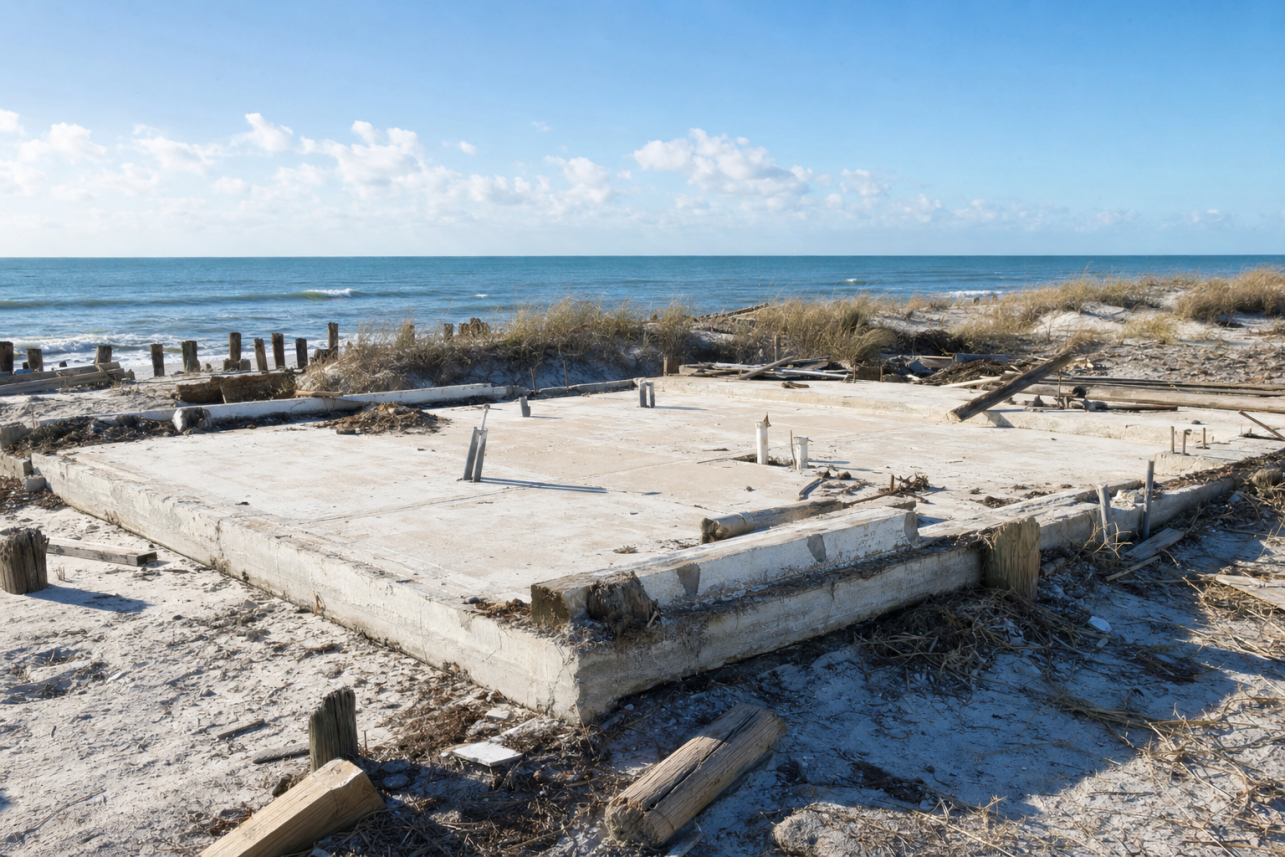
When Hurricane Katrina roared ashore in August 2005, Norman and Genevieve Broussard’s Biloxi, Mississippi home was destroyed so completely that nothing remained but a concrete slab. Like thousands of Gulf Coast homeowners, they filed a claim under their State Farm homeowners policy. State Farm denied it, taking the position that storm surge — a form of flooding excluded under the policy — had caused all of the destruction, and that the couple was therefore owed nothing for the loss of their home.
The problem with that argument was obvious to anyone who lived through the storm: hours of hurricane-force winds battered the coast before the surge arrived. With the house reduced to a slab, there was no physical evidence left to show exactly what the wind destroyed before the water ever touched it. State Farm essentially argued that this uncertainty should count against the homeowners. Anyone who has had a hurricane claim denied on similar reasoning will recognize the tactic.
The Court Flips the Script
The federal trial court disagreed with State Farm’s approach. Key points from the ruling include:
- The burden fell on the insurer. Because flood was an exclusion State Farm was invoking, State Farm had to prove what portion of the damage was actually caused by storm surge rather than covered wind.
- Uncertainty hurt the insurer, not the homeowners. Where the evidence could not separate wind damage from water damage, the insurer could not simply attribute everything to the excluded peril.
- The homeowners prevailed at trial. The court found State Farm had not carried its burden, the Broussards recovered their policy benefits, and the jury went further by awarding punitive damages for the way the claim was handled — an award the judge later reduced, but a striking rebuke nonetheless.
Why This Story Still Matters
The Broussard case became a touchstone in post-Katrina litigation because it exposed how insurers had been using the wind-versus-water dispute to shift their own proof problems onto policyholders. Claims professionals across the country — including any experienced public adjuster licensed in NC — still point to it as a reminder that a total-loss “slab case” is not automatically an uncovered flood case.
The lesson for homeowners is simple: a denial letter is an insurer’s opening position, not the final word. Policyholders who push back with documentation, expert analysis, and knowledgeable representation — whether that means an attorney or a public adjuster in Wilmington or elsewhere in North Carolina — can and do overturn storm surge denials, even when the physical evidence is nearly gone.

What Does This Court Victory Mean for NC Coastal Homeowners?
It means that when a North Carolina homeowner has a hurricane claim denied as “storm surge,” the insurer cannot simply declare flooding the cause and walk away. If the homeowner shows a covered peril like wind was at work, the burden shifts to the insurer to prove how much damage its exclusion actually caused.
The Broussard principle isn’t binding law in every jurisdiction, but the reasoning behind it — that an insurer invoking an exclusion must back it up with evidence, not assumptions — reflects how burden-shifting generally works in property insurance disputes. For homeowners on the Outer Banks, in Wilmington, or anywhere across the coastal plain, that matters. Hurricanes in North Carolina almost always deliver hours of destructive wind before surge or river flooding arrives, which means wind damage frequently occurs first, even in properties that ultimately flood.
Evidence That Supports Wind Causation in NC
Because these disputes turn on facts, the homeowners who fight blanket surge denials successfully are usually the ones who build a record. Useful evidence includes:
- Weather data and wind field records — National Weather Service and National Hurricane Center reports showing peak wind speeds at your location and when they occurred relative to peak surge.
- Timelines — witness accounts, texts, photos with timestamps, or security footage showing the roof failed or windows blew out before water arrived.
- Debris patterns — shingles, structural members, or personal property scattered downwind rather than deposited by receding water can indicate wind as the driving force.
- Neighboring properties — comparable homes at higher elevations that suffered wind damage but never flooded help isolate what wind alone did.
- Engineering analysis — a qualified engineer can often distinguish wind-caused structural failure from hydrodynamic water damage.
Honest Caveats You Should Know
No court decision guarantees an outcome in your claim. Every loss is fact-specific: your policy language, your home’s elevation, the storm’s track, and the physical evidence all shape the result. Some homes genuinely are destroyed primarily by surge, and a strong wind argument requires real proof, not just frustration with the denial. What the case law does give you is leverage — a basis to demand that the insurer justify its causation conclusion instead of accepting it at face value. Homeowners inland of the coast face similar fights over wind versus flooding after hurricanes push rain-swollen rivers over their banks, which is why a public adjuster in Benson NC or other coastal-plain communities sees these disputes regularly, not just at the beach.
The practical takeaway: a surge denial is the insurer’s opening position, not the final word. Whether you’re on a barrier island or working with a public adjuster in Kenly NC after river flooding, documented evidence of wind causation can change the conversation entirely.
What Should I Do If My Insurer Blames Everything on Flooding?
Immediately request the denial letter and any engineer or adjuster reports in writing, then preserve all evidence of wind damage — photos, debris, and damaged materials. Gather local wind data and neighbor accounts, refuse to sign quick release forms, and note North Carolina’s deadlines for filing suit. Documentation is what turns a flood denial into a paid wind claim.
Step 1: Get Everything in Writing
Ask your insurer for a written explanation of the denial that cites the specific policy language relied upon, plus complete copies of any engineering reports, adjuster field notes, and photographs used to reach that conclusion. You are entitled to know exactly why your hurricane claim was denied, and these documents often reveal weak or one-sided investigations that never seriously considered wind as a cause.
Step 2: Preserve and Document the Evidence
- Photograph everything — roof damage, broken windows, missing shingles, displaced debris, and water lines inside the home.
- Keep damaged materials where safely possible; don’t let contractors haul away roofing, siding, or framing until it’s documented.
- Note the direction of damage — wind damage patterns often differ visibly from rising-water damage.
- Save receipts for temporary repairs, tarping, and additional living expenses.
Step 3: Build Your Own Wind Case
Collect publicly available weather data showing wind speeds in your area during the storm, and get written statements from neighbors or witnesses who saw wind damage occur before any water arrived. Timeline evidence — when the roof came off versus when the surge came in — can be the difference between a denial and a full recovery. An experienced public adjuster can also commission an independent engineering inspection to counter the insurer’s report.
Step 4: Don’t Sign Anything Quickly
After a hurricane claim denied as storm surge, some insurers offer a small “goodwill” payment in exchange for a signed release. Signing can permanently waive your right to pursue the wind portion of your loss. Have any release, proof of loss, or settlement document reviewed before you sign it.
Step 5: Know Your North Carolina Deadlines
Your policy contains a contractual deadline for filing suit against your insurer, and North Carolina law sets its own limitations periods — these clocks keep running even while you negotiate. Check your policy’s “suit against us” provision now, calendar the date, and act well before it arrives. A licensed licensed public adjuster or an attorney can confirm which deadlines apply to your specific policy so you don’t lose your leverage by waiting.
The common thread in every step is the same: a flood denial is the insurer’s opinion, not the final word. Homeowners who document aggressively and push back in writing routinely recover money the first denial letter said they’d never see.
How Can a Public Adjuster Help With a Hurricane Claim Denied as Storm Surge?
A licensed, bonded public adjuster works for you — not the insurance company. In a wind-versus-flood dispute, a public adjuster independently documents your damage, analyzes your policy language, builds evidence that wind caused covered losses, and negotiates directly with the carrier to pursue the settlement your policy allows.
When your hurricane claim is denied as storm surge, the insurer’s conclusion is usually based on its own adjuster’s inspection and its own interests. A public adjuster levels that playing field by bringing a trained, independent set of eyes to your loss — someone whose only job is representing the policyholder.
What a Public Adjuster Actually Does in a Wind-vs-Flood Dispute
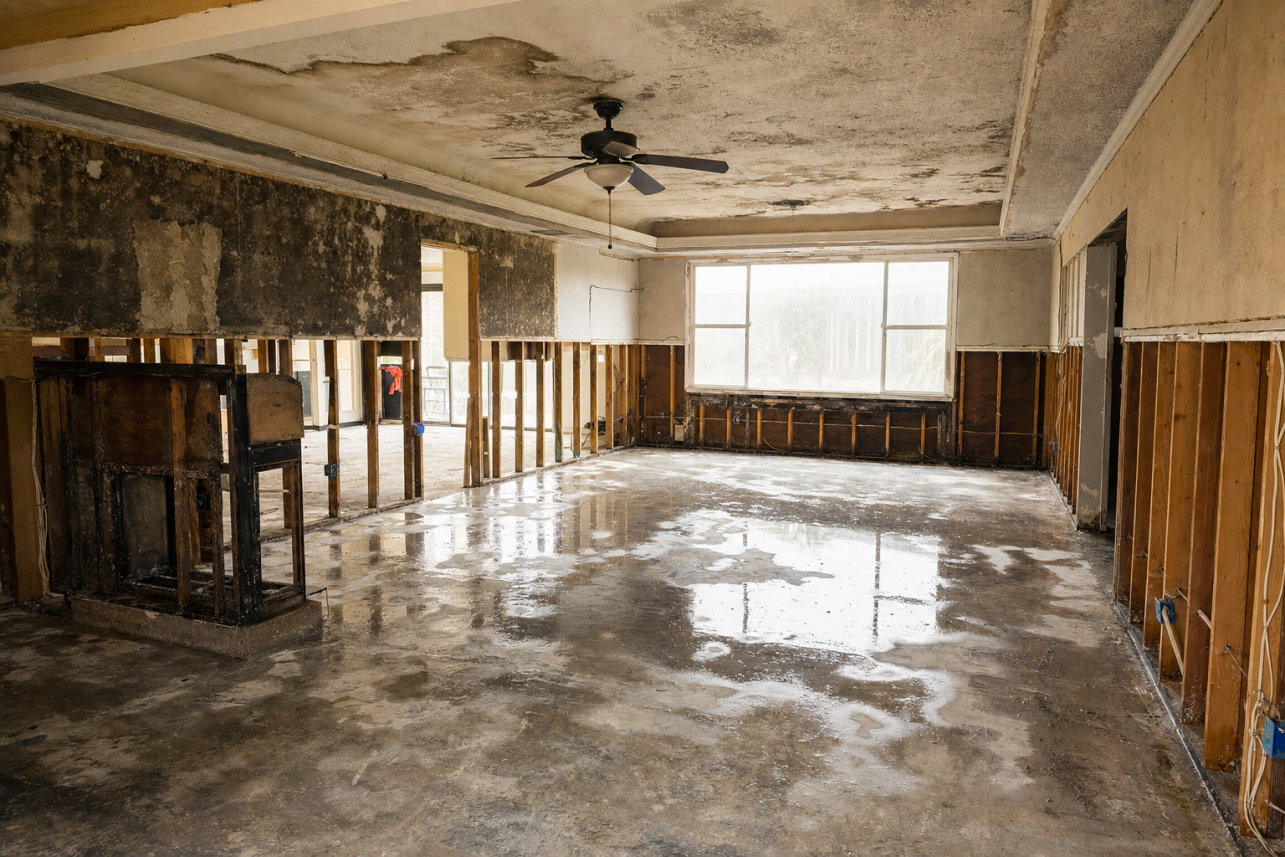
- Independent damage documentation: Photographing, measuring, and cataloging damage patterns that point to wind — such as roof and siding loss, broken windows, and debris impact — before evidence deteriorates or repairs erase it.
- Policy analysis: Reading your homeowners policy line by line to identify covered perils, anti-concurrent causation language, and coverage the carrier may have overlooked or misapplied.
- Claim preparation: Building a complete, itemized estimate of your loss rather than relying on the insurer’s numbers.
- Negotiation: Handling communication with the carrier, responding to its engineers’ reports, and pushing back on blanket “flood damage” conclusions with documented evidence.
Keep in mind that flood damage itself is typically covered only through a separate flood policy, such as one backed by the National Flood Insurance Program (NFIP). A public adjuster can help you sort out which damage belongs on which claim so nothing falls through the cracks between your homeowners and flood policies.
Why Acting Now Matters
We are in the heart of hurricane season, and timing works against homeowners who wait. Evidence of wind damage fades as tarps go up, debris is hauled off, and weather takes its toll. Policies also contain deadlines for disputing decisions and filing supplemental claims. Getting an independent professional involved early — whether you work with a public adjuster in Four Oaks NC or elsewhere in the state — preserves your strongest documentation while the facts are still fresh.
It also helps to know your rights as a policyholder. The North Carolina Department of Insurance licenses public adjusters in the state, so you can verify credentials before hiring anyone. If you’re inland and were hit by wind-driven rain or storm remnants rather than coastal surge, the same principles apply — a public adjuster serving Moncure NC and surrounding communities can evaluate whether your denial holds up against the actual evidence.
No one can promise a specific outcome on any claim. What a public adjuster can do is make sure your side of the story is fully documented, professionally presented, and impossible for the carrier to ignore.
Hurricane Claim Denied as Storm Surge vs. Wind: How the Burden of Proof Can Shift
| Issue | Insurer’s Typical Position | Policyholder’s Counter Under Broussard-Style Reasoning |
|---|---|---|
| Cause of total loss | Everything was destroyed by storm surge, which is excluded flood damage | Wind arrived first and could have caused or contributed to the destruction; insurer must prove the flood portion |
| Burden of proof | Homeowner must show exactly what wind did before the water arrived | Once a total loss under an all-risk policy is shown, the insurer bears the burden of proving excluded flood damage |
| Evidence used | Flood zone maps and surge modeling applied broadly to the whole neighborhood | Site-specific wind data, timelines, engineering analysis, debris patterns, and eyewitness accounts |
| Outcome of uncertainty | Ambiguity resolved against the homeowner — claim denied or minimized | Ambiguity can be resolved against the insurer that failed to carry its burden on the exclusion |
Illustrative Example: Challenging a Blanket ‘Storm Surge’ Denial
Illustrative example
Consider a hypothetical couple on the North Carolina coast whose home is reduced to its foundation after a major hurricane, and whose carrier denies the claim by attributing all damage to excluded storm surge. Their attorney gathers weather station data showing hurricane-force winds struck hours before the water rose, plus photos of wind-shredded structures on higher ground nearby.
Citing the reasoning in Broussard, counsel argues that because the homeowners proved a total loss under an all-risk policy, the insurer must prove what portion was flood — and it cannot. Faced with that burden and the supporting evidence, the carrier substantially revises its position and the claim is resolved favorably. This composite scenario is illustrative only, but it reflects how the wind-versus-water burden of proof can change the outcome of a denied hurricane claim.
Frequently asked questions
What should I do first if my hurricane claim denied letter blames storm surge?
Request the denial in writing along with the adjuster’s full report, photos, and any engineering analysis the insurer relied on. Then preserve your own evidence: photos, videos, weather data, and witness accounts of when wind hit versus when water rose. Don’t repair or discard damaged materials until they’re documented. A written denial locks the insurer into its reasoning, which matters if you later challenge how it split wind from flood damage.
How much does it cost to hire a lawyer to fight a denied hurricane claim?
Most policyholder attorneys handle hurricane claim disputes on contingency, typically taking a percentage of what they recover, so you usually pay nothing upfront. Percentages vary by firm and by whether the case settles or goes to trial, so ask before signing. Many offer free initial case reviews. Compare that cost against what the insurer is refusing to pay — on a total-loss home, the difference can be substantial.
How long does it take to fight an insurance company over wind versus water damage?
It varies widely. Some disputes resolve in weeks or months through a supplemental claim, appraisal, or negotiation once you present contrary evidence. Cases that require a lawsuit can take a year or longer, especially if expert witnesses and engineering analysis are involved. After major hurricanes, court backlogs can stretch timelines further. Acting quickly on deadlines and gathering evidence early generally shortens the process.
Can my insurer deny my whole claim just because I don’t have flood insurance?
No. Lacking flood insurance means flood damage isn’t covered, but wind damage under your homeowners policy still is. When a hurricane causes both, the insurer must fairly separate covered wind damage from excluded water damage — it can’t simply label everything ‘storm surge’ and pay nothing. If your carrier attributes every dollar to flooding without solid evidence, that allocation can be challenged, as the Broussard case illustrates.
What evidence do I need to prove wind destroyed my house before the storm surge arrived?
Useful evidence includes timestamped photos or videos, neighbors’ accounts, damage patterns on surviving structures nearby, weather service data showing wind speeds and surge timing at your location, and reports from meteorologists or structural engineers. Debris location can also matter — wind and water scatter materials differently. Even in a ‘slab case’ where the house is gone, experts can often reconstruct the sequence of destruction from this kind of data.
Who has to prove what when a hurricane destroys a home under an all-risk policy?
Under the reasoning in Broussard, once the homeowner proves a total loss occurred during the storm under an all-risk policy, the burden shifts to the insurer to prove how much of the damage falls under an exclusion like flood. In other words, the carrier can’t just assert ‘it was all storm surge’ — it has to back that allocation with evidence. Courts apply burden rules differently by state, so confirm how yours handles it.
Should I hire a public adjuster or a lawyer after a hurricane claim denial?
It depends on where things stand. A public adjuster is often useful when the dispute is about the amount of damage and the claim is still open. Once the insurer has formally denied coverage or attributed everything to an excluded cause like storm surge, an attorney is usually the better fit, since the fight is now about coverage law and burden of proof, not just repair estimates. Some homeowners use both.
What are the biggest mistakes homeowners make after a storm surge denial?
Common mistakes include accepting the insurer’s wind/water split without question, missing policy or legal deadlines for disputing the decision, throwing away damaged materials before documenting them, giving recorded statements without preparation, and cashing a check marked as full settlement without understanding the consequences. Another is assuming a denial is final — denials are the start of a dispute process, not the end of it.
Does the Broussard burden-shifting rule apply to hurricane claims in North Carolina?
Broussard was a Mississippi federal case, so it doesn’t automatically control North Carolina courts. However, its core principle — that insurers must prove how much damage an exclusion actually covers rather than assuming it — reflects reasoning policyholder attorneys use in other coastal states. How NC courts allocate the burden in mixed wind-and-water cases is a legal question worth asking a North Carolina insurance attorney about your specific facts.
Is it worth fighting my insurance company if my house was reduced to a slab?
Often, yes — slab cases can actually favor homeowners in one respect. Because nothing remains, the insurer has a harder time proving exactly how much destruction came from excluded flooding versus covered wind, and courts like the one in Broussard have made carriers carry that burden. With a total loss, the amount at stake is typically the full policy limit, so the potential recovery frequently justifies the effort of a dispute.
Homeowners Claim help near you
Related local pages
If your carrier is blaming every dollar of hurricane damage on storm surge, don’t accept that as the final word. Our licensed and bonded NC public adjusters review denials, document wind damage, and advocate for the settlement your policy actually promises. Call today for a free claim review. Get in touch.
Last updated: August 22, 2026