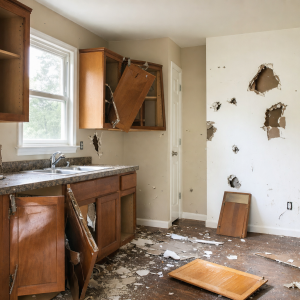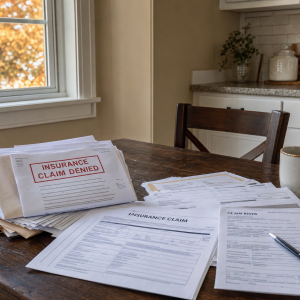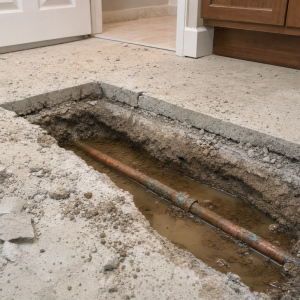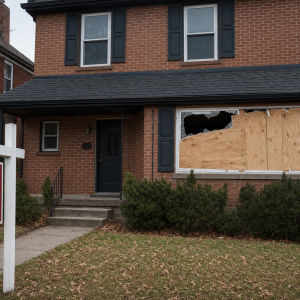

You dried the place out, ripped out what had to go, and waited for the flood carrier to do the right thing. Then the estimate arrived, or the denial letter did, and now you're staring at a number that doesn't come close to what it will take to repair the house or reopen the business.
That reaction you're having is justified. In flood claims, anger is often the first clear sign that something is wrong with the adjustment. An insurance claim flood dispute under the NFIP or a Write Your Own carrier isn't a normal homeowner claim disagreement. It's a technical fight, governed by strict rules, tight paperwork, and adjusters who often frame the loss far narrower than the damage you suffered.
Table of Contents
- Your Flood Insurance Claim Was Denied or Low-Balled Now What
- Understanding the NFIP Playbook and Its Flaws
- Strategic Documentation to Counter a Lowball Estimate
- Dissecting the Denial and Launching Your Formal Appeal
- The Public Adjuster Advantage in a Flood Claim Fight
- Get Expert Help to Secure Your Flood Claim Settlement
Your Flood Insurance Claim Was Denied or Low-Balled Now What
The first thing to understand is this. A bad flood offer is not rare. It's part of a system where payment often falls far short of actual loss.

From 2010 to 2023, direct property damage from flooding in the United States totaled nearly $144 billion, while NFIP insurance payments covered about $50 billion, or 35% according to the New York Fed flood risk analysis. That gap tells you something important. Flood losses are routinely undercompensated, and a claim dispute is often part of the process, not some unusual exception.
If your estimate feels insultingly low, trust that instinct and start treating the claim like a contested file. Don't treat the carrier's first number like a neutral assessment. Treat it like an opening position.
What a low-ball flood adjustment usually looks like
A flood underpayment usually shows up in familiar ways:
- Scope gets cut down: The estimate pays for obvious wet materials but ignores hidden damage, detached structures, built-ins, or cleanup items that were necessary because of floodwater.
- Measurements come in short: Room dimensions, cabinet counts, flooring quantities, and trim lengths often don't reflect the actual building.
- Item quality gets downgraded: The carrier prices for cheaper replacements than what was there.
- Damage gets compartmentalized: They isolate one area and ignore how water moved through the structure.
Practical rule: If the number won't return the property to the condition covered under the policy, don't argue emotionally with the adjuster. Build evidence and challenge the scope line by line.
Many people find themselves at a disadvantage. They call, vent, and wait. That won't move a flood file. Documentation moves it. Deadlines move it. A structured dispute moves it.
Your next move needs to be deliberate
Start by pulling together every piece of claim paperwork you have. That means the policy, adjuster estimate, denial language if there is one, photos from day one, contractor opinions, receipts, and all emails. Then compare the carrier's estimate to the actual condition of the property, not to what you hope the company will eventually figure out on its own.
If you need a broader look at damage categories that often get missed after flooding, review this breakdown of flood damage claim issues homeowners run into. It helps you spot what the carrier may have left out.
You're not overreacting. You're at the point where you either let a bad number stand or you fight it properly.
Understanding the NFIP Playbook and Its Flaws
Most homeowners walk into a flood dispute thinking they're dealing with a regular property insurance claim. They aren't. Flood is its own machine, and it runs on federal rules, rigid forms, and narrow interpretations.

Why flood claims feel different
Even when the paperwork carries the name of a familiar insurer, the flood claim process isn't the same as a standard homeowners claim. The adjuster may wear a private company badge, but in an NFIP or WYO claim, that file is tied to a federal program with strict limitations and procedures.
That matters because flood adjusters often act like rule enforcers first and problem-solvers second. If the documentation is incomplete, if the damage description is vague, or if the valuation support is weak, the file can stall fast.
A lot of coastal property owners first realize this when comparing flood disputes with ordinary coverage questions. Resources on coastal property protection in SC can help explain broader storm-risk planning, but once floodwater enters the structure, the NFIP rules take over and the dispute becomes much more technical.
What Risk Rating 20 means for your dispute
Under FEMA's Risk Rating 2.0, pricing uses structure-level variables such as flood type, distance to a flood source, and elevation according to FEMA's Risk Rating 2.0 FAQs. For a policyholder in a dispute, the takeaway is simple. Your evidence needs to be tied to the specific building, not just the flood map.
That changes how you argue the claim.
| Dispute issue | Weak argument | Stronger argument |
|---|---|---|
| Water impact | "The area always floods" | Photos showing actual water path, depth, and affected components |
| Structural condition | "The house was hit hard" | Elevation details, room-by-room damage mapping, contractor observations |
| Repair cost | "The estimate is too low" | Independent repair scopes tied to the exact damaged materials |
If you're dealing with an insurance claim flood disagreement, stop leaning on general statements. Use structure-specific proof. Show where water entered, what it reached, what materials were affected, and why those materials require repair or replacement.
The flood zone may explain why you bought coverage. It does not prove what your building actually suffered.
For a plain-language overview of flood claim issues under these policies, this guide on NFIP flood damage disputes is useful. It helps you separate what the map says from what the structure shows.
The flaw in the NFIP playbook is that it rewards precision from the carrier but often punishes imprecision from the policyholder. Your job is to close that gap before the carrier uses it against you.
Strategic Documentation to Counter a Lowball Estimate
Low offers survive because the file is thin. The carrier's estimate looks authoritative, the homeowner is exhausted, and damaged materials start disappearing before they were fully documented. That's how underpayments stick.

Build the file like you are proving every room from scratch
Start at the front door and move room by room. Don't say "kitchen damaged." That phrase is useless in a dispute. Say the lower cabinets were saturated, toe kicks swelled, end panels delaminated, drywall wicked moisture, insulation was contaminated, flooring failed, appliance bases were exposed, and electrical receptacles at affected height need review or replacement.
Do the same outside. Siding, doors, crawlspace components, detached storage, foundation vents, steps, utility connections, and exterior finishes all need their own documentation trail if they were affected.
Use a simple field routine:
- Photos first: Wide shots, mid-range shots, then close-ups of specific damage.
- Video with narration: Walk the property and say what you're looking at. Name the room, the material, and the visible condition.
- High-water evidence: Photograph water lines, staining, debris marks, and sediment.
- Saved samples: Keep damaged trim, flooring, insulation, and other materials when practical until the claim is resolved.
The evidence adjusters have trouble arguing with
The strongest rebuttal package usually includes more than one kind of proof. You want overlap. If your photos, contractor scope, moisture history, and personal inventory all point in the same direction, it's harder for the carrier to dismiss the loss as minor.
Focus on these categories:
- Detailed inventory: List contents individually. Furniture, electronics, tools, inventory for a small business, rugs, shelving, and stored materials. Include brand, model, age, and replacement support when available.
- Independent estimates: Get detailed contractor estimates that break out demolition, material quantities, labor, finishes, and code-related repair needs where applicable.
- Expert opinions: If there's structural movement, significant contamination, or disputed causation, outside specialists can help define the full scope.
- Communication log: Keep a dated record of every call, site visit, email, and promise made.
If you throw the damaged materials away too early, you may also throw away your leverage.
The stakes in flood claims can be high enough that sloppy paperwork becomes expensive fast. The average NFIP claim payout after Hurricane Harvey was $146,589, and after the 2016 Louisiana floods it was $116,775, according to Policygenius flood insurance statistics. Numbers like that explain why documentation has to be meticulous in a serious flood dispute. These aren't minor losses.
If you want a broader property-loss framework for organizing estimates, photos, and contractor input, this guide to property damage insurance claims gives a useful outside perspective.
A clean claim file does two things at once. It proves what was damaged, and it shows the carrier you're not backing down.
Dissecting the Denial and Launching Your Formal Appeal
When the denial letter or low estimate lands, slow down and read it like a contractor, not like a victim. The wording matters. The omissions matter more.
Read the estimate like a rebuttal document
Most bad flood estimates don't fail because every line item is wrong. They fail because key items are missing, measurements are short, and the scope was framed too narrowly from the start.
Look for these pressure points:
- Missing building components such as insulation, baseboards, doors, trim, cabinetry parts, detached improvements, or cleanup-related repairs.
- Low quantities on flooring, drywall, paint, or debris removal.
- Cheap unit pricing that doesn't reflect what it costs to perform the work in your market.
- No allowance for necessary tear-out to access and repair flood-damaged materials.
- Contents descriptions that are too generic to match what you lost.
Create a comparison sheet. On the left, list the carrier line item or denial reason. On the right, list your rebuttal with photo references, measurements, receipts, contractor comments, and policy support if available. Keep it disciplined. Don't rant in writing. Carriers ignore outrage but they have to respond to organized contradiction.
Your Proof of Loss is not busywork
In an NFIP dispute, the Sworn Proof of Loss is one of the most important documents in the file. Treat it like a formal claim package, not a form you fill out in a hurry.
Your Proof of Loss should be consistent with the evidence you've assembled. That means:
- The amount claimed should tie to actual estimates, inventories, and supporting records.
- The description of damage should match the physical evidence.
- The supporting attachments should be labeled so an adjuster or reviewer can follow them easily.
- The submission should directly address the gaps in the carrier's estimate or the reasons given for denial.
Send a flood appeal package as if the next reviewer knows nothing about your property and will only believe what you prove.
A solid appeal package usually contains the estimate dispute letter, the Proof of Loss, contractor estimates, room-by-room photos, content inventory, receipts, and a chronology of the claim. If the adjuster measured wrong, show your measurements. If they omitted cabinetry, identify every omitted component. If they priced a patch where full replacement is required, show why partial work won't restore the damaged area properly.
Keep every deadline in focus. Flood claims can go sideways when a policyholder assumes the carrier will sort it out later. It won't. In an insurance claim flood dispute, your paperwork is your strongest asset. If the denial is weak, expose it. If the estimate is incomplete, prove it. If the carrier still won't move, you've built the file for the next level of pressure.
The Public Adjuster Advantage in a Flood Claim Fight
There comes a point where doing this alone stops being practical. Not because you're wrong, but because the other side handles claim disputes every day and you don't. That's where representation changes the balance.

What a skilled public adjuster actually changes
A licensed public adjuster doesn't just "help with paperwork." A good one reinspects the property, rebuilds the scope, values the loss properly, and challenges the carrier with technical support instead of frustration.
That usually means the public adjuster will:
- Re-measure the structure and contents areas
- Prepare or review a detailed repair estimate
- Organize the claim file into a usable dispute package
- Communicate directly with the insurer or WYO adjuster
- Push back when the scope is incomplete or the valuation is weak
A flood dispute is often won by persistence plus precision. Public adjusters bring both.
If you want a plain explanation of the role before deciding whether to hire one, this overview of what a public adjuster does is a solid starting point.
A short video can also help clarify how representation changes the process.
When bringing in help makes the most sense
You should seriously consider professional help when the file shows any of these warning signs:
- The carrier's scope feels stripped down: Big categories of damage are missing, or the estimate doesn't reflect what contractors are telling you.
- The claim has stalled: Calls aren't returned, reinspection requests go nowhere, or the file keeps changing hands.
- The loss is complex: Multiple rooms, mixed building and contents damage, business property, or disputed causation can overwhelm a homeowner fast.
- You don't have time to become your own adjuster: That's not a weakness. It's reality.
The carrier already has experts on its side. Bringing in your own isn't aggressive. It's fair.
The right public adjuster also acts as a filter. Instead of every contractor, family member, and neighbor tossing opinions into the claim, one person builds a coherent position and presents it in the language the insurer has to address. That can reduce stress as much as it improves the claim presentation.
Flood claims are exhausting because you are trying to recover physically, financially, and emotionally while the file keeps demanding more proof. A seasoned advocate gives that burden a structure and a strategy.
Get Expert Help to Secure Your Flood Claim Settlement
A bad flood claim outcome usually doesn't come from one dramatic mistake. It comes from a chain of smaller ones. A rushed inspection. A narrow scope. Missing photos. Weak estimates. An incomplete Proof of Loss. A policyholder who is worn down enough to accept less than the property needs.
You don't have to let that happen.
If your NFIP or WYO flood claim was denied, delayed, or low-balled, the right response is to get organized and push back with evidence tied to the actual structure, the actual damage, and the actual cost to repair it. That's how you turn a frustrating insurance claim flood dispute into a serious challenge the carrier can't ignore.
Homeowners and business owners need straight answers during this stage, not recycled claim-center scripts. A proper review should tell you what was missed, what can be supported, what the paperwork needs, and what pressure points matter most in the dispute.
Have your water damage claim questions answered at NO COST. Call 919-400-6440 to speak with a licensed Public Insurance Adjuster or Contact Us here with questions. WE Work For YOU… NOT Your Insurance Company!
If your flood claim payment doesn't match the damage, For The Public Adjusters, Inc. can review the file, identify what the carrier missed, and help you fight for the settlement your property needs.