
Although hurricane season is over, being involved in an insurance claim hurricane settlement isn’t a simple request for help. It’s the start of a strategic fight. The storm might be over, but for homeowners and business owners across the country, the real battle is just beginning. That first lowball offer or outright denial from your insurance company isn’t the final word—it’s just their opening move.
Your Insurer Denied Your Claim. What Now?
Getting a denial letter after a hurricane feels like getting hit by the storm all over again. It’s a gut punch, especially when you’re just trying to figure out how to put your life back together.
But you have to understand something critical: this is a calculated business tactic. For major carriers like Allstate and State Farm, protecting their bottom line often comes before protecting their policyholders. Their business model thrives on paying out as little as possible. That first offer is almost never their best. It’s a test to see if you’ll just go away.
This is your moment to take control. Don’t feel defeated. Your policy is a contract, and you have every right to challenge how they’re interpreting it. This denial isn’t the end of your recovery; it’s the start of the real claims process.
The Immediate Steps to Take
Your first move? Formally request a detailed, written explanation for the denial or the lowball offer. Don’t accept vague excuses. Your insurer is legally required to point to the exact language in your policy that justifies their decision. This letter is the foundation for your entire dispute.
At the same time, you need to prepare for a fight. Start gathering every single piece of documentation you have. Pull together your pre-storm property records, your photos, and your notes. Understand that from this point forward, your relationship with your insurer is adversarial.
This is the basic flow when a claim gets disputed.

As you can see, a denial isn’t a dead end. It’s the trigger to formally dispute their decision and build your case with hard evidence.
Understanding the Broader Context
Let’s be blunt: massive hurricanes put immense financial pressure on insurance companies, giving them every incentive to minimize what they pay out. The U.S. gets hit hard. Since 1980, there have been 403 weather and climate disasters that each topped $1 billion in damages, and hurricanes are a huge driver of those costs.
A denial is often just a test of your resolve. Insurance companies are betting that you’ll be too tired, too overwhelmed, and too intimidated to fight back. Proving them wrong starts now.
When your claim is denied, it’s also smart to get a handle on every party involved in the process, which can include various players like those involved in understanding insurance and notary acceptance agencies. Every detail matters.
For a deeper dive into what to do right after you get that rejection letter, check out our full guide on what to do when your insurance claim is denied. This battle is winnable, but it demands preparation, persistence, and an absolute refusal to settle for less than you’re owed.
Building Your Case to Fight the Insurance Company
Let’s get one thing straight. When you’re fighting an insurance company after a hurricane, you can’t just show up with a few blurry photos from your phone and expect them to suddenly do the right thing. It doesn’t work that way.
Their adjuster has already built a case file against you. Every note, every photo, every estimate they’ve gathered is designed to do one thing: justify paying you as little as they can legally get away with. To win this fight, you have to build a stronger, more detailed, and more convincing case than theirs. This is where your battle for a fair insurance claim hurricane settlement truly begins.

Think of it this way: their file is their version of the story. It’s time to write yours, backed up with so much irrefutable proof that their lowball offer looks completely indefensible. This isn’t just about showing some damage; it’s about proving the full, crushing scope of your loss, down to the very last nail.
Create an Exhaustive Inventory of Every Single Loss
First, you need to go way beyond just snapping pictures. You need to create a comprehensive, room-by-room inventory of everything that was damaged or completely destroyed. I know this is tedious, brutal work when you’re already overwhelmed, but it is absolutely non-negotiable.
Your goal is to document every single item, from the roof shingles the hurricane ripped off to the warped hardwood floors and the ruined sofa in the living room.
For every item on your list, you need to include:
- A Specific Description: Don’t just write “couch.” Write “blue three-seat sectional sofa with chaise lounge, brand name, model number if known.”
- Original Purchase Info: Dig for receipts, bank statements, or credit card records to show when you bought it and for how much.
- The Real Replacement Cost: Go online and find out what it would cost to buy a new, comparable item today. Don’t let them trick you into accepting a depreciated value.
- Link to Proof: Match every item on your list to the specific photos and videos you took.
A critical point: Your policy almost certainly covers “Replacement Cost Value” (RCV), not the depreciated “Actual Cash Value” (ACV). Insurers save millions by getting homeowners to accept the worn-out value of their old property. Don’t fall for this classic trap. Demand the full cost to replace what you lost.
Get Your Own Independent Repair Estimates
Never, ever rely on the estimate from the insurance company’s adjuster or one of their “preferred” contractors. These contractors often have a cozy, long-standing relationship with the insurer. Their estimates are frequently reverse-engineered to match the insultingly low settlement the company already decided to offer you.
You have to get your own repair estimates from at least two or three reputable, local contractors who aren’t in the insurance company’s pocket. These are the guys who know the real-world costs of labor and materials in your area, and they understand local building codes.
Their detailed estimates create a powerful paper trail. This documentation becomes your hard evidence, directly contradicting the insurer’s fantasy numbers.
Document Every Single Call, Email, and Letter
From this moment on, every single interaction you have with your insurance company must be documented. Treat this process like you’re preparing for a court case, because that’s exactly where this could end up. Start a simple communication log in a notebook or a spreadsheet.
For every single interaction, you must log:
- The date and time of the call or email.
- The full name and title of the person you spoke with.
- A detailed summary of what you discussed.
- Any promises made or timelines they gave you.
This log will become your most powerful weapon. It will expose their delay tactics, catch different company reps in contradictory statements, and build a pattern of behavior that can be used to prove they are acting in bad faith.
For example, when one adjuster tells you a certain document isn’t needed, and a month later another one denies your claim because that exact document is “missing,” your log is the proof that exposes their game. This detailed record is the backbone of your entire dispute.
Exposing Common Insurance Denial and Delay Tactics
After a hurricane, you expect your insurance company to help you recover. Let’s be blunt: that’s rarely how it works. Instead, you’re often thrown into a second battle against a corporate giant.
Major carriers like Allstate and State Farm have a well-worn playbook of tactics designed to frustrate you, delay your payment, and grind you down until you accept a settlement that’s a fraction of what you’re actually owed. Understanding their game is the first step to beating it. They are banking on your exhaustion, hoping you’ll give up and take their insulting offer. Don’t fall for it.

Unmasking Their Favorite Denial Excuses
When your claim gets denied, the reason they give might sound official, but it’s often complete nonsense. Insurers lean on a handful of go-to excuses to weasel out of paying what they owe.
One of the most common is blaming “pre-existing damage.” Their adjuster will walk your property and allege that your shredded roof wasn’t damaged by 120 mph winds, but by simple “wear and tear” that was there long before the storm. It’s a convenient way to shift the financial responsibility right back onto you.
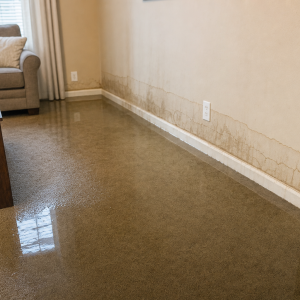
Another classic move is to deliberately misinterpret your policy’s exclusions. Your carrier might deny your claim for interior water damage by calling it “storm surge” (floodwater), which your standard policy doesn’t cover. They know full well the damage was caused by wind-driven rain blasting through your ruined roof—a textbook covered peril. They blur these lines on purpose.
How to Dismantle Baseless Denials
You can tear these weak excuses apart with cold, hard evidence. This is precisely why your pre-storm photos and documentation are so critical.
- To Shut Down “Pre-existing Damage” Claims: Pull out your time-stamped photos and videos of your home from before the hurricane. Even better, produce maintenance records, like a receipt from a roofer for a recent inspection or repair. This is powerful proof that your home was in solid shape before the storm.
- To Fight Policy Misinterpretation: Don’t take their word for it. Hire a public adjuster or a trusted, independent contractor to assess the damage. Their professional report will pinpoint the true cause, giving you an unbiased weapon to directly challenge the insurance company’s self-serving conclusion.
In a notable case after Hurricane Ike, State Farm was found by a jury to have committed fraud and acted in bad faith, leading to a significant verdict against the company. This homeowner’s fight proved that even industry giants can be held accountable for wrongfully denying claims.
Recognizing Their Insidious Delay Tactics
Sometimes, the strategy isn’t an outright denial—it’s death by a thousand papercuts. Delays are a form of psychological warfare. The longer they make you wait, the more desperate you become and the more likely you are to accept a lowball offer just to be done with it.
Watch out for these classic delay tactics:
- The Adjuster Carousel: Your claim gets handed off to a new adjuster every few weeks. Each time, you have to start from scratch, re-explaining the situation while the new person “gets up to speed.” This can drag the process out for months.
- Endless Document Requests: They’ll keep asking for documents you’ve already sent, claiming they “never received them” or the files were “corrupted.” It’s a frustrating, circular tactic designed to wear you out.
- Going Dark: Suddenly, your adjuster stops returning your calls and emails. You’re left in limbo for weeks, completely in the dark about the status of your claim.
There’s a reason they do this. Hurricane claims are massively expensive for the insurance industry. In 2017, hurricanes Harvey, Irma, and Maria drove insured losses 111% above the long-term trend. Harvey alone led to roughly $30 billion in insured losses. With numbers like that, carriers have a powerful motive to delay, deny, and underpay every claim they can. You can learn more about these natural catastrophe trends at Swiss Re.
Navigating Difficult NFIP Hurricane Flood Damage Claims
After a hurricane’s floodwaters finally drain away, the real shock often sets in: your standard homeowner’s policy covers none of it. This is where you enter the world of the National Flood Insurance Program (NFIP), and believe me, the fight is just getting started. An insurance claim hurricane that involves floodwater is a completely different animal, tangled up in strict federal rules.
Forget your familiar insurance agent. You’ll be facing an adjuster from FEMA or a “Write Your Own” (WYO) company that administers these policies on behalf of the government. These adjusters are notorious for being difficult and inflexible, operating within a system that feels like it was designed to deny claims on the smallest technicality. Getting help from a public adjuster is crucial.
The Unforgiving Rules of NFIP Claims
The NFIP system is brutally rigid. One of the biggest hurdles they throw at homeowners is the Proof of Loss requirement. This isn’t just another form to fill out—it’s a sworn legal statement that must be filed within a strict deadline, usually just 60 days from the date of the flood.
If that form is filled out incorrectly, is missing information, or arrives even one day late, FEMA can—and often will—deny your entire claim. Period. This isn’t a negotiation. It’s a hard deadline with devastating consequences, and countless policyholders have lost everything simply by missing it.
The way NFIP policies are structured also causes a ton of confusion. Unlike your regular policy, NFIP coverage is split into two distinct parts with separate limits:
- Building Coverage: This is for the structure of your home.
- Contents Coverage: This applies to your personal belongings.
What’s covered under these is far more limited than people realize. For instance, coverage for basements and anything below the lowest elevated floor is practically non-existent. That finished basement with your entertainment center and new furniture? It could easily be a total loss with zero reimbursement from the NFIP.
Fighting an Unfair NFIP Decision
If the NFIP denies your claim or throws a lowball offer at you, you can’t just pick up the phone and argue. You have to follow a specific, formal appeals process. Your first move is to file a detailed written appeal directly with FEMA within 60 days of the date on their denial letter.
This appeal has to be rock-solid and backed by hard evidence. You need to explain exactly why their decision was wrong and provide all your documentation—independent estimates, inventories, photos—to prove your case. If FEMA still denies you after the appeal, your only path forward is filing a lawsuit in U.S. District Court.
A classic tactic we see is an NFIP adjuster blaming foundation damage on “earth movement” (which isn’t covered) instead of the powerful hydrodynamic forces of floodwaters (which is covered). Without an independent engineering report to shut that argument down, the homeowner is left with a denial they can’t fight.
Why You Need an NFIP-Experienced Public Adjuster
Let’s be blunt: the complexity and unforgiving nature of the NFIP system make it nearly impossible for a homeowner to navigate alone. An experienced public adjuster who specializes in NFIP claims isn’t a luxury; it’s a necessity. They know the labyrinth of rules, the precise format for a Proof of Loss, and the kind of expert evidence required to successfully challenge a denial.
Want to dig deeper? Check out our complete guide on handling flood damage insurance claims.
A public adjuster takes over the entire brutal process, making sure every deadline is hit and every form is filed perfectly. They bring in their own network of engineers and estimators to build a case that FEMA’s adjusters can’t just brush aside. This is how you level the playing field and dramatically increase your chances of getting a fair settlement for your hurricane flood damage.
Hiring a Public Adjuster to Maximize Your Settlement
Let’s be blunt: fighting your insurance company after a hurricane is a full-time job you never signed up for. You’re exhausted, your home is a wreck, and the last thing you need is a battle against a corporate giant whose entire business model involves minimizing payouts. They have teams of experts—adjusters, lawyers, engineers—all working to protect their bottom line, not yours.
This is where a public adjuster flips the script.
A public adjuster is a state-licensed insurance pro who works exclusively for you, the policyholder. Their loyalty is to you and you alone. The adjuster your insurance company sends out works for them. A public adjuster works to get you the maximum possible settlement you’re entitled to under your policy. They don’t just level the playing field; they bring the same hard-nosed expertise to your side of the table.

When to Call in a Professional
Knowing the right time to bring in a public adjuster can be the single most important decision you make. While they can help with almost any claim, their value is undeniable in a few key situations.
You absolutely need to consider hiring an expert when:
- The Damage is Severe or Complex: We’re talking about more than a few shingles. If you have structural damage, widespread water intrusion, or a combination of issues, you need an expert assessment to capture the true scope of the loss.
- You Get a Lowball Offer: If that first check from the insurer feels like an insult and won’t even scratch the surface of your repair costs, that’s a massive red flag. It’s their first move in a negotiation you need to win.
- You Just Don’t Have the Time or Expertise: Let’s be real. Documenting every single loss, deciphering dense policy language, and going back and forth with adjusters is completely overwhelming. A public adjuster takes that entire brutal process off your plate.
Insurers bank on the fact that you don’t know the fine print of your own policy. A public adjuster finds and closes those knowledge gaps, making sure every legitimate part of your claim is paid.
The scale of hurricane damage makes these claims a different beast entirely. In the first half of one recent year, global insured losses from natural catastrophes smashed through $100 billion, with over 90% of that coming from the U.S. When the stakes are that high, you can bet insurers will fight even harder. You can discover more insights about these catastrophe losses at Risk and Insurance.
Case Study: The Power of a Real Advocate
The difference a skilled public adjuster makes isn’t just a few extra dollars—it can be life-changing.
Take the real-world case of a restaurant owner in North Carolina whose coastal business was obliterated by a hurricane. The insurance company’s initial offer was a pathetic $150,000. That wouldn’t even cover the structural repairs, never mind the custom kitchen equipment and everything else that was destroyed.
Beaten down and ready to give up, he hired a public adjuster. The PA immediately spotted huge errors. The company adjuster had ignored mandatory code upgrade requirements and completely undervalued the lost business income.
After a meticulous re-documentation of the entire loss and invoking the policy’s appraisal clause—a formal dispute process—the claim was ultimately settled for over $750,000. That’s more than five times the original offer. That is the power of having a dedicated expert in your corner.
How to Find and Vet a Public Adjuster
Hiring the right public adjuster is everything. You need a fighter, not just a paper-pusher. Here’s a quick rundown of the fundamental differences between the adjuster your insurer sends and the one you hire.
Insurance Company Adjuster vs Public Adjuster
| Attribute | Insurance Company Adjuster | Public Adjuster |
|---|---|---|
| Who they work for | Your insurance company | You, the policyholder |
| Loyalty & Obligation | To protect the insurer’s financial interests | To maximize your settlement |
| Who pays them | The insurance company (their employer) | You (a small, agreed-upon percentage of the final claim settlement) |
| Main Goal | Find ways to legally minimize the claim payout | Document everything to justify the largest possible payout under your policy |
This table makes it crystal clear: the company adjuster and the public adjuster are on opposing teams. One is paid to limit your claim, the other is paid to maximize it.
Start your search by looking for professionals licensed by your state’s Department of Insurance. Check for memberships in respected groups like the National Association of Public Insurance Adjusters (NAPIA).
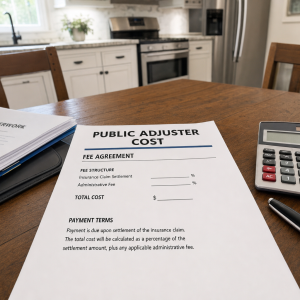
Ask for references from past clients who had hurricane claims just like yours. A reputable adjuster will be completely transparent about their fee, which is almost always a small percentage of the settlement. The best part? They don’t get paid until you get paid. For a deeper dive, you can learn more about what a public claim adjuster does in our detailed article. Taking this step ensures you have a true advocate ready to fight for every single dollar you are owed.
Frequently Asked Questions About Hurricane Claim Disputes
When you’re going toe-to-toe with your insurance company over a hurricane claim, you’re going to have questions. A lot of them. Getting straight answers is the only way you can fight back and win.
Let’s cut through the noise and tackle the questions we hear every single day from homeowners who are tired of being pushed around.
What Is Insurance Bad Faith and How Do I Prove It?
Let’s be blunt: “bad faith” isn’t just a disagreement. It’s when your insurance company breaks its promise to you, failing to uphold its end of the contract you paid for.
This isn’t just about them offering a low number. It’s about their conduct. We see it all the time in a few classic forms:
- Outright denial with no good reason. They can’t just say no. They have to point to the specific language in your policy that justifies their decision. Anything less is a red flag.
- Dragging their feet. A “failure to conduct a proper and timely investigation” is a textbook bad faith tactic. They hope you’ll get tired and give up.
- The classic lowball offer. They throw out a ridiculously low number, hoping you’re desperate enough to take it without a fight.
Proving it comes down to one thing: documentation. Every single call, email, and letter creates a paper trail. This is your ammunition. It helps you build a clear timeline that shows a pattern of unreasonable delays, contradictory statements, and a total failure to communicate.
How Long Does a Hurricane Claim Dispute Take?
There’s no sugarcoating this one—it varies. A straightforward fight might wrap up in a few months. But a complex, high-dollar claim? That can easily turn into a year-long battle, or even longer.
The timeline really depends on the complexity of the damage, how willing your insurer is to negotiate fairly, and whether you have to escalate the fight to appraisal, mediation, or a lawsuit.
The single biggest factor in speeding this up is being prepared from day one. When a public adjuster submits a bulletproof, evidence-backed claim package right out of the gate, it strips the insurance company of its usual excuses to delay, deny, and underpay.
Hiring a professional sends a message: you won’t be worn down by their standard playbook.
Can I Dispute a Claim if I Already Cashed the Check?
This is a big one, and the answer is usually yes. Cashing that first check from the insurance company typically does not sign away your rights to fight for more.
Think of that initial payment as a down payment for the “undisputed amount” or the “actual cash value” (ACV) of your losses. It doesn’t mean you agree that’s all you’re owed. You can—and should—still pursue payment for the full replacement cost and any supplemental damages they missed.
But you have to be incredibly careful here. Never, ever sign a document labeled “Final Release of Claim” or “Full and Final Settlement” unless you are 100% satisfied and ready to walk away. Signing that piece of paper is like handing them a get-out-of-jail-free card, permanently closing your claim and letting them off the hook for pennies on the dollar.
Before you cash any check, have a public adjuster review it and the paperwork that comes with it. Don’t accidentally sign your rights away. To get a better handle on the world you’re operating in, you can look into general information about the insurance industry.
How does the Anti-Concurrent Causation (ACC) clause affect my hurricane claim settlement?
The ACC clause states that if both a covered peril (wind) and an excluded peril (flood) occur at the same time and cause the same damage, the entire loss may be excluded. A Public Adjuster counters this by hiring forensic meteorologists and engineers to prove the wind created the pathway for water before the flood component began.
My policy has a separate "Hurricane Deductible." How does that impact my out-of-pocket cost versus a standard deductible?
Hurricane deductibles are typically much higher than standard deductibles, often set as a percentage (e.g., 2% or 5%) of the Dwelling Coverage (Coverage A) limit, not a fixed dollar amount. For a $500,000 policy, a 2% deductible is $10,000, which you must pay before the insurer pays anything.
What specific types of hidden damage must be documented after a hurricane, even if the roof looks fine?
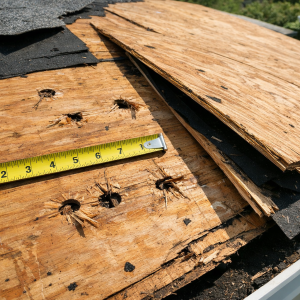
Hurricanes can cause micro-fractures in the roof sheathing, nail pops, truss uplift, and water intrusion into the attic space that is not visible from the ground. A Public Adjuster uses drones and thermal imaging to find these hidden failures that could lead to subsequent mold and structural issues.
How does a Public Adjuster prove the full scope of wind damage when the insurer is only willing to pay for spot repairs?
We document the damage with certified estimates and engineer reports showing that the integrity of the entire roof or structural element was compromised by hurricane-force winds, forcing the insurer to pay for a full replacement instead of limited, ineffective patch-up work.
My claim involves debris removal, temporary repairs, and living expenses. Are these covered under my hurricane claim?
Yes. The policy covers Debris Removal (often as an extension of the Dwelling limit), Temporary Repairs (part of your duty to mitigate, and reimbursable), and Additional Living Expenses (ALE) if the home is uninhabitable, which a Public Adjuster manages to ensure all costs are captured.
Can I recover the cost of mandatory code upgrades required to rebuild my hurricane-damaged home?
Yes, if you have the Ordinance or Law policy endorsement. This critical coverage pays for the increased cost to bring the damaged portion of the home (e.g., new roof tie-downs, windows) up to current, stricter building codes enforced after the storm.
How does a Public Adjuster manage the involvement of the mortgage company on the hurricane settlement check?
For significant damage, the mortgage lender is a payee on the settlement check. The Public Adjuster serves as the liaison, providing the lender with the approved scope and draw schedule to ensure the funds are released in controlled stages, allowing the contractor to be paid and the rebuild to proceed.
What is the most common bad-faith tactic used by insurers after a major hurricane, and how do I fight it?
The most common tactic is unreasonable delay in inspection, valuation, or payment, often called "slow-walking" the claim. You fight this by hiring a Public Adjuster who strictly enforces the state's Fair Claims Settlement Practices Act timelines and creates a documented paper trail for potential legal action.
If my hurricane claim is denied, how does a Public Adjuster leverage the Appraisal process for reversal?
If the denial is based only on the cost or amount (e.g., insurer claims damage is below the deductible), the Public Adjuster demands Appraisal. This contractual process brings in neutral experts whose binding decision can often overturn a faulty low valuation denial without needing to file a lawsuit.
Should I hire a water mitigation or restoration company before my Public Adjuster inspects the hurricane damage?
You must hire a mitigation company immediately to prevent further loss (Duty to Mitigate), but always contact your Public Adjuster first. The PA can guide you on which mitigation costs are covered and ensure the initial scope of work is documented properly, preventing the insurer from claiming unnecessary expenses later.
How long should I expect the entire hurricane claim process to take, from filing to final payment?
While simple claims can resolve quickly, a complex or disputed hurricane claim involving wind vs water, engineering reports, multiple estimates, and RCV recovery often takes 6 to 18 months. A Public Adjuster works to streamline this timeline by eliminating unnecessary communication delays and forcing timely decisions from the carrier.
When you’re facing an uphill battle against a major insurance carrier, you need an expert on your side. For The Public Adjusters, Inc. works exclusively for policyholders in North Carolina and Virginia to ensure you get the full settlement you are owed. If your claim has been denied, delayed, or lowballed, contact us for a free, no-obligation claim review at https://forthepublicadjusters.com.