
Wind Damage Claim Denied: What NC Homeowners Need to Know Right Now
A wind damage claim denied by your insurance company does not have to be the final word — in North Carolina, wrongful roof denials are routinely reversed when homeowners challenge the insurer’s reasoning with the right evidence and professional support. If your carrier blamed “pre-existing deterioration” after a clear storm event, you are not alone, and you likely have strong grounds to fight back.
Key takeaways
- Insurance companies routinely attribute storm-damaged roof decking to ‘pre-existing deterioration’ to deny wind damage claims, but a forensic inspection can disprove this classification.
- A public adjuster works exclusively for the homeowner — not the insurance company — and can commission independent roofing experts to document storm causation with photographic and laboratory evidence.
- Wind damage claim denied outcomes can often be reversed when a public adjuster identifies policy language the insurer failed to apply correctly, such as concurrent causation provisions.
- Forensic roofing reports that document fiber saturation patterns, nail pull-through angles, and shingle displacement consistent with a named storm event carry significant weight in claim disputes.
- North Carolina homeowners have the right to hire a licensed public adjuster at any stage of the claims process, including after a formal denial has been issued.
Why “Pre-Existing Deterioration” Is the Go-To Denial Tactic
After significant wind events, insurance adjusters are often under pressure to close claims quickly and cheaply. One of the most common tools carriers use is attributing roof damage to gradual wear and tear or pre-existing deterioration rather than the storm itself. This framing matters enormously because most homeowners insurance policies cover sudden, accidental damage — not long-term maintenance issues.
Here is why this tactic is so effective against unprepared homeowners:
- It shifts the burden back to you. Once the insurer labels damage as “pre-existing,” you must prove the storm caused it — something most homeowners do not know how to document.
- The insurer’s adjuster controls the initial narrative. Their report becomes the official record unless you actively challenge it with independent findings.
- Roofing damage is genuinely complex. Wind creasing, lifted tab edges, and fractured mat layers can look like age-related wear to an untrained eye, even when the storm caused every bit of it.
- Homeowners rarely appeal. Insurers know that a large percentage of denied claimants accept the denial without pushing back, making the tactic low-risk for them.
A Brief Preview: How One NC Homeowner Reversed a Wrongful Denial
In a case that illustrates exactly how this plays out, a North Carolina homeowner had a wind damage claim denied after a strong storm moved through the region. The insurer’s adjuster documented the roof damage as “normal aging” and closed the file. The homeowner hired a public adjuster, who brought in a forensic roofing inspector. That inspection uncovered directional granule loss, stress fractures consistent with wind uplift, and shingle damage patterns that directly matched the storm’s wind direction — evidence the original adjuster had never documented.
The claim was reopened, and the settlement was reversed in the homeowner’s favor. The full story — including exactly what the forensic inspection found and how the public adjuster built the case — is walked through in detail later in this article.
What NC Homeowners Should Understand Right Now
- A denial letter is not legally final. You have the right to dispute it.
- North Carolina insurance regulations provide specific protections for policyholders facing bad-faith claim handling.
- Acting quickly matters — policies have deadlines for filing supplemental claims and initiating appraisal processes.
- A public adjuster works for you, not the insurance company, and is paid only when you recover money.
If you have already received a denial or a lowball settlement after wind or storm damage, the guide at Insurance Claim Storm Damage NC covers the broader landscape of what NC homeowners face and how to respond. The sections below go deeper into the specific evidence, legal protections, and step-by-step actions that turn a denied claim into a paid one.
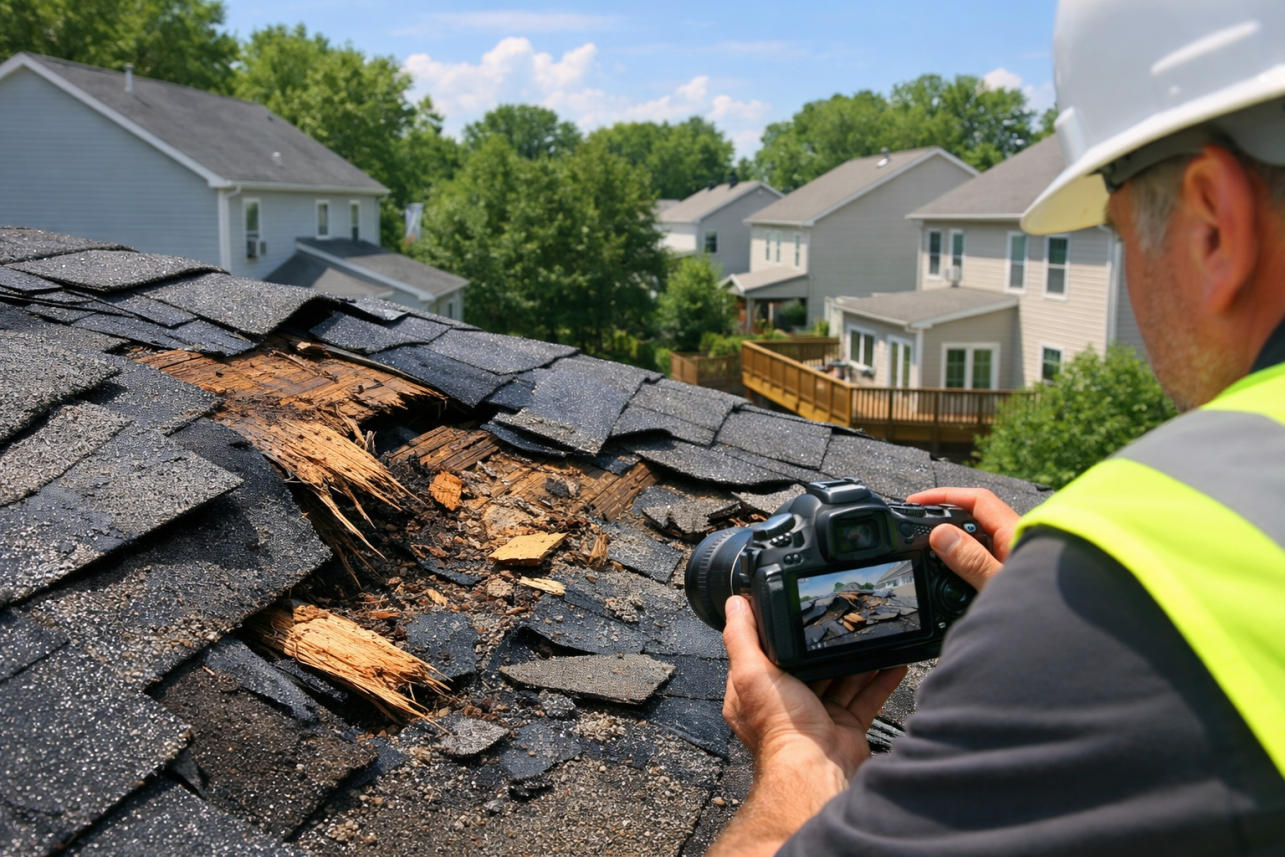
Why Did the Insurance Company Blame ‘Pre-Existing Deterioration’ Instead of the Storm?
Insurance companies routinely attribute visible roof and structural damage to pre-existing deterioration — rather than a named wind event — because age or neglect exclusions give them a contractual basis to deny or drastically reduce a payout. It is a common, well-documented claims-handling strategy, not an honest assessment of what the storm actually did to your home.
The Insurer’s Adjuster Has a Different Goal Than You Do
It is easy to assume the adjuster who shows up after a storm is there to help you. In reality, a carrier-employed adjuster works for the insurance company. Their inspection reports become the foundation for coverage decisions, and those reports are often written with policy exclusions already in mind. When a wind damage claim denied outcome saves the carrier a significant repair bill, the motivation to find pre-existing problems is real.
That does not mean every carrier adjuster acts in bad faith — but it does mean their interpretation of damage will naturally lean toward the explanation that costs their employer less money.
The ‘Deterioration’ Playbook: How It Works in Practice
Here is what the standard insurer narrative typically looks like after a wind event:
- Granule loss is called normal weathering. Asphalt shingles do lose granules over time, but a significant storm accelerates and concentrates that loss in ways a trained eye can distinguish. Carrier adjusters frequently label all granule loss as age-related wear.
- Lifted or creased shingles are called installation defects. Wind-created tab lifts and crease lines along shingle edges are characteristic of uplift damage. An insurer’s report may instead note that the shingles were improperly nailed years ago.
- Deck sheathing damage is called rot. When wind-driven moisture gets under compromised shingles, the decking below can show staining or soft spots. Adjusters often photograph these areas and describe them as pre-existing rot rather than storm-caused water infiltration.
- Fascia and soffit damage is dismissed as deferred maintenance. Paint peeling, wood separation, or cracked trim near the roofline gets logged as maintenance neglect — even when high-wind uplift pressures are the more likely mechanical cause.
Why ‘Pre-Existing’ and ‘Storm-Caused’ Are Not Mutually Exclusive
One of the most important things homeowners miss is that a roof does not have to be in perfect condition for a storm claim to be valid. North Carolina and Virginia policies generally cover sudden storm damage even if the roof had some prior wear. The legal question is whether the wind event caused or materially worsened the damage — not whether the roof was brand new. Insurers blur this distinction deliberately when a wind damage claim denied outcome is their preferred result.
If a storm with documented high winds moved through your area and your roof failed shortly after, that timeline matters. Weather data, neighboring property damage, and a proper forensic inspection can all establish causation that a rushed carrier adjuster simply never looked for. Understanding how these tactics work is the first step — learning the benefits of hiring an independent claims adjuster is the logical next one.
What a Forensic Roofing Inspection Finds That an Insurer’s Adjuster Misses When Your Wind Damage Claim Is Denied
A forensic roofing inspection documents specific physical evidence — nail pull-through patterns, fiber-tear marks on shingles, creased tabs, and storm-date correlation reports — that proves wind caused the damage on a particular date. This level of detail directly counters an insurer’s blanket assertion that your roof simply “wore out,” giving you a defensible, evidence-based foundation to challenge a denial.
Why a Standard Insurance Adjuster Inspection Often Falls Short
When an insurance company sends its own adjuster to inspect your roof, that visit is typically brief, conducted from ground level or a single vantage point on the roof, and focused on identifying reasons a claim may not be covered. The adjuster is not a forensic expert, and the report they produce is often a checkbox form rather than a detailed engineering analysis. A public adjuster working alongside a forensic roofing consultant takes a fundamentally different approach.
The Specific Evidence a Forensic Inspection Documents
- Nail pull-through patterns: When high winds lift a shingle and force it back down, the roofing nails can punch through or elongate the shingle mat in a distinctive way. A forensic inspector photographs and measures these patterns to show mechanical stress consistent with sudden wind loading — not gradual aging.
- Fiber-tear evidence: Asphalt shingles have a fiberglass or organic mat core. Wind stress tears those fibers in a directional pattern. Deterioration from age looks fundamentally different under close inspection — it crumbles or granule-strips uniformly rather than tearing directionally.
- Creased and folded tabs: Wind lifts shingle tabs and creases them at the bond line. A fresh crease with intact granules on the fold is a strong indicator of acute wind event damage, not long-term wear.
- Storm-date correlation reports: A qualified expert obtains certified weather data — including peak wind gust speeds, storm track records, and hail reports — for your specific address and date of loss. This ties the physical damage directly to a documented weather event, which is critical when an insurer claims the damage predates the storm.
- Comparison photography: Forensic reports typically include side-by-side documentation of damaged areas versus undamaged sections of the same roof, isolating the storm’s impact zone rather than treating the whole roof as uniformly deteriorated.
How This Evidence Counters a Deterioration Claim
Insurance companies lean on “pre-existing deterioration” because it is difficult for a homeowner to disprove without expert documentation. A forensic report changes that dynamic entirely. When a public adjuster presents nail pull-through measurements, directional fiber tears, and certified storm data in a single organized file, the insurer’s adjuster must either address that evidence point by point or concede the denial was not supportable. That is precisely the paper trail that turns a wind damage claim denied into a reopened — and often approved — file.

How a Wind Damage Claim Denied in NC Was Reversed: A Real Case Walkthrough
A wind damage claim denied by an insurance carrier is not necessarily the final word. In this North Carolina case, a public adjuster documented wind-specific damage patterns the insurer’s adjuster had overlooked, submitted a formal rebuttal with forensic evidence, and ultimately secured full roof replacement coverage for the homeowner — reversing a denial that had stood for several weeks.
The Claim Timeline
After a significant windstorm moved through the piedmont region of North Carolina, the homeowner filed a claim for roof damage. The insurer dispatched its own staff adjuster, who spent roughly 45 minutes on site before issuing a denial letter citing “pre-existing deterioration and normal wear” as the cause of the shingle displacement and underlayment exposure. The homeowner, unconvinced, contacted a licensed public adjuster.
What the Public Adjuster Found
The public adjuster conducted a full forensic inspection, spending several hours on the roof and in the attic. The documented findings stood in direct contrast to the carrier’s conclusions:
- Directional shingle tab breaks consistent with uplift forces from a single wind event, not gradual weathering
- Creased and folded shingles along the windward slope only — a pattern that does not occur from simple aging
- Intact granule adhesion on shingles adjacent to the damaged areas, contradicting the deterioration theory
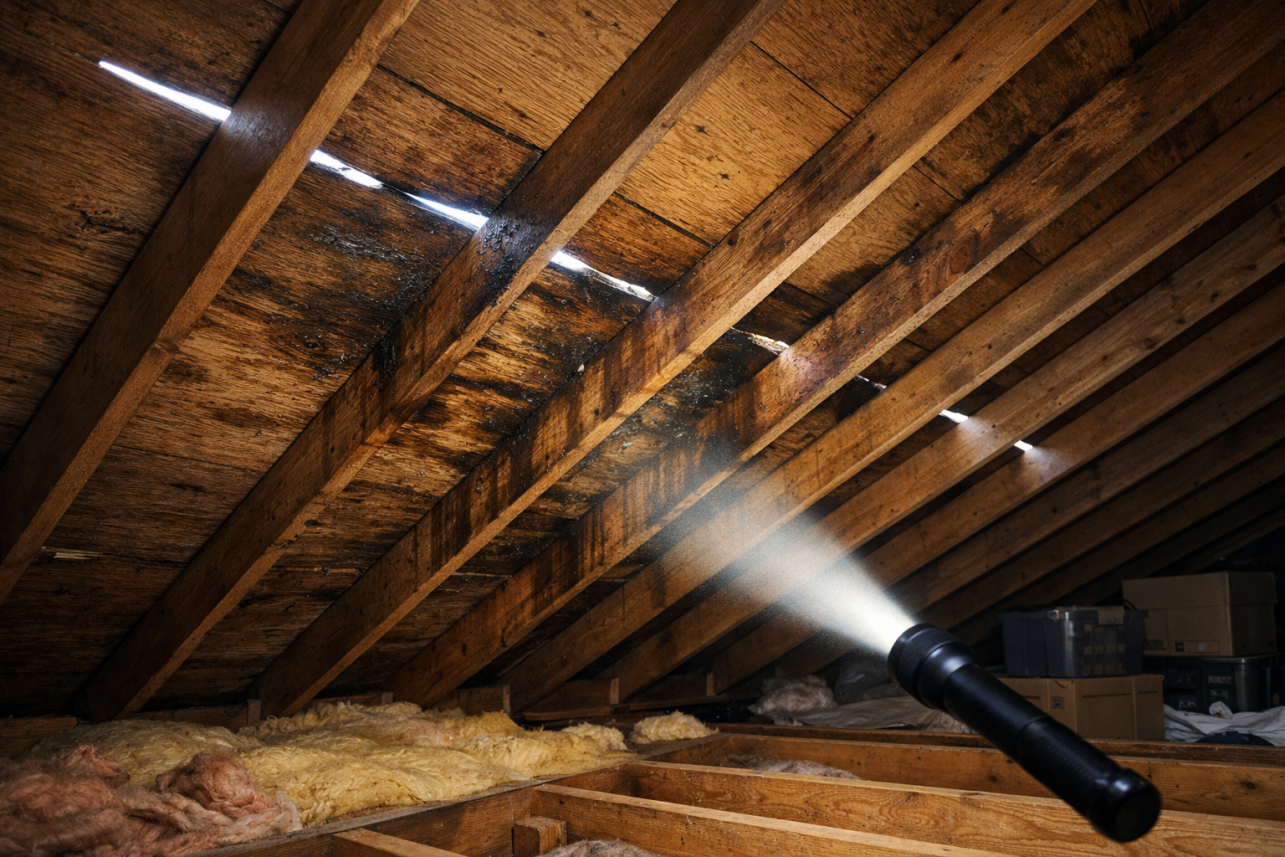
- Attic truss movement evidence including new nail pops and minor rafter separation invisible from street level
- Weather data correlation tying recorded wind gust speeds on the storm date to documented damage thresholds for the roof’s shingle type
The Formal Rebuttal
The public adjuster compiled these findings into a structured rebuttal package submitted directly to the carrier’s claims supervisor. The package included the forensic inspection report, annotated photographs keyed to specific damage locations, the third-party weather data, and a written argument distinguishing storm-caused damage from wear-related deterioration under the policy language. The rebuttal also noted that North Carolina courts have historically scrutinized insurer adjuster determinations that dismiss storm causation without adequate on-site investigation. While every case turns on its own facts, decisions in cases like Badham v. Erie Insurance Exchange reflect a broader judicial willingness in the state to side with insureds when carrier determinations appear cursory or unsupported by physical evidence.
The Outcome
Within three weeks of the rebuttal submission, the carrier reversed its denial and issued a new scope of loss covering full roof replacement. The homeowner received payment for materials, labor, and code-required upgrades to the drip edge — costs that had been entirely excluded from the original denial.
The reversal did not happen by chance. It happened because the public adjuster created an evidence record that was simply too specific and too well-documented for the carrier to dismiss a second time.
What Should You Do If Your Wind Damage Claim Is Denied in NC or VA?
If your wind damage claim is denied in North Carolina or Virginia, act quickly and deliberately: preserve all evidence, request your complete claim file in writing, engage a licensed public adjuster to build an independent case, and consider invoking the appraisal clause in your policy. Both states also give you legal remedies if your insurer acts in bad faith.
Step 1: Preserve Evidence Immediately
Do not make permanent repairs before documenting everything. Take dated photos and video of every area of damage — roof, siding, gutters, windows, and interior water intrusion. Save all storm-related debris on your property if possible. Keep receipts for any emergency tarping or temporary repairs you make to prevent further damage, since most policies require you to mitigate loss but do not require you to restore the property before the claim is resolved.
Step 2: Request Your Full Claim File
Under both NC and VA insurance regulations, you have the right to request a complete copy of your claim file, including the adjuster’s field notes, photos, damage estimates, and the specific policy language the insurer cited when denying your claim. Submit this request in writing and keep a copy. Understanding exactly why your wind damage claim was denied tells you precisely what evidence you need to counter it.
Step 3: Hire a Licensed Public Adjuster
- A public adjuster works for you, not the insurance company.
- They conduct an independent inspection, often alongside a forensic roofing contractor, to document storm-caused damage the insurer’s adjuster may have overlooked or misclassified.
- They prepare a competing estimate and manage all communications with the carrier on your behalf.
- Public adjusters in NC and VA are licensed and regulated by their respective Departments of Insurance.
Step 4: Invoke the Appraisal Clause
Most homeowner policies contain an appraisal clause — a built-in dispute resolution process that does not require litigation. Each side selects a competent appraiser, and those two appraisers choose a neutral umpire. The panel then determines the amount of loss. Invoking this clause can resolve a disputed wind damage claim denied over pricing or scope far faster and less expensively than filing a lawsuit.
Step 5: Understand Your Bad-Faith Rights
North Carolina’s Unfair Claims Settlement Practices Act and Virginia’s similar statutory framework prohibit insurers from misrepresenting policy provisions, failing to investigate claims promptly, or denying claims without a reasonable basis. If you believe your carrier violated these standards, you can file a complaint with the NC Department of Insurance or the Virginia Bureau of Insurance. In more serious cases, an attorney experienced in insurance bad faith can evaluate whether you have grounds for a civil claim beyond the original policy benefits.
Can an Insurance Company Legally Deny a Valid Wind Damage Claim? What NC and VA Law Says
Yes, an insurer can deny a claim — but they cannot do so wrongfully, arbitrarily, or in bad faith. Both North Carolina and Virginia have statutes that define unfair claims settlement practices and give policyholders legal recourse when an insurer misrepresents policy provisions, fails to conduct a reasonable investigation, or denies a valid claim without a sound basis. A wind damage claim denied under these circumstances may be grounds for a formal complaint or legal action.
North Carolina: General Statute § 58-63-15
North Carolina General Statute § 58-63-15 outlines specific acts that constitute unfair or deceptive insurance practices. When it comes to property claims, insurers are prohibited from:
- Misrepresenting pertinent facts or policy provisions related to the claim
- Failing to acknowledge and act reasonably promptly on communications about a claim
- Not attempting in good faith to reach a prompt and fair settlement when liability is reasonably clear
- Compelling policyholders to initiate litigation to recover amounts owed under a policy
- Refusing to pay claims without conducting a reasonable investigation based on all available information
Violations of this statute can be reported to the North Carolina Department of Insurance, which has authority to investigate complaints and take action against insurers engaging in systemic unfair practices.
Virginia: Code § 38.2-510
Virginia Code § 38.2-510 mirrors many of these protections. Virginia’s unfair claims settlement practices provisions prohibit insurers from making material misrepresentations, failing to provide a reasonable explanation for a denial, and refusing to pay a valid claim based on a policy interpretation that contradicts the plain language of the contract. The Virginia State Corporation Commission’s Bureau of Insurance oversees these regulations and accepts consumer complaints when homeowners believe a denial was handled improperly.
What These Laws Mean for You as a Homeowner
These statutes do not automatically reverse a denial, but they establish a legal framework that can work in your favor when you challenge it. Courts in both states have ruled against insurers that failed to conduct thorough investigations or that leaned on vague exclusion language — such as “pre-existing deterioration” — without documented evidence to support that conclusion. Key points to understand:
- An insurer must provide a written explanation for any denial, citing specific policy language
- A denial based solely on a desk review or brief field inspection — without forensic analysis — can be challenged
- Filing a formal complaint with your state’s Department of Insurance creates an official record and often prompts a re-examination of your claim
- In bad faith cases, courts may award damages beyond the original claim value, including attorney’s fees
Understanding your rights under state law is one of the most powerful tools you have when a wind damage claim denied by your insurer feels unjust. Documentation, professional inspection reports, and a clear paper trail are your foundation for any legal or regulatory challenge.
Wind Damage Claim Denied vs. Disputed: Insurer Adjuster vs. Public Adjuster Approach
| Factor | Insurer’s Staff Adjuster | Public Adjuster with Forensic Inspection |
|---|---|---|
| Who they represent | The insurance company | The homeowner exclusively |
| Roof inspection method | Visual walkthrough, often single visit | Forensic inspection with documentation, material sampling, and weather data correlation |
| Damage attribution | May default to ‘pre-existing deterioration’ to limit payout | Documents storm-specific causation patterns to establish coverage |
| Claim outcome tendency | Settlement based on insurer’s initial assessment | Typically higher settlements; denials frequently reversed or reduced in scope |
| Cost to homeowner | No direct cost, but potential for underpayment | Contingency fee (percentage of settlement), no recovery — no fee |
Illustrative Case: Denied Roof Claim Reversed After Forensic Report
Illustrative example
Consider a hypothetical NC homeowner whose insurer denied a post-hurricane roof claim, citing granule loss and soft decking as evidence of long-term neglect rather than storm damage. The homeowner hired a licensed public adjuster, who retained a forensic roofing contractor to inspect the property and cross-reference damage patterns with certified storm data from the named event.
The forensic report documented nail pull-through angles, localized decking delamination consistent with sudden uplift forces, and shingle displacement geometry that matched recorded wind speeds — evidence distinctly different from gradual weathering. Armed with this report, the public adjuster submitted a formal dispute to the insurer citing relevant policy provisions, and the carrier reversed the denial and approved full roof replacement coverage. This type of outcome illustrates why documentation quality and advocacy expertise can be the deciding factor when a wind damage claim is denied.
Frequently asked questions
My wind damage claim was denied because the insurer said my roof had pre-existing deterioration — what does that actually mean and can I fight it?
When an insurer’s adjuster attributes roof damage to ‘pre-existing deterioration,’ they are arguing that the failure was caused by age, neglect, or deferred maintenance rather than a specific storm event. This is a common denial basis, but it is not necessarily the final word. A public adjuster or forensic roofing inspector can examine the physical evidence — such as the pattern of decking failures, nail pull-through characteristics, wood fiber condition at fracture points, and weather data tied to a named storm — to determine whether wind loading was the proximate cause. If the evidence supports a storm-caused loss, you have grounds to dispute the denial through your insurer’s internal appeals process, a state insurance department complaint, or appraisal or litigation.
What does a forensic roofing inspection look for that a standard insurance adjuster might miss?
A forensic roofing inspection goes beyond a visual surface check. An inspector may document the direction and pattern of damage relative to documented wind direction during the storm, examine decking for shear failures consistent with uplift forces rather than gradual decay, assess whether deterioration was actually structural prior to the storm or was secondary to storm exposure, and collect material samples if needed. This systematic documentation creates a technical record that directly counters a vague ‘wear and tear’ or ‘deterioration’ denial by tying the damage to a specific meteorological event.
What is a public adjuster and how are they different from the adjuster my insurance company sent?
A public adjuster is a licensed claims professional who works exclusively on behalf of the policyholder, not the insurance company. The adjuster your insurer sends is employed or contracted to evaluate and settle claims in a way that reflects the insurer’s interpretation of the policy. A public adjuster reviews the same policy language and damage evidence but advocates for the broadest legitimate interpretation of your coverage, prepares a competing damage estimate, and negotiates with the insurer on your behalf. In complex cases involving causation disputes — like deterioration versus wind damage — their technical knowledge and independent documentation can be decisive.
If my claim is reversed after hiring a public adjuster, what costs are typically recoverable?
If a denial is successfully overturned, the settlement should cover the scope of loss that the policy actually provides for. For a roof claim this often includes the cost to replace damaged decking, underlayment, and roofing materials, and may include associated work such as flashing or ventilation components that must be disturbed during replacement. Whether you receive actual cash value or full replacement cost value depends on your specific policy terms and whether you carry replacement cost coverage. Public adjusters typically work on a contingency fee — a percentage of the recovered settlement — so you should clarify their fee agreement in writing before engaging them.
Related local pages
- Public Adjuster Garner NC — Fight for the Full Settlement You Deserve
- Public Adjuster Holly Springs NC — Fight For The Full Settlement You Deserve
Had your wind damage claim denied in NC or VA? Don’t accept the insurer’s decision as final. Our licensed public adjusters have reversed denials just like this one — contact us today for a free claim review and let us fight for every dollar you’re owed. Get in touch.
Last updated: July 27, 2026