
FROZEN PIPE PLUMBER – When the plumber finally packs up and leaves, you feel a wave of relief. The roar of spraying water is gone. But that feeling doesn’t last long.
It’s quickly replaced by the gut-sinking realization that the easy part is over. The real fight has just begun.
The Battle After The Frozen Pipe Plumber Leaves
You’ve plugged the leak, but now you’re left staring at the aftermath. Buckled hardwood floors, a sagging, water-logged ceiling, and family belongings completely ruined. The plumber fixed the pipe—that was their job. They can’t do a thing about the catastrophic water damage now saturating every inch of your home.
This is exactly what your homeowner’s insurance is for, right? To step in and make you whole again.

Unfortunately, for most homeowners, this is where the process turns into a grueling, unfair battle. You pay your premiums on time, every time, expecting your insurer to have your back. Instead, companies like State Farm or Allstate often send out an adjuster whose real job isn’t to help you—it’s to protect their company’s profits.
This isn’t just a hunch; it’s a fundamental conflict of interest. The person responsible for assessing your damage works for the very company that has to write the check. Their incentive is to find every possible reason to low-ball that check, not to uncover the full extent of the damage you’re entitled to have covered.
The Reality of the First Offer
This conflict of interest almost always shows up as a shockingly low settlement offer. It’s a classic move. The company adjuster might ignore hidden moisture trapped behind walls, conveniently forget about the cost of matching your discontinued flooring, or use outdated pricing for labor and materials.
They’re betting you’re too stressed out and exhausted to fight back. They hope you’ll just take the low-ball number to get it over with.
This isn’t just a few isolated incidents. Waking up to a burst pipe is a nightmare hitting homeowners hard across the country. State Farm data shows over 20,000 claims were filed for frozen pipe damage, totaling more than $628 million in losses. The average claim topped $30,000. When you see numbers like that, it’s crystal clear why insurers are fighting tooth and nail to pay out as little as possible.
Don’t mistake that first offer for the final word. It’s not. It’s just the opening shot in a negotiation you probably didn’t even know you were in.
Preparing for the Real Fight
Let’s be clear about what’s at stake. Accepting a lowball settlement means you’re either paying thousands out of your own pocket to finish the repairs or you’re forced to cut corners. Cutting corners on water damage restoration is a recipe for long-term disaster, including dangerous mold growth.
Water damage from a burst pipe always goes deeper than what you can see. You have to understand what your claim is truly worth before you can even begin to fight for a fair recovery. You can get a better handle on the process by reading our guide to navigating the complexities of an insurance water damage claim.
This is where the simple task of calling a plumber ends and the complex, strategic financial battle begins. Think about the contrast between these two phases.
The Plumber’s Fix vs The Insurance Fight
| Challenge | The Plumber’s Role (The Quick Fix) | The Insurance Company’s Role (The Long Battle) |
|---|---|---|
| The Problem | A single, identifiable leak in a pipe. | Widespread, often hidden, structural and personal property damage. |
| The Goal | Stop the water. A clear, technical objective. | Minimize the payout. A financial, adversarial objective. |
| The Process | Diagnose the break and repair or replace the pipe. | Inspect, interpret policy language, estimate, and negotiate. |
| Your Role | You call, they fix. It’s a straightforward service transaction. | You must prove every dollar of your loss against a skeptical opponent. |
The table says it all. The insurance company has a team of experts, adjusters, and lawyers on its side, all working to protect their bottom line.
The real question is, who do you have on yours? That low offer isn’t a dead end—it’s a wake-up call that you need to get ready to fight for the settlement you deserve.
Tactics Insurers Use To Deny Your Burst Pipe Claim
After the emergency plumber has left and the immediate chaos is over, you’d think your insurance company would step in to make things right. But let’s be blunt: major carriers like Allstate and State Farm are massive corporations, and their first priority is protecting their profits—not paying you the full value of your claim.
Their adjusters are trained with a playbook of strategies designed to underpay, delay, or just flat-out deny your claim. They’re counting on your stress and confusion to get you to accept a lowball settlement. A denial isn’t the end of the road; it’s just their opening move.
The Negligence Excuse
One of the oldest tricks in the book is to blame you. The adjuster will arrive and start asking pointed questions, trying to prove you were “negligent” in maintaining your home. Did you keep the heat high enough? Did you let the faucets drip?
They’re looking for any excuse to reclassify a “sudden and accidental” event—which is covered—into a maintenance failure, which isn’t. Answering the wrong way can give them all the ammunition they need to deny your claim on the spot.
The Preferred Vendor Ploy
Here’s a classic trap. The insurance adjuster shows up and says something like, “We’ve got a great restoration company we work with, let me give them a call for you.” It sounds helpful, but it’s a setup.
These “preferred vendors” get a steady stream of business from the insurance company, so guess who they’re loyal to? It’s not you. They’re notorious for writing repair estimates that magically match the low number the adjuster wants to see. They’ll cut corners, use cheaper materials, and overlook hidden damage, all to keep the costs down for the insurer.
You are never obligated to use your insurance company’s preferred vendor. You have the right to get independent estimates from contractors who work for you. This is a critical step in proving the true cost of your damages.
Exploiting Policy Loopholes
Your insurance policy is a dense legal document, intentionally filled with confusing language and loopholes. The adjuster knows it inside and out—and they use that knowledge against you. They will dig through every line, looking for any technicality they can find to deny parts of your claim.
They might argue that the cost to tear out the wall to access the pipe isn’t covered, or that your policy doesn’t pay to replace your entire floor, only the damaged section. It’s a war of attrition. To fight back, you have to understand exactly why your insurance company might refuse to pay a claim and what your options are.
The financial stakes here are massive. Frozen pipe claims are a huge drain on insurers. In one state alone, these claims jumped from just 75 to 2,094 in a single year. Another major carrier saw a 191% spike in frozen pipe claims nationally in one winter. With the average claim costing over $30,000, you can see why they fight so hard to control their payouts. You can find more details about these staggering claim statistics and learn more about the rising costs of frozen pipe damage. Knowing this makes it clear: a low offer isn’t an accident, it’s a strategy.
Building Your Case With Undeniable Proof
If you want to fight your insurance company’s ridiculous lowball offer, you’ll need more than just frustration. You need cold, hard evidence.
Snapping a few quick phone pictures isn’t going to cut it. Major insurers like State Farm and Allstate deal with thousands of these claims. They are absolute experts at finding holes in weak documentation. Your job is to build a file so airtight they have nowhere to wiggle.
This means you need to document the damage from your burst pipe with the precision of a crime scene investigator. Don’t be in a rush to clean up. Every warped floorboard, stained piece of drywall, and ruined personal item is a piece of evidence.
Go Way Beyond Simple Photographs
You need to think bigger than just still photos. Insurers can easily argue that a picture doesn’t tell the whole story, claiming the damage “wasn’t that bad.” A video walkthrough? That’s a lot harder for them to dispute.
Hit record on your phone before you even walk into the damaged room. Start talking and narrate what you’re seeing as it happens. For example, “I’m walking into the living room now. You can see water pouring from the light fixture, and the ceiling drywall is completely saturated. Over by the window, the hardwood floors are buckled and ruined.” That narration provides crucial context a silent video just can’t.
- Show Cause and Effect: If you can see the burst pipe, film it. Then, pan slowly to show the entire path the water took.
- Zoom in on the Details: Get close-up shots of water lines on the walls, warped baseboards, and soaked furniture.
- Keep Physical Evidence: Did a contractor cut out a piece of ruined drywall or flooring? Bag it and save it. It’s tough for an adjuster to argue with a physical piece of evidence you can hold in your hand.
The Power of Meticulous Logs
Next, you need to create an inventory of every single thing that was damaged or destroyed. I mean everything. Don’t just write down “books”—list every single title. Don’t put “clothing”—itemize every shirt, pair of pants, and jacket.
For every item on your list, you need to include:
- A clear description of the item
- Where you bought it from
- How old it was
- What you paid for it originally
- The estimated cost to replace it today
I know this feels like a monumental task, but this is the kind of detail that dismantles a lowball offer. When you’re facing a potential legal fight, organized evidence is your strongest weapon, much like following a deposition preparation checklist to make sure no stone is left unturned.
This infographic breaks down some of the most common moves insurers pull to deny claims, from blaming you for negligence to making lowball offers based on their own incomplete estimates.

What this shows you is that a low offer isn’t their final word. It’s a calculated opening move designed to test you.
Your Document Checklist
Your evidence file isn’t complete without the paper trail to back it up. The insurance company will demand these documents, and having them ready to go shows them you’re organized and you mean business. Gather everything and scan it.
Keep every single receipt related to this disaster. I’m talking about the emergency bill from your frozen pipe plumber, invoices from the water mitigation crew, and even the receipts for the tarps and buckets you bought in a panic. Every dollar counts.
You’ll also need to bundle all of this into a formal document to present your losses. We break down exactly how to structure this in our guide on submitting a Proof of Loss form. That document, backed by your detailed logs, videos, and receipts, is the foundation for your fight to get paid what you’re truly owed.
Leveling The Playing Field With A Public Adjuster
Let’s be blunt. Trying to fight a massive insurance company on your own after a frozen pipe burst is like stepping into a boxing ring with a heavyweight champion when you’ve never thrown a punch.
The adjuster your insurance company sends works for them. They’re trained by them. Their performance is judged on how well they protect the company’s bottom line. This isn’t a fair fight—it’s a system designed from the ground up to leave you with a low-ball settlement.
Hiring a public adjuster is the single most powerful move you can make to level that playing field. Unlike the company adjuster, a public adjuster is a state-licensed professional who works exclusively for you, the policyholder. Their only allegiance is to you. Their sole job is to secure the maximum, fair settlement you’re entitled to under your policy.
Your Advocate In A Biased System
Think of it this way: the insurance company has its expert—the company adjuster. You absolutely need your own. A public adjuster from a firm like For The Public Adjusters, Inc. becomes your personal advocate, taking over every aspect of your claim and fighting back against the insurer’s delay-and-deny tactics.
They start by conducting their own exhaustive, independent inspection of the damage. They don’t just glance at water stains. They bring out the professional gear—moisture meters and thermal imaging cameras—to find hidden water trapped behind walls and under floorboards. This is precisely the kind of damage the company adjuster might conveniently “miss.”
This isn’t just about finding more damage; it’s about seeing the full scope of what’s required to make you whole. Insurers profit from what you don’t know. A public adjuster ensures everything is brought to light.
One of the biggest hurdles homeowners face is understanding the true cost of repairs. Frozen pipe claims are notoriously expensive, and insurers know this. An analysis of 433 burst pipe claims found an average loss of $27,000, with one incident ballooning to a staggering $1.7 million.
Here’s a critical detail they hope you overlook: labor costs can make up as much as 80% of the total repair bill. It’s a number that is almost always drastically underestimated in those initial low-ball offers. You can see more on the true cost of these winter weather risks on guidewire.com.
Speaking The Insurer’s Language
Public adjusters use the same professional estimating software as the big insurance companies, like Xactimate. This is a game-changer. They don’t just argue that the insurer’s offer is too low; they build a line-item, data-driven estimate that proves it, using the industry’s own pricing data against them.
This detailed estimate becomes undeniable proof of your actual loss. Suddenly, it’s much harder for the insurance company to justify their low-ball numbers. They’re forced to negotiate based on hard facts, not their own self-serving opinions.
It’s crucial to understand who is actually working for you. The difference is night and day.
Insurance Adjuster vs Public Adjuster: Who They Really Work For
This comparison highlights the critical differences in allegiance, goals, and results between the adjuster your insurer sends and the public adjuster you hire.
| Factor | Insurance Company Adjuster | Your Public Adjuster |
|---|---|---|
| Who They Work For | The insurance company that pays their salary. | You, the policyholder. |
| Primary Goal | Minimize the claim payout to protect the insurer’s profits. | Maximize your settlement to ensure a full and fair recovery. |
| Loyalty | 100% to their employer, the insurance carrier. | 100% to you, their client. |
| Damage Assessment | Often a quick, surface-level inspection. | A detailed, comprehensive assessment using advanced tools. |
| Motivation | Close the claim quickly and for the lowest possible amount. | Document every detail of the loss to justify the highest possible amount. |
The takeaway is simple: the insurance company’s adjuster is their financial gatekeeper. A public adjuster is your financial advocate.
A public adjuster from For The Public Adjusters, Inc. is fluent in the language of insurance claims and policy interpretation. They know how to dismantle common denial tactics, cite specific policy provisions that support your claim, and build a case so strong that the insurer has little choice but to pay what they owe. You can learn more about what a public adjuster does to protect your interests in our detailed guide.
The difference this advocacy makes is real, as one of our clients discovered:
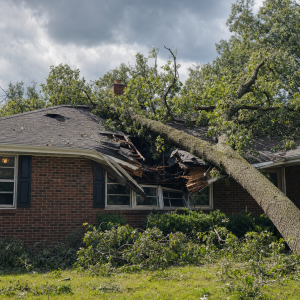
“Had a tree fall on our house… We called For The Public Adjusters and they took over from there. Any question or concern we had they were there to answer, and they did all the hard parts for us. We were beyond pleased with our outcome and will recommend this business to anyone and everyone!!” – Brandon B.
This is what it’s all about—getting peace of mind and a superior financial outcome by having a dedicated expert in your corner. Instead of battling your insurer every day, you can focus on getting your life back to normal while your public adjuster handles the fight.
From Low-Ball to Full Recovery: A Real Homeowner’s Story
It’s one thing to talk about fighting your insurance company in theory. It’s another thing entirely to see how that fight plays out for a real person who’s standing in the middle of a water-logged disaster.
Stories like these are powerful proof. They show that you don’t have to just roll over and accept the first insultingly low offer your insurer slides across the table, especially after the chaos of hiring an emergency frozen pipe plumber. They take the idea of “fighting your insurer” and make it real.
It almost always starts the same way. The emergency plumber finally leaves, and you breathe a sigh of relief. That relief is short-lived. The dread kicks in the moment you open the email with your insurer’s estimate—a low-ball offer that wouldn’t even cover the cost of drywall, let alone the labor to put your home back together.
This is the moment homeowners feel completely powerless, trapped between a devastating mess and a settlement that’s a slap in the face.
It’s in this exact moment of frustration that most people realize they need a professional in their corner—an advocate who knows the insurance game inside and out and isn’t afraid to fight back.
This review shows the critical shift: going from a place of stress and total uncertainty to one of confidence, knowing an expert has taken over the fight for you.
A public adjuster doesn’t just argue about the numbers. They take control of the entire complicated, soul-crushing process. They provide peace of mind and, most importantly, force a financial outcome that the insurance company would have never offered on its own.
Brandon’s story isn’t a one-off. It’s the path taken by homeowners who decide to stop playing a rigged game and finally level the playing field.
It proves that with the right expert fighting for you, you can successfully push back against a low-ball offer and get the money you’re actually owed to rebuild—without having to drain your own savings account. You are never stuck with the first number they throw at you.
Answering Your Questions About Frozen Pipe Claims
When your house is soaked and the insurance company starts playing games, the questions come fast and furious. The stress can be crushing. Here are some straight, no-nonsense answers to the questions we hear every day from homeowners battling a frozen pipe claim.
My Insurer Blames Me for the Frozen Pipes. Can I Still Fight a Denial?
Absolutely, yes. Insurance companies love to hide behind the “homeowner negligence” or “failure to maintain heat” excuse. Frankly, it’s one of their go-to moves to deny a claim right out of the gate.
They are banking on you being too overwhelmed to fight back.
This is a tactic, not a verdict. A public adjuster’s job is to completely dismantle that argument. We dig into the specifics of what happened—the weather data, your home’s construction, the exact circumstances of the freeze—and build an evidence-based case proving it was a “sudden and accidental” loss. That’s precisely what your policy is supposed to cover.
Never, ever accept an insurer’s initial ‘no’ as the final word. A denial based on negligence is almost always the opening shot in a negotiation, and it’s a battle you can absolutely win with the right professional in your corner.
How Much Does a Public Adjuster Cost for a Burst Pipe Claim?
This is the most critical question, and the answer usually comes as a huge relief. Reputable public adjusting firms, including For The Public Adjusters, Inc., operate on a contingency fee basis.
What does that mean for you? You pay nothing upfront. Zero. No retainers, no hourly charges, no hidden fees. We only get paid a small, agreed-upon percentage of the insurance settlement we successfully recover on your behalf.
- No Upfront Cost: You don’t pay a single penny to get us started fighting for you.
- Aligned Interests: Our success is tied directly to your success. If we don’t get you more money, you owe us nothing.
- No Risk: This model completely removes the financial risk from your shoulders. Our goal is the same as yours: maximize your settlement so you can put your home back together properly.
This structure guarantees we are 100% motivated to fight for every last dollar you’re entitled to.
Do I Have to Use My Insurance Company’s Recommended Plumber?
No. Let’s be crystal clear: you are never obligated to use your insurance company’s “preferred” vendors. This goes for plumbers, water mitigation crews, and general contractors. Pushing their network on you is one of the oldest and most misleading tricks in their playbook.
Recommending their guys is a cost-control strategy for them, not a benefit for you. These contractors get a steady diet of work from the insurance company, which means their loyalty is to the insurer, not to you. They are notorious for writing conveniently low estimates that just happen to support the adjuster’s lowball offer.
You have the absolute right to hire your own independent, trusted professionals. A public adjuster will help you get multiple, detailed quotes from qualified contractors. We then use those independent estimates as undeniable proof that the insurer’s offer is garbage, forcing them to pay what it actually costs to do the job right.
How Long Do I Have to Dispute a Low Water Damage Settlement?
While the legal timeframe, or statute of limitations, varies by state, the most important answer is this: you need to act now.
The second you get a settlement offer that feels wrong, or when the delays start piling up with no good reason, it’s time to call for backup. The longer you wait, the harder it gets to challenge the insurance company. They’ll try to argue that new damage has occurred or that you’ve essentially “accepted” their low number by not speaking up sooner.
Getting a public adjuster involved right away gives you the strongest possible chance of a successful outcome. We can review your claim for free, with no obligation, to tell you where you stand and what to do next. Fast action is your best defense against an insurer trying to close your file for pennies on the dollar.
When you’re staring down a lowball offer after a frozen pipe disaster, you don’t have to take the hit alone. The team at For The Public Adjusters, Inc. has the expertise to take over, shut down the insurer’s tactics, and secure the full settlement you deserve. Get a free review of your claim today and let us take on the fight for you.