
Fire Claim Denied for Suspected Arson? It’s Not the Final Word
A fire claim denied on suspicion of arson is not the end of the road. Courts have repeatedly held that insurers must conduct a reasonable, good-faith investigation before denying a claim, and policyholders who document their loss independently from day one — photos, inventories, receipts, and expert reports — are the ones who most often prevail.
Key takeaways
- In Zoppo v. Homestead Insurance Co. (Ohio 1994), the state supreme court ruled that an insurer who denies a fire claim without a reasonable investigation acts in bad faith — and the tavern owner prevailed.
- An arson accusation is not proof; the carrier must ground its denial in a genuine, documented investigation of the actual facts.
- A fire claim denied for suspected arson can often be challenged when the policyholder has independent evidence the insurer ignored or never gathered.
- Building your own damage file from day one — photos, inventories, fire department reports, and expert findings — gives your claim evidence the carrier cannot simply wave away.
- A licensed public adjuster works only for the policyholder, documenting the loss independently rather than relying on the insurer’s version of events.
Few moments are more frightening for a property owner than opening a denial letter that quietly, or not so quietly, suggests you burned your own home or business. The accusation feels personal because it is. But an insurance company’s suspicion is not proof, and a denial letter is not a verdict. The burden of proving arson generally falls on the insurer, and that burden is a heavy one — carriers typically must show both that the fire was intentionally set and that the insured had something to do with it.
Why Courts Side With Policyholders Who Push Back
Judges and juries take a dim view of insurers that deny first and investigate later. In Rawlings v. Apodaca, the Arizona Supreme Court upheld a bad-faith judgment for homeowners whose house was destroyed by fire, holding that an insurer owes its policyholder a duty of fair dealing that goes beyond simply cutting a check — the carrier must treat the insured’s interests with equal regard to its own. The lesson carries across jurisdictions: when an insurer’s “investigation” is really a search for reasons to deny, the policyholder gains powerful legal leverage. If you’re facing a suspicious denial, an experienced Public Adjuster in Garner can help you understand whether your carrier actually did the work the law requires.
What Separates Owners Who Win From Owners Who Don’t
In nearly every successful arson-defense story, the policyholder did a few things right, early:
- They documented independently. Their own photos, video, and contents inventory — not just the carrier’s file.
- They preserved the scene and the evidence. Nothing was cleaned up or discarded before it was recorded.
- They kept a paper trail. Every call, letter, and email with the insurer was logged in writing.
- They brought in their own experts. Independent cause-and-origin findings often contradict a carrier’s hired investigator.
- They cooperated — carefully. They complied with policy duties without volunteering speculation.
In the sections that follow, we’ll walk through how one tavern owner beat his insurer’s arson accusation in court, when a rushed denial crosses the line into bad faith, and the exact steps North Carolina property owners should take in the first days after a fire. Whether your loss is in the Triangle or a smaller community, a licensed and bonded Public Adjuster in Siler City NC can help you build the kind of documented, professional claim file that insurance companies — and courts — cannot easily dismiss.
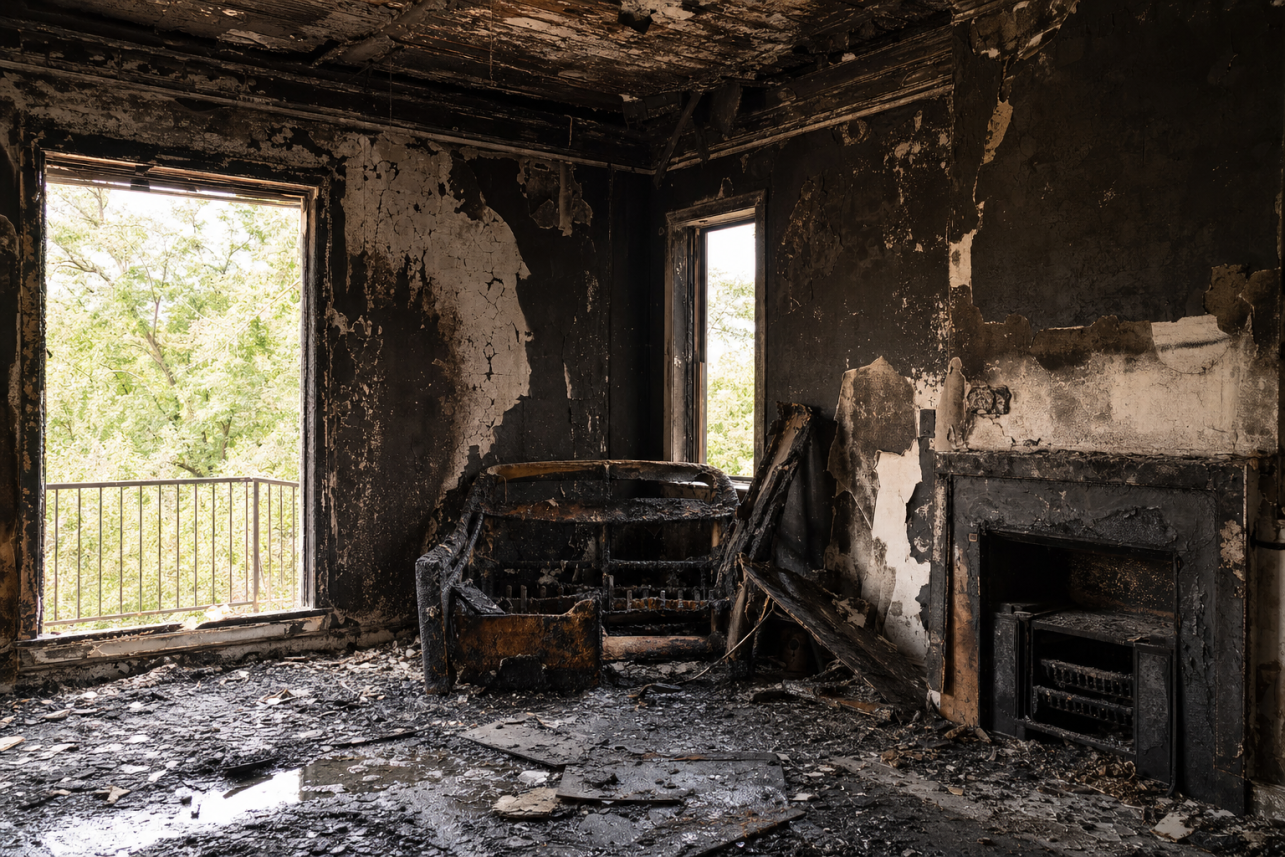
How Did a Tavern Owner Beat His Insurer’s Arson Accusation?
In Zoppo v. Homestead Insurance Co., an Ohio tavern owner whose bar burned was accused of arson and had his fire claim denied. He sued, proved the insurer ran a one-sided investigation that ignored witnesses pointing to other suspects, and the Ohio Supreme Court upheld a verdict in his favor, including punitive damages for bad faith.
The Fire and the Rush to Judgment
Michael Zoppo owned a tavern that was destroyed by fire. Like many policyholders, he assumed his insurance company would investigate fairly and pay what the policy promised. Instead, Homestead Insurance quickly settled on a theory that the owner himself had set the fire — and denied the claim on arson grounds.
What made the case remarkable was not the accusation itself. Insurers raise arson defenses regularly. It was how little genuine investigation stood behind it.
The One-Sided Investigation
The evidence at trial showed the carrier’s investigation was built to support a conclusion it had already reached, rather than to find the truth. Among the failures the court highlighted:
- Witnesses knew that patrons had been thrown out of the tavern shortly before the fire and had made threats — yet the insurer failed to meaningfully pursue those leads.
- The investigator did not interview people who could have pointed to other suspects or supported Zoppo’s account.
- The carrier leaned on circumstantial suspicion of the owner while disregarding exculpatory information already in its reach.
This is the pattern experienced claim professionals watch for: an insurer that interviews only the witnesses who help its denial. A licensed Public Adjuster in Siler City NC sees versions of this dynamic in fire losses where the carrier’s “investigation” never seriously considered anyone but the policyholder.
What the Ohio Supreme Court Decided
In 1994, the Supreme Court of Ohio sided with Zoppo. The court held that an insurer acts in bad faith when it denies a claim without reasonable justification — and that a justification built on a deliberately incomplete, one-sided investigation does not qualify. The jury’s verdict for the policyholder, including punitive damages, stood. The ruling remains a leading authority that insurers must investigate fairly before accusing their own customers of fraud.
Why This Matters to You
Zoppo proves that an arson accusation is not the end of the road. Policyholders who document their losses, preserve evidence, and push back on lazy investigations can prevail — even against a carrier that has already made up its mind. Having an advocate who knows how to force a complete record matters; that is exactly the role a Public Adjuster in Mebane NC plays for fire-loss clients facing hostile claim handling. While no one can guarantee a specific outcome, the lesson of Zoppo is clear: insurers are legally obligated to look at all the evidence, not just the evidence that saves them money.
Is a Fire Claim Denied Without Investigation Bad Faith?
Yes, it can be. Under the standard set in Zoppo v. Homestead Insurance Co., an insurer that denies a claim without a reasonable justification — and without conducting a genuine investigation of the facts — acts in bad faith. North Carolina’s unfair claims settlement practices laws impose a similar duty, requiring carriers to investigate promptly and fairly before a fire claim denied letter ever goes out.
The Zoppo decision, which arose from a tavern fire and an arson accusation the policyholder ultimately defeated at trial, is best remembered for the rule it announced: an insurance company cannot simply decide it would rather not pay and then build a file to support that decision. The investigation has to come first, it has to be genuine, and the denial has to rest on a reasonable justification drawn from the facts the insurer actually found.
What Does a “Genuine Investigation” Look Like?
Courts and regulators generally expect an insurer to do real investigative work before denying a fire loss. Warning signs that an investigation was not genuine include:
- Reaching a conclusion of arson before the cause-and-origin investigation is complete
- Ignoring or failing to interview witnesses who support the policyholder’s account
- Disregarding fire department or independent expert findings that point to an accidental cause
- Relying only on evidence that supports denial while leaving contrary evidence out of the file
- Failing to explain, in plain terms, the actual basis for the denial
If your denial letter arrived quickly, cites vague policy language, or leans on “suspicion” rather than documented findings, those are facts worth examining closely. Policyholders working with a Public Adjuster in Hillsborough often discover that the carrier’s file is thinner than the denial letter suggests.
How North Carolina Law Echoes the Zoppo Duty
North Carolina’s unfair claims settlement practices statute, N.C. Gen. Stat. § 58-63-15(11), prohibits insurers from, among other things, refusing to pay claims without conducting a reasonable investigation based upon all available information, and from failing to provide a reasonable explanation for a denial. North Carolina courts have also recognized that unfair claims handling can support a claim under the state’s unfair and deceptive trade practices law, which carries the possibility of enhanced damages when a carrier’s conduct crosses the line.
In plain terms: the law in North Carolina does not let an insurer treat “deny first, investigate later” as a business strategy. The duty to investigate genuinely and justify the decision reasonably exists before the denial, not after a lawsuit is filed.
None of this means every denial is bad faith — some denials are legitimate. But it does mean you are entitled to a real investigation and a real explanation. If you suspect you received neither, having your file reviewed by a licensed Public Adjuster in Mebane, NC is a practical first step toward understanding whether the carrier met its legal obligations.
How Do Public Adjusters Build Evidence a Carrier Can’t Dismiss?
Public adjusters build an independent, documented damage file: photos and video captured before cleanup, a room-by-room contents inventory, independent origin-and-cause input, a clear timeline of events, and a log of every conversation with the insurer. Starting on day one means the policyholder — not the carrier — controls the official record of the loss.
When an insurer suspects arson, its investigators begin assembling a file immediately, and that file is built to support the company’s position. The only effective counterweight is a file of your own, created with the same discipline. That is exactly what a licensed public adjuster does — not guessing at values or arguing from memory, but documenting the loss so thoroughly that the evidence speaks for itself.
What Goes Into an Independent Damage File
- Photos and video before cleanup. Once debris is hauled away, burn patterns, smoke staining, and damaged contents are gone forever. Wide shots, close-ups, and video walkthroughs preserve the scene as it actually was.
- A room-by-room contents inventory. Every item is listed with its description, age, condition, and replacement cost. A detailed inventory is far harder to dispute than a rough estimate scribbled after the fact.
- Independent origin-and-cause input. The carrier’s investigator does not get the only word on how the fire started. Independent expertise on origin and cause can expose weak points in an accusatory theory.
- A timeline of events. Where you were, who you spoke with, when the fire department arrived, when the carrier inspected — dates and times documented while memories are fresh.
- A correspondence log. Every phone call, email, and letter with the insurer is recorded. If the carrier later misstates what was said, the log tells the real story.
Why Day One Matters So Much
Policyholders who wait until a fire claim denied letter arrives are forced to reconstruct evidence months later, often after the scene has been cleared. Those who document from the beginning hand the insurer a record it cannot easily wave away. If you’re facing a fire loss or a dispute over how it started, working with a fire damage insurance claim adjuster near Rolesville from the outset keeps the documentation on your side of the table.
This approach matters most when the stakes are highest. A carrier accusing a policyholder of setting their own fire is making a serious allegation, and a thin file makes that allegation easier to sustain. Policyholders dealing with an arson insurance claim in Pittsboro or anywhere else in North Carolina benefit from having a licensed, bonded professional whose only job is to document and present the insured’s side of the loss.
No one can promise a specific outcome. But a carrier reviewing a meticulous, independently built file behaves very differently than one facing a policyholder with nothing but a stack of receipts and a story.
Why Do Fire Claims Rise in a North Carolina Fall?
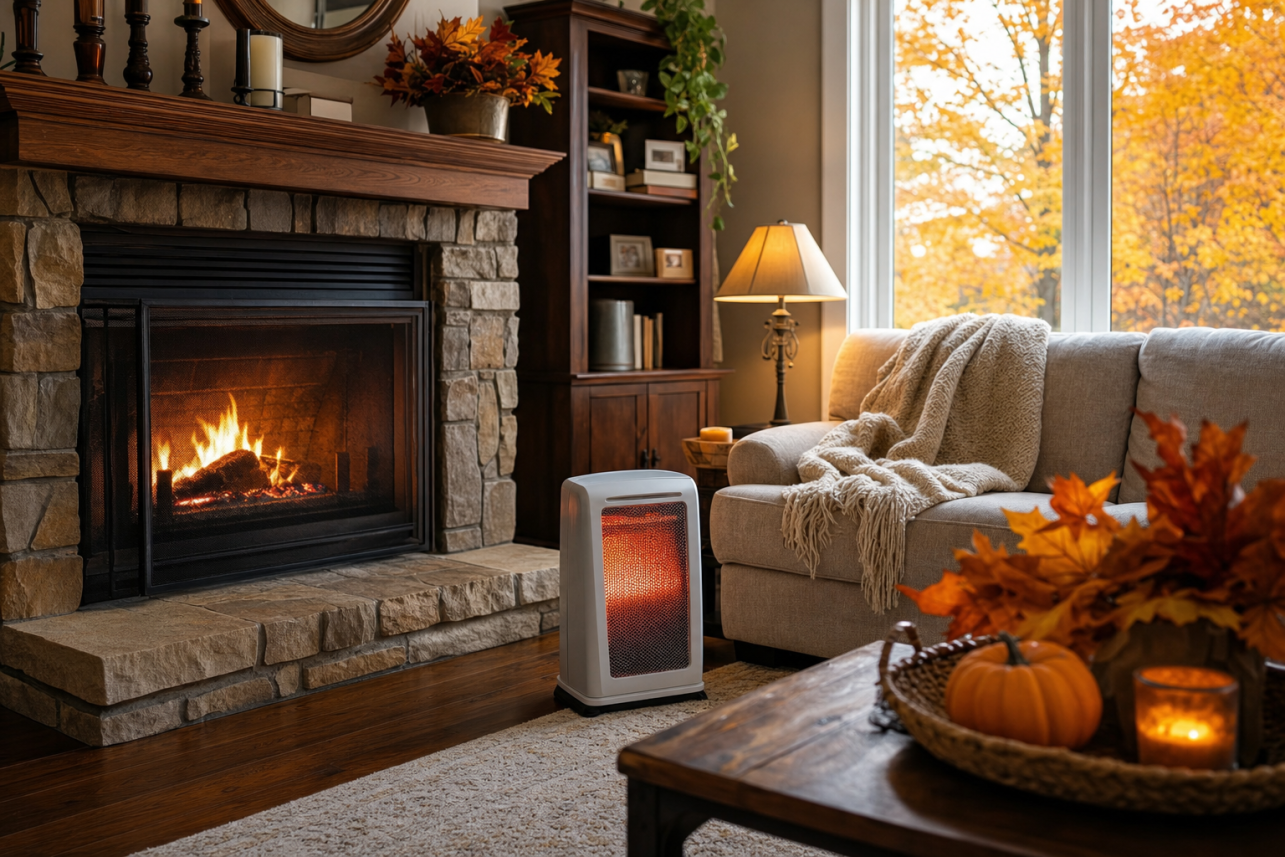
Fire claims climb in a North Carolina fall because the first cold snaps bring space heaters out of storage, send homeowners lighting neglected chimneys, pile dry leaves against structures, and strain circuits with seasonal loads. Insurers know this pattern, so autumn fire losses often receive extra scrutiny — making thorough documentation your best protection.
The Seasonal Hazards Behind Autumn Fire Losses
From the mountains to the Piedmont, the shift from warm afternoons to chilly nights changes how we heat and live in our homes almost overnight. Several risks converge at once:
- Space heaters pulled from closets and plugged in near bedding, curtains, or furniture — often on extension cords never rated for that load.
- First fires in neglected chimneys, where creosote built up over previous seasons ignites the moment the flue gets hot.
- Dry fallen leaves collecting in gutters, against siding, and under decks, creating ready fuel for a stray ember or discarded cigarette.
- Overloaded circuits as heaters, holiday lighting, and kitchen appliances all compete for power in older wiring systems.
Why Carriers Look Harder at Fall Fires
Because autumn fires are predictable, carriers investigate them aggressively. Adjusters and cause-and-origin investigators look for anything suggesting negligence, a maintenance failure they can tie to a policy exclusion, or — in the worst cases — an intentional act. A homeowner who simply turned on a heater the same way everyone else on the street did can suddenly face pointed questions about financial stress, recent policy changes, or the condition of the property. If the answers are not well documented, a legitimate fire claim denied on thin reasoning is a real possibility. Working with an experienced fire damage insurance claim adjuster in Rolesville early in the process helps ensure the file tells the true story before the carrier writes its own version.
Documentation Is Your Best Defense
The good news is that policyholders can get ahead of this scrutiny. Useful records include:
- Receipts or service records for chimney cleanings, HVAC maintenance, and electrical work.
- Photos of the property taken before the loss — even casual family photos showing rooms and contents.
- A prompt, detailed inventory of damaged contents, with model numbers and purchase information where available.
- Written notes of every conversation with the carrier, including names, dates, and what was said.
This paper trail matters most when a carrier hints at intentional causes. When the questions turn accusatory, as they can with any suspicious-origin determination, policyholders dealing with an arson insurance claim in Pittsboro or anywhere else in North Carolina should treat documentation as evidence, not paperwork. A well-organized file shifts the burden back where it belongs: on the insurer to prove its theory, rather than on you to disprove suspicion. While no one can promise a particular outcome, owners who document early and thoroughly consistently put themselves in a far stronger negotiating position.
What Should I Do After a Fire Loss in NC — Especially If Your Fire Claim Denied Worries Are Growing?
After a fire in North Carolina, secure the property, preserve the scene before any cleanup, report the loss promptly and accurately, respond carefully to any examination-under-oath request, and consider hiring a licensed public adjuster early. These steps protect both your safety and your claim — though no professional can guarantee a specific outcome.
Secure the Property and Preserve Evidence
Your first duty under most policies is to protect the property from further damage. Board up openings, tarp the roof if it is safe to do so, and keep records of those costs — they are typically reimbursable. Just as important: do not clean up, discard debris, or allow contractors to haul anything away until the scene has been documented. The fire scene itself is often your best evidence, especially if the carrier later questions the cause. Photograph everything, keep damaged contents, and ask for copies of the fire department’s report. The U.S. Fire Administration offers practical post-fire recovery guidance that is worth reading before anyone touches the site.
Report the Loss Carefully and Honestly
Notify your insurer promptly, but stick to facts you actually know. Guessing about how the fire started, the value of contents, or your whereabouts can create inconsistencies the carrier may later use against you. If you are unsure of an answer, say so. Keep a written log of every call, adjuster visit, and document request.
Understand Examination-Under-Oath Requests
If the insurer requests an examination under oath (EUO), take it seriously — it is a formal, recorded proceeding, and refusing to appear can jeopardize your claim. You are entitled to prepare, to have representation, and to review documents beforehand. An EUO request often signals the carrier is scrutinizing the claim closely, which is exactly when accurate records and professional help matter most. If you have concerns about how your claim is being handled, you can also contact the North Carolina Department of Insurance, which regulates insurers and accepts consumer complaints.
When to Bring in a Public Adjuster
The earlier a licensed public adjuster is involved, the more evidence can be preserved and documented before it is lost to cleanup or demolition. A fire damage insurance claim adjuster in Rolesville can scope the structural loss, inventory contents, and present documentation in the format carriers expect.
Fire losses happen across the Triangle and beyond, and working with a licensed, bonded public adjuster in Pittsboro NC or your own community means someone is advocating solely for you, not the insurance company. To be clear and honest: no adjuster can promise a particular settlement or guarantee a denial will be reversed. What professional representation does provide is thorough documentation, policy knowledge, and a fair fight — the same ingredients that help policyholders who were wrongly accused prevail.
Fire Claim Denied: Relying on the Carrier’s File vs. Building Your Own Evidence
| What Happens | Relying Only on the Insurer’s Investigation | Building an Independent, Documented File |
|---|---|---|
| Who gathers the evidence | The carrier’s adjusters and experts, working for the insurer | Your own public adjuster and experts, working only for you |
| Damage documentation | May be limited to what supports the carrier’s position | Day-one photos, contents inventories, and origin-and-cause findings preserved before cleanup |
| If the claim is denied | You must argue against a file you never controlled | You can point to concrete evidence the insurer overlooked — the failure courts condemned in Zoppo |
| Negotiating position | Carrier’s conclusions often go unchallenged | Independent proof pressures the insurer to investigate fairly or reconsider |
Illustrative Example: Evidence That Could Not Be Waved Away (Hypothetical)
Illustrative example
Consider a composite scenario drawn from common claim patterns: a North Carolina restaurant owner suffers a devastating kitchen fire, and the carrier hints at arson because the business had a slow season. Before any cleanup, a public adjuster photographs the scene, secures the fire department’s report pointing to an electrical origin, and catalogs every piece of damaged equipment and contents. When the insurer’s denial letter arrives citing ‘suspicious circumstances,’ the owner’s file shows the carrier never examined the electrical panel its own expert flagged. Faced with a documented record it could not explain away — the same failure the Ohio Supreme Court condemned in Zoppo v. Homestead — the insurer reopens the investigation and resolves the claim on the evidence. This example is hypothetical and illustrative only; every claim is different, and no outcome can be guaranteed.
Frequently asked questions
What should I do first if my fire claim is denied?
Ask the insurer for the denial in writing, including the specific policy language and the evidence they relied on. Then gather your own documentation—photos, receipts, witness statements, and fire department reports—before responding. In Zoppo v. Homestead Insurance Co., the Ohio Supreme Court held that a carrier that denies a fire claim without a reasonable investigation acts in bad faith, so a denial built on thin evidence is not the end of the road.
Can an insurance company accuse me of arson without proof?
A carrier must have a reasonable basis for an arson defense, which generally requires evidence of an intentionally set fire, motive, and opportunity. Courts have pushed back hard when insurers skip real investigation—Zoppo v. Homestead is a leading example, where the tavern owner prevailed because the insurer ignored facts pointing away from him. If you are accused, do not panic; demand the evidence and start building your own documented file immediately.
How much does a public adjuster cost for a fire claim?
Public adjusters typically work on a contingency fee—a percentage of the amount recovered—so there is usually no upfront cost. Fee percentages vary by state and claim size, and North Carolina regulates how these agreements must be written. Because the adjuster is paid from the settlement, their interest is aligned with documenting the full, provable value of your loss. Always get the fee agreement in writing before signing.
How long does a fire insurance claim take to settle?
Straightforward fire claims may resolve in a few months, but large losses, total losses, or claims involving an arson investigation can take considerably longer—sometimes a year or more if litigation follows. The timeline depends on how quickly damage is documented, how responsive the carrier is, and whether the cause of the fire is disputed. A complete, well-organized damage file from day one is the single best way to keep a claim moving.
What is insurance bad faith and how do I prove it?
Bad faith generally means the insurer denied or underpaid a claim without a reasonable justification. In Zoppo v. Homestead Insurance Co., the Ohio Supreme Court held that failing to conduct a reasonable investigation before denying a fire claim is itself bad faith. Proving it usually requires showing what the carrier knew, what it ignored, and that no reasonable basis supported its decision—which is why your own documented evidence matters so much.
Should I hire a public adjuster or a lawyer after a fire claim denial?
They solve different problems. A public adjuster documents and values the physical loss—structure, contents, additional living expenses—and negotiates the claim itself. An attorney handles legal disputes like bad faith, arson accusations, or lawsuits. Many denied claims benefit from both: the adjuster builds the evidence file the attorney relies on in court. If you are formally accused of arson or facing an examination under oath, consult an attorney promptly.
What is an examination under oath and do I have to attend?
An examination under oath (EUO) is sworn questioning by the insurer’s attorney, and most policies make attendance a condition of coverage—refusing can forfeit your claim. It is common in suspected-arson cases. You may bring your own attorney, and you should prepare carefully, because your answers become part of the record. Honest, consistent testimony backed by documentation is exactly what helped policyholders like the owner in Zoppo prevail.
What are the biggest mistakes people make after a house or building fire?
The most costly mistakes: throwing away damaged contents before they are photographed and inventoried, giving recorded statements without preparation, accepting the carrier’s first estimate as final, missing policy deadlines for proof of loss, and relying solely on the insurer’s investigation. The carrier builds its own file from day one—policyholders who do the same, with independent photos, receipts, and expert reports, stand on evidence that is much harder to dismiss.
Can I reopen or appeal a fire claim that was already denied?
Often, yes. A denial is the insurer’s position, not a court ruling. You can submit new evidence, request reconsideration, file a complaint with the North Carolina Department of Insurance, invoke the policy’s appraisal clause for valuation disputes, or pursue litigation. Act quickly—policies and state law impose deadlines for suing on a denied claim. New, well-documented evidence of the cause and value of the loss is what changes outcomes.
What proof do I need to document fire damage to my home or business?
Photograph and video everything before cleanup, keep damaged items until documented, and collect the fire department report, pre-loss photos, purchase receipts, repair estimates from independent contractors, and a room-by-room contents inventory. Save receipts for hotels and meals if you are displaced. Independent evidence gathered early is powerful—as Zoppo v. Homestead shows, carriers cannot simply wave away a claim supported by facts without risking a bad faith finding.
Flood Insurance Claim help near you
Related local pages
If your fire claim was denied or is being questioned, don’t face the carrier’s investigators alone. Our licensed and bonded North Carolina public adjusters build an independent, documented damage file and advocate for you from day one. Contact us for a free, no-obligation claim review. Get in touch.
Last updated: November 2, 2026