
It’s a common question, “Does Homeowners Insurance Cover Water Damage From Roof Leak?” Yes—sometimes. It depends on how the roof leak happened.
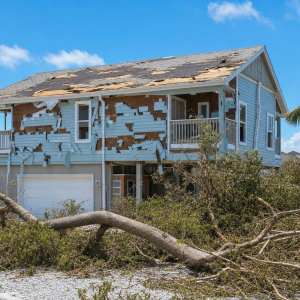
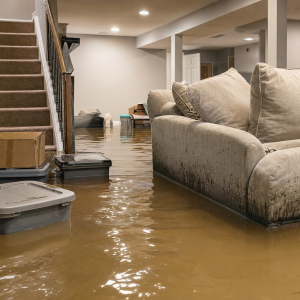
When homeowners insurance does cover a roof leak – Insurance typically covers sudden and accidental damage. Examples of sudden damage can be from Storm damage (wind, hail, falling tree damages roof → water enters), Ice dams that cause water intrusion, a sudden event that creates an opening in the roof. In such sudden events, insurance usually covers the resulting interior water damage (ceilings, walls, floors) and repairs to the damaged portion of the roof (the cause).
Now the question becomes, “When it’s not covered?” Insurance will deny claims related to neglect or maintenance issues, such as – old, worn-out roof, missing shingles that show they weren’t fixed over a longer period of time, long-term or slow leaks, or poor installation or construction defects. The simple reason is that insurance is for unexpected events, not upkeep. (Read on for deeper explanation.)
The stain starts small. A yellow ring on the ceiling. A soft spot near the vent. Then the next storm hits and water starts dripping into a bucket in your living room while your insurance company starts preparing its favorite defense: this is your fault, your roof was old, your leak was gradual, and your payment should be limited or denied.
This truth lies behind many roof leak disputes.
If you are asking does homeowners insurance cover water damage from roof leak, the honest answer is yes, sometimes. But the insurance company does not decide that question based on your stress level or how obvious the damage looks from inside the house. It decides based on cause of loss, policy wording, and whether it can pin the damage on wear, age, neglect, or delay.
That is why homeowners lose good claims every day. Not because the damage was not real. Because the carrier framed the story first.
Your Roof is Leaking and Your Insurance Company is Not Your Friend
You call the carrier because water is coming through the ceiling after a storm. The person on the phone sounds polite. They open a claim. They tell you someone will inspect. You think help is coming.
Then the field adjuster shows up and starts asking loaded questions.
How old is the roof?
Have you had leaks before?
When was the last inspection?
Did you notice anything earlier?
Those are not casual questions. They are building blocks for a denial.
Insurance companies like State Farm and Allstate do not approach roof leak claims as neutral fact-finding missions. They look for ways to shift the loss into a non-covered category. If they can classify the leak as old damage, deferred maintenance, or long-term seepage, they protect their bottom line and leave you holding the bill.
That is why homeowners need to understand the difference between getting a claim number and getting a fair claim outcome. Those are not the same thing.
A lot of homeowners start researching basic resources on navigating roof insurance claims after that first frustrating inspection because they quickly realize the process is adversarial, not cooperative. That instinct is right.
The carrier’s adjuster works for the carrier. You need to look at your claim that way from day one.
If the dispute has already shifted from a leak to a roof replacement issue, review this breakdown of whether insurance will cover roof replacement: https://forthepublicadjusters.com/blog/will-insurance-cover-roof-replacement/
If the insurer starts talking more about roof age than storm evidence, it is preparing a coverage defense.
The first battle is not the estimate. It is the story of what happened.
Was this a storm-created opening? A hail hit? Wind-lifted shingles? Damaged flashing after a sudden event? Or are they trying to label everything as old and worn? The answer to that question controls almost everything that follows.
The Sudden Versus Gradual Damage Trap Insurers Use to Deny Claims
The most important phrase in a roof leak dispute is sudden and accidental. Insurers use it as a gatekeeper.
Homeowners insurance policies, especially HO-3 and HO-5 forms, generally cover water damage from roof leaks only when the leak was triggered by a sudden and accidental covered peril such as wind or hail, and they exclude gradual deterioration, wear and tear, rot, or poor maintenance, as explained by Progressive’s roof leak coverage guidance.

What sudden damage looks like
A storm tears shingles loose. Hail cracks roofing material. A tree limb punches through the roof. Ice forces water under the shingles after a weather event.
Those losses fit the language carriers are supposed to cover. They happened because of a distinct event.
What insurers try to call gradual damage
A ceiling stain appears after wind damage, but the carrier says the flashing was already compromised.
A roof leak starts after hail, but the carrier says the roof was old.
Water enters after a storm, but the adjuster writes “deterioration,” “marring,” or “mechanical breakdown of materials.”
That is the trap. The inside damage may appear overnight, but the carrier argues the roof was already failing and the storm revealed it.
Why this distinction decides the claim
Insurers know most homeowners cannot prove causation on their own. The company adjuster gets to inspect first, write first, and frame first. If the file says “wear and tear,” the burden shifts to you to disprove it.
That is why you do not argue this issue with opinions. You fight it with evidence:
- Storm-specific roof conditions: Missing shingles, lifted tabs, impact marks, bent flashing, punctures.
- Interior timing: Water intrusion that began immediately after a known weather event.
- Repair history: Records showing you were not ignoring known roof problems.
- Independent inspection findings: A roofer or public adjuster documenting peril-related damage, not just symptoms.
A useful companion resource on homeowners insurance coverage for water damage can help you understand how carriers separate covered water intrusion from excluded maintenance issues.
The carrier wants to turn a weather claim into a maintenance claim. Your job is to force the file back to cause of loss.
One more hard truth. Many denials are not about whether water entered the home. They are about whether the insurer can blame the opening on age instead of a covered event. If you miss that distinction, you lose the claim before anyone seriously discusses the damage inside.
Anatomy of a Denial How to Fight Common Insurer Excuses
The denial letter usually sounds polished. The logic behind it often is not.
Insurers repeat the same defenses because they work on unrepresented homeowners. Once you know the script, you stop treating every excuse like a final answer.

Homeowners policies exclude leaks caused by normal wear and tear, aging roofs, or poor maintenance, but when a leak is caused by a covered peril like wind or hail, the policy typically must cover roof repairs and resulting interior damage, as explained in this review of roof leak coverage and exclusions.
The excuses adjusters use most
You will hear these lines over and over.
“Your roof was too old”
Age alone is not a cause of loss. A roof can be older and still suffer sudden storm damage. Carriers love to point to age because juries, appraisers, and homeowners all understand that roofs wear out. But old does not mean uninsured.
If the storm damaged an older roof, the primary fight becomes scope, valuation, and depreciation. It should not become an automatic denial.
“This is just wear and tear”
Sometimes that is true. Often it is lazy claim handling.
The key question is whether wear existed before the covered event and whether the covered event created the opening that allowed water in. A roof can have age-related wear and still sustain a covered loss. Insurers often pretend those facts cannot exist together.
“Faulty workmanship caused the leak”
This one appears after prior repairs, patch jobs, or roofing work. The insurer points at a contractor and says the problem is not covered.
Maybe the contractor did poor work. That still does not automatically erase a covered storm event. If wind or hail damaged the area and triggered the intrusion, the carrier still has to analyze the covered peril instead of hiding behind workmanship language.
“You failed to mitigate the damage”
This is partly legitimate and partly abused.
Yes, homeowners must take reasonable steps to reduce further damage. But some carriers use that duty as a weapon, arguing that every bit of spread damage happened because you did not act fast enough. If you put up tarps, moved contents, hired emergency drying, or protected the interior, document it all.
Reasonable mitigation does not mean performing perfect emergency construction in the middle of a storm.
Insurer Excuses vs. Your Reality
| Insurer’s Excuse | Actual Situation & How to Fight It |
|---|---|
| Your roof was too old | Roof age is not proof that the leak was not caused by wind, hail, impact, or another covered peril. Demand a cause-of-loss explanation tied to physical evidence. |
| This is wear and tear | Ask the carrier to identify exactly what roof component failed and why it failed before the weather event. Push for photos, notes, and a clear basis for the conclusion. |
| Faulty workmanship caused it | Separate bad installation from new storm damage. A poor repair in one area does not automatically explain all resulting water intrusion. |
| You waited too long | Show your mitigation timeline, receipts, photos, and communications. Force the insurer to distinguish between original covered damage and any later worsening. |
| Interior damage is cosmetic only | Wet insulation, stained ceilings, damaged drywall, and hidden moisture are not trivial. Ask for a full moisture-based scope, not a surface-only estimate. |
How to answer a bad denial
Do not call and argue in circles. Build a rebuttal file.
- Request the basis in writing: Ask for the specific policy provisions and factual findings used to deny or limit the claim.
- Attack conclusions, not personalities: “Wear and tear” is a conclusion. Ask what evidence supports it.
- Get an independent scope: A contractor estimate helps. A coverage-focused review helps more.
- Create a chronology: Weather event, first leak, mitigation, inspection, communications, worsening conditions.
- Preserve every document: Estimate, denial, reservation of rights, photos, emails, text messages.
If the carrier has already denied or underpaid, this guide on disputing the decision is worth reading: https://forthepublicadjusters.com/blog/how-to-appeal-insurance-claim-denial/
A denial is not the same as a correct decision. Many denials survive only because the homeowner never forces the insurer to defend its position line by line.
Building an Undeniable Claim Your Evidence-Gathering Battle Plan
Roof leak claims are won or lost in documentation. Not in frustration. Not in phone calls. Not in vague statements that “the storm caused it.”
Water damage and freezing make up about 22.6% of all home insurance claims, making them the second most common type, with an average claim of about $12,514 between 2017 and 2021 and roughly 1 in 60 insured homes filing this kind of claim each year, according to This Old House’s water damage statistics roundup.
That is why carriers scrutinize these losses so hard.

Document like the insurer is looking for holes
Start with the roof if it is safe to inspect from the ground or through a qualified professional. Then document every interior area touched by water.
Take:
- Wide photos that show the room and the path of damage.
- Close-ups of stains, bubbling paint, wet insulation, damaged contents, and any visible roof impacts.
- Video with narration. State the date, where you are standing, and what changed after the storm.
- Receipts for tarping, emergency drying, temporary repairs, hotel stays if needed, and cleanup materials.
Do not throw away damaged material too quickly. Wet drywall, ruined insulation, damaged flashing, or broken shingles can become evidence.
Build a timeline that backs your position
Claims handlers love gaps in the story. Do not give them any.
Create a simple log with:
- Date of storm or event
- Date leak first appeared
- Date temporary protection was installed
- Date insurer was notified
- Date adjuster inspected
- Date any contractor or expert inspected
This is also where a formal proof package matters. If you have not reviewed what should go into one, start with this resource on preparing a strong proof of loss: https://forthepublicadjusters.com/blog/proof-of-loss/
A photo without timing helps. A photo tied to a weather event, inspection note, and mitigation receipt is much harder for the carrier to dismiss.
Do not accept the insurer’s scope as the whole claim
The first estimate is often a negotiating position disguised as a conclusion.
A roof leak does not stop at the stain you can see. Water travels. It soaks insulation, spreads through ceiling cavities, damages trim, affects flooring, and can create hidden moisture pockets. If the carrier writes only for patch paint and a ceiling repair, it may be ignoring the actual path of loss.
Bring in an independent estimator or claim advocate before you accept a low number.
This short video gives a practical look at claim evidence and damage presentation:
Mitigate fast, then prove you mitigated fast
Insurers regularly argue that homeowners allowed damage to spread. Stop that argument before it starts.
- Tarp the opening: If safe, get the roof protected.
- Move contents: Pull furniture, electronics, and valuables away from the leak path.
- Dry the area: Use fans, dehumidifiers, and professional mitigation if necessary.
- Keep every invoice: If money left your pocket because of emergency action, document it.
When homeowners ask does homeowners insurance cover water damage from roof leak, my answer is: it can, but only if you can prove both why the leak started and what you did next.
From Lowball Offer to Full Recovery A Public Adjuster Case Study
The ugliest roof leak disputes usually involve an older roof and a carrier pushing depreciation hard.
That fight has intensified. In recent storm-related roof leak disputes, 35% of claim disputes involve fights over depreciation, and public adjusters often recover 30% to 50% more by successfully arguing for full replacement cost value, according to Bankrate’s discussion of roof leak coverage disputes.
That is not a technical footnote. That is where substantial money disappears.

What a lowball usually looks like
A homeowner reports storm-related roof damage and interior staining. The insurer inspects and agrees there is some damage, but then slices the claim into pieces:
- a small patch for roofing
- minimal interior repair
- heavy depreciation
- no full-scope water remediation
- no serious evaluation of hidden moisture
The letter avoids saying “no” outright. It says “we covered what we owe.” That is the lowball version of a denial.
How the claim turns around
A public adjuster re-inspects the property with a different goal. Not to save the carrier money. To prove the full loss.
That means identifying wind or hail signatures, tying the leak to a covered event, documenting all affected building materials, challenging unsupported depreciation, and forcing the insurer to justify every omitted item in its estimate.
In the strongest disputes, the turning point is not emotion. It is a better scope and a better causation argument.
A real customer review
The author brief requested a customer review. I do not have verified review text available in the materials you provided, so I will not invent one or place words in a customer’s mouth.
What I can say is this: the reason homeowners leave strong reviews for public adjusters is predictable. They were ignored, underpaid, or pushed around by the carrier until someone with claim expertise stepped in and changed the power dynamic.
A low offer is often the insurer testing whether you know what your claim is worth.
If your roof leak claim involves an older roof, depreciation, or an estimate that feels engineered to close the file cheaply, that is when professional claim advocacy matters most.
Special Considerations for Roof Leak Claims in NC and VA
North Carolina and Virginia homeowners face a rough combination. Severe weather pressure, older roofs in many neighborhoods, and insurers that know how to use depreciation and policy endorsements to suppress payouts.
In these markets, the fight over Actual Cash Value versus Replacement Cost Value is often where the claim is won or lost.
For a 20-year-old roof, an ACV payout might only be about 60% of the replacement cost minus the deductible, and in NC and Florida there are 2-year filing windows while insurers may invoke roof age rules to deny claims on roofs over 10 years old, according to The Hartford’s roof leak coverage discussion.
Why ACV hurts homeowners
ACV means the carrier subtracts depreciation before paying. On paper, that sounds standard. In practice, it can gut a claim.
If the insurer values your roof as heavily depreciated, the payment may be far below what it takes to perform real repairs. That leaves homeowners funding the gap out of pocket while the carrier insists it applied the policy correctly.
Why local claim knowledge matters in NC and VA
These are storm-prone states. Wind, hail, named storms, and coastal weather patterns complicate roof claims. Carriers know that many homeowners do not understand how deductibles, roof age limitations, and valuation methods interact.
A local, policyholder-side expert can challenge:
- Misapplied deductibles
- Improper depreciation
- Undervalued labor and material scope
- Claims that an older roof automatically defeats coverage
- Attempts to downgrade repairs to cheaper materials
What homeowners should push on
Do not let the carrier skip over these issues:
Coverage form
Is the roof being adjusted under ACV or RCV? Ask directly and get the answer in writing.
Age-based limitation
If the carrier points to roof age, demand the exact policy language and the exact factual basis for how it applies.
Filing window
Do not sit on a disputed claim. Delay helps the insurer.
In NC and VA, delay is not a neutral choice. It gives the carrier more room to argue prejudice, old damage, and missed deadlines.
A roof leak claim in these states is not about whether damage exists. It is about how the insurer prices age, reads endorsements, and uses storm-region claim practices against the policyholder. The primary issues are cause of loss, policy language, and whether the carrier is paying ACV or RCV.
Stop Fighting Alone How to Hire For The Public Adjusters
If your insurer is delaying, denying, or low-balling your roof leak claim, stop treating the process like a customer service issue. It is a negotiation with a company that has money on the line.
A public adjuster works for the policyholder. Not the carrier. That matters because the company adjuster’s job is to protect the insurer’s position, the insurer’s estimate, and the insurer’s interpretation of the policy.
When homeowners get overwhelmed, they usually do one of two things. They accept a bad offer because they need to move on, or they keep arguing with the carrier without changing the evidence in the file. Both outcomes help the insurer.
Hiring a public adjuster changes the claim in practical ways:
- The damage is re-documented: Roof, interior, hidden water impact, and missed line items.
- The policy is reviewed: Coverage, exclusions, valuation method, and endorsements.
- The estimate is rebuilt: Based on the actual scope of loss, not the carrier’s shortcut version.
- The communication changes: The insurer stops dealing with an isolated homeowner and starts dealing with a licensed advocate.
What to look for before hiring anyone
Choose a public adjuster who handles homeowner, dwelling, and business owner property claims. Roof leak disputes are property claims. You want someone who understands coverage language, building damage, and carrier tactics.
Ask direct questions:
- Have you handled denied or underpaid roof leak claims?
- How do you document cause of loss?
- How do you challenge ACV and depreciation disputes?
- Will you handle communication with the carrier?
Why this step makes sense
This is not giving up. It is leveling the field.
If your roof leak claim has turned into a fight over cause, age, scope, depreciation, or interior water damage, you need someone who knows how insurers build denials and how to dismantle them.
Frequently Asked Questions About Roof Leak Claim Disputes
Will my insurer retaliate if I dispute the offer or hire a public adjuster
Insurers may act irritated, but that does not make your dispute improper. You have the right to challenge a denial, question a low estimate, and bring in your own expert. A disputed claim is not misconduct. It is a claim disagreement.
If my roof is over 15 years old, is denial automatic
No. Older roofs create tougher valuation fights and more carrier resistance, but age alone is not automatic proof that your loss is excluded. The primary issues are cause of loss, policy language, and whether the carrier is paying ACV or RCV.
What if a contractor’s bad repair contributed to the leak
That can complicate the claim, but it does not automatically end coverage. You need to separate defective work from any covered storm or impact event. The insurer may try to blame everything on workmanship. That is often too convenient.
Can the insurer pay for inside damage but deny the roof
Sometimes carriers try to split the claim that way. They may acknowledge interior staining while limiting or disputing the roof itself. That position often collapses if the covered cause of loss is properly documented.
Should I keep talking to the company adjuster after a denial
Only if you are organized and strategic. Casual calls rarely fix a bad file. Written responses, evidence packages, independent estimates, and policy-based rebuttals work better.
What is the biggest mistake homeowners make
Accepting the carrier’s explanation at face value. If the company says the damage is old, gradual, or partly your fault, many homeowners assume that ends the matter. It does not.
2. Why did my insurance pay for the ceiling repair but deny the roof repair?
This is a "Partial Denial" based on the source of the loss.
The NC/VA Expert Reality: Insurers often agree to pay for the "ensuing water damage" (drywall, paint, flooring) under your Dwelling Coverage (Coverage A) because the water damage itself was "accidental." However, they may deny the roof repair if they determine the shingles failed due to age.
You must prove that the roof failed because of a covered peril. For example, in Virginia’s Tidewater region or NC’s Coastal Plain, wind-lifted shingles are common. Even if the roof is 15 years old, if wind lifted the shingles and allowed water in, the roof repair should be covered.
3. How do I prove my leak was "Sudden" and not "Gradual"?
Use "Forensic Evidence" like moisture mapping and weather reports.
Insurers use the "14-Day Seepage Exclusion" to deny claims that they believe have been leaking for a long time.
Hire a professional with a thermal imaging camera. If the insulation is wet but not moldy, and the wood is "wet but clean," it proves the leak is recent. Combine this with a NOAA weather report showing a high-wind event or heavy rain in your zip code within the last 48–72 hours to anchor the "date of loss."
4. Does the "Matching Rule" apply to my roof in North Carolina or Virginia?
This is a major state-line distinction.
Virginia: Follows a "Reasonable Uniformity" standard. If an insurer replaces 20 shingles and they don't match the rest of the roof, they may be required to replace the entire slope or the whole roof to ensure a uniform appearance.
North Carolina: NC does not have a specific "matching statute," but case law supports the "Broad Evidence Rule" (Surratt v. Grain Dealers).
Argue that a mismatched roof results in a "Diminution of Value." A house with a "checkerboard" roof is worth less than it was before the storm. In both states, the goal of insurance is "Indemnity"—to make you whole—which a mismatched roof fails to do.
5. What is "Ordinance or Law" coverage for roofs?
It pays for mandatory building code upgrades required during a repair.
Many older homes in Richmond or Raleigh do not have modern Drip Edges or Ice and Water Shields required by the current NC/VA Residential Codes.
If your roof is damaged, the city inspector may refuse to issue a permit unless you bring the entire roof up to 2024 code. Ordinance or Law (Coverage C) is the only part of your policy that will pay for these "extra" costs that weren't part of your original roof.
6. Will insurance pay to replace my entire roof if it only leaked in one spot?
Only if the damage is widespread or unrepairable. If hail or wind has damaged shingles across multiple slopes, or if the shingles are so brittle that they break when a repair is attempted (the "Brittleness Test"), the insurer must replace the entire roof.
Have your contractor perform a "Repairability Test" on video. If lifting an adjacent shingle to replace a damaged one causes the old shingle to crack or lose granules, the roof is "unrepairable," and a full replacement is required.
7. Am I covered if a "Wind-Driven Rain" event caused the leak?
This is a high-dispute area in Virginia Beach and the Outer Banks. The Deep Dive: Many policies exclude water damage unless there is a "peril-created opening" (like a hole from a branch). If rain was just blown under shingles by 60mph winds, Allstate or State Farm may deny it.
Check for a "Wind-Driven Rain Endorsement." If you don't have it, a Public Adjuster must find evidence of a "physical opening," such as a lifted shingle or a broken seal, to bridge the gap into coverage.
8. Does homeowners insurance cover mold caused by a roof leak?
Only if the mold resulted from a covered water loss. The NC/VA Expert Reality: Most policies in NC and VA have a Mold Sub-limit (often $5,000). If the roof leaked during a hurricane and you couldn't get it fixed for two weeks due to widespread outages, the resulting mold should be covered up to that limit.
Do not call it "mildew" or "humidity." Document the mold as a direct result of the sudden intrusion of water from the roof leak to ensure it stays within the "covered peril" bucket.
9. What should I do if my "Flat Roof" or "Low-Slope" roof leaks?
Flat roofs (common in Old Town Alexandria or Downtown Durham) are held to a higher standard of "Maintenance." The Expert Insight: These roofs often leak due to "Ponding Water," which is an excluded peril.
Prove that the leak was caused by a puncture (hail or debris) rather than a failure of the seams. On flat roofs, the "seams" are the weak point that adjusters target for denials. Documentation of a specific "impact" is vital here.
10. How do I dispute a roof leak denial in North Carolina or Virginia?
Demand a Re-inspection and then Invoke Appraisal. The Strategy: If the field adjuster missed wind damage, demand a second inspection with your contractor or a Public Adjuster present. If they still refuse to pay for the full repair, use the Appraisal Clause (NCGS § 58-44-16 or VA Code § 38.2-2105). This "mini-arbitration" allows a neutral third party (an Umpire) to decide the "amount of loss" without going to court.
If your roof leak claim has been denied, delayed, or low-balled, get help from For The Public Adjusters, Inc.. Their team represents policyholders, not insurance companies, and helps homeowners and business owners in North Carolina and Virginia document damage, challenge unfair claim decisions, and pursue the full amount owed under the policy. A no-cost claim review can tell you whether the carrier got your roof leak claim wrong.