
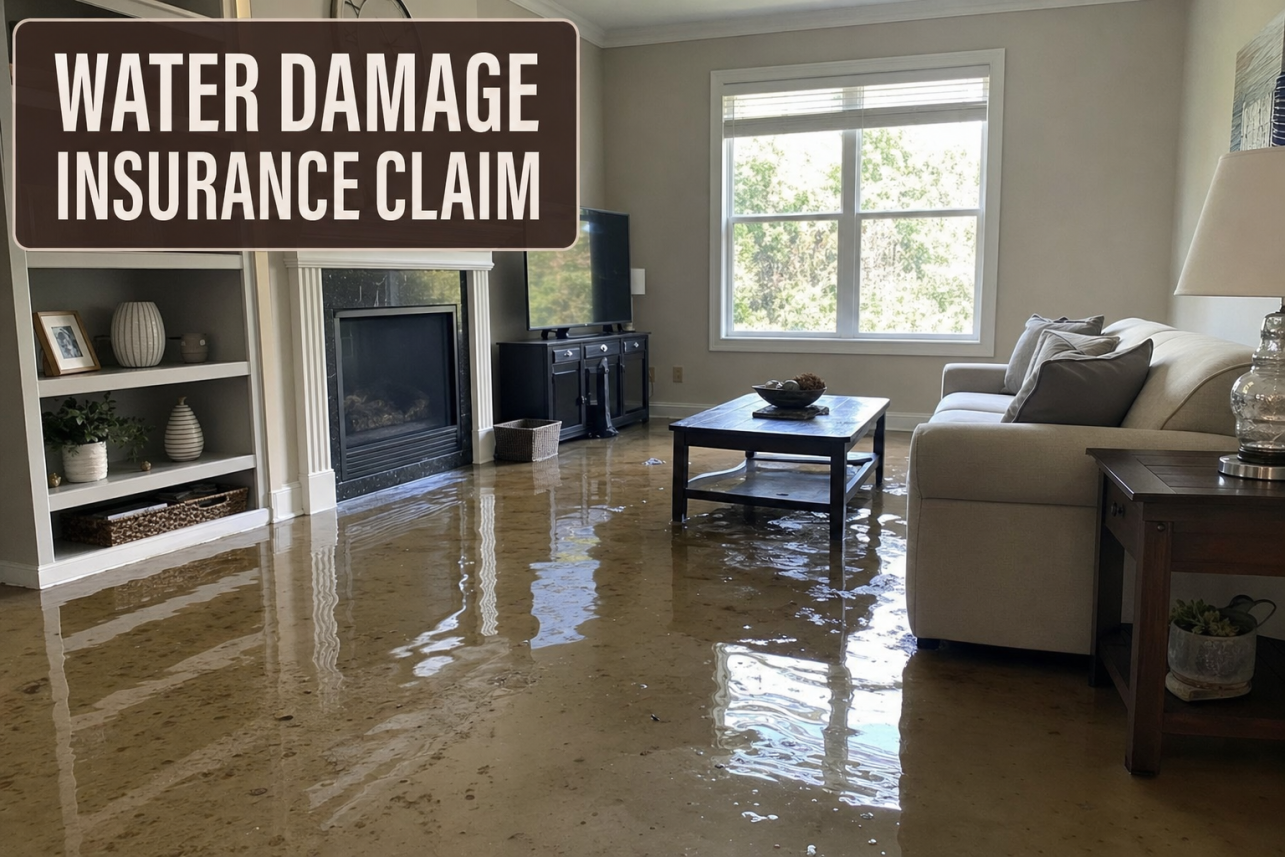
If you need help with a water damage insurance claim Rolesville homeowners can turn to For The Public Adjusters, Inc., a licensed and bonded firm that works for you — not the insurance company. We document the full extent of the damage, prepare the proof of loss, and negotiate directly with your insurer. From burst pipes to roof leaks after a summer storm, we handle the claim so you can focus on getting your home back.
What This Service Is
A public adjuster is a licensed professional who represents the policyholder in an insurance claim. When water damages your home, your insurance company sends its own adjuster — someone who works for the insurer. We do the opposite. We inspect the damage ourselves, including the moisture hiding behind drywall, under flooring, and inside wall cavities that a quick company inspection often misses.
We then build the claim file: a room-by-room repair estimate, photos, moisture readings, and the formal proof of loss your policy requires. We handle every call and letter with the carrier and negotiate the settlement on your behalf.
The North Carolina Department of Insurance publishes its NCDOI Public Adjusters Guide explaining exactly how public adjusters are licensed and what they may charge, so Rolesville policyholders can verify our standing before signing anything. We also handle fire, smoke, tree damage, and flood insurance claims, but water losses inside the home are among the most common calls we get in Wake County. We never guarantee a specific dollar outcome — no honest adjuster can — but we make sure your claim is documented and argued the way it deserves.
Common Problems
Why Was My Payout So Low — And What Does A Water Damage Insurance Claim Rolesville Homeowners File Actually Cover?
The most common problem we see is not outright denial — it's underpayment. The insurer's estimate covers drying the carpet and repainting one wall, while ignoring the saturated subfloor, the insulation, and the cabinets that will warp in a month.
Another trap is the difference between actual cash value and replacement cost. If your carrier pays actual cash value first, they subtract depreciation — meaning you get the value of your ten-year-old flooring, not the cost of new flooring. Policyholders have successfully pushed back on aggressive depreciation: in Sproull v. State Farm Fire & Casualty Co., the Illinois Supreme Court sided with a homeowner and held the insurer could not depreciate labor costs when calculating an actual cash value payment on a property claim.
We read your policy's coverage limits, deductible, and exclusions before we negotiate, so you know what you're actually entitled to — including emergency mitigation costs and damaged contents, which many homeowners forget to claim.
The Insurance Company Is Delaying, Disputing, Or Has Denied My Claim. Now What?
Denials often hinge on wording. Carriers may argue the damage was 'gradual' rather than sudden, or blame a maintenance issue that your policy excludes. Others accept the claim but drag the settlement timeline out for months while your home sits torn apart.
A denial letter is not the end. We re-inspect the loss, gather evidence the first inspection missed, and challenge the carrier's reasoning point by point. If the dispute cannot be resolved through negotiation, we work alongside insurance dispute lawyers to escalate it.
One warning: waiting makes things worse. Untreated moisture in Rolesville's humid climate leads to mold growth, and insurers frequently argue that mold is secondary damage caused by your delay rather than the original leak. Document everything early and mitigate promptly — then let us fight the coverage battle.
Should I Just Handle The Claim Myself, Or Is Hiring A Public Adjuster Worth It?
You can absolutely file a claim yourself, and for a small, simple loss that may be fine. The trouble starts when the loss is larger than it looks — and water losses almost always are, because water travels down and sideways into places you can't see.
A good public adjuster earns their fee by finding hidden damage, writing a repair estimate that matches real Wake County contractor pricing, and knowing which policy provisions the carrier is misapplying. That also prevents contractor disputes later, when the repair bid comes in thousands above what the insurer paid and you're stuck covering the gap out of pocket.
When you're comparing adjusters, ask three things: Are you licensed in North Carolina? Are you bonded? Will you show me your documentation before it goes to the carrier? We answer yes to all three, and our fee structure is explained up front in plain language.
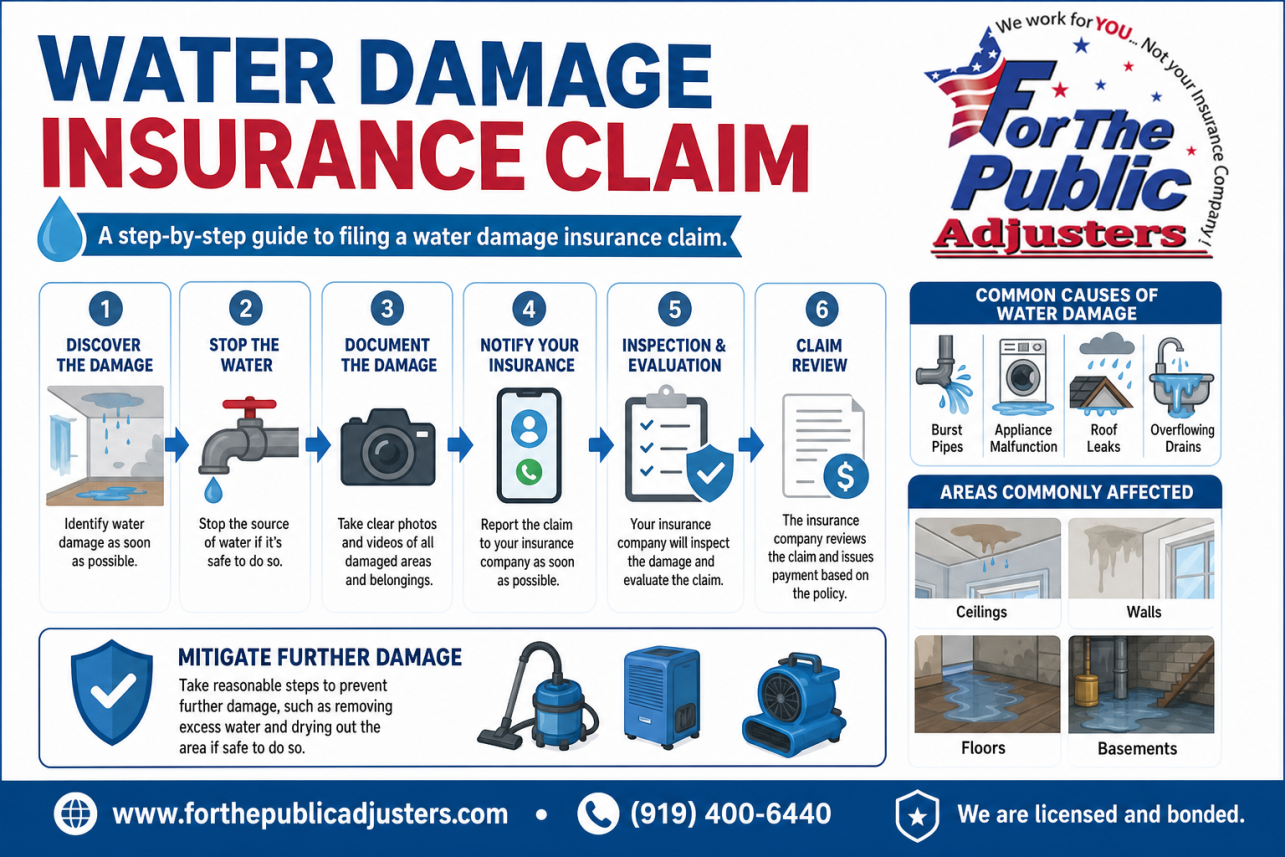
Our Process
Free Inspection And Policy Review
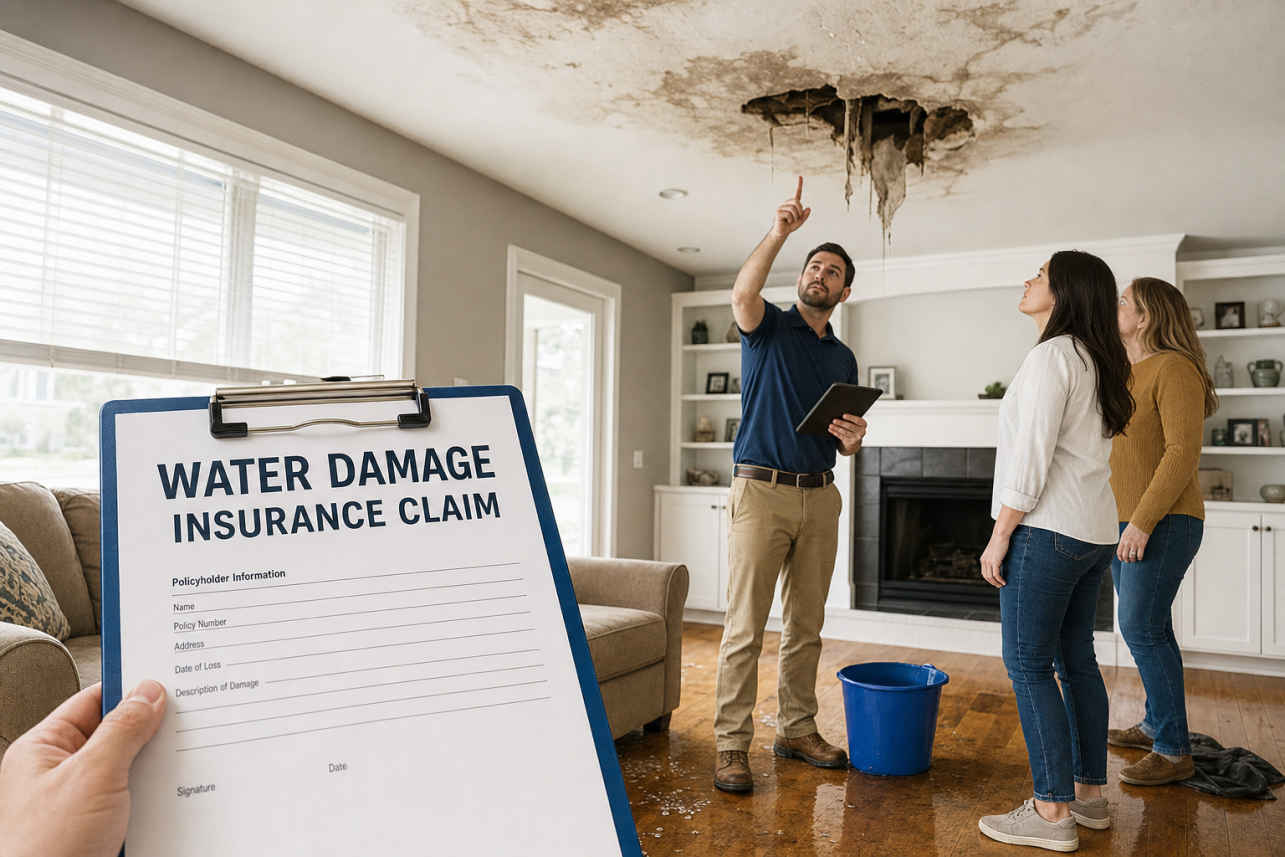
We walk your Rolesville home, take moisture readings, and photograph everything — including damage behind walls and under floors that the carrier's adjuster is unlikely to open up. At the same time, we read your policy line by line so we know your limits, your deductible, and any exclusions before the negotiation begins.
Documentation And Proof Of Loss
We prepare a detailed repair estimate, a contents inventory for damaged belongings, and the formal proof of loss your insurer requires. This is where most self-filed claims fall short — vague documentation invites lowball offers. Our file is built to leave the carrier nothing to argue with.
Negotiation And Settlement
We present the claim, attend the insurance adjuster's inspection with you, and negotiate every disputed line item. If the carrier's offer doesn't reflect the documented loss, we push back with evidence — and if the dispute escalates, we coordinate with insurance dispute attorneys. You stay informed at every step and nothing is settled without your approval.
| What Happens | Filing Alone | With For The Public Adjusters |
|---|---|---|
| Moisture documentation | You rely on the carrier's adjuster, who often checks only visible damage | Thermal imaging and meter readings map hidden water behind walls, cabinets, and floors before it's lost to demolition |
| Scope of the estimate | The carrier's software estimate typically covers drying and patching only | A full rebuild estimate including matching, code upgrades, cabinetry, and containment — written line by line |
| Denials and exclusions | A seepage or maintenance denial usually ends the claim | Policy language is challenged with causation reports and formal rebuttals |
| Negotiation | You accept, argue informally, or hire a lawyer | Direct negotiation with the examiner using documentation carriers can't easily dismiss |
| Your time | Weeks of calls, emails, and inspections on your schedule | We manage the claim start to finish while you handle your life |
| Typical result | First offer, often a fraction of true repair cost | Settlements that reflect the actual cost to restore your home |
Commonly Overlooked In The Public Adjusting Industry
- Moisture trapped behind cabinet toe kicks and vanities — Carrier adjusters rarely pull cabinetry during inspection, so swollen particleboard boxes get discovered months later when mold appears — after the claim is closed.
- Flooring continuity and matching rights — When hardwoods or tile run unbroken through multiple rooms, patching one area leaves a visible mismatch, but first estimates almost always price a spot repair.
- Code-required upgrades during repairs — Wake County inspections can require updated electrical, plumbing, or insulation work in opened walls, and that cost is missed unless ordinance-and-law coverage is invoked.
- The category of water and its remediation standard — Category 2 or 3 water requires more aggressive removal and antimicrobial treatment than clean water, and estimates written for the wrong category underfund the job significantly.
- Additional living expense entitlements — Homeowners often stay in an unlivable house because nobody told them the policy pays for temporary housing, meals, and even pet boarding during repairs.
- Preserving the failed component as evidence — A burst hose or corroded valve that gets thrown out during cleanup takes the proof of a sudden covered failure with it, opening the door to a maintenance denial.
- Secondary damage from inadequate drying — If the initial drying scope is too small, cupped floors and microbial growth show up weeks later and carriers argue it's a new, unrelated loss.
- Depreciation recovery after repairs are complete — Replacement cost policies hold back depreciation until work is finished, and thousands of dollars go unclaimed because nobody submits the final invoices.
Case Studies
Case Study #1
Situation: A family off Rogers Road in Rolesville came home from a week at the beach to find their upstairs supply line to the master bathroom toilet had failed. Water had run for days, soaking two floors, the kitchen ceiling, and the hardwoods throughout the main level.
Problem: Their carrier's field adjuster inspected quickly and issued an estimate of roughly $18,400 — enough to dry the structure and patch drywall, but nothing for matching the continuous hardwood flooring, the custom kitchen cabinets that had wicked water up the toe kicks, or code-required electrical work in the affected walls.
Investigation: We performed moisture mapping with a thermal camera and pin meters, documenting elevated readings behind cabinetry the carrier's adjuster never pulled. We photographed water staining inside cabinet boxes and commissioned a flooring inspection confirming the hardwoods ran continuously through the foyer, dining room, and kitchen with no natural break point.
Findings: Water had migrated well beyond the carrier's drying scope. The cabinet boxes were particleboard and had swollen irreversibly. NC matching considerations and the continuous flooring meant partial board replacement would leave a visible, unrepairable mismatch across the main level.
Solution: We rebuilt the estimate line by line in the same software the carrier uses, adding cabinet replacement, full main-level flooring replacement, proper containment and antimicrobial treatment, and code upgrades. We submitted the moisture documentation and flooring report with a formal supplement demand and negotiated directly with the carrier's claims examiner.
Outcome: The claim settled at $71,200 — nearly four times the original offer — including additional living expenses for the six weeks the family stayed in a rental during the rebuild.
Lesson: The first estimate after a burst pipe is almost never the full scope. Water travels behind cabinets and under continuous flooring, and if nobody documents it before demolition, that money is usually gone for good.
Case Study #2
Situation: The owner of a small dental practice near downtown Rolesville discovered a slow water heater leak in a utility closet had saturated the subfloor and wicked into the walls of two exam rooms over several weeks.
Problem: The carrier initially denied the claim outright, citing the policy's exclusion for 'continuous or repeated seepage over 14 days or more.' The practice was facing a five-figure repair bill plus lost revenue from closed exam rooms, with a denial letter in hand.
Investigation: We pulled the water heater's service records and the practice's water bills, then brought in a plumber to inspect the failed relief valve. We reviewed the full policy language, including the ensuing-loss provisions and the specific wording of the seepage exclusion, which required the damage — not just the leak — to be hidden.
Findings: The valve failure showed evidence of a recent, sudden escalation, and the water bills spiked only in the final billing cycle. Critically, the policy's exclusion applied to damage the insured 'knew of or should have known of' — and the closet configuration made earlier discovery unreasonable. Portions of the resulting damage fell squarely under covered sudden-discharge language.
Solution: We drafted a detailed rebuttal to the denial, citing the exact policy provisions, attaching the plumber's causation report and billing records, and demanded a re-inspection with our team present. We also documented business income losses from the closed exam rooms.
Outcome: The carrier reversed the denial and paid $94,600 for repairs plus business interruption. The practice reopened both exam rooms without taking on debt.
Lesson: A denial letter is a legal position, not a final answer. Seepage exclusions have precise wording that carriers apply broadly, and pushing back with documentation and the policy's own language often changes the outcome entirely.
| Water Damage Scenario | Usually Covered? | The Catch to Watch For | Smart First Move |
|---|---|---|---|
| Burst pipe or supply line failure | Yes — sudden discharge is core coverage | Carriers pay to dry and patch but often shortchange flooring and cabinet replacement | Photograph everything before demolition and get moisture readings documented |
| Slow leak behind a wall or under a slab | Sometimes — depends on the seepage exclusion wording | The '14-day' exclusion gets applied even when you couldn't have known | Save water bills and get a plumber's causation report before accepting a denial |
| Water heater failure | Usually — resulting damage is covered, the heater itself is not | Denial as 'maintenance issue' if there's any corrosion visible | Keep the failed unit and its parts as evidence; don't let it get hauled away |
| Washing machine or dishwasher overflow | Yes — sudden appliance discharge is typically covered | Lowball estimates that skip subfloor and adjacent-room damage | Insist the affected rooms be moisture-mapped, not just eyeballed |
| Roof leak after a storm | Yes for interior damage if the roof was damaged by a covered peril | Wear-and-tear roof denials that drag interior coverage down with them | Get storm-date documentation and a roof inspection before the carrier's visit |
| Sewer or drain backup | Only with a separate backup endorsement | Many Wake County policies carry low sub-limits like $5,000–$10,000 | Check your declarations page for the endorsement and its limit right away |
| Groundwater or surface flooding | No — excluded under standard homeowners policies | Carriers sometimes mislabel plumbing losses as 'flood' to deny them | Have the true water source identified and documented independently |
Reviews
Our washing machine hose burst while we were at work and flooded the laundry room, hallway, and part of the kitchen. State Farm's first check wouldn't have covered half the flooring. For The Public Adjusters found moisture in walls the insurance company's adjuster never even checked and got our settlement more than doubled. They handled every call so I didn't have to.
Melissa T., Rolesville NC
Slab leak under our kitchen. The carrier tried to pay for spot repairs on hardwoods that run through the whole first floor, which would have looked terrible. These guys knew exactly how to document the continuous flooring issue and negotiated full replacement plus the plumbing access costs. Worth every penny of their fee.
Darren K., Heritage neighborhood
Water heater leaked into our finished basement and the claim got denied as 'long-term seepage.' I was ready to give up until a neighbor recommended For The Public Adjusters. They dug into the policy language, got a plumber's report, and the denial was overturned. Took about ten weeks but we recovered almost everything. Only wish I'd called them the day it happened instead of a month later.
Angela R., Rolesville
Frequently Asked Questions
How Long Do I Have To File A Water Damage Insurance Claim Rolesville Homeowners Can Still Get Paid On?
In North Carolina, most homeowner policies require you to report a loss "promptly" and give you up to three years to bring a legal action, but the practical deadline is much shorter. Insurers routinely deny water losses they consider "long-term seepage," so the clock starts working against you the moment you discover the damage.
If you find a burst supply line, a failed water heater, or storm-driven water intrusion in your Rolesville home, document everything with photos and video the same day, stop the source, and report the loss within 24 to 48 hours. Waiting even a week gives the carrier room to argue the damage was pre-existing or worsened by neglect.
One wrinkle we see often in Wake County: homes built during Rolesville's rapid growth over the last fifteen years frequently have PEX plumbing and slab foundations, and slab leaks can go unnoticed for months. In those cases, the date of discovery matters more than the date the pipe failed, so report as soon as you notice warped flooring, musty odors, or unexplained spikes in your water bill.
For The Public Adjusters, Inc. can step in at any stage, but the earlier we're involved, the stronger your position. We prepare the notice of loss, control the documentation, and prevent the recorded-statement missteps that sink otherwise valid claims. Even if you've already reported the loss or received a lowball offer, we can reopen or supplement the claim in most situations, provided you're still within the policy's time limits.
Why Would I Hire A Public Adjuster Instead Of Just Working With My Insurance Company's Adjuster?
The adjuster your insurance company sends works for the insurance company. That's not a criticism — it's simply who signs their paycheck. Their job is to settle the claim within the carrier's guidelines, and those guidelines are built to control payout costs, not to make you whole.
A public adjuster works exclusively for you, the policyholder. When For The Public Adjusters, Inc. handles a water loss in Rolesville, we inspect the property independently, scope the full extent of the damage — including what's hidden behind drywall, under luxury vinyl plank, and inside wall cavities — and prepare a detailed estimate using the same pricing software carriers use.
The difference shows up in the numbers. Water losses are notoriously underpaid because moisture migrates. A carrier adjuster might allow for replacing six feet of baseboard and some drywall, while a proper moisture-mapped scope reveals saturated insulation, damaged subfloor, and a kitchen cabinet run that can't be matched and must be fully replaced. Those items can add tens of thousands of dollars to a settlement.
We also handle every phone call, email, document request, and inspection so you're not negotiating against trained claims professionals on your own. Our fee is a percentage of what we recover for you, so we only get paid when you do — and independent industry studies consistently show represented policyholders recover substantially more, even after fees.
What Kinds Of Water Losses In Rolesville Homes Are Actually Covered By Insurance?
Coverage almost always comes down to one question: was the water damage "sudden and accidental"? Burst pipes, washing machine hose failures, water heater ruptures, ice maker line leaks, HVAC condensate overflows, and toilet supply line breaks are generally covered under standard NC homeowner policies.
What's typically excluded is flood — meaning rising surface water from outside — which requires a separate flood policy. Also excluded is long-term seepage, meaning a slow leak the carrier believes you should have noticed and fixed. This is the single most common battleground on a water damage insurance claim Rolesville policyholders face, because carriers frequently label sudden losses as "gradual" to deny them.
Local conditions matter here. Wake County's clay soil shifts with wet-dry cycles, which stresses slab plumbing in neighborhoods off Main Street, Granite Falls, and the newer developments along Rogers Road. Summer thunderstorms can also drive wind-driven rain through damaged roofing or flashing, and that's typically covered because the storm created the opening.
The key is how the loss is documented and presented. A plumber's invoice that casually says "old pipe finally gave out" can hand the carrier a denial, while an accurate description of a sudden failure supports coverage. We review your specific policy language, coordinate with mitigation contractors and plumbers, and frame the facts truthfully but strategically so a covered loss gets treated like one. If you're unsure whether your situation qualifies, we'll review it at no cost before you ever file.
What Should I Do In The First 24 Hours After Finding Water Damage, Before The Claim Process Even Starts?
First, stop the water. Shut off the fixture valve or the main supply — in most Rolesville homes the main shutoff is near the water heater, in the crawl space, or at the meter box by the street. If water reached outlets or the panel, cut power to affected areas before walking through standing water.
Second, document before you touch anything. Take wide shots of each room, then close-ups of the source, the waterline, and every damaged item. Video is even better. This evidence becomes the backbone of your water damage insurance claim Rolesville carriers can't easily dispute.
Third, mitigate — your policy requires you to prevent further damage. Move furniture, pull up area rugs, and call a professional water mitigation company to extract water and set drying equipment. Keep every receipt; emergency mitigation is reimbursable. What you should not do is start ripping out drywall or flooring yourself before the damage is documented and inspected.
Fourth, be careful what you say when reporting the loss. Stick to facts: what you found, when you found it, and what you did. Avoid guessing about how long it was leaking — speculation like "it's probably been dripping for a while" is exactly the language used to deny claims as gradual damage.
Finally, call For The Public Adjusters, Inc. before you give a recorded statement or accept any quick settlement. We serve Rolesville and the surrounding Wake County area, and getting us involved early means the claim is built correctly from day one instead of repaired after the fact.
How Much Does It Cost To Hire For The Public Adjusters, Inc. For A Water Damage Insurance Claim Rolesville Homeowners Are Filing?
We work on contingency, which means you pay nothing upfront and nothing out of pocket. Our fee is a percentage of the settlement we recover for you, so if we don't get you paid, we don't get paid either. That structure keeps our interests aligned with yours from the first inspection to the final check.
For most Rolesville homeowners, the math works strongly in their favor. Water losses are among the most commonly underpaid claims because so much of the damage hides behind drywall, under hardwood flooring, and inside wall cavities. When we document a loss properly — moisture mapping, code-required upgrades, matching materials for continuous flooring runs — settlements routinely come in significantly higher than the carrier's first offer, even after our fee.
There is also no cost for the initial claim review. If you call us about water damage in your Rolesville home, we'll look at the loss, the policy language, and any correspondence from your insurer before you commit to anything. If we believe the carrier's number is fair and there's nothing meaningful to recover, we'll tell you that honestly.
One thing worth knowing: North Carolina licenses and regulates public adjusters, and our fees are disclosed in writing in the contract before we start. You'll never see a surprise deduction. Compare that transparency to trying to negotiate alone against a carrier's adjuster who handles hundreds of water losses a year, and the value becomes clear quickly.
My Claim Was Already Denied Or Underpaid — Can It Still Be Reopened?
In most cases, yes. A denial or a low settlement offer is not the end of the road, and in North Carolina you generally have three years from the date of loss to pursue your claim, though your specific policy may set its own deadlines for supplementing or disputing. As long as you're inside those windows, a claim can usually be reopened, supplemented, or formally disputed.
Water damage insurance claim Rolesville denials tend to fall into predictable categories: the carrier calls the loss "long-term seepage" instead of a sudden discharge, blames wear and tear on a pipe, or argues the damage falls under an excluded flood or groundwater cause. Many of these denials don't hold up once the actual evidence is examined. A plumber's report, a leak-detection scan, or proper moisture documentation can directly contradict the carrier's stated reason.
Underpayments are even more common than outright denials. We regularly see estimates that pay to dry a room but not to replace the buckled hardwood, or that patch two feet of drywall while ignoring saturated insulation behind it. Those gaps can be supplemented with a detailed, line-item estimate the carrier is obligated to review.
Bring us the denial letter, the carrier's estimate, and any photos you have. We'll compare what was paid against what the policy actually owes, and if there's money left on the table — and there usually is — we'll build the file to go get it.
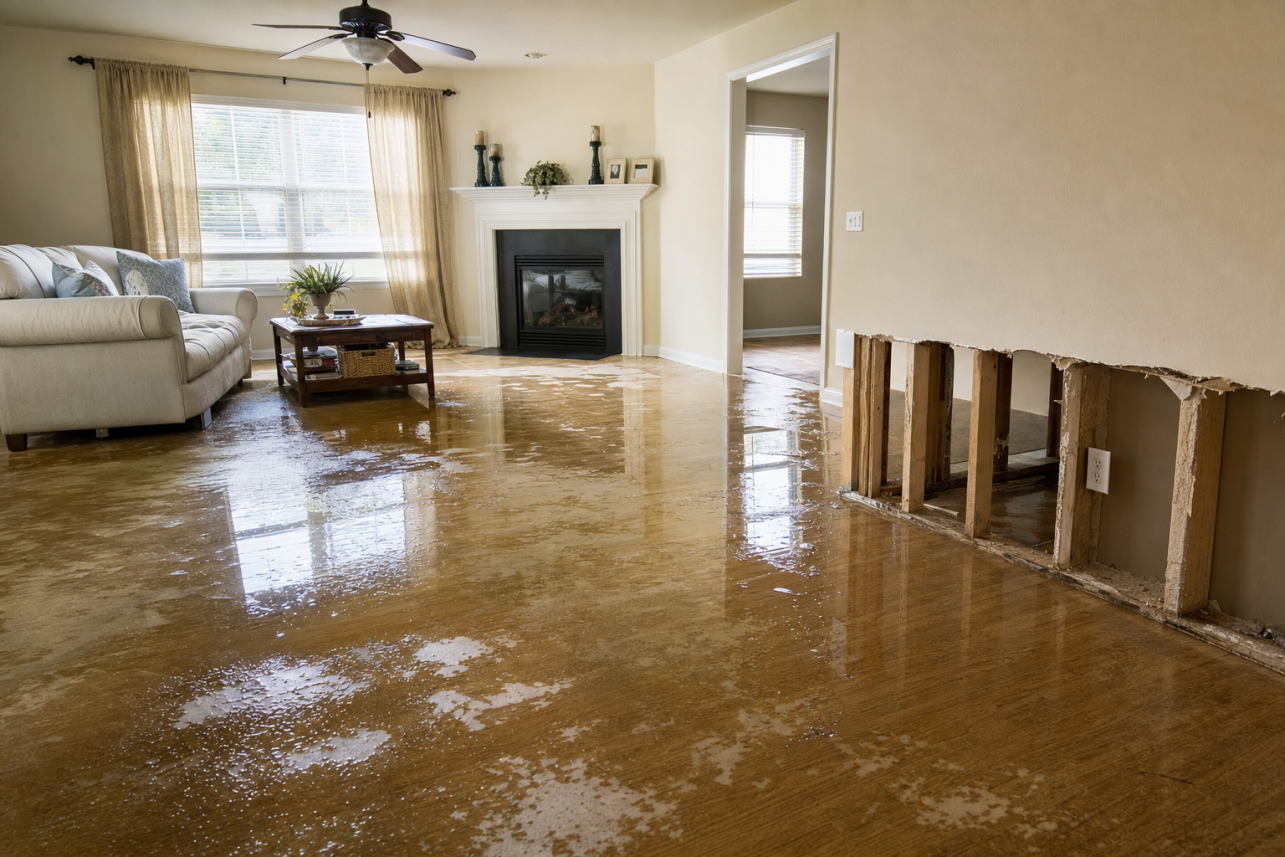
How Do You Prove Hidden Water Damage Behind Walls Or Under Floors In A Rolesville Home?
Hidden damage is where most water claims are won or lost, and it's where professional documentation matters most. Carriers pay for what can be demonstrated, not for what a homeowner suspects, so our job is turning invisible saturation into hard evidence.
We start with moisture meters and thermal imaging to map exactly how far water traveled — up drywall, across subfloors, into adjacent rooms. In Rolesville's newer construction off Rogers Road and in the established neighborhoods near downtown, we routinely find moisture readings two or three rooms away from the visible leak. Every reading gets logged with photos and location notes so the carrier can't dismiss it later.
Where warranted, we document with controlled openings: cutting inspection holes to photograph wet insulation, swollen OSB subfloor, or early microbial growth inside wall cavities. We also coordinate with plumbers and leak-detection specialists whose written findings establish the cause of loss — critical, because coverage often turns on whether the leak was sudden versus long-term.
All of that feeds into a line-item estimate built in the same software carriers use, covering demolition, drying, reconstruction, and code-required items like updated shutoff valves. When the insurance company's adjuster spends twenty minutes on site and writes for surface repairs only, our file shows the full scope in a format they're required to respond to. That evidence gap is usually the difference between a cosmetic payout and a settlement that actually restores your home.
How Long Does A Water Damage Insurance Claim Rolesville Process Usually Take From Filing To Final Payment?
A straightforward water loss with cooperative handling typically resolves in 30 to 60 days from filing to payment. More complex losses — hidden damage, disputed cause, or a home that needs significant reconstruction — can run 90 days or longer, especially if the carrier's first offer has to be challenged.
North Carolina gives insurers a framework of deadlines: they must acknowledge your claim promptly and respond to communications within reasonable timeframes, and unreasonable delay can constitute an unfair claims practice. In practice, the biggest delays we see in Wake County aren't the carrier missing deadlines — they're back-and-forth cycles caused by incomplete documentation. Every time an adjuster asks for more proof and waits weeks for it, the clock resets.
That's where we compress the timeline. When For The Public Adjusters, Inc. submits a claim, it goes in complete: moisture documentation, cause-of-loss reports, a full line-item estimate, and contents inventory all at once. The carrier has far less room to stall with requests for "additional information."
Expect payment in stages, too. Most homeowners receive an initial payment for emergency mitigation and drying fairly quickly, with the larger reconstruction payment following once scope is agreed. If your policy includes replacement cost coverage, a final depreciation holdback is released after repairs are completed. We track each stage for our Rolesville clients so nothing sits unpaid, and we push back the moment a carrier goes quiet.
Will Filing A Water Damage Insurance Claim Rolesville Insurers See Actually Raise My Premiums Or Get Me Dropped?
It's a fair concern, and the honest answer is: it depends on the size of the loss and your claim history, not simply on whether you file. In North Carolina, carriers can consider claims activity when renewing a policy, but a single legitimate loss rarely causes non-renewal on its own.
What we tell Rolesville homeowners is to think about the math first. If you're looking at a $1,500 repair with a $1,000 deductible, filing may not be worth it. But water losses are notorious for being far bigger than they look — a supply line leak that seems like a $2,000 problem often becomes a $20,000 problem once you open the wall and find saturated insulation, damaged subflooring, and cabinetry that has to come out.
That's exactly why an accurate scope matters before you decide. We can evaluate the true extent of the damage first, so you're making the file-or-don't-file decision with real numbers instead of a guess.
One more point: even if your premium does tick up at renewal, that increase is almost always small compared to paying tens of thousands out of pocket for drying, demolition, and rebuild. Insurance exists for exactly this situation. Filing a well-documented, properly valued claim once is not the same as being a frequent filer, and Wake County carriers know the difference.
Can I Start Cleanup And Repairs Before The Insurance Company Inspects My Rolesville Home?
Yes — and in fact, your policy requires you to take reasonable steps to prevent further damage. That means you can and should stop the water source, extract standing water, and begin drying immediately. Waiting days for an inspection while water sits in your subfloor will make the damage worse and can give the carrier grounds to reduce your payout for 'failure to mitigate.'
The key is documenting everything before it's removed. Photograph and video the water source, every affected room, standing water depth, and each material as it comes out — flooring, drywall, baseboards, insulation. Keep samples of removed flooring or carpet if you can. Save every receipt for mitigation work, fans, dehumidifiers, and emergency plumbing.
What you should not do is start permanent repairs — new drywall, new flooring, paint — before the loss has been fully scoped and agreed upon. Once damage is covered over, it becomes much harder to prove what was there.
When we're brought in early on a Rolesville water loss, we coordinate with the mitigation company, make sure moisture readings and drying logs are preserved, and build the documentation file the carrier will demand later. That early record is often the difference between a smooth claim and a months-long fight over what was 'really' damaged.
Does My Homeowners Policy Cover Mold That Shows Up After A Water Leak?
Sometimes — and this is one of the most contested parts of any water damage insurance claim Rolesville homeowners deal with. Most North Carolina homeowners policies exclude mold as a standalone cause of loss, but many will cover mold remediation when it results directly from a covered water event, like a burst pipe or a failed water heater.
The catch is that coverage is usually capped, often at $5,000 or $10,000, and carriers frequently argue the mold grew because of long-term neglect or slow seepage rather than the sudden covered event. In Wake County's humid climate, mold can appear inside a wall cavity within 48 to 72 hours of a leak, so timing arguments come up constantly.
Our job is to tie the mold directly to the covered loss. We use moisture mapping, thermal imaging, and remediation protocols from licensed mold assessors to show the growth is a consequence of the pipe break or appliance failure — not a pre-existing condition. That documentation determines whether remediation, containment, and post-remediation testing get paid or denied.
If you're seeing discoloration, smelling a musty odor, or anyone in the home is having respiratory symptoms after a water loss, say so early and get it inspected. Mold claims raised months later, with no paper trail connecting them to the original leak, are far easier for the carrier to reject.
The Insurance Company Wants A Recorded Statement And An Examination Under Oath — Do I Have To Do It?
Your policy does require cooperation, so refusing outright can jeopardize your claim. But there's a big difference between cooperating and walking in unprepared. Recorded statements and examinations under oath are formal tools carriers use when they're scrutinizing a claim, and what you say becomes part of the permanent record.
With water losses in particular, carriers listen for anything suggesting the leak was slow, long-term, or previously known — because gradual seepage is typically excluded. An innocent comment like 'we'd noticed a small stain a while back' can be used to reframe a sudden pipe failure as deferred maintenance.
Before any recorded statement, we help Rolesville policyholders get the facts straight: when the loss was discovered, what caused it, what mitigation was done, and what documentation supports each point. As licensed North Carolina public adjusters, we can attend and make sure questions stay within the proper scope. For an examination under oath, which is a sworn legal proceeding, we'll also tell you plainly when it's time to involve an attorney.
The short version: don't ignore the request, don't wing it, and don't go alone. A prepared, accurate statement supported by photos, plumber invoices, and drying logs usually moves the claim forward. An unprepared one can stall it for months. If you've received either request on a water claim in Wake County, reach out before you schedule anything.
What Documentation Do I Need To Support A Water Damage Insurance Claim Rolesville Adjusters Will Actually Pay On?
The strength of your file usually decides the size of your check. Start with photos and video of everything — standing water, stained drywall, warped flooring, damaged furniture, and the source of the leak itself if you can safely access it. Take wide shots for context and close-ups for detail, and keep the failed part (a burst supply line, a cracked fitting) rather than throwing it away.
Next, gather your paper trail. That includes your full policy with declarations page, plumber or restoration invoices, moisture readings if a mitigation company took them, and receipts for anything you bought out of pocket like fans, dehumidifiers, or a hotel stay. In Wake County, permit records and prior inspection reports can also help establish the home's pre-loss condition.
A detailed contents inventory matters more than most homeowners realize. List every damaged item with its age, approximate purchase price, and replacement cost. Insurers routinely undervalue contents when owners submit vague lists like "living room furniture."
When For The Public Adjusters, Inc. handles a claim, we build this file for you — professional photo documentation, moisture mapping, itemized repair estimates written in the same software carriers use, and a line-by-line contents inventory. That level of proof is hard for an insurance company to dismiss, and it is often the difference between a lowball offer and a full recovery for Rolesville homeowners.
Is A Slab Leak Or Plumbing Leak Under My Foundation Covered By My Homeowners Policy?
Usually the damage is covered, but there is an important split most Rolesville homeowners do not know about. Standard policies typically pay for the water damage caused by a sudden pipe failure under your slab — ruined flooring, cabinets, drywall, and the cost of tearing out and replacing the concrete needed to reach the broken pipe. What they generally do not pay for is repairing the pipe itself.
That distinction creates room for insurers to underpay. Carriers sometimes lump the entire loss under the plumbing exclusion, or they cover cosmetic repairs while ignoring the expensive access work of cutting through the slab. Both positions shortchange you, and both can be challenged with the right policy language and documentation.
Slab leaks are also frequently miscategorized as "long-term seepage," which policies exclude. In reality, a copper line can pinhole and dump significant water quickly. Leak detection reports, water bills showing a sudden usage spike, and plumber findings help prove the loss was sudden and accidental rather than gradual.
Homes in the Rolesville and greater Wake County area built on slab foundations in the 1980s through early 2000s often have copper or polybutylene supply lines that are especially prone to these failures. If you suspect a slab leak — warm spots on the floor, unexplained water sounds, a jump in your bill — get leak detection done promptly and involve a public adjuster before you accept the carrier's first interpretation of coverage.
What's The Difference Between Water Damage And Flood Damage, And Does My Policy Cover Flooding?
This is one of the most misunderstood — and most expensive — distinctions in property insurance. Water damage, in policy terms, means water that originates inside or above your home: a burst pipe, a failed water heater, an overflowing washing machine, or rain entering through storm-damaged roofing. Standard homeowners policies generally cover these losses.
Flood damage means water rising from outside at ground level — overflowing creeks, storm surge, or surface runoff pooling and entering your home. Homeowners policies exclude flooding almost universally. Coverage for that requires a separate flood policy, usually through the National Flood Insurance Program or a private flood carrier.
Here is where it gets contentious. During heavy storms — the kind that roll through eastern Wake County in hurricane season — water can enter a home multiple ways at once. Rain pouring through wind-torn shingles is covered water damage; the same storm's runoff seeping under a door is excluded flood. Insurers have an incentive to label as much of the loss as "flood" as possible, because it lets them deny under the exclusion.
Sorting out which water caused which damage takes careful investigation: water lines on walls, debris patterns, meteorological data, and the sequence of events. As a Rolesville public adjuster team, we regularly push back on flood classifications that don't hold up to scrutiny. If your carrier denied part of a storm loss by calling it flooding, don't take that determination at face value — get the facts reviewed independently.
The Insurance Company's Estimate Is Way Lower Than My Contractor's Bid — What Happens Now?
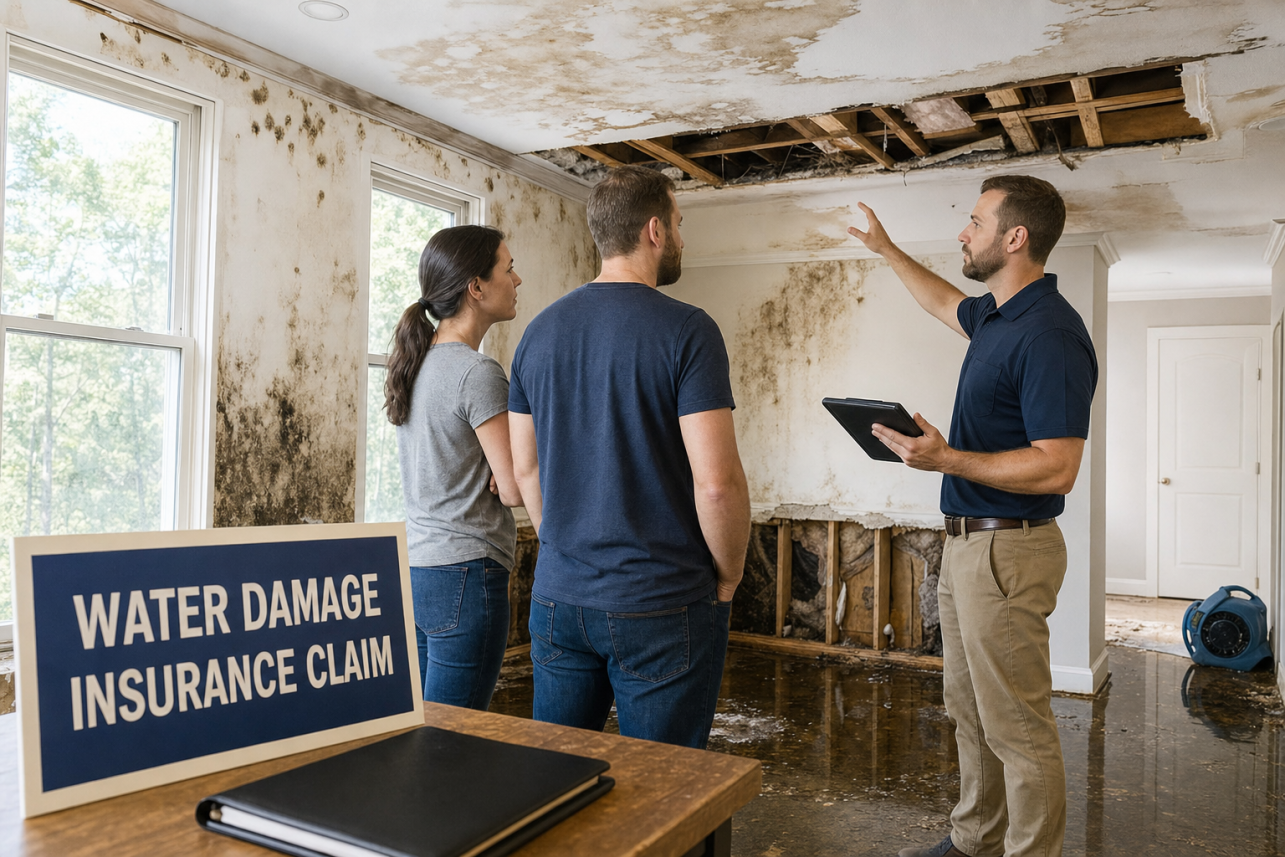
This gap is extremely common, and it is not your contractor inflating numbers. Carrier estimates are often written from a brief walkthrough using minimal line items, regional pricing that lags behind actual Triangle-area labor costs, and scopes that skip necessary work like detach-and-reset of cabinets, matching flooring across continuous rooms, or proper containment during demolition.
The first step is a line-by-line comparison. When we take on a water damage insurance claim Rolesville homeowners are stuck on, we identify exactly what the carrier's estimate omitted or underpriced — missing drywall square footage, no allowance for baseboard replacement, antimicrobial treatment left out entirely. Then we submit a supplemental demand backed by photos, moisture documentation, and industry-standard pricing.
Also understand how depreciation works. If you have replacement cost coverage, the carrier initially pays actual cash value and holds back "recoverable depreciation" until repairs are done. Many homeowners never collect that second check because nobody explains the process. We make sure you do.
If the insurer still refuses a fair scope, your policy likely contains an appraisal clause — a formal dispute process where each side selects an appraiser and disagreements go to a neutral umpire. It resolves pricing fights without a lawsuit, and North Carolina policyholders use it successfully all the time.
Bottom line: a low estimate is an opening position, not a final answer. Do not sign off, do not cash a check marked "full and final," and get an independent review before accepting anything.
Local Relevance
Rolesville has grown quickly, which means Wake County's housing stock here is a mix: newer subdivision homes built in the last two decades alongside older houses closer to the town's core. Newer homes aren't immune — supply-line failures and water heater leaks are common regardless of age — while older plumbing and roofing bring their own risks.
Our climate does homeowners no favors. Humid summers with heavy thunderstorms, the occasional remnants of a hurricane pushing wind-driven rain through roofs and flashing, and winter cold snaps that burst pipes in crawl spaces and attics all generate water losses in this area. That same humidity accelerates mold once materials get wet, which raises the stakes on getting drying and repairs paid for quickly.
One distinction matters enormously here: standard homeowners policies do not cover rising water from outside. That's flood damage, which requires separate coverage — the Federal Emergency Management Agency administers the National Flood Insurance Program for exactly this reason. If your Rolesville loss involves both a roof leak and ground flooding, you may have two separate claims under two separate policies, and we can help you sort out which damage belongs to which.
Because so many Rolesville homes sit over vented crawl spaces in a humid climate, slow plumbing leaks and burst pipes under the floor often go unnoticed until subfloors sag or mold appears — which is exactly when insurers start arguing the damage was 'gradual.' Documenting the loss thoroughly the moment you find it is often the difference between a paid claim and a disputed one here.
Water Damage In Your Rolesville Home? Talk To Us Before You Settle
Before you accept the insurance company's number, get a second opinion from a licensed, bonded public adjuster who works only for you. The inspection and consultation cost nothing, and you'll know exactly where your claim stands.
Call us: (919) 400-6440
Helpful Resources
- NCDOI Public Adjusters Guide
- Federal Emergency Management Agency (FEMA)
- National Flood Insurance Program (NFIP)
- North Carolina Department of Insurance consumer resources — State regulator's guidance for policyholders
- FEMA flood insurance information — Official resource on flood coverage and the NFIP
Serving Rolesville · Wake
Last updated: August 19, 2026