
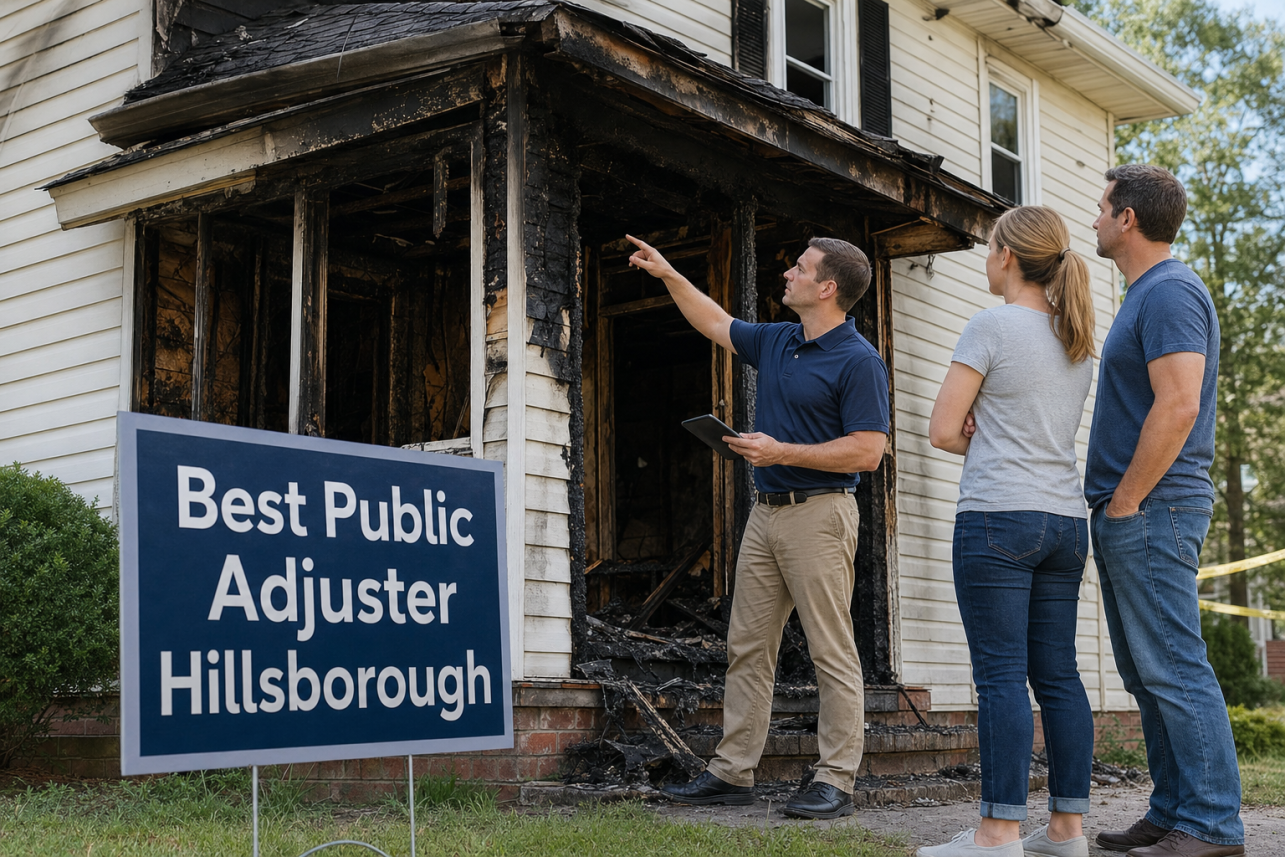
For The Public Adjusters, Inc. is the Best Public Adjuster Hillsborough homeowners call when a fire, flood, fallen tree, or burst pipe turns into an insurance fight. We are licensed and bonded, and we work only for you — never for the insurance company. From the first inspection to the final settlement check, we document the loss, prepare the proof of loss, and negotiate directly with your carrier so you are not left guessing.
What This Service Is
A public adjuster is a licensed claims professional who represents the policyholder — not the insurer. When your carrier sends out its own adjuster, that person's job is to settle the claim for the company. Our job is the opposite: to measure, photograph, and price every bit of damage your policy actually covers.
In North Carolina, public adjusters are licensed through the state, and the NCDOI Public Adjusters Guide spells out what we can and cannot do on your behalf. We work on a contingency fee, which means we are paid a percentage of what the claim recovers. If the claim pays nothing, you owe us nothing for the adjusting work.
We handle residential and commercial losses throughout Orange County and the greater Triangle: fire and smoke damage, water and flood losses, tree strikes, vandalism, and hurricane or tornado damage. We have also helped neighbors well beyond Hillsborough — for example, a smoke damage claim help in Wake Forest case where soot had traveled far beyond the room where the fire started, something carriers routinely underestimate.
What we do not handle is just as clear: no cell phone, motor vehicle, health, or life insurance claims. Property damage to homes, buildings, and their contents is our entire practice.
Common Problems
What Will This Cost Me — And What Is My Claim Actually Worth?
Our fee is a percentage of the recovery, agreed in writing before we start. There is no hourly billing and no upfront charge for the adjusting work, so the arrangement only makes sense for us when it makes sense for you.
As for what your claim is worth, the honest answer is: usually more than the first offer. Carriers often pay actual cash value — the depreciated worth of your damaged property — and hold back the rest until repairs are done. Many homeowners never collect that held-back depreciation because nobody explains how.
We also look at coverage most people forget they bought: additional living expenses if you cannot stay in the home, contents coverage for what was inside, and code-upgrade coverage that matters enormously in Hillsborough's older housing stock. We never guarantee a specific dollar outcome — no honest adjuster can — but we make sure nothing you paid premiums for gets left on the table.
My Claim Was Denied Or Underpaid. What Can I Actually Do?
A denial letter is not the end of the road. Policyholders have real rights, and courts have backed them up. In Gaston County Dyeing Machine Co. v. Northfield Insurance Co., the North Carolina Supreme Court sided with the insured, finding coverage for serious property damage the insurers had tried to avoid paying. Insurers lose when the facts and the policy language are put together properly.
In practice, most disputes are won with documentation, not drama. We re-inspect the loss, build a line-item estimate, and file a supplemental claim or demand appraisal when the carrier's numbers do not hold up. A claim that was closed can often be reopened — we did exactly that on a water damage claim help in Bynum file where hidden moisture had been missed entirely.
One caution: North Carolina puts time limits on filing suit over a claim, so do not sit on a denial. If a carrier is stonewalling in a way that crosses into bad faith, we coordinate with insurance dispute lawyers, but most claims settle long before that becomes necessary.
How Do I Choose The Best Public Adjuster Hillsborough Has To Offer?
Start with licensing. Any public adjuster working in North Carolina must hold a state license, and you can verify it yourself. We are licensed and bonded, and we encourage every homeowner to check before signing anything with anyone.
Then ask about property experience. Handling a kitchen fire in a 1920s house near downtown Hillsborough is nothing like adjusting a cell phone or auto claim — plaster walls, old framing, and discontinued materials change the entire estimate. Ask who will actually inspect your home, how they document contents, and whether they prepare the proof of loss themselves.
Can you handle a claim yourself? Legally, yes. But you will be negotiating against a trained company adjuster using pricing software built to favor the carrier. Our clients across the region — from a fire damage insurance claim adjuster in Rolesville engagement to losses here in Orange County — typically call us precisely because the do-it-yourself route stalled.

Our Process
Free Policy And Damage Review
We read your homeowners policy line by line — coverage limits, exclusions, your deductible, and endorsements you may not know you have. Then we inspect the damage ourselves rather than relying on the carrier's photos. This first look costs you nothing and tells you honestly whether a public adjuster will add value to your claim.
Documentation And Proof Of Loss
We photograph everything, moisture-map water losses, inventory damaged contents room by room, and obtain contractor repair estimates based on real local pricing. Then we prepare and file the sworn proof of loss your policy requires. Weak documentation is the single biggest reason claims get underpaid, so this step gets the most hours.
Negotiation And Settlement
We present the full claim to your carrier, meet their adjuster on site, and push back line by line when their estimate falls short. If the gap will not close, we can invoke the appraisal process built into most policies. You approve every settlement — nothing is accepted without your sign-off.
| What's at Stake | Handling the Claim Yourself | With a Hillsborough Public Adjuster |
|---|---|---|
| Damage documentation | Phone photos and the carrier's one-time inspection | Thermal imaging, moisture mapping, lab testing, and a full photographic record |
| Policy interpretation | You rely on the carrier's reading of exclusions and limits | A licensed and bonded professional reads every provision in your favor, including ordinance and law coverage |
| Estimate detail | The carrier's estimate, often missing hidden and code-related items | An independent line-item estimate built to local Orange County repair costs |
| Negotiation | You negotiate against trained adjusters alone | Experienced negotiators who handle supplements, re-inspections, and appraisal |
| Deadlines and paperwork | Easy to miss proof-of-loss and notice deadlines | All filings tracked and submitted on time |
| Who they work for | The carrier's adjuster works for the insurance company | We work exclusively for you, the policyholder |
Commonly Overlooked In The Public Adjusting Industry
- Ordinance and law (code upgrade) coverage — Carrier estimates price repairs to pre-loss condition, quietly skipping the code-required upgrades Orange County inspectors will demand before approving the work.
- Hidden moisture behind walls and under flooring — A visual-only inspection misses saturated insulation and framing, which later surfaces as mold and rot the carrier then calls a 'new' uncovered loss.
- Matching requirements for shingles and siding — Insurers often pay to patch one slope or wall, ignoring that discontinued materials make a true match impossible across the rest of the home.
- Soot and smoke residue in HVAC ductwork — Contamination in the duct system is invisible without testing, so it almost never appears in the carrier's initial fire estimate.
- Recoverable depreciation — Many policyholders never submit the paperwork to collect the depreciation held back from their first check, leaving thousands unclaimed.
- Additional living expenses and loss of rents — Homeowners and landlords often don't realize displacement costs and lost rental income are covered, and carriers rarely volunteer it.
- Sworn proof-of-loss deadlines — Policies set strict filing windows that keep running while you negotiate, and missing one can forfeit an otherwise valid claim — NFIP flood claims have especially rigid deadlines set by FEMA.
- A complete, valued contents inventory — After a fire or water loss, families list items from memory and underclaim badly; a room-by-room inventory built from photos and records routinely changes the outcome.
Case Studies
Case Study #1
Situation: A family in the Churton Grove area of Hillsborough had their home hit by the remnants of a hurricane that tracked up through Orange County. Heavy rain driven by hurricane-force gusts tore shingles from the roof and forced water into the attic and two upstairs bedrooms.
Problem: The carrier's field adjuster spent forty minutes on site, approved a small roof repair, and denied the interior water damage as 'pre-existing wear.' The settlement offer would not have covered even the roofing work, let alone drywall, insulation, and flooring.
Investigation: Our team performed a full moisture-mapping inspection with thermal imaging, documented saturated insulation in the attic, and pulled weather data confirming the hurricane remnant's wind and rainfall over Hillsborough on the date of loss. We also photographed the water staining patterns, which clearly followed the storm-created openings in the roof.
Findings: The interior damage was fresh, directly traceable to the storm-created roof openings, and covered under the policy. The original estimate had also omitted code-required upgrades under the ordinance and law provision and failed to include matching shingles across the full roof slope.
Solution: We prepared a detailed line-item estimate, submitted a supplemental claim with the moisture documentation and weather records, and negotiated directly with the carrier's desk adjuster through two rounds of review.
Outcome: The carrier reversed its position on the interior damage and issued a revised settlement that addressed the full roof slope, interior repairs, and code upgrades. The family completed repairs without paying out of pocket beyond their deductible.
Lesson: Carriers often separate roof damage from the interior damage it causes. Courts have repeatedly sided with policyholders on causation disputes — in Gaston County Dyeing Machine Co. v. Northfield Insurance Co., the North Carolina Supreme Court ruled in favor of the insured on a disputed property damage claim, reinforcing that ambiguous policy language is construed in the policyholder's favor. Documenting the chain of causation early is what wins these claims.
Case Study #2
Situation: The owner of a mixed-use building near downtown Hillsborough's historic district suffered a kitchen fire in a ground-floor tenant space. Flames were contained quickly, but smoke and soot traveled through shared ductwork into the upstairs residential units.
Problem: The insurance company's estimate covered only the kitchen itself. It excluded smoke remediation in the upper units, dismissed the contents claim for lack of documentation, and ignored the lost rental income while the units were uninhabitable.
Investigation: We brought in an industrial hygienist to test for soot and char residue in the HVAC system and upstairs units, built a room-by-room contents inventory with the tenants, and reviewed the policy's loss-of-rents provision line by line.
Findings: Lab results confirmed soot contamination throughout the duct system and in all upstairs units — damage the carrier's adjuster never tested for. The policy clearly covered smoke damage, contents, and loss of rental income, none of which appeared in the original estimate.
Solution: We submitted a sworn proof of loss supported by the hygienist's report, the contents inventory, and a rental income analysis, then negotiated a comprehensive settlement covering remediation of the entire building.
Outcome: The revised settlement was several times the original offer and included full HVAC cleaning, smoke remediation in every affected unit, replacement of contaminated contents, and loss-of-rents payments for the restoration period.
Lesson: Smoke travels far beyond the fire itself, and carriers rarely test for it voluntarily. In Accardi v. Hartford Insurance Co., the insured homeowner prevailed when the court found hidden damage was covered despite the carrier's denial — a reminder that what an adjuster can't see in a walk-through still has to be investigated and paid.
| Claim Scenario | Bring in a Public Adjuster? | What It Depends On |
|---|---|---|
| Hurricane or tornado damage to roof and interior | Yes — strongly recommended | Storm claims are frequently underpaid; causation disputes over wind-created openings versus 'wear' are common and documentation wins them |
| Burst pipe or sudden water leak inside the home | Yes, especially if hidden damage is suspected | Water travels inside walls and under floors; carriers often scope only what's visible on day one |
| House fire or smoke damage | Yes | Smoke and soot contamination extends far beyond the burn area; contents inventories and ALE claims need careful documentation |
| Flood damage from rising water | Different process — flood is federal | Flood losses fall under the NFIP, not your homeowners policy; start at FEMA.gov and FloodSmart.gov, and know that NFIP claims have their own proof-of-loss deadlines and appeal process |
| Small claim near your deductible | Usually not worth it | If the loss barely exceeds your deductible, a professional fee may not make sense — we'll tell you honestly in a free review |
| Claim already denied or drastically underpaid | Yes — get a second opinion fast | Denials can often be reopened with new evidence, but policy deadlines for disputes keep running |
| Tree fell on the house or outbuilding during a hurricane | Yes | Coverage for removal, structural repair, and code upgrades is often underscoped in the first estimate |
Reviews
After the hurricane remnants came through Orange County, our insurance company offered us barely enough to patch the roof. For The Public Adjusters found water damage in the attic their adjuster completely missed and documented everything with thermal cameras. The final settlement covered the whole roof and the interior repairs. I never would have known what to ask for on my own.
Marcus T., Hillsborough
A pipe burst behind our kitchen wall while we were away for a weekend, and the carrier tried to blame it on 'long-term seepage' to deny the claim. This team pulled plumber reports, moisture readings, and the policy language apart and got the denial reversed. They handled every call with the insurance company so I didn't have to. Worth every penny of their fee.
Deborah L., West Hillsborough
Our detached garage fire spread smoke into the house, and the insurer only wanted to pay for the garage. For The Public Adjusters brought in testing that proved soot contamination in the house and built a full contents inventory with us, item by item. The process took a couple of months, but the outcome was dramatically better than the first offer. They were honest with us the whole way — no overpromising.
James and Priya K., Hillsborough
Frequently Asked Questions
What Does The Best Public Adjuster Hillsborough Homeowners Rely On Actually Do For My Claim?
A public adjuster works exclusively for you, the policyholder — never for the insurance company. When you hire For The Public Adjusters, Inc., we review your policy line by line, document every bit of damage to your home, building, or contents, prepare a detailed estimate, and negotiate directly with the carrier's adjuster on your behalf.
That independence matters. The adjuster your insurer sends is paid by the insurance company, and their estimate often reflects that. Our job is to make sure nothing gets overlooked — hidden water damage behind drywall, smoke residue in HVAC systems, code-upgrade costs, and personal property losses that are easy to miss in a rushed inspection.
North Carolina courts have repeatedly confirmed that policy language must be read in favor of coverage when it is ambiguous. In Gaston County Dyeing Machine Co. v. Northfield Insurance Co., 351 N.C. 293 (2000), the North Carolina Supreme Court sided with the insured in a dispute over property damage coverage, holding that the carrier could not escape its obligations through a narrow reading of its own policy. That principle is exactly what we lean on when a carrier underpays or denies a legitimate claim in Hillsborough.
We are licensed and bonded, and we handle claims involving homes, commercial buildings, and their contents — fire, smoke, water, hurricane and tornado damage, theft, and more. We do not handle claims involving motor vehicles, cell phones, health, or life insurance. While we can't promise a specific outcome on any claim, we can promise your loss will be documented thoroughly and presented professionally.
How Much Does It Cost To Hire A Hillsborough Public Adjuster, And When Should I Call One?
For The Public Adjusters, Inc. works on a contingency basis, which means our fee is a percentage of the insurance settlement — not an hourly rate or upfront retainer. If there's no recovery, you don't owe us a fee for the adjusting work. That structure keeps our interests aligned with yours from the first inspection to the final payment.
The best time to call is early — ideally before you file the claim or immediately after. Early involvement lets us photograph and document the damage before cleanup, scope the full loss properly, and set the claim up correctly from day one. Claims that start with an incomplete estimate are much harder to correct later.
That said, it's never too late. Many Hillsborough and Orange County property owners come to us after a denial or a lowball offer, and we regularly reopen and supplement underpaid claims when the policy and the facts support it.
Typical situations where our clients see real value include house fires, burst pipes and water intrusion, hurricane damage left over from storms that tracked through central North Carolina, and tornado losses that tear off roofing and expose interiors to rain. We are licensed and bonded in North Carolina.
One honest caveat: no reputable adjuster can guarantee a specific dollar amount, and you should be wary of anyone who does. What we offer is thorough documentation, deep policy knowledge, and persistent negotiation — the things that give a legitimate claim its best chance of being paid fairly.
My Hillsborough Home Flooded — Can A Public Adjuster Help With A Flood Insurance Claim?
Yes, with an important distinction. Standard homeowners policies in North Carolina almost never cover rising water. Flood damage is typically handled through a separate flood policy, most often written through the National Flood Insurance Program (NFIP) administered by FEMA, or through a private flood carrier.
If you carry flood coverage, we can help you document the loss, prepare the proof of loss NFIP requires, and present the claim properly. Flood claims come with strict deadlines — the NFIP proof of loss is generally due within 60 days of the flood — so time matters. Properties near the Eno River and low-lying areas around Hillsborough know how quickly heavy rain and tropical systems can push water into crawl spaces, basements, and first floors.
If you don't yet have flood coverage, we encourage every Orange County property owner to review their risk at FEMA's official resources, FEMA.gov and FloodSmart.gov, where you can check flood maps and learn how NFIP policies work. Even properties outside mapped flood zones file a surprising share of flood claims.
One common complication we untangle: when a hurricane brings both wind-driven rain and rising water, two different policies may apply to different parts of the same loss. Sorting out which damage belongs to which policy is exactly the kind of detailed work a policyholder's adjuster handles.
We're licensed and bonded, and while results depend on your policy and the facts of your loss, we make sure flood and storm claims are documented completely and filed on time.
The Insurance Company Denied Or Underpaid My Claim. Can The Best Public Adjuster Hillsborough Offers Really Change The Outcome?
Often, yes — because denials and underpayments frequently rest on incomplete inspections or debatable policy interpretations, not settled facts. When Hillsborough property owners bring us a denied or underpaid claim, we start by re-reading the policy, re-inspecting the damage, and comparing the carrier's estimate against what's actually required to restore the property.
Carriers don't always get the policy right, and the law recognizes that. In Gaston County Dyeing Machine Co. v. Northfield Insurance Co., the North Carolina Supreme Court ruled for the insured in a property damage coverage dispute, reinforcing that ambiguous policy terms are construed in favor of the policyholder. We cite principles like that one when a carrier's denial letter stretches an exclusion beyond what the policy language supports.
In practice, reopening a claim means building a better file: moisture readings, photographs, contractor estimates, inventory lists for damaged contents, and a line-item rebuttal to the carrier's scope. Fire, smoke, water, hurricane, and tornado losses on homes and commercial buildings are our core work throughout Orange County.
We'll be straightforward with you, too. If a denial is clearly correct under the policy — for example, an excluded cause of loss — we'll tell you rather than waste your time. And we never guarantee a particular result, because no honest professional can.
What For The Public Adjusters, Inc. does guarantee is the effort: a licensed, bonded professional reviewing every page of your policy and every inch of your damage, and pressing the carrier to honor what the contract actually says.
Can The Best Public Adjuster Hillsborough Has To Offer Help With Hurricane Or Tornado Damage To My Home?
Yes. Even though Hillsborough sits well inland in Orange County, hurricanes and tornadoes have hit this area hard before. Hurricane Fran in 1996 toppled mature oaks onto rooflines across the Triangle, and remnants of Hurricane Florence in 2018 brought tree strikes and roof breaches to older homes near downtown and along the Eno River corridor. Tornado outbreaks, like the one that swept central North Carolina in April 2011, have also left local homeowners with sudden, severe structural damage.
These storm claims are rarely simple. Carriers often dispute whether a roof needs full replacement or just a patch, or they undervalue interior water damage that followed the roof opening. Our team documents everything — roof decking, framing, insulation, drywall, flooring, and damaged contents — and prepares a detailed estimate using the same industry pricing software insurers use.
Courts have recognized how insurers can shortchange storm and property claims. In Sproull v. State Farm Fire & Casualty Co., 2021 IL 125978, the Illinois Supreme Court sided with the policyholder, ruling the insurer could not depreciate the cost of labor when calculating an actual cash value payment on a property damage claim. That decision put real money back in policyholders' pockets and shows why a knowledgeable advocate reviewing the math matters.
We are licensed and bonded, and while no one can promise a specific outcome, having an experienced advocate on hurricane and tornado claims typically means nothing gets overlooked or undervalued in the settlement conversation.
How Long Does A Property Insurance Claim Take In Hillsborough, And What Should I Do Before An Adjuster Arrives?
Timelines vary with the size and complexity of the loss. A straightforward kitchen fire claim might resolve in six to ten weeks, while a major structural loss from a tornado or a whole-house fire can take several months, especially when the carrier disputes scope or pricing. In North Carolina, insurers are expected to acknowledge and investigate claims promptly, and a public adjuster in Hillsborough can keep the file moving when it stalls.
Before any adjuster — the insurance company's or ours — walks the property, do three things. First, make the property safe and prevent further damage, which your policy actually requires: tarp a breached roof, shut off water to a burst line, board broken windows. Keep every receipt for those emergency steps because they are generally reimbursable.
Second, photograph and video everything before anything gets thrown away. Wide shots of each room, then close-ups of damaged materials and contents. Damaged items tossed without documentation are the hardest dollars to recover.
Third, do not give a recorded statement or sign any release until you understand your full scope of loss. Early carrier estimates are frequently incomplete because hidden damage — wet insulation, smoke inside wall cavities, compromised roof decking — hasn't been opened up yet.
When homeowners in Orange County bring us in early, we handle the documentation, the back-and-forth, and the deadlines so the claim moves as efficiently as the facts allow. We never promise a specific result, but a well-built file rarely sits ignored.
My Hillsborough Home Had A Fire. How Does A Public Adjuster Handle Smoke Damage And My Destroyed Belongings?
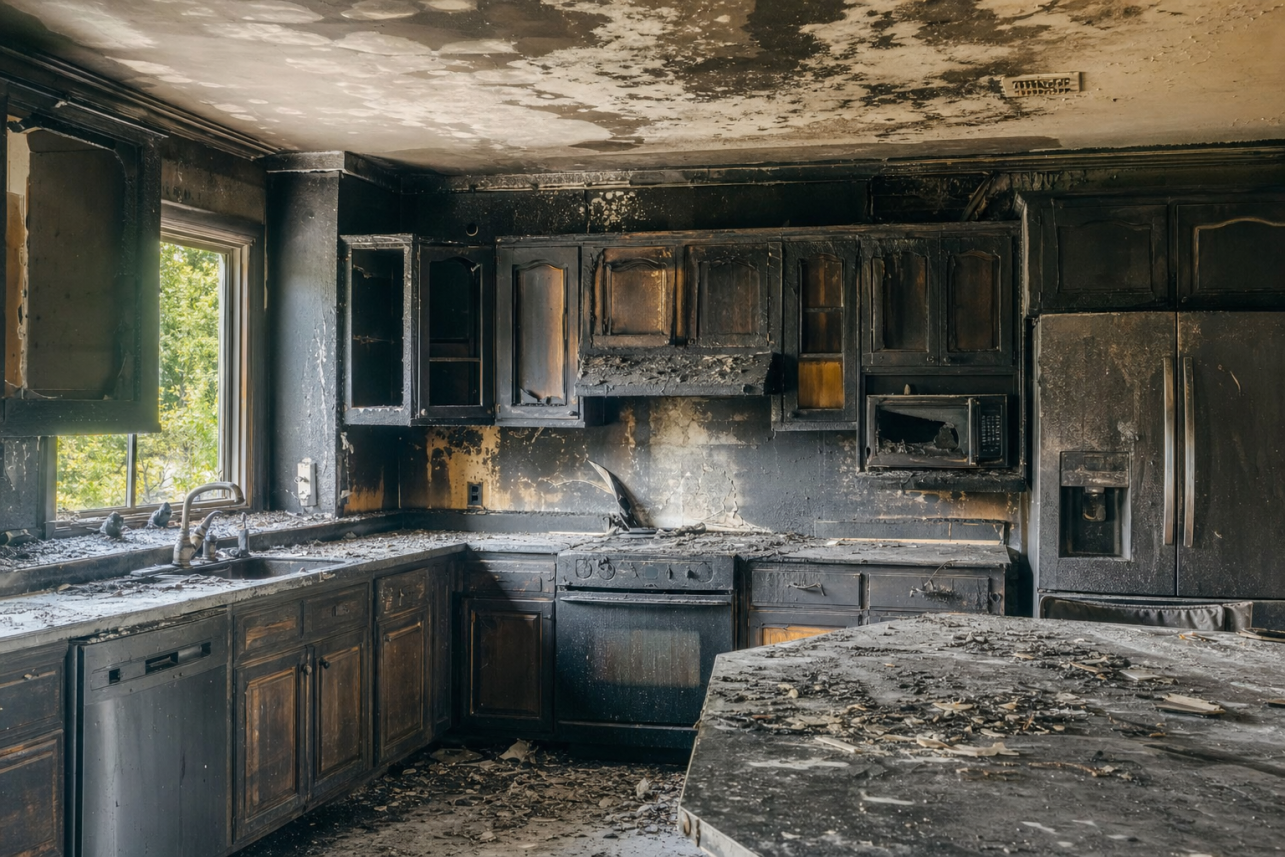
Fire claims are really three claims in one: the structure, the contents, and the additional living expenses while you're displaced. The Best Public Adjuster Hillsborough homeowners can hire is one who works all three at the same time instead of letting the carrier dictate the pace.
On the structure, smoke and soot travel far beyond the burn area. Soot is acidic and keeps corroding surfaces, wiring, and HVAC components long after the fire is out. We document contamination in attic spaces, duct systems, and wall cavities that a quick walkthrough misses, because unaddressed smoke damage leads to lingering odor and failed finishes later.
On contents, we build a room-by-room inventory of your belongings with descriptions, ages, and replacement pricing — often hundreds of line items. This is where undervaluation hits families hardest, and it's exactly the kind of math courts have scrutinized. In Hicks v. State Farm Fire & Casualty Co., 751 F. App'x 703 (6th Cir. 2018), the court sided with policyholders, holding the insurer improperly depreciated labor costs when paying actual cash value on home damage claims, forcing fairer payments.
On additional living expenses, your policy typically covers comparable temporary housing, and in a town like ours with limited rental inventory, we push for allowances that reflect real local costs, not a statewide average.
We are licensed and bonded, and while results depend on your policy and the facts of your loss, a thoroughly documented fire claim gives you the strongest possible position.
Which Types Of Insurance Claims Does For The Public Adjusters, Inc. Handle In Orange County — And Which Does It Not?
We represent policyholders on property claims: homes, commercial buildings, and the contents inside them. In and around Hillsborough, that most often means fire and smoke damage, water damage from burst pipes or appliance failures, hurricane and tornado damage, lightning strikes, and flood losses.
For flood claims specifically, coverage usually comes through the National Flood Insurance Program rather than a standard homeowners policy, and NFIP claims follow their own strict proof-of-loss deadlines. Resources at FEMA.gov and FloodSmart.gov explain the program, and a Hillsborough public adjuster who knows NFIP rules can help you meet those deadlines with complete documentation.
To be clear about what we do not handle: we do not work on claims involving cell phones or other personal electronics claims of that type, motor vehicles, health insurance, or life insurance. Our focus stays on buildings and the belongings inside them, because that specialization is where deep policy knowledge pays off for our clients.
That focus matters in disputes. In Sproull v. State Farm Fire & Casualty Co., 2021 IL 125978, the Illinois Supreme Court ruled for the insured homeowner, finding the carrier could not deduct labor depreciation from actual cash value payments on structural damage — a detailed, technical issue that only comes to light when someone examines the settlement line by line.
For The Public Adjusters, Inc. is licensed and bonded. We can't guarantee any particular settlement figure — no honest adjuster can — but we can promise your claim gets documented, priced, and advocated for thoroughly, from the first inspection through the final payment.
What's The Difference Between The Insurance Company's Adjuster And A Public Adjuster In Hillsborough?
The adjuster your insurance company sends works for the insurer. Their job is to settle the claim within the carrier's guidelines, and their loyalty is to the company that signs their paycheck. A public adjuster in Hillsborough works exclusively for you, the policyholder, and is paid only from the settlement you actually receive.
That difference matters more than most homeowners realize. The carrier's adjuster may spend thirty minutes at your property and rely on software estimates built around average pricing. Our team documents every damaged surface, every affected item of contents, and the real cost of repairs in Orange County — then negotiates from that evidence.
Courts have repeatedly recognized that insurers who lowball or delay claims can be held accountable. In Bi-Economy Market, Inc. v. Harleysville Insurance Co. of New York, 10 N.Y.3d 187 (2008), a family-owned market suffered a devastating fire that destroyed the building's interior and its inventory. The insurer paid only a fraction of the loss and dragged out the claim. New York's highest court ruled for the insured, holding the carrier could be liable for consequential damages caused by its bad-faith handling of the claim.
You shouldn't have to go to court to be treated fairly. Having a licensed, bonded advocate documenting your loss from the start often prevents the kind of underpayment that case was built on. We can't promise a specific dollar outcome — no honest adjuster can — but we make sure your side of the claim is fully presented.
Is For The Public Adjusters, Inc. Licensed To Work On Claims In Orange County, And How Do I Verify That?
Yes. For The Public Adjusters, Inc. is licensed and bonded, and we handle residential and commercial property claims throughout Hillsborough and the surrounding Orange County area. Licensing matters because public adjusting is a regulated profession — anyone negotiating an insurance claim on your behalf for a fee is required to hold a valid public adjuster license.
Verifying a license is simple, and we encourage every homeowner to do it before signing with anyone. Ask for the adjuster's license number, then check it through the state Department of Insurance website or by calling their consumer services line. A legitimate adjuster will hand over that number without hesitation. If someone dodges the question, walk away.
The bond is your second layer of protection. It exists specifically to protect policyholders if an adjuster mishandles their duties, which gives you financial recourse beyond the license itself.
Be especially cautious after major storms, when out-of-area contractors and unlicensed "claim consultants" tend to canvass Hillsborough neighborhoods door to door. Some offer to "handle the insurance" as part of a repair contract, which they are generally not licensed to do. Mixing your repair contract with your claim negotiation creates a conflict of interest that rarely benefits you.
When you work with us, you get a local, accountable firm whose only role is representing your interests on the claim. One note on scope: we handle property claims only — we do not take claims involving cell phones, motor vehicles, health, or life insurance.
A Pipe Burst And Flooded My Kitchen — Should I Call The Best Public Adjuster Hillsborough Has Before My Insurer?
The team many homeowners consider the Best Public Adjuster Hillsborough offers would tell you this: stop the water, make the property safe, and call us before you give the insurance company a recorded statement. What you say in those first conversations can shape how the carrier categorizes and values your claim.
Burst pipes, supply-line failures, and water heater leaks are among the most commonly underpaid claims we see in Orange County. Carriers often pay to dry the structure but miss hidden damage — saturated insulation inside walls, warped subflooring under cabinets, and moisture trapped beneath vinyl or hardwood that leads to mold weeks later. Our team uses moisture mapping and a room-by-room contents inventory so none of that gets left out of the estimate.
One important distinction: a burst pipe is typically covered under your homeowners policy, but rising water from outside the home is a separate flood claim. Flood losses usually fall under the National Flood Insurance Program (NFIP), and FEMA's website at fema.gov and floodsmart.gov explain how those policies work. We can help you sort out which policy applies when water comes from more than one source.
Before anything is torn out, photograph everything — standing water, the failed pipe itself, damaged belongings — and keep the broken component. Insurers sometimes dispute whether a leak was sudden or long-term, and that physical evidence protects you. We'll review your policy at no obligation and tell you honestly whether professional representation makes sense for your loss.
I Already Filed My Claim And Got A Check That Won't Cover Repairs. Is It Too Late To Bring In A Public Adjuster?
No, it's usually not too late. Cashing a partial payment generally does not close your claim, and in most situations you can reopen or supplement a claim when new or undervalued damage is documented. Hillsborough homeowners come to us at this stage constantly — often after the first contractor bid arrives and it's thousands more than the insurance check.
Here's how we approach an underpaid claim. First, we review your full policy, including endorsements most people never read, to confirm what coverage actually applies. Second, we re-inspect the property and compare our findings against the carrier's estimate line by line. Missing items are common: code-upgrade costs, matching requirements for flooring and roofing materials, contents that were never inventoried, and overhead and profit that should apply when multiple trades are needed.
Then we prepare a documented supplemental claim and negotiate directly with the carrier on your behalf. Because our fee is a percentage of what you recover, you pay nothing up front, and our interests are aligned with yours.
Two cautions worth knowing. Policies contain deadlines — proof-of-loss requirements and time limits for supplements or legal action — so the sooner you call, the more options you keep open. And never sign a document titled "release" or "full and final settlement" without understanding it, because that can genuinely end your claim.
We can't guarantee a specific result on any reopened claim, but we can promise your loss will be fully measured and professionally presented, which is the foundation every fair settlement is built on.
What Should I Expect During My First Meeting With The Best Public Adjuster Hillsborough Homeowners Recommend?
The first meeting is a free, no-pressure review of your situation. A licensed adjuster from For The Public Adjusters, Inc. will walk your property, look at the damage firsthand, and read your actual policy language — not a summary, the full policy — to identify every coverage that may apply to your loss.
In Hillsborough, that walkthrough matters more than most people realize. Many homes near the historic district and along the Eno River corridor are older structures with plaster walls, original hardwoods, and dated plumbing or wiring. Damage in these homes is frequently underestimated because repairs must match existing materials, and matching costs real money. We document those details from day one.
You'll leave the meeting understanding three things: what your policy likely covers, what documentation we'll need to build the claim, and what a realistic timeline looks like. We'll never promise a specific dollar outcome — no honest adjuster can — but we will explain exactly how we intend to measure and present your loss.
If we take the claim, our fee is a percentage of the recovery, so there's no upfront cost. We're licensed and bonded, and you can verify that before signing anything. Bring photos, your policy declarations page, and any correspondence from your insurer, and the meeting will be far more productive.
Have Policyholders Actually Won In Court Against Insurance Companies Over Property Damage?
Yes, and the case law is worth knowing because it shapes how insurers behave today. One of the most influential decisions is Gruenberg v. Aetna Insurance Co. (1973), where the California Supreme Court sided with a policyholder after his insurer refused to pay a fire loss to his building and its contents. The court held that an insurer owes its policyholder a duty of good faith and fair dealing, and that wrongfully denying a legitimate property claim can expose the insurer to damages beyond the policy itself.
That principle — that carriers must handle claims fairly — now runs through insurance law nationwide, including North Carolina, where unfair claim settlement practices are addressed by statute. It's a big reason documented, well-presented claims get taken seriously.
Here's the practical takeaway for an Orange County homeowner: most disputes never need to reach a courtroom. When a claim is professionally documented — itemized contents inventories, line-item repair estimates, moisture readings, photographs, and policy citations — the insurer knows the file would hold up under scrutiny. That changes the conversation.
Our role as your Hillsborough public adjuster is to build that kind of file from the start. We can't guarantee any particular result, and we're careful never to promise one. But cases like Gruenberg exist precisely because policyholders who stood their ground, with solid evidence, prevailed. If a claim does require an attorney, we work alongside your counsel and supply the damage documentation that supports the legal case.
Does Homeowners Insurance Cover Mold After Water Damage, And Can A Public Adjuster In Hillsborough Help?
Often yes — but it depends heavily on how the mold started and how your policy is written, which is exactly where a trained eye earns its keep.
Most homeowners policies cover mold when it results from a sudden, covered water loss: a burst supply line, a failed water heater, or an appliance leak. What they typically exclude is mold from long-term neglect or gradual seepage. Insurers lean hard on that distinction, and in Hillsborough's humid climate, mold can bloom inside wall cavities within 48 to 72 hours of a leak, making the cause-and-timing question critical.
Our team documents the origin of the moisture immediately — plumbing failure points, moisture mapping, thermal imaging where useful — so the carrier can't recast a sudden loss as a maintenance issue. We also read your policy for mold sublimits, which in North Carolina are often capped at figures like $5,000 or $10,000, and we structure the claim so remediation, tear-out, and rebuild costs are categorized correctly under the right coverages.
One important distinction: if the water came from rising floodwater — say, the Eno River leaving its banks — that falls under flood insurance rather than your homeowners policy. Flood claims run through the National Flood Insurance Program, and resources at FEMA.gov and FloodSmart.gov explain that coverage. We handle NFIP claims too, and mold documentation standards there are strict and time-sensitive.
If you see or smell mold after any water event, call before remediation crews remove the evidence.

My Insurer And I Can't Agree On The Repair Cost. How Does The Appraisal Clause Work, And Does The Best Public Adjuster Hillsborough Offers Handle It?
Yes — appraisal is one of the most useful tools we use for Hillsborough policyholders, and most homeowners don't even know it exists in their policy.
Nearly every homeowners policy in North Carolina contains an appraisal clause. When you and the carrier agree the loss is covered but disagree on the amount — common after fire, water, hurricane, or tornado damage — either side can invoke appraisal. You select your appraiser, the insurer selects theirs, and the two choose a neutral umpire. Agreement between any two of the three sets the loss amount, which is binding on the dollar figure.
This matters because appraisal resolves pricing disputes without a lawsuit, usually in weeks or months rather than years. It's especially effective in Orange County, where carriers' software-generated estimates often miss local realities: matching materials in a 1920s Hillsborough bungalow, code-upgrade costs under current North Carolina building requirements, or the true cost of restoring plaster and period trim.
For The Public Adjusters, Inc. prepares the detailed estimate and documentation your appraiser relies on, and in many claims a member of our team can serve as your appraiser. We'll tell you honestly whether appraisal makes sense for your numbers — it involves some cost, and it isn't the right move for every dispute. We never promise a specific award.
One caution: don't invoke appraisal before your own damage estimate is complete and defensible. Timing and preparation drive the outcome, so talk to us before you send that letter.
Local Relevance
Hillsborough's housing is a tale of two eras. The historic district holds some of the oldest homes in the state, where a single fire or water loss means plaster repair, custom millwork, and materials no big-box store carries. Carriers routinely price these losses as if they were modern drywall boxes, and the gap can be enormous. Surrounding the old town are subdivisions built during the growth of the past few decades, where roofs and builder-grade materials are now aging into the years when insurers argue "wear and tear" on every storm claim.
The weather here does not help. Orange County sits in the path of hurricane remnants pushing inland — longtime residents remember what Fran did to the Triangle — and spring brings thunderstorms, hail, and the occasional tornado. Winter ice storms snap limbs onto roofs, and the Eno River and its tributaries can put water into homes that never expected it. Because standard homeowners policies exclude flood, the Federal Emergency Management Agency (FEMA) urges owners in river towns like this one to carry separate flood coverage rather than assume their regular policy will respond.
We serve all of Orange County and neighboring communities as well — homeowners who found us as a public adjuster in Fearrington Village NC or through our tree damage claim in Fuquay Varina work often refer their Hillsborough friends and family.
Around Hillsborough, flood risk tends to hide off the map — the Eno and its small tributaries can push water into homes outside the mapped high-risk zones, especially as new pavement sends more runoff downstream than the old flood maps assumed. Many owners learn only after a storm that their homeowners policy excludes flood entirely, which is why we review flood coverage questions before the water ever rises.
Talk To A Hillsborough Public Adjuster Before You Accept The Carrier's Number
Whether it's fire, smoke, water, a fallen oak, or floodwater off the Eno, the first offer is rarely the full story. For The Public Adjusters, Inc. is licensed and bonded, and the policy review costs you nothing. Call before you sign anything, and let's find out what your claim is really worth.
Call us: (919) 400-6440
Helpful Resources
- NCDOI Public Adjusters Guide
- Federal Emergency Management Agency (FEMA)
- National Flood Insurance Program (NFIP)
- North Carolina Department of Insurance — Verify public adjuster licensing in NC
Serving Hillsborough · Orange
Last updated: November 3, 2026