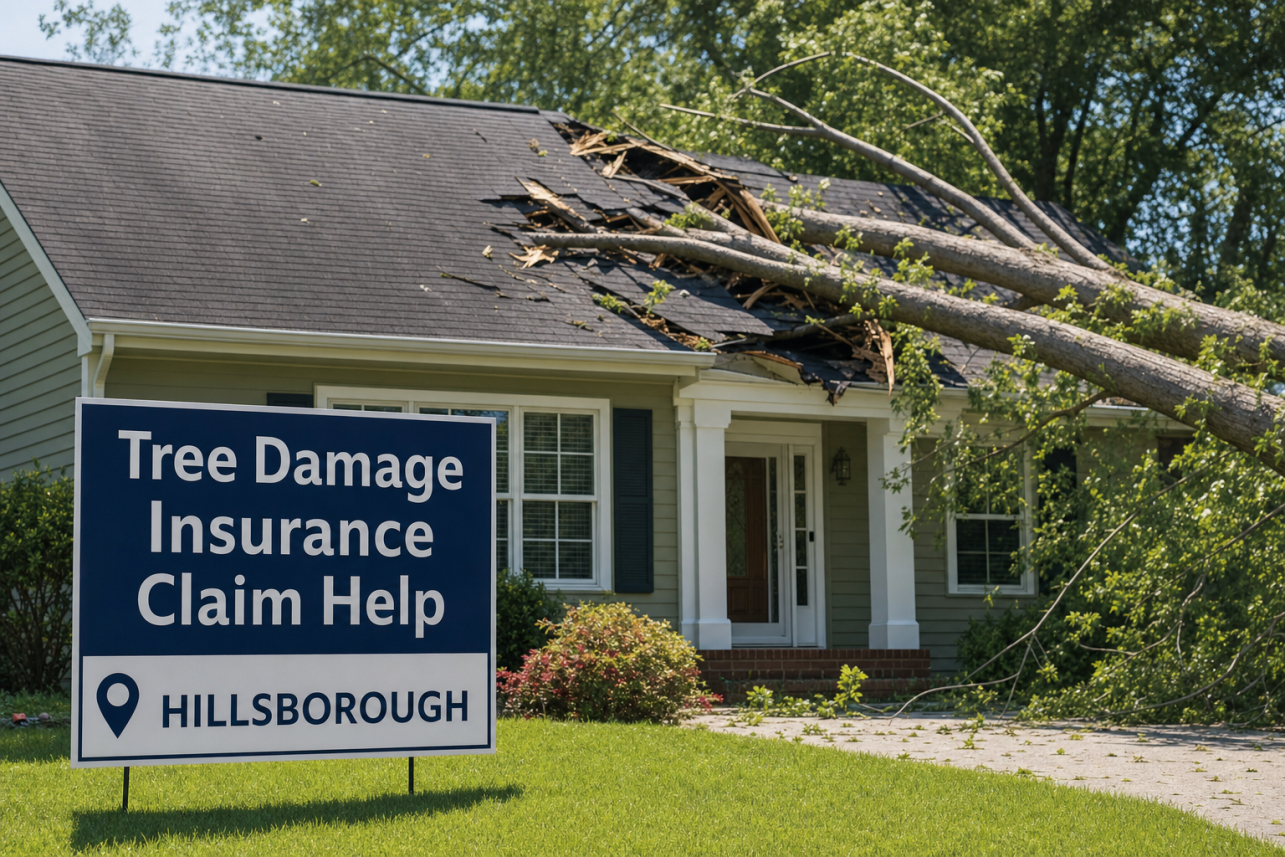
If you need tree damage insurance claim help Hillsborough homeowners can rely on, For The Public Adjusters, Inc. represents you — not the insurance company — from the first inspection through final settlement. We document the full scope of roof, structural, and interior damage after a tree strikes your home, prepare the proof of loss, and negotiate directly with your insurer. As licensed and bonded public adjusters, we work only for policyholders in Hillsborough and throughout Orange County.
What This Service Is
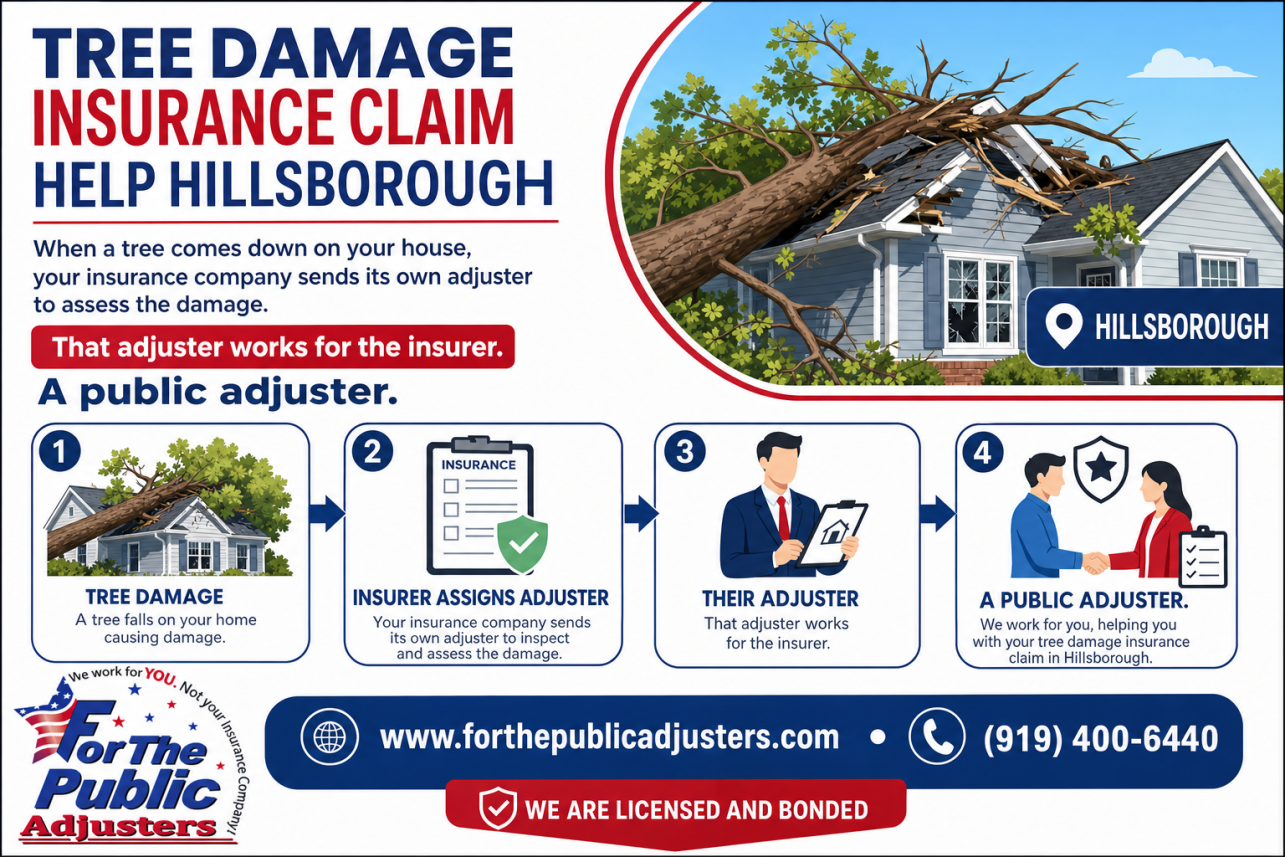
When a tree comes down on your house, your insurance company sends its own adjuster to assess the damage. That adjuster works for the insurer. A public adjuster does the opposite: we work exclusively for you, the policyholder.
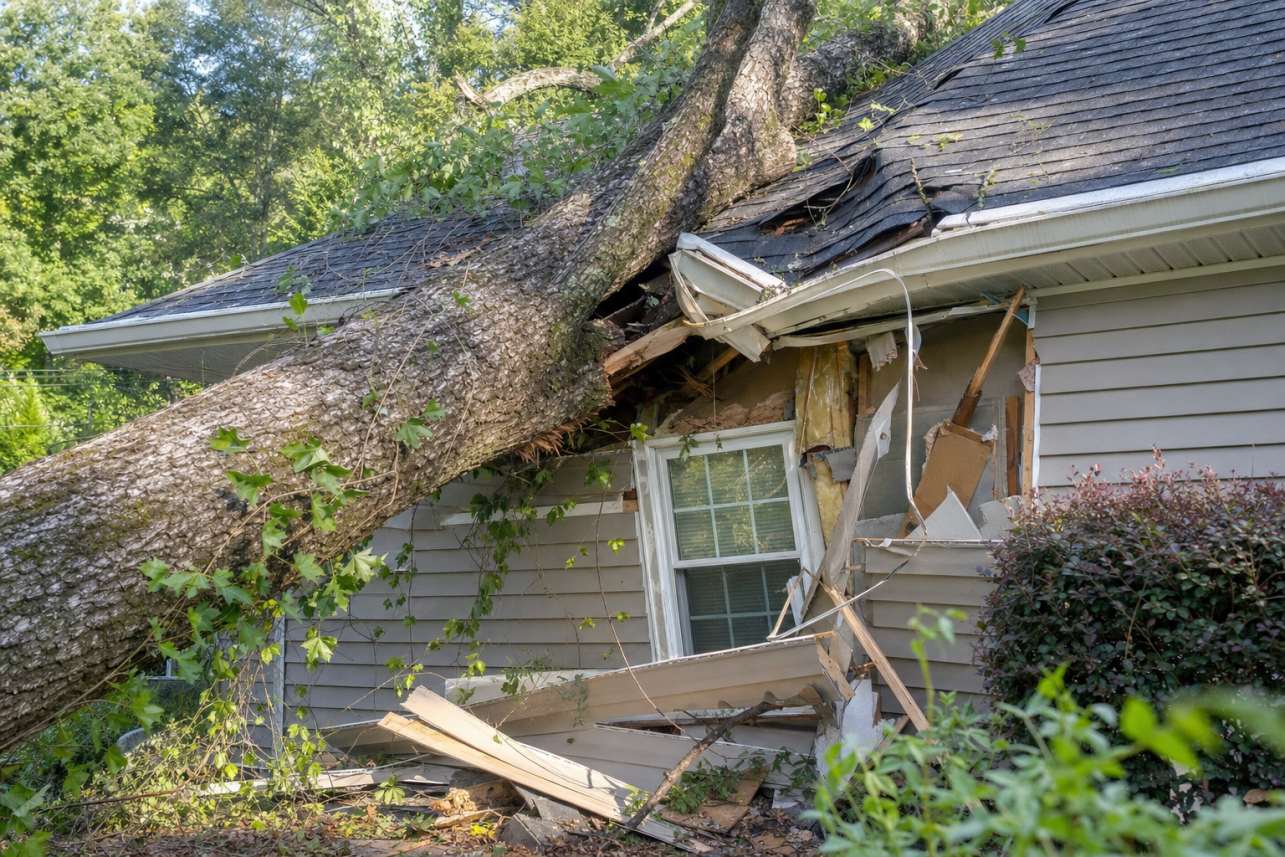
For a tree strike, that means climbing into the details the company adjuster often rushes past. A trunk that punches through shingles rarely stops at the roof deck. It can crack rafters, shift load-bearing walls, split ceiling joists, and open the home to rain damage that spreads for weeks if it isn't caught.
We read your homeowners policy line by line, identify what coverage actually applies — dwelling, contents, debris and tree removal, emergency repairs, and additional living expenses if you can't safely stay in the home — and build a complete, documented claim. Then we handle the back-and-forth negotiation so the settlement reflects the real cost of putting your home back the way it was.
The NCDOI Public Adjusters Guide explains that public adjusters in North Carolina must be licensed to represent policyholders, and we meet that standard. We handle tree damage claims alongside related losses like water intrusion, fire, and storm damage — but never guarantee a specific dollar outcome, because no honest adjuster can.
Common Problems
The Insurer's Estimate Stops At The Shingles
The most common problem we see after a tree hits a Hillsborough home is a settlement offer that covers visible roof damage and little else. A falling oak transfers enormous force into the structure below it.
Cracked rafters, sagging ridge lines, separated wall plates, and plaster cracks two rooms away are all part of the same loss — but they only get paid if someone finds and documents them. A quick walk-around inspection rarely does. We push for a full structural damage assessment before anyone signs off on a number.
Why Tree Damage Insurance Claim Help Hillsborough Owners Need Most Involves Hidden Water Loss
In summer, a tree strike almost never happens in dry weather. It happens during a thunderstorm or the remnants of a tropical system, which means rain pours through the opening before a tarp ever goes up.
That water soaks insulation, wicks into framing, and shows up later as stained ceilings, warped floors, and mold. Insurers sometimes try to separate that water damage from the tree claim or blame it on delayed repairs. We document the moisture damage as part of the original loss, and we make sure your reasonable emergency repairs — tarping, board-up, water extraction — are claimed too, since your policy requires you to protect the home and typically covers those costs.
Depreciation, Deductibles, And The Check That's Smaller Than The Repair Bill
Many policyholders are shocked when the first check is thousands less than the contractor's estimate. Often the insurer has paid actual cash value — the depreciated worth of your old roof — and is holding back the rest until repairs are done, even when the policy provides replacement cost.
Others get tripped up by tree removal limits, disputes over whose tree fell (a neighbor's tree landing on your home is usually your claim, not theirs), or missed filing deadlines. Courts have long recognized that insurers owe policyholders fair dealing: in Gruenberg v. Aetna Insurance Co., the insured won the right to hold his insurer accountable for handling a building fire loss in bad faith. You should never have to eat out-of-pocket repair costs because a claim was underpaid or wrongly delayed.
Our Process
Free Claim Review And Full Damage Inspection
We start by reviewing your policy and the loss itself — at no cost. Then we inspect everything the tree touched: roof covering, decking, framing, attic, interior walls and ceilings, and any water intrusion paths.
We photograph and measure the damage, note contents losses, and identify structural issues that need an engineer's eyes before they get buried under new shingles.
Documentation And Proof Of Loss
We prepare a detailed, itemized estimate of the full scope of damage and assemble the sworn proof of loss your insurer requires. This is where claims are won or lost.
A complete file — measurements, moisture readings, photos, contractor-level pricing — leaves far less room for the insurance company to argue the damage down. We also track your additional living expenses if the home isn't livable, and your emergency repair receipts.
Negotiation Through Settlement
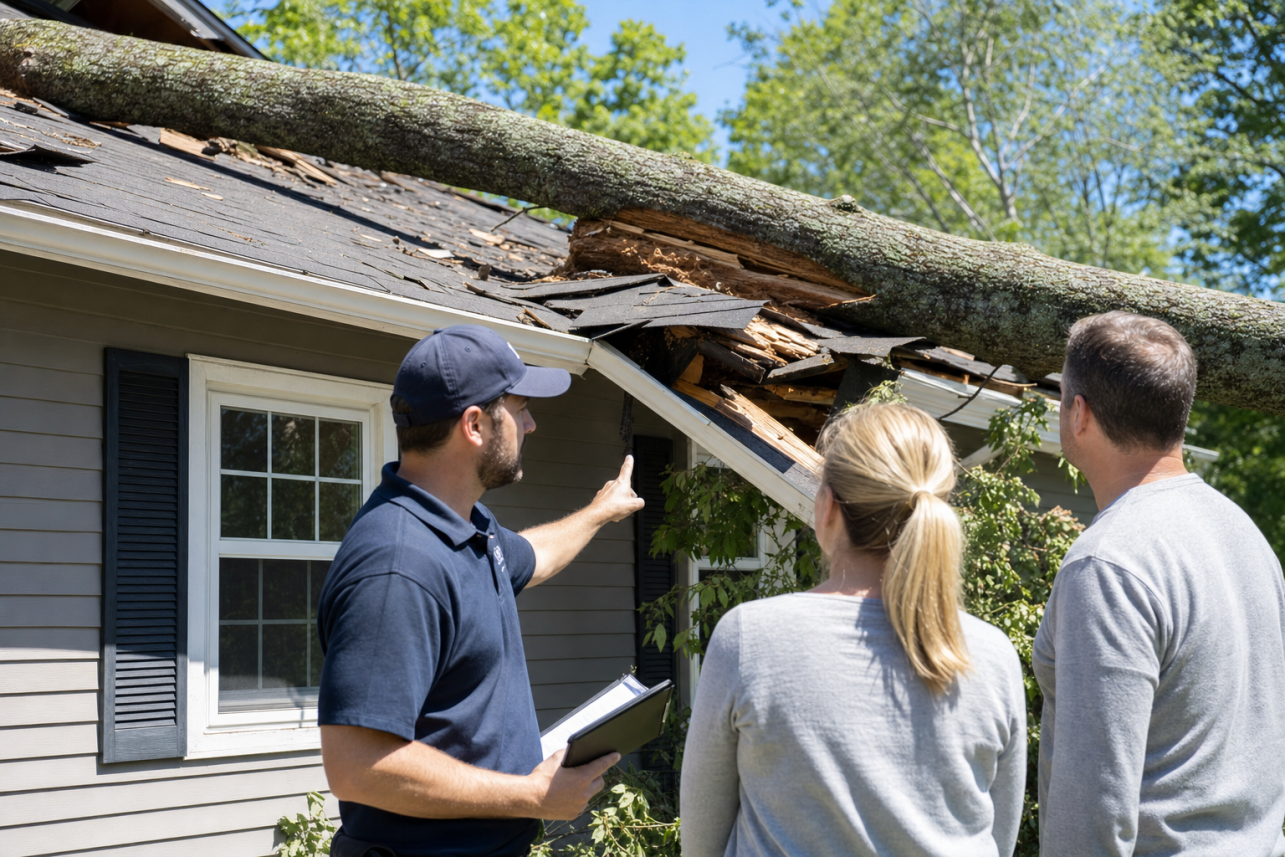
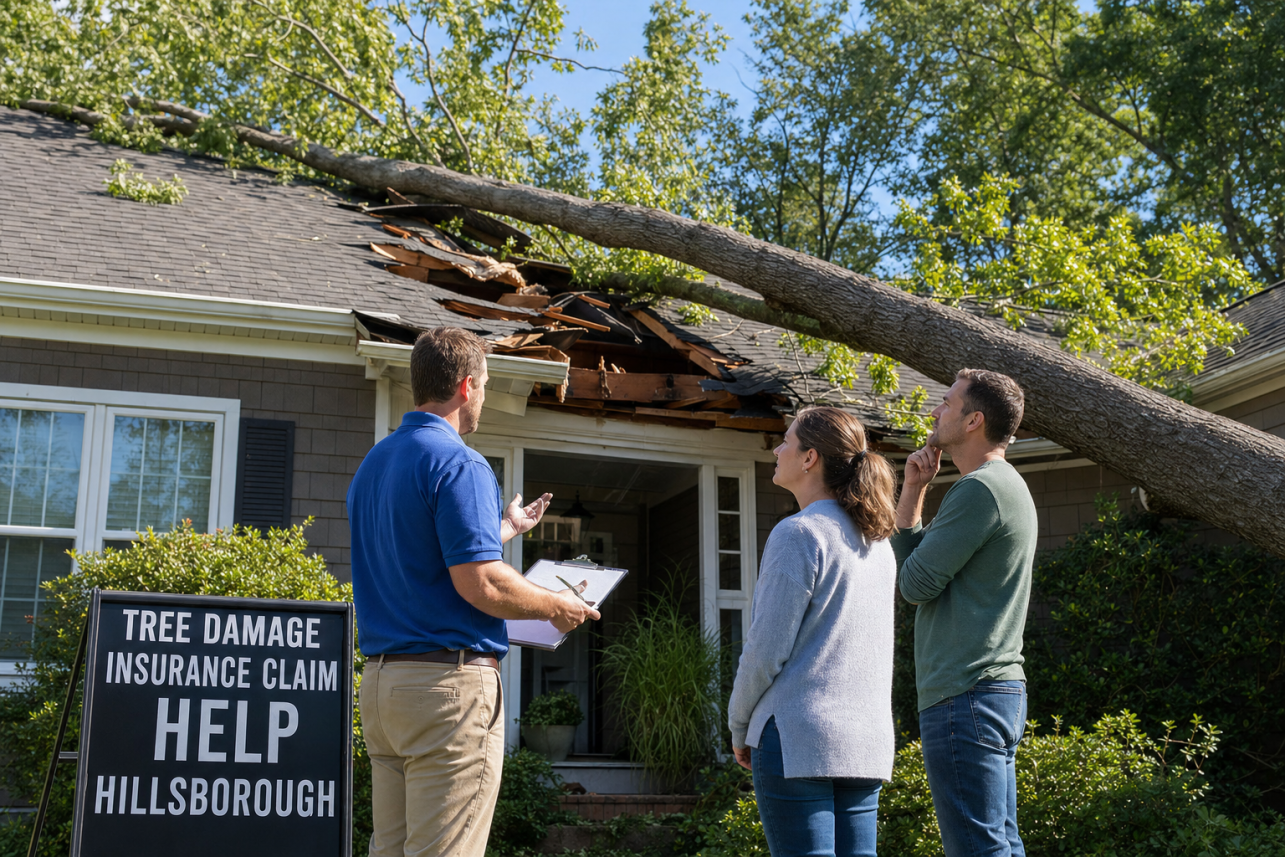
We meet the insurance company's adjuster on site, walk the damage item by item, and negotiate on your behalf until the offer reflects the documented loss. If the insurer disputes the scope or underpays, we respond with evidence, not frustration.
You stay informed at every step, and you make the final decision on any settlement. Our fee is a percentage of the recovery, so our interests stay aligned with yours.
| What Happens | Filing on Your Own | With For The Public Adjusters |
|---|---|---|
| Roof and structure inspection | Carrier's adjuster does a brief exterior look; attic framing rarely checked | Full attic, framing, and impact-point inspection, with a structural engineer when the hit warrants it |
| Debris and tree removal payment | Often capped at a token amount or lumped into the roof estimate | Policy's separate tree-removal and debris allowances identified and claimed in full |
| Hidden water damage | Interior scope limited to visible stains | Moisture mapping traces water inside walls, insulation, and subfloors before it becomes mold |
| Neighbor's-tree situations | Homeowner gets bounced between two insurers for months | Your policy is pursued first; the negligence question is documented for the carrier's subrogation |
| Settlement negotiation | You accept or dispute the carrier's number with no leverage | Line-item estimate in carrier format, negotiated by licensed NC adjusters, appraisal invoked if needed |
| Cost to you | Free, but Hillsborough tree claims are routinely underpaid by tens of thousands | Percentage of recovery only — no fee unless your settlement increases |
Commonly Overlooked In The Public Adjusting Industry
- Fractured rafters and ridge beams under the impact point — Carrier adjusters often inspect only from the rooftop, and a beam cracked by a falling oak is invisible unless someone actually enters the attic.
- The policy's separate tree-removal allowance — Debris removal frequently gets lumped into the roof estimate at a fraction of the real cost because the standalone allowance in the policy is never invoked.
- Water tracking inside wall cavities after the roof is breached — Rain entering through a limb hole runs down framing far from the visible stain, so estimates written from what's visible miss two or three rooms of damage.
- Chimney and flue damage from glancing limb strikes — A limb that scrapes the chimney can crack the crown or flue liner without knocking bricks loose, and nobody checks until the first fire of winter.
- Matching requirements for partial roof repairs under NC practice — Carriers approve a patch in a discontinued shingle color, and homeowners don't know they can push for a full slope or full roof when materials can't reasonably match.
- Documenting the mitigation timeline from the first hour — Insurers deny interior water damage for 'failure to mitigate,' and without records of tarping calls made the night of the storm, the homeowner can't disprove it.
- Additional living expenses during a kitchen or bedroom rebuild — Families absorb weeks of restaurant meals and hotel costs out of pocket because no one told them the policy reimburses those when part of the home is unusable.
- Prior written notice to a neighbor about a hazardous tree — That one email or letter proves negligence, opens the neighbor's liability coverage, and can get your deductible back — but it's rarely gathered before it matters.
Case Studies
Case Study #1
Situation: A retired couple on Orange Grove Road had a mature red oak split during a summer thunderstorm, dropping a limb the size of a small tree across their roof ridge, chimney, and back deck.
Problem: Their carrier's field adjuster inspected for twenty minutes, approved removal of the debris from the roof only, and offered $9,400 — enough to patch shingles but nothing for the cracked chimney crown, the fractured ridge beam, or the deck the limb crushed on its way down.
Investigation: Our adjusters brought in a structural engineer to open the attic and inspect the framing beneath the impact point. We also documented the chimney with a masonry contractor and pulled the deck into the claim as a separate covered structure under the policy's other-structures provision.
Findings: The ridge beam had a visible fracture and two rafters were displaced — hidden damage the carrier's inspector never entered the attic to see. The chimney flue liner was cracked, making the fireplace unsafe. Debris removal had also been underpaid because the carrier ignored the policy's separate tree-removal allowance.
Solution: We rewrote the scope with engineer-backed documentation, invoked the appraisal-ready estimate format carriers respond to, and negotiated line by line: structural repair, full chimney rebuild above the roofline, deck replacement, and the correct debris allowances.
Outcome: The settlement rose from $9,400 to $61,700. The couple repaired the framing properly instead of covering a broken beam with new shingles, and the fireplace was safe to use by winter.
Lesson: A fast rooftop inspection almost never catches what a falling tree does to the structure underneath. If nobody has been in your attic, your claim probably isn't done.
Case Study #2
Situation: A family near Cameron Park in Hillsborough had a neighbor's dying pine fall through their kitchen roof during a nor'easter, opening the home to three days of rain before tarping was complete.
Problem: The carrier accepted the impact damage but denied most of the interior water damage, arguing the family failed to mitigate quickly enough. They also told the homeowners to pursue the neighbor for the tree itself, stalling everything for weeks.
Investigation: We built a timeline proving the family called three tarping companies the same night and none could respond during the storm — reasonable mitigation under NC policy language. We also documented that the neighbor had been notified in writing about the dying pine, which mattered for the carrier's subrogation, not the homeowners' recovery.
Findings: Moisture mapping showed water had traveled inside wall cavities into two adjacent rooms the carrier's estimate ignored. The kitchen cabinets were water-swollen and the subfloor was saturated. The 'failure to mitigate' argument collapsed against the documented timeline.
Solution: We separated the two issues cleanly: the homeowners' own policy owed for the loss regardless of the neighbor's negligence, and the carrier could chase the neighbor's insurer afterward. Then we submitted a moisture-mapped interior scope with drying logs and cabinet replacement pricing.
Outcome: The claim settled at $87,200, including full kitchen restoration, subfloor replacement, and additional living expenses for the six weeks the kitchen was unusable. The carrier pursued the neighbor's insurer on its own.
Lesson: When a neighbor's tree hits your house, your own policy pays first — don't let an insurer send you on a detour. And never accept a mitigation denial without a documented timeline.
| Scenario | Typically Covered by Your Policy? | What It Depends On |
|---|---|---|
| Your own tree falls on your house | Yes — structure repair plus removal of the tree from the dwelling | Tree must have caused damage to a covered structure; a tree that falls in the yard alone usually gets only a small removal allowance |
| Neighbor's tree falls on your house | Yes — your policy pays first | If the neighbor knew the tree was dead or hazardous, your carrier can recover from theirs, which may protect your deductible |
| Tree hits detached garage, shed, or fence | Usually — under the other-structures coverage | Other-structures limits are typically 10% of dwelling coverage; large outbuildings can exceed it |
| Rain enters through the hole before tarping | Yes — interior water damage from the opening is covered | You must show reasonable mitigation; keep records of every tarping call and receipt from day one |
| Tree crushes your parked car | Not under homeowners | This falls to your auto policy's comprehensive coverage — a separate claim with a separate deductible |
| Carrier says the tree was rotten or neglected | Often disputed, not automatically denied | An arborist's assessment of the failure point frequently proves wind or ice caused the fall, reversing the denial |
| Home unlivable during repairs | Yes — additional living expenses | Coverage runs while repairs make the home uninhabitable; save every hotel, meal, and mileage receipt |
| Stump grinding and lot cleanup | Sometimes | Many policies cap tree debris removal per tree and per occurrence; the exact endorsement wording controls |

Reviews
A hickory came down on our garage during the ice storm in January and State Farm offered us $6,800. For The Public Adjusters found broken trusses the first adjuster never looked at and got us just over $34,000. The garage was rebuilt right instead of patched.
Denise W., Hillsborough NC
Our insurer said the tree that hit our sunroom was 'rotten' and tried to deny the whole thing. These folks brought in an arborist who proved the trunk was sound and the failure was wind. Went from a denial to a $28,500 settlement. Wish I'd called them the day it happened instead of two months later.
Marcus T., Efland
Honest and thorough. A pine limb punched through our roof and rain got into two bedrooms before we could tarp it. The insurance company only wanted to pay for the hole. This team documented the water tracking into the walls and more than tripled the payout. Only reason for four stars is the appraisal process took longer than we hoped, but that was the carrier dragging its feet, not them.
Karen B., Orange County
Frequently Asked Questions
How Does Tree Damage Insurance Claim Help Hillsborough Homeowners Actually Work After A Tree Hits My House?
When you call us for tree damage insurance claim help Hillsborough homeowners get a licensed public adjuster who works for you, not the insurance company. We start with a full inspection of your property, usually within a day or two of your call, documenting everything the tree impact affected: roof decking, trusses, framing, siding, gutters, interior ceilings, and any water intrusion that followed.
From there, we prepare a detailed, line-item estimate using the same software insurance carriers use. This matters because tree strikes in Orange County often cause hidden structural damage that a quick carrier inspection misses. A cracked truss or shifted ridge line can cost tens of thousands to repair properly, and it rarely shows up in a ten-minute walkthrough.
We then handle every conversation with your carrier: filing or reopening the claim, meeting their adjuster on site, negotiating scope and pricing, and pushing back on lowball offers or wrongful denials. You approve the final settlement before anything is agreed.
Our fee is a percentage of the settlement we recover, so there is no upfront cost. If we don't recover money for you, you don't pay us. For most Hillsborough tree damage claims we handle, the increase in settlement far exceeds our fee, and you get your evenings back instead of spending them on hold with the insurance company.
My Insurance Company Already Offered A Settlement For The Tree That Fell On My Roof. Is It Too Late To Get Help?
No, it's not too late, and this is actually one of the most common situations we handle for Hillsborough homeowners. Until you sign a final release or the policy's deadline to dispute passes, you generally still have the right to challenge an inadequate offer. In North Carolina, most policies allow supplemental claims and reopened claims well after the first check is issued.
Carriers often pay quickly on tree strikes because a fast, low settlement closes the file. We regularly review offers that cover shingle replacement over the impact zone but ignore cracked rafters, damaged sheathing, disturbed flashing, and interior repairs. Around Hillsborough, where many homes have older architectural shingles that can no longer be matched, you may also be entitled to full slope or full roof replacement rather than a patch.
When you bring us an existing offer, we re-inspect the property from scratch, compare the carrier's estimate line by line against actual damage, and document everything they missed with photos, measurements, and moisture readings. Then we file a supplemental claim and negotiate directly with the adjuster or their desk reviewer.
Cashing the first check usually does not end your claim, but signing a release can. Before you sign anything or start repairs, have us look at the offer. The review costs you nothing, and if the settlement is genuinely fair, we'll tell you that too.
Who Pays When My Neighbor's Tree Falls On My Hillsborough Home, And Whose Insurance Handles It?
This surprises almost everyone: in most cases, your own homeowners policy pays when a neighbor's tree lands on your house, even though the tree wasn't yours. North Carolina follows the general rule that each property owner claims damage on their own policy unless the neighbor was clearly negligent.
Negligence changes things. If your neighbor knew the tree was dead, diseased, or leaning dangerously, and you can prove it, their liability coverage may be responsible. Documentation matters here. If you ever emailed or texted a neighbor about a hazardous tree, or an arborist flagged it, save that record. We've used that kind of evidence to shift responsibility to the right carrier and protect our clients' claim history.
Either way, the claim itself works the same: the damage to your roof, structure, fence, or outbuildings needs to be fully scoped and priced, and debris removal coverage needs to be applied correctly. Many policies cap tree removal at $500 to $1,000 per tree, but removal of the portion sitting on a covered structure is usually paid under the main dwelling coverage instead, which is a distinction carriers don't always volunteer.
With the mature hardwoods across Orange County neighborhoods, from West Hillsborough to the areas off St. Marys Road, neighbor-tree situations come up constantly after storms. We sort out which policy applies, handle both carriers if needed, and make sure you're not stuck absorbing costs that coverage should pay.
What Should I Do In The First 48 Hours After A Tree Damages My Home, Before Repairs Begin?
First, make sure everyone is safe and stay out of any room under the impact area. A tree strike can compromise framing in ways that aren't visible from below, and ceilings can fail hours after the initial hit.
Second, photograph and video everything before anything is moved: the tree on the structure, the point of impact, interior damage, and the surrounding yard. Once a removal crew cuts the tree apart, critical evidence of how the damage occurred is gone forever. Wide shots and close-ups both help.
Third, take reasonable steps to prevent further damage, because your policy requires it. Tarping an opened roof and moving belongings away from water intrusion are covered as emergency mitigation. Keep every receipt, including tarps, tree removal on the structure, and any emergency contractor invoices.
What you should not do is authorize permanent repairs, sign an assignment of benefits with a contractor, or give a recorded statement to the carrier before the full scope of damage is known. Rushed repairs make it nearly impossible to document what the storm actually did.
Calling us early makes the biggest difference. When homeowners contact For The Public Adjusters before the carrier's inspection, we can be on site to document structural and hidden damage from day one. That's the core of the tree damage insurance claim help Hillsborough families rely on us for: building the claim correctly from the start, so you're negotiating from strength instead of fighting an undervalued file months later.
What Kinds Of Tree Damage Do Insurance Companies Commonly Underpay Or Miss On Hillsborough Homes?
The most frequently missed damage is what you can't see from the ground. When a mature oak or pine punches through a roof, the impact often travels through the framing. We routinely find cracked rafters, shifted trusses, and separated ridge boards that the carrier's first inspection never documented.
Older Hillsborough homes are especially vulnerable. Properties near downtown and along the Eno River corridor often have plaster walls, original framing, and rooflines that don't match modern materials. A quick patch estimate almost never accounts for matching historic siding, custom trim, or code upgrades Orange County requires when repairs reach a certain scope.
Water intrusion is the other big one. Between the strike and the tarp going on, rain frequently soaks insulation, drywall, and flooring below the impact point. If that moisture isn't documented early, carriers may later argue it's unrelated or pre-existing.
We also see chimneys knocked out of plumb, gutters and fascia crushed under debris, HVAC units and fences flattened by the canopy, and driveway or foundation cracking from the root ball lifting. Each of those is a separate line item that belongs in your claim.
A thorough claim inspection means getting on the roof, into the attic, and behind the walls where needed — not a fifteen-minute walkaround. That difference in documentation is usually the difference between a settlement that covers a patch and one that actually restores your home.
Does My Homeowners Policy Cover Removing The Tree Itself, Or Just The Damage To My House?
It depends on where the tree landed and what your policy says, and this is one of the most misunderstood parts of tree claims in Orange County.
If the tree struck your home, garage, or another insured structure, most policies cover removing it from the structure as part of the repair. That removal can be expensive — crane work is often required on wooded Hillsborough lots where trucks can't reach the house — and carriers sometimes lowball this cost badly.
If the tree fell in your yard without hitting anything covered, the answer changes. Many policies only pay for debris removal when the tree blocks a driveway or a handicap-access ramp, and even then the coverage is often capped, commonly at $500 to $1,000 per tree with an overall limit. A tree that simply falls in the backyard may not be covered at all.
There's also a distinction between removing the tree from the structure and hauling it off the property. Some adjusters approve the first and quietly omit the second, leaving homeowners with a massive trunk in the yard and a disposal bill.
We read the actual policy language, identify every removal and debris provision that applies, and make sure crane time, cutting, hauling, and stump considerations are documented with real local pricing. Tree services around Hillsborough charge a premium for emergency crane lifts, and your settlement should reflect what the work actually costs here — not a statewide software average.
My Tree Damage Claim Was Denied Or Barely Covered Anything. Can Tree Damage Insurance Claim Help Hillsborough Services Change The Outcome?
Yes, in many cases a denial or a low payout is not the end of the road. Professional tree damage insurance claim help Hillsborough homeowners rely on starts by finding out exactly why the carrier said no, because denials usually rest on specific reasoning that can be challenged with better evidence.
Common denial arguments include claims that the tree was dead or diseased before the storm, that the damage is wear and tear rather than a sudden event, or that water damage found later isn't connected to the strike. Each of those is a factual question, and facts can be documented. Arborist assessments, weather records for the date of loss, photos, and a proper engineering-level inspection often tell a very different story than the carrier's file.
As licensed public adjusters, we represent you — not the insurance company. We reopen the conversation with a detailed, line-item estimate, supported documentation, and knowledge of North Carolina policy provisions and claim-handling requirements. Carriers respond differently when the person across the table knows the policy as well as they do.
Timing matters. North Carolina policies have deadlines for supplementing or disputing claims, so don't sit on a denial letter. Bring us the denial, your policy, and any estimates you've received, and we'll review it at no cost. If we believe the outcome can be improved, we'll tell you honestly what we think is recoverable before you commit to anything.
How Much Does It Cost To Hire A Public Adjuster For A Tree Claim, And Is It Worth It For A Hillsborough Homeowner?
Public adjusters in North Carolina work on contingency, meaning we're paid a percentage of the insurance settlement we recover for you. There's no upfront fee, no hourly billing, and if we don't recover anything, you owe nothing. Our fee is spelled out in writing before we start, as state law requires.
Whether it's worth it comes down to the gap between what the carrier offers and what your repairs actually cost. On tree strikes, that gap is often substantial. A carrier estimate might cover shingles and a drywall patch, while the real scope includes structural framing repairs, matching materials on an older home, water mitigation, crane-assisted tree removal, and Orange County permit and code-upgrade costs. When those items get added and properly priced, settlements frequently increase enough that homeowners come out well ahead even after our fee.
There's also the time factor. Managing a claim means inspections, phone calls, estimate disputes, and paperwork stretched over weeks or months. We handle all of that so you're coordinating with one advocate instead of chasing a claims department.
For smaller losses — say a limb that dinged a gutter — we'll tell you plainly if hiring us doesn't make financial sense. Our reputation in Hillsborough and the surrounding Triangle area depends on honest assessments. The free initial review exists exactly for that reason: we look at your damage and your policy first, then you decide with real numbers in front of you.
How Long Does A Tree Damage Claim Usually Take In Hillsborough, And Can Tree Damage Insurance Claim Help Hillsborough Speed Things Up?
Most tree damage claims in Orange County take anywhere from three weeks to several months, depending on the severity of the damage and how quickly the carrier's adjuster gets on site. After a major storm rolls through Hillsborough, insurance companies get flooded with claims and response times stretch out, sometimes leaving homeowners waiting weeks just for an initial inspection.
Working with tree damage insurance claim help Hillsborough professionals typically shortens that timeline in practical ways. We prepare complete documentation before the carrier's adjuster ever arrives, which means fewer back-and-forth requests for photos, contractor estimates, or engineering reports that stall claims for weeks at a time.
Under North Carolina law, insurers are expected to acknowledge claims promptly and investigate within a reasonable timeframe. When a carrier drags its feet, a public adjuster knows how to apply the right pressure through documented follow-ups and, when necessary, complaints to the North Carolina Department of Insurance.
Structural claims involving cracked rafters, shifted framing, or foundation impact naturally take longer because they may require an engineer's evaluation. But even complex claims move faster when the file is organized, the scope of damage is fully documented from day one, and someone is following up with the carrier every week. Our goal is always the same: a complete settlement, not a quick lowball payout that leaves you covering repairs out of pocket.
A Tree Crushed My Fence, Shed, And Deck Along With The House. Are Those Covered Too?
In most cases, yes. Standard homeowners policies in North Carolina include what's called Coverage B, or 'other structures' coverage, which applies to detached buildings and structures on your property. That typically means fences, sheds, detached garages, gazebos, and freestanding decks damaged when a tree comes down.
Coverage B is usually capped at 10% of your dwelling coverage. So if your Hillsborough home is insured for $350,000, you'd generally have up to $35,000 available for detached structures. That sounds like plenty until you price out a new privacy fence, a rebuilt shed, and deck repairs at today's material and labor costs in Orange County.
Where homeowners get shortchanged is in the details. Carriers often pay to repair only the fence sections the tree physically hit, ignoring that new pickets won't match twenty-year-old weathered wood, or that the impact racked posts several sections away. Attached decks fall under your main dwelling coverage rather than Coverage B, which matters for your limits.
Our adjusters walk the entire property, not just the obvious impact zone. We document splintered rails, cracked footings, and damage hidden under debris before cleanup crews haul evidence away. If a tree took out multiple structures on your property, get everything photographed and itemized before anyone starts removal work, because once the debris is gone, proving the full scope of the loss gets much harder.
The Tree Made Part Of My Home Unlivable. Will Insurance Pay For A Hotel Or Rental While Repairs Happen?
If a covered tree loss makes your home uninhabitable, your policy's Additional Living Expenses coverage, sometimes called Loss of Use or Coverage D, should pay the extra costs of living elsewhere during repairs. That includes hotel stays, a short-term rental, increased food costs from eating out, extra mileage, even pet boarding in many cases.
The key word is 'additional.' The carrier pays the difference between your normal living costs and what you're spending because you're displaced. If your usual grocery bill is $600 a month and you're now spending $1,000 on restaurants, the $400 difference is what's owed.
Where Hillsborough homeowners run into trouble is the carrier's definition of 'uninhabitable.' A tree through the roof over your only bathroom, or a hole that lets rain and November cold pour into your living space, absolutely qualifies. Yet carriers sometimes argue a home is livable because one bedroom is untouched, pressuring families to stay in unsafe or unhealthy conditions.
We push back on those determinations with photos, moisture readings, and contractor statements showing the home genuinely can't be occupied safely. We also make sure displacement costs are projected realistically, because repairs that carriers estimate at three weeks often run three months once permits, engineering, and material lead times in Orange County are factored in. Keep every receipt from the day you leave the house, no matter how small. Those receipts are the backbone of your reimbursement.
Is There A Deadline To File Or Reopen A Tree Damage Claim In North Carolina, Or To Get Tree Damage Insurance Claim Help Hillsborough Residents Can Still Use Months Later?
North Carolina generally gives you three years to bring legal action on a property insurance claim, though many policies shorten that window through contract language, so reading your specific policy matters. For filing the initial claim, most policies require 'prompt' notice rather than a fixed number of days, but waiting months invites the carrier to argue the delay prejudiced their investigation.
Here's what many Hillsborough homeowners don't realize: accepting a payment doesn't necessarily close the door. If you cashed a settlement check and later discovered the payout didn't come close to covering actual repair costs, or found hidden damage like cracked trusses or water intrusion behind walls, you can often file a supplemental claim for the difference.
Seeking tree damage insurance claim help Hillsborough homeowners can rely on is worthwhile even months after the tree came down. We regularly reopen underpaid claims where the original estimate missed structural framing damage, matching issues with roofing or siding, or interior water damage that only revealed itself over time.
The practical advice is simple: don't sit on it. Evidence degrades, memories fade, and repair invoices get lost. If you suspect your tree claim was underpaid, whether the tree fell last month or last fall, have the settlement reviewed now. For The Public Adjusters, Inc. reviews prior settlements at no upfront cost, and if the numbers don't hold up against real Orange County repair pricing, there's usually a path to recover more.
The Insurance Company Only Wants To Patch Part Of My Roof, But The Shingles Won't Match. Can Tree Damage Insurance Claim Help Hillsborough Homeowners Get A Full Replacement?
Often, yes. This is one of the most common disputes we handle after a tree strikes a roof in Hillsborough. Insurers frequently approve a small repair over the impact area, ignoring the fact that ten-year-old architectural shingles are discontinued or weathered beyond matching.
North Carolina does not have a strict statutory matching law, but most policies promise to return your home to its pre-loss condition. A patchwork roof with two visibly different shingle colors arguably fails that standard, and many policies contain language about repairing with materials of "like kind and quality."
Our adjusters document the mismatch with manufacturer discontinuation notices, supplier availability letters from roofing distributors serving Orange County, and photos showing the color and profile difference. We then push for full slope or full roof replacement where the policy and facts support it.
The same argument applies to siding crushed by a falling limb, brick veneer, and gutters. If a section of vinyl siding was installed in 2008, matching panels almost certainly no longer exist, and a two-tone wall is not a proper repair.
Before you accept a partial repair, get the exact shingle or siding product name from the insurer's estimate and ask whether it is actually available. If it is not, that gap becomes powerful leverage. We build that case for you, present it to the carrier in writing, and negotiate the scope until the repair genuinely restores your home rather than leaving a permanent, value-reducing scar.
Why Was My First Insurance Check So Much Smaller Than My Contractor's Repair Estimate?
Two things usually explain the gap: depreciation and an incomplete scope. Understanding both helps you recover what you are actually owed after a tree damages your Hillsborough home.
Most homeowners policies pay in two stages. The first check reflects actual cash value, which is the repair cost minus depreciation for the age and condition of your roof, siding, or framing. If you hold a replacement cost policy, you can recover that withheld depreciation after repairs are completed and documented, but many homeowners never realize this and leave thousands unclaimed.
The second issue is scope. Insurance estimates written after a quick rooftop visit routinely omit items your contractor will price, such as decking replacement, tarping and emergency mitigation, debris haul-off, damaged truss repair, interior drywall and paint from water intrusion, and code-required upgrades like updated flashing or ventilation that Orange County inspections will demand.
As public adjusters, we compare the carrier's line-item estimate against a complete, independently written scope. We then submit supplements with photos, measurements, and pricing to close the difference. It is common for a properly documented tree claim to grow substantially between the first check and the final settlement.
So do not treat that first check as the final word. Cash it if you need to, noting it as a partial payment, keep every receipt, and have the full scope reviewed before you sign anything releasing the insurer from further payment.
Will Filing A Tree Damage Claim Raise My Premiums Or Get My Hillsborough Policy Dropped?
This worry keeps a lot of homeowners from filing legitimate claims, so it deserves a straight answer. A tree falling on your house is almost always classified as a weather-related, not-at-fault loss, and North Carolina insurers treat those differently than negligence claims like a kitchen fire or a dog bite.
A single storm-related claim rarely triggers non-renewal on its own. Carriers understand that wind events across Orange County hit entire neighborhoods at once, and they generally cannot single you out for damage caused by weather affecting the whole area. Rate changes tied to storm losses are typically applied regionally, meaning your premium may shift whether you filed or not.
What can hurt you is a pattern of frequent small claims. That is why we sometimes advise clients that a loss barely above the deductible may not be worth filing. Part of honest claim guidance is telling you when not to claim.
But when a tree has punched through your roof, cracked rafters, or torn open a wall, the damage usually runs well into five figures once hidden issues are found. Paying that out of pocket to protect a premium makes no financial sense.
One more caution: never let a contractor file or inquire about a claim on your behalf casually, because even a claim inquiry can appear on your CLUE report. If you are unsure whether your damage justifies filing, we will look at it first and give you an honest read before anything goes on your record.
My Insurance Company Wants Me To Use Their Preferred Contractor For The Repairs. Do I Have To, And Where Does Tree Damage Insurance Claim Help Hillsborough Fit In?
No, you do not have to use the insurer's contractor. In North Carolina, you have the right to choose who repairs your home, and getting tree damage insurance claim help Hillsborough homeowners can trust often starts with understanding exactly that.
Carriers steer policyholders toward "preferred vendor" or managed-repair programs because those contractors agree to work at the insurer's pricing and scope. That arrangement serves the insurance company's budget first. Sometimes the work is fine, but the contractor's customer, in a practical sense, is the carrier that sends them steady referrals, not you.
With a tree strike, the stakes are higher than a typical roof claim. Impact damage can crack rafters, shift load-bearing framing, and compromise decking in ways a program contractor working from the insurer's limited scope may never open up and inspect. If hidden structural damage gets covered over, you inherit the problem.
Our role is independent of any contractor. We document the full extent of the damage, write a complete scope, and negotiate the settlement amount so that whichever licensed Hillsborough-area builder you choose has an adequate budget to do the job correctly, including permits and code compliance through Orange County inspections.
A practical note: if the insurer's program contractor gives you a warranty backed by the carrier, weigh that against reviews and local reputation. Either way, do not sign a work authorization or assignment-of-benefits form under pressure. Get the settlement scoped and negotiated properly first, then hire the contractor you actually want.
Local Relevance
Hillsborough is a historic Piedmont town, and that history shows in its housing stock and its trees. Many neighborhoods sit under a mature canopy of oaks, poplars, and pines that have been growing for generations — beautiful in October, dangerous in a July thunderstorm.
Summer here brings the two conditions that bring trees down: saturated soil from heavy downpours and sudden straight-line gusts from severe storms and the remnants of Atlantic hurricanes pushing inland across Orange County. A tree that stood through fifty winters can go over in one wet August evening.
The town's older homes add a second layer of difficulty. Original framing, plaster walls, and period materials cost more to repair correctly than a standard insurance estimate assumes, and the Insurance Information Institute notes that tree removal and debris coverage in a typical homeowners policy carries its own limits — limits that get tested fast when a large hardwood is involved. Getting those details right in the claim is the difference between a proper restoration and a patch job you pay to finish yourself.
Hillsborough's combination of large, old-growth hardwoods and older wood-framed homes means a single tree strike often causes structural and plaster damage well beyond the point of impact — so claims here tend to be undervalued when the inspection stops at the roofline instead of tracing the force down through the framing.
A Tree Hit Your Home? Talk To Your Own Adjuster First
Before you accept the insurance company's number, let us look at the damage and your policy — the review costs you nothing. For The Public Adjusters, Inc. is licensed and bonded, and we represent Hillsborough and Orange County homeowners only, never insurers. The sooner we document the loss, the stronger your claim.
Call us: (919) 400-6440
Helpful Resources
- NCDOI Public Adjusters Guide
- Insurance Information Institute (III)
- North Carolina Department of Insurance consumer resources — State insurance guidance for NC policyholders
- Ready.gov hurricane preparedness — Federal storm-season preparation guidance
Serving Hillsborough · Orange
Last updated: July 24, 2026