
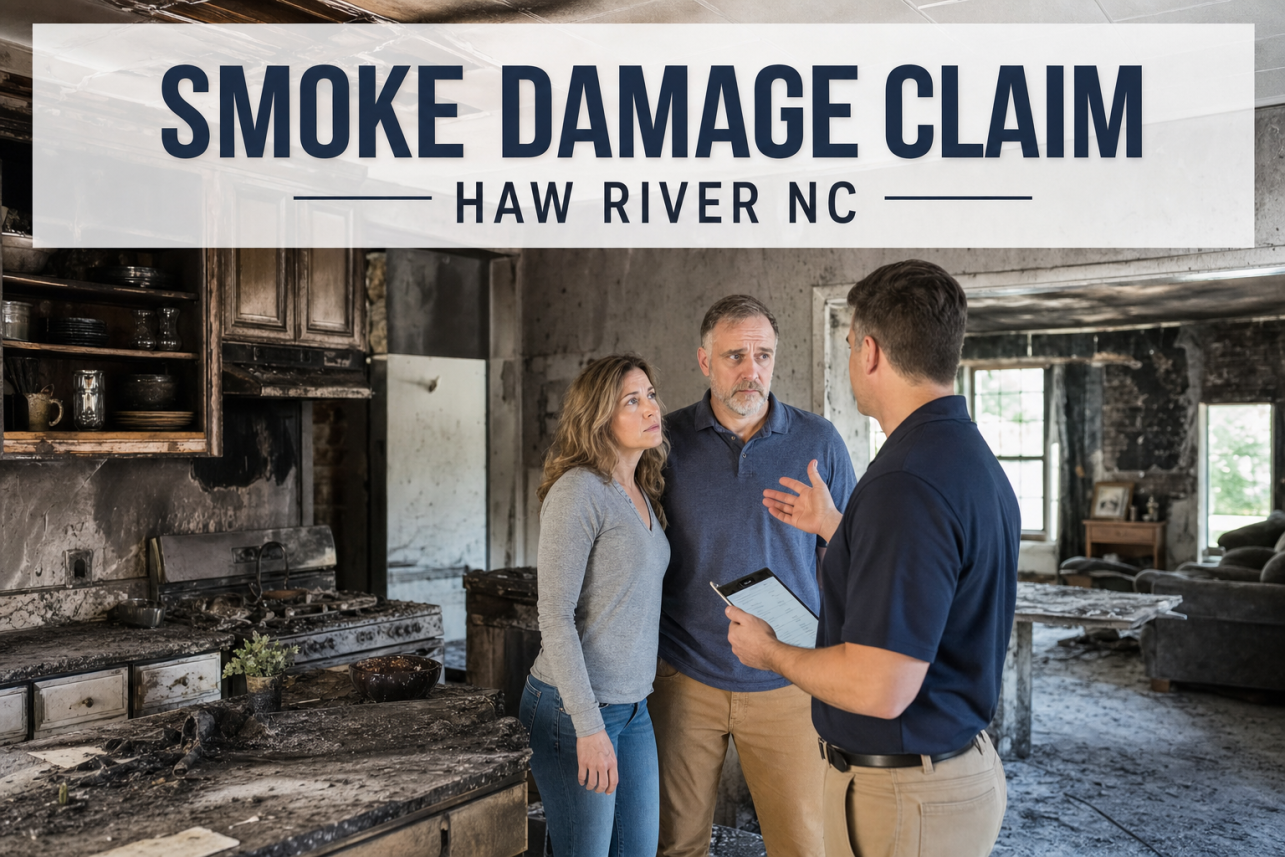
If you need help with a Smoke Damage Claim Haw River NC homeowners can call For The Public Adjusters, Inc., a licensed and bonded public adjusting firm that works for you — not the insurance company. Smoke losses are among the most underpaid claims in property insurance because so much of the damage is invisible at first glance. We inspect, document, and value everything smoke touched, then handle the negotiation with your insurer from start to finish.
What This Service Is
A smoke damage claim covers the harm smoke causes even when flames never reach a room — and often the whole house. Soot residue etches finishes, corrodes metal, works into fabrics and upholstery, and gets pulled through your HVAC system into every duct and closet. The odor alone can make a home unlivable until it is professionally treated.
As public adjusters, we represent the policyholder. We assess the full scope of smoke penetration, build a room-by-room inventory of damaged belongings, prepare the proof of loss your policy requires, and negotiate the settlement. If firefighters were involved, we also document the water damage they left behind, which insurers frequently try to treat as a separate, smaller issue.
Smoke claims often follow a fire elsewhere in the structure, and the two need to be handled together. When a kitchen fire chars one room but smokes out the entire house, we make sure the fire damage claim in Haw River NC and the smoke portion are both scoped completely rather than lumped into one lowball figure. We handle residential and commercial losses alike, and we never guarantee a specific dollar outcome — what we do is make sure nothing is left off the table.
Common Problems
Why Is The Insurance Company’s Offer So Much Lower Than My Actual Damage?
The first offer on a smoke loss is often built from a quick walkthrough that only counts what’s visible: stained walls, a smoky sofa, a scorched cabinet. It usually misses soot inside wall cavities, contaminated ductwork, damaged electronics and appliances, and the full cost of professional odor removal.
There’s also the actual cash value trap. Many insurers pay a depreciated amount up front and only release the rest after you finish repairs — and some depreciate more aggressively than the policy allows. Courts have pushed back on this. In Hicks v. State Farm Fire & Casualty Co., a federal appeals court sided with homeowners and ruled the insurer could not depreciate labor costs when calculating actual cash value on a property claim. Knowing where those lines are is exactly why an independent damage appraisal matters before you accept anything.
What If My Smoke Damage Claim Haw River NC Gets Denied Or Drags On For Months?
Denials and stalls usually come down to paperwork and proof, not whether the damage is real. Insurers may argue the soot is ‘pre-existing dirt,’ claim the odor is cosmetic, miss the proof of loss deadline dispute, or simply go quiet for weeks while your family lives around the smell.
North Carolina policies also carry filing deadlines and documentation requirements that can quietly sink a claim if they’re missed. The NCDOI Public Adjusters Guide explains that licensed public adjusters exist precisely so policyholders have qualified representation in these situations. We take over the correspondence, meet the deadlines, rebut the denial reasons in writing, and keep the claim moving — including your temporary living expense coverage if the home isn’t habitable. We’ve reopened stalled and underpaid claims across the region, including work like our smoke damage insurance claim help in Durham.
Can I Just Handle The Claim Myself, Or Do I Really Need A Public Adjuster?
You can file yourself, and for a tiny loss that may be fine. But a whole-house smoke claim involves a contents inventory that can run hundreds of line items, valuation questions on everything from clothing to electronics, HVAC contamination testing, and negotiation against an adjuster who settles these claims for a living.
A good public adjuster does three things you can’t easily do alone: finds damage you didn’t know to look for, values it using the same estimating tools insurers use, and negotiates as your licensed representative. We work on the same footing as the company’s adjuster — the difference is who we answer to. Ask any adjuster you consider whether they’re licensed and bonded in North Carolina, whether they’ve handled smoke losses specifically, and whether they’ll walk the property with you before you sign anything. Our answer to all three is yes, as clients from a recent smoke damage insurance claim help in Raleigh engagement can attest.

Our Process
Full Smoke Damage Assessment And Documentation
We inspect the entire property, not just the rooms nearest the fire. That means checking wall cavities, attic spaces, ductwork, closets, electronics, and appliances for soot and corrosion, plus any secondary water damage from firefighting. Everything is photographed, measured, and logged before evidence disappears under cleanup.
Valuation, Contents Inventory, And Proof Of Loss
We build a room-by-room inventory of your damaged belongings with replacement values, prepare the structural repair scope, and file the formal proof of loss your policy requires — accurately and on time. We also flag where depreciation deductions are being applied incorrectly and where your policy’s coverage limits actually sit.
Negotiation And Settlement
We present the documented claim to your insurer, respond to their pushback point by point, and negotiate the settlement on your behalf. If the carrier’s position doesn’t move, we advise you on next steps, including appraisal or attorney involvement, so your out-of-pocket restoration costs stay as low as possible.
| Claim Stage | Handling It Yourself | With For The Public Adjusters, Inc. |
|---|---|---|
| Damage documentation | Photos of visible soot only; hidden residue in ducts, attics, and wall cavities is usually missed | Room-by-room inspection, residue wipe testing, duct and attic evaluation, and a documented contents inventory |
| Scope of repairs | Carrier’s estimate often limited to wiping and repainting affected rooms | Full remediation scope: odor sealing, insulation replacement, HVAC decontamination, electronics assessment, and code-required items |
| Contents and personal property | Cleanable and non-restorable items lumped together, often undervalued | Itemized inventory separating restorable goods from total losses, with replacement-cost documentation |
| Negotiation | Homeowner accepts or disputes the carrier’s numbers without supporting evidence | Line-item supplemental claims backed by testing, photos, and industry pricing |
| Additional living expenses | Frequently unclaimed or cut short | Documented and pursued for the full period the home is unlivable during remediation |
Commonly Overlooked In The Public Adjusting Industry
- Protein smoke residue from kitchen fires — It is nearly invisible on surfaces, so quick inspections miss it — but it carries one of the strongest, most persistent odors and coats an entire home.
- Soot contamination inside HVAC ductwork — Nobody opens the plenum during a walkthrough, yet a running blower distributes smoke through every duct run and re-contaminates cleaned rooms.
- Acidic soot corroding electronics and metal fixtures — The damage is internal and progressive, so items that power on today are written off as fine even though circuit boards are actively corroding.
- Smoke absorbed into attic and wall-cavity insulation — Insulation is hidden behind drywall and above ceilings, and because it cannot be cleaned, carriers rarely volunteer to include its replacement.
- Thermally driven smoke penetration into closed spaces — Heat and pressure push smoke into closed drawers, closets, cabinets, and wall gaps, so contents that were ‘shut away’ are wrongly assumed clean.
- Odor as direct physical loss — Carriers sometimes call lingering smell cosmetic, even though courts — including Farmers Insurance Co. of Oregon v. Trutanich, 123 Or. App. 6 (1993) — have ruled for policyholders that a pervasive odor is physical damage to the home.
- Additional living expenses during odor treatment — Ozone and hydroxyl treatments require the home to be vacated, but families often absorb hotel and meal costs without realizing the policy may cover them.
- Matching and line-of-sight repairs — Sealing and repainting one smoke-stained wall leaves a visible mismatch, and adjusters frequently omit the continuous surfaces needed for a uniform result.
Case Studies
Case Study #1
Situation: A family on Trollingwood Road in Haw River had a kitchen grease fire that was extinguished within minutes. The flames never left the stove area, but a hot, protein-based smoke plume traveled through the ranch home while the HVAC blower was running.
Problem: The insurance carrier’s adjuster inspected only the kitchen, offered a payment for repainting two rooms and a general cleaning, and closed the file. Within weeks the family noticed a persistent rancid odor in bedrooms, closets, and even inside kitchen cabinets that had been wiped down.
Investigation: Our team performed a room-by-room inspection using wipe sampling on walls, ceilings, and inside the supply ductwork. We opened the return plenum, tested attic insulation above the kitchen, and documented residue on clothing, upholstered furniture, and the contents of closed drawers.
Findings: Protein smoke residue — which is nearly invisible but highly odorous — had coated surfaces throughout the house. The duct system was contaminated, the blown-in attic insulation above the kitchen had absorbed smoke, and dozens of soft goods could not be restored by standard laundering.
Solution: We prepared a detailed scope including full duct cleaning and sealing, removal and replacement of affected attic insulation, sealing and repainting of affected rooms, professional ozone and hydroxyl treatment, and a documented contents inventory separating cleanable items from non-restorable ones. We presented the supplemental claim with photographs, residue test results, and line-item pricing.
Outcome: The carrier reopened the claim and issued a supplemental payment many times the original offer, covering structural cleaning, insulation replacement, duct remediation, and the contents losses. The family also recovered additional living expenses for the days the odor treatment made the home unlivable.
Lesson: Smoke and odor are real, compensable physical damage — courts have recognized this. In Farmers Insurance Co. of Oregon v. Trutanich, 123 Or. App. 6 (1993), the court sided with the homeowner and held that a persistent odor permeating a house constituted direct physical loss to the property. If a carrier treats lingering smoke odor as cosmetic, that position can and should be challenged with documentation.
Case Study #2
Situation: A small commercial building owner near the Haw River mill district suffered smoke infiltration when an adjacent unit caught fire. His own space never burned, but heavy black smoke pushed through shared wall cavities, the ceiling plenum, and the rooftop HVAC unit overnight.
Problem: The carrier initially argued that because the fire occurred in a neighboring unit, most of the damage was ‘superficial soot’ and offered a janitorial-level cleaning allowance. The offer ignored inventory losses, electronics corrosion, and business income interruption.
Investigation: We documented chloride and soot deposition on inventory, shelving, and electrical equipment, brought in corrosion testing on point-of-sale systems and copper components, and mapped smoke migration paths through the shared plenum. We also reconstructed sales records to support the business income claim.
Findings: Acidic soot residue was actively corroding circuit boards and metal fixtures — damage that worsens every day it sits. Sheetrock and insulation inside the shared wall cavities were saturated with odor, and a significant portion of packaged inventory was unsellable due to smoke contamination.
Solution: We submitted a full estimate covering selective demolition of contaminated wall and ceiling assemblies, professional electronics restoration or replacement, inventory write-offs supported by purchase records, HVAC decontamination, and a business interruption calculation tied to actual sales history.
Outcome: After a joint re-inspection with our documentation in hand, the carrier revised the settlement substantially upward, funding proper remediation of the structure, the inventory losses, and lost income during the closure. The owner reopened without absorbing the shortfall himself.
Lesson: Smoke damage from a fire next door is still smoke damage to your property. Corrosive soot on electronics and hidden contamination in wall cavities are exactly the items that get missed when a claim is scoped from the doorway instead of investigated properly.
| Affected Item or Area | Usually Restorable When… | Usually Replaced When… | What the Outcome Depends On |
|---|---|---|---|
| Painted walls and ceilings | Light dry soot on sealed surfaces, caught early | Odor persists after cleaning, or residue has penetrated flat/porous paint | Type of smoke (protein vs. synthetic), how long residue sat, surface porosity |
| HVAC ductwork and equipment | Rigid metal ducts that can be professionally cleaned and sealed | Flex duct, fiberglass duct board, or contaminated blower/coil components | Duct material, whether the system ran during the fire, corrosion testing results |
| Attic and wall insulation | Rarely — insulation traps odor | Almost always when smoke reached the cavity or attic | Smoke migration paths; insulation cannot be effectively cleaned |
| Clothing and textiles | Light exposure, professionally laundered with smoke-specific processes | Heavy protein or synthetic smoke exposure, melted fibers, or odor after treatment | Fiber type, exposure level, whether items were in closed drawers or open rooms |
| Electronics and appliances | Sealed units with no internal soot, verified by inspection | Acidic soot found on circuit boards or internal components | Speed of assessment — corrosive residue worsens daily until treated |
| Hardwood floors and cabinetry | Sealed finishes with surface-only residue | Odor absorbed into unfinished undersides, joints, or interiors of cabinets | Finish condition, heat exposure, and whether interiors were closed during the event |
| Upholstered furniture and mattresses | Very light exposure treated quickly with professional deodorization | Any significant smoke penetration — foam and batting hold odor permanently | Porosity of materials and proximity to the smoke source |
Reviews
After our attached garage fire, the insurance company said the smoke smell in our living areas would ‘air out.’ It didn’t. For The Public Adjusters found soot inside our ductwork and attic insulation that nobody else even looked for. The revised settlement paid for real remediation, not just a coat of paint. I can’t imagine having handled that supplemental claim on my own.
Denise M., Haw River
A kitchen fire left an odor we could not get rid of no matter how much we cleaned. This team documented protein smoke residue room by room, inventoried every piece of contaminated clothing and furniture, and dealt with the carrier’s adjuster directly. The final payment covered odor sealing, duct cleaning, and our ruined contents. Straight shooters the whole way through.
Carl B., Alamance County
Smoke from a neighbor’s fire got into our rental property overnight. The first offer was basically a cleaning fee. For The Public Adjusters proved the smoke had corroded the HVAC coil and contaminated the wall cavities, and the settlement was revised to reflect the actual scope of work. Professional, thorough, and they explained every step in plain English.
Priya S., Graham / Haw River line
Frequently Asked Questions
What Does A Public Adjuster Do For A Smoke Damage Claim Haw River NC Homeowners Are Filing?
When you hire For The Public Adjusters, Inc. to handle a Smoke Damage Claim Haw River NC policyholders often discover damage the insurance company’s adjuster missed entirely. Smoke behaves differently than flame. It travels through HVAC ductwork, settles inside wall cavities, and bonds to porous surfaces like drywall, insulation, and upholstered furniture throughout the home, not just in the room where the fire occurred.
Our team documents every affected area of your property, from soot residue on kitchen cabinets to acidic smoke film etching into window glass and metal fixtures. We inventory damaged contents room by room, obtain professional cleaning and restoration estimates, and interpret your policy language so nothing covered gets left off the claim.
We then negotiate directly with your insurance carrier on your behalf. As licensed and bonded public adjusters, we work exclusively for you, the policyholder, never for the insurance company. That distinction matters, because the carrier’s adjuster is paid to protect the insurer’s interests.
Courts have recognized how real smoke and odor damage is. In Farmers Insurance Co. of Oregon v. Trutanich, 123 Or. App. 6 (1993), the insured homeowner won when the court ruled that a persistent odor that permeated the house constituted direct physical damage to the property, and the cost of removing it was a covered loss. That reasoning is exactly why thorough documentation of smoke odor and residue matters so much in Alamance County claims. While we can never promise a specific outcome, we make sure every dollar of legitimate damage is presented and pursued.
My House In Haw River Didn’t Burn, But Smoke From A Kitchen Fire Spread Everywhere. Is That Still Covered?
In most cases, yes. Standard homeowners policies in North Carolina cover smoke as a named peril or as part of fire coverage, and that includes damage far beyond the point of origin. A small kitchen fire in a Haw River home can push soot through the return-air vents into bedrooms, closets, and the attic within minutes.
The problem is that insurance carriers frequently scope these losses too narrowly. Their adjuster may approve cleaning for the kitchen and adjacent hallway while ignoring smoke residue in ductwork, insulation contamination, and odor absorbed into carpet, mattresses, and clothing on the far side of the house.
Protein smoke from cooking fires is especially deceptive. It leaves a nearly invisible film with a strong, lingering odor that discolors paint and varnish over time. If it isn’t identified and included in the claim early, homeowners end up paying out of pocket months later when the damage becomes obvious.
As your public adjuster in Haw River, we bring in the right testing and documentation, including surface sampling where appropriate, to prove the full footprint of the smoke damage. We also review your contents coverage and additional living expense benefits, since families sometimes need to relocate during odor remediation. The case law supports policyholders here: in Farmers Insurance Co. of Oregon v. Trutanich, the court sided with the insured and held that pervasive odor was physical damage requiring covered remediation. Thorough documentation is what turns that principle into a properly paid claim.
How Long Do I Have To File A Smoke Damage Claim Haw River NC Insurers Will Accept, And When Should I Call A Public Adjuster?
You should report the loss to your insurance carrier promptly, and you should call us as early in the process as possible, ideally before the insurance company’s adjuster inspects your home. North Carolina policies typically require timely notice of loss, and the standard fire policy in this state generally allows lawsuits within a set period after the loss, so waiting works against you.
Early involvement matters for a practical reason: smoke evidence degrades. Soot gets wiped away during everyday cleaning, odor fades in some rooms while intensifying in others, and acidic residue continues corroding metals, electronics, and finishes the longer it sits. Documenting the damage in its original state gives your claim its strongest foundation.
That said, it is not too late if you’ve already filed. Many Alamance County homeowners contact us after receiving a settlement offer that doesn’t come close to covering professional smoke remediation, duct cleaning, repainting with sealer, and contents restoration. We can review the carrier’s estimate, identify what was omitted, and reopen the negotiation with proper documentation.
We’ve also helped policyholders whose claims were underpaid because the carrier treated smoke damage as a surface cleaning issue rather than the structural contamination it often is. Policyholders who push back with evidence have prevailed in court before, as in Farmers Insurance Co. of Oregon v. Trutanich, where the insured won coverage for odor remediation the insurer resisted. We can’t guarantee any particular result, but a well-built claim file is always your best position.
How Much Does It Cost To Hire Your Team For A Smoke Damage Claim In Haw River, And Is It Worth It?
For The Public Adjusters, Inc. works on a contingency basis, meaning our fee is a percentage of the claim settlement. There are no upfront costs and no hourly billing, so our interests are aligned with yours: we only do well when your claim does.
Whether it’s worth it comes down to the complexity of smoke losses. Insurance carriers often price these claims using general cleaning line items, when proper remediation may require HEPA vacuuming, chemical sponge cleaning, thermal fogging or hydroxyl treatment for odor, sealing and repainting of smoke-stained surfaces, full ductwork cleaning, and pack-out restoration of contents. Each of those items has a real cost, and each one left off the estimate is money out of your pocket.
For Haw River and greater Alamance County homeowners, there’s also the contents side of the loss. Clothing, bedding, books, electronics, and furniture absorb smoke and soot. Building a defensible room-by-room inventory with replacement values is tedious, detailed work, and it’s where underpayment happens most often when policyholders handle claims alone.
We are licensed and bonded in North Carolina, and we handle the documentation, estimating, and negotiation from start to finish so you can focus on your family and your home. We won’t promise a specific dollar figure, because no honest adjuster can. What we can promise is a complete, accurate, professionally presented claim that accounts for every covered element of your smoke loss, which is exactly what the claims process is supposed to reward.
What Hidden Damage Should I Look For Before Filing A Smoke Damage Claim Haw River NC Insurers Will Take Seriously?
Smoke rarely stays where the fire happened. In the Haw River homes we inspect, we routinely find soot pulled through HVAC ductwork, acidic residue etched into countertops and window glazing, and odor trapped in attic insulation, wall cavities, and carpet padding. None of that is visible during a quick walkthrough, which is exactly why insurance company estimates so often come in low.
Before your carrier’s adjuster arrives, photograph every room, including closets, cabinets, and the inside of the return-air vents. Wipe a white cloth along baseboards and the tops of door frames — if it comes back gray or yellow, document it. Keep any damaged textiles, upholstered furniture, and electronics rather than throwing them out, because contents are part of your claim.
Protein smoke from kitchen fires is especially deceptive. It can leave almost no visible staining but bonds to painted surfaces and cabinetry, and the odor returns with humidity — something Alamance County summers guarantee.
Our team brings in the testing and documentation that turns ‘we’ll pay for some cleaning’ into a properly scoped claim covering structure, contents, and remediation. We’re licensed and bonded, and we build the file so nothing gets overlooked.
The Insurance Company Only Offered To Pay For Cleaning My Haw River Home. Can I Push Back On A Low Smoke Damage Offer?
Yes, and you should. A cleaning-only offer is one of the most common lowball responses to a Smoke Damage Claim Haw River NC policyholders bring to us. Wiping down surfaces does not address soot inside wall cavities, contaminated duct systems, or porous materials like drywall and insulation that hold odor permanently. When cleaning can’t restore the property to its pre-loss condition, replacement is often the appropriate remedy under the policy.
Courts have repeatedly sided with policyholders who challenged carriers that shortchanged property claims. In Sproull v. State Farm Fire & Casualty Co. (Illinois Supreme Court, 2021), the insured won when the court ruled the insurer could not depreciate the cost of labor when calculating the actual cash value of a damaged home — a practice that had quietly reduced payouts on countless building claims. Cases like that show carriers do not always get the final word on what a claim is worth.
As your public adjuster in Haw River, we prepare an independent estimate, document contamination the carrier’s inspection missed, and negotiate from evidence rather than opinion. We can’t promise a specific dollar outcome — no honest adjuster can — but we can make sure your claim is measured against the full scope of the loss, not just what’s visible from the doorway.
My Neighbor’s House Fire Filled My Haw River Home With Smoke. Does My Own Homeowners Policy Cover That?
In most cases, yes. Standard homeowners policies list smoke as a named peril, and coverage generally applies whether the fire started in your kitchen or on the property next door. Smoke migrating from a neighboring structure, a nearby brush fire, or even a commercial fire along a busy corridor like NC-49 or the rail line through town can trigger your own policy.
The complications come in proving the loss. Because your home shows no burn damage, the carrier may argue the smoke exposure was minor or that odor alone isn’t a covered loss. That’s where documentation matters: soot sampling, photos of residue on horizontal surfaces, HVAC filter evidence, and a detailed inventory of affected contents like clothing, drapes, and bedding.
You may also have a claim against the neighbor’s liability coverage, but pursuing your own policy first is usually faster, and your insurer can seek reimbursement afterward through subrogation.
Our Haw River adjusters handle third-party smoke losses regularly across Alamance County. We inspect, document, and present the claim so the carrier evaluates real evidence instead of assumptions. If you’ve already been told ‘there’s nothing visible, so there’s nothing covered,’ get a second opinion before you accept it.
How Are My Smoke-Damaged Contents Valued — Will I Get Replacement Cost For Furniture, Clothing, And Electronics?
It depends on your policy, and the difference is significant. Replacement cost value (RCV) policies pay what it costs to buy new items of like kind and quality. Actual cash value (ACV) policies subtract depreciation, which can cut a payout dramatically on older furniture and textiles. Many RCV policies pay ACV up front and release the depreciation only after you actually replace the items — a step homeowners frequently miss, leaving money unclaimed.
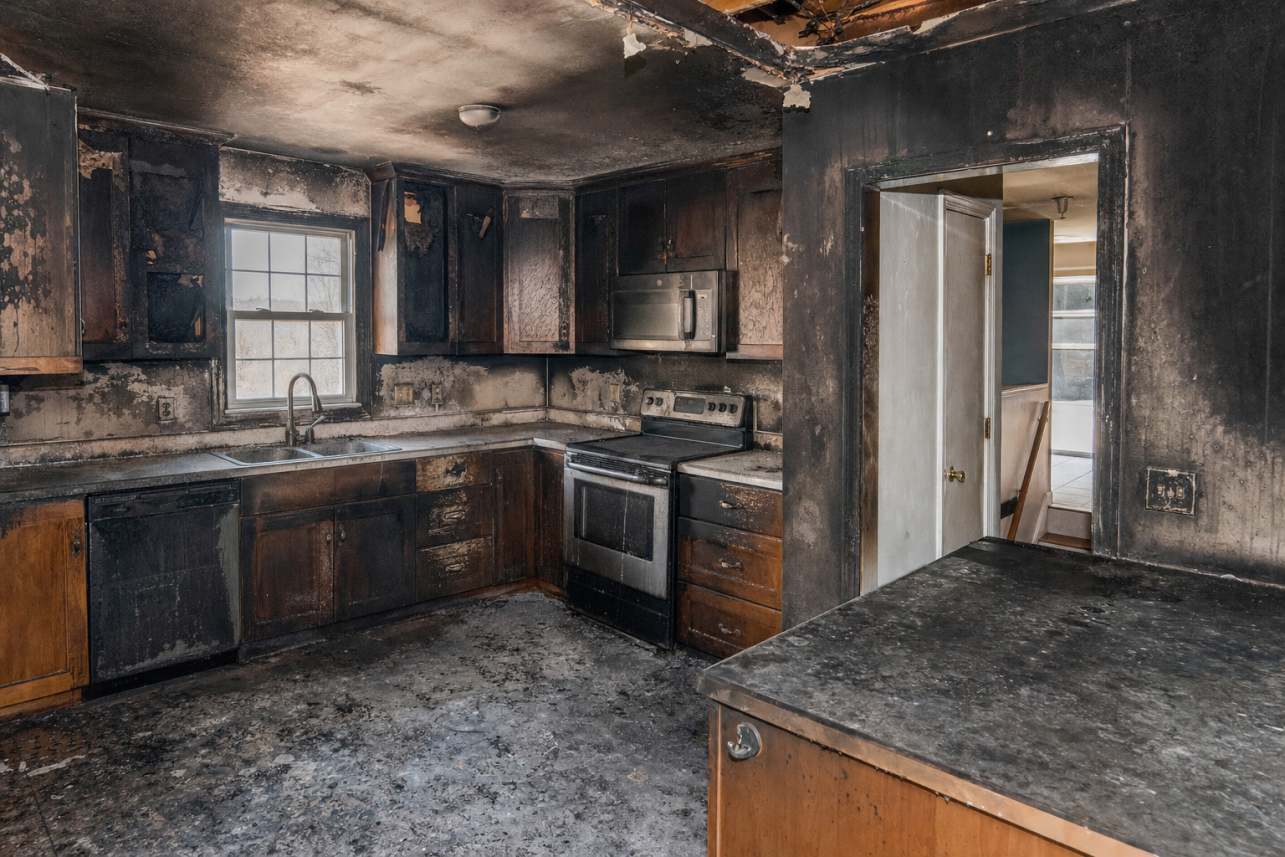
Smoke losses hit contents hard. Upholstered furniture, mattresses, clothing, books, and lampshades absorb odor that cleaning often can’t remove. Electronics are vulnerable too, because acidic soot corrodes circuit boards over time; a TV that works today may fail in six months. We push carriers to test or replace contaminated electronics rather than dismiss them.
The biggest mistake we see after a smoke loss in Haw River is homeowners discarding damaged items before they’re inventoried. Keep everything until it’s photographed and listed with age, condition, and replacement price.
Our team builds a room-by-room contents inventory, applies fair pricing, and tracks the depreciation holdback so you can recover it. We work on your behalf, not the insurance company’s, and while results vary by policy and loss, a complete, well-documented inventory consistently produces a stronger claim than a handwritten list scribbled under pressure.
The Insurer Says Smoke Odor Isn’t ‘physical Damage.’ Can I Still Win A Smoke Damage Claim Haw River NC Adjusters Initially Deny?
Yes, denials based on the argument that odor alone is not physical damage have been successfully challenged, and courts have sided with policyholders. In Farmers Insurance Co. of Oregon v. Trutanich, the Oregon Court of Appeals held that a persistent odor that permeated a house was a direct physical loss to the property, and the homeowner won coverage for the cost of removing it. While that ruling came from another state, the reasoning is widely cited in property disputes and gives policyholders real footing when an insurer dismisses odor as cosmetic.
In Haw River homes, smoke odor is rarely just odor. It signals soot particles and combustion residues embedded in drywall, insulation, carpet padding, and HVAC ductwork. Proper documentation — surface wipe samples, particulate testing, and a detailed protocol from a qualified restoration hygienist — turns a vague ‘it smells’ complaint into measurable, physical contamination the policy is designed to cover.
As licensed and bonded public adjusters, For The Public Adjusters, Inc. builds that evidence file before we ever negotiate. We cannot guarantee any specific outcome, but a denial letter is not the end of the road. Many first-position denials are reversed once the loss is documented correctly and presented under the actual policy language rather than the desk adjuster’s summary of it.
If your claim was denied or minimized, keep everything — the denial letter, photos, and any cleaning receipts — and have the file reviewed before you accept the insurer’s conclusion as final.
Will My Insurance Pay For A Hotel Or Rental While My Haw River Home Is Being Cleaned Of Smoke And Soot?
Most homeowners policies include Additional Living Expenses (ALE) coverage, sometimes called Loss of Use. If smoke contamination makes your home unfit to live in — heavy soot on surfaces, respiratory irritation, or an odor strong enough that a restoration contractor recommends vacating — ALE can pay the extra costs of living elsewhere while remediation is underway.
That can include a hotel in Alamance County or a short-term rental in the Burlington–Graham area, plus the increase in meal costs, pet boarding, and additional mileage if your temporary housing is farther from work or school. The key word is ‘extra’: ALE covers the difference between your normal living costs and what you’re spending now.
Where Haw River homeowners run into trouble is proving the home was uninhabitable. Insurers sometimes argue a smoke-affected house is livable and cut off ALE early, even while ozone treatment, thermal fogging, or duct cleaning is still in progress — work that often requires occupants to be out of the house. A written statement from your restoration contractor and, where relevant, air-quality readings make that argument much harder for the carrier to sustain.
Our team documents the habitability issue from day one, tracks every receipt, and pushes for ALE to continue until the remediation protocol is genuinely complete — not just until the carrier decides it has paid enough. Keep every receipt from the day of the fire forward, even small ones. Gaps in documentation are the most common reason legitimate living-expense reimbursements get reduced.
Smoke Got Into My HVAC System And Ductwork. Should That Be Part Of My Claim, And How Is It Handled?
Absolutely include it. Your HVAC system is one of the most commonly missed items in a smoke damage claim in Haw River, and one of the most consequential. During a fire — even a small kitchen or garage fire — the blower pulls smoke-laden air through returns and distributes soot and combustion byproducts through every duct run, coating coils, filters, plenums, and flexible duct interiors.
If the system isn’t professionally assessed, two things happen. First, every time the unit runs, it re-contaminates rooms you already paid to clean, which is why some homeowners notice smoke odor returning weeks after remediation. Second, acidic soot residues can corrode evaporator coils and electronic components over time, shortening equipment life.
A proper claim should include a duct inspection (often with camera documentation), NADCA-standard duct cleaning or duct replacement where flex duct is contaminated beyond cleaning, coil cleaning or replacement, and new filtration. In many Alamance County homes with older flex ductwork, replacement is more defensible than cleaning, because porous inner liners hold odor.
Insurers frequently offer a flat duct-cleaning allowance that doesn’t reflect the actual system condition. We counter that with contractor documentation showing what the system needs, line by line. We can’t promise a specific payout — no honest adjuster can — but we can make sure the HVAC scope is fully documented rather than reduced to a token line item. If your system ran during or after the fire, tell your adjuster and get it inspected before the carrier closes the file.
What Documents And Evidence Do I Need Before Filing A Smoke Damage Claim Haw River NC Insurance Companies Will Pay Fairly?
Strong documentation is the difference between a fair settlement and a fast, low one. Before and during the claim, gather your full policy — declarations page plus all endorsements — because coverage details for contents, ordinance-and-law upgrades, and living expenses live in the fine print, not the summary.
Photograph everything before any cleanup: soot lines on walls and ceilings, discolored HVAC vents, residue on countertops, and affected contents room by room. Open closets, drawers, and cabinets — smoke migrates into enclosed spaces, and Haw River insurers routinely exclude items that were never photographed. Video walkthroughs with narration are excellent supporting evidence.
Keep every receipt: emergency board-up, hotel stays, meals, cleaning supplies, laundry, and pet boarding. Save the fire department report if one was generated, since it establishes the date, cause, and origin of the loss. For contents, build an inventory listing each item, its age, condition, and replacement cost — not garage-sale value.
Where odor and soot are disputed, professional testing matters. Surface wipe samples and particulate analysis convert a subjective complaint into lab-verified contamination. Courts have recognized this kind of loss as real physical damage — in Western Fire Insurance Co. v. First Presbyterian Church, the Colorado Supreme Court found that vapor infiltration rendering a building unusable was a direct physical loss, and the insured prevailed.
For The Public Adjusters, Inc. assembles all of this into a documented, policy-based claim package. We make no guarantees about outcomes, but claims built on evidence are consistently harder for carriers to underpay than claims built on a phone conversation and a handful of photos.
Smoke From A Nearby Brush Fire Drifted Into My Haw River Home. Can I File A Smoke Damage Claim Haw River NC Insurers Will Accept Even Though The Fire Wasn’t On My Property?
In most cases, yes. Standard homeowners policies in North Carolina cover direct physical loss from smoke regardless of where the fire started, as long as the smoke actually infiltrated your home and left residue, staining, or contamination on the structure or contents.
The key is proving physical impact, not just a temporary smell. Soot film on window sills, discolored HVAC filters, residue wipe samples, and lab testing for combustion byproducts all help establish that outside smoke caused real damage inside your walls.
Courts have sided with policyholders on exactly this issue. In Oregon Shakespeare Festival Association v. Great American Insurance Co. (D. Or. 2016), wildfire smoke infiltrated a theater building and the insurer argued there was no physical damage. The federal court disagreed, ruling that smoke that rendered the property unusable and required remediation was direct physical loss under the policy. That reasoning is powerful support when an insurer tries to dismiss drift smoke as a mere nuisance.
Homes along the Haw River corridor and near wooded areas off Highway 70 are especially vulnerable when debris burns or brush fires send smoke across neighborhoods. If you can smell it days later or see film on surfaces, document everything before cleaning and have the loss professionally evaluated. As licensed and bonded public adjusters, we build the evidence insurers respond to, though no one can guarantee a specific outcome on any claim.
Should I Clean Up Soot And Smoke Residue In My Haw River Home Before The Insurance Adjuster Inspects It?
No — hold off on anything beyond what is necessary to prevent further damage. Your policy does require reasonable steps to protect the property, like boarding a broken window or shutting down a contaminated HVAC system. But scrubbing walls, shampooing carpets, or throwing out damaged belongings before the loss is documented can seriously weaken your claim.
Soot is the evidence. Once it is wiped away, the insurance company’s adjuster may argue the damage was minor or never existed. Worse, improper cleaning can grind acidic soot deeper into drywall, fabrics, and finished wood, permanently setting stains and odor that professional restoration could have removed.
Instead, photograph every room, including ceilings, closet interiors, inside cabinets, and behind furniture. Take wide shots and close-ups of residue. Keep damaged items — even ones you assume are ruined — until they have been inventoried and inspected. Save receipts for any emergency measures, air purifiers, or temporary lodging.
If residue is causing ongoing harm, such as soot etching metal fixtures or electronics, tell the insurer in writing that emergency mitigation is needed and document conditions thoroughly first. When our Alamance County team handles a smoke loss, we complete the inspection and inventory before restoration begins, so nothing gets cleaned away that should have been counted. That sequencing is one of the most common mistakes we see homeowners in Haw River make on their own.
Are There Different Types Of Smoke Residue, And Why Does That Matter For My Claim Payout?
Yes, and it matters a great deal. The type of residue determines the cleaning method, the restoration cost, and whether items can be saved at all — which directly affects what a fair settlement looks like.
Dry smoke comes from fast, hot fires burning wood or paper. It leaves a powdery residue that is comparatively easier to clean but travels far through a house. Wet smoke, from slow smoldering fires involving plastics and synthetics, produces a sticky, smeary residue with a pungent odor that is far more expensive to remediate. Protein residue, common after kitchen fires, is nearly invisible but discolors paint and varnish and carries a stubborn odor that penetrates the whole home. Fuel or oil soot, often from furnace puff-backs, is another category entirely.
Insurance adjusters sometimes price every smoke loss as if it were simple dry-smoke cleaning. If your Haw River home suffered a smoldering electrical fire or a grease fire, a generic cleaning estimate may fall thousands of dollars short of what proper restoration actually costs, including sealing, repainting, ozone or hydroxyl treatment, and contents processing.
We identify the residue type, bring in appropriate testing when needed, and write an estimate that matches the actual science of the loss. Insurers take a documented, technically supported scope far more seriously than a homeowner’s objection alone. We cannot promise a particular dollar figure, but we can make sure the claim reflects the true nature of the damage.

What Happens If My Insurer And I Can’t Agree On The Value Of My Smoke Damage Claim Haw River NC Dispute — Do I Have To Sue?
Not necessarily. A lawsuit is usually the last resort, and there are several steps that resolve most disagreements over a Smoke Damage Claim Haw River NC homeowners bring to us.
First comes negotiation backed by documentation. Many disputes exist simply because the insurer’s estimate missed damage — soot in wall cavities, contaminated insulation, or contents that cleaning cannot restore. A detailed, line-item counter-estimate with photos and testing often closes the gap without any formal proceeding.
Second, most North Carolina homeowners policies contain an appraisal clause. Either side can invoke it when the dispute is about the amount of loss. You select an appraiser, the insurer selects one, and a neutral umpire resolves differences. Appraisal is typically faster and far less expensive than litigation.
When insurers wrongly deny coverage outright, courts have held them accountable. In Farmers Insurance Co. of Oregon v. Trutanich (Or. Ct. App. 1993), the insurer refused to pay for pervasive contamination and odor in a home, arguing it wasn’t physical damage. The court ruled for the homeowner, finding the contamination was a direct physical loss and the cost to remove it was covered. Decisions like that give policyholders real leverage before anyone files suit.
As licensed and bonded public adjusters serving Haw River and the rest of Alamance County, we handle the negotiation and appraisal stages on your behalf. If a claim ultimately requires an attorney, we can coordinate with counsel — but most smoke losses settle well before that point.
Local Relevance
Haw River is an old textile-mill town, and much of its housing reflects that heritage — modest frame homes, some more than a century old, alongside newer construction spreading along the I-40/I-85 corridor through Alamance County. Older frame homes tend to have open wall and floor cavities that let smoke travel far beyond the room where a fire starts, which is why a fire contained to one kitchen can leave soot in bedrooms at the other end of the house.
Winter heating fires are a recurring risk here too. The National Fire Protection Association has long identified heating equipment and cooking as leading causes of home fires nationally, and in older Haw River homes with space heaters, aging wiring, or wood stoves, a small fire can produce an outsized smoke loss.
Alamance County sits between the Triad and the Triangle, and out-of-town insurance adjusters don’t always give smaller-town claims the attention they deserve. As a local public adjuster in Haw River, we walk the property in person, know how these older structures hold smoke, and stay on the claim until it’s resolved. We serve the wider region as well — from Alamance County east through Orange County, where our fire damage claim dispute help in Chapel Hill handles contested fire and smoke losses.
Many Haw River homes date to the town’s mill era, and their older framing often lacks the fire blocking found in modern construction — so smoke and soot travel freely through wall and floor cavities, and North Carolina’s humid climate can cause acidic soot residue to set into finishes quickly. That combination means smoke losses here are frequently larger than they first appear, and early professional documentation makes a real difference in what the claim ultimately covers.
Get A Free Review Of Your Smoke Loss
Before you accept an offer — or give up on a denied claim — let For The Public Adjusters, Inc. take a look. We’re licensed and bonded in North Carolina, we work only for policyholders, and the consultation costs you nothing. The sooner we document the damage, the stronger your claim stands.
Request Your Free Claim Review
Call us: (336) 331-8300
Helpful Resources
- National Fire Protection Association (NFPA)
- NCDOI Public Adjusters Guide
- U.S. Fire Administration home fire safety resources — Federal guidance on home fire causes and prevention
- North Carolina Department of Insurance consumer assistance — State regulator’s consumer resources for insurance claims
Last updated: September 24, 2026