
If you’re facing a Fire Damage Claim Haw River NC insurance companies will send their own adjuster — but that adjuster works for the insurer, not for you. For The Public Adjusters, Inc. is a licensed, bonded public adjusting firm that represents only the policyholder, documenting the full scope of your fire, smoke, and water-related damage and negotiating directly with your insurance company. You have the right to your own representation, and it often changes how a fire loss is measured and paid.
What This Service Is
A public adjuster is a claims professional who works exclusively for you, the property owner. After a fire in your Haw River home or business, we read your policy line by line, inspect the property for both obvious and hidden damage, build a room-by-room inventory of your personal belongings, prepare the proof of loss paperwork your insurer requires, and negotiate the settlement on your behalf.
Fire losses are among the most complicated claims there are. Flames cause the visible destruction, but smoke and soot travel through duct systems and wall cavities, and the water used to put the fire out often soaks framing, insulation, and flooring far from the burn area. An insurer’s estimate that only prices the charred rooms can miss a large share of the real loss.
We also sort out the parts of your policy most homeowners never think about until they need them: additional living expenses that pay for temporary housing while your home is unlivable, whether your policy pays replacement cost or a depreciated actual cash value, and coverage for bringing repairs up to current building code. The North Carolina Department of Insurance publishes the NCDOI Public Adjusters Guide explaining exactly what licensed public adjusters may do for policyholders in this state — and we work strictly within those rules. Similar situations come up across Alamance County; if you own property up the road, our Fire Insurance Claim Mebane NC page covers how we handle fire losses there as well.
Common Problems
Why Is The Insurance Company’s Offer So Much Lower Than My Contractor’s Repair Quotes?
This gap is the single most common reason Haw River homeowners call us. The insurer’s estimate is usually built from software pricing and a quick walkthrough, while your contractor is pricing what it actually takes to rebuild — demolition, smoke sealing, matching finishes, and code-required upgrades.
Depreciation is another quiet culprit. Many first checks are written at actual cash value, meaning the insurer deducts for the age of your roof, cabinets, and flooring, and only releases the held-back money after repairs are done — if you know to claim it. Contents get shortchanged too, because a fair payout requires a detailed inventory of everything you lost, not a lump-sum guess.
A proper property loss assessment closes that gap with documentation the insurer can’t wave away. In a well-known fire loss case, Gruenberg v. Aetna Insurance Co., a California policyholder whose building burned took his insurer to court over how the claim was handled — and the court sided with the insured, affirming that carriers owe policyholders a duty of good faith when paying fire claims. That duty exists for a reason: without pressure, low offers tend to stay low.
What If Your Fire Damage Claim Haw River NC Is Delayed, Underpaid, Or Denied?
Delays and denials rarely announce themselves. More often the claim just stalls — repeated document requests, a new adjuster assigned mid-claim, weeks of silence while you’re paying out of pocket for a hotel and storage.
Meanwhile hidden problems get worse. Firefighting water left in wall cavities breeds mold in our humid climate, and smoke residue becomes harder to remove the longer it sits. Every week of delay can quietly grow your out-of-pocket costs and shrink what the insurer eventually admits to.
If your claim has been underpaid or denied, it is usually not final. Claims can be disputed, supplemented, and reopened with new documentation. We build the evidence — engineering-level scope notes, photographs, itemized estimates, and a formal proof of loss — and push the dispute through negotiation. We’ve handled these fights across the Triangle; a Fire Insurance Claim Dispute in Raleigh follows the same playbook we use here in Alamance County. And when a carrier’s conduct crosses into bad faith, we coordinate with insurance dispute lawyers so nothing falls through the cracks.
Should I Just Handle The Fire Claim Myself, Or Is Hiring A Public Adjuster Worth It?
You can absolutely file on your own, and for a very small loss that may be fine. But a significant fire claim is really three jobs at once: reading a dense policy correctly, measuring a complicated loss completely, and negotiating against a professional adjuster who does this every day.
A good public adjuster earns their fee by finding damage and coverage you didn’t know to claim — smoke contamination in the HVAC system, structural charring behind intact drywall, depreciation you’re entitled to recover, code-upgrade coverage, and additional living expenses for the months you can’t be home. We’re licensed by the state, bonded, and paid a percentage of what’s recovered, so our interests line up with yours. We never guarantee a specific outcome — no honest adjuster can — but we make sure nothing legitimate is left off the table.
When you’re comparing help, ask for a North Carolina license number, ask who actually inspects the property, and ask how contents inventories are built. Homeowners who’ve worked with a Fire Damage Public Adjuster in Durham from our team will tell you the inspection alone usually reveals damage the first estimate skipped.
Our Process
Free Policy Review And Damage Inspection
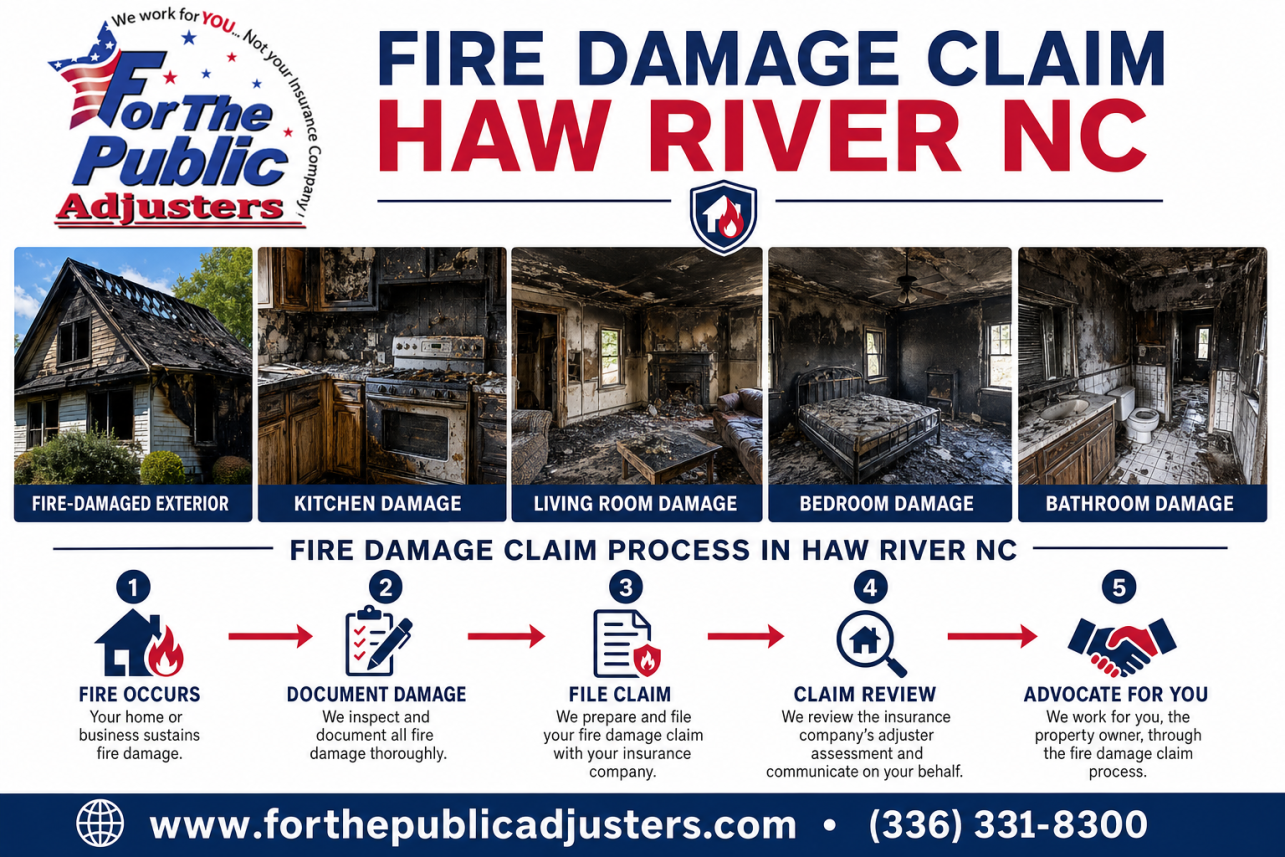
We start by reading your actual policy — coverage limits, deductible amount, code-upgrade provisions, and how it treats replacement cost versus depreciated value. Then we inspect the property top to bottom, including areas the fire never touched, because smoke, soot, and firefighting water rarely stay put.
Full Documentation And Proof Of Loss
We prepare a detailed structural repair estimate, photograph and catalog the damage, and build a complete contents inventory of your personal property. We also document your temporary housing and living costs so your additional living expenses coverage is used, not wasted. Everything is packaged into the formal proof of loss your insurer requires.
Negotiation And Settlement
We present the claim, meet the insurance company’s adjuster on site, answer their pushback with documentation, and negotiate the settlement on your behalf. If depreciation was withheld, we pursue the recoverable portion after repairs. If the carrier digs in unfairly, we escalate the dispute — including coordinating with attorneys when the situation calls for it.
| Claim Stage | Handling It Yourself | With For The Public Adjusters |
|---|---|---|
| Damage documentation | Carrier’s adjuster controls the scope; hidden smoke, soot, and heat damage often go unrecorded | Independent room-by-room inspection, soot testing, attic and HVAC evaluation, full photo record |
| Estimate and scope | You rely on the insurance company’s estimate, which is written to their pricing and scope | Detailed line-item estimate built for the policyholder, matched to real local repair costs |
| Contents claim | Homeowners typically list a fraction of damaged items from memory | Structured room-by-room inventory with replacement-cost documentation for every item |
| Additional Living Expenses | Often ends when the carrier decides, not when the home is livable | ALE documented and pursued for the realistic restoration timeline your policy allows |
| Negotiation | You argue coverage and pricing against trained claim professionals | Licensed and bonded adjusters who negotiate disputed items with evidence, on the record |
| Your time | Weeks of calls, forms, and inspections on top of displacement | We manage the claim so you can focus on your family or business |
Commonly Overlooked In The Public Adjusting Industry
- Soot migration through HVAC ductwork — Carrier estimates often stop at the burn room, but return-air systems pull corrosive soot into every room, and nobody tests for it unless someone insists.
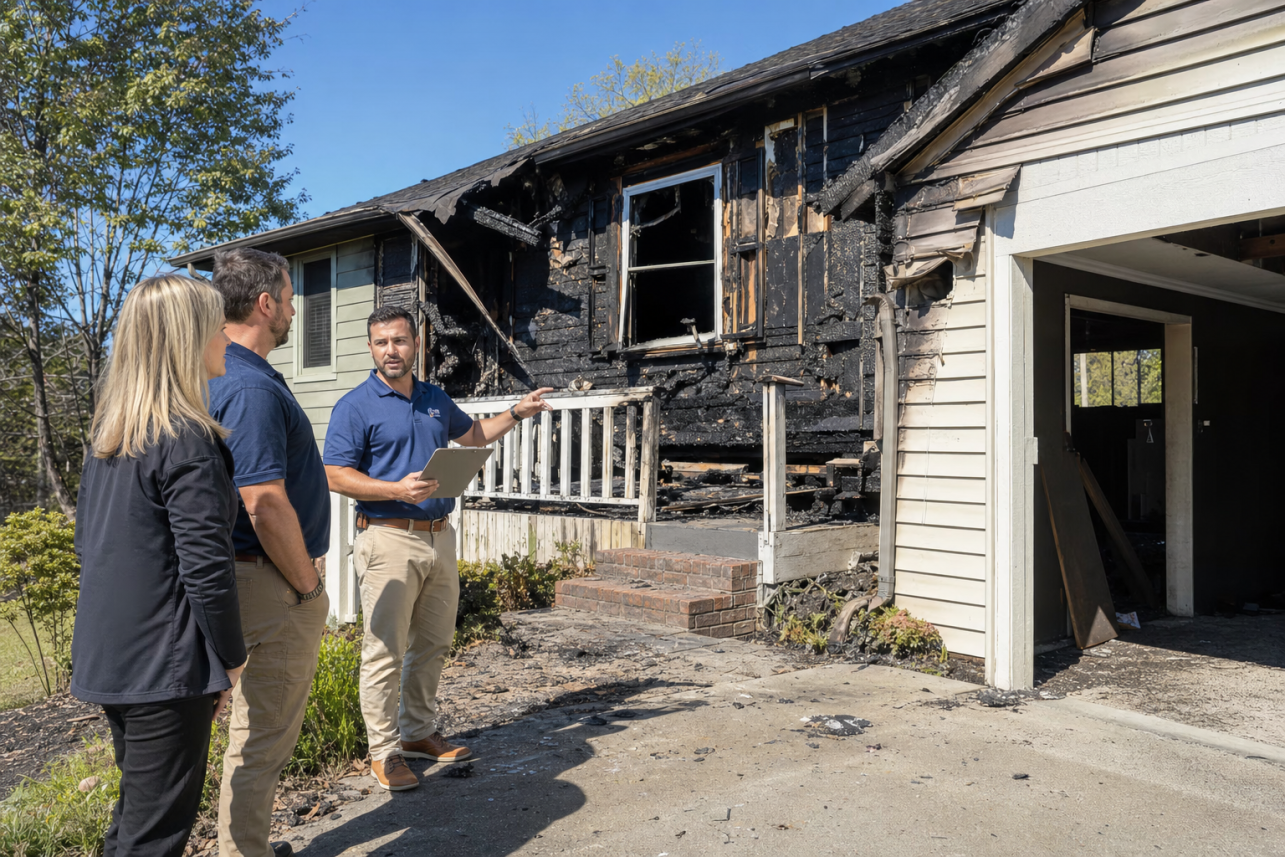
- Heat-compromised framing that never charred — Rafters, joists, and trusses lose structural strength at high temperatures without visible burning, so they pass a quick visual inspection and stay in the house.
- Additional Living Expenses beyond the first hotel bill — Displaced families rarely realize ALE can cover rent, mileage, extra food costs, and pet boarding for the full restoration period, and carriers rarely volunteer it.
- Full replacement-cost contents inventories — Homeowners working from memory typically list a fraction of what they owned, and every unlisted item is money the policy would have paid but never did.
- Code-upgrade (ordinance or law) coverage — Rebuilding in Alamance County triggers current electrical, plumbing, and building codes, and the extra cost is often covered but almost never included in the first estimate.
- Smoke and soot damage to electronics and wiring insulation — Acidic soot corrodes circuit boards and wire coatings over weeks, so equipment that powers on today can fail after the claim is closed.
- Ambiguous policy language read against the insured — Policyholders accept the carrier’s interpretation, even though North Carolina’s Supreme Court in Gaston County Dyeing Machine Co. v. Northfield Insurance Co., 351 N.C. 293 (2000), confirmed that ambiguities in property coverage are resolved in the insured’s favor.
- Debris removal as a separate coverage limit — Hauling away a burned structure can cost tens of thousands, and many policies pay for it in addition to the dwelling limit if it’s claimed correctly.
Case Studies
Case Study #1
Situation: A family on Roxboro Street in Haw River had a kitchen fire that started at the range and spread into the cabinets and attic before the fire department knocked it down. The home was a 1970s brick ranch insured under a standard HO-3 policy, and the family was displaced to a hotel the same night.
Problem: The insurance company’s adjuster inspected once, wrote an estimate for cleaning and repainting the kitchen, and offered roughly $28,000. The offer ignored smoke and soot migration through the ductwork, heat damage to attic framing, and the family’s smoke-saturated contents. It also allowed almost nothing for Additional Living Expenses beyond two weeks of hotel stays.
Investigation: Our Haw River public adjuster performed a room-by-room inspection with soot wipe sampling, opened the attic to document charred rafters over the kitchen, and had the HVAC system tested for soot contamination. We photographed every room, built a full contents inventory with the family, and pulled the policy to map every available coverage, including Dwelling, Contents, ALE, and Debris Removal.
Findings: Soot residue was present in bedrooms at the opposite end of the house, confirming migration through the return-air system. Three rafters and a section of roof decking above the kitchen were structurally compromised by heat. Over 400 contents items were smoke-damaged, many beyond restoration. The ALE estimate had been calculated without accounting for the realistic rebuild timeline.
Solution: We prepared a detailed line-item estimate covering structural repairs, full HVAC cleaning and partial duct replacement, whole-home smoke remediation, and a documented contents claim with replacement-cost pricing. We presented the file to the carrier with photographs, lab results, and the contractor scope, then negotiated each disputed line item on the record.
Outcome: The claim settled for a figure several times the original offer, with ALE extended to cover the family through the actual reconstruction period. The homeowners returned to a fully remediated house rather than a repainted kitchen sitting on hidden damage.
Lesson: Fire damage almost never stops where the flames stopped. Smoke, soot, and heat travel, and North Carolina courts have long held that ambiguities in a property policy are construed in favor of the insured — a principle the state Supreme Court applied in Gaston County Dyeing Machine Co. v. Northfield Insurance Co., 351 N.C. 293 (2000), where the policyholder prevailed on a property damage coverage dispute. Documentation is what turns that principle into dollars.
Case Study #2
Situation: A small commercial building owner near the old mill district in Haw River suffered an electrical fire that gutted a storage room and filled the rest of the building with dense smoke. The building housed a tenant’s retail inventory, and the owner carried a commercial property policy with business income coverage.
Problem: The carrier’s estimate treated the loss as a single-room event. It excluded smoke damage to the sales floor, denied portions of the roof structure claim as ‘pre-existing wear,’ and initially reserved rights on the whole claim while its own origin-and-cause investigator worked, leaving the owner without funds and the tenant unable to reopen.
Investigation: We brought in an independent structural engineer to evaluate the steel joists above the fire room, documented smoke film on merchandise and finishes throughout the building with photographs and wipe samples, and reconstructed the business income loss from lease records and the tenant’s sales history. We also reviewed the reservation-of-rights letter against the actual policy language.
Findings: The engineer confirmed heat deflection in two joists that the carrier’s estimate had called cosmetic. Smoke contamination extended across the entire 6,000 square feet, not one room. The policy’s business income period of restoration had been calculated far too short, and nothing in the file supported the pre-existing damage theory.
Solution: We submitted a complete rebuttal package: the engineering report, the corrected structural scope, a full smoke remediation estimate, and a documented business income calculation. We requested a joint re-inspection with the carrier’s adjuster and walked the building line item by line item.
Outcome: The carrier withdrew the pre-existing damage position, accepted the engineering findings, and the claim settled at a substantially higher figure that funded the joist repairs, full remediation, and the income loss through the true restoration period. The tenant reopened in the same location.
Lesson: On commercial fire losses, the structural and business income portions of the claim are often where the real money sits — and where carriers push back hardest. Independent experts and a documented file change the conversation from opinion to evidence.
| Decision | Do It Right Away If… | Wait or Get Advice First If… | Why It Matters |
|---|---|---|---|
| Sign the carrier’s proof of loss | Never sign immediately | The damage hasn’t been fully documented or the estimate seems low | A signed proof of loss can lock in the claim amount before hidden damage is found |
| Accept the first settlement check | The check is clearly marked as an undisputed partial payment | It’s presented as ‘full and final’ or arrives before a complete inspection | Endorsing a final-payment check can limit your ability to reopen the claim |
| Throw away burned or smoke-damaged items | Items are a health hazard and you’ve photographed and inventoried them first | You haven’t documented each item’s brand, age, and condition | Discarded contents without documentation are routinely denied or underpaid |
| Authorize demolition or repairs | There’s an emergency safety issue and you’ve documented everything | The carrier hasn’t inspected or your own scope isn’t finished yet | Repairs before documentation destroy the evidence your claim is built on |
| Sign a restoration contractor’s work authorization | You’ve read it and it doesn’t assign your insurance benefits | It contains an ‘assignment of benefits’ or direction-to-pay clause | Some contracts hand control of your claim money to the contractor |
| Start the ALE/temporary housing claim | You’re displaced at all, even for a few nights | Never wait — file it from day one and keep every receipt | Undocumented living expenses are among the most commonly forfeited coverages |
| Give a recorded statement | Only after reviewing your policy duties and preparing | You’re still in shock or unsure what caused the fire | Recorded statements are transcribed and used to interpret coverage later |
| Bring in a public adjuster | The loss involves structural damage, contents, displacement, or a low offer | The loss is truly minor and the carrier has already paid it fairly | Earlier involvement means the file is built on your documentation, not just theirs |
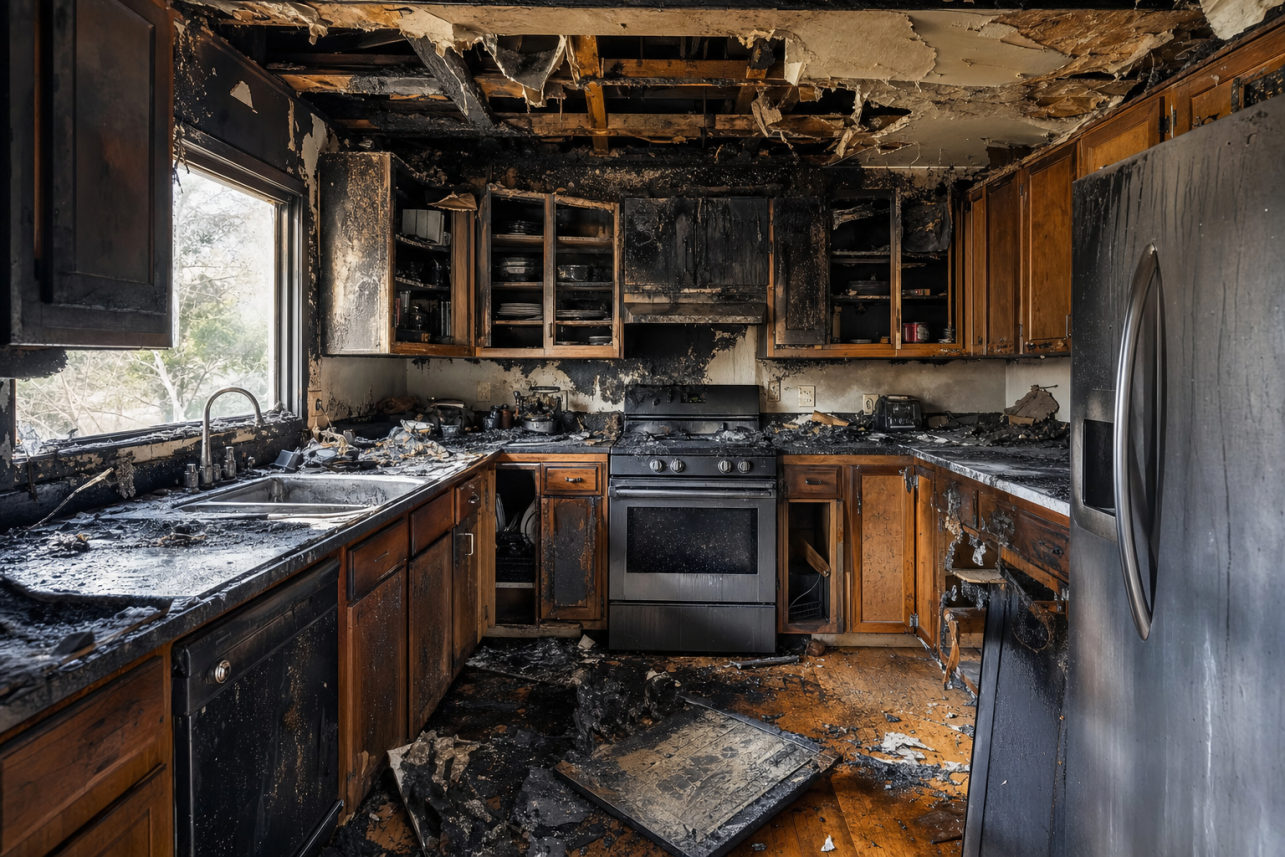
Reviews
Our attic fire looked contained, but soot got into every duct in the house. The insurance company’s first offer wouldn’t have covered half the cleanup. For The Public Adjusters found smoke damage in rooms their adjuster never even tested and rebuilt the whole estimate. The final settlement actually paid for the repairs we needed, and they handled every call with the carrier so we didn’t have to.
Marcus T., Haw River
After our garage fire, we had no idea we could claim our smoke-damaged furniture and clothing, or that our policy paid for the months we spent in a rental. They walked us through the contents inventory item by item and got our living expenses extended to match the actual rebuild time. I’d tell anyone in Haw River dealing with a fire loss to call them before signing anything.
Denise W., Alamance County
The carrier tried to blame part of our fire damage on ‘old wear and tear’ to cut the roof structure out of the claim. These adjusters brought in an engineer, documented everything, and got that position reversed. The settlement was far beyond the first offer. Honest, thorough, and they knew the policy better than the insurance company’s own adjuster did.
Raymond P., Graham
Frequently Asked Questions
How Does A Public Adjuster Help With A Fire Damage Claim Haw River NC Homeowners Can Actually Rely On?
When you hire For The Public Adjusters, Inc., we work exclusively for you — never the insurance company. From the first inspection of your Haw River property, we document every category of loss: structural damage, smoke and soot infiltration, water damage from firefighting efforts, and your personal contents room by room.
Many homeowners in Alamance County don’t realize that smoke residue can travel through HVAC systems and settle in wall cavities, insulation, and attic spaces far from the fire’s origin. Insurance company adjusters often miss or minimize these hidden damages. We use detailed moisture readings, photographic documentation, and line-item estimates written in the same software carriers use, so nothing gets overlooked or undervalued.
We also handle every phone call, letter, and negotiation with the carrier, which matters because North Carolina courts have long held insurers accountable when claims are wrongly handled. In Ward v. Durham Life Insurance Co., 325 N.C. 202 (1989), the North Carolina Supreme Court sided with a policyholder whose home was destroyed by fire after the insurer tried to deny coverage — the insured ultimately prevailed. That case is a reminder that policyholders have real rights, and that thorough documentation and persistence pay off.
We are licensed and bonded, and while no adjuster can promise a specific outcome, our job is to make sure your claim reflects the full, documented scope of your loss under the terms of your policy.
What Should I Do In The First 48 Hours After A House Fire In Haw River?
First, make sure the fire department has cleared the property for re-entry — never go inside before that. Fires in older Haw River homes, including many near the historic mill district, can leave compromised framing and floor joists that look intact but aren’t.
Once it’s safe, notify your insurance carrier promptly to open the claim, but be careful about giving recorded statements before you understand your policy. Take wide photos and close-ups of every damaged area, and do not throw anything away. Damaged contents are evidence, and carriers frequently dispute items that were discarded before inspection.
Secure the property against weather and theft — most policies actually require reasonable steps to prevent further damage, and those emergency expenses (tarping, board-up, temporary fencing) are typically reimbursable. Keep every receipt, including hotel stays and meals, because Additional Living Expense coverage often applies while your home is uninhabitable.
Finally, get a copy of your full policy, including all endorsements, not just the declarations page. Coverage limits for contents, code upgrades, and debris removal all matter to your recovery. Calling a Haw River public adjuster early — before the carrier’s adjuster sets the tone of the claim — gives you a professional advocate from day one. We can walk the loss with you, help you avoid statements that get used against you later, and start building the documentation your settlement will depend on.
The Insurance Company Already Made An Offer On My Fire Loss. Is It Too Late To Bring In Your Team?
No — in most cases it is not too late. If you haven’t signed a full release or accepted a final settlement, a claim can usually be reopened, supplemented, or renegotiated. Even after a payment has been issued, many policies allow supplemental claims when additional damage is discovered.
This happens constantly with fire losses in Alamance County. The carrier’s estimate might cover visible charring but ignore smoke-permeated drywall, warped subflooring from fire-hose water, or the cost of matching undamaged finishes so repairs don’t look patchworked. Contents claims are another common gap — homeowners are often handed a blank inventory form and expected to remember and price everything they owned, which almost always results in undervaluation.
When we review an existing offer, we re-inspect the property, rebuild the estimate line by line, and compare it against your actual policy language, including ordinance-and-law coverage for bringing older Haw River homes up to current building code. If the numbers don’t hold up, we present the documented difference to the carrier and negotiate on your behalf.
North Carolina policyholders should know the courts have backed insureds who pushed back. In Ward v. Durham Life Insurance Co., the state Supreme Court ruled for a homeowner in a fire loss dispute the insurer had fought hard to deny. We can’t guarantee any particular result — no honest adjuster can — but a professional second opinion on a low offer costs you nothing to explore, and it frequently changes the conversation.
How Long Does A Fire Damage Claim Haw River NC Property Owners File Usually Take, And What Does It Cost To Hire You?
A straightforward fire loss might resolve in 60 to 90 days, while a large or disputed Fire Damage Claim Haw River NC families face — especially a total loss with extensive contents — can take six months or longer. Timelines depend on the severity of the damage, how quickly the carrier responds, and whether disputes arise over scope or pricing.
Under North Carolina insurance regulations, carriers are expected to acknowledge and investigate claims promptly. When an insurer drags its feet, we document the delays and escalate appropriately, which often keeps a file moving that would otherwise sit for weeks.
As for cost, For The Public Adjusters, Inc. works on a contingency fee — a percentage of the settlement, agreed to in writing before we begin. There are no upfront charges and no hourly billing. If the claim recovers nothing, you owe us nothing. We are licensed and bonded in North Carolina, and our fee agreement is transparent from the start.
One honest note: we never guarantee a specific dollar amount or outcome, and you should be skeptical of anyone who does. What we can commit to is a thorough inspection, a complete room-by-room contents inventory, a professionally prepared estimate, and persistent negotiation until the carrier addresses the full documented loss. For most Haw River and Alamance County homeowners, having an experienced advocate handle that process is the difference between a rushed settlement and a fair one.
Does A Fire Damage Claim Haw River NC Policyholders File Cover Smoke, Soot, And Odor Damage In Rooms The Fire Never Touched?
In most standard homeowners policies, yes — smoke and soot are part of the covered fire loss, even in rooms far from the point of origin. The problem is that carriers often scope only the visibly burned areas and miss the rest.
Smoke migrates through HVAC ductwork, wall cavities, and attic spaces. In older homes around Haw River and the surrounding Alamance County mill villages, plaster walls and original hardwoods absorb soot and odor deep into the material. Wiping a surface clean does not remove acidic soot residue that continues corroding metals, electronics, and finishes for weeks after the fire.
When our adjusters inspect a fire loss, we test for soot in duct systems, insulation, closets, and contents storage areas, and we document protein and synthetic smoke residues that carriers frequently overlook. We also evaluate whether sealing and repainting is truly sufficient or whether materials must be removed and replaced — a distinction that can change a claim’s value substantially.
Odor remediation is another commonly shorted item. Thermal fogging, ozone or hydroxyl treatment, and duct cleaning are legitimate, policy-covered costs when properly documented. We build that documentation into the estimate before it ever reaches the insurance company.
We are licensed and bonded, and while no adjuster can promise a specific outcome, a properly scoped smoke and soot claim is almost always broader than the carrier’s first inspection suggests. If your settlement only addresses the burn room, it deserves a second look.
My Insurance Company Is Asking For A Recorded Statement And An Examination Under Oath After My House Fire. Should I Be Worried?
Not necessarily worried, but you should absolutely be prepared. A recorded statement early in a fire claim is routine. An examination under oath (EUO) is a more formal proceeding, and carriers often request one when they are scrutinizing the cause of the fire, the contents inventory, or the amounts being claimed.
Here is what Haw River policyholders should understand: your policy requires cooperation, so refusing outright can jeopardize coverage. But you have the right to prepare, to have documentation organized in advance, and to understand what the carrier is actually probing before you answer questions on the record.
Inconsistent answers — even innocent ones about when items were purchased or where you were the night of the fire — get used to delay or reduce settlements. This is where preparation matters far more than most homeowners realize.
As your public adjuster in Haw River, we help you assemble the proof-of-loss documentation, purchase records, photographs, and repair estimates so your answers are grounded in evidence rather than memory. If the EUO signals a coverage dispute, we can also coordinate with an attorney, since only lawyers may represent you in the legal proceeding itself.
Policyholders who push back do prevail. In Bi-Economy Market, Inc. v. Harleysville Insurance Co. of New York, a business destroyed by fire fought its insurer’s lowball handling all the way to New York’s highest court, which ruled in 2008 that the insured could recover consequential damages caused by the carrier’s failure to pay the claim properly. Preparation and documentation were central to that outcome — and they should be central to yours.
How Do You Handle The Contents Inventory And Additional Living Expenses While My Haw River Home Is Being Rebuilt?
These two categories — personal property and additional living expenses (ALE) — are where fire claims are most commonly underpaid, and where our involvement tends to make the biggest difference.
For contents, the carrier will ask you to list every damaged item with its age, purchase price, and replacement cost. After a total or near-total fire loss, that is an overwhelming task for a family already displaced. We walk the property room by room, photograph and catalog what remains, and use pre-fire photos, receipts, bank statements, and even social media images to reconstruct what was lost. We then price items at true local replacement cost rather than accepting the carrier’s software defaults.
Just as important, we track the difference between actual cash value and replacement cost. Many policies pay depreciated value up front and release the balance only after you replace items — money families in Alamance County frequently leave unclaimed simply because no one explained the process.
For ALE, your policy generally covers the increased cost of living elsewhere: comparable rental housing, added commuting mileage if you are temporarily farther from work in Burlington, Graham, or Mebane, pet boarding, laundry, and reasonable meal cost increases. We document these expenses monthly and push back when carriers try to cap ALE prematurely before your home is actually livable again.
We cannot guarantee any particular payment amount — no honest adjuster can — but thorough, well-documented inventories and expense logs consistently support stronger settlements than a rushed spreadsheet filled out under stress.
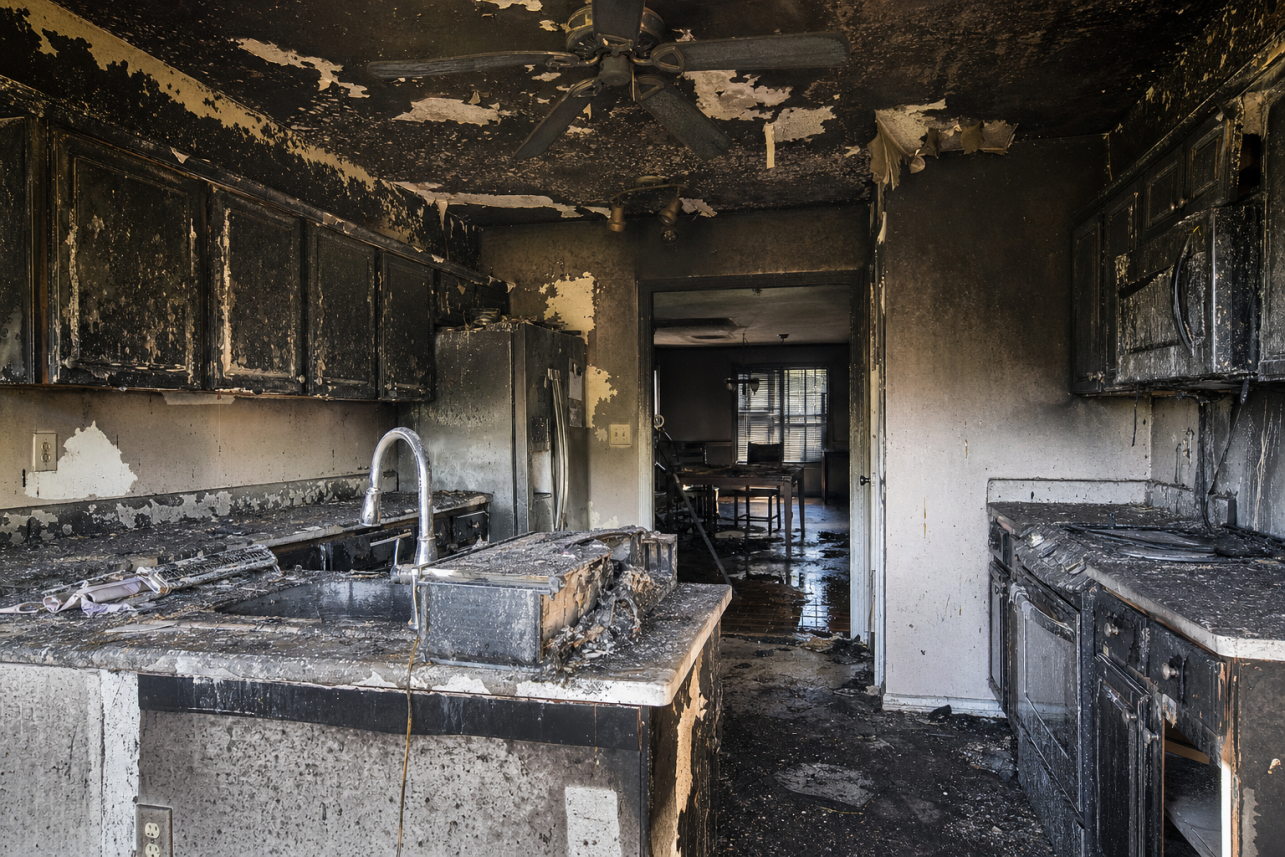
My Fire Claim Was Denied Or Badly Underpaid. Do Homeowners Ever Actually Win Against The Insurance Company?
Yes, and there is real case law proving it. In Bi-Economy Market, Inc. v. Harleysville Insurance Co. of New York (2008), a fire destroyed a family-owned market’s building, equipment, and inventory. The insurer delayed and underpaid, and the business ultimately failed. New York’s Court of Appeals sided with the insured, holding that the policyholder could pursue consequential damages beyond the policy limits because the carrier failed to honor its obligation to pay the covered fire loss promptly and in good faith.
The lesson for Haw River property owners is that a denial or low offer is a position, not a verdict. Carriers deny fire claims for alleged misrepresentation, disputed cause and origin, or claimed policy violations — and those positions can be challenged with evidence.
When we take on a denied or underpaid Fire Damage Claim Haw River NC families bring to us, we start by re-reading the full policy, including endorsements the first adjuster may have ignored. We then re-inspect the property, obtain independent estimates from contractors familiar with Alamance County construction costs, and file a documented supplemental claim or formal dispute.
North Carolina also gives policyholders leverage through its unfair claim settlement practices statutes, and the appraisal clause in most policies offers a path to resolve pure valuation disputes without a lawsuit.
We are licensed and bonded, and we never promise a specific dollar recovery — but we can promise that your claim will be re-examined thoroughly, documented professionally, and argued by people who negotiate fire losses for a living, not once in a lifetime.
What Does The Insurance Policy Actually Pay For On A Fire Damage Claim Haw River NC Residents File — Is It Just The Burned Rooms?
No, and this is where most policyholders leave money on the table. A typical homeowner policy in North Carolina covers the dwelling, other structures like detached garages and sheds, personal property, additional living expenses, and often ordinance or law coverage for required code upgrades.
That last part matters in Alamance County. If your Haw River home was built decades ago, rebuilding after a fire triggers current building codes — updated wiring, smoke detection, sometimes structural changes. Ordinance or law coverage helps pay for those upgrades, but insurers rarely volunteer it. We identify every applicable coverage and document the loss against each one.
We also look at hidden damage. Heat can compromise roof decking and framing far from the flames, and water from firefighting efforts soaks into subfloors, insulation, and wall cavities. A thorough scope catches what a quick carrier inspection misses.
North Carolina courts have backed policyholders who push for the full scope of what a policy promises. In Gaston County Dyeing Machine Co. v. Northfield Insurance Co., 351 N.C. 293 (2000), the North Carolina Supreme Court sided with the insured on property damage coverage the carriers had tried to deny, reinforcing that ambiguous policy language is construed in the policyholder’s favor. We can’t promise a specific outcome on any claim, but we can make sure every coverage you paid premiums for is put on the table and properly documented.
The Insurance Company Wants Me To Use Their Preferred Contractor For The Fire Repairs. Do I Have To?
No. In North Carolina, you have the right to choose your own contractor. The carrier’s preferred vendor works within pricing and scope guidelines set by the insurance company — which can mean patch-and-paint repairs where a full rebuild of a fire-damaged section is warranted.
We see this often on Haw River fire losses. The carrier’s estimate might call for cleaning smoke-stained framing that actually needs replacement, or sealing charred studs instead of removing them. Once drywall goes back up over compromised material, odor and structural problems resurface months later, and reopening the claim becomes an uphill fight.
As your public adjuster, we build an independent scope of repairs based on what the damage actually requires, using the same estimating platforms carriers use. Then we negotiate line by line — demolition, structural repairs, mechanical systems, finishes, and code-required upgrades under Alamance County permitting.
Get your own estimates from contractors you trust, and don’t sign a work authorization or assignment with any vendor the carrier sends before you understand what you’re agreeing to. Some agreements limit the contractor’s work to whatever the insurer approves, which locks in an underscoped repair.
For The Public Adjusters, Inc. is licensed and bonded, and we represent you — not the carrier and not a contractor. Our job is to make sure the settlement reflects the true cost of restoring your home, so whichever builder you hire has an adequate budget to do the work right.
My Fire Was Electrical And The Carrier Is Dragging Out Its Cause-And-Origin Investigation. Can They Delay My Haw River Claim Indefinitely?
Carriers are entitled to investigate, but they are not entitled to stall forever. North Carolina’s Unfair Claim Settlement Practices statute requires insurers to acknowledge communications promptly, investigate reasonably, and affirm or deny coverage within a reasonable time. A cause-and-origin investigation on an electrical fire — a common cause in older Haw River homes — should not leave you in limbo for months without explanation.
While the investigation runs, several things should still be moving. Your additional living expense coverage should be paying for temporary housing now, not after a final decision. The property should be secured and mitigated, and the carrier should tell you in writing exactly what it’s waiting on.
We keep pressure on that timeline. We document every request, respond quickly with what’s legitimately needed, and push back when the carrier asks for the same records repeatedly or lets weeks pass without action. If the insurer hires an origin-and-cause investigator, you’re entitled to know the findings that affect your claim.
Courts have penalized insurers who mishandle fire claims in bad faith. In Lovell v. Nationwide Mutual Insurance Co., 108 N.C. App. 416 (1993), aff’d in relevant part, 334 N.C. 682 (1993), a North Carolina policyholder recovered punitive damages after the carrier’s aggravated conduct in handling a claim. We can’t guarantee any particular result, but a professionally managed file with documented delays gives you real leverage — and often gets a stalled fire claim moving again.
I Own A Small Commercial Building In Haw River That Had A Fire. Can You Handle A Business Fire Loss Too, And How Is A Fire Damage Claim Haw River NC Business Owners File Different From A Homeowner Claim?
Yes, we handle commercial fire losses throughout Alamance County, and they involve moving parts a residential claim doesn’t. Beyond the building and contents, a commercial policy typically includes business interruption coverage, extra expense coverage, and sometimes loss of rents — each requiring its own documentation and calculation.
Business interruption is where owners get shortchanged most often. Proving lost income means reconstructing revenue from financial statements, tax returns, and sales records, then projecting what the business would have earned during the restoration period. Carriers frequently apply a shorter restoration period or lower projections than the evidence supports. We build that calculation properly and defend it.
Building claims on older commercial structures along the Haw River corridor also raise code-upgrade questions — sprinkler requirements, accessibility, electrical service — that ordinance or law coverage may address. Contents claims for equipment and inventory require detailed valuation, and we prepare those inventories so nothing is missed.
North Carolina case law supports commercial policyholders who hold insurers to the policy. In Gaston County Dyeing Machine Co. v. Northfield Insurance Co., 351 N.C. 293 (2000), the state Supreme Court ruled for the insured business on a disputed property damage claim, holding coverage applied where the carriers argued it didn’t.
One note on scope: we handle property claims for homes, buildings, and contents. We don’t work on motor vehicle, cell phone, health, or life insurance claims. If your fire loss touches a fleet vehicle, that portion goes through your auto carrier separately while we manage the building and business loss.
The Fire Department’s Water And Foam Ruined More Of My House Than The Flames Did. Is That Damage Covered On A Fire Damage Claim Haw River NC Homeowners Submit?
Yes, in almost every standard homeowner policy. Damage caused by firefighting efforts — water saturation, foam residue, broken windows, chopped-open walls and roofs — is treated as part of the fire loss because it flows directly from a covered peril. Carriers sometimes try to split hairs and price the water portion like a small plumbing leak. That approach badly shortchanges Haw River homeowners.
Water used to knock down a fire soaks framing, insulation, subfloors, and drywall. In Alamance County’s humid climate, saturated materials can grow mold within days if drying is delayed while the carrier’s cause-and-origin work drags on. We document moisture readings room by room, photograph firefighter access damage before anything is disturbed, and make sure demolition and drying costs are scoped into the estimate rather than left out.
We also pursue secondary damage: warped hardwood in rooms far from the fire, ceiling collapse from water pooling above, and corrosion on fixtures from foam agents. If your loss also involved rising water from an outside source, that is a separate flood question handled through the National Flood Insurance Program — FEMA and NFIP resources explain that coverage, and we can point you in the right direction.
One caution: never sign off on a water-damage-only estimate early in the process. The full scope of a fire loss, including suppression damage, often isn’t visible until demolition begins, and settling too soon can leave real money on the table. We’re licensed and bonded, and while no one can guarantee a specific outcome, thorough documentation consistently produces a more complete settlement than a quick drive-by inspection ever will.
My Settlement Offer Shows A Big Deduction For ‘recoverable Depreciation.’ How Does That Work On A Fire Loss In Haw River?
Most homeowner policies in North Carolina pay in two stages. First the carrier issues the actual cash value — replacement cost minus depreciation for age and wear. Then, after you actually repair or replace the damaged property, you can recover the withheld depreciation, usually by submitting invoices or a signed repair contract.
The problem is how depreciation gets calculated. We regularly see carriers depreciate a 5-year-old roof as if it were 20 years old, or apply depreciation to labor and to items that don’t wear out, like sales tax or debris removal. Every extra percentage point of depreciation is money out of your pocket, at least temporarily, and permanently if you never learn to claim it back.
For a Haw River homeowner, that holdback can run tens of thousands of dollars on a serious fire. We audit the carrier’s depreciation schedule line by line, challenge unreasonable useful-life assumptions, and track deadlines — many policies give you only 180 days to two years to complete repairs and claim the recoverable portion. Missing that window can forfeit the money entirely.
North Carolina courts have shown they will hold insurers to the actual language of the policy rather than the carrier’s preferred reading. In Gaston County Dyeing Machine Co. v. Northfield Insurance Co., 351 N.C. 293 (2000), the North Carolina Supreme Court sided with the insured on a disputed property damage claim, rejecting the insurer’s narrow interpretation of its own policy. That principle — ambiguities are read in the policyholder’s favor — is one we lean on when carriers over-depreciate a fire loss. We can’t promise a specific dollar recovery, but we can make sure every recoverable dollar is properly documented and pursued.
What Happens If The Insurance Company And I Simply Can’t Agree On The Value Of My Fire Damage Claim Haw River NC Policy Dispute — Appraisal Or Court?
You have real options, and disagreement is not the end of the road. Most North Carolina homeowner policies contain an appraisal clause. Either side can invoke it when the dispute is about the amount of the loss rather than whether coverage exists. You pick an appraiser, the carrier picks one, and the two select a neutral umpire. Agreement by any two of the three sets the loss amount — often faster and cheaper than litigation.
Before appraisal ever becomes necessary, though, most disputes come down to documentation. A carrier’s estimate written from a 45-minute walkthrough rarely matches a line-item scope built from moisture mapping, a full contents inventory, and contractor-level pricing for Alamance County. When we present that level of detail, many carriers revise their numbers without a formal fight.
If the carrier denies coverage outright or acts in bad faith, court remains available, and North Carolina policyholders do win. In Gaston County Dyeing Machine Co. v. Northfield Insurance Co., the state Supreme Court ruled for the insured on a property damage coverage dispute, holding the insurer to the plain meaning of its policy. Courts here construe unclear policy language against the company that wrote it.
As licensed public adjusters we handle the valuation fight — appraisal included on many policies — and we work alongside policyholder attorneys when a coverage denial requires one. We never promise a particular result, but Haw River homeowners should know the carrier’s first number is a starting point, not a verdict.
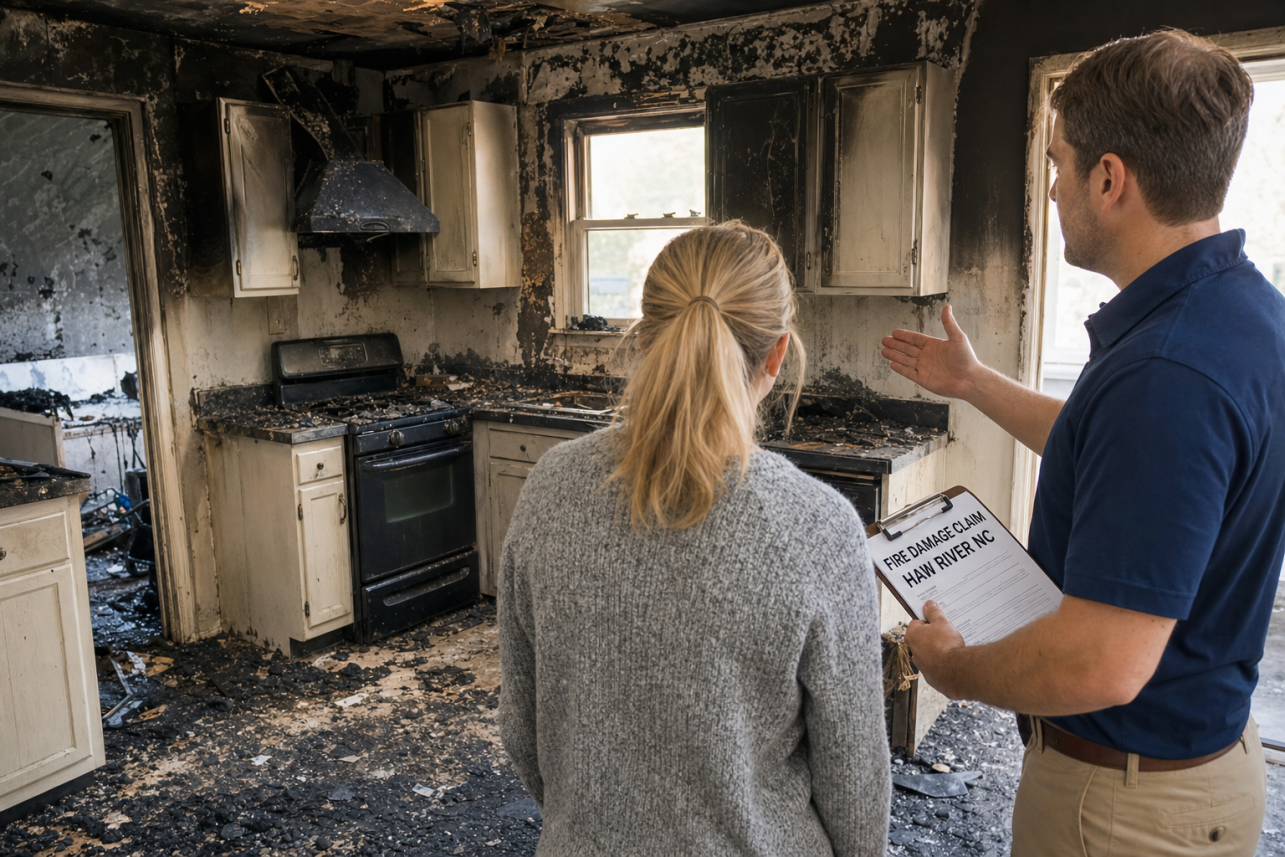
Our Detached Garage And Workshop Behind The House Burned. Are Outbuildings And The Tools Inside Covered The Same Way As The Main Dwelling?
Usually yes, but under different coverage buckets with their own limits — and that’s where Haw River homeowners get tripped up. Detached structures like garages, workshops, sheds, and fences typically fall under Coverage B (Other Structures), which is commonly capped at 10% of your dwelling limit. The tools, equipment, and stored belongings inside fall under Coverage C (Personal Property), the same bucket as your household contents.
The first thing we check is whether those limits are adequate for the actual loss. A well-equipped workshop with saws, compressors, welding gear, and lawn equipment can easily exceed a default contents sub-limit, and some policies cap certain categories — tools used for any business purpose, for example, may face a sharply reduced limit unless you carried an endorsement. Identifying every applicable coverage and endorsement before the claim is priced matters enormously.
We build a detailed inventory of everything in the structure, researching replacement pricing item by item rather than accepting a carrier’s lump-sum guess. We also scope the structure itself properly: slab damage from heat, electrical service to the building, and code-required upgrades when rebuilding in Alamance County are frequently left out of first estimates.
One more thing to watch — if the fire spread and damaged the main house’s siding, roof edge, or windows facing the garage, that damage belongs on the dwelling portion of the claim, not the outbuilding limit. Allocating damage to the right coverage protects your limits. We handle that allocation as part of every fire loss we adjust, and it often changes the outcome meaningfully.
Local Relevance
Haw River is a historic mill town, and much of its housing stock reflects that heritage. Older homes with original framing, plaster walls, and wiring that has been updated piecemeal over the decades tend to suffer differently in a fire than new construction — flames and smoke travel through old wall cavities in ways a quick estimate misses, and rebuilding to today’s electrical and building codes adds real cost that your policy may cover if it’s claimed properly.
Our central North Carolina climate matters too. High humidity means that water used to knock down a fire lingers in framing and insulation, and mold can follow within days. Winter heating-related fires are a recurring risk statewide — the National Fire Protection Association consistently identifies heating equipment and cooking as leading causes of home fires — and those losses often combine burn, smoke, and water damage in a single claim.
We represent policyholders throughout Alamance County and the surrounding Triangle region. Whether you’re here in Haw River, working with a Public Adjuster in Mebane NC, or comparing notes with a neighbor who used a Public Adjuster in Pittsboro NC, the goal is the same: a claim measured completely and paid according to the policy you’ve been paying for.
Many Haw River homes date to the town’s textile-mill era, and in older balloon-framed houses fire and smoke often travel vertically inside wall cavities — so damage frequently extends a floor above the visible burn area. That’s exactly the kind of hidden loss a policyholder-side inspection is designed to catch before the claim is settled.
Get A Second Opinion On Your Haw River Fire Loss
Before you accept the insurance company’s number, let a licensed, bonded public adjuster review your policy and inspect the damage — at no cost and with no obligation. For The Public Adjusters, Inc. represents homeowners and business owners across Haw River and Alamance County, and we only get paid when you do.
Request Your Free Claim Review
Call us: (336) 331-8300
Helpful Resources
- NCDOI Public Adjusters Guide
- National Fire Protection Association (NFPA)
- North Carolina Department of Insurance — State regulator overseeing insurers and licensed public adjusters
- U.S. Fire Administration home fire resources — Federal fire-safety and recovery information for homeowners
Last updated: September 23, 2026