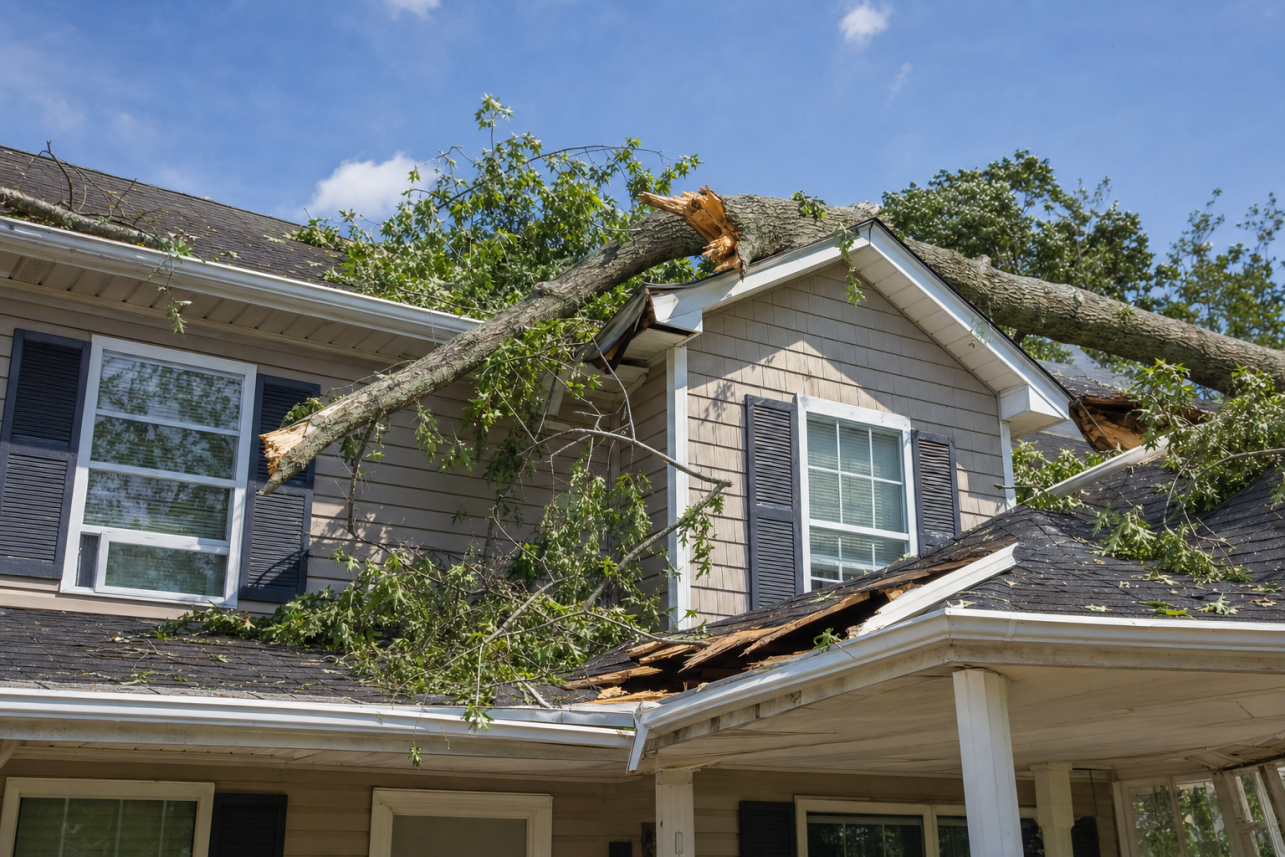
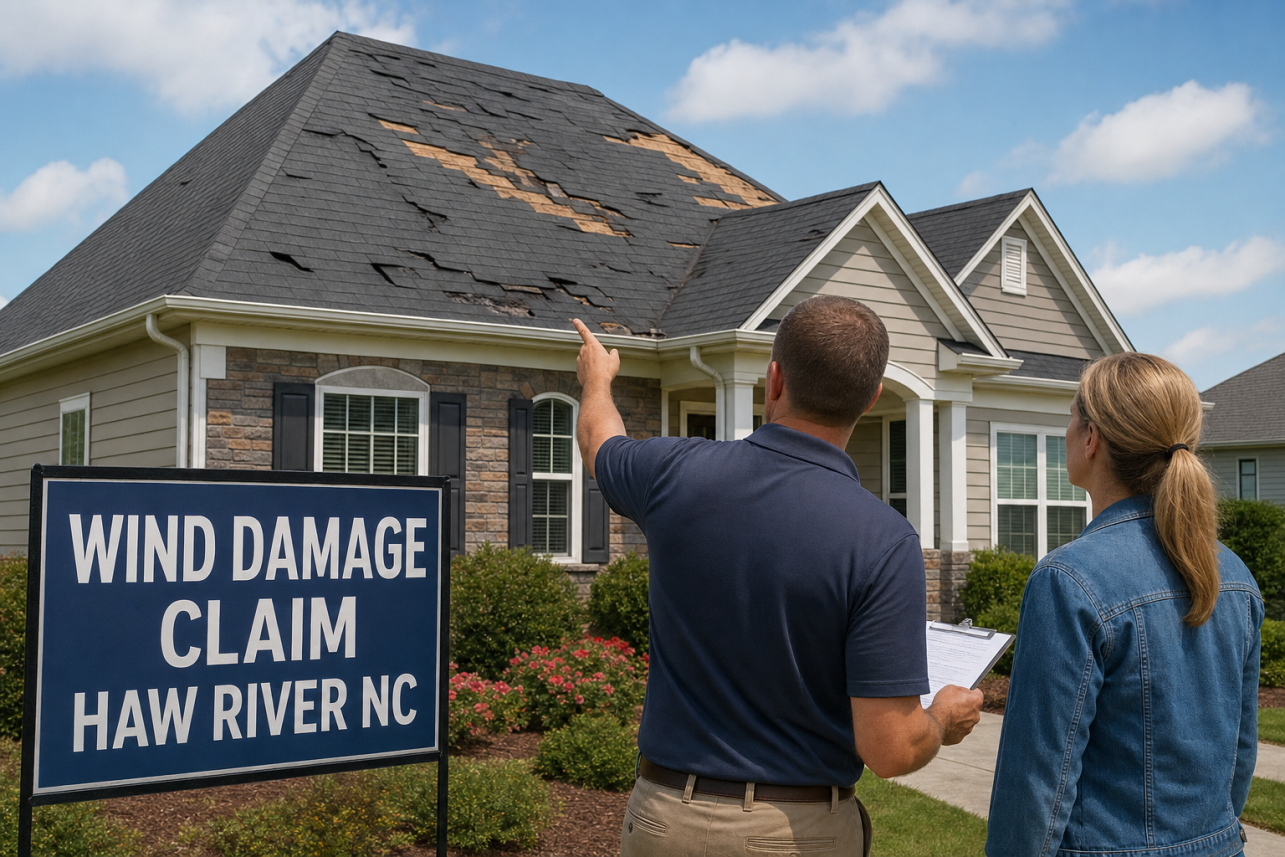
If you need help with a Wind Damage Claim Haw River NC, For The Public Adjusters, Inc. represents you — the policyholder — not the insurance company. When hurricane remnants or a tornado rip shingles off your roof, drive rain into your ceilings, or drop a tree on your home, we document the full scope of the damage and negotiate your settlement with your insurer. We are licensed and bonded in North Carolina, and we only get paid when you do.
What This Service Is
A public adjuster is a licensed professional who works exclusively for the property owner during an insurance claim. After a hurricane or tornado moves through Alamance County, your insurance company sends its own adjuster to assess the damage — and that person answers to the insurer, not to you.
We level the playing field. Our team inspects your roof, siding, windows, ceilings, and contents, builds a detailed repair cost estimate, and reviews your homeowners insurance policy line by line so you understand your coverage limits, your windstorm deductible, and whether your policy pays replacement cost or only actual cash value after depreciation is deducted.
That distinction matters more than most homeowners realize. An actual cash value settlement subtracts age and wear from your payout, while replacement cost coverage pays what it actually takes to rebuild. Knowing which you have — before you accept a check — can change the outcome of your claim significantly.
We handle the entire process: emergency documentation, storm damage evidence, estimate preparation, settlement negotiation, and supplemental claims when hidden damage surfaces later. We also handle related losses, from a tree damage home insurance claim in Mebane to water intrusion and structural issues that follow a storm.
Common Problems
My Insurance Check Won’t Come Close To Covering The Roof Repair
This is the most common call we get after a storm. The insurer’s estimate allows for patching a few shingles, but your roofer says the whole slope — or the whole roof — has to go, and the gap comes out of your pocket.
Lowball offers often happen because the carrier’s adjuster spent twenty minutes on your roof and missed lifted shingles, broken seals, and wind-driven rain that soaked insulation and framing you can’t see from the ground. Courts have sided with homeowners on exactly this issue: in Windridge of Naperville Condominium Association v. Philadelphia Indemnity Insurance Co., the insurer wanted to replace only the storm-damaged sides of the buildings, and the court held the insured was entitled to a result that actually restored the property, not a mismatched patch job.
We build an independent damage appraisal and a complete repair estimate, then push back with evidence. We never guarantee a specific dollar outcome — no honest adjuster can — but we make sure nothing is left off the claim.
What If My Wind Damage Claim Haw River NC Gets Delayed Or Denied?
A denial letter is not the end of the road. Insurers deny or stall wind claims for many reasons — they blame the damage on age or wear, argue the storm didn’t cause it, or claim you missed a filing deadline. Others simply slow-walk the file, requesting the same documents repeatedly while your ceiling stains spread.
You have the right to challenge all of it. We reopen denied and underpaid claims, gather weather data and inspection evidence tying the damage to the specific hurricane or tornado event, and file supplemental claims when the first payment falls short. The North Carolina Department of Insurance publishes guidance in its NCDOI Public Adjusters Guide explaining exactly how licensed public adjusters represent policyholders in these disputes.
One caution: make temporary repairs to prevent further damage — tarping the roof, boarding broken windows — and keep every receipt. Your policy requires you to protect the property, and those emergency costs are typically reimbursable.
Do I Really Need A Public Adjuster, Or Can I Handle This Myself?
You can file a wind claim yourself, and for very small losses that may be fine. The problem is that storm claims hide their real cost. Wind lifts shingles without tearing them off, rain follows nail holes into wall cavities, and a tornado’s pressure can rack framing in ways only a structural damage inspection reveals. Miss it now, and you pay for it later.
A good public adjuster documents everything before repairs erase the evidence, reads your policy for coverage you didn’t know you had, and handles the negotiation so you’re not arguing with a professional adjuster on your own. Verify that anyone you hire is licensed with the state — we are licensed and bonded, and we work on contingency, so our fee comes from the recovery, not upfront.
We’ve handled storm losses across Alamance County, including a Wind Damage Claim in Elon and cases requiring Wind Damage Claim Help in Burlington, so we know how local carriers evaluate these losses.

Our Process
Free Inspection And Policy Review
We start with a no-cost look at your storm damage and your homeowners insurance policy. We identify your coverage limits, your deductible — including any separate windstorm deductible, which is often a percentage of your dwelling coverage rather than a flat amount — and whether your policy pays replacement cost or actual cash value. You’ll know where you stand before any claim decisions are made.
Full Documentation And Estimate
We photograph and measure every affected area: roof, gutters, siding, fencing, interior ceilings and walls, and damaged contents. We look for the hidden losses carriers miss — wind-driven rain inside wall cavities, compromised decking, stressed framing. Then we prepare a detailed, line-item repair cost estimate that reflects real local construction pricing, not the insurer’s software defaults.
Negotiation And Settlement
We present the claim, meet the insurance company’s adjuster on site, and negotiate the settlement on your behalf. If new damage is discovered during repairs, we file a supplemental claim to cover it. If the carrier delays or disputes the loss, we escalate — and when a claim needs legal firepower, we work alongside insurance dispute lawyers. You stay informed at every step without fighting the battle yourself.
| Claim Step | Handling It Alone | With For The Public Adjusters |
|---|---|---|
| Roof inspection after a hurricane or tornado | Ground-level look; carrier’s adjuster may spend minutes on site | Drone imagery, slope-by-slope uplift testing, attic and decking review |
| Proving the storm caused the damage | Your word against the carrier’s ‘wear and tear’ opinion | Certified weather data, engineer reports, and photo documentation tied to the date of loss |
| Estimating the repair cost | Carrier’s estimate, often missing code upgrades and matching costs | Independent line-item estimate including code compliance and material matching |
| Contents and interior losses | Rough lists from memory, easy for the carrier to discount | Itemized inventory with receipts, photos, and salvage values |
| Negotiating the settlement | You vs. a trained claims professional | A licensed, bonded Alamance County adjuster advocating only for you |
| Time and stress | Weeks of calls, letters, and re-inspections on your own | We manage every carrier interaction from first notice to final payment |
Commonly Overlooked In The Public Adjusting Industry
- Broken shingle adhesive seals from hurricane-force gusts — Unsealed shingles look perfectly normal from the ground and even from a ladder, so quick inspections miss the very damage that lets the next storm strip the roof.
- Wind-racked wall framing after a tornado passes nearby — A building can be pushed slightly out of square without any obvious cracks, and only an engineer’s measurement catches it before doors, windows, and rooflines fail later.
- Matching requirements for discontinued shingles and siding — Carriers often approve a patch repair without checking whether the material still exists, when a documented mismatch can support replacing the entire slope or elevation.
- Code-upgrade costs required by Alamance County building standards — Estimates written to pre-storm construction quietly leave out ordinance-and-law items like updated decking, fasteners, and underlayment that inspectors will require.
- The wind-versus-water causation fight when rain follows the breach — Insurers sometimes attribute interior damage to excluded flooding or ‘delayed mitigation,’ even though courts — as in Corban v. USAA — have held wind damage remains covered.
- Attic and decking damage hidden above the insulation — Cracked decking, lifted nails, and moisture staining sit out of sight, and nobody checks the attic during a twenty-minute exterior inspection.
- Contents documentation before cleanup crews haul things away — Storm-soaked inventory and belongings get discarded in the rush to dry out, erasing the photographic proof needed to get the contents portion of the claim paid.
- The one-way nature of the carrier’s first offer — Policyholders assume the initial check is final, when most policies allow documented supplements — but only if someone takes the time to build the evidence.
Case Studies
Case Study #1
Situation: A family on Roxboro Road in Haw River came home after the remnants of Hurricane Michael pushed through Alamance County with sustained winds and violent gusts. Shingles were scattered across the yard and a section of ridge cap was missing.
Problem: Their insurance carrier sent an adjuster who spent twenty minutes on site, approved a small repair for the missing ridge cap, and denied the rest of the roof as ‘wear and tear.’ The homeowners suspected the payout would not come close to covering the real damage, but they had no way to prove it.
Investigation: Our team performed a full roof inspection with drone imagery and a shingle-by-shingle uplift test. We documented creased and unsealed shingles across three slopes, checked the attic decking for daylight penetration and moisture staining, and pulled local weather data confirming hurricane-force gusts on the date of loss.
Findings: The wind had broken the adhesive seal on hundreds of shingles that still looked intact from the ground. Unsealed shingles are wind damage under most policies, not wear and tear, and the manufacturer confirmed the discontinued shingle could not be matched for a partial repair.
Solution: We prepared a supplemental claim with photographic evidence, the weather report, the manufacturer’s discontinuation letter, and a line-item estimate for full slope replacement. We handled every conversation with the carrier so the family didn’t have to argue coverage themselves.
Outcome: The carrier reversed its wear-and-tear position and issued payment for a full roof replacement plus interior ceiling repairs in two bedrooms, a settlement many times the original approval.
Lesson: Hurricane wind damage is often invisible from the ground. If the carrier’s inspection lasted minutes and the check seems small, an independent, documented inspection can change the outcome. Courts have backed policyholders on this exact issue — in Corban v. United Services Automobile Ass’n, 20 So. 3d 601 (Miss. 2009), the court sided with homeowners and held the insurer could not escape paying for hurricane wind damage to the home simply because other perils were involved.
Case Study #2
Situation: A small commercial building owner near the Haw River textile district took a direct hit when a tornado-warned storm cell crossed Alamance County. The metal roof panels peeled back on one corner and rain poured into the warehouse space overnight before tarping could be arranged.
Problem: The carrier accepted the roof damage but blamed the soaked inventory and buckled flooring on ‘delayed mitigation,’ offering a fraction of the contents loss. The owner was facing a six-figure gap between the offer and the real cost to reopen.
Investigation: We reconstructed the timeline hour by hour — when the tornado warning was issued, when the owner discovered the breach, and when the first tarping crew was even available given county-wide storm demand. We inventoried the damaged contents with photographs, purchase records, and salvage assessments, and brought in a structural engineer to evaluate the racked wall framing the first adjuster never mentioned.
Findings: The engineer confirmed wind-racked framing that required steel reinforcement, not just cosmetic repair. The mitigation timeline showed the owner acted as fast as any reasonable person could during a declared severe weather event — the interior damage flowed directly from the covered tornado opening, not from neglect.
Solution: We submitted a rebuilt claim package: engineer’s report, contents inventory with documentation, mitigation timeline, and a corrected building estimate including code-required upgrades. We requested a re-inspection with the carrier’s adjuster and walked the loss together, line by line.
Outcome: The revised settlement covered the structural repairs, code upgrades, and the substantial majority of the documented contents loss — enough for the owner to reopen without taking on debt.
Lesson: Carriers sometimes recast storm-caused interior damage as an owner’s failure to mitigate. Policyholders who document the timeline and the causation chain are in a far stronger position. In Broussard v. State Farm Fire & Casualty Co., a Hurricane Katrina case out of Mississippi, a jury found for the homeowners after the insurer refused to pay for wind destruction to their house — proof that well-documented wind claims can and do prevail.
| Your Situation | Best First Move | What It Depends On |
|---|---|---|
| Tornado or hurricane winds tore off shingles or roof panels | Tarp immediately, photograph everything, then get an independent inspection before accepting any offer | Whether hidden uplift damage exists beyond the visible loss — it usually does |
| Carrier denied the claim as ‘wear and tear’ or ‘maintenance’ | Request the denial in writing and have a Haw River public adjuster re-inspect | The age of the roof, weather data for the date of loss, and shingle seal condition |
| Carrier’s offer seems too low to complete repairs | Get contractor bids and a line-item review before cashing or endorsing anything | Gaps in the carrier’s scope — code upgrades, matching, and overhead are commonly omitted |
| Wind opened the building and rain damaged the interior or contents | Document the timeline of the breach and your mitigation efforts right away | Proving the covered wind opening caused the interior loss, as the insureds did in Corban v. USAA |
| Storm caused both wind damage and flooding | Separate the claims — wind goes to your homeowner’s carrier, flooding to NFIP if you carry it | Flood is excluded from most homeowner policies; see FEMA and the National Flood Insurance Program for flood coverage questions |
| Claim is stalled with no response from the carrier | Send written follow-ups creating a paper trail, then bring in professional representation | North Carolina’s fair claims handling requirements and how well your loss is documented |
| You already accepted a payment but repairs cost more | Ask whether the claim can be supplemented — acceptance often isn’t the end | Policy deadlines, whether a release was signed, and newly discovered damage |
Reviews
After the tornado warning storms came through Alamance County, our insurance company offered us $4,800 for a roof that clearly needed replacing. For The Public Adjusters found creased shingles on three slopes our carrier’s adjuster never even climbed up to look at. The final settlement paid for the whole roof and the water-stained ceilings inside. I wish we had called them the day after the storm instead of arguing with the carrier for two months first.
Danielle P., Haw River
Hurricane remnants ripped siding and fascia off our house near Trollingwood Road. The first offer didn’t even cover matching the discontinued siding. These folks documented everything — weather data, manufacturer letters, a full estimate — and handled every call with the adjuster. The difference between the first check and the final one was significant. Licensed, bonded, and they actually explained our policy in plain English.
Marcus T., Haw River
A tornado-spawning storm took part of the roof off our rental property and soaked the interior. The carrier tried to split hairs over what the wind caused versus what the rain caused. For The Public Adjusters built the causation case with photos and an engineer’s input and got the interior damage included. Honest about what they could and couldn’t do from day one — no wild promises, just thorough work.
Renee H., Haw River
Frequently Asked Questions
What Does A Public Adjuster Do On A Wind Damage Claim Haw River NC Property Owners File After A Hurricane Or Tornado?
When a hurricane remnant or tornado tears through Alamance County, your insurance company sends its own adjuster — someone who works for the carrier, not for you. For The Public Adjusters, Inc. levels that playing field. We are licensed and bonded professionals who represent only the policyholder on a Wind Damage Claim Haw River NC residents file for homes, commercial buildings, and damaged contents.
Our work starts with a complete, independent inspection. Tornado and hurricane winds often cause damage that a quick carrier walkthrough misses: lifted shingles that later leak, racked framing, cracked masonry, and wind-driven rain intrusion inside walls and attics.
We document everything with photos, measurements, and detailed line-item estimates, then review your policy language for every coverage that applies — dwelling, other structures, contents, and additional living expenses if a tornado forces you out of your home.
From there, we prepare and present the claim, handle communications with the carrier’s adjuster, and negotiate the settlement on your behalf. Policyholders in this area faced this after Hurricane Fran’s winds crossed the Piedmont in 1996 and again when Hurricane Michael’s remnants hit in 2018, and many discovered how much documentation matters.
While we never guarantee a specific outcome, our role is to make sure nothing covered under your policy gets overlooked or undervalued. We do not handle claims involving vehicles, cell phones, health, or life insurance — our focus is strictly damage to buildings and their contents.
Why Do Insurance Companies Underpay Hurricane And Tornado Wind Claims In Alamance County?
Underpayment is rarely one big refusal — it usually happens through a series of small decisions that add up. After a tornado touches down near Haw River or hurricane-force gusts move up from the coast, carriers may attribute roof damage to “wear and tear,” approve a partial roof repair when a full replacement is warranted, or overlook interior water damage caused by wind-driven rain.
Another common issue is matching. If a tornado destroys shingles on one slope, the carrier may pay for that slope only, even though the replacement shingles won’t match the rest of the roof. North Carolina policyholders often have stronger arguments here than the first estimate suggests.
Depreciation is a third pressure point. Carriers apply depreciation aggressively, and many homeowners never recover the withheld amount because they don’t understand the recoverable-depreciation process or miss the deadlines to claim it.
Finally, contents claims after a tornado are frequently rushed. Insurers hand you a blank inventory form and expect you to remember every item in a damaged room while you’re displaced. We build that inventory methodically, with replacement pricing, so nothing is left off.
As your Haw River public adjuster, we identify each of these gaps, document them, and push back with evidence. We can’t promise a particular dollar figure — no honest adjuster can — but we can make sure your claim reflects the true scope of what the storm did to your property.
Can I Bring In For The Public Adjusters, Inc. After My Tornado Claim Was Denied Or Lowballed?
Yes. Many of our Haw River and Alamance County clients call us after the carrier has already issued a decision they believe is wrong. A denial or a low settlement offer is not necessarily the end of your claim — policies include appraisal and supplemental-claim provisions, and North Carolina law gives policyholders real leverage when coverage is wrongly restricted.
Courts have sided with insureds in exactly these disputes. In Gaston County Dyeing Machine Co. v. Northfield Insurance Co., the North Carolina Supreme Court ruled in favor of the insured on a property damage coverage dispute, rejecting the insurer’s narrow reading of its own policy language. That case is a reminder that the carrier’s first interpretation of your policy is not the final word.
When we take on a previously denied or underpaid Wind Damage Claim Haw River NC policyholders bring to us, we start by re-inspecting the property and reviewing the denial letter against the actual policy language. Hurricane and tornado damage is often misclassified — wind-driven rain gets labeled as a maintenance issue, or structural racking gets dismissed as pre-existing settling.
We then assemble new documentation, prepare a supplement or invoke appraisal where appropriate, and re-present the claim. If your loss also involved flooding, note that flood damage falls under separate NFIP coverage, and resources at FEMA.gov and FloodSmart.gov explain that process. We never guarantee a reversal, but a properly documented re-submission frequently changes the conversation.
How Soon After A Hurricane Or Tornado Should I Start My Claim, And What Should I Do First?
Start immediately. North Carolina policies require “prompt notice” of a loss, and delays give the carrier room to argue that damage worsened because you waited. After a tornado or the remnants of a hurricane pass through Haw River, your first steps are safety, then documentation, then notice to your insurer.
Photograph and video everything before you move or discard anything — the roof from the ground, downed trees on structures, broken windows, wet ceilings, and damaged contents. Keep receipts for tarps, board-up materials, and any hotel stays if your home is unlivable, since those emergency and additional living expenses are often reimbursable.
Make only the temporary repairs needed to prevent further damage, which your policy actually requires. Do not authorize permanent repairs or sign a contractor’s assignment-of-benefits agreement before the claim scope is settled, because that can limit your options.
Be aware of your deductible structure, too. Depending on your policy, a named-storm or windstorm deductible may apply instead of your standard deductible, and it can be a percentage of your dwelling coverage rather than a flat amount. We review that language for every client.
Contacting a public adjuster in Haw River early — ideally before the carrier’s inspection — lets us document the loss properly from day one rather than rebuilding the record afterward. There is no cost to have us evaluate the damage and explain your options, and getting the scope right at the start is far easier than fighting an underpayment later.
What Hidden Damage Should I Document Before Filing A Wind Damage Claim Haw River NC Insurers Will Take Seriously?
Hurricane and tornado winds cause far more damage than most homeowners can see from the ground. Lifted or creased shingles, cracked ridge caps, and broken seal strips often look fine from the driveway but allow water intrusion for months afterward.
Before filing, photograph everything: the roof from multiple angles, all four elevations of the home, gutters, siding, windows, fencing, outbuildings, and any interior water staining. In Haw River, we frequently find fastener pull-through on older architectural shingle roofs and hidden decking damage under areas that appear intact.
Don’t forget contents. Tornado pressure changes and wind-driven rain damage furniture, electronics, and stored belongings in attics and garages. A room-by-room inventory with photos and receipts strengthens your position considerably.
Also document the storm event itself. Save National Weather Service reports for Alamance County, note the date and time, and keep any local news coverage. Insurers sometimes argue damage predates the storm, and this evidence ties the loss to a specific hurricane or tornado.
Our team inspects the property before the insurance company’s adjuster arrives so nothing gets missed or dismissed. We’re licensed and bonded in North Carolina, and while no one can promise a specific outcome, thorough documentation at the start of the process is the single biggest factor in how a claim resolves. A well-built file is much harder for a carrier to lowball than a handful of cell phone photos taken after repairs have already started.
Have Homeowners Actually Won In Court Against Insurance Companies Over Storm Damage Payments?
Yes, and the case law matters because it shapes how carriers must handle claims like yours. A significant example is Sproull v. State Farm Fire & Casualty Co., decided by the Illinois Supreme Court in 2021. A homeowner challenged State Farm’s practice of depreciating labor costs when calculating the actual cash value of storm damage to his home. The court sided with the policyholder, ruling that labor does not depreciate the way materials do, which meant the insurer had been underpaying claims.
Why does that matter in Haw River? Because depreciation is one of the most common ways carriers shrink hurricane and tornado payouts here in Alamance County. When an insurer depreciates both materials and labor on a roof replacement, the first check can come in thousands of dollars below the real cost of repairs.
The Sproull decision, and cases like it around the country, confirm what public adjusters see every day: carrier estimating practices are not automatically correct, and policyholders who push back with documentation and policy knowledge can prevail.
We review how depreciation, overhead and profit, and code-upgrade costs were applied to your estimate. If the carrier’s math shortchanges you, we build the documented case to correct it. We never guarantee a particular result, but knowing the legal landscape helps us hold insurers to what the policy actually promises rather than what their software spits out.
How Much Does It Cost To Hire For The Public Adjusters, Inc. For A Hurricane Or Tornado Claim In Haw River?
We work on a contingency fee, which means our fee is a percentage of what the insurance company pays on your claim. There are no upfront costs, no hourly billing, and no fee at all if there is no recovery. Our interests are aligned with yours from day one.
That structure matters for storm victims in Haw River because most families dealing with tornado or hurricane damage are already stretched thin. You may be paying for temporary housing, tarping, tree removal, and emergency repairs. Asking you to write another check just to get fair treatment from your own insurer would defeat the purpose.
The percentage is agreed to in writing before any work begins, so there are never surprises. North Carolina regulates public adjusters, and we are licensed and bonded in the state, which gives you a layer of accountability you won’t get from an unlicensed “claims consultant” who shows up after a storm.
Homeowners sometimes worry that the fee means less money in their pocket. In practice, a professionally documented and negotiated claim often resolves differently than one handled alone, because the carrier’s estimate is checked line by line against the actual scope of damage. We cannot and do not guarantee any specific dollar amount — no honest adjuster can. What we can promise is a thorough inspection, a complete estimate, and persistent advocacy through every stage of a Wind Damage Claim Haw River NC families would otherwise have to fight on their own.
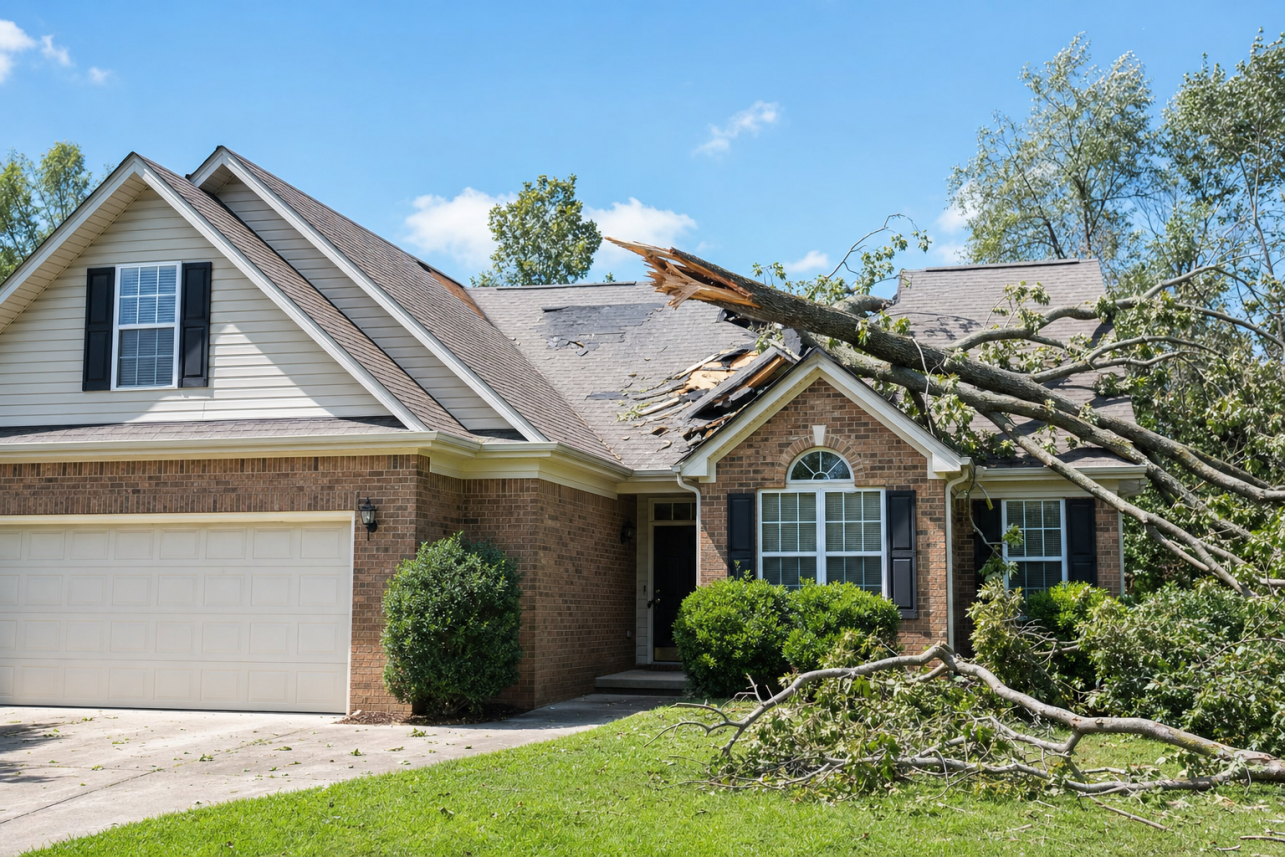
Does My Homeowners Policy Cover Both Tornado Wind Damage And Flooding Here In Alamance County?
This is one of the most important distinctions in storm claims, and it trips up a lot of Haw River property owners. Standard homeowners policies generally cover damage caused by hurricane and tornado winds — torn roofs, broken windows, structural damage, and rain that enters through a wind-created opening.
Rising water is a different story. Flooding from the Haw River itself, or from storm surge and overland water flow, is excluded from nearly every standard homeowners policy. Flood coverage comes separately through the National Flood Insurance Program (NFIP) at floodsmart.gov or through FEMA disaster assistance at fema.gov after a declared disaster.
Where it gets contentious is when both happen at once. A tornado peels back your roof, then heavy rain pours in, and the carrier tries to blame everything on “flooding” to shift the loss to a policy you may not have. Sorting out wind-caused water intrusion from rising water is often the entire fight, and the sequence of events, weather data, and physical evidence all matter.
Our role covers the wind side of that equation. We document what the hurricane or tornado did to the structure and contents, establish the causation chain, and push back when a carrier misclassifies wind-driven damage as an excluded flood loss. If you have separate NFIP coverage, we can help you understand how the two claims interact. We’re licensed and bonded, and while outcomes are never guaranteed, correctly separating covered wind damage from excluded flood damage frequently changes what a claim is worth.
How Long Does A Wind Damage Claim Haw River NC Homeowners File After A Tornado Usually Take To Resolve?
A straightforward tornado claim in Haw River — say, a torn roof section, damaged gutters, and some interior water staining — often resolves in 30 to 60 days once documentation is complete. Claims involving structural damage, displaced families, or disputes over the insurer’s estimate routinely stretch to several months.
North Carolina’s unfair claim settlement practices statute, N.C. Gen. Stat. § 58-63-15(11), requires insurers to acknowledge and act on claims with reasonable promptness. In practice, delays usually come from incomplete documentation, back-and-forth over scope, or a carrier waiting on its own engineer’s report. A well-organized file with photos, measurements, and a line-item estimate removes most of those excuses.
Courts have punished insurers who drag their feet. In Bi-Economy Market, Inc. v. Harleysville Insurance Co. (New York Court of Appeals, 2008), a family food business was destroyed and the insurer delayed and underpaid the building and contents claim. The court ruled the policyholder could recover consequential damages caused by the insurer’s delay — a landmark win that put carriers nationwide on notice that slow-walking a claim has real legal consequences.
We cannot promise a specific timeline or outcome, since every loss and every policy is different. What we can do is prepare the claim thoroughly from day one, respond to every carrier request quickly, and keep steady pressure on the adjuster so an Alamance County family isn’t left waiting through another storm season.
What Happens During The Inspection When For The Public Adjusters, Inc. Reviews My Hurricane Damage In Haw River?
Our inspection is far more detailed than the walk-through most carrier adjusters perform. We start at the roof, checking every slope for lifted, creased, or missing shingles — hurricane winds coming through Alamance County often crease shingles without tearing them off, and creased shingles fail early even though they look intact from the ground.
From there we examine flashing, ridge vents, gutters, fascia, siding, windows, and fencing. Inside, we check attics for daylight penetration and wet insulation, then scan ceilings and walls with moisture meters, because wind-driven rain frequently soaks wall cavities that look dry on the surface.
We photograph and measure everything, then build a line-item estimate using the same professional estimating software insurance companies use. That means when we sit down with the carrier’s adjuster on a Wind Damage Claim Haw River NC policyholders can see exactly where the two estimates differ — item by item, price by price — instead of arguing over a vague lump sum.
We also inventory damaged contents, from furniture to electronics to clothing, with model numbers and replacement pricing where possible. Contents are one of the most commonly underpaid parts of a hurricane loss because homeowners rarely have time to document them properly.
The entire inspection typically takes two to four hours depending on the size of the home. You’re welcome to walk it with us — most homeowners are surprised by how much damage they’d walked past for weeks without noticing.
Does My Insurer Have To Match New Shingles Or Siding To The Rest Of My Home After Tornado Damage?
Matching is one of the most common fights on a tornado claim in Haw River. A twister rips shingles off one slope or peels siding from one wall, and the carrier offers to patch just that area — even when the original material is discontinued and the repair leaves an obvious mismatch that hurts the home’s value.
Most homeowner policies promise to repair or replace with material of “like kind and quality.” Policyholders have argued successfully that a visibly mismatched patch is not like kind and quality. In Cedar Bluff Townhome Condominium Association v. American Family Mutual Insurance Co. (Minnesota Supreme Court, 2014), storm damage hit siding panels on every building, and the replacement color was no longer available. The court sided with the insured association, holding that a reasonable color match was part of restoring the property and the insurer had to replace all the siding — not just the damaged panels. The policyholders won full replacement.
North Carolina outcomes depend on your specific policy language, any matching endorsements or exclusions, and the facts of the loss, so we never guarantee a full-replacement result. What we do is document the mismatch thoroughly, obtain discontinued-product verification from manufacturers and suppliers, and present the argument in the language the policy itself uses.
On older Haw River homes with decades-old shingle colors or vinyl siding profiles that no longer exist, this single issue can be the difference between a patch job and a properly restored exterior.
Is For The Public Adjusters, Inc. Licensed To Handle A Wind Damage Claim Haw River NC Residents Need Help With, And How Do I Verify That?
Yes. Public adjusters in North Carolina must be licensed by the North Carolina Department of Insurance, pass a state examination, and post a surety bond before representing any policyholder. For The Public Adjusters, Inc. is licensed and bonded, and you can verify any adjuster’s license directly through the NCDOI’s online licensee search or by calling the Department in Raleigh.
Why does this matter after a hurricane or tornado? Because major storms attract unlicensed operators. After tornado outbreaks in the Piedmont, out-of-state contractors and so-called claim consultants often knock on doors in Alamance County offering to “handle the insurance for you.” In North Carolina, negotiating a claim on a homeowner’s behalf for a fee without a public adjuster license is illegal — and homeowners who sign with these operators often end up with a botched claim and no recourse.
Before hiring anyone, ask for their license number, confirm it with the NCDOI, and confirm the bond is active. Also ask whether they’ve handled hurricane and tornado losses specifically, since windstorm claims involve issues — creased shingles, wind-driven rain intrusion, matching disputes — that differ from fire or plumbing losses.
One note on scope: we handle claims for damage to homes, buildings, and their contents. We do not handle claims involving vehicles, cell phones, health, or life insurance. And if your storm loss included rising water, flood coverage falls under the National Flood Insurance Program rather than your homeowners policy — FEMA and FloodSmart.gov are the right starting points for that portion of your loss.
What If My Insurer Blames Wear And Tear Instead Of The Tornado On A Wind Damage Claim Haw River NC Homeowners Submit?
This is one of the most common denial tactics we see across Alamance County. The adjuster inspects your roof after a tornado or hurricane and writes the damage off as age, deterioration, or poor maintenance rather than the storm event you actually reported.
The good news is that wear and tear and wind damage look very different to a trained eye. Tornado and hurricane winds leave distinct signatures: creased or lifted shingles, broken seal strips, directional patterns that follow the storm’s path, and impact marks from wind-driven debris. Gradual deterioration looks nothing like that, and we document the difference with photographs, moisture readings, and weather data confirming the storm hit Haw River on the date of loss.
Courts have repeatedly sided with policyholders when insurers stretch the wear-and-tear exclusion. In Corban v. United Services Automobile Association, 20 So. 3d 601 (Miss. 2009), the Mississippi Supreme Court ruled in favor of the insured homeowners after Hurricane Katrina, holding that the insurer could not escape paying for wind damage that its policy plainly covered simply by pointing to excluded causes.
If you have received a wear-and-tear denial in Haw River, do not accept it as the final word. Keep the denial letter, do not sign anything, and have an independent professional evaluate the roof before you make repairs. We build the evidence the carrier’s own adjuster skipped over, then present it under the terms of your policy.
Should I Accept The Insurance Company’s First Settlement Offer After Hurricane Damage To My Haw River Home?
You are never required to accept the first offer, and in our experience the initial number on a hurricane or tornado loss frequently misses real damage. First offers are often built from a quick walkthrough that skips attic framing, decking, gutters, fencing, detached structures, and interior water intrusion that followed the wind opening.
Before you sign anything, compare the insurer’s estimate line by line against what actually happened to your property. Look for missing trades, low labor rates that do not reflect current Alamance County contractor pricing, and depreciation that was applied too aggressively. Cashing a check is not always the end of the road, but signing a release can be, so read every document carefully.
When For The Public Adjusters, Inc. reviews a Wind Damage Claim Haw River NC carriers have already priced, we prepare our own independent estimate and negotiate from documented evidence rather than the insurer’s paperwork. We are licensed and bonded, and while no one can promise a specific dollar outcome, a thorough second review costs you nothing to explore and often reveals items the first estimate never addressed.
Courts have punished carriers for lowball first offers, too. In Broussard v. State Farm Fire & Casualty Co., a federal jury in Mississippi found for the homeowners after Hurricane Katrina when the insurer refused to pay for wind destruction to their home, awarding the full policy amount for the dwelling. That case is a reminder that the first offer is a starting point, not a verdict.
My Home Took Both Tornado Wind And Water Damage In The Same Storm — How Does That Get Sorted Out?
This is a critical distinction, because your homeowners policy and a flood policy cover very different things. Wind damage from a tornado or hurricane — torn roofing, broken windows, and the rain that pours in through those openings — falls under your homeowners coverage. Rising water from a swollen Haw River or overwhelmed drainage is flood damage, which is only covered if you carry a separate flood policy through the National Flood Insurance Program.
Problems start when a carrier tries to shift covered wind damage into the excluded flood column. In Corban v. USAA, the Mississippi Supreme Court held for the insured that wind damage occurring before floodwater arrived remained covered, and the insurer bore the burden of proving what its exclusion actually applied to. That principle matters for any homeowner facing a mixed wind-and-water loss.
Our job is to separate the two causes with evidence: storm timelines, water lines, debris patterns, and the physical sequence of how damage occurred. We handle the wind portion under your homeowners policy. For flooding itself, you would file separately through the NFIP, and FEMA’s resources at fema.gov and floodsmart.gov explain that process and any disaster assistance available after a declared event.
Do not let anyone tell you the whole loss is flood just because water was present. Document everything before cleanup, keep damaged materials where safely possible, and get an independent evaluation of which policy owes for what.
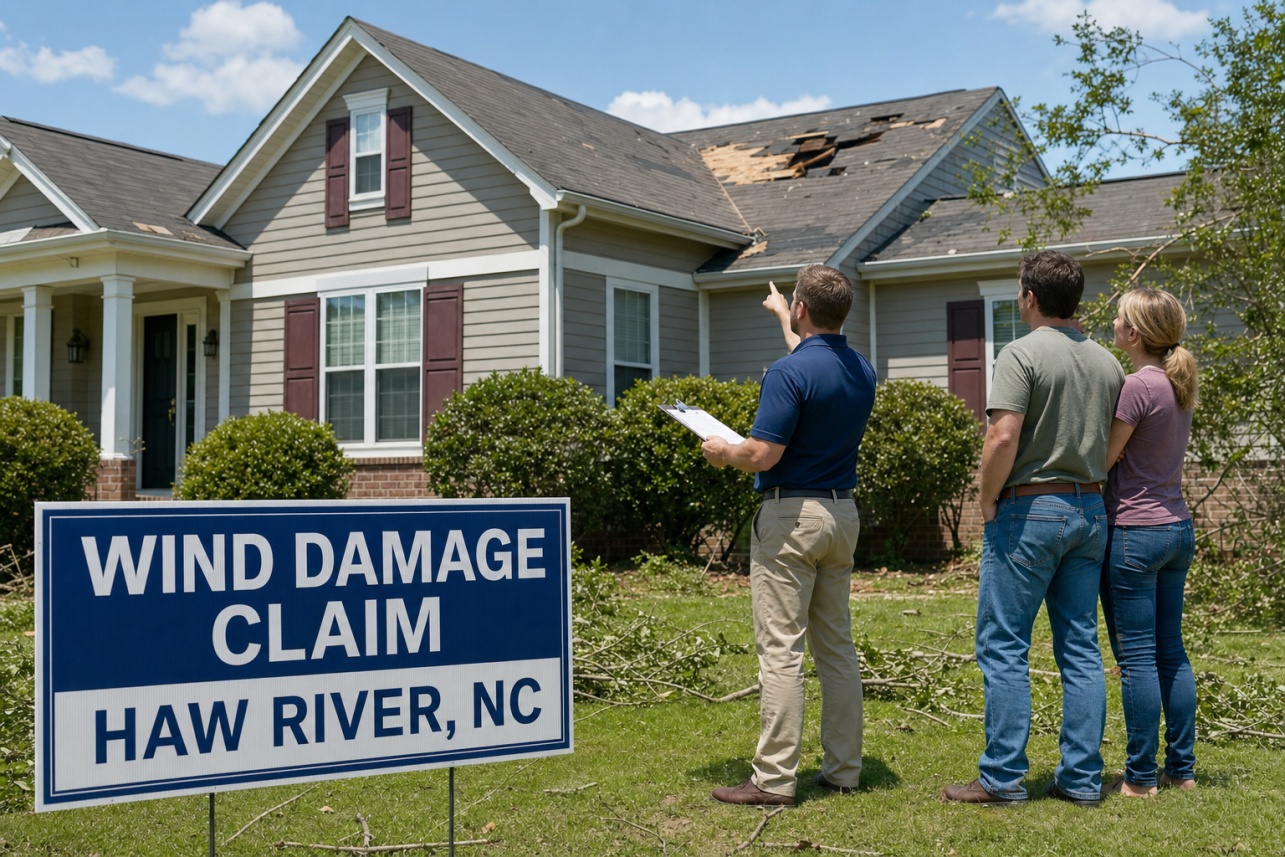
Can Haw River Business Owners And Landlords Use A Public Adjuster For Tornado Or Hurricane Damage, Or Is It Only For Homeowners?
We represent commercial policyholders and residential landlords throughout Haw River and the rest of Alamance County, not just owner-occupants. If a tornado or hurricane damaged your storefront, warehouse, office, rental house, or church, you have the same right to independent representation that a homeowner does.
Commercial storm losses are usually more complicated than residential ones. Beyond the building itself, you may have claims for business personal property, tenant improvements, inventory, and business income lost while you cannot operate. Business interruption is where carriers push back hardest, and it demands careful documentation of revenue history, ongoing expenses, and a realistic restoration timeline for the Haw River market.
Landlords face their own wrinkles: loss of rents coverage, code-upgrade requirements when older buildings along the Highway 70 corridor are rebuilt, and coordinating repairs across occupied units. We prepare the full scope for every coverage that applies under your policy, then negotiate directly with the carrier so you can keep running your business.
One boundary to know: we handle property claims for buildings and contents only. We do not work on claims involving motor vehicles, cell phones, health insurance, or life insurance, so damage to a company truck would go through your auto carrier separately.
Our fee works the same way it does for homeowners — a contingency percentage of what is recovered, with no upfront cost. We are licensed and bonded in North Carolina, and we cannot guarantee any particular result, but we can make sure your loss is fully documented and properly presented.
Local Relevance
Haw River sits in the North Carolina Piedmont, far enough inland to escape a hurricane’s storm surge but squarely in the path of tropical remnants that track up from the coast and Gulf. Those weakened storms still carry damaging gusts and hours of driving rain — a combination that peels shingles and forces water into attics across Alamance County. Spring and early summer bring their own threat, as the Piedmont sees severe thunderstorms and occasional tornadoes that can do concentrated damage in minutes.
The housing stock here compounds the risk. As a former textile mill town, Haw River has many older homes with mature trees, aging roofs, and original framing — exactly the properties where wind damage is easy for an insurance adjuster to dismiss as ‘wear and tear.’ Distinguishing storm damage from age is often the entire fight in these claims, and it’s the fight we’re built for.
We serve homeowners and business owners throughout the county, from Haw River and Graham to clients working with a Public Adjuster in Burlington and a Public Adjuster in Elon. If your storm loss also involves flooding, note that flood damage falls under separate flood insurance — we can help you sort out which policy covers what.
Many Haw River homes date from the town’s mill era and carry older roofing over original decking, so a hurricane remnant’s sustained gusts often break shingle seals without visibly tearing anything off — damage that leaks months later and gets blamed on age unless it’s documented immediately after the storm.
Storm Damage In Haw River? Talk To An Adjuster Who Works For You
Before you accept the insurance company’s number, get a free inspection and policy review from a licensed, bonded North Carolina public adjuster. There’s no upfront cost — we’re paid from the recovery, so our interests are aligned with yours from day one.
Call us: (336) 331-8300
Helpful Resources
- NCDOI Public Adjusters Guide
- Hurricane Center
- North Carolina Department of Insurance — State regulator overseeing insurers and public adjuster licensing
- National Hurricane Center — Official tropical storm and hurricane tracking and forecasts
Last updated: September 25, 2026