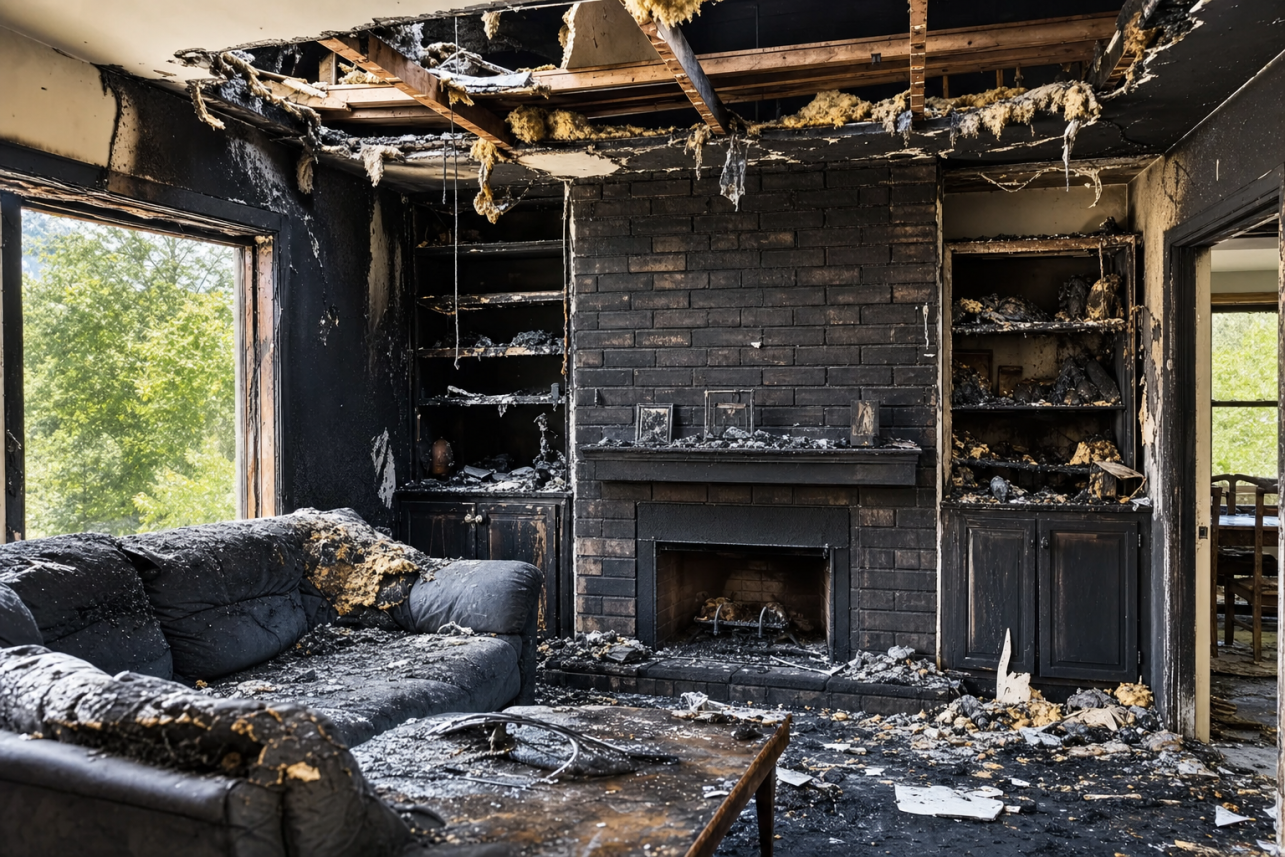
A fire damage insurance claim Hillsborough homeowners file after a house fire is rarely as simple as reporting the loss and waiting for a fair check. The flames are only part of the damage — smoke and soot travel through the whole house, and the water used to put the fire out often ruins floors, walls, and belongings the fire never touched. For The Public Adjusters, Inc. is a licensed and bonded public adjusting firm that works only for you, the policyholder, documenting the full loss and negotiating with your insurance company so nothing gets overlooked or undervalued.
What This Service Is
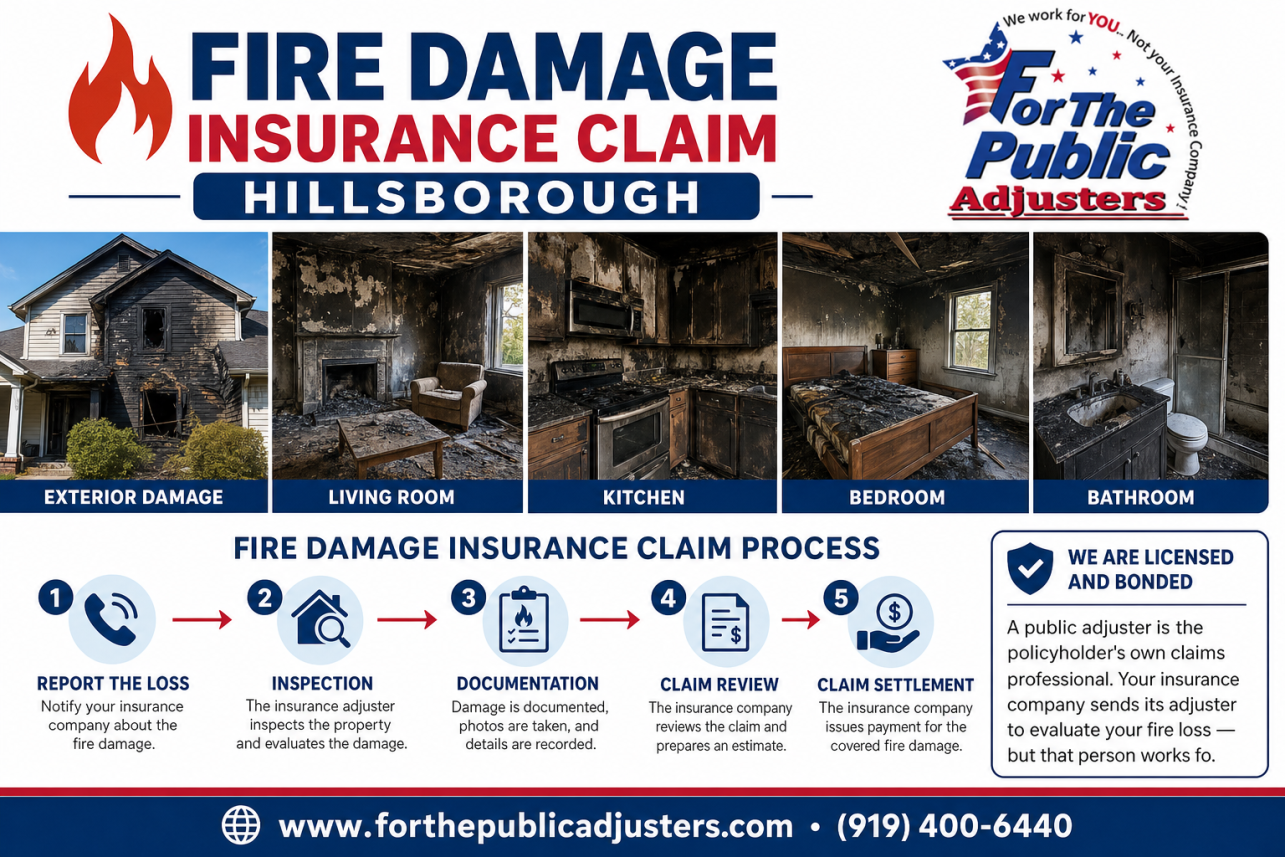
A public adjuster is the policyholder's own claims professional. Your insurance company sends its adjuster to evaluate your fire loss — but that person works for the insurer, not for you. We do the opposite: we work exclusively for you.
After a fire, we read your policy line by line so you know exactly what coverage you actually have — your dwelling limits, your personal property coverage, and the money available for temporary housing while your home is unlivable. Many families in this situation don't realize their policy pays for hotel stays, rental housing, and extra living costs while repairs happen, and they eat those expenses out of pocket.
Then we build the claim itself: a room-by-room inventory of damaged contents, a detailed repair estimate for the structure, and documentation of hidden problems like heat-damaged framing, soot inside HVAC ducts, and water soaked into subfloors from firefighting. In North Carolina, public adjusters must be licensed by the state, and the NCDOI Public Adjusters Guide confirms your right as a policyholder to hire your own representative. We handle the paperwork, the deadlines, the proof of loss, and the back-and-forth with the insurance company — and our fee comes from the settlement, not from money up front.
Common Problems
Why Is My Fire Damage Insurance Claim Hillsborough Offer So Much Lower Than My Contractor's Estimate?
This is the most common call we get. The insurer's first offer often misses entire categories of damage — smoke odor sealed into wall cavities, soot in ductwork, water damage under flooring — and then subtracts depreciation on top of that.
Depreciation matters more than most people realize. If your policy pays replacement cost, you're entitled to what it actually costs to replace items today — but insurers frequently pay the depreciated 'actual cash value' first and make you chase the rest. If they undercount the depreciation holdback or miscategorize your coverage, you can lose thousands without knowing it.
We rebuild the estimate from scratch, item by item, at real local repair and replacement prices. We also flag code-upgrade costs, because rebuilding an older home often means bringing wiring, plumbing, and framing up to current building code — a cost many policies cover but first offers routinely leave out.
The Insurance Company Keeps Delaying, Disputing, Or Denying — What Can I Do?
Slow responses, repeated requests for the same documents, and lowball revisions are tactics, not accidents. When a claim drags on for months, families burn through savings on temporary housing and out-of-pocket repairs while the insurer holds the money.
You are not powerless. Policyholders who push back with proper documentation and professional representation regularly win. Courts have sided with property owners, too — in Windridge of Naperville Condominium Association v. Philadelphia Indemnity Insurance Co., a federal appeals court ruled that the insurer had to replace all of a building's storm-damaged siding so it matched, rather than leaving the owner with a patchwork repair. The policyholder won.
We manage disputes before they become lawsuits: enforcing policy deadlines, submitting a complete sworn proof of loss, invoking appraisal when appropriate, and escalating bad-faith delay patterns. If the insurer denies or underpays, we build the record that forces a second look.
Should I Handle The Fire Claim Myself, Or Hire A Public Adjuster?
You can handle your own claim — the question is whether you should while you're also finding a place to live, replacing clothes, and keeping kids in school. Fire claims are the most complex residential claims there are, involving structure, contents, smoke, water, and living expenses all at once.
A good public adjuster does three things you can't easily do yourself: reads the policy the way the insurer does, values the loss the way estimators do, and negotiates the way claims professionals do. When you're vetting one, ask about their North Carolina license, whether they're bonded, and whether they'll walk your property before promising anything.
We're licensed and bonded, we handle everything from single-family homes to commercial buildings, and we never promise a specific dollar outcome — no honest adjuster can. What we promise is a complete, professionally documented claim and a negotiator on your side of the table.
Our Process
Free Policy Review And On-Site Loss Assessment
We start by walking your fire-damaged property in person and reading your actual policy. We identify every coverage that applies — dwelling, contents, additional living expenses, code upgrades — and explain your deductible and limits in plain English so you know what's realistic before anything is filed.
Full Documentation Of The Loss
We photograph and inventory damaged belongings room by room, bring in structural and environmental testing where needed to find hidden heat, smoke, and water damage, and prepare a detailed repair estimate at real local pricing. We then compile the sworn proof of loss and supporting documents the insurer requires, submitted correctly and on time.
Negotiation And Settlement
We present the claim to your insurance company, meet their adjuster on site, and challenge every undervaluation, missed item, and improper depreciation deduction. We push the claim through to settlement — including recoverable depreciation once repairs are done — and keep you informed at every step.
| Claim Stage | Filing Alone | With For The Public Adjusters |
|---|---|---|
| Damage documentation | Homeowner photos and the carrier adjuster's walkthrough, often missing hidden smoke and heat damage | Soot testing, HVAC inspection, structural review, and a room-by-room inventory before the carrier sets scope |
| Scope and estimate | You react to the insurer's estimate, usually written at minimum scope and regional pricing | Independent line-item estimate reflecting Orange County labor rates and like-kind-and-quality materials |
| Additional living expenses | Frequently unclaimed or cut off early because the homeowner doesn't know the policy limits | ALE tracked and claimed for the full displacement period, with extensions negotiated as rebuilds run long |
| Negotiation | One offer, take it or fight it yourself with no leverage | Documented disputes, supplemental claims, and direct negotiation with the carrier's adjuster and engineers |
| Typical result | Settlements that cover part of the visible damage | Settlements that reflect the true cost to restore the property — often multiples of the first offer |
Commonly Overlooked In The Public Adjusting Industry
- Soot contamination inside HVAC ductwork — Ducts pull smoke through the whole house during a fire, but no one opens the system during a standard carrier walkthrough.
- Corrosive residue on wiring, plumbing, and appliances — Acidic soot slowly eats metal for months after the fire, so the damage isn't visible when the claim gets settled.
- Heat-compromised roof framing above the burn area — Rafters and trusses can lose structural integrity from heat alone without visible charring, and estimates rarely include an attic inspection.
- Like-kind-and-quality matching for plaster and historic materials — Older Hillsborough homes have plaster, true hardwoods, and period trim that carriers try to replace with cheap modern equivalents.
- Additional living expense coverage for the full displacement period — Homeowners often stop claiming ALE when the carrier stops offering it, not when the policy limit or rebuild timeline actually ends.
- Contents inventory at replacement cost instead of depreciated value — Insurers default to depreciated payouts, and most policyholders never learn they can recover the depreciation after replacing items.
- Water and chemical damage from firefighting efforts — Everyone focuses on the burn, while thousands of gallons of water and extinguishing agents quietly destroy floors, insulation, and drywall two rooms away.
- Ordinance and law coverage for code upgrades during rebuild — Orange County code requirements often force upgrades beyond original construction, and this separate coverage goes unclaimed unless someone specifically invokes it.
Case Studies
Case Study #1
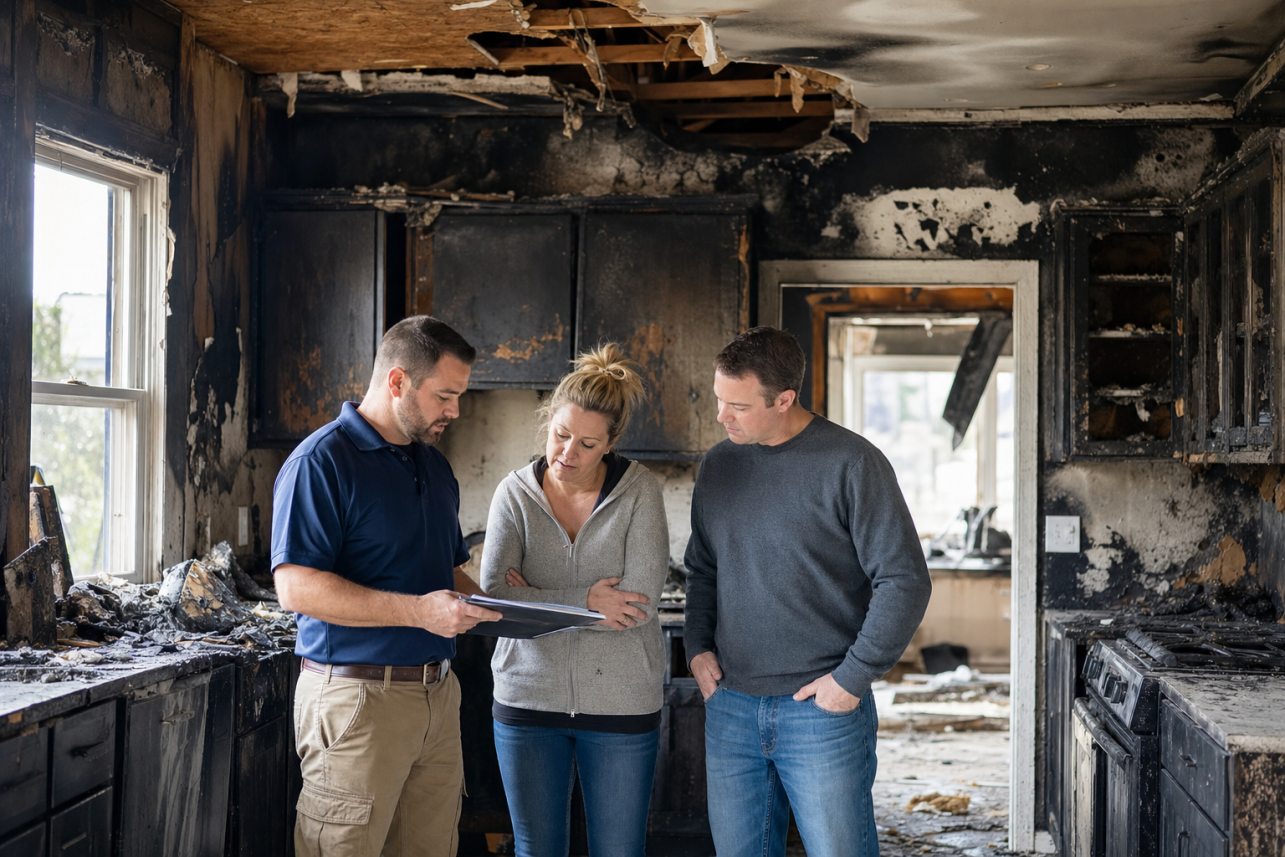
Situation: A family on Churton Street in Hillsborough had a kitchen fire that spread into the attic before the fire department contained it. The home was a 1940s brick bungalow with plaster walls and original hardwood floors.
Problem: The carrier's initial estimate covered drywall repair and repainting in the kitchen only, totaling just under $28,000. It ignored smoke migration through the HVAC ductwork, soot embedded in the plaster, and heat damage to roof framing above the kitchen.
Investigation: Our team brought in a thermal inspection of the attic structure, pulled HVAC registers to document soot inside the duct runs, and took chloride and pH surface tests on the plaster in rooms the carrier called 'unaffected.' We also documented that the plaster and hardwoods were historic materials that could not be matched with modern drywall and prefinished flooring.
Findings: Soot residue was measurable in every room of the house, charring extended into two roof rafters, and the plaster in three rooms had absorbed acidic smoke residue that would bleed through paint within months. The original estimate also used regional pricing that didn't reflect Orange County restoration labor rates.
Solution: We rewrote the scope line by line, added duct cleaning and encapsulation, structural repairs to the rafters, full plaster remediation with a like-kind-and-quality argument, and content cleaning for smoke-affected furnishings. We then negotiated directly with the carrier's adjuster and their re-inspection engineer.
Outcome: The claim settled at $167,400 — nearly six times the initial offer — plus fourteen weeks of additional living expenses the family hadn't known they were entitled to.
Lesson: The visible burn area is rarely the true scope of a house fire. Smoke and heat travel, and older Hillsborough homes with plaster and original materials demand a like-kind-and-quality analysis the first estimate almost never includes.
Case Study #2
Situation: The owner of a small retail shop near the Riverwalk in downtown Hillsborough suffered an electrical fire that started in a back storage room overnight. Inventory, fixtures, and part of the sales floor were damaged.
Problem: The insurer questioned the origin of the fire and delayed the claim for weeks pending their own investigation. Meanwhile, the business had no income, and the carrier's business interruption calculation used the shop's slowest quarter as the baseline.
Investigation: We assembled the owner's point-of-sale records, seasonal sales history, and supplier invoices to build an accurate revenue model. We also coordinated with the fire marshal's report and an independent electrical engineer to establish the origin was a failed circuit — not negligence — and documented every damaged inventory item with photos and cost records.
Findings: The carrier's business interruption figure understated monthly revenue by roughly 40% because it ignored the shop's peak season leading into holiday tourism traffic downtown. The inventory valuation also used depreciated values on merchandise that should have been paid at replacement cost under the policy.
Solution: We submitted a corrected business interruption model based on trailing twelve-month sales trends, a full inventory schedule at correct valuation, and the engineering report resolving the origin dispute. We pushed for an advance payment so the owner could begin restocking before final settlement.
Outcome: The insurer released a $50,000 advance within three weeks, and the final settlement came to $312,000 covering structure, contents, and lost income — allowing the shop to reopen before the spring festival season.
Lesson: For commercial fire losses, how business income is calculated matters as much as the physical damage. A carrier's baseline period selection can quietly cut a settlement nearly in half if no one challenges it.
| Decision Point | Best Move | Why It Matters to Your Claim |
|---|---|---|
| First 48 hours after the fire | Secure the property, take wide and close-up photos of everything, and touch nothing structural | Carriers can deny portions of a claim if damage worsens from an unsecured property, and early photos are your strongest evidence |
| Insurer asks for a recorded statement | Politely delay until you understand your policy and have representation | Casual statements about the fire's cause or your maintenance history are frequently used to narrow or dispute coverage |
| Carrier's first estimate arrives | Do not sign or accept — have it independently reviewed | First estimates on fire losses routinely cover only visible burn damage and omit smoke, odor, HVAC, and structural items |
| Contractor offers to 'handle the insurance' | Keep repair contracting and claim negotiation separate | Contractors are limited in negotiating your claim in North Carolina, and their interest is the repair contract, not your full settlement |
| Displaced from your home | Track every hotel, meal, and mileage expense from day one | Additional living expenses are recoverable but only if documented, and unclaimed ALE is money left on the table |
| Smoke smell lingers after cleaning | Request professional odor and residue testing before closing the claim | Acidic soot corrodes wiring, plumbing, and finishes for months — settling early forfeits coverage for damage that surfaces later |
| Offer feels low but you're exhausted | Bring in a licensed public adjuster before accepting anything | Once you sign a release, reopening a fire claim is extremely difficult, and independent representation typically changes the outcome substantially |
Reviews
After our garage fire, the insurance company offered $19,000 and called it done. For The Public Adjusters found smoke damage in rooms we didn't even think to check and proved the roof trusses over the garage were compromised. Our final settlement was over $90,000. I genuinely don't know what we would have accepted without them.
Denise M., Hillsborough NC
The fire in our rental property off Highway 86 turned into a nightmare when the carrier started disputing what was pre-existing versus fire-related. This team documented everything — soot testing, contractor estimates, the works — and handled every call with the adjuster. Settled for almost triple the first offer and I never had to argue with anyone myself.
Robert T., Orange County
We were living in a hotel after our house fire and had no idea our policy covered additional living expenses beyond two weeks. They got our ALE extended for the full rebuild, caught missed HVAC and electrical items in the scope, and kept us informed the whole way. Only wish we'd called them the day of the fire instead of a month later.
Karen & Doug W., Hillsborough
Frequently Asked Questions
How Long Does A Fire Damage Insurance Claim Hillsborough Homeowners File Typically Take To Settle?
Most fire claims in Hillsborough resolve within 60 to 120 days, but the timeline depends heavily on the severity of the loss and how thoroughly the claim is documented from day one. A kitchen fire with contained smoke damage may settle in six to eight weeks, while a structural loss on an older home near downtown or along the Eno River corridor can take four to six months.
North Carolina law requires insurers to acknowledge your claim within 30 days and act on it in a reasonable timeframe, but 'reasonable' leaves room for delay. Carriers often stall by requesting repeated documentation, disputing the scope of smoke and soot damage, or lowballing structural repair estimates that don't reflect Orange County labor and material costs.
When For The Public Adjusters, Inc. handles the process, we front-load the claim with a complete damage inventory, moisture and soot testing results, and a line-item repair estimate before the insurer's adjuster ever walks the property. That preparation removes the back-and-forth that drags claims out.
Older Hillsborough homes, including those in the historic district, add another wrinkle: repairs often require period-appropriate materials and may trigger local review, which insurers rarely account for in their first offer. We build those costs into the claim from the start rather than fighting for them later. The single biggest factor in settlement speed is presenting the insurer with evidence they can't easily dispute.
What Should I Do In The First 48 Hours After A House Fire In Hillsborough?
First, don't re-enter the home until the Hillsborough Fire Department or Orange County fire marshal clears it. Structural damage and toxic soot residue are real hazards even in fires that look minor from outside.
Once it's safe, notify your insurance carrier to open the claim, but keep the initial report brief and factual. Don't guess at causes or estimate damages verbally — early statements get quoted back to you later. Then photograph and video everything before anything is moved, cleaned, or thrown away, including areas that only smell of smoke. Soot travels through HVAC systems and settles rooms away from the flames.
Secure the property with board-up and tarping. Your policy requires you to prevent further damage, and your insurer must reimburse reasonable protective costs — save every receipt. If the home is unlivable, your policy's additional living expense coverage should pay for a hotel or rental. Keep receipts for lodging, meals above your normal costs, and even pet boarding.
Be cautious about signing anything in those first two days. Restoration contractors and carrier representatives often show up quickly with paperwork, and some documents assign your benefits or lock you into a repair scope before the full damage is known.
Calling a public adjuster early — ideally before the carrier's adjuster inspects — lets us document the loss properly and manage communication from the start. For The Public Adjusters, Inc. responds to fire losses throughout Orange County and can typically be on-site in Hillsborough within a day.
Why Would I Hire A Public Adjuster Instead Of Relying On My Insurance Company's Adjuster?
The adjuster your insurance company sends works for the insurance company. That's not an accusation of bad faith — it's simply how the system is structured. Their job is to evaluate the claim within the carrier's guidelines, and those guidelines consistently favor lower payouts, especially on complex losses like fire.
A public adjuster works exclusively for you, the policyholder. We're licensed by the North Carolina Department of Insurance and our fee is a percentage of the settlement we recover, so our interests are aligned with yours.
Fire losses are where this matters most. Carrier adjusters routinely miss or minimize smoke penetration in wall cavities and insulation, corrosive soot damage to wiring and electronics, heat damage to roofing and framing that isn't charred, and the true cost of contents that must be replaced rather than cleaned. On Hillsborough properties, we also frequently find that carrier estimates use pricing that doesn't match what contractors in Orange County actually charge, or ignore code-upgrade requirements when older homes are repaired.
Independent industry studies have found that policyholders represented by public adjusters recover substantially more than those who go it alone — often several times the initial offer on large fire losses.
Beyond the money, there's the workload. A fire claim involves detailed contents inventories, proof-of-loss deadlines, examinations under oath in some cases, and constant negotiation. For The Public Adjusters, Inc. takes all of that off your plate while you focus on getting your family back to normal.
My Insurer Already Made An Offer On My Fire Damage Insurance Claim Hillsborough — Is It Too Late To Get Help?
No, it's not too late. An offer is exactly that — an offer, not a final judgment. Until you've signed a full release or accepted a settlement that closes the claim, you have the right to dispute the amount, submit additional documentation, and negotiate for what your policy actually owes.
Even if you've already cashed a partial payment, most North Carolina fire policies allow supplemental claims when additional damage is discovered or when the original estimate proves inadequate. This happens constantly with fire losses: demolition reveals charred framing behind drywall, smoke odor returns after initial cleaning, or contractors quote repair costs far above what the carrier allowed.
When homeowners bring us an existing offer, For The Public Adjusters, Inc. starts with a free review of the carrier's estimate against the actual damage and your policy language. On fire damage insurance claim Hillsborough files we've reviewed, common gaps include missing line items for HVAC duct cleaning, electrical inspection after heat exposure, matching requirements for siding and roofing, and ordinance-and-law coverage for bringing older homes up to current code.
One important caution: watch your deadlines. North Carolina policies typically require suit to be filed within a set period after the loss — often one to three years depending on your policy — so don't let negotiations drift indefinitely.
If we review your offer and it's genuinely fair, we'll tell you so. If it's short, we'll show you exactly where, reopen negotiations with documented evidence, and pursue the difference. There's no cost to find out where you stand.
How Much Does It Cost To Hire For The Public Adjusters, Inc. For A Fire Damage Insurance Claim Hillsborough Property Owners Are Filing?
We work on a contingency fee basis, which means you pay nothing upfront and nothing out of pocket. Our fee is a small, agreed-upon percentage of the settlement we recover for you, and it is only collected when your insurance company actually pays.
For most Hillsborough homeowners, that structure more than pays for itself. Fire losses are among the most complex claims in the industry, involving structural repairs, smoke and soot remediation, personal property inventories, and additional living expenses. Insurers routinely underestimate one or more of these categories. When we build the claim properly, the increase in the settlement typically far exceeds our fee.
Before you sign anything, we review your policy and the facts of your loss at no charge. If we don't believe we can add real value to your claim, we'll tell you honestly. There's no obligation attached to that initial consultation.
North Carolina law also regulates public adjuster fees and requires us to be licensed by the state Department of Insurance, so the terms are transparent and put in writing before we ever begin work. You'll know exactly what the percentage is, what services are included, and what happens if the claim resolves quickly.
Compare that to hiring an attorney, where hourly billing can pile up regardless of outcome, and the contingency model becomes even more attractive for property claims. Our interests are aligned with yours: the more we recover for your fire loss, the better the result for both of us.
What Does Smoke And Soot Damage Coverage Typically Include After A House Fire In Orange County?
Smoke and soot damage is often the most underpaid part of a fire loss, because much of it is invisible to a quick walkthrough. A proper claim should account for far more than what looks charred.
Soot is acidic and corrosive. It penetrates HVAC ductwork, insulation, wall cavities, electronics, and porous materials like drywall, carpet, and upholstered furniture. In older Hillsborough homes — including the historic properties near downtown and along the Eno River corridor — plaster walls, hardwood floors, and original millwork absorb smoke odor deeply and often require specialized restoration or replacement rather than simple cleaning.
Your homeowner's policy generally covers professional smoke remediation, duct cleaning, sealing and repainting of affected surfaces, cleaning or replacement of contaminated contents, and odor treatment such as thermal fogging or ozone treatment. Textiles, mattresses, and children's items frequently qualify for replacement rather than cleaning because contamination can't be fully removed.
The problem is that insurance company estimates often stop at visible damage. We document the full migration path of smoke using moisture readings, particulate testing where appropriate, and room-by-room photo inventories. That evidence is what turns a lowball cleaning allowance into a settlement that actually restores your home.
If your insurer has told you a room "just needs a wipe-down and a coat of paint," get a second opinion before accepting. Once you sign off and cash the check, reopening that portion of the claim becomes much harder.
Will My Insurance Pay For Temporary Housing While My Hillsborough Home Is Repaired After A Fire?
Yes, in most cases. Nearly every homeowner's policy includes Additional Living Expenses coverage, sometimes called Loss of Use, and it applies whenever a covered fire makes your home uninhabitable.
ALE covers the reasonable increase in your cost of living while displaced. That includes rent for a comparable home or extended-stay lodging, the difference in food costs if you can't cook, pet boarding, laundry, storage for salvaged belongings, and even extra mileage if your temporary housing lengthens your commute to Durham, Chapel Hill, or elsewhere in the Triangle.
Two things trip up Hillsborough families. First, insurers sometimes push displaced homeowners into housing that isn't truly comparable — a small apartment when you own a four-bedroom home, or lodging far from your children's schools in the Orange County district. You're entitled to accommodations that reflect your normal standard of living, and we push back when carriers try to cut corners.
Second, ALE has both a dollar limit and a time limit, often twelve to twenty-four months. Rebuilds after significant fire damage in this area frequently run longer than the insurer's initial estimate, especially with permitting through the Town of Hillsborough or Orange County and contractor availability being what it is. We track your ALE spending, document every receipt, and fight for extensions when repair delays aren't your fault.
Keep every receipt from day one, even for small purchases. Those records are the foundation of a full ALE recovery.
What Documentation Do I Need To Support A Fire Damage Insurance Claim Hillsborough Insurers Won't Dispute?
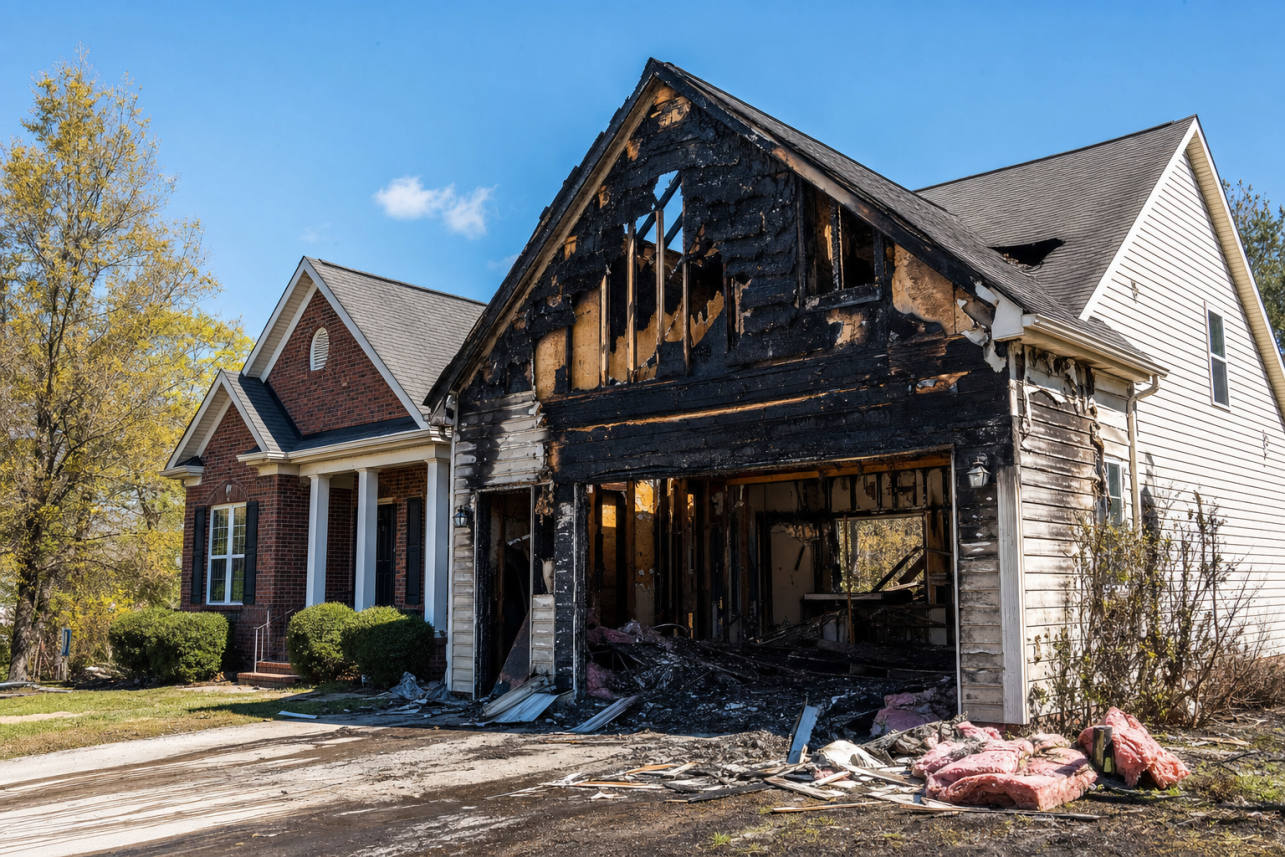
The strength of a fire damage insurance claim Hillsborough carriers take seriously comes down to documentation, and most of it needs to be gathered before cleanup begins.
Start with the official record: the fire department incident report from Hillsborough Fire Department or Orange Rural Fire Department, plus any cause-and-origin findings. Then photograph and video everything, room by room, before anything is moved or discarded. Wide shots establish context; close-ups capture the extent of char, soot, and water damage from firefighting efforts.
Next comes the contents inventory, which is where most homeowners leave money on the table. Every damaged item should be listed with a description, approximate purchase date, and replacement cost. Bank statements, credit card records, old photos, and even Amazon order histories help reconstruct what you owned. We routinely build inventories running hundreds of line items — insurers rarely do that work for you.
You'll also need repair documentation: independent contractor estimates, engineering reports if structural members were compromised, and remediation scopes for smoke and water damage. Estimates written to actual local labor and material costs in Orange County often differ significantly from an insurer's software-generated numbers.
Finally, keep a claim diary. Log every call with your carrier, who you spoke with, and what was promised. Save all receipts for temporary housing and emergency expenses.
If that sounds overwhelming while you're also dealing with displacement, that's exactly the work For The Public Adjusters, Inc. takes off your plate — building the file so the carrier has little room to dispute it.
Can I Dispute A Denied Or Underpaid Fire Damage Insurance Claim Hillsborough Insurers Have Already Closed?
Yes. A denial or a closed claim file is not the final word. In North Carolina, you generally have three years from the date of loss to pursue a property claim, and insurers are required to reopen a file when new documentation supports additional damage or value.
Most underpayments we see in Hillsborough fires come from three sources: incomplete scoping (hidden smoke damage in attics, HVAC ducts, and wall cavities), pricing that lags behind actual Orange County contractor rates, and depreciation applied too aggressively to contents and finishes.
Our team re-inspects the property, builds an independent line-item estimate, and presents the supplement or appeal directly to the carrier with photographic and testing evidence. If the insurer denied the claim outright — for example, citing a vacancy clause or alleged misrepresentation — we review the policy language and the denial letter to determine whether the exclusion was applied correctly.
Many denials rest on interpretations that don't hold up once the facts are documented properly. Even after you've signed a proof of loss or cashed a check marked as partial payment, you typically retain the right to claim additional amounts. The one thing that closes the door permanently is a signed full release, which is rare in standard property claims. If you're unsure what you've signed, bring us the paperwork before assuming you're out of options.
My Hillsborough Home Is Older — Will Code Upgrades Be Covered When We Rebuild After A Fire?
This is one of the most important and most overlooked questions for Hillsborough homeowners, especially in and around the historic district. Many homes here were built decades before current North Carolina building codes, and when fire damage triggers repairs, local permitting will require the rebuilt portions to meet today's standards — updated wiring, modern egress requirements, current insulation values, and sometimes structural changes.
Standard homeowner policies do not automatically pay for these upgrades. That coverage comes from an endorsement usually called "Ordinance or Law" coverage, and it's often capped at 10% of your dwelling limit unless you purchased more.
On an older home, code-required work can easily add tens of thousands of dollars to a rebuild, so knowing your ordinance-or-law limit early shapes the entire claim strategy. If your home sits within Hillsborough's Historic District Overlay, there's another layer: the Historic District Commission may require specific materials or architectural details, which can cost more than standard replacements.
We document exactly which repair costs are driven by code and historic requirements versus the fire itself, because carriers pay them from different coverage buckets with different limits. Separating those costs correctly — and pushing back when an adjuster lumps code work into the capped category unnecessarily — often recovers money that would otherwise come out of your pocket.
How Are My Personal Belongings Valued In A Fire Damage Insurance Claim Hillsborough Carriers Are Handling?
In a fire damage insurance claim Hillsborough policyholders file, contents are typically valued one of two ways: actual cash value (ACV) or replacement cost value (RCV). ACV pays what an item was worth used — its replacement price minus depreciation. RCV pays what it costs to buy the item new today, though most policies pay the depreciated amount first and release the difference after you actually replace the item.
Check your declarations page to see which you have; the gap between the two can be enormous after a total-loss fire. The bigger problem is the inventory itself. Insurers expect a room-by-room list of every damaged item with age, condition, and replacement cost — hundreds or thousands of line items for a typical Orange County household. Homeowners doing this alone routinely leave 30-40% of their contents off the list simply because memory fails under stress.
We build the inventory systematically, working from photographs, floor plans, receipts, bank statements, and structured interviews that jog recollection room by room. We also challenge unrealistic depreciation — a five-year-old solid wood dining set does not lose 80% of its value the way carriers' software sometimes claims.
Smoke-damaged items that can't be cleaned to pre-loss condition should be claimed as total losses, not cleaning line items. Getting the contents portion right often changes the settlement more than any other single category.
Should I Start Repairs Or Hire A Contractor Before My Fire Claim Is Settled?
You should complete emergency mitigation right away — board-ups, roof tarping, water extraction from firefighting efforts, and securing the property — because your policy requires you to prevent further damage, and those costs are reimbursable. Keep every receipt.
But permanent repairs are a different matter. Starting reconstruction before the scope of loss is fully documented and agreed upon is one of the costliest mistakes we see in Orange County fire losses. Once walls are opened, cleaned, or rebuilt, the evidence of hidden smoke penetration, charred framing, and heat-damaged wiring is gone, and the carrier has little incentive to pay for damage no one can inspect.
We recommend this sequence: mitigate, document everything thoroughly, establish the full repair scope with the insurer in writing, and only then begin permanent work. Be cautious with contractors who appear at the fire scene offering to "handle the insurance" — in North Carolina, contractors cannot legally negotiate your claim on your behalf, and signing an assignment or a broad work authorization early can limit your control over the settlement.
As licensed public adjusters, we handle the negotiation side while you choose your own contractor on your own terms. Around Hillsborough, we also encourage clients to get local, itemized bids rather than accepting a carrier's software-generated estimate, because regional labor and material costs frequently run higher than the insurer's pricing database assumes. Patience in the first few weeks protects the entire recovery.
The Fire Started Because Of My Own Mistake — Will A Fire Damage Insurance Claim Hillsborough Insurers Review Still Be Paid?
In almost every case, yes. Standard homeowners policies in North Carolina cover accidental fires, and that includes fires caused by ordinary human error — a pan left on the stove, a candle too close to curtains, a space heater that tipped over. Negligence is not the same as intent, and only intentional acts like arson by the policyholder void coverage.
That said, carriers scrutinize origin and cause closely, and how the loss is documented and described matters. We regularly see Hillsborough and Orange County homeowners unintentionally hurt their own claims by speculating about causes or accepting blame in recorded conversations before the fire marshal or an origin-and-cause investigator has even finished their work.
Our advice: report the fire promptly, stick to the facts you actually know, and let the official investigation establish the cause. If the carrier raises questions about how the fire started, that is exactly the moment to have a licensed public adjuster managing communication on your behalf.
One more nuance worth knowing — even if the fire traces back to a faulty appliance or wiring, your carrier may pursue subrogation against a manufacturer or contractor after paying you. That process happens behind the scenes and does not reduce what you're owed. A fire damage insurance claim Hillsborough carriers investigate for cause should still resolve in your favor when the loss was accidental, and we make sure the paperwork and statements support that outcome from day one.
What's The Difference Between Actual Cash Value And Replacement Cost On A Hillsborough Fire Claim?
This distinction often decides whether you can actually rebuild. Replacement cost value (RCV) pays what it costs today to repair or replace your home and belongings with materials of like kind and quality. Actual cash value (ACV) is that same figure minus depreciation for age and wear — and the gap can be enormous on older Hillsborough homes, especially the historic properties near downtown and along the Eno River corridor.
Here's what trips people up: even with an RCV policy, most carriers initially pay only the ACV amount. The withheld depreciation — called recoverable depreciation — is released after you actually complete repairs or replace items and submit proof. Miss the policy's deadline for doing so, and that money can be forfeited.
We review every fire policy we handle in Orange County for these provisions before negotiations begin. We verify whether your dwelling, other structures, and contents are each insured at replacement cost, calculate what depreciation is being withheld, and build a timeline so no recoverable dollars are left behind.
We also challenge depreciation itself when carriers apply it too aggressively. There is no universal depreciation table, and insurers frequently depreciate items — like well-maintained hardwood flooring or masonry — far beyond what's reasonable. Pushing back on those percentages, line by line, routinely adds meaningful money to a settlement. If you're unsure which valuation method your policy uses, that's one of the first things worth confirming before you accept any payment.
My Insurance Company Wants A Recorded Statement And An Examination Under Oath After My House Fire — Should I Agree?
Cooperating with your carrier is a policy requirement, so refusing outright isn't wise. But there's a big difference between cooperating and walking into these interviews unprepared. Recorded statements and examinations under oath (EUOs) are formal fact-gathering tools, and on fire losses in particular, carriers use them to probe cause, occupancy, the accuracy of your inventory, and anything that might limit or deny payment.
An EUO is conducted under oath, often by the insurer's attorney, and everything you say becomes part of the permanent claim record. Guessing at dates, estimating values off the top of your head, or misremembering details can be characterized later as a material misrepresentation — grounds carriers cite to deny claims entirely.
Our approach for Hillsborough clients is straightforward. We prepare you thoroughly before any statement, make sure your documentation — inventory, receipts, photos, the fire report — is organized and consistent, and attend the examination with you where permitted. You answer truthfully and completely, but you don't speculate, and you don't volunteer conclusions the investigation hasn't established.
It's also worth noting that a request for an EUO often signals the carrier has concerns about the claim, whether justified or not. That's precisely when professional representation earns its keep on a fire damage insurance claim Hillsborough policyholders are counting on. If you've received a letter scheduling an EUO or a call requesting a recorded statement, reach out before you respond — timing matters, and reasonable scheduling accommodations are almost always available.

What Happens If My Home Is Declared A Total Loss After A Fire In Orange County?
A total loss changes the entire structure of your claim. Instead of negotiating repair scopes room by room, the central questions become your dwelling's full policy limit, whether that limit actually reflects today's rebuild costs, and what happens with the land, debris removal, and your mortgage.
North Carolina is not a strict valued-policy state for homeowners insurance, so a total loss doesn't automatically trigger payment of the face amount — the carrier will still evaluate value, and disputes are common. We build a complete replacement-cost estimate for the home as it stood, which matters enormously for older Hillsborough properties where plaster walls, true-dimension framing, and period millwork cost far more to reproduce than a carrier's software assumes.
Several coverages beyond the dwelling limit come into play: debris removal (often an additional 5% above the limit), ordinance and law coverage for current Orange County building code requirements, other structures like detached garages or workshops, and extended replacement cost endorsements that can add 25–50% above your stated limit if your policy includes them. Many homeowners never realize these exist.
Your mortgage lender will also be named on settlement checks and will control disbursement of dwelling funds, typically releasing them in stages as rebuilding progresses. We coordinate that process so funds flow when your builder needs them.
A total loss is the largest financial event most families ever face. Getting every available coverage identified and maximized — before signing anything — is the difference between rebuilding fully and rebuilding smaller.
Local Relevance
Hillsborough's charm is its history — and its history is exactly what makes fire claims here harder than average. Much of the town's housing stock predates modern construction, with plaster walls, older framing, and in some cases original heart-pine floors and trim. When fire and smoke hit materials like these, a standard insurance estimate built on modern tract-home pricing badly undervalues the real cost of repair.
The National Fire Protection Association identifies cooking and heating equipment among the leading causes of home fires nationwide, and Orange County homes are no exception — space heaters, older wiring, and chimneys in period homes all raise the stakes during cold Piedmont winters. Add North Carolina's humidity, which accelerates mold growth in firefighting water left inside walls, and a delayed or underpaid claim gets more expensive by the week.
We also see the ripple effects fire brings in this area: smoke damage spreading to neighboring structures, water claims from suppression efforts, and trees weakened by fire coming down on rooflines later. Whether it's a historic home near downtown or a newer build on the edge of town, we document the loss the way it actually needs to be repaired — not the cheapest way it can be patched.
Many Hillsborough homes were built in eras when plaster, true-dimension lumber, and period millwork were standard, and those materials absorb smoke odor and hide heat damage in ways drywall doesn't — so fire claims here often need deeper inspection and higher, historically accurate repair pricing than a first insurance estimate reflects.
Had A Fire? Talk To Your Own Adjuster Before You Accept Anything
For The Public Adjusters, Inc. is licensed and bonded, and we work only for policyholders — never for insurance companies. Before you sign a release or accept a first offer, let us review your policy and walk your property at no obligation. We'll tell you honestly whether your claim is being valued fairly and what we can do about it if it isn't.
Call us: (919) 400-6440
Helpful Resources
- NCDOI Public Adjusters Guide
- National Fire Protection Association (NFPA)
- North Carolina Department of Insurance — State regulator overseeing insurers and licensing public adjusters in NC
- U.S. Fire Administration home fire resources — Federal agency's fire prevention and post-fire recovery guidance
Serving Hillsborough · Orange
Last updated: August 15, 2026