
If you need help with a Vandalism Homeowners Claim Burlington NC policyholders can hire For The Public Adjusters, Inc. to document the damage, prepare the claim, and negotiate directly with the insurance company on their behalf. Most standard homeowners policies cover vandalism and malicious mischief, but carriers frequently dispute what was damaged, how it happened, and what repairs should cost. As licensed and bonded public adjusters, we work only for you — never for the insurance company — and we handle the entire claim from the police report through the final settlement check.
Key takeaways
- Filing a Vandalism Homeowners Claim Burlington NC with For The Public Adjusters, Inc. means a licensed public adjuster works for you, not the insurance company.
- Homeowners in Burlington and throughout Alamance County should document all vandalism damage with photos and a police report before starting repairs.
- A professionally managed Vandalism Homeowners Claim Burlington NC often results in a significantly higher settlement than a self-filed claim.
- For The Public Adjusters, Inc. handles the entire claims process, from damage assessment to negotiating directly with your insurance carrier.
- Insurance policies typically cover vandalism damage, but strict deadlines apply, so Burlington NC homeowners should act quickly after discovering the damage.
What This Service Is
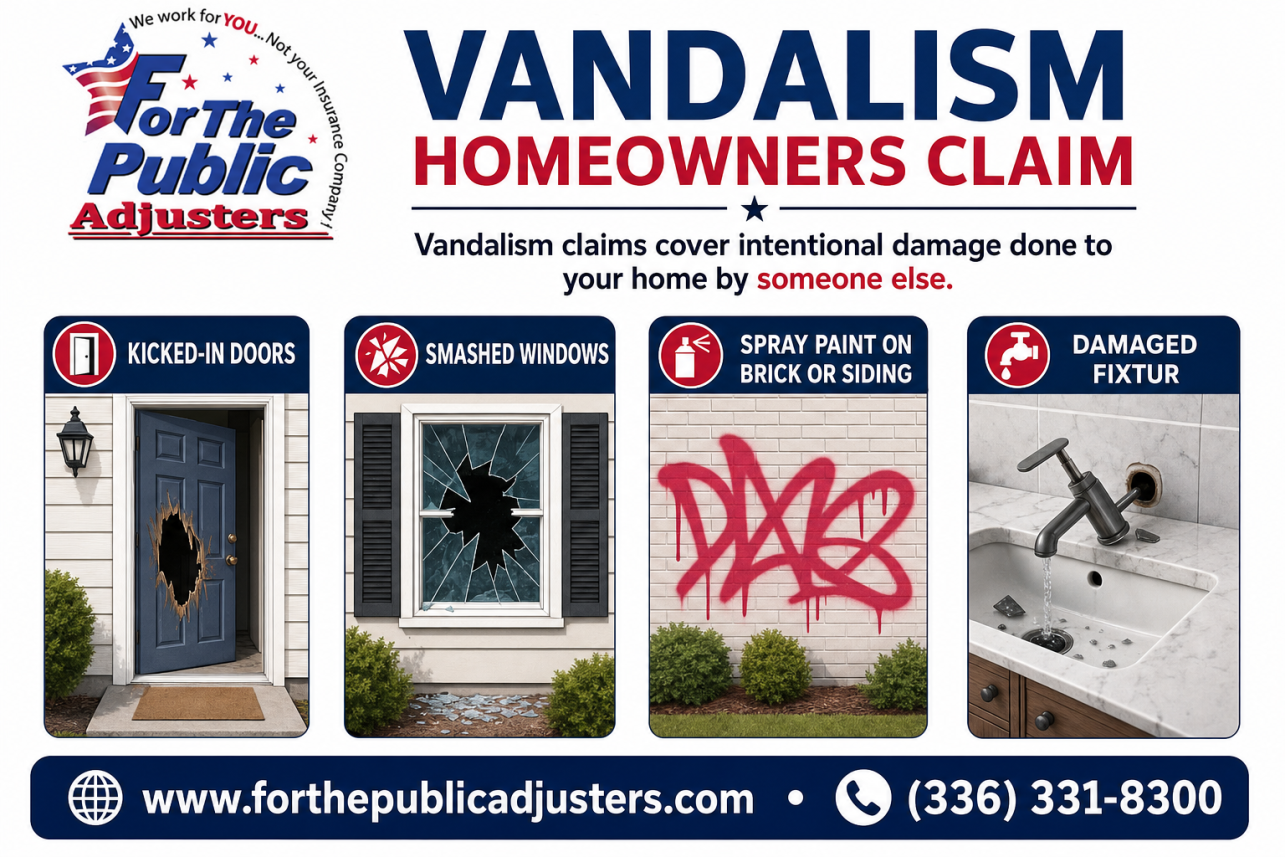
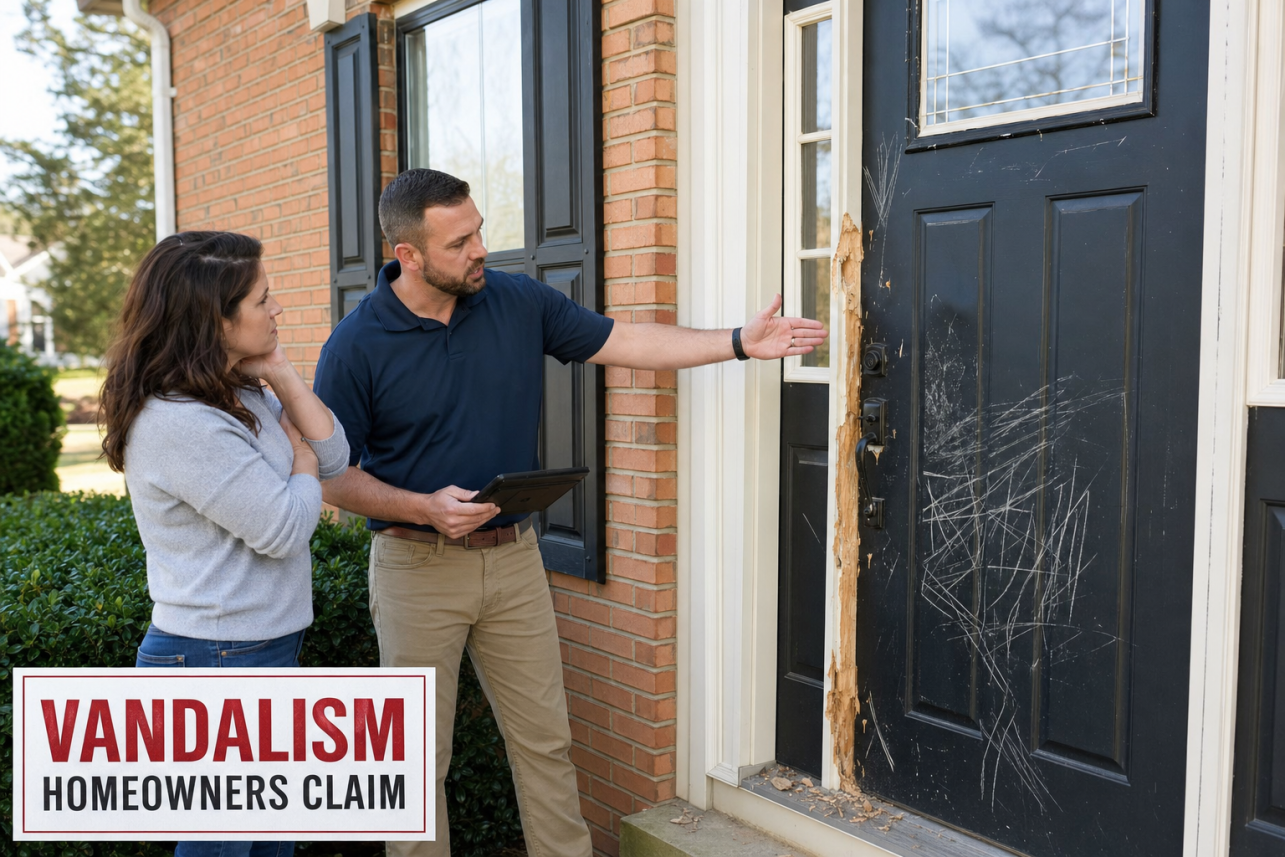
Vandalism claims cover intentional damage done to your home by someone else: kicked-in doors, smashed windows, spray paint on brick or siding, damaged fixtures, slashed screens, wrecked interiors during a break-in, and destroyed personal belongings. Your homeowners policy almost certainly covers it — but coverage on paper and a fair payment in hand are two very different things.
Our job as your public adjuster is to build the claim the way the insurance company should have. That means a room-by-room inventory of damaged property, photographs and written documentation of every broken item, a detailed repair estimate written to local Burlington contractor pricing, and a properly completed proof of loss statement so the carrier cannot delay you on a technicality.
We also handle the arguments that trip up homeowners on their own: whether damage is vandalism or ‘wear and tear,’ whether you’re owed replacement cost or only a depreciated actual cash value payment, and whether the carrier’s estimate actually covers what a contractor will charge to fix the home. The North Carolina Department of Insurance licenses public adjusters for exactly this role, and its NCDOI Public Adjusters Guide explains that we represent the policyholder’s interest in the claim — not the insurer’s.
Vandalism often overlaps with other losses we handle. A break-in that ends with a fire set inside the home may become an arson homeowners claim in Clayton-type case, and vandals who rip out plumbing or leave water running can create serious water damage. We adjust the whole loss, not just the obvious pieces.
Common Problems
Why Was My Vandalism Homeowners Claim Burlington NC Paid So Much Less Than The Repairs Cost?
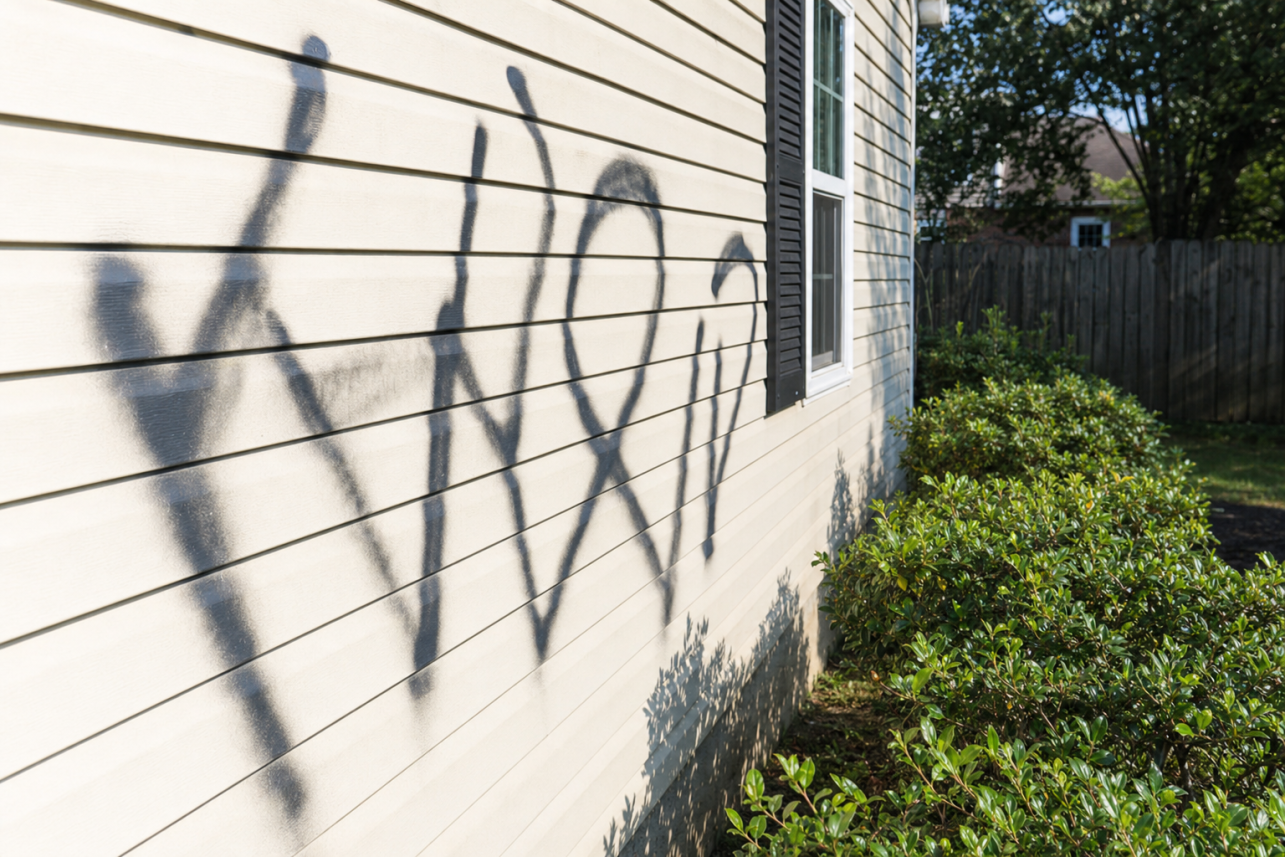
Underpayment is the most common problem we see. The carrier’s estimate might allow a few hundred dollars to ‘clean’ graffiti that actually requires repainting or repointing brick, or price a broken custom door at the cost of a builder-grade replacement that doesn’t match your home.
Then depreciation gets deducted. If your policy pays actual cash value first, the insurer subtracts for age and condition, and many homeowners never learn they can recover that held-back money after repairs are complete. Add your deductible on top, and the first check often won’t come close to covering the real work.
We rebuild the numbers line by line — matching materials, real Alamance County labor rates, contents at their true replacement cost — and we push back on every improper deduction. We can never guarantee a specific outcome, but we make sure the claim is valued correctly before anyone settles.
The Insurance Company Denied Or Delayed My Vandalism Claim — What Can I Do?
Carriers deny vandalism claims for predictable reasons: no police report was filed, the damage was blamed on wear and tear or poor maintenance, the home was allegedly vacant, or the proof of loss was late or incomplete. Others simply stall — weeks pass between adjuster visits while you live with a boarded-up door.
Most of these denials can be challenged with better documentation. A police report filed promptly, dated photos, and a professional damage inspection often turn a ‘wear and tear’ denial into a paid claim. Courts take unjustified delay seriously too — in Bi-Economy Market, Inc. v. Harleysville Insurance Co. of New York, the insured building owner won the right to recover consequential damages after the insurer dragged out payment on a covered property loss.
If your claim was denied, don’t assume it’s final. We review the denial letter against your actual policy language, prepare the appeal, and when a dispute needs to escalate, we work alongside insurance dispute lawyers. You have real rights as a policyholder, and the National Association of Insurance Commissioners publishes consumer guidance confirming insurers must handle claims fairly and in good faith.
Should I Handle The Claim Myself Or Hire A Public Adjuster In Burlington?
You can file on your own, and for a single broken window it may make sense. But when vandals damage multiple rooms, destroy contents, or the carrier starts disputing the cause, the claim becomes a negotiation — and the insurer’s adjuster negotiates claims every day. You don’t.
A good public adjuster documents the loss before evidence disappears, writes an independent repair estimate, handles every call and form, and knows which policy provisions the carrier hopes you won’t read. Our fee is a percentage of what the claim pays, disclosed in writing up front — there is no upfront cost, and we don’t get paid unless you do.
Ask any adjuster you consider for their North Carolina license number and proof of bond. We’re licensed and bonded, and we serve homeowners across the region — from Burlington and Alamance County to a homeowners vandalism insurance claim in Durham and beyond.
Our Process
Secure The Home, File The Police Report, And Call Us
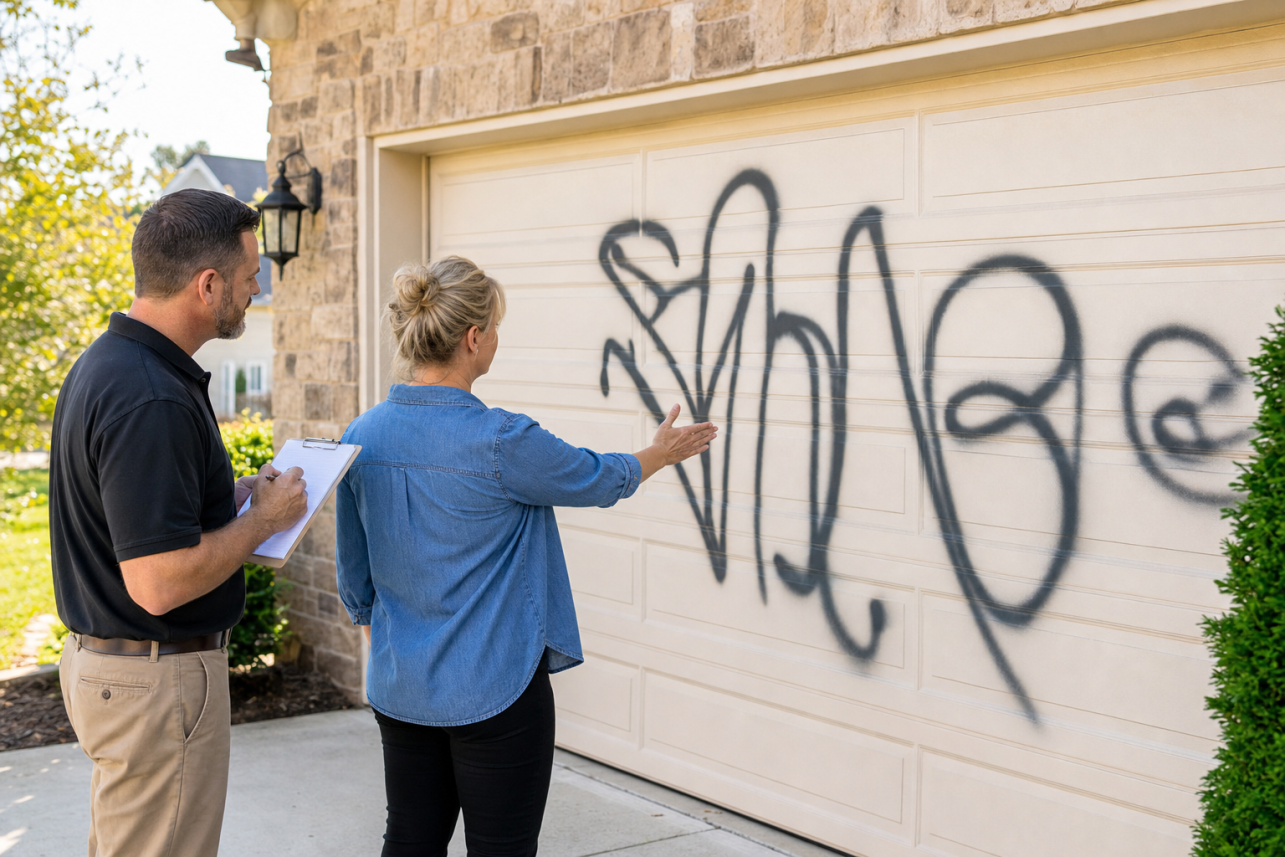
Report the vandalism to Burlington police right away — nearly every policy requires a police report for vandalism or theft, and skipping it is the fastest route to a denial. Make reasonable temporary repairs like boarding a broken window so damage doesn’t spread, and keep every receipt because those out-of-pocket costs are typically reimbursable. Then call us before you give the insurance company a recorded statement.
We Document Everything And Build The Claim
We inspect the property, photograph and inventory all damaged structure and contents, and write a detailed repair estimate based on what Burlington-area contractors actually charge. We prepare and submit the proof of loss statement correctly and on time, so the carrier can’t use paperwork errors against you.
We Negotiate The Settlement On Your Behalf
We meet the insurance company’s adjuster at the property, challenge lowball line items and improper depreciation, and negotiate until the offer reflects the true cost to restore your home. If the carrier still refuses to pay fairly, we advise you on appeal options, appraisal, and when it’s time to involve an attorney.
| Claim Step | Handling It Yourself | With For The Public Adjusters |
|---|---|---|
| Damage documentation | Phone photos of obvious damage; hidden damage often missed | Room-by-room inventory, moisture readings, and specialist inspections tied to the police report |
| Repair estimate | You rely on the carrier’s estimate, written to the carrier’s pricing | Independent line-item estimate at actual Alamance County contractor pricing |
| Vacancy or exclusion disputes | Denial letter is often accepted as final | Policy language reviewed and rebutted with evidence of occupancy and oversight |
| Negotiation | One homeowner versus a trained company adjuster | Licensed adjuster negotiating on your side with documented leverage |
| Board-up and emergency costs | Frequently forgotten and never reimbursed | Tracked from day one and submitted under the policy’s reasonable repairs coverage |
| Typical result | First offer, often a fraction of true repair cost | Settlements routinely well above the initial carrier offer |
Commonly Overlooked In The Public Adjusting Industry
- Water damage behind stolen copper plumbing — Everyone focuses on the missing pipe, but the water that ran before shutoff soaks insulation and subfloor where nobody looks.
- Door and window frame damage from forced entry — Carriers pay for the broken glass or lock and skip the split jamb that makes the whole unit unsecurable.
- Spray paint penetration into drywall paper — A paint-over estimate looks cheaper on paper, but solvent-based paint bleeds through primer for years and the wall board actually needs replacing.
- Emergency board-up and temporary security costs — Homeowners pay these out of pocket in the first frantic 24 hours and never think to submit the receipts.
- The policy’s specific definition of vacancy — Denials get accepted because owners assume ’empty’ means ‘vacant,’ when the policy language often requires much more before the exclusion applies.
- Matching requirements for siding, flooring, and cabinetry — Insurers offer to replace only the damaged section, ignoring that discontinued materials mean the whole run may need replacing to match.
- Contents damaged during the vandalism, not just the structure — Slashed furniture, smashed electronics, and contaminated food get lumped into the mess and thrown out before anyone inventories them.
- The proof-of-loss deadline running while the police investigation drags on — Owners wait for an arrest before filing paperwork, not realizing policy deadlines run regardless of what law enforcement does.
Case Studies
Case Study #1
Situation: A retired couple near Elon returned from a two-week trip to find their Burlington home broken into. Windows were smashed, interior doors kicked in, spray paint covered the living room walls, and copper piping had been cut out of the crawl space.
Problem: Their insurance carrier assigned a desk adjuster who never visited the home. The initial estimate covered the broken glass and one coat of paint but ignored the plumbing damage, water staining from the severed pipes, and the odor left by spray paint soaked into drywall.
Investigation: We walked the entire property with the homeowners, documented every room with photos and moisture readings, and pulled the Burlington Police Department incident report to match damage to the documented break-in. We also brought in a licensed plumber to scope the crawl space.
Findings: The severed copper lines had leaked before the water was shut off, saturating subfloor insulation and framing. Spray paint had penetrated primer-resistant drywall paper in three rooms, and two exterior doors had frame damage that made them unsecurable, not just cosmetic.
Solution: We prepared a line-item estimate covering repiping, subfloor drying and insulation replacement, full drywall replacement in the tagged rooms rather than paint-over, new door units with frames, and temporary boarding costs the couple had already paid out of pocket.
Outcome: The claim settled at more than four times the carrier’s original offer, and the couple recovered their emergency board-up expenses under the policy’s reasonable repairs provision.
Lesson: Vandalism damage is rarely just what you can see from the doorway. Secondary damage from cut plumbing, forced entry, and paint penetration must be documented before it gets painted over or dismissed.
Case Study #2
Situation: A landlord with a vacant rental off Maple Avenue in Burlington discovered squatter-related vandalism after a tenant moved out: punched walls, destroyed cabinetry, a shattered sliding door, and graffiti throughout the garage.
Problem: The carrier initially moved to deny the claim entirely, arguing the home had been vacant more than 60 days and citing the policy’s vacancy exclusion for vandalism and malicious mischief.
Investigation: We reviewed the policy language, the utility records, and the lease timeline. We gathered showing logs from the landlord’s realtor, dated photos from routine inspections, and mail delivery records to establish the actual vacancy period.
Findings: The property had been actively listed, shown weekly, and inspected regularly. Utility usage and the realtor’s documented showings established that the home did not meet the policy’s definition of vacant, which required the dwelling to be unattended and without regular oversight.
Solution: We submitted a formal rebuttal with the timeline evidence, then presented a complete repair estimate including cabinet replacement, tempered glass door replacement, drywall repair, and full interior repainting where graffiti removal was not feasible.
Outcome: The denial was reversed and the claim paid in full, covering roughly $38,000 in repairs the owner had been told he would receive nothing for.
Lesson: A vacancy denial is often the carrier’s opening position, not the final word. Policy definitions of vacancy are specific, and documented oversight of a property can defeat the exclusion.
| Type of Vandalism Damage | Usually Covered Under Homeowners Policy? | What It Depends On | First Step Before Repairs |
|---|---|---|---|
| Graffiti on siding, brick, or fences | Yes | Whether removal or full replacement is needed; brick often requires blasting, not paint | Photograph before any cleanup and get a police report number |
| Broken windows and forced-entry doors | Yes | Frame damage counts too, not just glass; check for matching trim coverage | Board up to secure the home and keep every receipt |
| Stolen copper pipes or wiring | Yes, plus resulting water damage | Damage from the theft is covered even if the stolen material has limits | Shut off water and power; document leaks before drying begins |
| Interior destruction (walls, cabinets, fixtures) | Yes | Carrier may push patch-and-paint when replacement is warranted | Do not throw anything away until it’s photographed and inventoried |
| Vandalized detached garage or shed | Yes, under other structures coverage | Coverage is typically 10% of dwelling limit; large outbuildings may exceed it | List the structure’s contents separately from the building damage |
| Damage to a home vacant 60+ days | Often disputed or denied | Policy definition of vacancy and proof of regular oversight or active listing | Gather utility records, showing logs, and inspection dates immediately |
| Landscaping, trees, and mailboxes | Yes, with sub-limits | Most policies cap trees and shrubs around $500 each | Get a written replacement quote from a local nursery or landscaper |
| Damage by a resident or named insured | No | Vandalism by someone living in the home is excluded | Talk to an adjuster before recording any statement about who caused it |

Reviews
Someone broke into our house on the west side of Burlington and destroyed nearly every room. Our insurance company offered us $6,200 and acted like that was generous. For The Public Adjusters found damage the company adjuster never even looked at, including the HVAC unit the vandals stripped for copper. Our final settlement covered everything, and I never had to argue with the insurance company myself.
Denise W., Burlington
Teenagers vandalized my late mother’s home while it sat empty during probate. The carrier tried to deny the whole thing over the vacancy clause. This team knew exactly how to fight it, pulled together records I didn’t know mattered, and got the denial overturned. Worth every penny of their fee.
Marcus T., Alamance County
After graffiti and window damage at our home, the insurance estimate only paid to paint over the tagged brick, which anyone can tell you doesn’t work. For The Public Adjusters got the estimate rewritten to include proper media blasting and sealing. The process took a few weeks longer than I hoped, but the result was more than double the first offer.
Sherry L., Graham
Frequently Asked Questions
What Should I Do First Before Filing A Vandalism Homeowners Claim Burlington NC?
The very first step in any Vandalism Homeowners Claim Burlington NC is to call the Burlington Police Department or the Alamance County Sheriff’s Office and file a report. Nearly every homeowners policy requires a police report for vandalism, and insurers routinely deny claims that skip this step. Get the report number before you do anything else.
Next, document everything before you touch it. Photograph and video the damage from multiple angles — spray paint, broken windows, kicked-in doors, damaged fixtures, torn screens, destroyed landscaping. Wide shots and close-ups both matter, because adjusters often question the extent of damage later.
After documenting, you’re allowed — and actually required — to make reasonable temporary repairs to prevent further damage. Board up broken windows, secure doors, and tarp any openings. Keep every receipt, because those emergency costs are typically reimbursable under your policy.
What you should not do is give a recorded statement to the insurance company or accept a quick settlement before the full scope of damage is known. Vandalism often involves hidden damage: contaminated HVAC systems if intruders were inside, damaged wiring, or graffiti that requires full repainting rather than spot treatment.
At For The Public Adjusters, Inc., we recommend calling us before you speak with your carrier’s adjuster. We handle the documentation, the proof-of-loss paperwork, and the negotiation so the claim reflects everything you actually lost — not just what’s visible at first glance.
Does Homeowners Insurance In Burlington Cover Vandalism And Malicious Mischief?
Yes, in almost all cases. Standard homeowners policies sold in North Carolina — including HO-3 policies, which are the most common in Alamance County — list vandalism and malicious mischief as covered perils. That coverage typically extends to your dwelling, detached structures like garages and sheds, and your personal property inside the home.
There are important exceptions, though. If your Burlington home has been vacant for more than 60 consecutive days, most policies exclude vandalism entirely. This trips up a lot of local homeowners — people who inherited a family property near downtown, landlords between tenants, or owners waiting to sell. Vacant is not the same as unoccupied, and insurers scrutinize this distinction closely on vandalism losses.
Coverage also depends on how the damage is categorized. Broken windows, graffiti, damaged doors, ripped-out copper piping, and destroyed appliances are usually straightforward. Things get contested when insurers try to reclassify damage as theft (which may carry different limits) or wear and tear (which isn’t covered at all).
Your deductible applies, so smaller incidents may not be worth filing. But vandalism damage is frequently more expensive than it first appears — matching brick or siding, repainting entire walls rather than patches, and replacing security systems add up fast.
As a Burlington public adjuster firm, we review your specific policy language, identify every applicable coverage, and push back when the carrier tries to minimize the loss or apply the wrong exclusion.
How Much Is A Vandalism Claim Typically Worth, And Why Do Insurers Underpay Them?
There’s no single number — we’ve handled vandalism losses in Alamance County ranging from a few thousand dollars for broken windows and graffiti to well over six figures when intruders gutted a home for copper or caused water damage by tearing out plumbing fixtures.
Insurers underpay these claims for predictable reasons. First, they scope only the visible damage. A spray-painted exterior wall gets priced for spot cleaning when proper restoration requires pressure washing, priming, and repainting the entire elevation so the finish matches. Older Burlington homes with original brick, plaster, or hardwood are especially prone to lowball repair estimates that ignore matching requirements under North Carolina claim practices.
Second, carriers often miss consequential damage. If vandals broke a window in January, wind and rain may have damaged flooring and drywall before you discovered it. If they tampered with plumbing, you may have hidden water damage and mold. Those secondary losses belong in the claim.
Third, personal property gets undervalued. Insurers apply steep depreciation to destroyed electronics, furniture, and belongings, and many homeowners never recover the depreciation holdback they’re entitled to after replacing items.
A public adjuster works only for you, not the insurance company. We prepare an independent, line-item estimate, inventory your damaged contents at proper values, and negotiate directly with the carrier. Our clients routinely recover substantially more than the insurer’s first offer — and since we work on contingency, there’s no upfront cost to have us take over.
How Can For The Public Adjusters, Inc. Help With My Vandalism Homeowners Claim Burlington NC, And What Does It Cost?
When you hire For The Public Adjusters, Inc. to handle a Vandalism Homeowners Claim Burlington NC, we take over the entire process from the moment you sign with us. That starts with a full inspection of your property — inside and out — to capture damage the carrier’s adjuster will overlook, from contaminated ductwork to structural damage behind cosmetic vandalism.
We then build the claim file: photographs, a detailed repair estimate using the same software insurers use, a complete personal property inventory, and the sworn proof of loss your policy requires. We coordinate the police report documentation, meet the insurance company’s adjuster at your Burlington property, and handle every phone call, email, and negotiation so you don’t have to.
If your home is unsafe or unlivable — common when doors and windows are destroyed — we also pursue your Additional Living Expenses coverage so temporary housing and extra costs are paid while repairs are made.
Our fee is a percentage of what the insurance company pays, and we only get paid when you do. There are no upfront charges, no hourly billing, and no cost for the initial consultation. If we review your situation and honestly believe you’re better off handling it yourself, we’ll tell you.
We’re licensed public adjusters in North Carolina and we work throughout Alamance County — Burlington, Graham, Mebane, Elon, and the surrounding communities. Whether the vandalism just happened or your claim has already been underpaid or denied, call us for a free review before you accept the carrier’s number.
Is There A Deadline To File A Vandalism Homeowners Claim Burlington NC Policyholders Should Know About?
Yes, and the clock starts running faster than most homeowners realize. Nearly every homeowners policy sold in North Carolina requires “prompt notice” of a loss, and many carriers interpret delays of even a few weeks as grounds to question or deny coverage. Beyond the notice requirement, North Carolina law generally gives you three years to bring legal action on a property claim, but your policy may shorten that window contractually, so the actual document controls.
With vandalism specifically, timing matters for another reason: evidence. Spray paint fades, broken glass gets swept up, and neighbors forget what they saw. Adjusters for the carrier will scrutinize a claim reported late in Alamance County far more aggressively, sometimes suggesting the damage happened over time or was pre-existing.
Our advice is to report to the Burlington Police Department the same day you discover the damage and notify your insurer within 24 to 48 hours. If you have already waited weeks or even months, do not assume the claim is dead. We regularly help homeowners document why a delay occurred, such as damage discovered after returning from travel, and preserve the claim.
If you are unsure where you stand on timing, call us before you call the carrier. A recorded statement given without preparation can do more harm to a Vandalism Homeowners Claim Burlington NC than the delay itself.
Do I Need A Police Report Before My Insurer Will Pay For Vandalism Damage In Burlington?
In almost every case, yes. Most homeowners policies covering property in Alamance County contain a duty to notify law enforcement when a loss involves a criminal act, and vandalism is by definition a crime under North Carolina law. Skipping the report gives the carrier an easy technical reason to deny an otherwise valid claim.
The good news is that the process is straightforward. For property inside city limits, contact the Burlington Police Department’s non-emergency line and request an officer or a case number for property damage. Outside the city, the Alamance County Sheriff’s Office handles the report. You do not need the vandal to be identified or arrested; you only need documentation that the incident was reported.
When the officer arrives or takes your report by phone, be specific. List every damaged item: broken windows, kicked-in doors, graffiti, slashed screens, damaged HVAC units, cut wiring. Insurers often try to limit payment to only the items mentioned in the police report, so a thin report can shrink your recovery later.
Get the report number immediately and request a copy once it is finalized, usually within a few business days. We include that report as a foundation document in every vandalism file we build, then layer on our own photographs, contractor estimates, and a detailed inventory. That combination makes it very difficult for a carrier to argue the loss did not happen the way you say it did.
My Burlington House Was Vacant When It Was Vandalized. Am I Still Covered?
This is the single biggest trap in vandalism coverage, and it catches a lot of Alamance County homeowners. Most standard policies exclude vandalism and malicious mischief if the dwelling has been vacant for more than 60 consecutive days before the loss. Some older or non-standard policies use a 30-day threshold, so reading the exact language matters.
Here is the critical distinction: vacant and unoccupied are not the same thing legally. A house you are actively renovating, a home staged with furniture while listed for sale, or a property you visit regularly between tenants is often “unoccupied” rather than “vacant.” Courts in North Carolina have generally held that a dwelling with furnishings and utilities maintained is not vacant, even if no one is sleeping there.
Carriers know most policyholders do not understand this difference, and vacancy is one of the most common denial reasons we see on these claims. An adjuster may ask leading questions in a recorded statement designed to get you to describe the home as vacant when it legally was not.
If your property near downtown Burlington, off University Drive, or anywhere in the county was hit while empty, do not accept a vacancy denial at face value. We review the policy wording, gather evidence of occupancy such as utility records, furniture photos, and maintenance visits, and push back with documentation. We have overturned vacancy denials that homeowners assumed were final.
What Can I Do If The Carrier Lowballs Or Denies My Vandalism Claim?
A low offer or denial is the beginning of a negotiation, not the end of your claim. Insurers routinely undervalue vandalism losses by using depreciated pricing, ignoring code-required upgrades, or arguing that damage is cosmetic. A denial letter must state the specific policy language relied upon, and that language can be challenged.
Start by requesting the carrier’s position in writing, along with a complete copy of your policy. Then compare their estimate line by line against a real contractor’s scope of repairs. In Burlington, we consistently find carrier estimates that omit paint matching across entire walls, use below-market labor rates for Alamance County, or leave out debris removal and security board-up costs entirely.
North Carolina policyholders also have leverage the carriers rarely mention. Most policies include an appraisal clause that lets you demand an independent valuation when the dispute is about the amount of loss. If the carrier acted unreasonably, the North Carolina Department of Insurance accepts complaints, and unfair claims practices can carry real consequences for the insurer.
This is exactly the situation where For The Public Adjusters, Inc. earns its fee. We reopen underpaid files, rebuild the damage documentation from scratch, invoke appraisal when it makes sense, and negotiate directly with the carrier so you are not arguing alone. Handled correctly, a Vandalism Homeowners Claim Burlington NC that was denied or shortchanged can often be turned into a full, fair settlement.
What Types Of Damage Actually Count As Vandalism Under A Burlington Homeowners Policy?
Vandalism coverage is broader than most Alamance County homeowners realize. It includes spray paint and graffiti, broken windows and doors, slashed screens, damaged fencing, keyed or dented garage doors, and destroyed landscaping fixtures attached to the home.
Interior damage counts too. If someone breaks in and punches holes in drywall, rips out copper piping, floods a bathroom by clogging drains, or destroys built-in cabinets and flooring, that is vandalism or malicious mischief under most standard HO-3 policies written in North Carolina.
Where policyholders get tripped up is the gray area between vandalism, theft, and resulting damage. If a vandal pulls plumbing out of a wall and water runs for two days, the water damage is a consequence of the vandalism and should be covered under the same claim, not treated as a separate loss with a separate deductible. Carriers sometimes try to split these events apart to reduce the payout.
Detached structures like sheds, fences, and detached garages are typically covered under Coverage B, and personal property destroyed in the incident falls under Coverage C. Each has its own limit, so how the damage is categorized directly affects your recovery.
When a Burlington public adjuster reviews the loss, one of the first steps is mapping every damaged item to the correct coverage section so nothing gets left off the estimate. Homeowners who file on their own frequently miss covered items simply because they did not know those items qualified.
Should I Board Up Or Make Temporary Repairs Before The Insurance Adjuster Inspects My Burlington Home?
Yes, and in most cases your policy actually requires it. Nearly every homeowners policy issued in North Carolina includes a duty to protect the property from further damage after a loss. If vandals broke windows or kicked in a door, you need to secure those openings promptly.
Here is the good news: reasonable temporary repairs are reimbursable. Board-up services, tarping, emergency locksmith work, and temporary fencing are all recoverable costs when they are necessary to protect the home. Keep every receipt, and photograph the damage thoroughly before anything is covered up or cleaned.
That last point matters. Take wide shots of each room or exterior area, then close-ups of specific damage, before the board-up crew arrives. Once plywood goes over a broken window or graffiti gets painted over, your photos become the primary evidence of what happened.
Do not make permanent repairs before the carrier has inspected. Replacing drywall, repainting, or installing new windows before the insurer documents the damage gives the adjuster room to dispute the scope of the loss. Temporary and permanent repairs are treated very differently.
In Burlington, several local restoration companies offer 24-hour board-up service, and many will bill the insurance claim directly. If you are unsure whether a repair crosses the line from temporary to permanent, hold off and get guidance first. Our team routinely advises homeowners on exactly what to do in those first 48 hours so nothing jeopardizes the claim.
Will Filing A Vandalism Homeowners Claim Burlington NC Raise My Insurance Premiums?
It is a fair concern, and the honest answer is: possibly, but usually less than people fear, and often less than eating the loss yourself.
Vandalism is classified as a not-at-fault loss. You did not cause the damage, and North Carolina carriers generally weight these claims differently than negligence-related losses like a kitchen fire or a burst pipe from poor maintenance. A single vandalism claim rarely triggers a dramatic rate increase or non-renewal on its own, especially if you have an otherwise clean claim history.
That said, every claim goes into the CLUE database, which insurers check at renewal and when you shop for new coverage. Multiple claims within a three-to-five-year window can affect your rates or eligibility regardless of fault.
Here is the practical math we walk Burlington homeowners through. If the damage is barely above your deductible, it may make sense to pay out of pocket. But vandalism losses are frequently far more expensive than they first appear, once you account for matching materials, code upgrades, hidden damage behind walls, and full repainting rather than spot touch-ups. Absorbing a $15,000 loss to avoid a modest premium adjustment is rarely the right trade.
Before you decide, get the damage properly scoped. For The Public Adjusters, Inc. offers free claim reviews, so you can see the true value of your Vandalism Homeowners Claim Burlington NC before anything is filed. Knowing the real number lets you make the premium decision with facts instead of guesswork.
What Documentation Do I Need To Prove My Vandalism Losses To The Insurance Company?
Strong documentation is what separates fully paid claims from underpaid ones. For a vandalism loss in Burlington, you want to build a file with several layers of evidence.
Start with the police report from the Burlington Police Department or the Alamance County Sheriff’s Office, depending on where the property sits. Get the report number immediately and request the full written report once it is available. Carriers treat this as the foundation of the claim.
Next comes visual evidence. Photograph and video everything before cleanup: every room, every wall, every broken fixture, from multiple angles with good lighting. Include timestamps if your phone allows it. If neighbors have doorbell or security camera footage, ask for copies right away because many systems overwrite recordings within days.
Then document the financial side. That means a detailed inventory of damaged personal property with approximate purchase dates and replacement costs, receipts for emergency board-up or securing services, and itemized repair estimates from licensed North Carolina contractors. Generic one-page estimates get challenged; line-item estimates built on industry pricing software carry real weight.
Finally, keep a written timeline of every conversation with your insurer, including dates, names, and what was said. Vandalism claims often involve coverage questions, and a clean record protects you if disputes arise.
When a public adjuster in Burlington handles the file, we prepare all of this on your behalf, including a professionally scoped estimate that documents damage the carrier’s adjuster may overlook entirely, such as odor treatment, matching finishes, and consequential water or electrical damage.
How Long Does A Vandalism Homeowners Claim Burlington NC Take To Settle From Start To Finish?
Most vandalism claims in Burlington resolve within 30 to 90 days, but the timeline depends heavily on how well the loss is documented up front. North Carolina law requires carriers to acknowledge a claim promptly and to pay or deny within 30 days of receiving a properly executed proof of loss, so much of the delay you hear about comes from back-and-forth over documentation, not the law itself.
Straightforward losses, like broken windows or a spray-painted fence, can settle in a few weeks once the police report, photos, and repair estimates are in the carrier’s hands. Larger losses involving interior destruction, water damage from smashed plumbing, or stolen fixtures often take longer because the insurer may send an independent adjuster, request recorded statements, or dispute the scope of repairs.
Where claims really stall is when the carrier’s estimate comes in far below actual repair costs and the homeowner has to push back. That negotiation phase can add 60 days or more if you handle it alone. When our team manages a claim in Alamance County, we front-load the file with a complete damage inventory, contractor-level estimates, and code-compliance documentation, which removes the most common excuses for delay.
A realistic expectation: minor vandalism, two to five weeks; moderate damage with interior repairs, six to ten weeks; severe or disputed losses, three to six months. If your claim has dragged past 90 days without a clear explanation, that is usually a sign the file needs professional intervention, not more patience.
The Vandal Who Damaged My Burlington Home Was Caught. Does That Change My Insurance Claim?
It changes some things, but it does not replace your claim. You should still file with your own homeowners carrier rather than waiting on the criminal case, because restitution through the Alamance County court system is slow, often partial, and depends entirely on the defendant’s ability to pay.
Your insurance policy is a contract that pays regardless of whether anyone is arrested. Once your carrier pays you, it gains subrogation rights, meaning the insurer can pursue the vandal or their family to recover what it paid out. That is the carrier’s fight, not yours, and it happens behind the scenes without delaying your settlement.
An arrest actually helps your claim in one important way: it eliminates any suggestion that the damage was staged or caused by a household member, which are the two most common reasons carriers deny vandalism losses. A named suspect and a criminal case number make the loss nearly impossible to dispute on those grounds.
One caution for Burlington homeowners: if the person charged is a relative, a resident of your household, or a tenant, coverage can get complicated fast. Most policies exclude intentional acts by an insured or by tenants in some situations, so the carrier will scrutinize the relationship. Do not guess at how to describe it in a recorded statement. If restitution is later ordered by the court, you may still collect it for your deductible and any uninsured portion of the loss, but you generally cannot double-recover amounts the insurer already paid.
Does A Vandalism Claim In Burlington Cover My Fence, Detached Garage, Shed, And Landscaping Too?
Usually yes, though each category is handled differently under a standard homeowners policy, and this is where a lot of money gets left on the table in Alamance County claims.
Detached garages, sheds, fences, gazebos, and similar structures fall under Coverage B, called other structures. It typically carries a limit equal to 10 percent of your dwelling coverage, and importantly, it is a separate pool of money on top of your dwelling limit. A vandalized workshop or knocked-down privacy fence should be paid from Coverage B without eating into what is available for the house itself.
Landscaping is trickier. Trees, shrubs, and plants destroyed by vandalism are covered under most policies, but usually capped at 5 percent of the dwelling limit total and around 500 dollars per tree or shrub. Mature landscaping in established Burlington neighborhoods can be worth far more than that cap, so document everything and claim the maximum available.
Personal property stored in outbuildings, tools, mowers, bicycles, patio furniture, falls under Coverage C, your contents coverage, which is yet another separate limit. Carriers frequently lump all this damage together and apply only the dwelling limit, or they simply overlook Coverage B and C items entirely because the homeowner never itemized them.
Before you accept any settlement, walk the entire property line, photograph every damaged item including fencing, mailboxes, lighting, and irrigation, and make sure the estimate assigns each item to the correct coverage. That single step routinely adds thousands to a recovery.
Will My Insurer Pay Replacement Cost For Vandalism Repairs, Or Will They Deduct Depreciation?
It depends on your policy language, and this distinction is one of the biggest reasons Burlington homeowners end up underpaid on a Vandalism Homeowners Claim Burlington NC settlement offer.
Most modern homeowners policies pay replacement cost on the dwelling, meaning the carrier owes what it actually costs to repair the damage with materials of like kind and quality, without deducting for age or wear. However, many carriers pay in two stages: first the actual cash value, which is replacement cost minus depreciation, then the recoverable depreciation after you complete repairs and submit invoices. If you never finish the repairs or never submit the paperwork, that withheld depreciation stays in the insurer’s pocket.
Personal property is often a different story. Unless you purchased a replacement-cost endorsement for contents, vandalized furniture, electronics, and belongings may be paid at depreciated value only. Check your declarations page for wording like personal property replacement cost before assuming.
Watch for two common tactics in vandalism files. First, over-depreciation, where the adjuster assigns unrealistic age or condition to items, a five-year-old exterior door depreciated by 60 percent, for example. Second, carriers sometimes classify permanent parts of the home, like built-in cabinetry or HVAC components damaged by vandals, as personal property to justify depreciating them when they should be paid as dwelling repairs.
Every depreciation figure in an estimate is negotiable and must be reasonable under North Carolina claim-handling standards. Reviewing the depreciation line by line, and recovering the withheld amounts after repairs, is a core part of how we maximize these settlements for Alamance County homeowners.
Local Relevance
Burlington’s housing stock reflects its textile-mill history — many neighborhoods feature homes built in the early and mid twentieth century, with original wood windows, solid-wood doors, plaster walls, and brick that can’t be patched with off-the-shelf materials. When vandals break these features, insurance estimates written to modern builder-grade pricing routinely fall short of what proper restoration costs.
Vandalism claims here also cluster around rental houses between tenants, inherited family homes sitting empty during probate, and properties under renovation. Carriers scrutinize these situations hard, sometimes arguing vacancy exclusions or neglect. Getting the timeline, occupancy status, and documentation right from day one matters enormously.
We work throughout Alamance County and the surrounding Triad and Triangle communities. Homeowners nearby have used our team as a water damage adjuster in Mebane when vandals or burst pipes flooded interiors, and we serve policyholders as a Public Adjuster Durham NC residents rely on as well. Wherever the loss happens in the region, the claim gets the same local, hands-on attention.
Because so many Burlington homes date to the city’s mill era, vandalism to original windows, doors, and brickwork often can’t be repaired with standard replacement materials — and insurers’ generic estimates tend to miss the cost of matching that older construction, which is frequently where the biggest underpayments hide.
Vandalized Home In Burlington? Get A Licensed Adjuster On Your Side
Before you accept the insurance company’s first offer — or a denial — let For The Public Adjusters, Inc. review your claim for free. We’re licensed and bonded in North Carolina, we work only for policyholders, and there’s no fee unless your claim pays. From the police report to the final check, we handle it so you don’t have to.
Call us: (336) 331-8300
Helpful Resources
- NCDOI Public Adjusters Guide
- National Association of Insurance Commissioners (NAIC)
- North Carolina Department of Insurance — State regulator that licenses public adjusters and handles consumer complaints
- National Association of Insurance Commissioners — National insurance regulatory body with consumer claim guidance
Serving Burlington · Alamance
Last updated: September 10, 2026